Best Blockchain Intelligence Tool in 2026: 8 Tools Compared
WLWPLegible EditorsLast verified 24 Nov 2026How we rank11 min read
★ Short answer
Chainalysis is the best blockchain intelligence tool for regulated exchanges, banks and agencies, with Reactor investigations and KYT monitoring in one suite. Smaller teams should start free with Dune for research, or pay $39 a month for Bitquery APIs if they build their own analytics.
How we make this list: we compare pricing pages, product documentation and public user reviews, then re-check every price before each update. No product paid for a place. Disclosure.
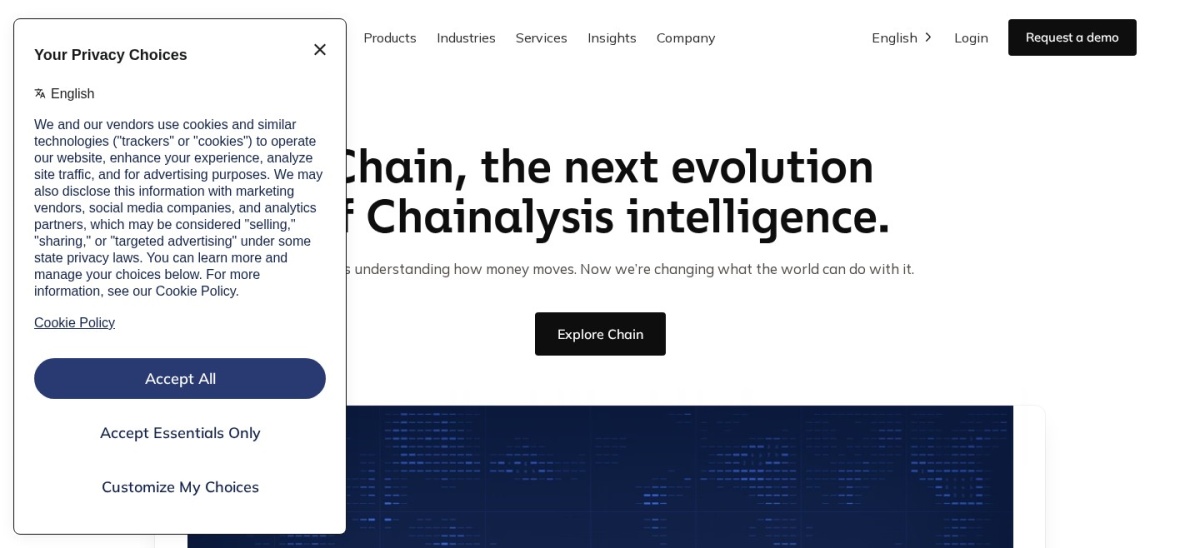
Chainalysis is the benchmark for enterprise crypto compliance, with 1,500-plus customers in more than 70 countries.
TRM Labs is the strongest challenger, rated 4.8 from 22 G2 reviews with broad multi-chain coverage.
Dune Analytics is the best free starting point for on-chain research, rated 4.3 from 4 G2 reviews.
Bitquery is the only tool here with a published price: API plans from $39 a month.
Six of the eight tools are quote-only enterprise contracts, so get every price in writing.
What blockchain intelligence should cover
Blockchain intelligence software traces cryptocurrency funds, screens wallets and transactions for risk, and monitors activity for fraud, sanctions exposure and money laundering. A block explorer shows the raw record; these tools add the interpretation layer of who controls an address and how risky it is.
Buyers fall into four camps. Enterprise compliance teams need screening and monitoring at volume, investigators need tracing depth and audit-ready reports, developers need data APIs, and researchers need public entity labels.
No tool proves who owns a wallet on its own. Attribution still needs exchange records, public data and off-chain evidence, so treat labels as leads, not conclusions, especially in a legal filing.
Chain coverage claims need checking per product. Screening depth, tracing depth and supported networks differ even inside one vendor, so pilot on your real transaction mix. Our guide to the best fraud detection software covers the wider fraud stack these tools sit in.
Chainalysis is the default enterprise choice for a reason: its Reactor investigation tool and KYT transaction monitoring product cover tracing, screening, sanctions checks and case work in a connected suite. Investigators can follow funds across hops and chains, flag exposure to sanctioned or high-risk entities, and build a case file that holds up in compliance review.
The trade off is cost and buying process. Pricing is quote-based and reflects transaction volume, chains and modules, so a mid-market team should expect a sales cycle and an annual contract, not a self-serve signup. It suits regulated exchanges, banks and agencies with steady investigation volume.
What we like
Reactor investigations and KYT monitoring in one suite
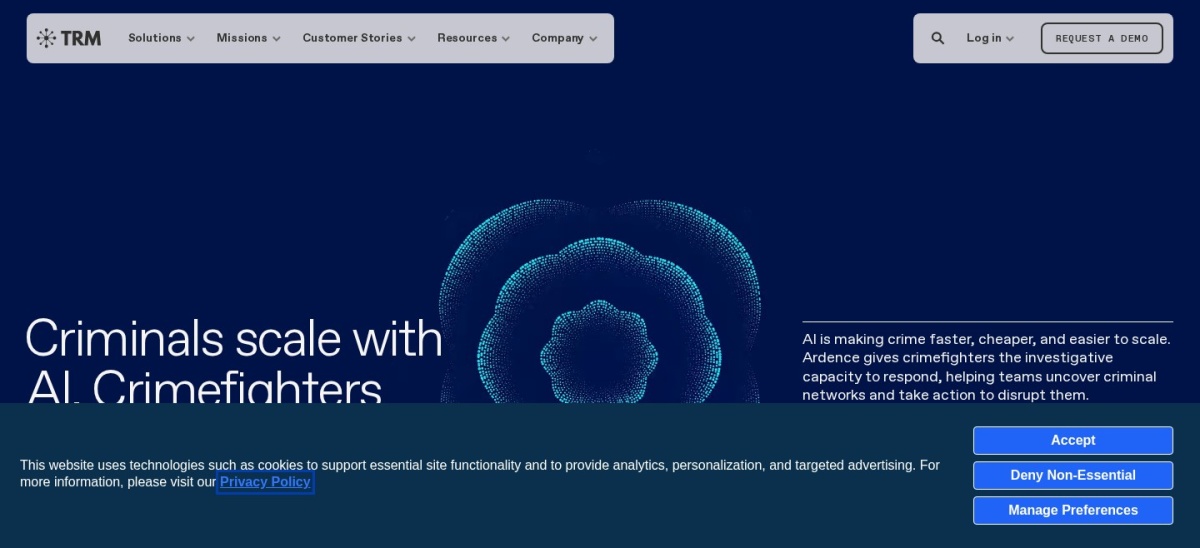
TRM Labs is a blockchain intelligence platform that combines wallet screening, transaction monitoring and forensics in one workspace built for cross-chain work. Compliance teams can set risk rules, receive alerts on exposure, and move from an alert into a full investigation without switching tools.
The trade off is the same as Chainalysis: annual contracts priced on volume and scope, so budgeting requires a scoped conversation. It suits a mid-market to enterprise exchange, fintech or agency that needs automation and broad coverage in one platform.
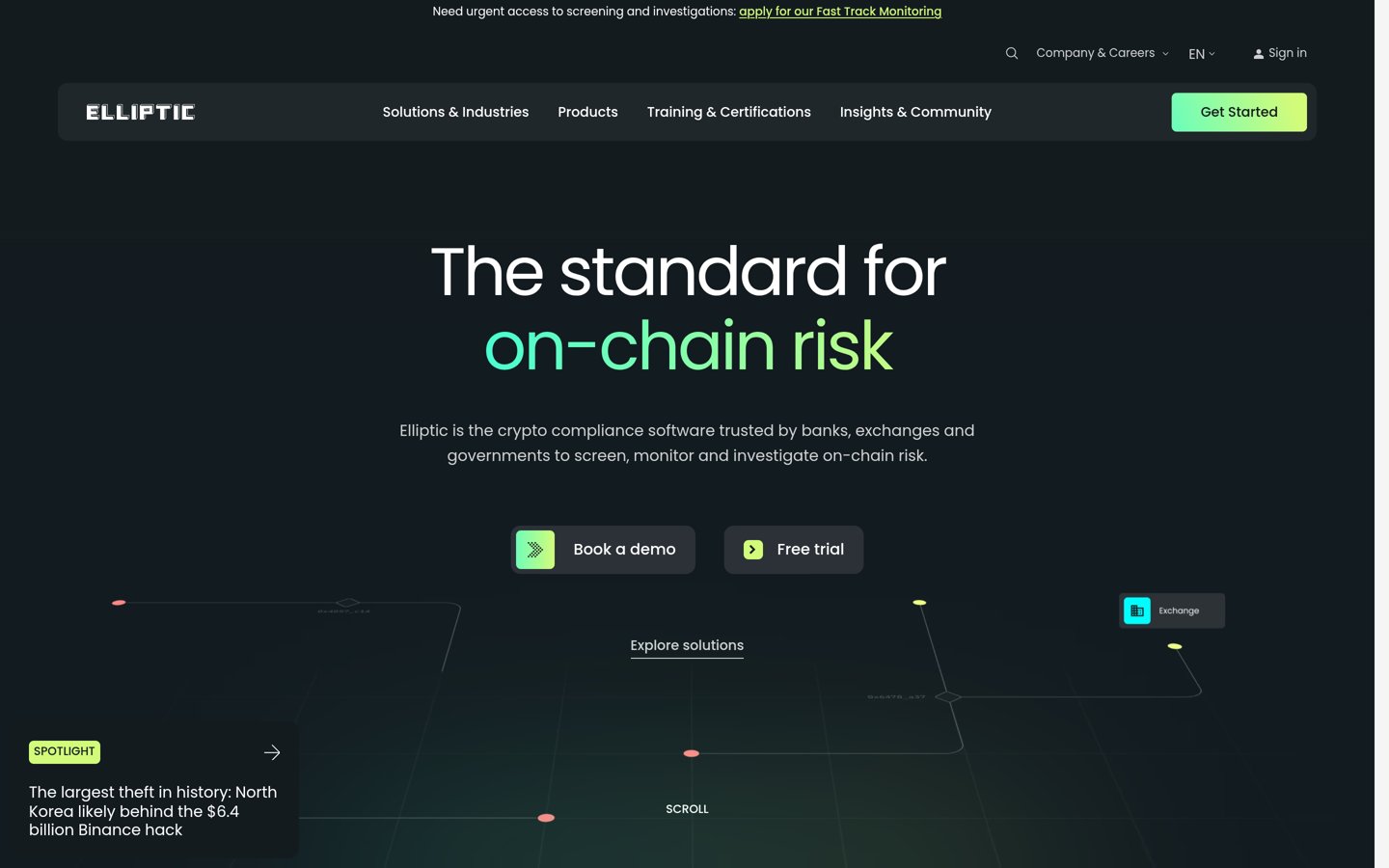
Elliptic is a blockchain analytics company that pairs Lens wallet screening with Investigator tracing and Navigator transaction monitoring, giving compliance teams one path from a single address check to a full fund flow. Its risk scores aim to explain why an address is flagged, including direct and indirect exposure through swaps and bridges.
The trade off is enterprise packaging and a thin public review base. Pricing is quote-based, and its Capterra rating of 5.0 rests on only 4 reviews, so reference diligence matters more than the score. It suits large regulated institutions screening at volume, especially with DeFi exposure.
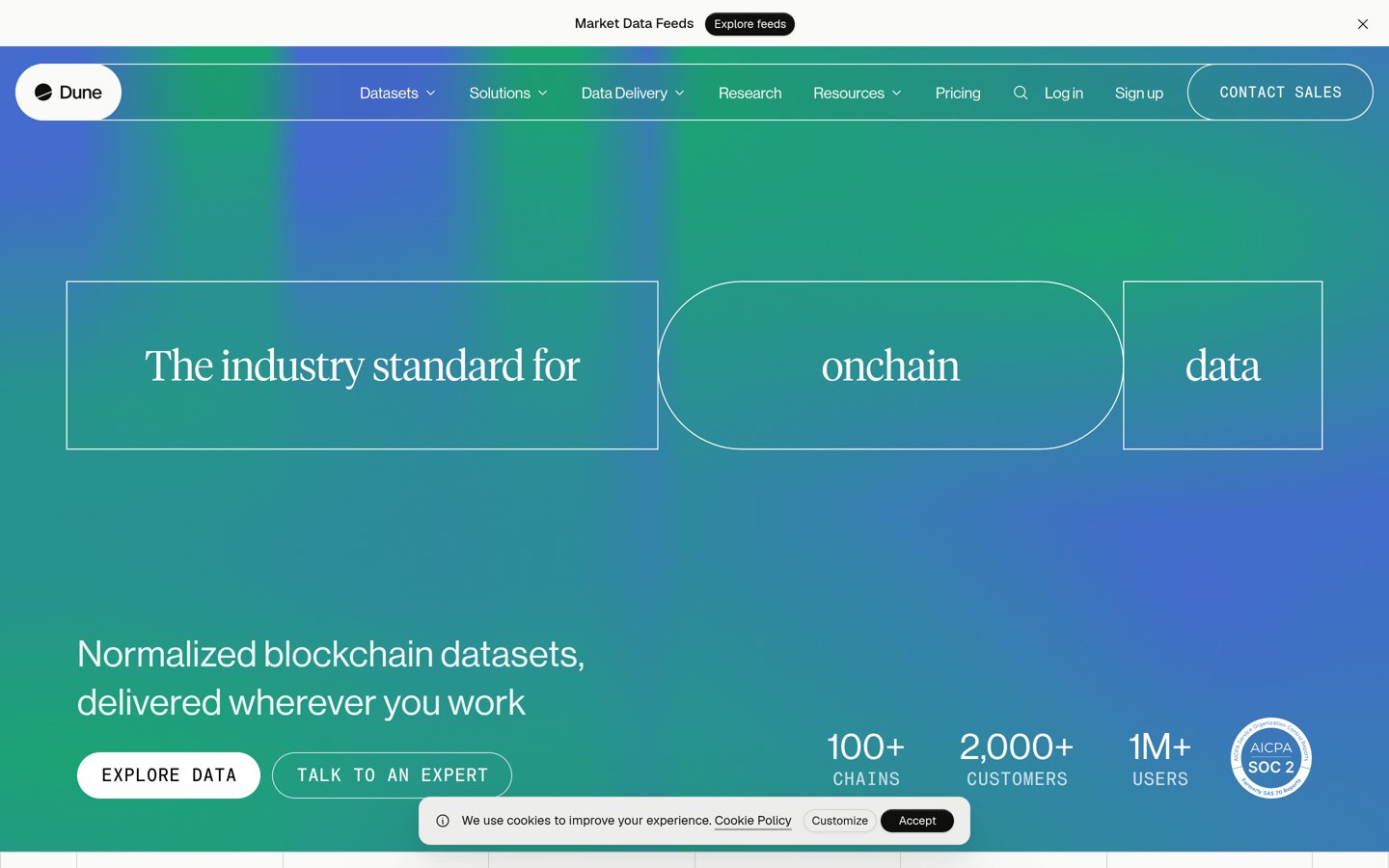
Dune Analytics is an on-chain data platform that helps crypto and digital-asset teams work with blockchain data without building their own indexing stack. Analysts write SQL against decoded multi-chain datasets, publish dashboards and deliver data into applications through APIs, and the community has built dashboards for protocol revenue, token holders, DEX volume and NFT mints.
The trade off is skill and evidence. Custom analysis needs SQL, and its G2 rating of 4.3 rests on only 4 reviews, so the score is directional rather than broad. It suits researchers and analysts who want direct access to decoded on-chain data instead of a fixed set of pre-built metrics.
What we like
SQL query engine over decoded multi-chain data
Public and private dashboards
Forkable community queries and dashboards
Free tier for public queries and dashboards
Watch out for
G2 rating rests on only 4 reviews
Needs SQL skills for custom analysis
Paid tiers gate private content and API access
Free tier for public queries; paid plans add private content and API accessVisit dune.com
05
Bitquery
4.6/5on G2 (5 reviews, checked Nov 2026)
Starts at$39/mo
Best for developer data APIs
APIGraphQL, REST
Chains40+ blockchains
StreamingReal-time
Free trialYes
bitquery.io
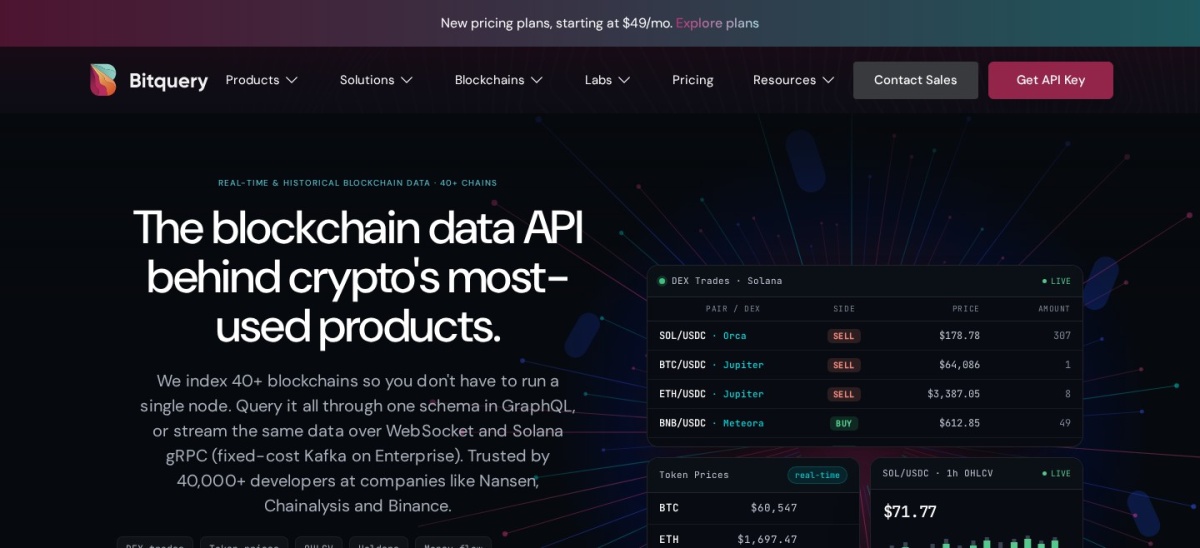
Bitquery homepage, captured Nov 2026.
Bitquery is an API-first product for teams that build their own analytics, dashboards or risk checks. Its GraphQL APIs return decoded blockchain data across many networks, with streaming for real-time use and Coinpath tools for tracing money flows, and plans start at $39 a month billed annually.
The trade off is ownership. Your engineers must design queries, handle rate limits and build the user interface and alerting around the data, since Bitquery does not ship a full compliance case system. It suits a Web3 product team or data team that wants raw, flexible blockchain data.
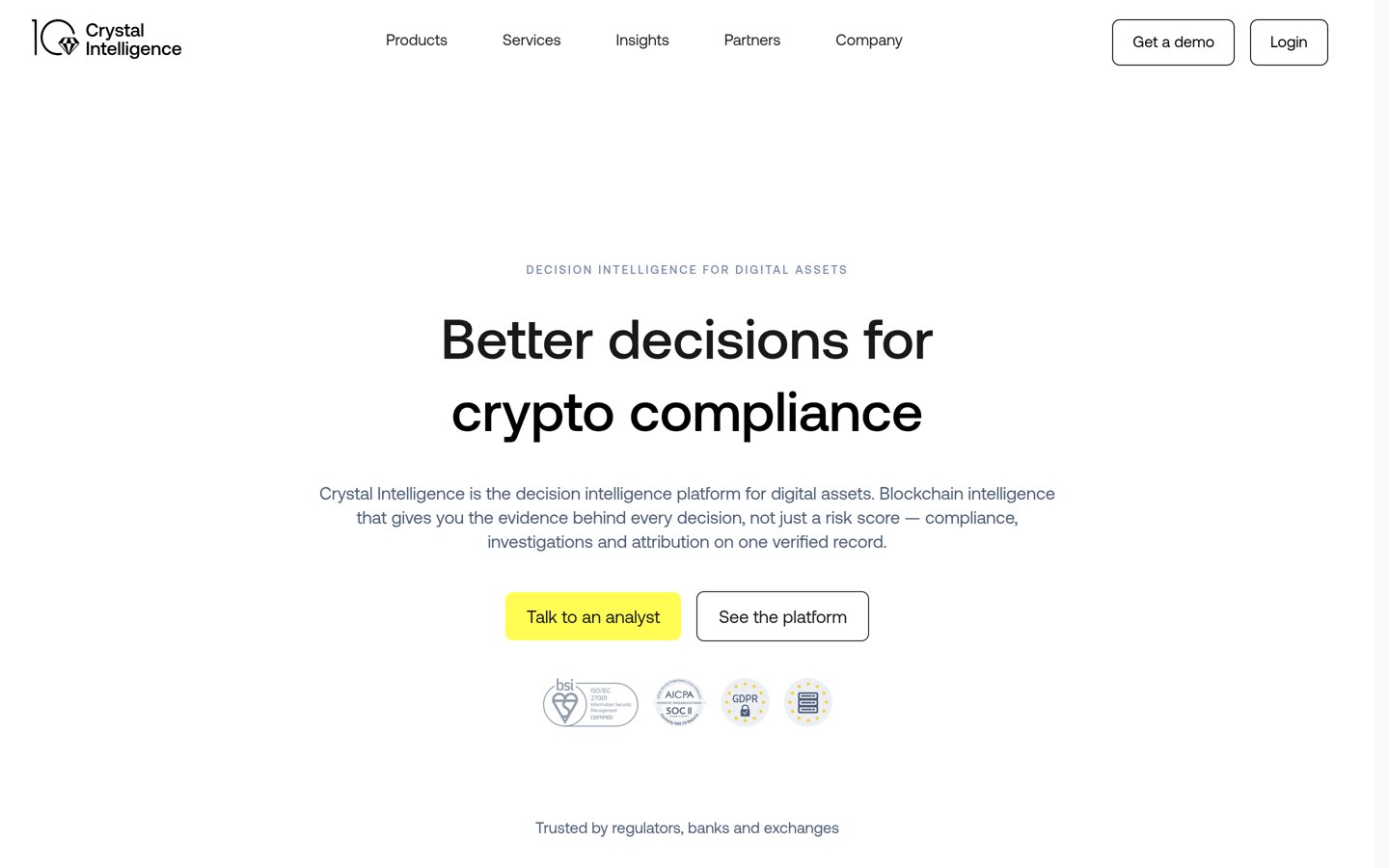
Crystal Intelligence is a blockchain analytics platform, formerly Crystal Blockchain, that focuses on investigations that must stand up to audit or court review. Its tracing visualizations show fund movement step by step, and its reports document the path, the entities involved and the risk indicators behind each hop.
The trade off is scale and a thin review base. Its Capterra rating of 5.0 rests on only 4 reviews, and its ecosystem is smaller than the top two, so buyers should confirm tracing depth on the chains they actually see. It suits an investigation-led team, a law firm or a compliance unit that values defensible documentation.
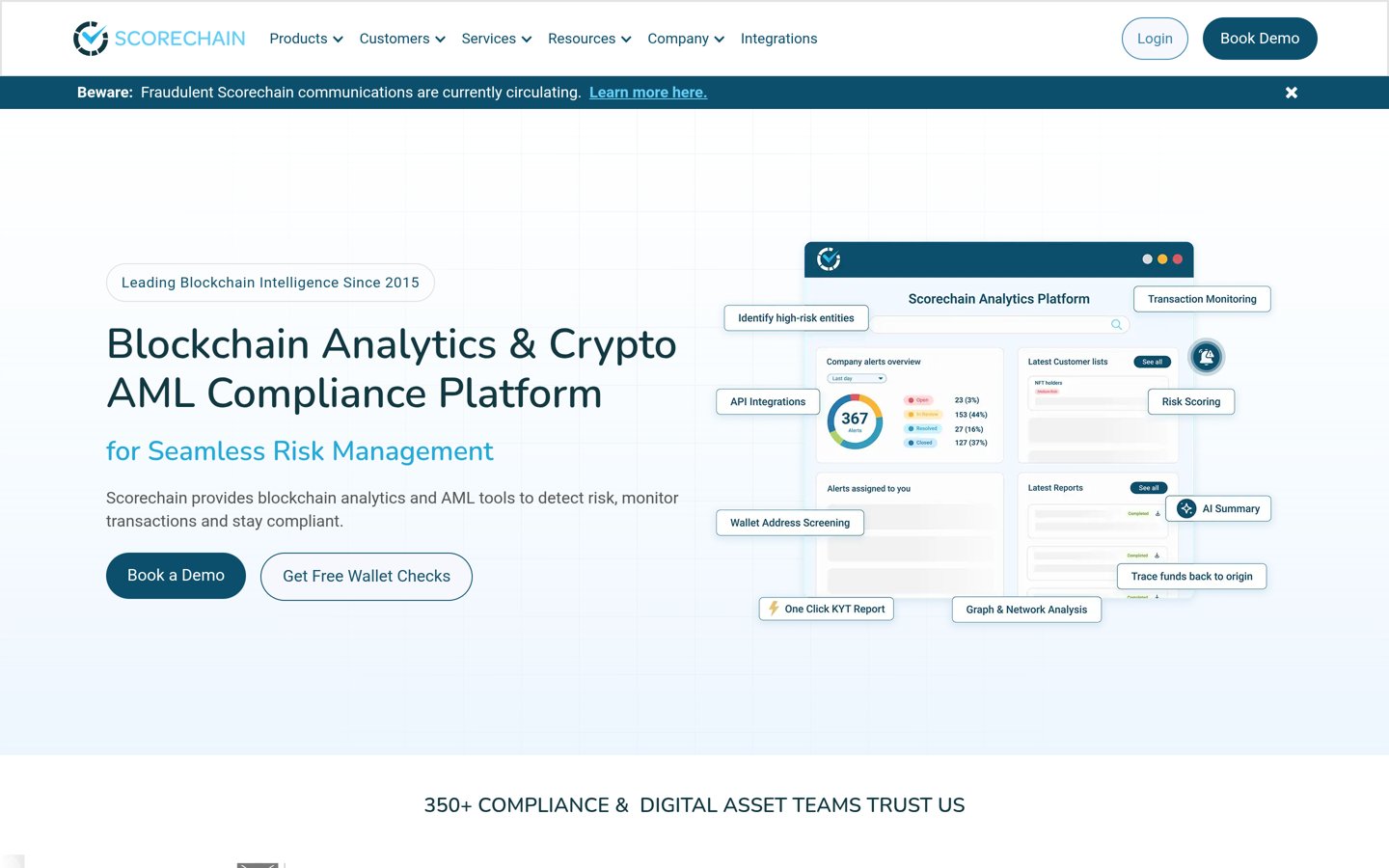
Scorechain is a Luxembourg-based blockchain analytics platform that serves crypto firms needing practical compliance workflows without the weight of the largest platforms. It covers wallet screening, transaction monitoring, sanctions checks and source-of-funds analysis, with an emphasis on European regulatory needs including MiCA and the Travel Rule.
The trade off is scale. Scorechain is smaller than the top vendors, and pricing and coverage vary by product, so a trial and a scoped quote are the right path. It suits a European or mid-market crypto firm that wants compliance coverage it can actually staff and run day to day.
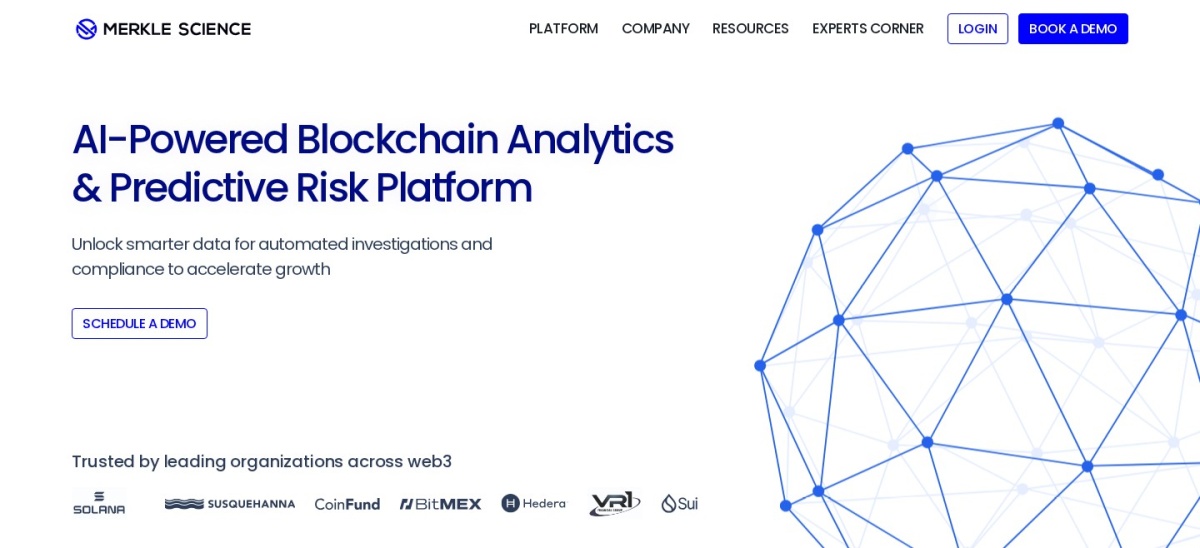
Merkle Science is an AI-powered blockchain analytics platform that approaches risk through behaviour, not only through known bad addresses. Its Compass monitoring product and Tracker investigation tool look for patterns that suggest laundering, fraud or sanctions evasion, even when no address on the path is already flagged.
The trade off is tuning and evidence. Behavioural models need tuning or teams face alert fatigue, and its G2 rating of 4.0 rests on only 2 reviews, so reference diligence matters. It suits a crypto-native product or fintech that wants monitoring tailored to its own flows rather than a generic score.
Enterprise compliance teams need screening at transaction time, monitoring with alerts and a case system for escalations. Shortlist Chainalysis, TRM Labs and Elliptic, and pilot each on your real transaction mix, including bridges and DeFi flows.
Investigators and law firms need tracing depth, clear visualizations and reports to hand to counsel. Crystal Intelligence and TRM Forensics are strong starting points, with Dune useful for early research.
Developers and Web3 teams need flexible data, not a compliance suite. Bitquery gives API access at a published price, while Dune covers on-chain research.
European mid-market firms should trial Scorechain, whose EU-native Travel Rule and MiCA focus fits smaller teams that still need real compliance coverage.
How we chose
We started from every established blockchain intelligence product with a verifiable G2 or Capterra rating, then kept those that cover enterprise compliance, investigation, developer data or public research.
Prices come from vendor pricing pages and vendor-page reads, checked on 24 November 2026. Ratings and review counts come from G2 or Capterra on the same day. Where a vendor publishes no prices, the list says Custom instead of inventing a number.
We left out tools with no verifiable G2, Capterra or Trustpilot rating, including Nansen with only 1 G2 review and Breadcrumbs with no clean rating found. Arkham Intelligence was dropped after its site blocked every screenshot route (Cloudflare check on lx shot, Microlink and thum.io) and replaced with Dune Analytics. No vendor paid for a place, and we do not claim hands-on testing for this list.
How to choose blockchain intelligence software
Start with the job you are hiring for, then compare inside that camp.
Name the job first. Screening and monitoring, investigation, developer data and public research are four different jobs. Pick your camp before you compare tools.
Pilot on your real transaction mix. Headline chain counts do not guarantee deep tracing on every network. Test coverage on the chains and assets you actually see.
Check the review base, not just the score. Several tools here carry 4.8 to 5.0 scores from fewer than 10 reviews. Ask for customer references before signing.
Get quotes in writing. Seven tools here publish no prices. Ask for the quote in writing, including implementation and onboarding fees, before you compare.
FAQ
What is the best blockchain intelligence tool?
Chainalysis is the best blockchain intelligence tool for regulated exchanges, banks and agencies, with Reactor investigations and KYT monitoring in one suite. TRM Labs is the strongest challenger, rated 4.8 from 22 G2 reviews.
What is blockchain intelligence?
It is the use of software to trace cryptocurrency funds, screen wallets and transactions for risk, and monitor activity for fraud, sanctions exposure and money laundering. Tools combine public ledger data with labeled entities, risk models and case workflows.
Can a tool prove who owns a wallet?
No. A tool can show that a wallet interacted with a known exchange, service or labeled entity, but ownership proof usually needs exchange records obtained through legal process, public statements or other off-chain evidence. Treat labels as leads, not conclusions.
How much do enterprise blockchain tools cost?
Most enterprise platforms use quote-based annual contracts priced on transaction volume, chains and modules, so there is no single public price. Developer APIs are the exception, with Bitquery publishing plans from $39 a month.
Which tool is best for a small team?
Dune Analytics is the best free starting point for research, and Bitquery is the best low-cost option for developers who need data. A small compliance team should trial Scorechain or Merkle Science before committing to a large enterprise suite.
Is Elliptic better than Chainalysis?
Neither is better in general. Chainalysis has the deepest attribution database and the most government use, while Elliptic leads on DeFi protocol mapping and explainable risk scores. Pilot both on your real transaction mix before deciding.