Best Biometric Authentication Software in 2026: 9 Tools Compared
WLWPLegible EditorsLast verified 24 Nov 2026How we rank11 min read
★ Short answer
Microsoft Entra ID is the best biometric authentication software for most organisations, with Windows Hello face and fingerprint sign-in plus Conditional Access from $6 a user a month. Pick Auth0 for customer-facing apps, or Cisco Duo if you only need phishing-resistant MFA.
How we make this list: we compare pricing pages, product documentation and public user reviews, then re-check every price before each update. No product paid for a place. Disclosure.
Microsoft Entra ID brings Windows Hello biometrics to every Microsoft 365 organisation, with a free edition included.
Okta FastPass is the strongest passwordless option for vendor-neutral enterprises, rated 4.5 from 1,428 G2 reviews.
Auth0 is the cheapest self-serve start for developers, with biometric login and passkeys from $35 a month.
Fingerprint identifies devices with 4.7 from 391 G2 reviews, but it is device identification, not a login product on its own.
Six of the nine tools are quote-only, so enterprise buyers should get every price in writing.
What biometric authentication should cover
Biometric authentication replaces passwords with something attackers cannot copy: a face, a fingerprint or a voice. It works either as a second factor beside a password or as a complete password replacement through passkeys and FIDO2.
The tools below span two worlds. Enterprise IAM platforms such as Entra ID, Okta, Duo and Ping add biometric MFA and passwordless sign-in to SSO and access management, while specialists such as HYPR, Fingerprint and Incognia focus on identity proofing and liveness.
Liveness detection matters most where fraud is the risk. iBeta PAD Level 2 certification is the minimum bar for proving a face is real and not a photo, a video or a deepfake injection.
Biometric data is sensitive personal data under GDPR and state privacy laws, so check consent, storage and deletion rules before you collect it. Our guide to the best identity verification software covers the onboarding side of the same problem.
Microsoft Entra ID is the identity backbone for Microsoft-centric organisations. Its biometric story centres on Windows Hello for Business face and fingerprint sign-in, FIDO2 security keys and the Authenticator app, all governed by Conditional Access policies.
The trade off is the ecosystem. A free edition ships with Microsoft 365 and Azure, but full passwordless features need the P1 plan at $6 a user a month or P2 at $9. It suits any organisation whose users already live in Windows and Microsoft 365.
Okta is the independent identity leader for workforce and customer identity, and its biometric credentials run through FastPass: device-bound, phishing-resistant sign-in using Face ID and fingerprint. The platform pairs that with adaptive MFA, lifecycle management, identity governance and thousands of pre-built integrations.
The trade off is price and complexity. Okta is enterprise-priced and quote-based, and small deployments find it complex to run. It suits large organisations that need vendor-neutral identity with biometric passwordless sign-in across many apps.
What we like
FastPass biometric passwordless
Huge integration catalog
Recognised IAM leader
Largest review base here at 1,428 reviews
Watch out for
Enterprise pricing, quote only
Complexity for small deployments
No permanent free plan, trial only
Workforce and customer identity are priced separatelyVisit okta.com
03
Cisco Duo
4.5/5on G2 (633 reviews, checked Nov 2026)
Starts at$3/user/mo
Best for phishing-resistant MFA
BiometricsDevice biometrics
Push MFAYes
Device trustYes
Free trialYes
duo.com
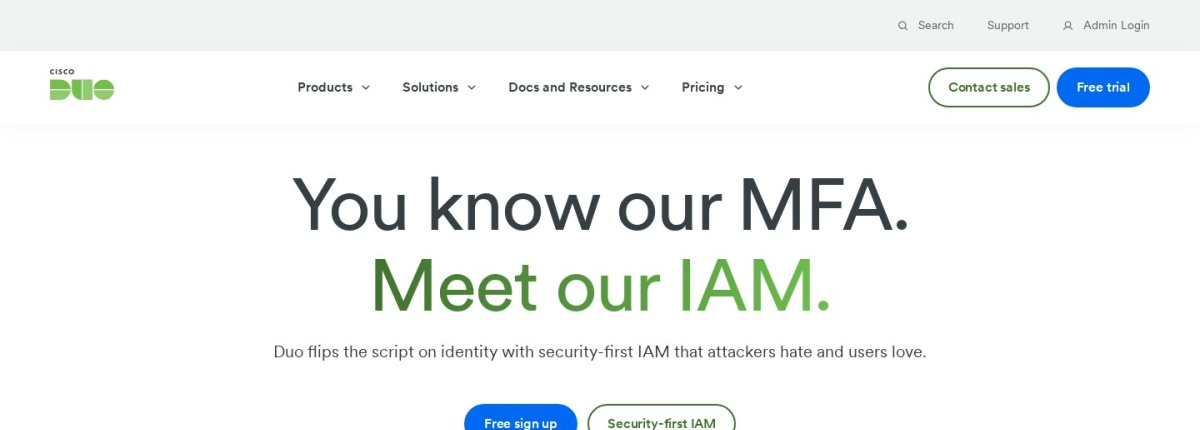
Cisco Duo homepage, captured Nov 2026.
Cisco Duo is a phishing-resistant MFA platform from Cisco, built on push approvals, biometrics on the device and device trust checks. Device trust runs beside identity verification, so a stolen credential on an unknown device still gets stopped, and Duo protects 1.3 billion monthly authentications.
The trade off is depth. Duo protects 1.3 billion monthly authentications and rolls out fast, but deeper IAM features are newer than the MFA core. Essentials costs $3 a user a month. It suits teams that need phishing-resistant MFA without rebuilding their whole identity stack.
What we like
Easiest MFA rollout in this list
Phishing-resistant options included
Device trust built in
1.3 billion monthly authentications
Watch out for
Deeper IAM features are newer
Enterprise tiers are quote-based
No permanent free plan, trial only
Advantage at $6 and Premier at $9 add more controlsVisit duo.com
04
Auth0
4.3/5on G2 (314 reviews, checked Nov 2026)
Paid from$35/mo
Best for developer customer auth
BiometricsPasskeys, WebAuthn
Free planYes
MAUs on Essentials500
SDKs30+
auth0.com
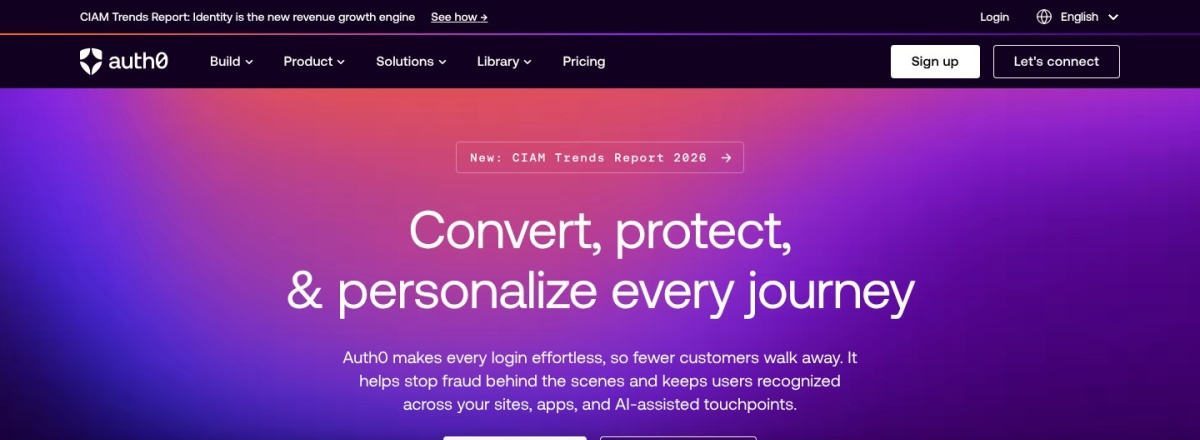
Auth0 homepage, captured Nov 2026.
Auth0 is the developer-first identity platform for customer-facing apps, now a product unit within Okta. Its biometric and passwordless options include passkeys, biometric authentication, magic links and adaptive MFA, all deployable through SDKs and quickstarts, and Essentials costs $35 a month for 500 monthly active users.
The trade off is scale pricing. Costs rise with monthly active users, so a growing app outgrows the Essentials tier quickly. It suits small SaaS teams that need biometric login without a sales call or an enterprise contract.
What we like
Free plan for developers
Passwordless and biometric options out of the box
30+ SDKs and quickstarts
Cheapest self-serve start here
Watch out for
Costs scale with monthly active users
Operates as an Okta product unit
Enterprise tiers are quote-based
Higher tiers add more MAUs and enterprise featuresVisit auth0.com
05
Fingerprint
4.7/5on G2 (391 reviews, checked Nov 2026)
Paid from$99/mo
Best for device identification
Free plan1,000 calls/mo
Visitor IDYes
Accuracy99.5% claimed
APIYes
fingerprint.com
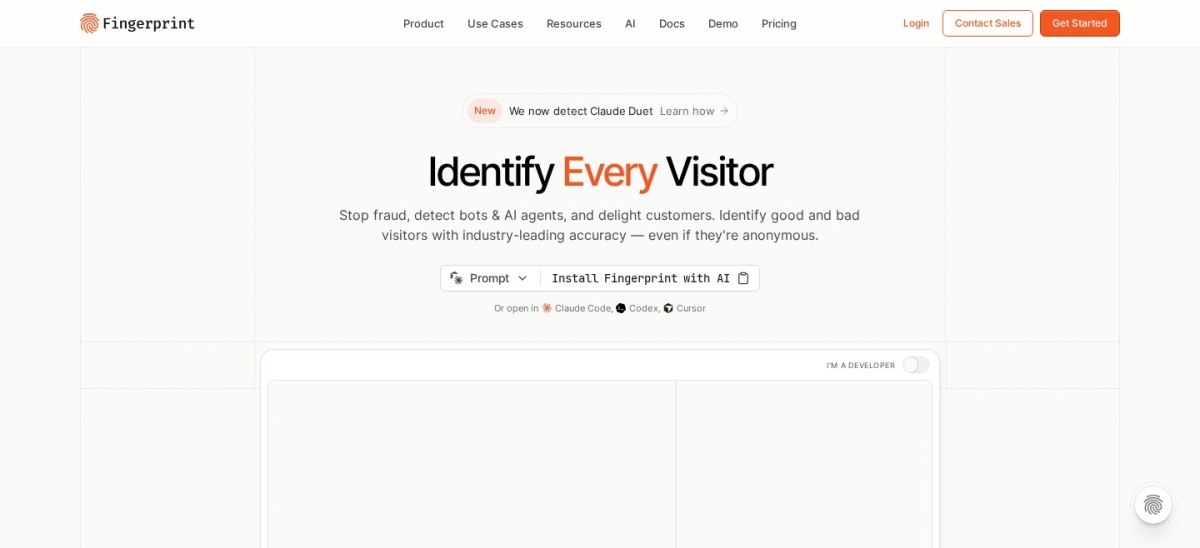
Fingerprint homepage, captured Nov 2026.
Fingerprint is a device identification API, formerly FingerprintJS Pro, that gives each browser or app visitor a stable Visitor ID from more than 100 device signals. It is rated 4.7 out of 5 on G2 from 391 reviews, and the Pro Plus plan costs $99 a month for 20,000 identifications.
The trade off is scope. Fingerprint identifies devices; it is not a login product on its own, so it pairs with an identity platform rather than replacing one. It suits fraud and security teams that need to recognise returning devices and stop account takeover.
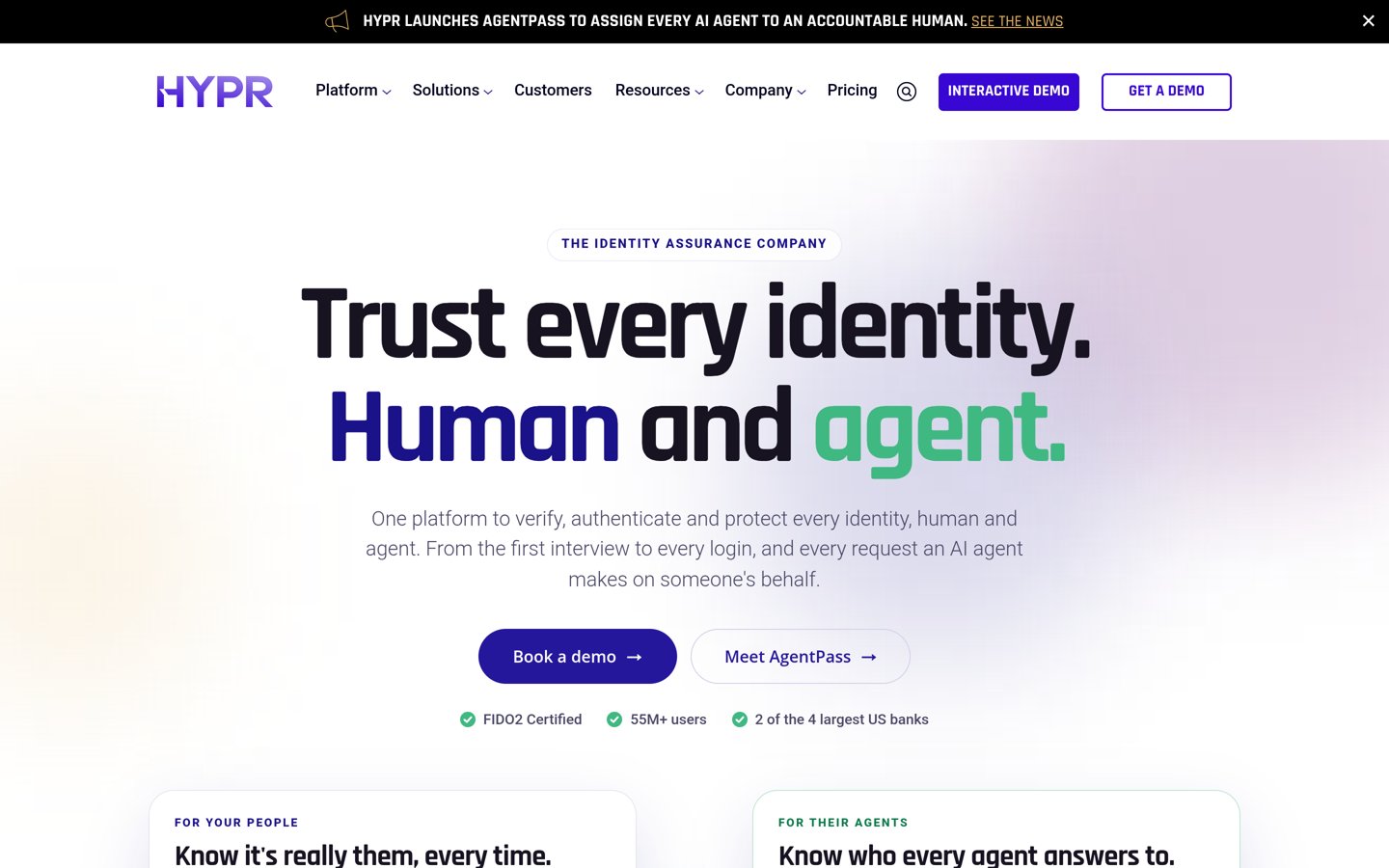
HYPR is a passwordless authentication platform that eliminates passwords entirely using public-key cryptography and device-bound credentials instead of shared secrets. Employees sign in with biometrics on their own devices, which neutralises credential phishing at the source, and the platform is FIDO2 certified.
The trade off is scope and price. HYPR does not publish prices, so every deployment is a quoted contract, and it is a passwordless layer rather than a full IAM suite. It suits enterprises whose goal is password elimination, especially banks and regulated teams.
What we like
True password elimination
FIDO2 certified, phishing-resistant
Strong banking and enterprise adoption
Slots into Okta or Entra ID stacks
Watch out for
No published prices, quote only
No free tier
Narrower scope than full IAM suites
Pricing is quoted per deployment and user countVisit hypr.com
07
Ping Identity
4.4/5on G2 (144 reviews, checked Nov 2026)
PricingCustom/yr
Best for enterprise identity journeys
BiometricsMFA factors
SSOYes
Risk-based authYes
Free trialYes
pingidentity.com
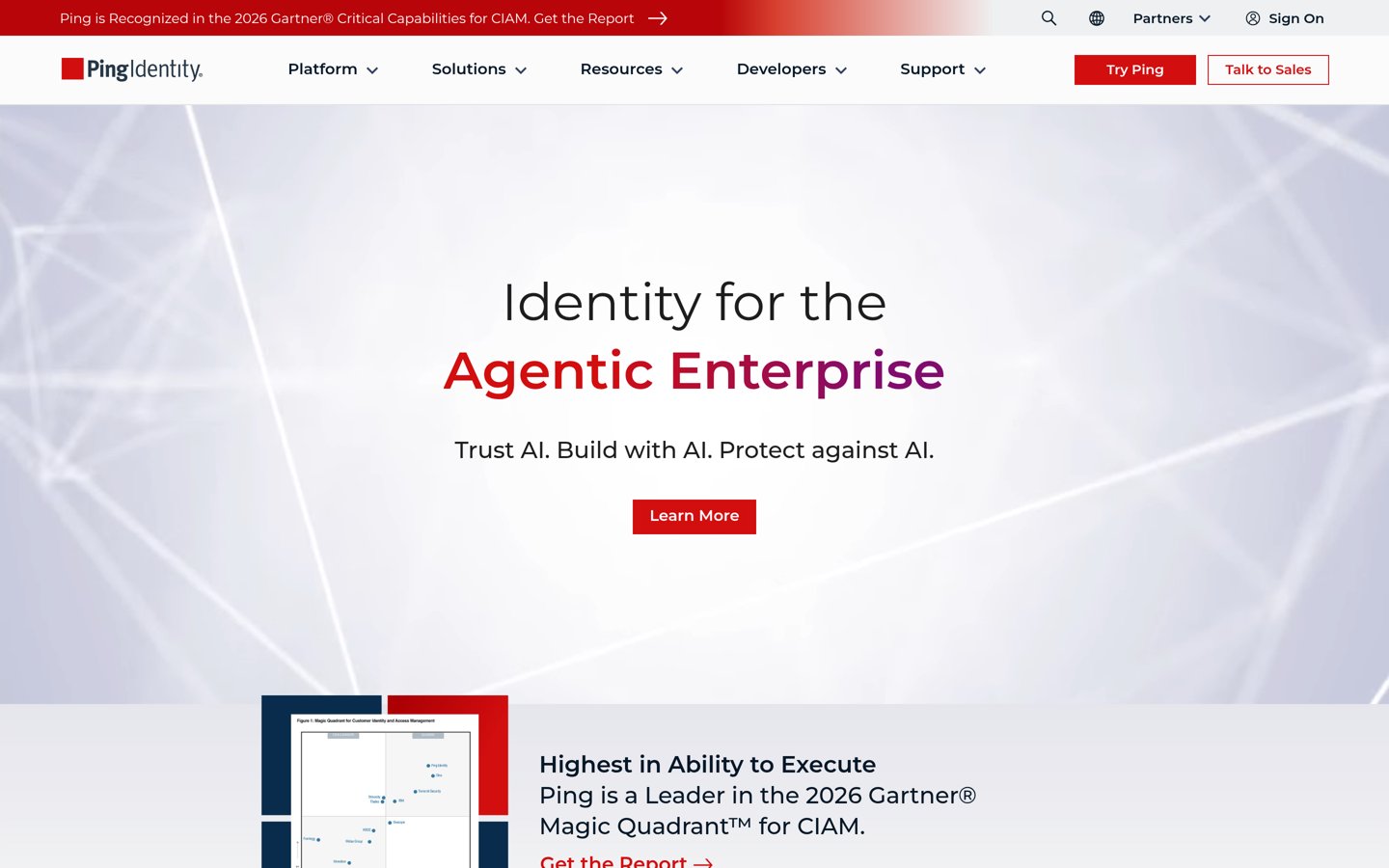
Ping Identity homepage, captured Nov 2026.
Ping Identity is an enterprise identity platform offered through the PingOne cloud, with SSO, MFA with biometric factors, risk-based authentication, identity verification and orchestration of no-code identity journeys. Over half of the Fortune 100 use Ping for identity.
The trade off is enterprise focus. Pricing is quote-based and the platform breadth needs skilled admins to run well. It suits large enterprises that need workforce, customer, partner and AI-agent identity in one platform.
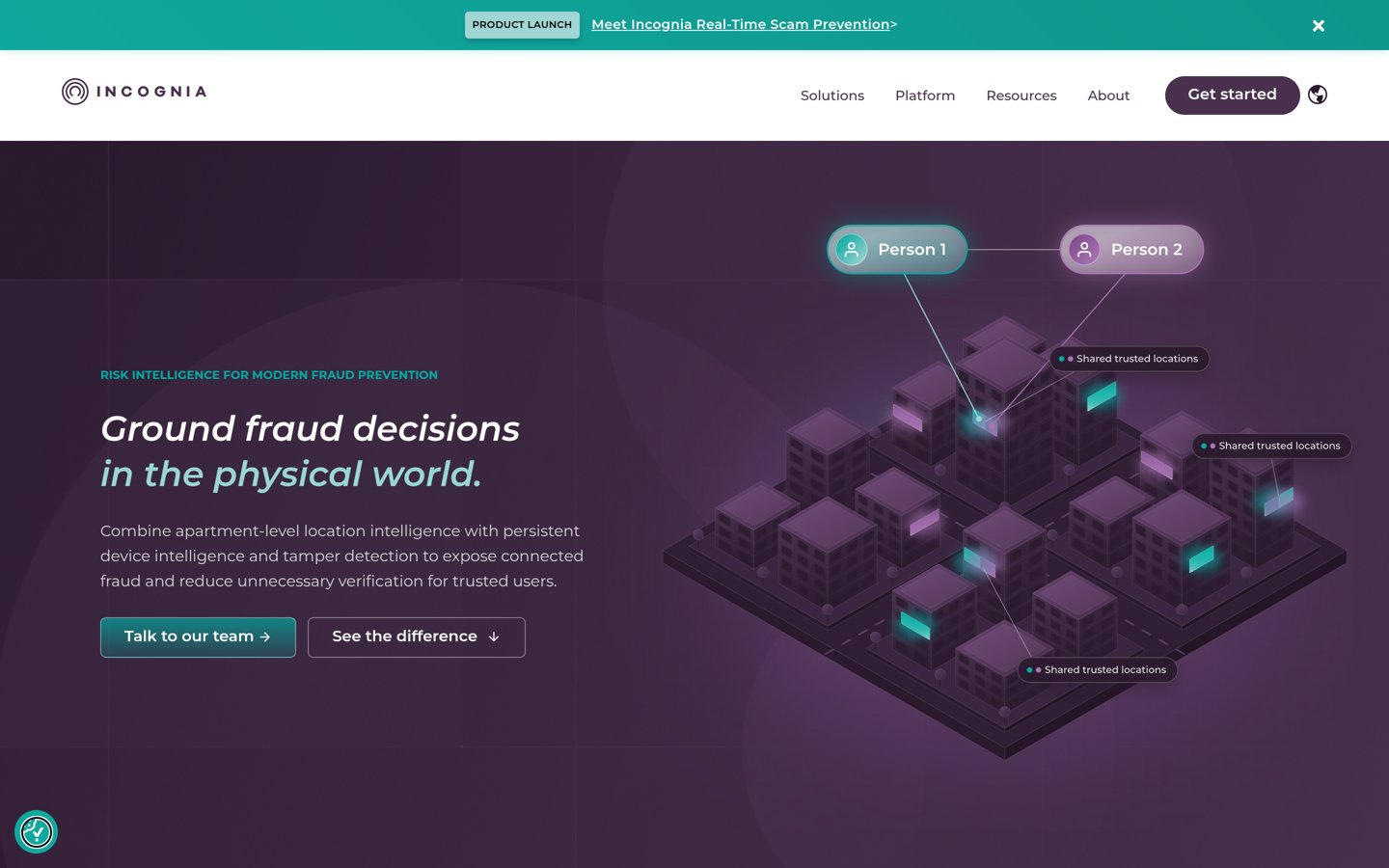
Incognia is a behavioural biometrics and fraud prevention platform that verifies users from location and behaviour signals on their devices. It holds the highest G2 rating in this list at 4.9 out of 5, though from only 36 reviews, and G2 rates its support above Fingerprint's.
The trade off is the thin review base and quote-only pricing. With 36 G2 reviews it is the least proven name here, and every deployment is a quoted contract. It suits fintech and marketplace teams fighting account takeover and fake accounts.
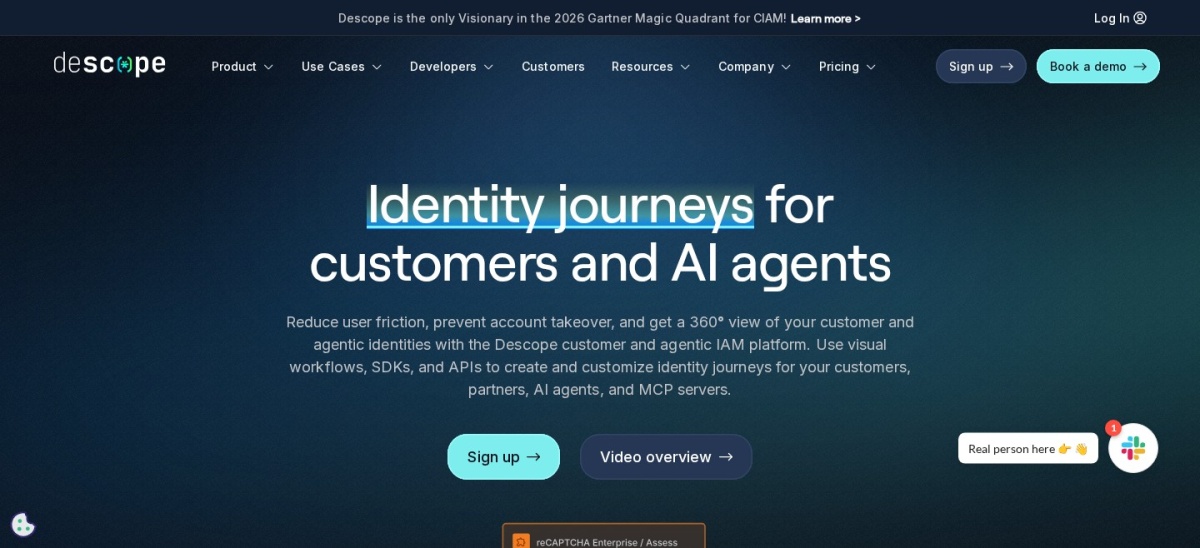
Descope is a drag-and-drop customer identity platform that builds passwordless login flows with biometrics, passkeys and other methods without writing auth code. It is rated 4.8 out of 5 on G2 from 80 reviews and featured in 74 G2 reports in Fall 2026, and paid plans start at $249 a month.
The trade off is price. At $249 a month it costs far more than Auth0 Essentials at $35, so it only pays off for teams that value the no-code flow builder. It suits product teams that want to ship passkey login fast without an identity specialist.
IAM platforms vs biometric specialists: which side fits
Workforce sign-in with biometrics points to Entra ID, Okta, Cisco Duo or Ping Identity. These platforms add biometric MFA to SSO, lifecycle management and audit tooling enterprises already expect.
Customer-facing apps favour Auth0 or Descope, where passkeys and biometric login ship as SDKs and no-code flows. Identity proofing and onboarding lean toward Daon or 1Kosmos, which specialise in liveness and document checks.
Password elimination as a standalone goal is HYPR's territory, while physical plus digital access is HID Global's. When compliance drives the project, prioritise certified biometrics and the audit trail, not just the login screen.
Fingerprint and Incognia are fraud tools, not login products. They recognise devices and behaviour, and they pair with an identity platform rather than replacing one.
How we chose
We started from every established biometric authentication product with a verifiable G2 rating, then kept those that cover workforce login, customer login or fraud defence with biometrics.
Prices come from vendor pricing pages and vendor-page reads, checked on 24 November 2026. Ratings and review counts come from G2 on the same day. Where a vendor publishes no prices, the list says Custom instead of inventing a number.
We left out tools with no verifiable G2, Capterra or Trustpilot rating, including Daon and HID Global. No vendor paid for a place, and we do not claim hands-on testing for this list.
How to choose biometric authentication software
Start with who signs in, then match the tool to that audience.
Name the audience first. Workforce sign-in points to Entra ID, Okta or Duo. Customer apps point to Auth0 or Descope. Fraud defence points to Fingerprint or Incognia.
Check the liveness bar. If fraud is the risk, ask for iBeta PAD Level 2 certification and injection-attack defence, not just a face match.
Pilot on your real device mix. Biometric behaviour varies across iOS, Android and Windows, so test enrolment friction on the devices your users actually carry.
Check the privacy rules before you collect. Biometric data is sensitive personal data under GDPR and state privacy laws, so confirm consent, storage and deletion rules with legal first.
FAQ
What is the best biometric authentication software?
Microsoft Entra ID is the best biometric authentication software for most organisations, with Windows Hello face and fingerprint sign-in from $6 a user a month. Okta is the best vendor-neutral alternative, rated 4.5 from 1,428 G2 reviews.
Is biometric authentication safer than passwords?
Yes, when it is done well. Device-bound biometrics and passkeys cannot be phished, stolen or reused like passwords, and liveness detection stops photos and deepfakes. The biometric itself should stay on the device, not in a central database.
What is the cheapest biometric authentication software?
Auth0 Essentials is the cheapest self-serve start at $35 a month for 500 monthly active users, with a free plan for early apps. Microsoft Entra ID has a free edition included with Microsoft 365.
What is the difference between Auth0 and Okta?
Auth0 is Okta's developer-first platform for customer-facing apps, with passkeys and biometric login from $35 a month. Okta is the enterprise workforce platform, with FastPass biometric sign-in and lifecycle management, priced by quote.
Do I need liveness detection?
Yes, if fraud is the risk. A face match alone cannot tell a live person from a photo, a video or a deepfake injection. Look for iBeta PAD Level 2 certification, which 1Kosmos and Daon both carry.
Can biometric authentication replace passwords completely?
Yes, with passkeys and FIDO2. HYPR eliminates passwords entirely with device-bound credentials, and Entra ID, Okta and Auth0 all support passkey login. Most teams keep a fallback method for lost or replaced devices.