Duolingo is the best app to learn English for most beginners, with a full free course, short daily lessons and streaks that build a habit. Pick Babbel for structured grammar lessons and Busuu for corrections from native speakers.
How we make this list: we compare pricing pages, product documentation and public user reviews, then re-check every price before each update. No product paid for a place. Disclosure.
Duolingo is the best free start, with a full English course, streaks and 500M+ learners worldwide.
Babbel is the strongest structured course, with grammar explained in plain English from $8.95 a month.
Busuu adds what solo apps miss: corrections from native speakers on your writing and speaking.
ELSA Speak is the pronunciation specialist, with sound-by-sound AI feedback and IELTS mock tests.
HelloTalk is the only free way here to practise with real people, but it has no lessons of its own.
What an English learning app should cover
English learners need four skills: reading, writing, listening and speaking. No single app covers all four well, so the best plan pairs a course app with a speaking app.
Start free. Duolingo, Busuu, Memrise and ELSA all teach real English without a card, and a month of free use shows whether the method fits before you pay.
Speaking is the gap most apps leave. ELSA coaches pronunciation, Pimsleur gets you talking by ear, and HelloTalk connects you with native speakers. Our guide to the best AI writing tools covers the writing side.
Watch the billing. Most apps here charge less per month on a yearly plan, and several renew automatically after a free trial, so check the renewal date when you sign up.
Duolingo is the most-downloaded language app in the world, with a free English course built around short lessons, streaks and leaderboards. The free plan covers the full course with ads and a daily hearts limit. Super costs $6.99 a month billed yearly and removes ads and the hearts limit.
The trade off is depth. Duolingo explains little grammar and gives almost no real conversation practice, so learners stall around intermediate level. It suits beginners who want a free daily habit and a gentle start before adding a structured course.
Babbel is a structured language course with short lessons that teach practical conversation in a sensible order. Each lesson explains grammar in plain English and adds speech recognition for pronunciation. The 12-month plan costs $8.95 a month and covers all 14 languages.
The trade off is that there is no real free plan, only the first lesson of each course, and speaking with a person means adding a tutor. It suits adults who want a clear path from beginner to upper intermediate and will study for six months or more.
Busuu is a structured English course aligned to CEFR levels from A1 to B2, with grammar explained rather than guessed. The free plan covers basic lessons in one language. Premium costs $6.08 a month billed yearly and opens the full course, offline mode and AI conversation practice.
The trade off is that the free tier opens only part of each unit, so progress is slow without paying. It suits learners who want a classroom-like course plus corrections from native speakers on their writing and speaking.
Rosetta Stone is an immersion course that teaches English with pictures, audio and speech practice and no translation into your own language. Every subscription now covers all 25 languages. The yearly plan costs $159, or $13.25 a month, with a 14-day money-back guarantee.
The trade off is that the method explains almost no grammar, so beginners can feel lost in the first weeks. It suits visual, pattern-based learners who want a calm, ad-free app and may study more than one language.
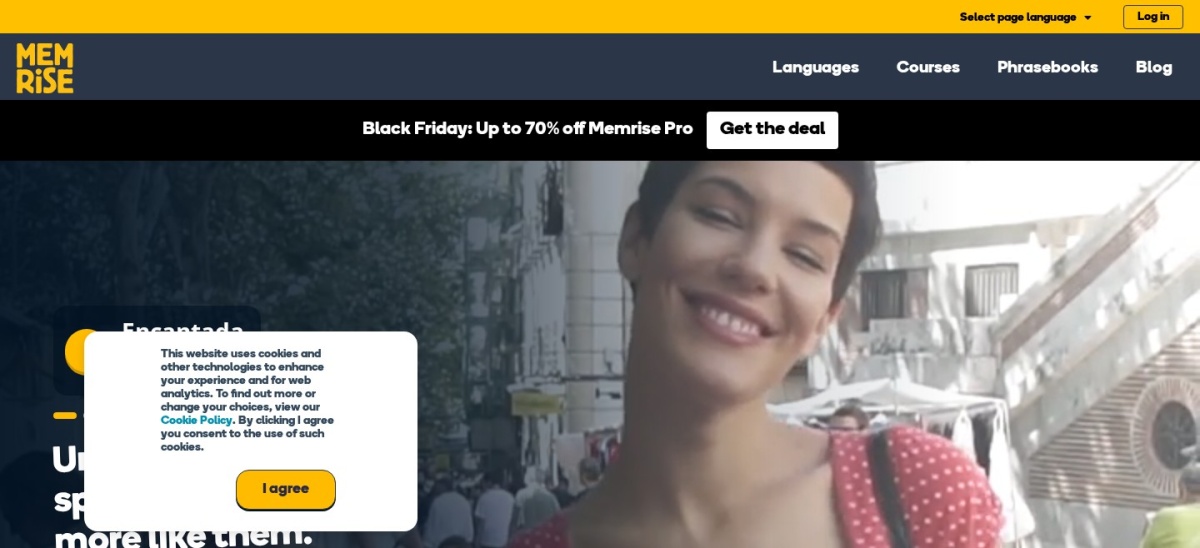
Memrise is a vocabulary app that teaches English the way people actually speak it, using short video clips of native speakers instead of flat synthetic audio. Core vocabulary courses are free with no time limit. Pro costs $5.17 a month billed yearly and unlocks premium content and removes ads.
The trade off is depth. Some advanced grammar content sits behind Pro, and the language list is smaller than Duolingo. It suits learners who want to understand street English and remember phrases with spaced review.
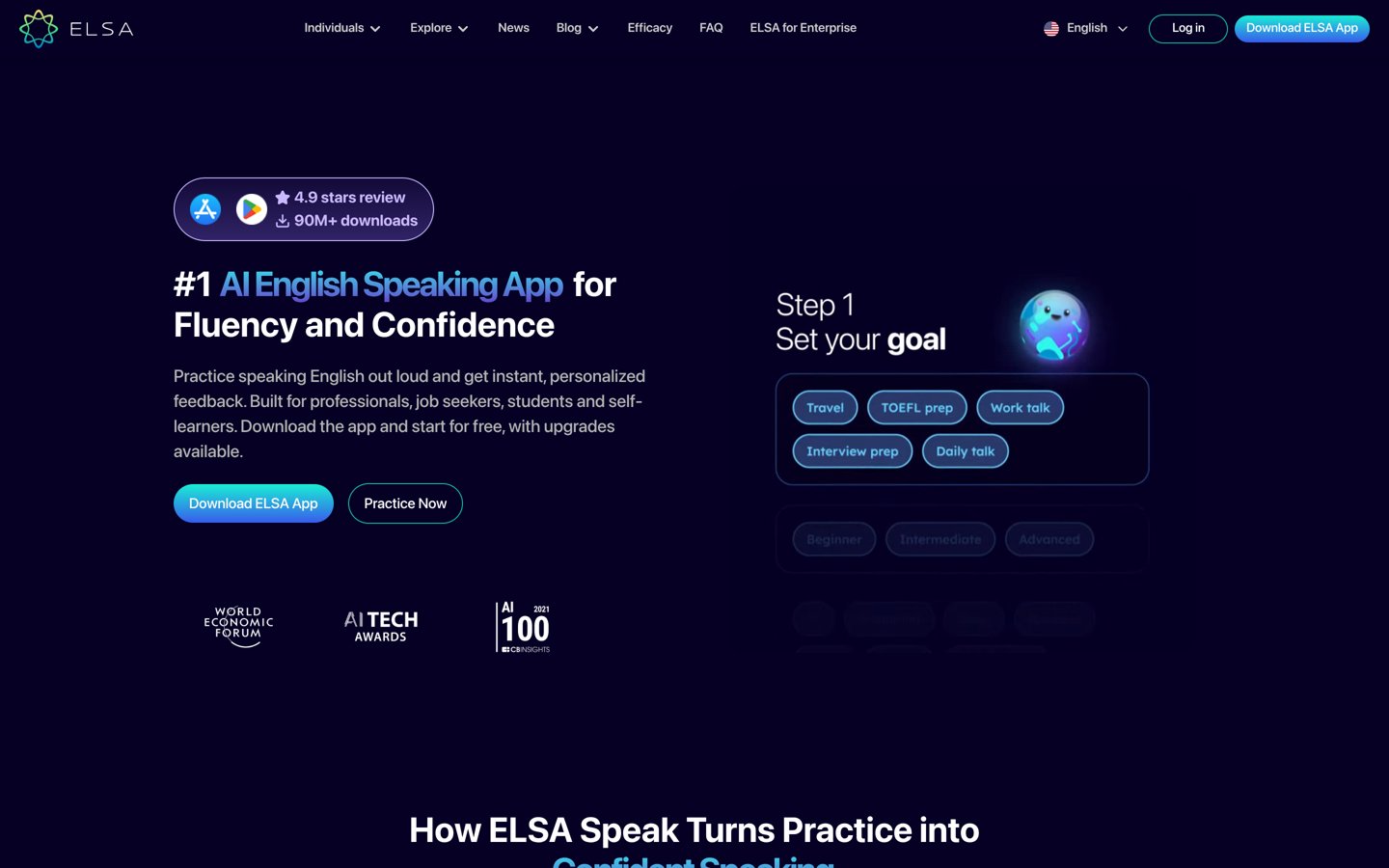
ELSA Speak is an AI English coach that scores your pronunciation sound by sound and tells you exactly which sounds to fix. The free plan covers basic lessons with ads. Pro costs $89.99 a year and adds AI chats, role-play and test preparation for IELTS, TOEFL and TOEIC.
The trade off is that ELSA teaches speaking only, with no full course in grammar or reading. It suits learners who already know English basics and want to sound clearer for work, study or a speaking test.
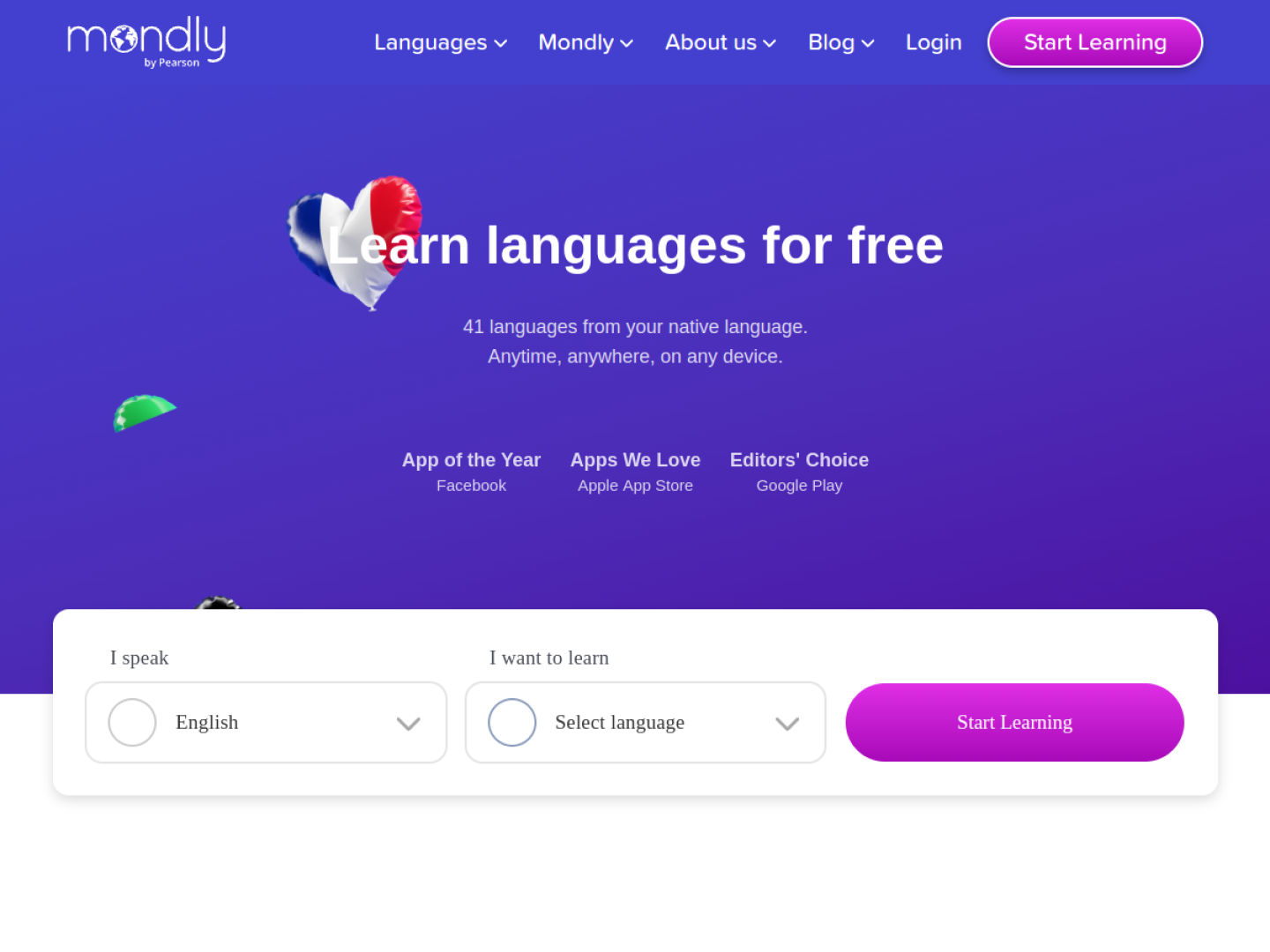
Mondly is a gamified English app with short daily lessons, speech recognition and a chatbot that rehearses common situations. The free plan covers one daily lesson and the first unit. Premium costs $6.24 a month billed yearly on the App Store and opens all lessons in 41 languages.
The trade off is depth. Lessons stay at beginner to upper-intermediate level, and the chatbot accepts off-topic replies without correcting you. It suits casual learners who want a quick daily lesson across more than one language.
4.2/5on Trustpilot (211 reviews, checked Nov 2026)
Starts at$14.95/mo
Best for speaking by ear
Free plan7-day trial only
Audio-Only plan$14.95/mo, one language
Premium plan$19.95/mo, adds Voice Coach
Lessons30 minutes, listen and respond
pimsleur.com
Pimsleur homepage, captured Nov 2026.
Pimsleur is an audio-first English course built around 30-minute listen-and-respond lessons that get you speaking from day one. The Audio-Only plan costs $14.95 a month for one language. Premium costs $19.95 a month and adds an AI Voice Coach for pronunciation.
The trade off is that Pimsleur is weak on reading, writing and grammar, and costs about twice what Babbel charges for a year. It suits commuters and auditory learners who want to hold simple conversations fast.
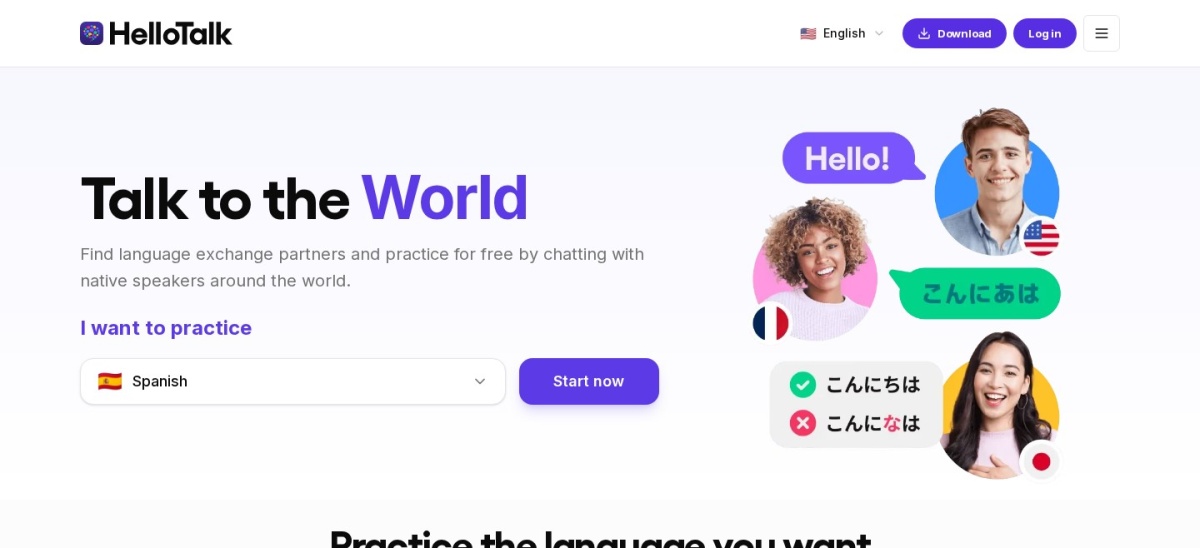
HelloTalk is a language exchange app where you chat or call native English speakers who want to learn your language in return. The free plan keeps text and voice chat uncapped, with daily caps on translation and AI correction. VIP costs $6.67 a month billed yearly and lifts those caps.
The trade off is that there are no structured lessons, and practice quality depends on the partners you find. It suits learners who already have the basics and want real conversation rather than more drills.
Free plans cover the basics well. Duolingo's full course is free, Busuu's basic lessons are free, and HelloTalk's chat is free.
Paid plans mostly remove limits and add feedback. You get offline mode, unlimited hearts, AI conversation and pronunciation coaching.
Pay only when you hit a wall. If the free plan still teaches you something new every day, keep using it and add a tutor later.
How we chose
We started from the English learning apps with the largest user bases and a verifiable rating on G2 or Trustpilot, then kept the 9 that teach English as a full course or a speaking skill.
Prices come from each vendor's pricing page, app-store listings or vendor-supplied G2 pricing, checked on 25 November 2026. Ratings and review counts come from G2 or Trustpilot on the same day. Where a vendor shows a sale, the list shows the regular price.
We left out tutor marketplaces that charge per lesson and apps with no verifiable rating. No vendor paid for a place, and we do not claim hands-on testing for this list.
How to choose an app to learn English
Start with your weakest skill, then pick the app that trains it.
Pick your weakest skill. If you cannot speak, start with ELSA, Pimsleur or HelloTalk. If you cannot read, start with Duolingo or Babbel.
Try the free plan for two weeks. A streak that survives two weeks is the best sign the app fits. Drop any app you keep avoiding.
Add one speaking app. A course app plus a speaking app covers more than any single app. Pair Duolingo with HelloTalk, or Babbel with ELSA.
Check the yearly price before you commit. Yearly plans cost far less per month, but they renew automatically. Set a reminder before the renewal date.
FAQ
What is the best app to learn English?
Duolingo is the best pick for most beginners. Its free course covers the basics with short daily lessons, streaks and leaderboards, and it is rated 4.5 out of 5 across 145 G2 reviews.
Can I learn English for free with an app?
Yes. Duolingo's full course is free with ads, Busuu's basic lessons are free, and HelloTalk's chat with native speakers is free. Paid plans mainly remove ads and limits and add feedback, so start free and pay only when you hit a wall.
Which app is best for English speaking practice?
ELSA Speak is best for pronunciation, with sound-by-sound AI feedback and IELTS mock tests. Pimsleur gets you speaking by ear in 30-minute audio lessons, and HelloTalk connects you with native speakers for real conversation.
Is Babbel or Duolingo better for English?
Babbel is better if you want structured grammar lessons explained in plain English, while Duolingo is better if you want a free daily habit. Many learners use Duolingo free for the habit and Babbel paid for the structure.
How long does it take to learn English with an app?
It depends on your starting level and daily time. With 15 to 30 minutes a day, most learners hold simple conversations after three to six months, but reaching fluency takes a year or more plus real speaking practice.
Do these apps teach British or American English?
Most teach American English by default, including Duolingo, Babbel and ELSA. Busuu and Rosetta Stone offer both, and HelloTalk lets you pick partners from any country, so you can practise the accent you need.
SaaS SEO and WordPress specialist with about 8 years of experience. Rakib compares WordPress plugins, themes, hosting and software using public pricing, documentation and user reviews. See how we rank.