Todoist is the best app for ADHD for most people, with a free plan covering 5 projects, reminders and 3 filter views, and Pro at 60 dollars a year. Focusmate adds body doubling with 3 free sessions a week, while TickTick packs a calendar, habits and a focus timer into one app for under 50 dollars a year.
How we make this list: we compare pricing pages, product documentation and public user reviews, then re-check every price before each update. No product paid for a place. Disclosure.
Todoist is the top pick: its free plan covers 5 projects, reminders and 3 filters, and Pro costs $60 a year.
Focusmate gives 3 body-doubling sessions a week free, and unlimited sessions cost $96 a year.
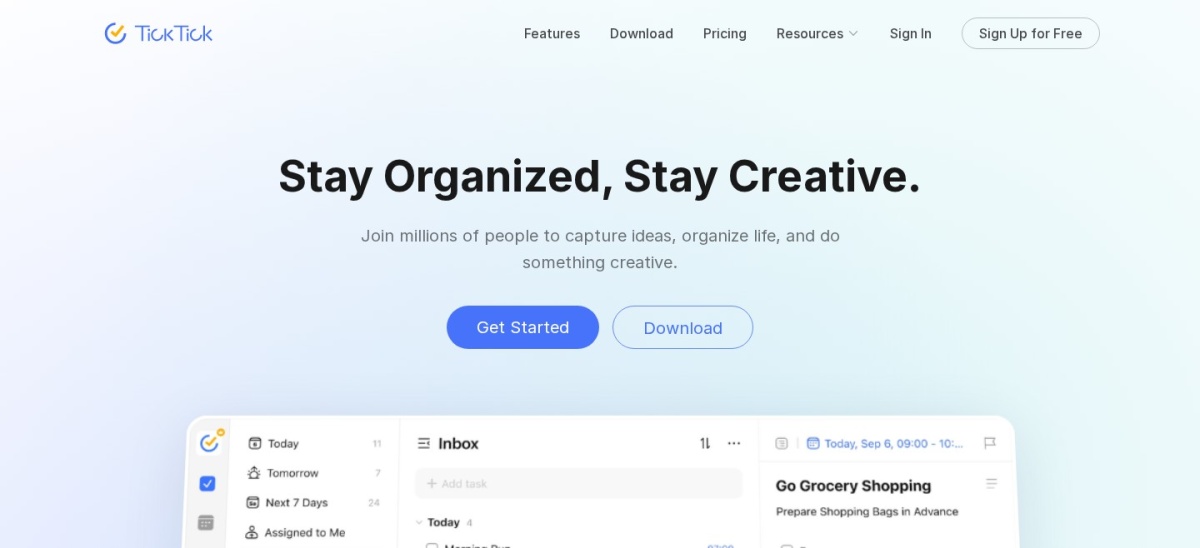
TickTick is the best value paid plan at $49.99 a year, with a calendar, habits and a Pomodoro timer included.
Tiimo and Forest tackle time blindness and phone distraction, but their prices vary by app store.
All 9 tools have a free tier or a trial, and paid plans run from $35.99 to $99.99 a year.
Pick the app by the job that fails
ADHD rarely fails in one place. Some days the problem is starting, other days it is seeing time pass, holding a list together, or staying off the phone once you have started.
That is why this list is organised by job, not by brand. A visual planner such as Tiimo helps when time feels invisible, a body-doubling service such as Focusmate helps when starting is the wall, and a blocker such as Freedom helps when the phone keeps winning.
Prices matter here because most of these apps sell through app stores, where the same plan can cost a different amount by country and platform. We show the yearly US price from each vendor's pricing page where one is published, and say so when the figure comes from an app store listing instead.
None of these apps diagnose or treat ADHD. They are planning and focus tools, and they work best beside the routines and support you already have. Our guide to the best focus apps covers the wider focus-tool field if you want more options.
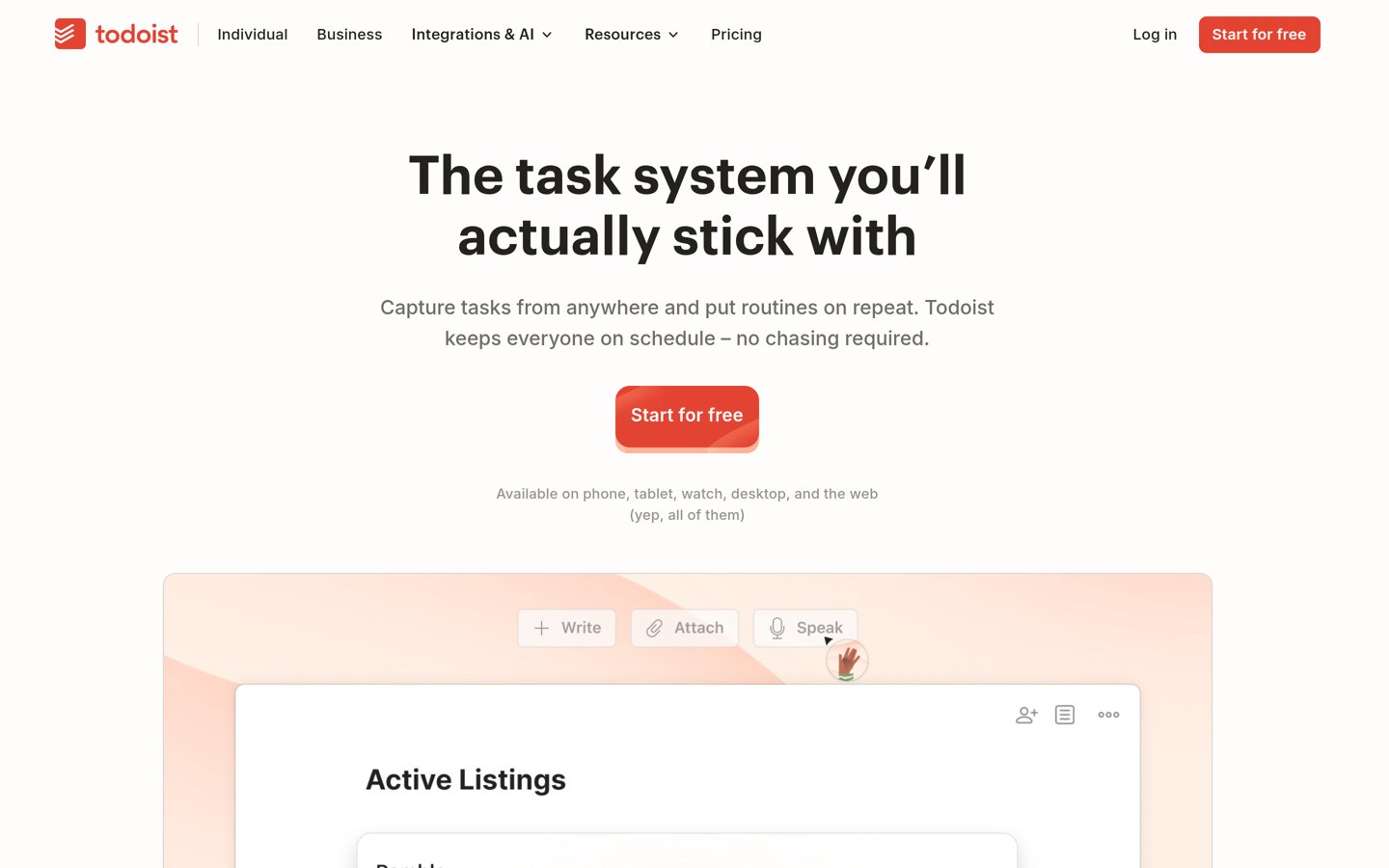
Todoist is a to-do list app that turns a scattered day into one list you can trust, and it is the most established tool in this list. The free Beginner plan covers 5 projects, quick add, task reminders, 3 filter views and a week of history, which is enough to run a daily routine without paying.
The trade off is that the features that help most with ADHD cost extra. Calendar layout, task duration and custom reminders need Pro at $60 a year, so the free plan can feel thin once your system grows. It suits people who want one reliable list for everything and will pay for the calendar view.
What we like
Free plan covers 5 projects and reminders
Fast capture with natural language dates
Works on every platform, including watches
Watch out for
Calendar layout and task duration are paid
No built-in focus timer or blocking
Pro adds calendar layout, task duration and 150 filtersVisit todoist.com
02
Focusmate
4.9/5on Trustpilot (340 reviews, checked Nov 2026)
Paid from$96/yr
Best for body doubling
Free sessions3 per week
Session lengths25, 50 or 75 min
Camera onYes, required
Paid planPlus, $96/yr
focusmate.com
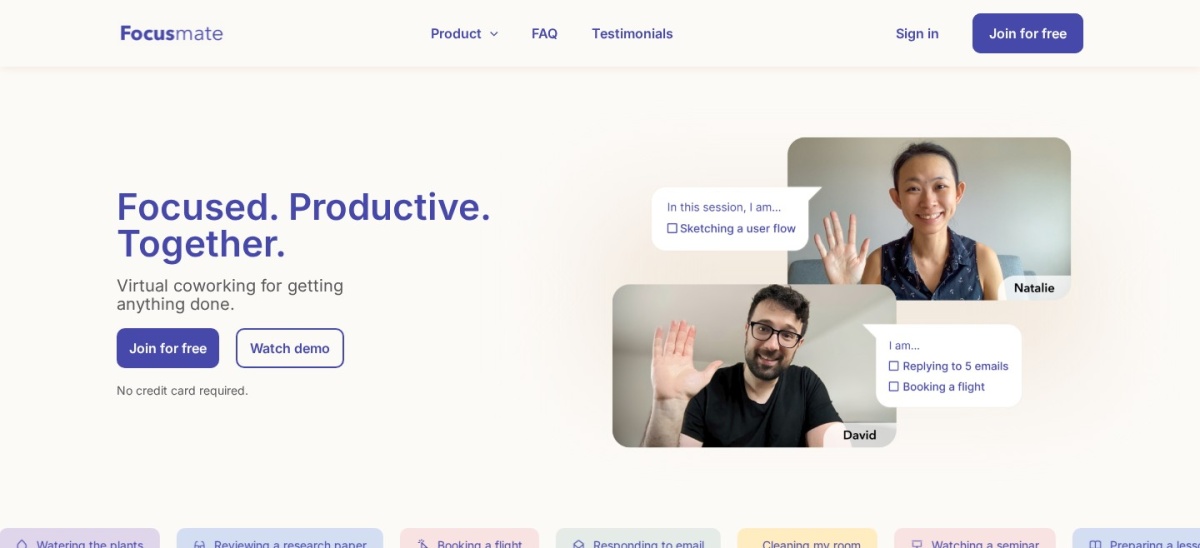
Focusmate homepage, captured Nov 2026.
Focusmate is virtual coworking built around body doubling, the technique of working beside another person so starting feels easier. You book a session of 25, 50 or 75 minutes, get paired with a stranger, state your goal on camera, then work quietly and check in at the end. The free plan gives 3 sessions a week with no card required.
The trade off is the camera. Sessions run with cameras on the whole time, which is the point for many people but a deal-breaker for others, and there is no native app. Plus costs $96 a year for unlimited sessions. It suits people whose main problem is starting, not planning.
TickTick is a to-do list, calendar, habit tracker and Pomodoro timer in one app, which makes it the best value pick in this list. The free plan covers 9 lists with 99 tasks each, natural language input, reminders and 5 habits. Premium adds multiple calendar views, task duration, AI features and 299 lists for $49.99 a year.
The trade off is density. TickTick packs so much into one screen that the interface can feel crowded, and the calendar view that ties it together is a paid feature. Premium is sold as an annual plan only, with no monthly option. It suits people who want one app for tasks, habits and focus sessions.
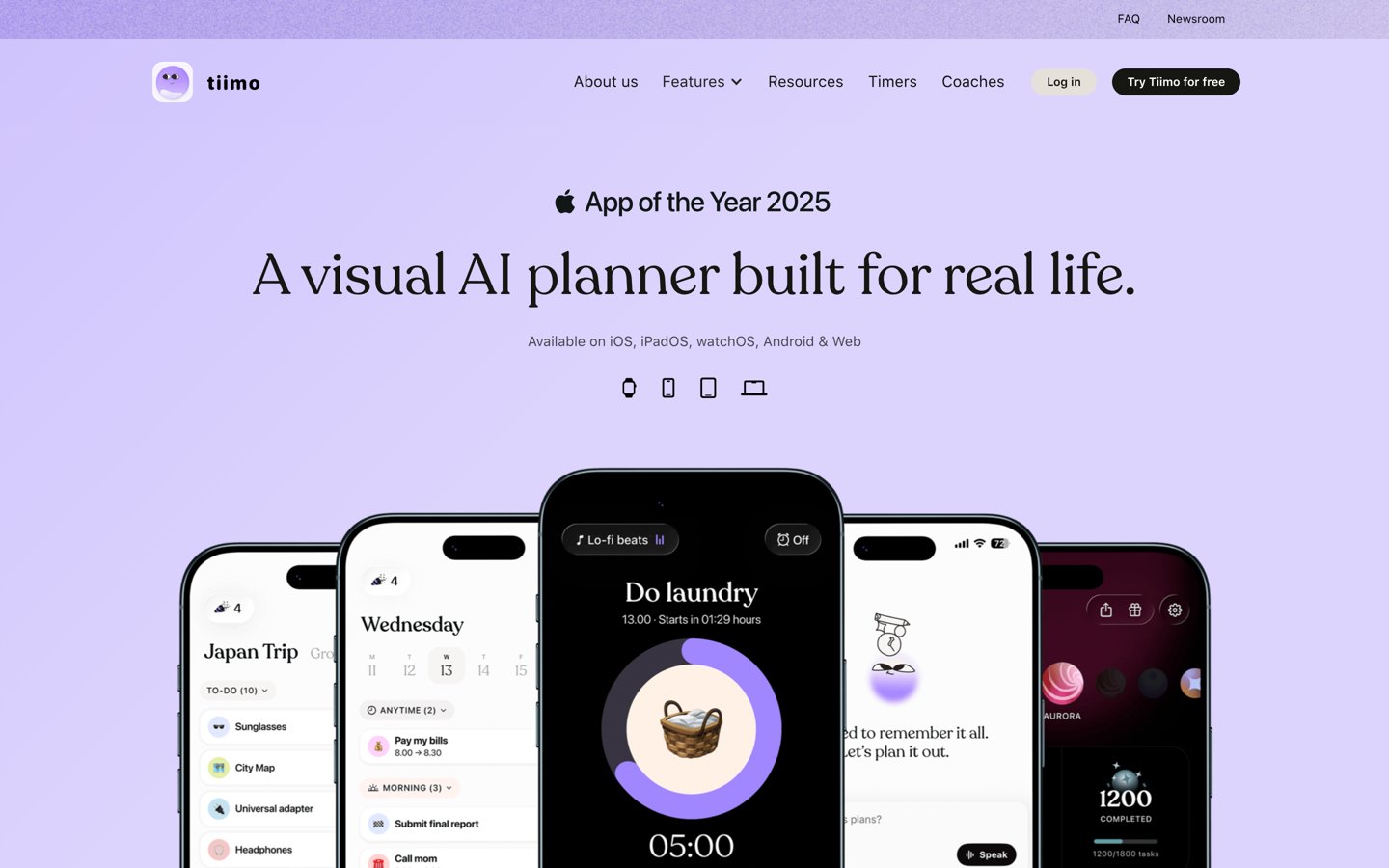
Tiimo is a visual day planner built for ADHD and autistic brains, showing the day as a coloured timeline instead of a text list. Each task is a block with an icon and a countdown, and the AI co-planner can split a task into timed steps. Apple named it iPhone App of the Year 2025, and its free mobile plan covers the basic planner.
The trade off is price and the thin review record. Tiimo publishes no fixed US price on its own site, so the $54 a year figure comes from the App Store listing and varies by store and region. Its Trustpilot score rests on only 7 reviews. It suits people who think in pictures and want their day as blocks, not lists.
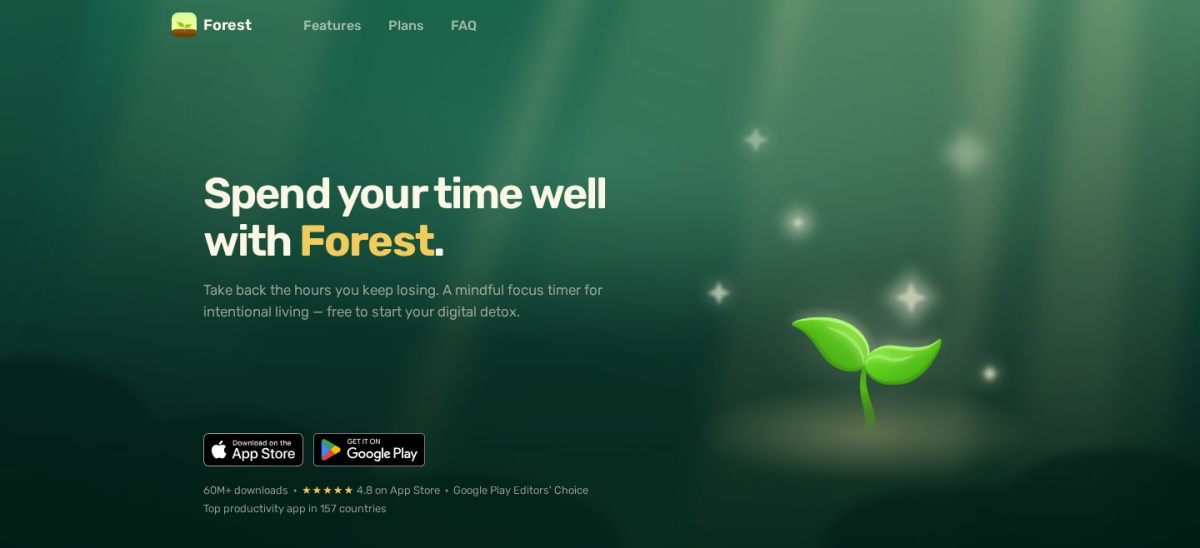
Forest is a focus timer that grows a virtual tree while you stay off your phone, and the tree dies if you leave early. The free timer includes Deep Focus app blocking, focus tracking and shared Plant Together rooms. Forest says more than 60 million people have used it, and over 2 million real trees have been planted through its charity partner.
The trade off is that it lives on your phone. Forest has no desktop app, only Chrome and Firefox extensions, and the vendor publishes no Plus price on its own site, so the $35.99 a year figure comes from the App Store. It suits people whose main distraction is the phone in their hand.
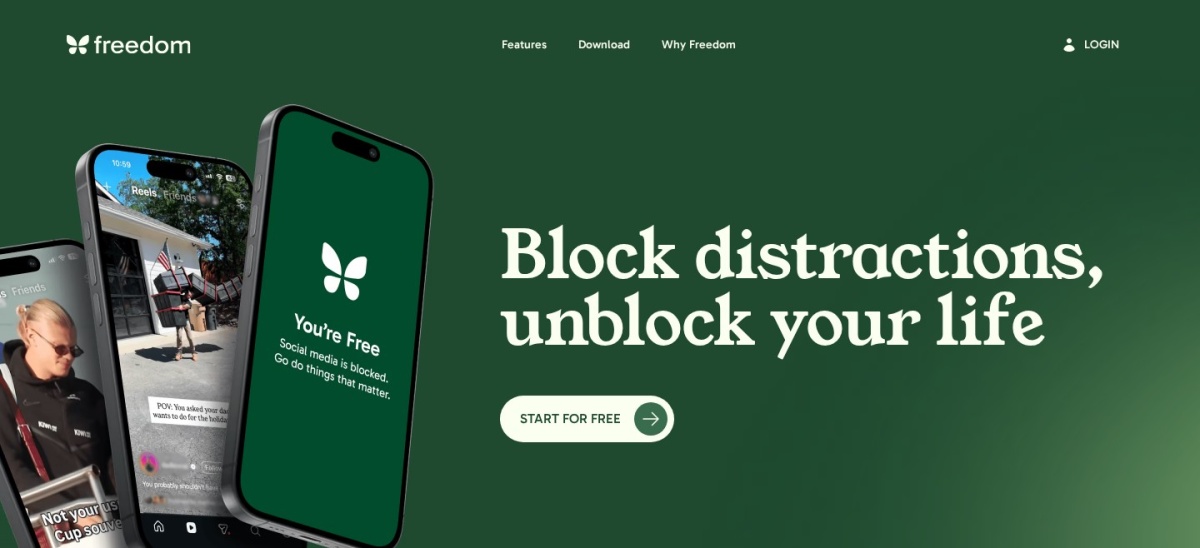
Freedom is a website and app blocker that syncs one blocklist across Mac, Windows, iOS, Android and Chromebook. The free plan blocks sites, apps or the whole internet in sessions of up to 2 hours on unlimited devices. Premium adds scheduling, recurring sessions and Locked Mode, which stops you ending a session early.
The trade off is that the free plan cannot run itself. Scheduling and recurring sessions need Premium at $39.96 a year, and iPhone sessions can be fiddly, sometimes waiting until you open the app. It suits people who switch between phone and computer and need one blocklist everywhere.
What we like
One blocklist across all your devices
Free sessions up to 2 hours
Locked Mode stops early exits
Watch out for
Scheduling needs Premium
iPhone sessions can be fiddly
Monthly billing costs more than double the yearly rate
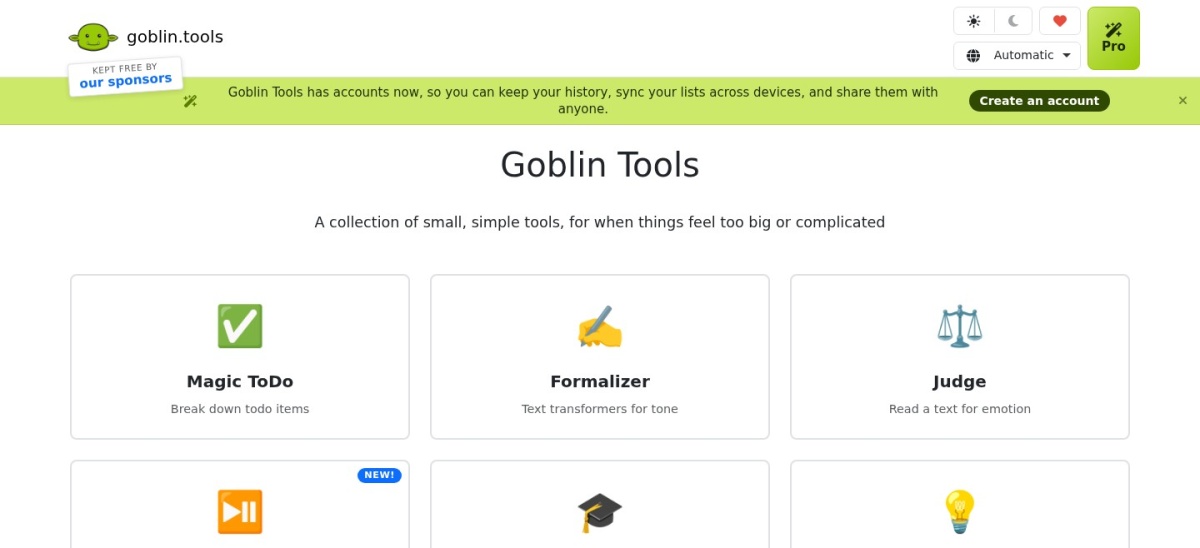
Goblin Tools is a set of nine small AI tools built for neurodivergent users, led by Magic ToDo, which breaks an overwhelming task into small steps. The site also has an Estimator for how long a task takes, a Compiler that turns a brain dump into a list, and a Formalizer for rewriting tone. All nine tools are free in the browser with no account.
The trade off is memory. Without an account and the $3 a month Pro tier, nothing you generate is saved, so closing the tab loses the breakdown, and the AI steps are guesses that need checking. It suits the moment a task feels too big to start, rather than running a whole week.
2.6/5on Trustpilot (120 reviews, checked Nov 2026)
Starts at$99.99/yr
Best focus music
Free planNo, trial only
ModesFocus, relax, sleep
Offline listeningYes, mobile
Paid plan$99.99/yr
brain.fm
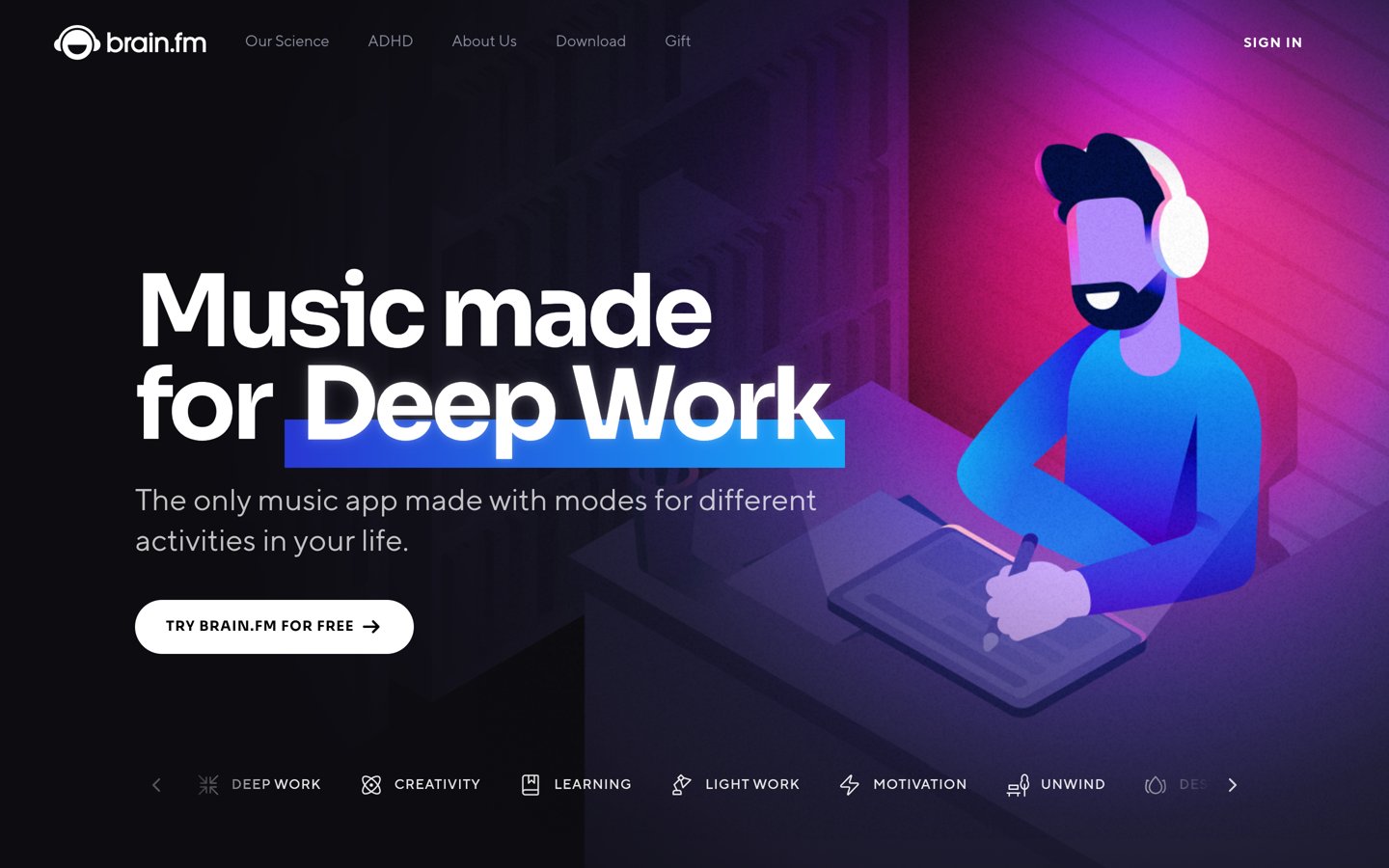
Brain.fm homepage, captured Nov 2026.
Brain.fm is a focus music app that generates instrumental tracks designed to sit behind your work without pulling attention away. You pick an activity such as Deep Work or Learning, choose an effect level, and press play on web, desktop or phone. The vendor cites peer-reviewed research behind its patented sound design, and its pricing page includes a mode made for ADHD brains.
The trade off is price and proof. There is no free plan, only a trial, and after that it costs $99.99 a year, the dearest in this list. Its Trustpilot score is 2.6 from 120 reviews, mostly about billing, and the research is largely company-funded. It suits people who focus better with sound than silence.
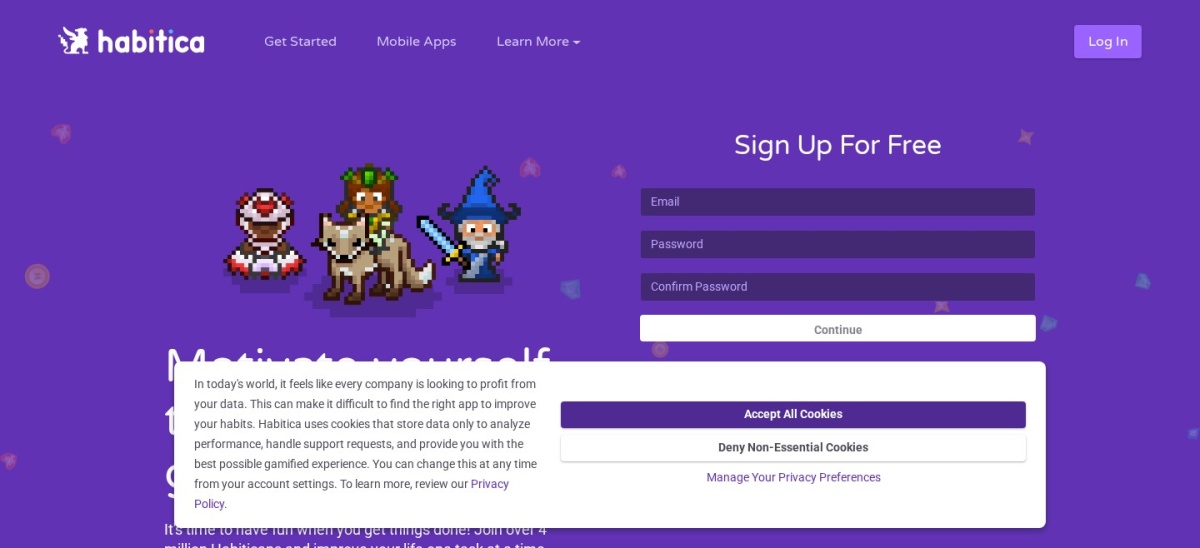
Habitica is a habit and task tracker that turns your to-dos into a role-playing game. You build an avatar, add habits, repeating dailies and one-off to-dos, and checking one off earns gold and experience while a missed daily costs health. The core tracker is free and open source, and parties of up to 30 players can take on quests together.
The trade off is clutter. The game layer adds a vocabulary to learn, with gems, hourglasses and quests, and the $48 a year subscription buys mostly in-game perks rather than new features. It suits people who stick with a system only when it feels like a game.
Free plans cover the basics well in this list. Todoist, TickTick, Forest, Freedom and Habitica all let you use the core tool without paying, and Goblin Tools is free in full.
Paid plans mostly add convenience and memory. You get calendar views, saved results, scheduling and unlimited sessions, not a different product.
The dearest plan here is Brain.fm at $99.99 a year, and the cheapest paid plan is Goblin Tools Pro at $36 a year. Start free, pay only for the job that keeps failing.
How we chose
We started from the apps that ADHD guides and communities recommend most often, then kept only those with a public rating on G2, Capterra or Trustpilot and a published price. That left 9 tools covering planning, task lists, focus timers, blocking, body doubling and music.
Prices come from each vendor's pricing page, checked on 25 November 2026. Where a vendor publishes no price of its own, we used the US App Store listing and say so in the text. Ratings and review counts come from G2, Capterra or Trustpilot on the same day.
We left out tools with no verifiable rating on G2, Capterra or Trustpilot, including Structured and Routinery, and tools whose prices could not be pinned to one figure. No vendor paid for a place, and we do not claim hands-on testing for this list.
How to choose an ADHD app
Start with the job that fails most often, then pick one app for it.
Name the job that fails. Is it starting, seeing time, holding the list, or staying off the phone? Each job has a different best app.
Try the free tier for two weeks. One app at a time. Adding three apps at once makes it impossible to tell which one helped.
Check the price on the vendor page. App store prices vary by country and platform, so confirm the yearly cost before you pay.
Drop what you do not use. An app you ignore is clutter. Keep the one that changed your week and delete the rest.
FAQ
What is the best app for ADHD?
Todoist is the best overall pick for most people. Its free plan covers 5 projects, reminders and 3 filter views, and Pro costs $60 a year. If starting is your main problem, Focusmate's body doubling with 3 free sessions a week is the better first try.
Are there any free ADHD apps?
Yes. Goblin Tools is free in the browser with no account, Forest's timer and blocking are free, and Todoist, TickTick, Tiimo, Focusmate, Freedom and Habitica all have free plans. Brain.fm is the only tool in this list with no free plan, offering a trial instead.
What is body doubling?
Body doubling means working at the same time as another person, usually on video, so the shared presence helps you start and stay on task. Focusmate pairs you with a stranger for 25, 50 or 75 minutes, and you state your goal at the start and check in at the end.
Do ADHD apps replace treatment?
No. These apps are planning and focus tools, not a diagnosis or a treatment, and they cannot replace professional care. They work best as one part of a wider routine, beside medical advice, coaching, or therapy where that applies.
Why do prices vary between app stores?
Many of these apps sell through Apple and Google, which take a cut, so the same plan can cost more in an app store than on the vendor's own site. Tiimo and Forest publish no fixed US price on their own sites, so their figures here come from the US App Store.
Which ADHD app is best for students?
TickTick is the strongest student pick, because it combines tasks, a calendar, habits and a focus timer for $49.99 a year, with a usable free plan. Forest is a good second choice if phone distraction is the main problem, since its timer and blocking are free.
SaaS SEO and WordPress specialist with about 8 years of experience. Rakib compares WordPress plugins, themes, hosting and software using public pricing, documentation and user reviews. See how we rank.