Best AI Tools for Academic Research Automation in 2026: 7 Tools Compared
WLWPLegible EditorsLast verified 22 Nov 2026How we rank12 min read
★ Short answer
Paperguide is our top AI academic research automation tool, with a $96 annual Plus plan offering 12,500 monthly AI credits and systematic reviews covering up to 1,000 papers. SciSpace is better for AI-assisted literature exploration and PDF analysis, while Scite specializes in evaluating how academic studies cite and support existing findings.
How we make this list: we compare pricing pages, product documentation and public user reviews, then re-check every price before each update. No product paid for a place. Disclosure.
Paperguide Plus costs $96 annually and includes 12,500 monthly AI credits, unlimited AI searches and systematic reviews covering up to 1,000 papers.
SciSpace Premium costs $12 monthly billed annually and combines literature reviews, PDF analysis, research agents and systematic review workflows.
Scite Basic costs $12 monthly billed annually, including 250 MCP credits, Smart Citation reports and collections of up to 1,000 papers.
Jenni Plus costs $12 monthly with annual billing and includes 5,000 AI autocompletes, 500 AI requests and 10 workflow runs monthly.
Paperpal Prime costs $144 annually and provides AI research assistance, citation lookup, academic editing and plagiarism checking.
QuillBot Premium costs $8.33 monthly billed annually at its regular rate, while Grammarly Pro starts at $12 monthly with annual billing.
What to look for in AI academic research automation software
Academic research involves discovering relevant papers, evaluating evidence, organizing references, extracting findings and preparing manuscripts. AI tools can automate parts of these activities, reducing repetitive administrative work while allowing researchers to concentrate on interpretation and methodology.
The most important distinction is between literature discovery, evidence synthesis and academic writing assistance. Research platforms such as Paperguide and SciSpace support several stages, while specialized products focus on citation analysis, editing or manuscript preparation.
Source transparency matters more than fluent writing. Prefer tools that identify original publications, provide citations and allow researchers to inspect evidence behind generated statements. AI-generated summaries can omit limitations, misunderstand statistical findings or misrepresent conclusions.
Systematic reviews need additional safeguards. Automated screening, inclusion criteria, evidence extraction and research reports can accelerate workflows, but reproducibility and independent verification remain essential. A vendor's automated review feature does not automatically make the output suitable for publication.
Pricing also varies by AI credits, research queries, paper allowances and writing volume. Compare actual research workloads rather than assuming tools with similar monthly subscriptions provide equivalent capabilities.
The 7 best AI tools for academic research automation
01
Paperguide
4.6/5on G2 (102 reviews, checked Nov 2026)
Paid from$8/mo
Best overall for academic research automation
Entry paid planPlus, $8/seat/mo annually
AI credits12,500/month on Plus
Systematic reviewsUp to 1,000 papers on Plus
Reference storageUnlimited on Plus
paperguide.ai
Paperguide homepage, captured Nov 2026.
Paperguide is an AI-powered academic research platform combining literature discovery, research agents, systematic reviews, reference management and academic writing. Its free edition provides 1,500 monthly AI credits, while Plus costs $8 per seat monthly billed annually and includes 12,500 monthly credits, unlimited AI searches and systematic reviews covering up to 1,000 papers.
The trade off is that automated research operations consume AI credits, and larger systematic reviews require higher subscriptions. Pro costs $19.50 per seat monthly billed annually and expands the review capacity to 5,000 papers. It suits graduate researchers, academic writers and research teams seeking connected workflows from paper discovery through cited drafting.
What we like
Combines literature search, synthesis and academic writing
Free edition includes monthly AI credits
Systematic review automation in the Plus edition
Unlimited reference storage on paid plans
Supports research agents and exportable evidence tables
Watch out for
AI operations consume monthly credits
Large reviews require higher subscriptions
Researcher verification remains necessary for extracted findings
Annual billing is required for the advertised entry price
Pro adds 50,000 monthly credits, figure extraction and systematic reviews covering up to 5,000 papers.Visit paperguide.ai
02
SciSpace
4.3/5on Trustpilot (411 reviews, checked Nov 2026)
Paid from$12/mo
Best for AI literature reviews and paper analysis
Entry paid planPremium, $12/mo annually
Monthly alternative$20/month
Free allowance100 AI credits/month
Research featuresSLR, PDF chat and literature review
scispace.com
SciSpace homepage, captured Nov 2026.
SciSpace is an AI academic research platform for discovering papers, understanding scientific literature and preparing research-backed writing. Its free Basic edition includes 100 monthly credits, while Premium costs $12 monthly billed annually. Premium adds expanded model access, literature reviews, systematic research workflows, PDF conversations and research reports.
The trade off is that advanced AI model access and research operations remain subject to plan-specific limits, even when selected features advertise unlimited usage. Monthly Premium costs $20 without annual billing. It suits students and researchers who regularly examine unfamiliar scientific papers and need assistance navigating large collections of literature.
What we like
Combines paper discovery and AI-assisted reading
Supports conversations with uploaded research PDFs
Includes systematic literature review workflows
Free edition for exploring research features
Offers citation and academic writing tools
Watch out for
Advanced models have usage restrictions
Annual billing is needed for the lower advertised price
Generated research summaries require source verification
Higher-level research agents may require additional capacity
Advanced expands access to higher-tier AI models and more demanding research workflows.Visit scispace.com
03
Scite
4.7/5on G2 (27 reviews, checked Nov 2026)
Starts at$12/mo
Best for evaluating citations and research credibility
Entry paid planBasic, $12/mo annually
MCP allowance250 credits/month
Paper collectionsUp to 1,000
Core featureSmart Citation reports
scite.ai
Scite homepage, captured Nov 2026.
Scite is an AI-powered research evaluation platform that analyzes how scientific publications are cited by other studies. Its Basic plan costs $12 monthly billed annually and includes AI Assistant access, full-text citation search, Smart Citation reports, citation alerts and 250 monthly MCP credits. Researchers can organize collections containing up to 1,000 papers.
The trade off is that deeper research integrations, API access and larger collections require Pro at $40 monthly billed annually. Citation classifications also need contextual interpretation rather than being treated as automatic judgments of study quality. It suits researchers checking influential claims, identifying conflicting evidence and examining how published findings are discussed.
What we like
Shows citation context beyond raw citation counts
Helps identify supporting and contrasting evidence
AI Assistant draws on scholarly research
Includes citation alerts and monitored collections
Supports connections to external AI tools
Watch out for
No permanent free subscription advertised
API access requires Pro
Citation classifications need human interpretation
Research automation credits are limited on Basic
Pro adds API access, 2,500 monthly MCP credits and collections containing up to 10,000 papers.Visit scite.ai
04
Jenni
3.7/5on Trustpilot (162 reviews, checked Nov 2026)
Paid from$12/mo
Best for automating academic writing and citations
Entry paid planPlus, $12/mo annually
AI autocompletes5,000/month
AI requests500/month
Research workflows10 runs/month
jenni.ai
Jenni homepage, captured Nov 2026.
Jenni is an AI academic writing assistant that combines document editing, reference management, PDF analysis and citation generation. Its free plan includes 10 daily autocompletes and limited research workflows, while Plus costs $12 monthly with annual billing. Plus provides 5,000 monthly autocompletes, 500 AI requests, unlimited PDF uploads and 10 workflow runs.
The trade off is that the Plus edition limits AI requests, document reviews and structured workflows, while Pro costs $29 monthly with annual billing. Generated citations and academic statements still require verification against original publications. It suits students and researchers who need assistance drafting literature reviews, manuscripts and source-based academic documents.
What we like
Combines research writing and citation management
Free edition supports basic academic drafting
Includes structured research workflows
Supports PDF uploads and source-based questions
Offers a large selection of citation styles
Watch out for
Monthly AI requests are limited on Plus
Pro is required for unlimited AI writing assistance
Generated citations require verification
Public reviews include concerns about subscriptions and refunds
Pro adds unlimited AI autocomplete, AI requests, document reviews and workflow runs.Visit jenni.ai
05
Paperpal
4.8/5on Trustpilot (579 reviews, checked Nov 2026)
Paid from$12/mo
Best for research writing and manuscript preparation
Entry paid planPrime, $12/mo annually
Annual subscription$144
Monthly alternative$25
Higher editionPro, $29/mo annually
paperpal.com
Paperpal homepage, captured Nov 2026.
Paperpal is an AI academic writing platform that assists with research discovery, citation lookup, manuscript editing and submission preparation. Its free edition includes limited research and writing assistance, while Prime costs $12 monthly billed annually. Prime adds expanded academic editing, research questions, reference checking, PDF conversations and plagiarism screening.
The trade off is that the regular monthly Prime subscription costs $25, while higher research and editing allowances require Pro at $29 monthly billed annually. Automated reference checks cannot guarantee that every citation supports its associated claim. It suits researchers preparing academic manuscripts who want research assistance integrated with writing and publication checks.
What we like
Academic writing and research assistance in one workspace
Includes citation lookup and reference checking
Supports manuscript editing and plagiarism screening
Works with common document editing environments
Free edition for basic research writing
Watch out for
Monthly billing costs more than annual billing
Advanced research allowances require Pro
Automated citation checks require human verification
Primarily focused on writing rather than full systematic reviews
Pro expands AI research assistance, academic editing, plagiarism checks and manuscript preparation features.Visit paperpal.com
06
QuillBot
4.4/5on G2 (79 reviews, checked Nov 2026)
Paid from$8.33/mo
Best for summarizing and refining research drafts
Entry paid planPremium
Regular annual rate$8.33/month equivalent
Free paraphrasing125 words per request
Research writing toolsSummarizer and citation generator
quillbot.com
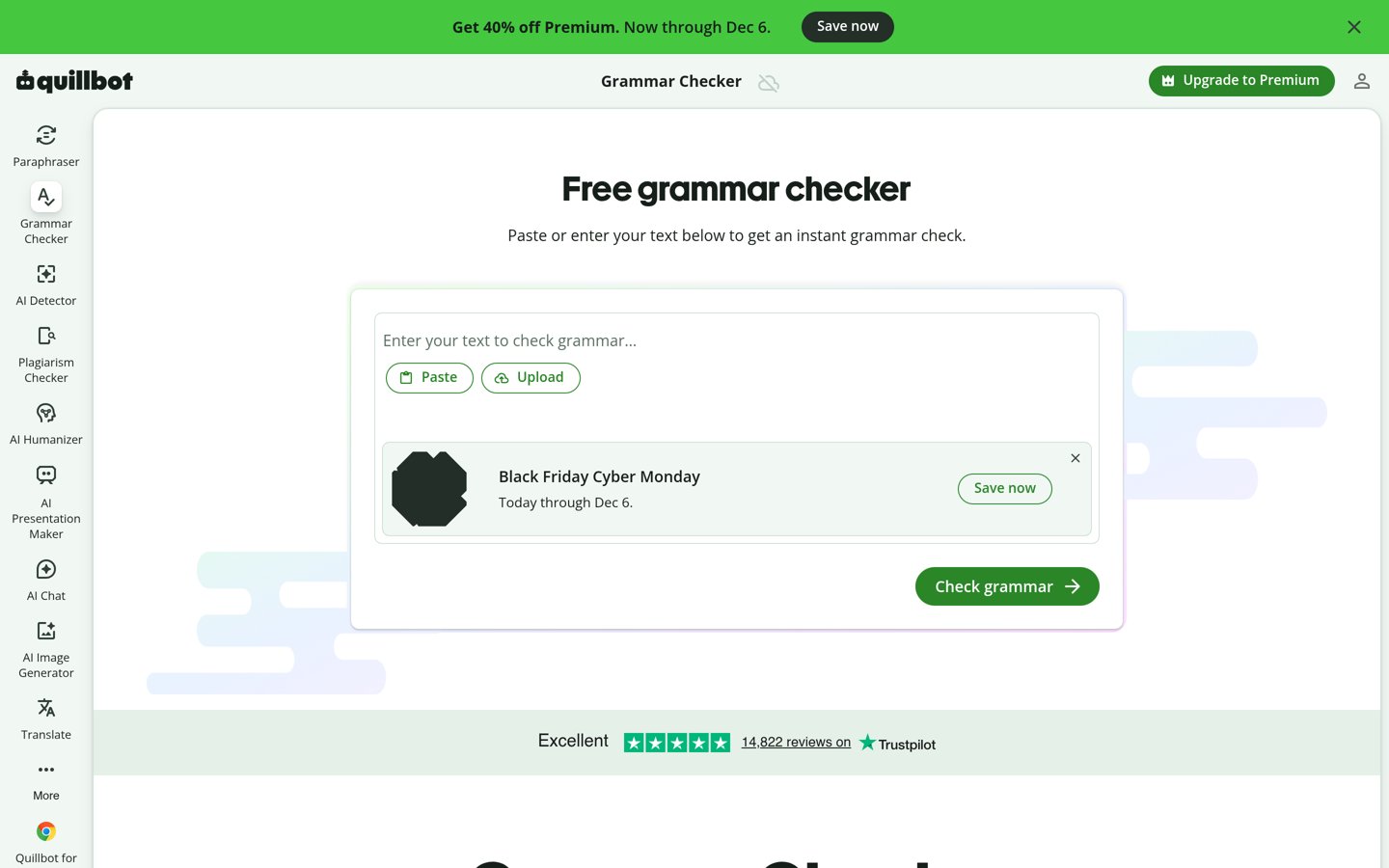
QuillBot homepage, captured Nov 2026.
QuillBot is an AI writing platform for paraphrasing, summarizing, checking grammar and generating citations. Its free edition allows paraphrasing of up to 125 words per request and basic summaries. Premium lists a regular annual-billing rate of $8.33 monthly and adds expanded paraphrasing, custom summaries, advanced grammar suggestions and plagiarism checking.
The trade off is that QuillBot is a writing and summarization assistant rather than a full academic literature review system. Its pricing page also advertises a temporary lower rate, which should not be confused with the regular subscription. It suits students and researchers who need to refine drafts and summarize text they have already evaluated.
What we like
Affordable regular annual subscription
Free paraphrasing and summarization tools
Includes a citation generator
Supports grammar and plagiarism checking
Useful for refining academic writing
Watch out for
Does not automate comprehensive literature reviews
Paraphrasing can alter technical meaning
Citation output requires verification
Premium features are subject to usage policies
Premium adds full paraphrasing access, custom summaries, advanced grammar assistance and plagiarism checks.Visit quillbot.com
07
Grammarly
4.7/5on G2 (14,157 reviews, checked Nov 2026)
Paid from$12/mo
Best for polishing research manuscripts
Entry paid planPro
Annual subscription$144
Monthly equivalent$12 with annual billing
Research featuresCitation assistance and AI editing
grammarly.com
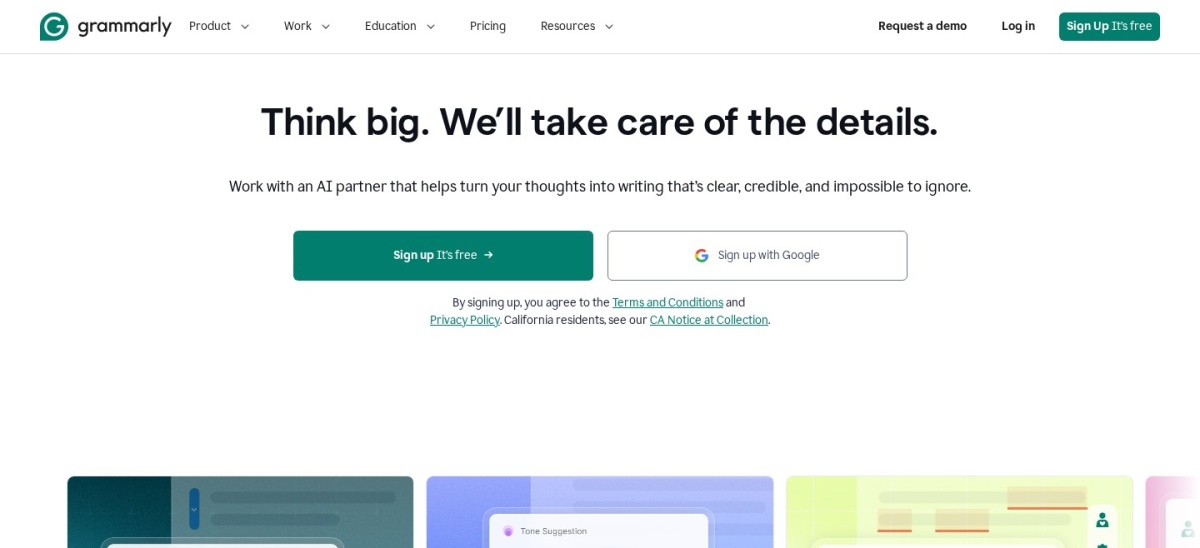
Grammarly homepage, captured Nov 2026.
Grammarly is an AI writing assistant that helps researchers improve grammar, clarity, tone and document consistency. Its free edition provides basic writing suggestions, while Pro costs $12 monthly with annual billing. Grammarly also provides citation assistance, AI rewriting and writing feedback across supported document editors and browser environments.
The trade off is that Grammarly does not provide systematic literature screening, evidence extraction or specialized citation-context analysis. Its general writing suggestions can also change scientific terminology or meaning if accepted without review. It suits academics who already manage their research elsewhere and need consistent manuscript editing before submission.
What we like
Provides writing assistance across common applications
Helps improve clarity and grammatical accuracy
Includes AI-assisted rewriting
Free edition available
Supports citation-related writing tasks
Watch out for
Not a dedicated literature review platform
Scientific terminology may require manual correction
Advanced features require Pro
Does not independently validate research findings
Pro expands rewriting, editing and citation-related writing assistance.Visit grammarly.com
How to automate an academic research workflow responsibly
Start with literature discovery. Use Paperguide or SciSpace to identify publications related to a research question. Document the search terms, inclusion criteria and relevant databases so the discovery process can be reproduced.
Next, organize and evaluate the evidence. Paperguide supports structured evidence extraction, while Scite provides citation context that can help identify disagreements and supporting literature. Neither replaces reading the original studies.
For the writing stage, Jenni and Paperpal can assist with source-based drafting, citation management and manuscript organization. QuillBot can summarize selected material, while Grammarly can improve language and consistency.
Keep human review throughout the process. Confirm bibliographic details, examine research methods, verify extracted statistics and distinguish supported conclusions from AI-generated interpretation.
For systematic reviews, maintain a separate record of screening decisions and exclusions. AI tools should support established research methods rather than silently determine which evidence qualifies.
What AI research automation cannot safely replace
AI research assistants can summarize academic papers, but summaries may omit limitations, misinterpret statistical results or overlook contradictory findings. Always verify conclusions using the original publication.
Citation automation also has limits. A citation may identify a real paper without supporting the particular sentence attached to it. Scite's citation context helps researchers inspect relationships between publications, but it does not establish the validity of a study by itself.
Systematic reviews require explicit eligibility criteria, transparent screening decisions and reproducible extraction procedures. AI-generated screening results should be checked against the review protocol and relevant methodological requirements.
Academic institutions and publishers may require disclosure of generative AI use. Review the applicable policies, preserve records of automated assistance and ensure that authors remain responsible for the accuracy and integrity of submitted work.
How we chose
We researched established AI-enabled academic research products covering literature discovery, research agents, citation evaluation, evidence synthesis, academic writing and manuscript review. We prioritized dedicated research platforms for the highest positions and included complementary writing assistants where they support identifiable stages of an academic workflow.
Official pricing pages and independent G2 or Trustpilot review listings were checked on 24 Nov 2026 using the 22 Nov 2026 editorial reference date. Prices use published regular subscription rates rather than promotional offers. Annual billing equivalents are identified, and review scores remain attributed to their original platforms.
We excluded products without sufficient public reviews, tools lacking an identifiable academic research use case and services whose paid pricing could not be confirmed from official documentation. General writing assistants were not treated as substitutes for dedicated systematic review software. No vendor paid for a place, and we do not claim testing for this list.
How to choose AI tools for academic research automation
Identify the research stages consuming the most time, then compare software according to these four steps.
Identify the research tasks you want to automate. Separate literature discovery, systematic screening, evidence extraction, citation checking and academic writing. Choose tools that address the most demanding stages rather than purchasing several applications with overlapping summarization features.
Evaluate source transparency and methodological controls. Prefer platforms that provide identifiable publications, supporting evidence and exportable research records. Check whether automated screening and extraction decisions can be reviewed, corrected and documented for reproducibility.
Match features to your research methodology. A narrative literature review may need paper discovery and summarization, while a systematic review requires explicit criteria and documented screening. Consider citation context, reference management and structured extraction according to the research design.
Compare regular prices and research allowances. Calculate expected paper volumes, AI credits, document uploads and writing requests. Include annual commitments and premium model access, then determine whether each subscription saves sufficient time to justify its ongoing cost.
FAQ
What is the best AI tool for automating academic research?
Paperguide is our top overall choice because it combines research agents, literature discovery, systematic reviews, reference management and academic writing. Its Plus edition includes 12,500 monthly AI credits and systematic reviews covering up to 1,000 papers. SciSpace and Scite offer useful alternatives for paper analysis and citation evaluation.
Can AI automate a systematic literature review?
AI tools can assist with searching, screening, extracting findings and organizing evidence tables. Paperguide and SciSpace offer systematic research workflows. However, researchers must still define eligibility criteria, validate extraction results, document exclusions and follow the methodological standards relevant to their review.
What is the best free AI tool for academic research?
Paperguide provides a free edition with 1,500 monthly AI credits, while SciSpace offers limited free research capabilities. Jenni and Paperpal also provide free writing assistance. The most suitable option depends on whether you need paper discovery, document analysis, citations or manuscript editing.
How much does AI academic research software cost?
Paperguide Plus costs $8 monthly billed annually, SciSpace Premium costs $12 monthly billed annually, and Scite Basic costs $12 monthly billed annually. Jenni Plus and Paperpal Prime also have annual-billing equivalents of $12 monthly. Higher subscriptions generally increase research capacity or AI usage allowances.
Which AI tool is best for checking academic citations?
Scite is particularly useful for evaluating citation context and identifying how subsequent papers discuss earlier findings. Paperpal offers reference checking and citation lookup, while Jenni provides integrated citation management. Researchers should still confirm that each citation directly supports the associated statement.
Can AI write a research paper automatically?
AI writing assistants can help develop outlines, draft passages, summarize source materials and refine academic language. They cannot independently guarantee accurate methodology, valid evidence or original scientific conclusions. Researchers remain responsible for checking sources, interpreting findings and complying with institutional policies on AI-assisted writing.
Which AI research tool is best for PhD students?
Paperguide and SciSpace are useful for literature discovery and organizing research evidence, while Scite can help evaluate how studies are cited. Jenni and Paperpal support academic writing. The most appropriate combination depends on the thesis methodology, available research databases and required citation practices.
Can AI tools find fake or unsupported academic citations?
Some research tools help identify source inconsistencies, verify bibliographic information and inspect citation context. However, no automated citation check guarantees complete accuracy. Researchers should confirm each publication's existence, examine its original text and verify that the cited evidence actually supports the statement.
Is AI research automation acceptable for academic publications?
AI assistance may be permitted, but requirements depend on the institution, journal and publisher. Researchers should check policies covering disclosure, authorship, data confidentiality and permitted automated tasks. AI-generated material must be verified, and human authors remain accountable for the integrity of their submitted research.