Best AI Optimization Platforms for Data Transparency in 2026: 9 Tools Compared
WLWPLegible EditorsLast verified 22 Nov 2026How we rank15 min read
★ Short answer
Profound is the best AI optimization platform for data transparency, showing the exact domains and URLs cited in AI answers and drawing on more than a billion real-user prompts. Otterly is the most open about its method and pricing from $29 a month, while Peec publishes the exact maths behind its 4,500 monthly answers.
How we make this list: we compare pricing pages, product documentation and public user reviews, then re-check every price before each update. No product paid for a place. Disclosure.
Profound shows the exact domains and URLs cited in AI answers, backed by 1.5 billion real-user prompts, but its self-serve plans were retired in September 2026.
Otterly publishes its credit maths, one credit is one prompt on one engine, and a stability study behind its prompt counts.
Peec prints the exact maths for its answers: 50 prompts across 3 models daily is 4,500 AI answers a month.
Scrunch publishes hard usage limits, 15,000 responses and 10 citation targets a month on Core, but not its refresh rate.
Goodie traces citations to specific sources and ties visibility to revenue, but its Core price changed twice in two months in 2026.
Entry prices run from $29 a month for Otterly to a custom Enterprise quote for Profound, with most tools between $50 and $250.
What data transparency means for AI optimization
AI answers now shape buying decisions, but the numbers behind them are often a black box. A platform can report a visibility score without ever showing which prompts it ran, which answers it read, or which sources the engines cited.
Data transparency means you can check the work: the prompt list, the full answer text, the cited sources down to the URL, and a way to export the raw data. Our guide to AI SEO plugins for WordPress covers the WordPress side of the same problem.
The cheapest plans in this list start at $29 a month, and the dearest is a custom Enterprise quote. Price alone says little: a $29 plan tracking 16 prompts on 4 engines and a $250 plan tracking 15,000 responses are measuring different things.
Watch for three traps: prompt counts that changed in the last few months, engine lists that only open up on higher tiers, and per-domain or per-seat pricing that multiplies the headline figure. Every price and rating below was checked on 22 November 2026.
The 9 best AI optimization platforms for data transparency
01
Profound
4.5/5on G2 (1,133 reviews, checked Nov 2026)
PricingCustom/mo
Best for the most open raw AI data
Real-user prompt data1.5B prompts
Citation detailDomain and URL
Raw exportsCSV, JSON, API
Entry priceCustom quote
tryprofound.com
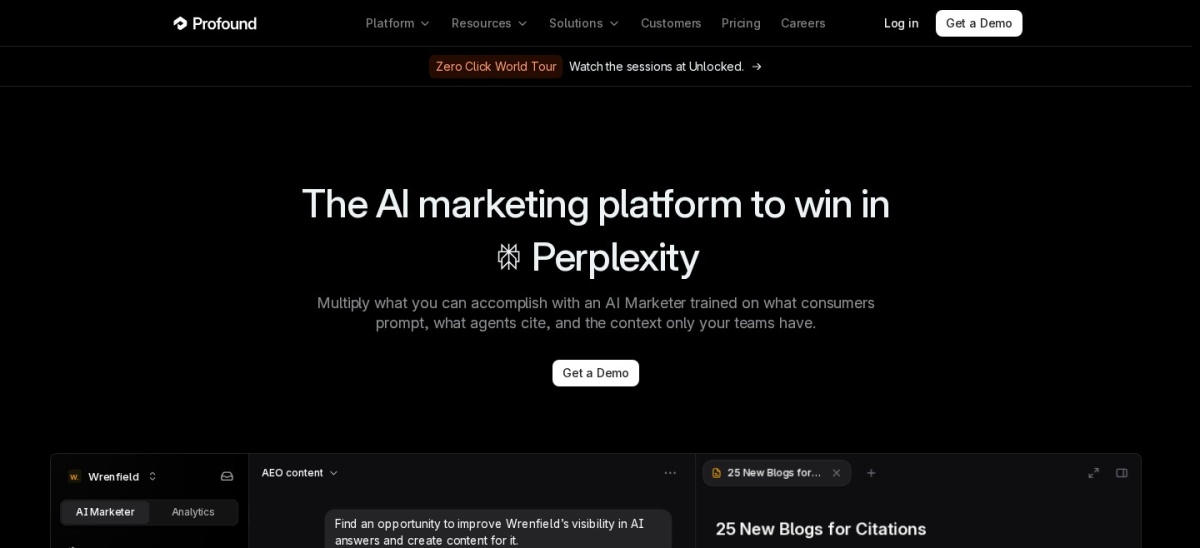
Profound homepage, captured Nov 2026.
Profound is an AI visibility platform built on a dataset of 1.5 billion real-user prompts and answers, so its reports show what people actually asked, not only what its own prompt list produced. Its Citations feature names the exact domains and URLs that AI answers cite, and it logs which AI bots visit your site.
The trade off is price. Profound retired its Starter and Growth plans in September 2026, so new accounts are custom-priced Enterprise deals and the $99 starting price quoted in older reviews no longer buys anything. It suits large teams that need the deepest raw data and can fund an enterprise contract.
What we like
Shows the exact domains and URLs cited in answers
1.5B real-user prompts behind its reports
CSV, JSON and API exports with all-time history
Tracks up to 10 answer engines on Enterprise
Watch out for
No public price since self-serve plans were retired
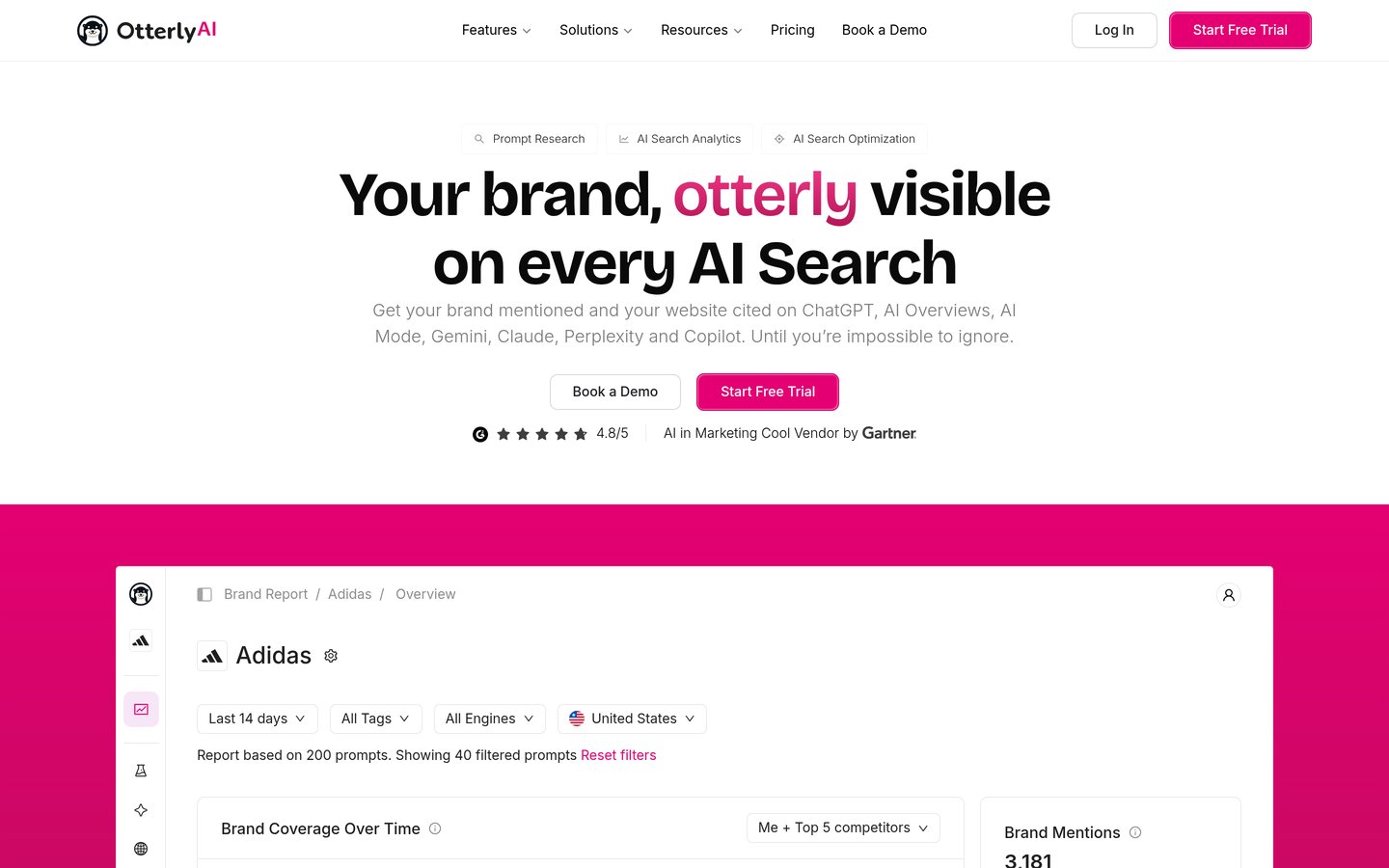
OtterlyAI is an AI search analytics platform that publishes how its tracking works: one credit is one prompt checked once on one engine, and Claude answers cost three credits. Its Lite plan costs $29 a month for 16 prompts across 4 of 7 engines, with citation source tracking, sentiment and share of voice included.
The trade off is that the cheapest plan is narrow. Lite has one workspace, three recommendations a week and no API, MCP or agent analytics, and adding Gemini, Google AI Mode or Claude costs extra. It suits small teams that want honest, checkable numbers at the lowest entry price in this list.
What we like
Publishes its credit maths and a stability study
Citation sources, sentiment and share of voice on every plan
Looker Studio connector from Standard
7-day free trial on paid plans
Watch out for
Lite covers only 4 of 7 engines
Prompt counts changed in November 2026, so older reviews quote 15 prompts
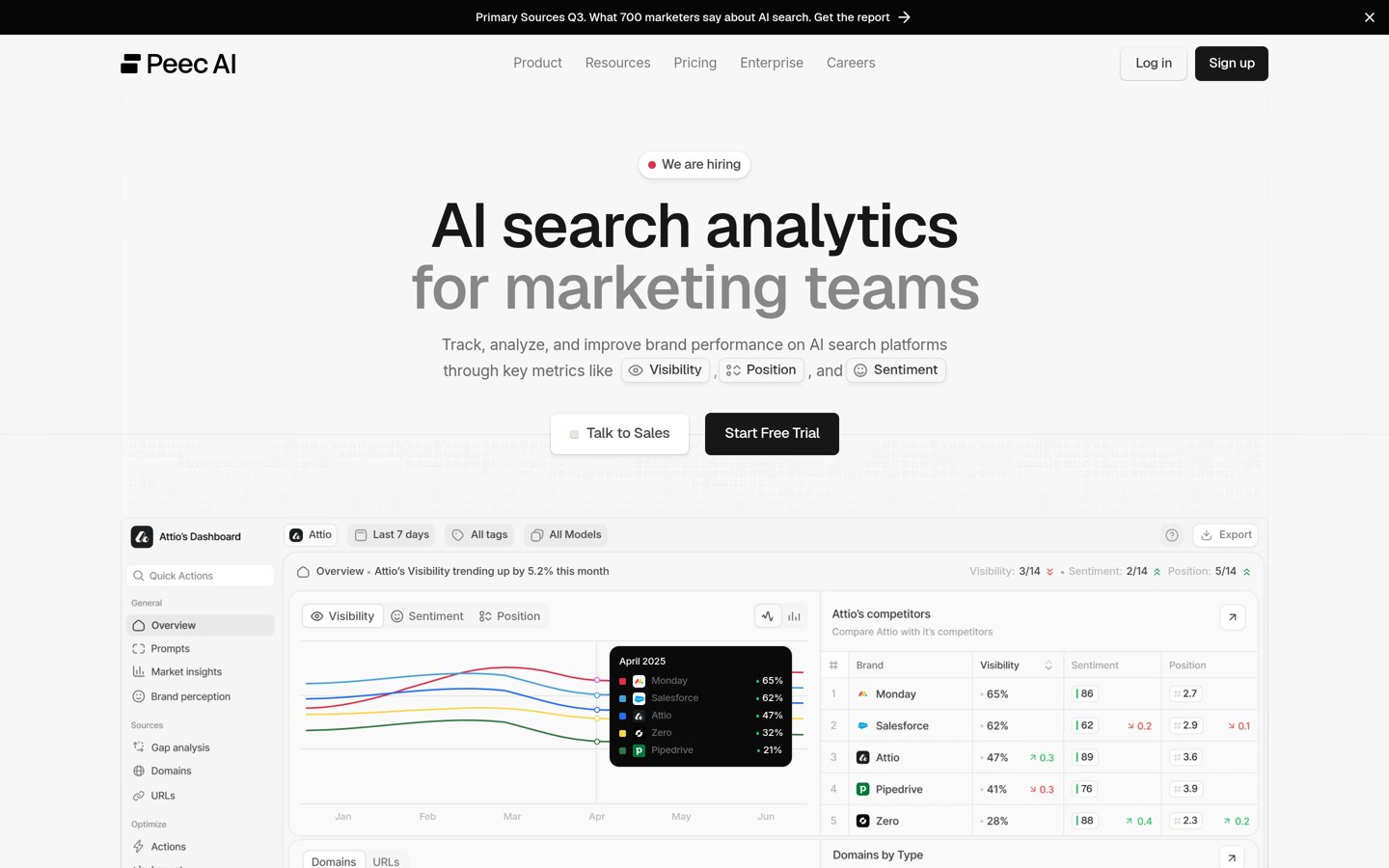
Peec AI is an AI search visibility platform that shows its working: 50 prompts across 3 models checked daily equals 4,500 AI answers a month, and the pricing page prints that maths. It breaks citations down to domain, subdomain and URL, classifies sources, and fact-checks tracked prompts against facts you set.
The trade off is engine choice. Starter covers 3 of 8 models, a fourth costs $35 a month extra, and the API starts on Pro at $245 a month. It suits teams that want source-level evidence and unlimited users without paying per seat.
What we like
Publishes the exact prompt-to-answer maths
Citation detail down to URL and source type
Fact-checking against your own brand facts
Unlimited users, competitors and languages
Watch out for
Only 3 models included; extras cost $35 a month each
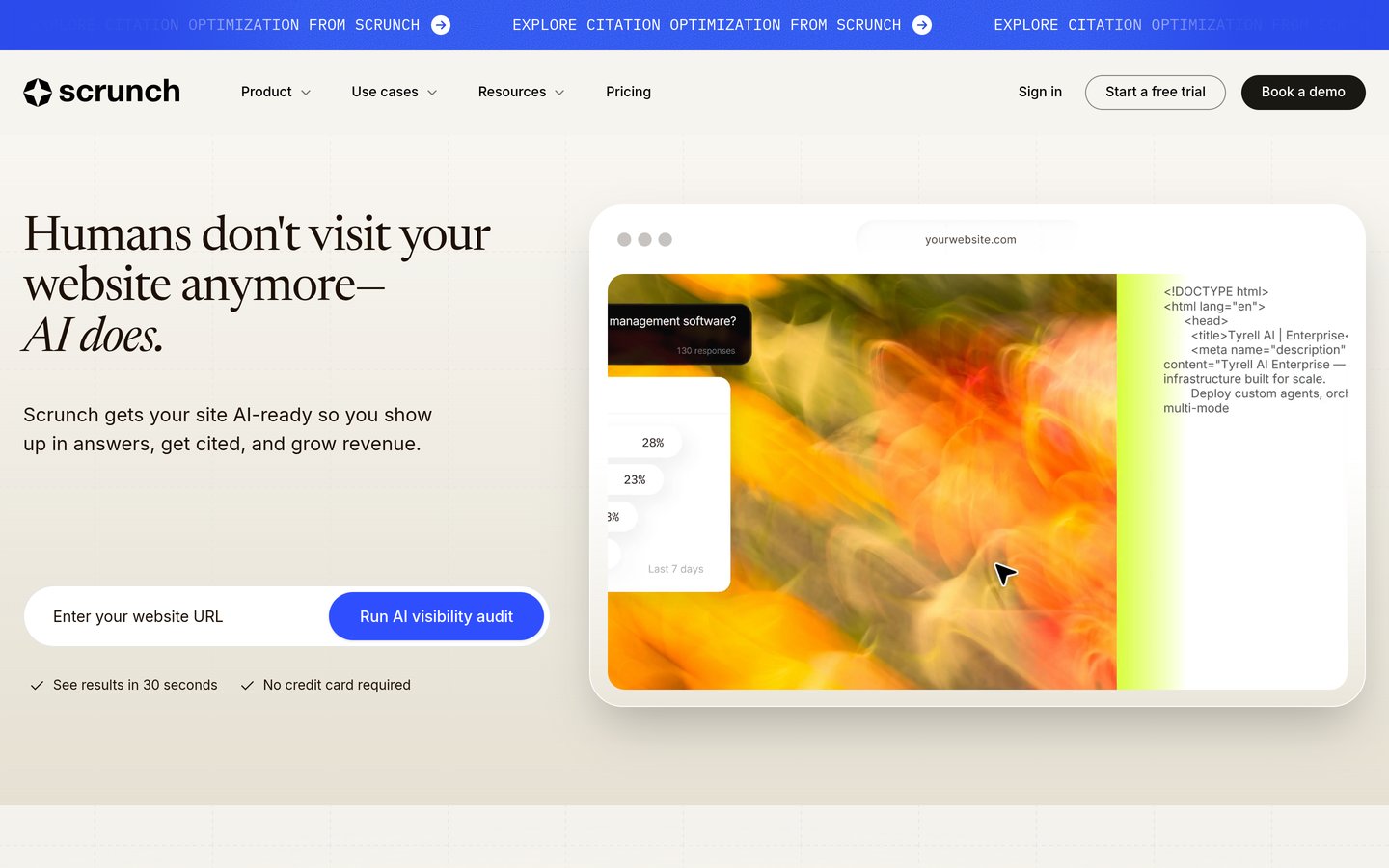
Scrunch is an AI visibility platform that publishes its usage limits in plain numbers: Core costs $250 a month for 15,000 responses, 10 citation targets and 10 pages optimized a month across 8 engines. It also tracks AI agent and bot traffic to your site and serves machine-readable pages to AI agents on Enterprise.
The trade off is access to the raw data. API access, unlimited citation targets and single sign-on sit on custom-priced Enterprise, and Scrunch does not publish how often it refreshes its data. It suits brands that want citation targets and agent analytics in one place.
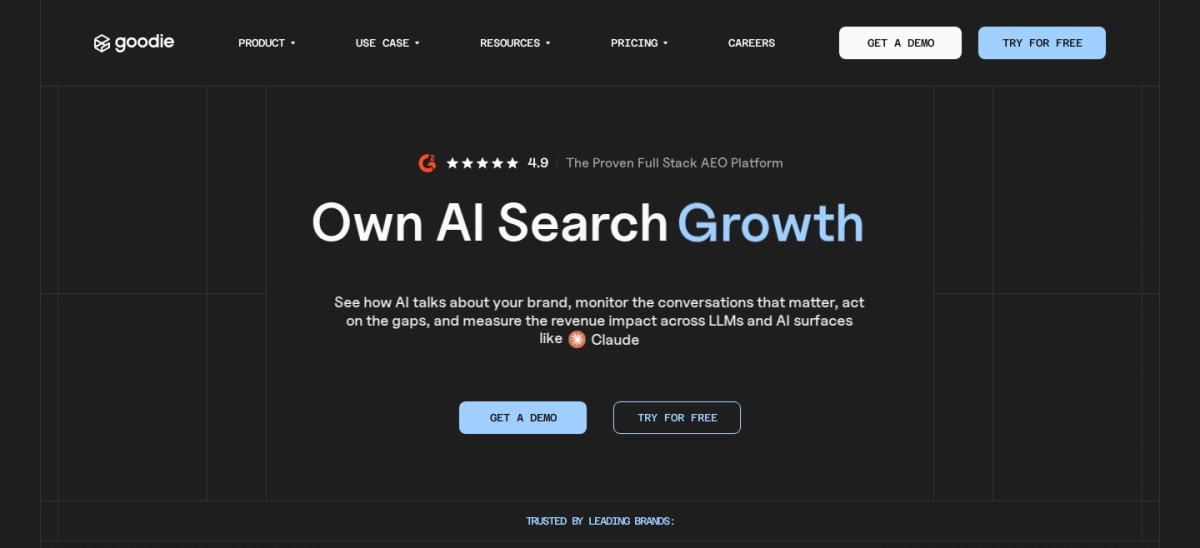
Goodie is an answer engine optimization platform that traces citations back to specific sources, then ties AI visibility to revenue with GA4 attribution. Its Core plan costs $354 a month, or $295 a month billed annually, for 110 prompts across 5 engines, 50 optimization actions a month and unlimited seats.
The trade off is a moving price. Core cost $399 a month in September 2026 and $295 a month on annual billing by October, so quotes in older reviews are already stale. It suits product-led brands that need to show what AI visibility is worth in pipeline terms.
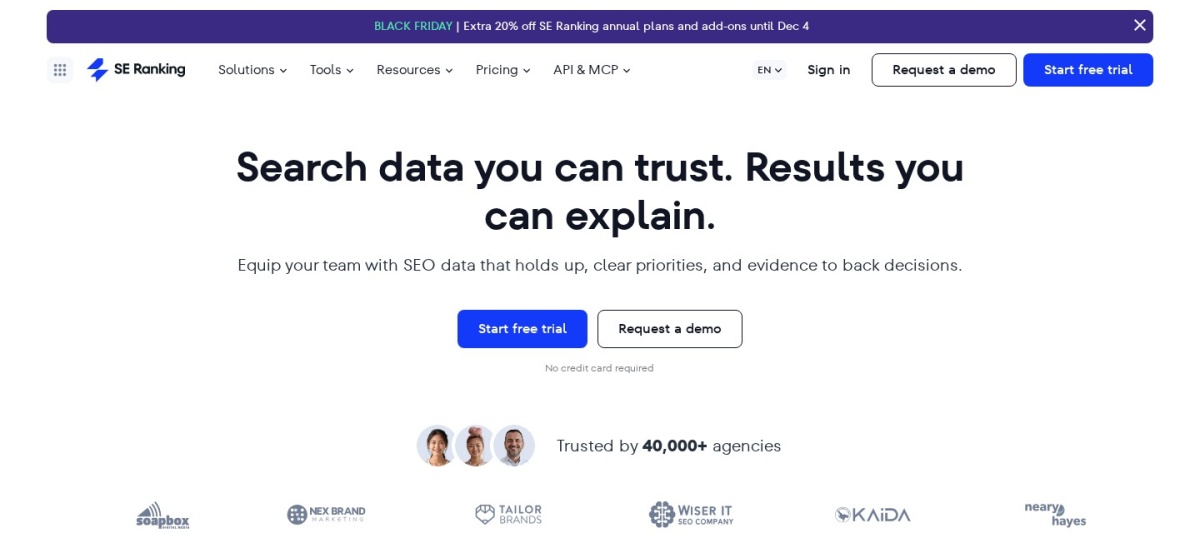
SE Ranking is an all-in-one SEO platform that added AI visibility tracking to its Core plan, which costs $129 a month and covers rank tracking, audits and keyword research alongside AI prompt tracking. It states its counting rule openly: one check is one prompt tracked on one AI platform, and exports run to CSV with API and MCP access.
The trade off is packaging churn. The AI Search add-on now only sells to accounts bought before 29 October 2026, and new buyers use the SE Visible dashboard instead, so older guides describe a bundle you can no longer buy. It suits teams already paying for SE Ranking who want AI tracking in the same account.
What we like
Counting rule published: 1 check is 1 prompt on 1 platform
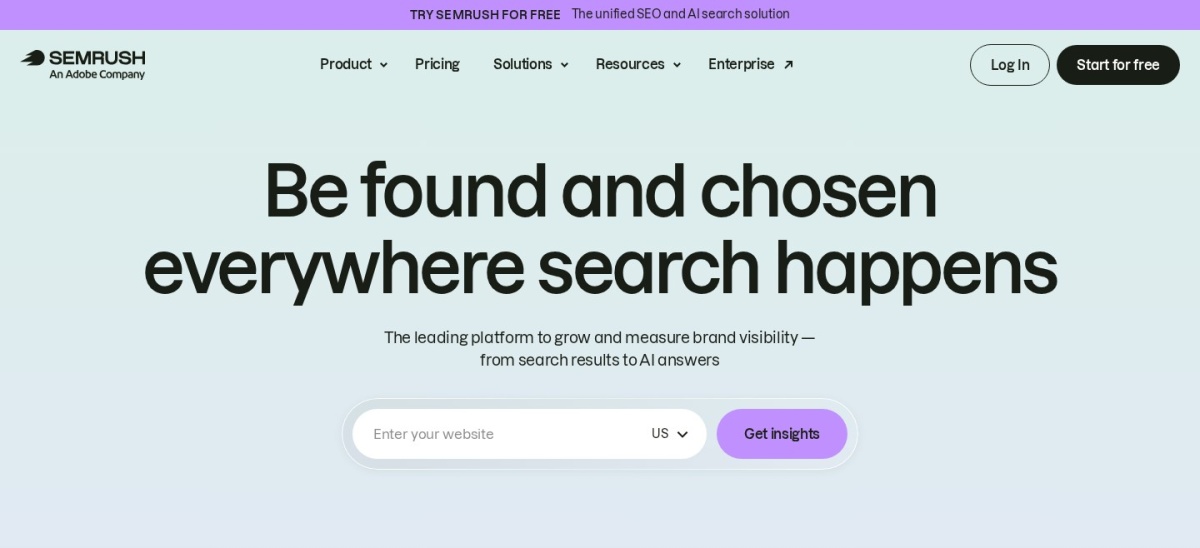
Semrush AI Toolkit is a standalone add-on that tracks brand visibility in ChatGPT, Google AI, Gemini and Perplexity for $99 a month per domain, billed annually. It publishes tight limits: 25 custom prompts, 300 daily AI analysis queries, 10 CSV exports a day and an AI-readiness site audit.
The trade off is multiplication. A second domain, location or teammate each costs another $99 a month, and there is no free trial, so a two-site team pays $198 before any extra prompts. It suits teams already running Semrush SEO who want AI reports in the same workspace.
What we like
Limits published in full: prompts, queries, exports
AI-readiness site audit included
Six report families, from visibility to competitors
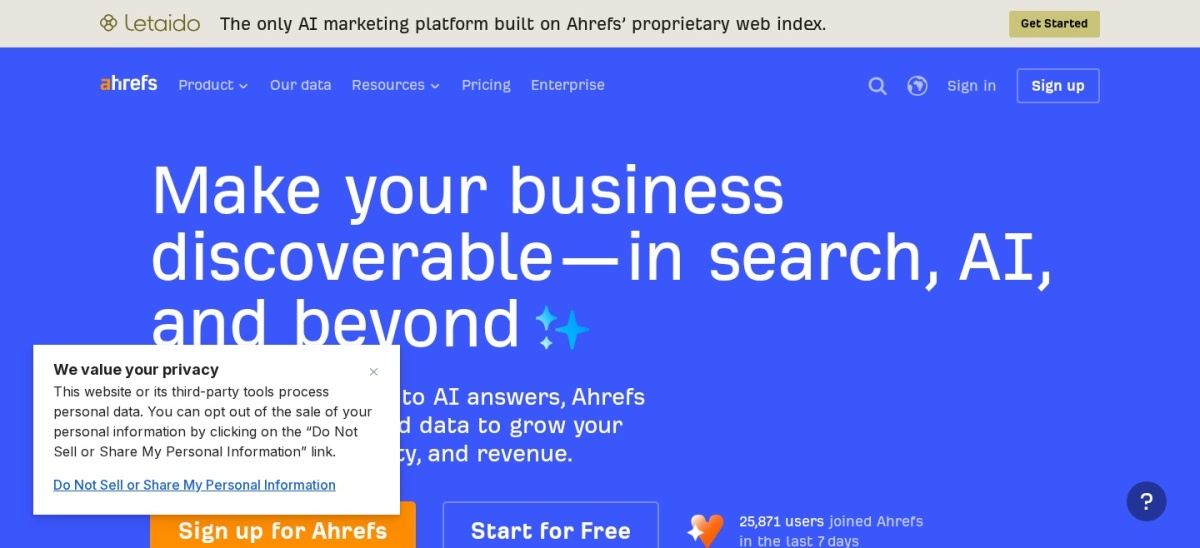
Ahrefs Brand Radar is Ahrefs' AI visibility product, built on an index of more than 500 million search-backed questions with data back to 2025. Custom prompt tracking starts at $50 a month for 2,500 checks, where one check is one prompt run on one platform in one location, and the separate AI Visibility Index starts at $199 a month per platform.
The trade off is that the two halves are sold separately. The index refreshes monthly, its prompts come from search keywords rather than customer phrasing, and it does not monitor sentiment. It suits research teams that want a ready-made prompt index more than daily tracking of their own questions.
Writesonic is an AI content platform whose GEO module tracks where ChatGPT, Gemini and Google AI Overviews mention your brand. Its Starter plan costs $99 a month, or $79 a month billed annually, for 50 tracked prompts a day, 15 AI articles a month and one user.
The trade off is coverage. Self-serve plans track only 3 engines, full 9-engine coverage needs custom-priced Enterprise, and the plan limits changed several times during 2026. It suits content teams that want writing and AI visibility in a single subscription.
Ask for a sample export before you buy. If the vendor will not show you raw answers, citations and prompt lists, its scores are claims, not evidence.
Check the prompt list, not the headline count. Fifty prompts your buyers actually ask beat 500 generic questions, and a platform that hides its list hides its method.
Run the free trial on your own brand and one competitor. If the numbers move when you change nothing, the sample is too small to trust.
How we chose
We started from the established AI visibility platforms named in this brief and in 2026 buyer guides, then kept the nine with a verifiable G2 rating and published pricing or a confirmed custom-only model.
Prices come from each vendor's pricing page, checked on 22 November 2026, except Goodie, SE Ranking, Semrush, Ahrefs and Writesonic, whose prices come from G2 vendor-supplied listings and independent reads of the official pages in October and November 2026. Ratings and review counts come from G2 on the same day.
We left out Brandlight, which publishes no price, and the HubSpot AI Search Grader, which is a free one-time check rather than a monitoring platform. No vendor paid for a place, and we do not claim hands-on testing for this list.
How to choose an AI optimization platform for data transparency
Start with what you need to prove, then check whether the platform shows its working.
Ask to see a raw answer. Before you pay, get a sample showing the prompt, the full AI answer, the cited sources and the date it ran. If any of those are missing, the score cannot be checked.
Count the prompts you actually need. List the questions your buyers ask, then match them to the plan. A 16-prompt plan cannot cover five topics in three markets, whatever the headline price says.
Check which engines are included. Several tools in this list cover 3 or 4 engines on the entry plan and charge extra for the rest. Add the add-ons to the price before you compare.
Confirm the export route. Make sure you can take the raw data out as CSV or through an API or MCP connection, so the history stays yours if you cancel.
FAQ
What is the best AI optimization platform for data transparency?
Profound leads on raw data, with exact cited domains and URLs and a dataset of 1.5 billion real-user prompts. Otterly is the most open about its method and pricing, and Peec publishes the exact maths behind its answer counts.
What does data transparency mean for an AI visibility tool?
It means you can check the work behind the score: the prompt list, the full answer text, the cited sources down to the URL, the date each check ran, and a raw export. A score with no visible inputs is a claim, not evidence.
Why does Profound have no price in this list?
Profound retired its Starter and Growth plans in September 2026, so new accounts are custom-priced Enterprise deals. Its pricing page, checked on 22 November 2026, lists Enterprise as custom only, and older $99 starting prices no longer apply.
Which platform is cheapest for transparent AI tracking?
OtterlyAI Lite at $29 a month is the cheapest entry in this list, with 16 prompts across 4 engines and published credit maths. Ahrefs Brand Radar custom prompts start at $50 a month for 2,500 checks.
Do these tools show which sources AI answers cite?
Most do. Profound, Peec and Goodie name the exact domains and URLs cited, Otterly tracks citation sources and domain rankings, and Scrunch sells citation targets as a measured limit. Ahrefs shows cited pages through its prompt index.
Can I export the raw data from these platforms?
Yes, on most paid plans. Profound, Peec, SE Ranking and Semrush offer CSV exports, Otterly and Goodie add API and MCP access, and Scrunch keeps API access for Enterprise. Check the export limits on your plan before you buy.
How often do these tools refresh their data?
Most track daily on paid plans, including Otterly, Peec and Profound Enterprise. Ahrefs refreshes its prompt index monthly, and Scrunch does not publish its refresh rate, so ask the vendor before you commit.