Best AI Database Software for Businesses in 2026: 8 Tools Compared
WLWPLegible EditorsLast verified 24 Nov 2026How we rank12 min read
★ Short answer
Pinecone is the best AI database for most businesses. Its serverless vector search needs no infrastructure work, with a free Starter tier and Builder at $20 a month, rated 4.5/5 on G2. Pick Weaviate for open-source control and Supabase if your app already runs on Postgres.
How we make this list: we compare pricing pages, product documentation and public user reviews, then re-check every price before each update. No product paid for a place. Disclosure.
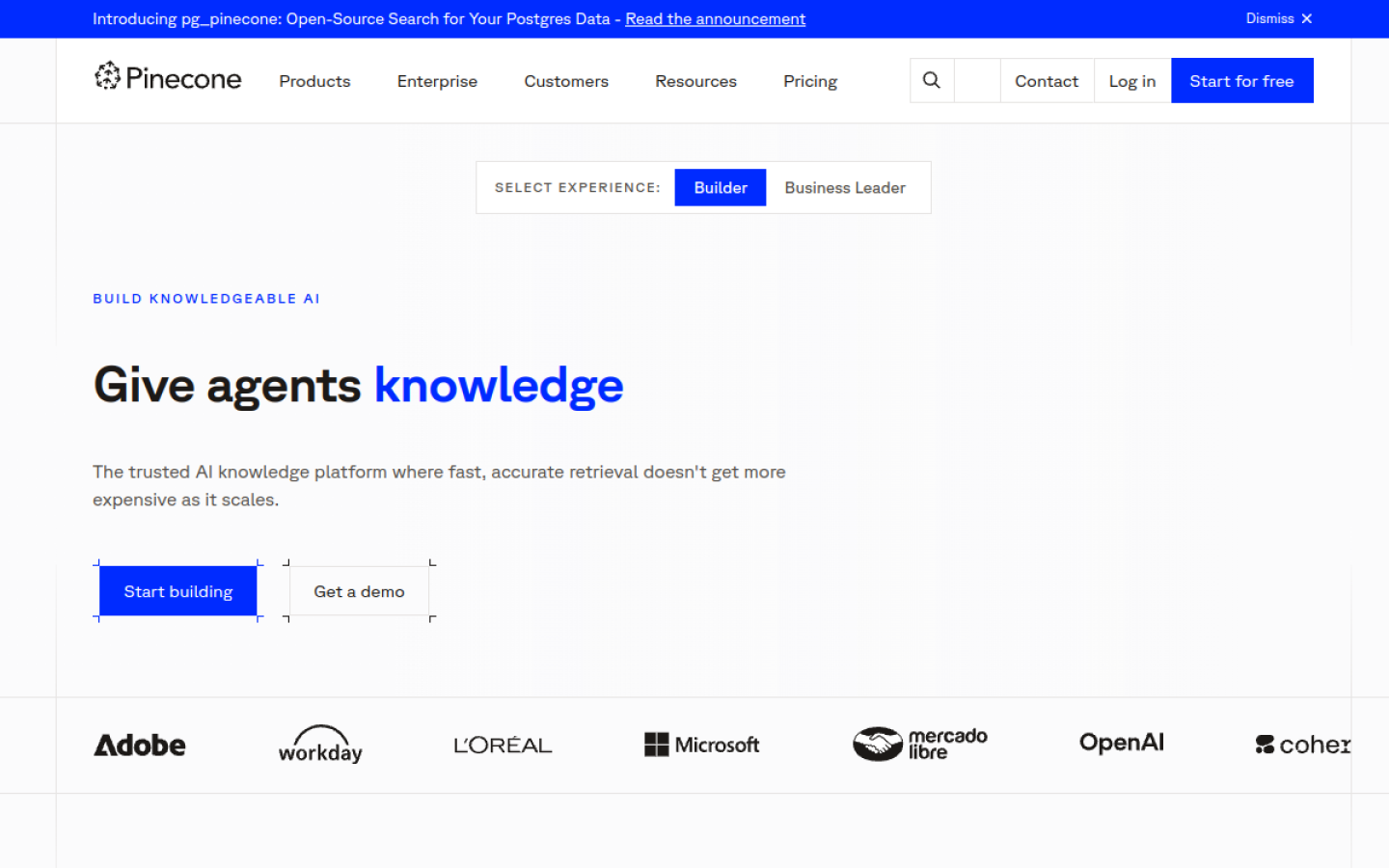
Pinecone is the simplest managed vector database: free Starter tier, then Builder at $20 a month flat.
Weaviate leads the open-source vector pack on hybrid search, from $45 a month, while TiDB Cloud adds vector search to distributed SQL.
Zilliz Cloud handles the largest scales, with a free tier of 5 GB storage and dedicated clusters from $126 a month.
Supabase and MongoDB Atlas add vector search to databases teams already use, from $25 and $8 a month.
Elasticsearch and Redis Cloud suit teams that need vector search beside full-text search or caching.
What an AI database should cover
An AI database stores embeddings, the number lists that represent text, images or audio, and finds the closest matches to a query. That powers search, recommendations and retrieval-augmented generation.
A good option should search fast at your scale, filter results by metadata, and offer a free tier so you can prove the idea before paying.
Hybrid search, which mixes vector similarity with keyword matching, matters when exact terms count as much as meaning. Our guide on AI data analytics tools covers the wider analytics side.
Watch the billing model. Some tools charge a flat monthly fee, others bill per query, per stored dimension or per gigabyte, so the cheapest entry price is not always the cheapest bill at scale.
Pinecone is a fully managed vector database built for AI search and retrieval-augmented generation. The free Starter tier covers 2 GB of storage, 1 million read units and 2 million write units a month, with up to 5 serverless indexes. Builder adds 10 GB of storage and any region for a flat $20 a month.
The trade off is usage billing. Standard has a $50 monthly minimum and charges $0.33 per GB stored plus per-million read and write units, so heavy query volume adds up. It suits teams that want vector search running fast with no servers to operate.
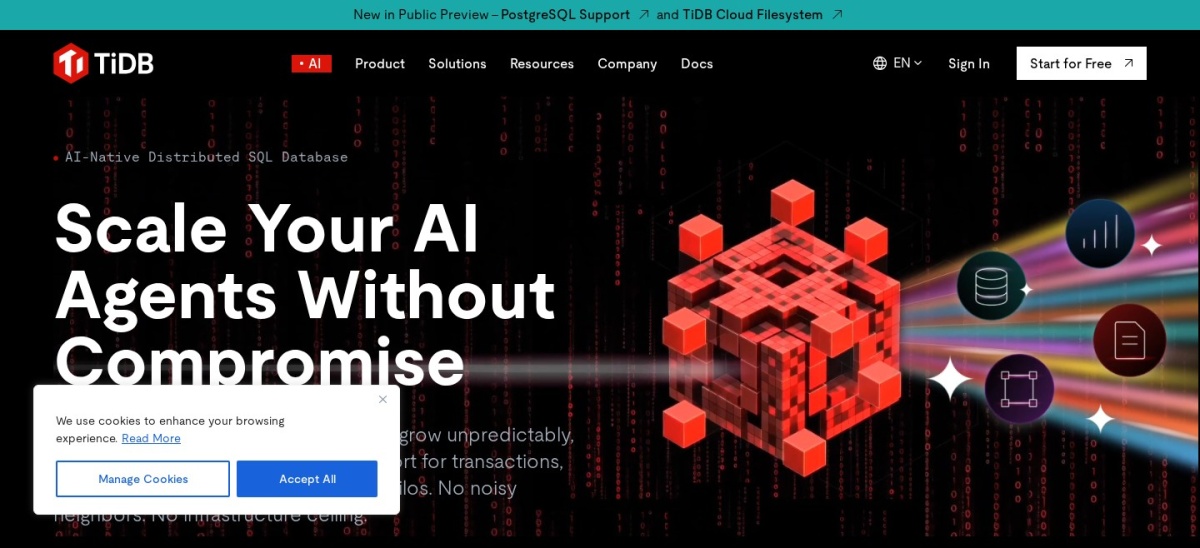
TiDB Cloud is PingCAP's managed distributed SQL database, built for AI workloads with vector search beside transactions and analytics in one engine. The Starter plan is free within its allowance: up to 5 instances with 5 GiB of row storage, 5 GiB of columnar storage and 50 million Request Units a month. Self-hosted TiDB is free under Apache 2.0.
The trade off is the jump to paid. Essential starts at $400 a month for provisioned compute, and Dedicated clusters start at $1,376 a month, so production costs climb fast. It suits teams that want one distributed database for transactions, analytics and vectors together.
What we like
One engine for transactions, analytics and vectors
Weaviate is an open-source vector database that combines dense vector search with BM25 keyword matching, which improves accuracy when exact terms matter. The free cloud tier covers 100,000 objects, 1 GB of memory and 10 GB of disk. Flex starts at a $45 monthly minimum with a 99.5% uptime SLA.
The trade off is dimension billing. Weaviate Cloud charges per million stored vector dimensions plus storage and backups, so large high-dimension collections cost more than a flat fee suggests. It suits teams that need hybrid search and built-in embedding and query-agent services.
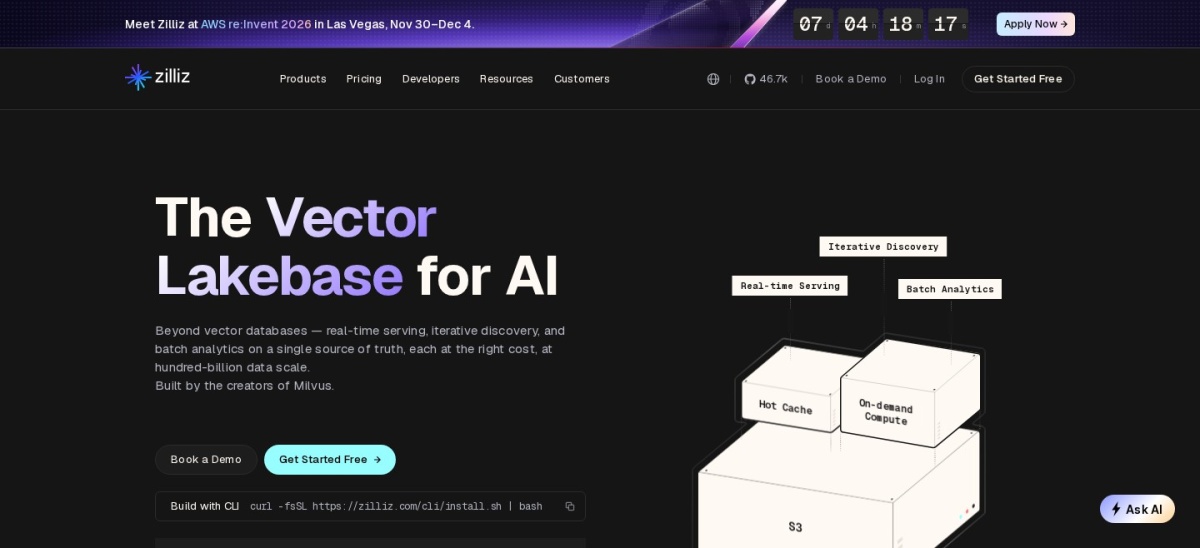
Zilliz Cloud is the managed version of Milvus, the open-source vector database built for billion-scale search. The free tier includes 5 GB of storage and 2.5 million vCUs a month across up to 5 collections. Standard serverless starts at $0 plus usage, while dedicated clusters start at $126 a month.
The trade off is pricing complexity. Serverless bills in vCUs, dedicated bills in compute units, and the per-vCU rate is only shown in the cost calculator. It suits teams with very large collections that need Milvus scale without running the cluster themselves.
What we like
Proven at billion-vector scale
Generous free tier at 5 GB
Highest G2 rating in this list
Watch out for
Pricing mixes vCUs, plans and per-vector rates
Dedicated entry is the priciest here
Enterprise adds SLAs and audit logs from $197 a monthVisit zilliz.com
05
Supabase
4.6/5on G2 (243 reviews, checked Nov 2026)
Paid from$25/mo
Best for Postgres apps that need vectors
Free tier500 MB database
BillingMonthly plan
Self-hostedYes, Apache 2.0
Paid planPro, $25/mo
supabase.com
Supabase homepage, captured Nov 2026.
Supabase is an open-source backend platform on PostgreSQL that adds vector search through the pgvector extension, so embeddings sit beside your app data. The free tier includes a 500 MB database, auth, storage and auto-generated APIs. Pro costs $25 a month and includes $10 in compute credits and 8 GB of disk.
The trade off is scale. Free projects pause after a week idle, and pgvector recall and speed trail purpose-built engines past a few million vectors. It suits teams already building on Postgres who want vectors without a second database.
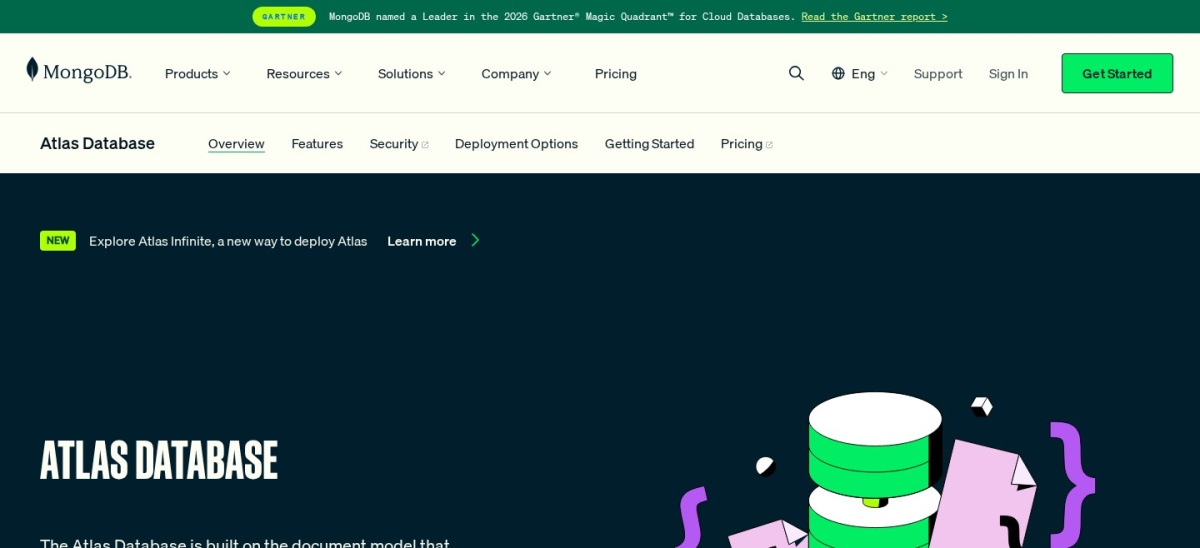
MongoDB Atlas adds vector search to the document database many teams already run, so embeddings live beside the JSON data they describe. The free M0 cluster covers 512 MB of storage, and Flex clusters run $8 to $30 a month. Dedicated M10 clusters start at about $57 a month.
The trade off is two billing meters. Vector search needs search nodes on top of the database cluster, with dedicated search deployments starting near $175 a month for two nodes. It suits teams whose app data already lives in Atlas.
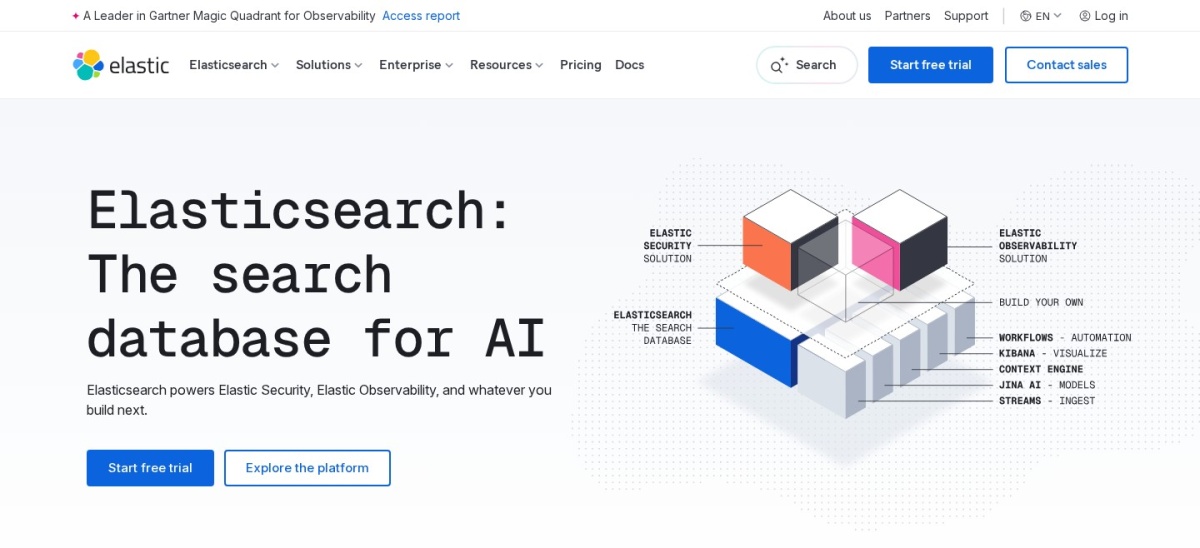
Elasticsearch runs vector similarity, full-text search and log analytics on one platform, self-hosted or on Elastic Cloud. It supports dense and sparse vectors plus hybrid search and inference endpoints, and holds the largest market presence of any vector database on G2. Elastic Cloud Hosted starts at about $99 a month.
The trade off is cost at small scale. Serverless vector workloads often land near $150 to $200 a month once search, ingest and storage meters combine. It suits teams already on the Elastic Stack that want vectors beside keyword relevance and observability.
What we like
One stack for vectors, text and logs
Strong hybrid search and inference
Largest G2 market presence here
Watch out for
No permanent free cloud tier
Small workloads can cost more than expected
Serverless adds usage-based scaling with no cluster sizingVisit elastic.co
08
Redis Cloud
4.4/5on G2 (45 reviews, checked Nov 2026)
Paid from$5/mo
Best for fast vector search beside caching
Free tier30 MB
BillingUsage-based, hourly
Self-hostedYes, open source
Paid planEssentials, from $5/mo
redis.io
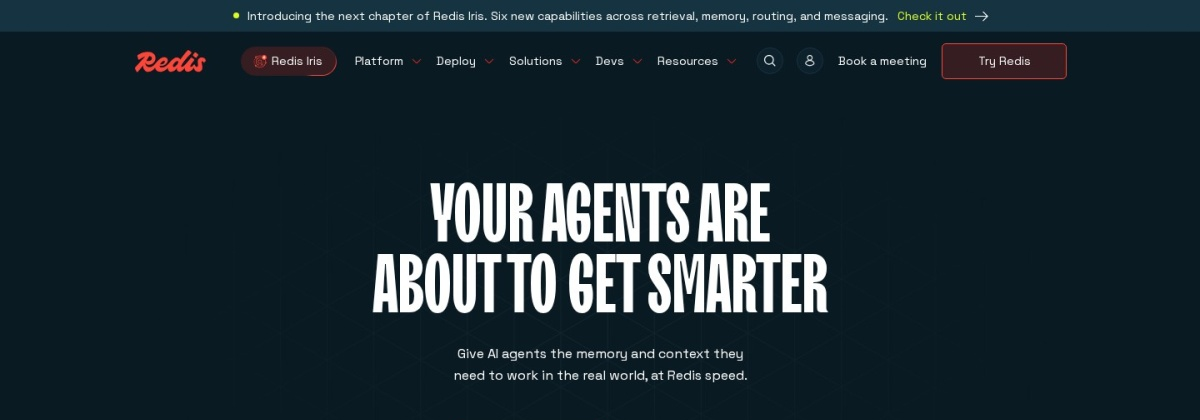
Redis Cloud homepage, captured Nov 2026.
Redis Cloud adds vector search to the in-memory store teams already use for caching and real-time data. The free tier covers 30 MB, and Essentials starts at about $5 a month on shared infrastructure. Vector search runs with sub-millisecond reads when the data already lives in Redis.
The trade off is the jump to dedicated. Pro starts at about $0.014 an hour with a $200 monthly minimum, which is steep for a vector-only workload. It suits teams that already run Redis and want fast vector search without a new database.
What we like
Sub-millisecond reads for hot data
Cheapest paid entry in this list
One store for cache and vectors
Watch out for
Free tier is only 30 MB
Pro minimum of $200 a month is steep
Pro adds dedicated deployments and higher SLAsVisit redis.io
Managed vs self-hosted: what changes
Managed services charge for convenience. You get backups, upgrades and scaling without hiring someone to run the cluster.
Self-hosting TiDB Cloud, Weaviate, Milvus or pgvector costs only infrastructure, but you own monitoring, upgrades and recovery.
For a first AI feature, start managed and free. Move to self-hosted only when the monthly bill passes the cost of the engineering time it replaces.
How we chose
We started from the vector and AI-native databases most often compared in 2026, then kept those with a usable free tier or trial and published pricing.
Prices come from each vendor's pricing page and recent pricing guides, checked on 24 November 2026. Ratings come from G2 on the same date. Where a vendor shows a sale, the list shows the regular price.
We left out Chroma Cloud, which is winding down in December 2026, and tools without published entry pricing. No vendor paid for a place, and we do not claim hands-on testing for this list.
How to choose an AI database for your business
Start with where your data already lives, then match the billing model to your query volume.
Check what you already run. If your app uses Postgres or MongoDB, Supabase or Atlas adds vectors without a new database to operate.
Estimate your vector count and queries. A few hundred thousand vectors fit a free tier. Millions of vectors with heavy queries need a paid plan sized to the workload.
Decide managed or self-hosted. Managed saves engineering time. Self-hosted TiDB Cloud or Weaviate saves money once the managed bill grows past infrastructure costs.
Model the full bill, not the entry price. Add storage, query and backup meters together before choosing, because usage-based plans can pass flat plans quickly.
FAQ
What is the best AI database for a small business?
Pinecone is the best pick for most small businesses. Its free Starter tier covers early use, Builder costs $20 a month flat, and there is no infrastructure to run.
What is the cheapest AI database?
Redis Cloud Essentials starts at about $5 a month, and MongoDB Atlas Flex runs $8 to $30 a month. Both have free tiers, so small prototypes can start at $0.
Do I need a separate vector database?
Not always. If your app already uses Postgres or MongoDB, Supabase or Atlas Vector Search adds vectors to the database you have.
What is hybrid search?
Hybrid search mixes vector similarity with keyword matching. It helps when exact terms matter, such as product codes or names, alongside meaning.
Is open-source vector search free?
The software is free, but you pay for the servers, storage and your time to run it. Managed cloud versions of the same tools charge a monthly fee instead.
Which AI database scales the largest?
Zilliz Cloud, the managed Milvus, is built for billion-vector workloads. Pinecone and Zilliz Cloud also scale to very large collections on managed plans.