Lovable is the best AI app builder for most people, turning a plain-language prompt into a working full-stack app with hosting included, backed by 502 G2 reviews. Pick Glide for spreadsheet-powered business apps and Softr for client portals built on Airtable data.
How we make this list: we compare pricing pages, product documentation and public user reviews, then re-check every price before each update. No product paid for a place. Disclosure.
Lovable is the top pick for prompt-to-app building, with a free plan and Pro at $25 a month.
Glide and Softr hold the highest G2 ratings in this list, 4.7 out of 5, for data-driven business apps.
v0 produces the cleanest React interfaces, but its cheapest plan for new users is now $30 a month.
FlutterFlow is the only tool here that exports full native mobile code, from $29 a month billed annually.
Every tool has a free plan, and paid plans start at $19 a month for Glide and Softr.
What an AI app builder should do
An AI app builder turns a written description into a working app. The best ones generate the interface, the logic and the database, then publish the result to a live web address.
Prompt-first builders such as Lovable, v0 and Bolt.new suit founders and product teams who want a working product fast. No-code builders such as Glide, Softr and Bubble suit teams building on data they already keep, with more control over structure. Our guide to AI agent builders covers the agent side of this market.
Watch the meter. Most of these tools charge by credits or tokens, so the monthly price is only part of the cost. A builder that looks cheap can get expensive when the AI reworks its own mistakes.
Code export matters if you ever want to leave. FlutterFlow and Bolt.new let you keep the code, while Bubble and Glide keep your app on their platform.
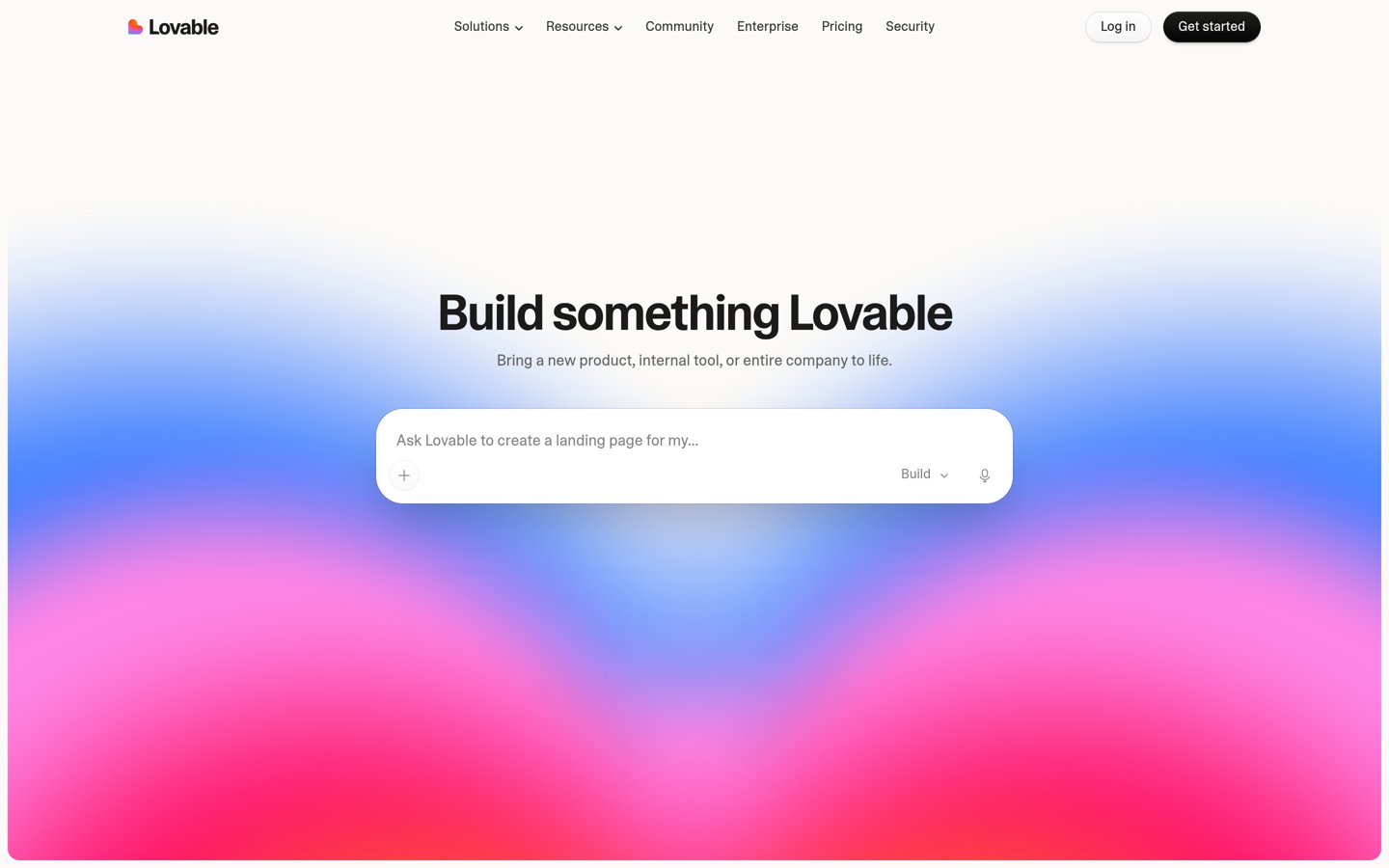
Lovable is an AI app builder that turns a plain-language description into a working full-stack web app, with design, logic and database included. The free plan gives 5 build credits a day, and paid plans add a monthly credit balance, one-click publishing and hosting, GitHub sync and integrations with tools such as Supabase and Stripe.
The trade off is the credit meter. Fixing a mistake or reworking a feature spends credits, so a long debugging session can use up a month's allowance fast, and reviewers report unpredictable costs on bigger builds. It suits founders and small teams who want a working product online quickly without hiring a developer.
What we like
Prompt to working app in minutes, with hosting included
Full-stack output with database, auth and payments
Free plan to try before paying
Own your code and sync it to GitHub
Watch out for
Credit costs are hard to predict on complex builds
Fixing AI mistakes spends credits too
No native mobile app output
Pro adds a monthly credit balance and removes free-plan limitsVisit lovable.dev
02
Glide
4.7/5on G2 (820 reviews, checked Nov 2026)
Paid from$19/mo
Best for spreadsheet-powered business apps
Data sourceGoogle Sheets, Airtable, Excel
Free planBuild and test apps
App typeProgressive web app
Paid planExplorer, $19/mo
glideapps.com
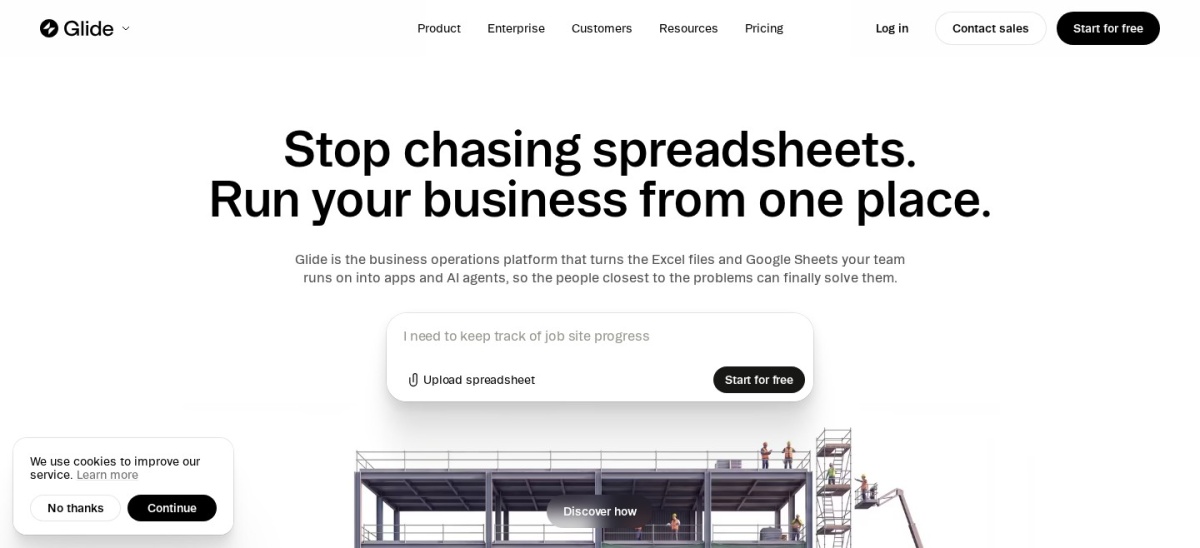
Glide homepage, captured Nov 2026.
Glide is a no-code app builder that turns a spreadsheet or database into a polished business app, with templates for portals, dashboards and internal tools. It connects to Google Sheets, Airtable and Excel, and its AI features help generate screens and data from a description. The free plan covers building and testing, and Explorer adds one published app.
The trade off is the output. Glide builds progressive web apps rather than native apps, so you cannot publish to the Apple App Store or Google Play, and usage is metered by updates. It suits teams whose data already lives in a spreadsheet and who need an internal tool or portal fast.
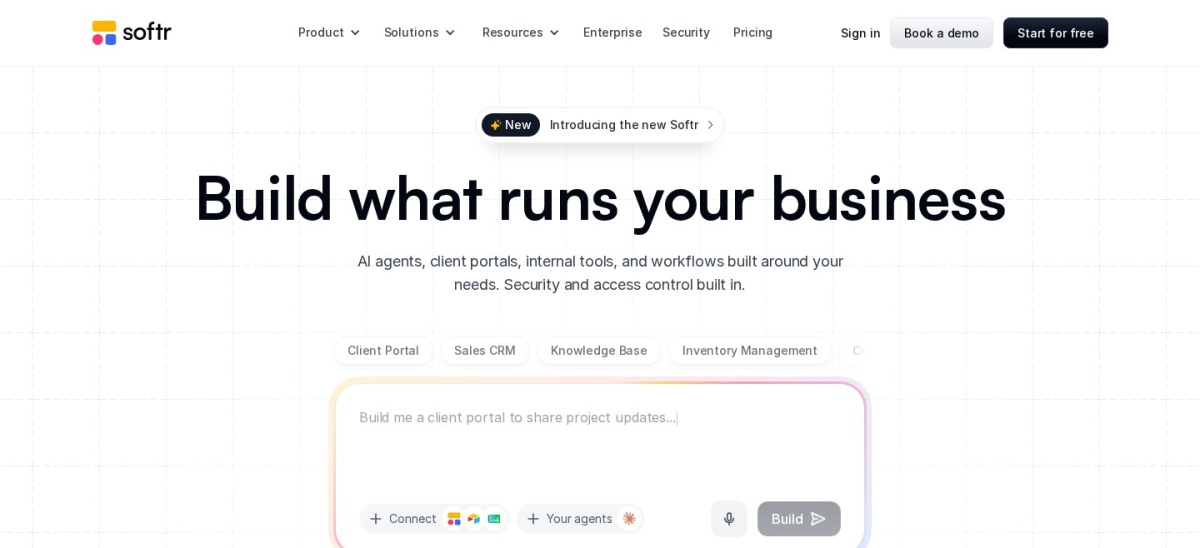
Softr is a no-code builder for client portals, internal tools and membership sites that sit on top of data you already keep in Airtable, Google Sheets, Notion or its own database. Its AI app builder generates a first version from a prompt, and the free plan covers a small project with 5 app users, a custom domain and integrations.
The trade off is metering. Records, workflow actions and seats are all counted, so the price climbs steeply from Basic at $19 a month to Pro at $99 and Business at $329 as your audience grows. It suits small teams building a portal or directory for a countable audience.
What we like
Fastest route to a client portal on Airtable
Generous free plan with a custom domain
Strong G2 rating from 757 reviews
Watch out for
Three separate meters make costs hard to predict
Big price jumps between tiers
No native mobile apps
Basic adds 50,000 records and 2,500 monthly actionsVisit softr.io
04
v0
4.6/5on G2 (51 reviews, checked Nov 2026)
Paid from$30/mo
Best for React and Next.js interfaces
OutputReact and Next.js UI
Free plan$5 in monthly credits
DeploymentOne-click to Vercel
Paid planPlus, $30/mo
v0.app
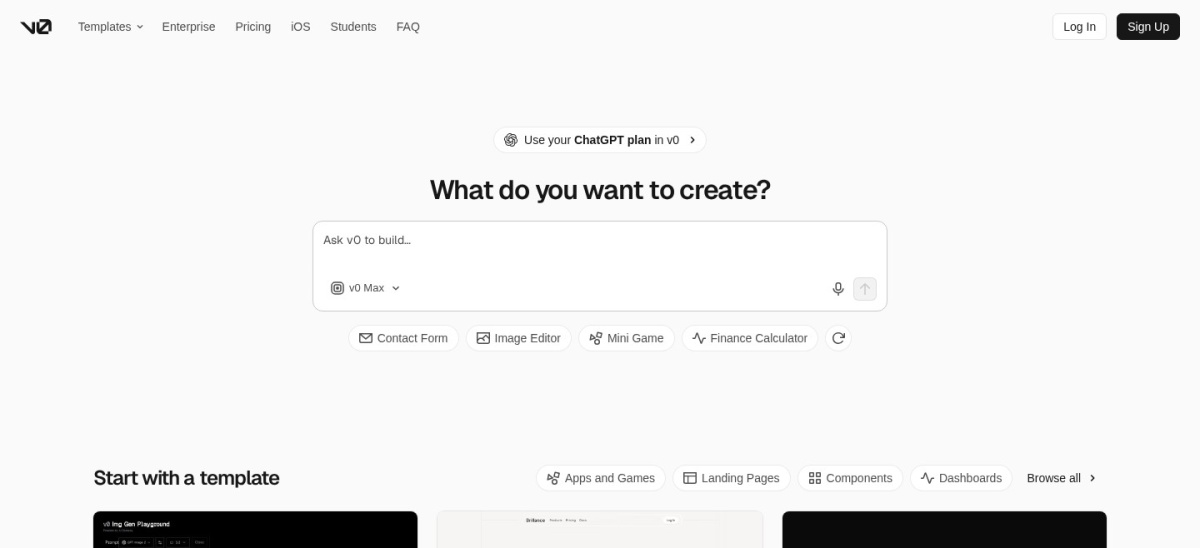
v0 homepage, captured Nov 2026.
v0 is Vercel's AI builder for turning a prompt or a design into production-ready React and Next.js interfaces with Tailwind styling. It generates clean components, syncs code to GitHub, connects to databases through the Vercel Marketplace and deploys in one click. The free plan includes about $5 in monthly credits.
The trade off is scope and cost. v0 is strongest on front-end interfaces, so back-end and auth work usually routes through other tools, and token-based pricing means heavy iteration burns credits quickly. It suits React developers who want the cleanest generated UI in the category.
What we like
Cleanest React and Next.js output in this list
GitHub sync and one-click Vercel deployment
Figma import for design-led builds
Watch out for
Front-end first; back end needs other tools
Token costs are hard to predict
Cheapest paid plan rose to $30 for new users
Plus adds $30 in monthly credits and private projectsVisit v0.app
05
Replit
4.5/5on G2 (407 reviews, checked Nov 2026)
Paid from$25/mo
Best for shipping fast from the browser
AI agentReplit Agent builds from prompts
Free planBuild and test apps
DeploymentHosting and autoscale included
Paid planCore, $25/mo
replit.com
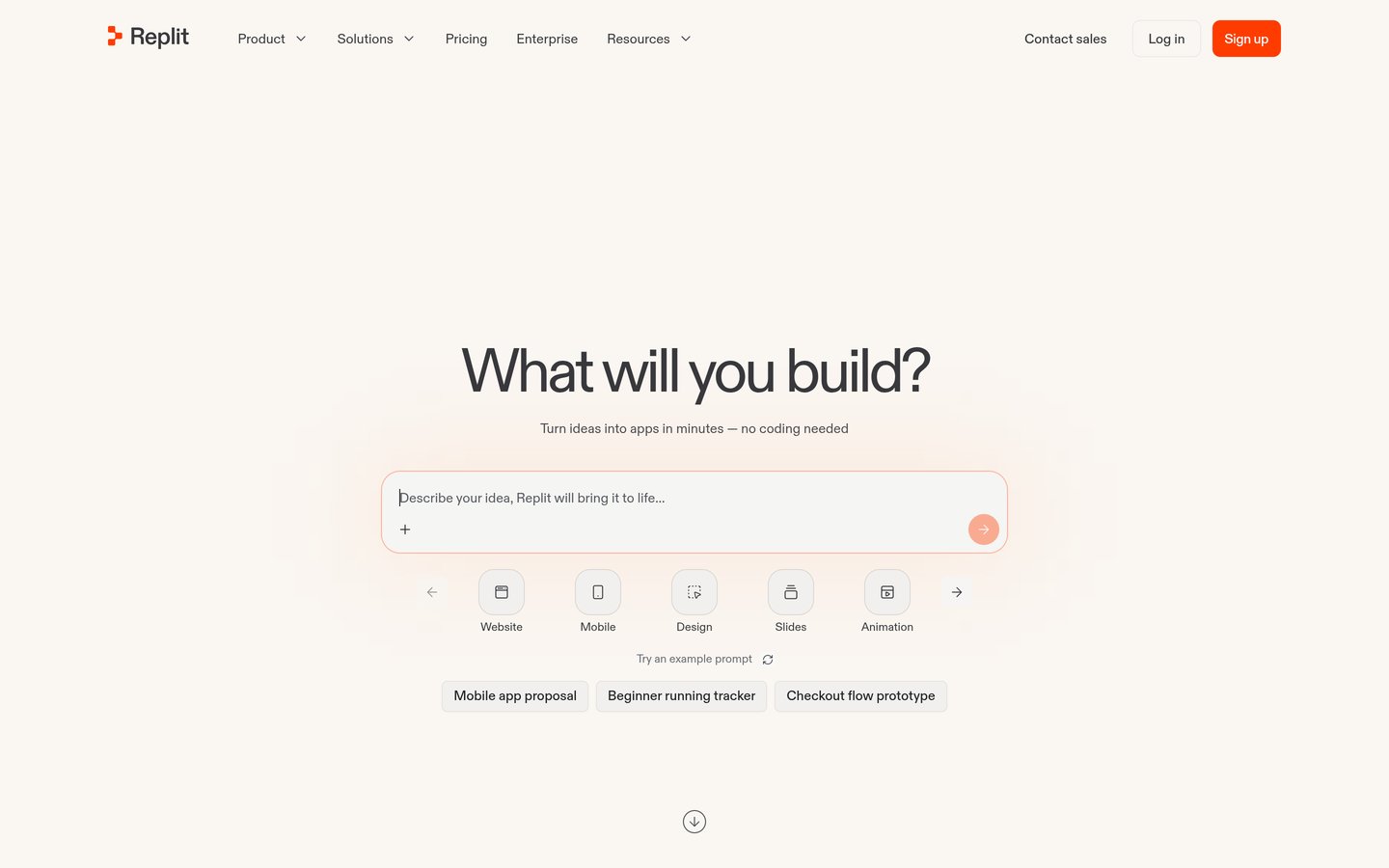
Replit homepage, captured Nov 2026.
Replit is a browser-based workspace where its AI agent builds, runs and deploys apps from a plain-language prompt, with hosting included. It covers the full loop from idea to a live URL, with a built-in editor for developers who want to adjust the code by hand. The free plan covers building and testing, and Core adds monthly credits.
The trade off is cost control. Credits run out fast on bigger builds, and reviewers report confusing billing, including credits spread across the year on annual plans. It suits solo builders and small teams who want to prototype and ship without setting up any infrastructure.
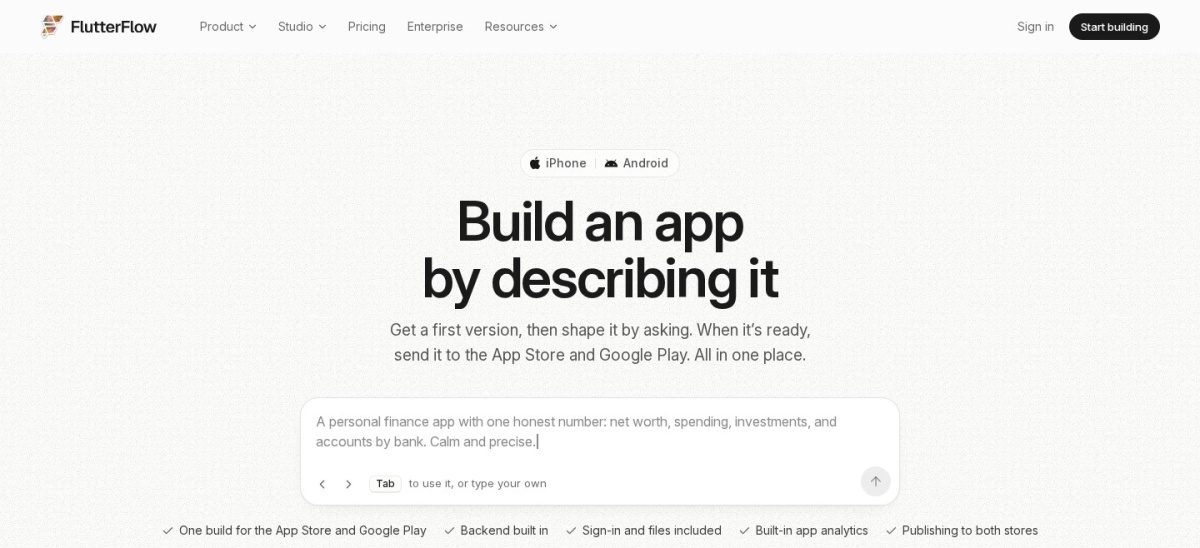
FlutterFlow is a visual builder for real Flutter apps that run on iOS, Android, web and desktop from one codebase. It offers more than 1,000 templates, Firebase and Supabase connections, built-in analytics and AI generation, and 3.3 million people have built on it. The free plan covers two projects with web publishing.
The trade off is that it is low-code rather than no-code. Real apps usually need some Dart for custom logic, the editor slows on large projects, and code download only unlocks on the paid Basic plan. It suits teams shipping true native mobile apps who want to own the code.
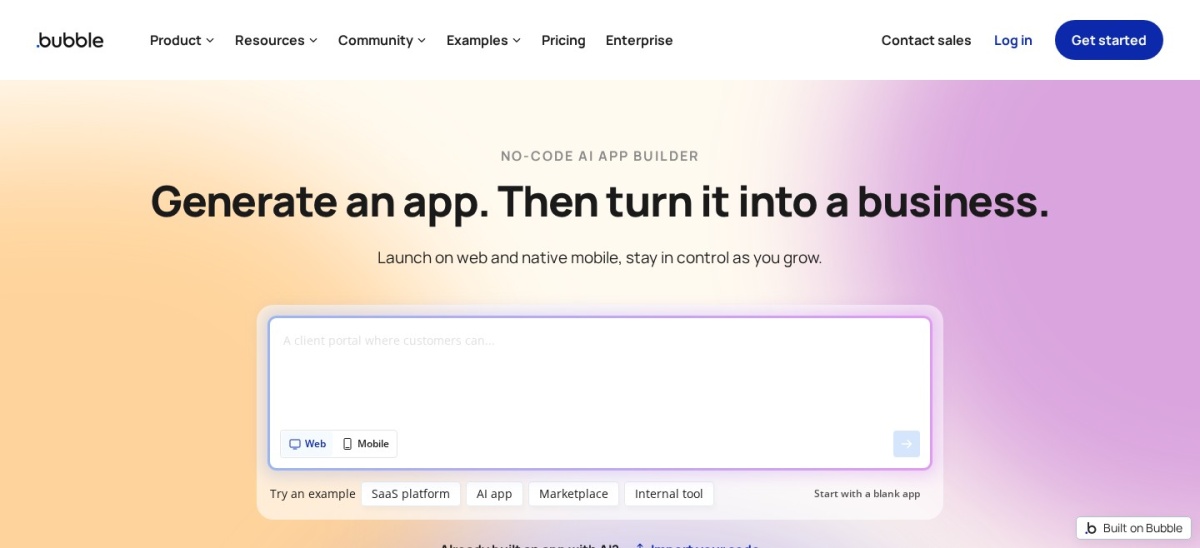
Bubble is the most capable no-code platform in this list, with a visual editor, a real database, back-end workflows and a large plugin marketplace. Its AI agent can generate a first version from a prompt, and the free plan covers building and testing. Starter adds a custom domain and a live app with 175,000 workload units.
The trade off is the learning curve. Bubble takes weeks to learn well, and its workload-based pricing can climb steeply as an app grows, with no way to export your code. It suits founders building a complex web app who want depth no simpler builder offers.
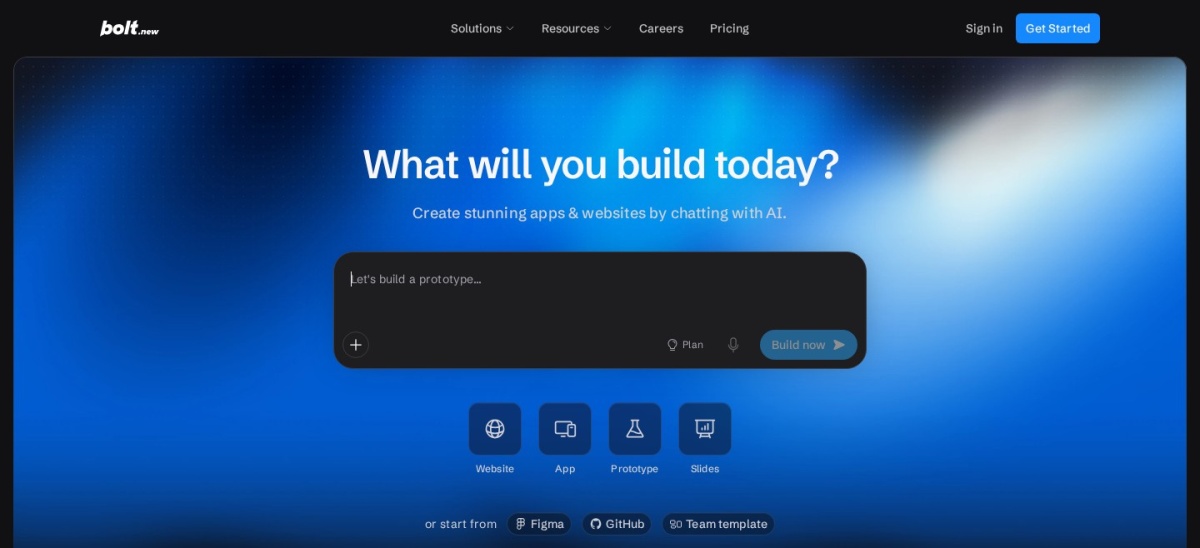
Bolt.new is StackBlitz's AI builder that turns a prompt into a full-stack web app running entirely in the browser, with full code access. It supports React, Vue, Svelte and more, deploys to Netlify in one click and connects to Supabase for database and auth. The free plan includes a daily token allowance.
The trade off is token burn. Reviewers report tokens draining fast when the AI fixes its own mistakes, and larger projects can lose context, so output often needs hardening before production. It suits developers who want a fast prototype with real code they can keep.
Prompt builders start from words. You describe the app, the AI builds a first version, and you refine it by chatting. They are fastest for new ideas and prototypes.
No-code builders start from structure. You pick a data source, lay out screens and set rules, with AI helping along the way. They are slower to start but steadier for apps with real users.
Many teams use both: a prompt builder for the first version, then a no-code platform for the version customers rely on. Check the export and pricing limits before you commit either way.
How we chose
We started from the AI and no-code builders with the largest review bases on G2, then kept the eight with a real free plan and a published paid price. Each tool below has a verifiable G2 rating and review count from November 2026.
Prices come from each vendor's pricing page and G2's vendor-provided pricing, checked on 25 November 2026. Where a vendor bills annually, the list shows the annual monthly rate, and the yearly total in the price ladder.
We left out builders without a verifiable rating or a published price. No vendor paid for a place, and we do not claim hands-on testing for this list.
How to choose an AI app builder
Start with what the app must do, then check the meter, the export and the price.
Decide prompt-first or data-first. If you are starting from an idea, a prompt builder is fastest. If your data already lives in a spreadsheet or Airtable, a no-code builder fits better.
Check what the free plan really includes. Some free plans cover real building, others only a demo. Look for published apps, custom domains and code export before you invest time.
Work out the true monthly cost. Credits, tokens, users and updates are all metered somewhere. Add the plan price to the likely top-ups before comparing two builders.
Confirm you can leave. Check code export and data export before you build. A builder that locks your app in is a bigger commitment than its monthly price suggests.
FAQ
What is the best AI app builder?
Lovable is the best AI app builder for most people. It turns a plain-language prompt into a working full-stack app with hosting included, backed by 502 G2 reviews. Glide and Softr rate higher for data-driven business apps.
Do AI app builders write real code?
Most of them do. Lovable, v0, Bolt.new and FlutterFlow generate real code you can view, edit and, on paid plans, download. Glide, Softr and Bubble keep your app on their platform, so check export options before building something you may need to move.
How much does an AI app builder cost?
Paid plans in this list start at $19 a month billed annually for Glide and Softr, and run to $30 a month for v0. Most builders also sell credits or tokens on top, so budget for top-ups if you build often or rework features.
Can I build a mobile app with an AI app builder?
Yes, but the output differs. FlutterFlow builds true native iOS and Android apps from one project, while Glide builds progressive web apps that run in a browser. Bubble and Softr also produce web apps rather than store apps.
Do I need to know how to code?
No. Every tool in this list works from prompts or visual editors, and none of them needs you to write code to ship a first version. Knowing some code helps when you want custom logic or need to fix what the AI built.
What is the catch with free plans?
Free plans limit what you can publish. Most cover building and testing, but a custom domain, code download or a live app for real users usually needs a paid plan, and credit allowances on free plans run out quickly.
SaaS SEO and WordPress specialist with about 8 years of experience. Rakib compares WordPress plugins, themes, hosting and software using public pricing, documentation and user reviews. See how we rank.