Pilot is the top pick for funded startups that want investor-ready books without hiring in-house, while ZipBooks is the best free starting point for pre-revenue founders. FreshBooks suits service startups that live on client invoicing, and Xero is the strongest all-round ledger once the team grows.
How we make this list: we compare pricing pages, product documentation and public user reviews, then re-check every price before each update. No product paid for a place. Disclosure.
Pilot is the top pick for funded startups, from 99 dollars a month for AI-run books and 299 dollars a month billed annually for a human bookkeeper.
Wave, ZipBooks and Zoho Books all offer genuinely free accounting, so a pre-revenue startup need not pay anything.
FreshBooks is the best invoicing-first pick, but Lite caps at five clients.
Xero is the strongest all-round ledger once the team grows, with unlimited users from 15 dollars a month.
QuickBooks is the priciest entry plan at 38 dollars a month, but it is the tool most US accountants already know.
What startup accounting software should cover
A startup's first accounting tool has to do three jobs: send invoices, track cash and produce books an accountant or investor can trust. The wrong pick means re-doing the books at the first funding round or tax return.
Free tools cover the basics well. Wave and ZipBooks offer real double-entry accounting at no cost, and Zoho Books is free while revenue stays under 50,000 dollars a year. A pre-revenue founder rarely needs to pay anything.
Paid tools split two ways. Self-serve ledgers like Xero, QuickBooks and FreshBooks cost 15 to 38 dollars a month and scale with the team, while managed services like Pilot hand the books to a bookkeeper from 99 dollars a month.
This list ranks nine tools by G2 rating, then by review count, with the cheapest paid plan shown at its regular price. Sale prices and introductory discounts are not used, and every price is flagged where it rests on a second-hand source.
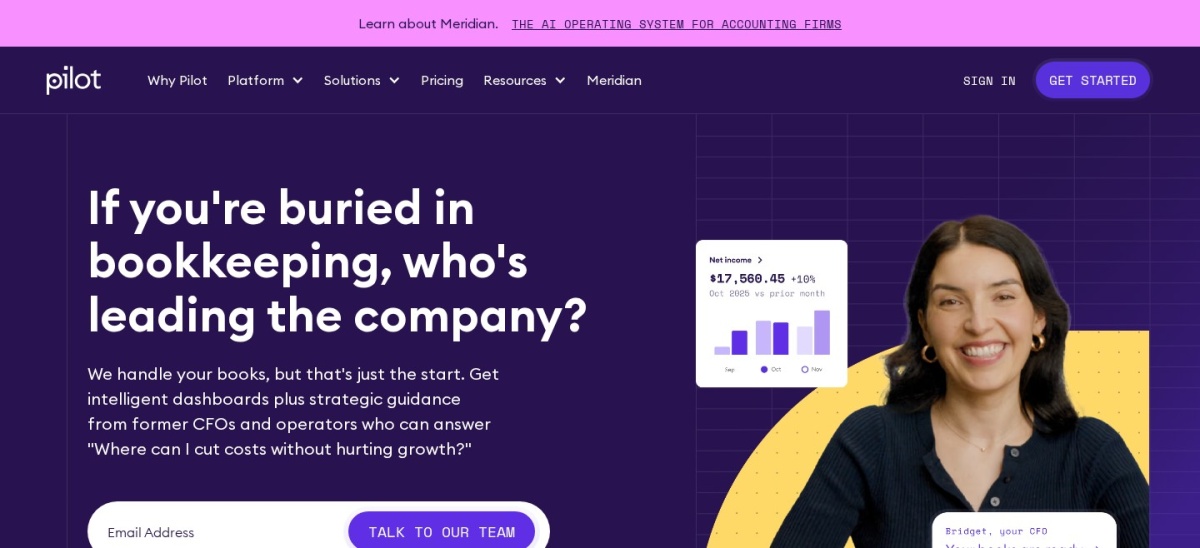
Pilot is a managed bookkeeping service for startups and small businesses that pairs AI categorisation with a US-based bookkeeper. Its Essentials plan at 99 dollars a month covers cash-basis books, monthly closes and a year-end tax package, while Core adds accrual books and a dedicated bookkeeper. Pilot runs your books in QuickBooks, so your accountant and investors see a familiar file.
The trade off is price and control. Essentials is AI-run with no human bookkeeper, and Core starts at 299 dollars a month billed annually for companies under 15,000 dollars in monthly expenses, rising with spend. It suits funded startups that want investor-ready books without hiring in-house.
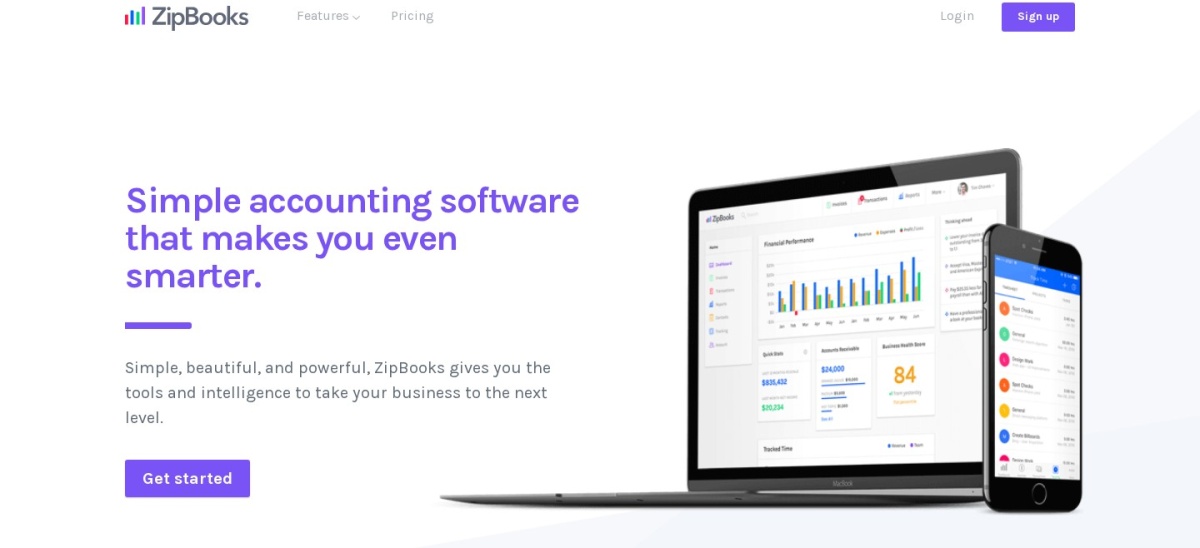
ZipBooks is a cloud accounting platform for freelancers and small businesses built around a genuinely free Starter plan. Starter covers unlimited invoices, unlimited customers and vendors, basic reports and one bank connection at no cost. Smarter at 15 dollars a month adds recurring invoices, reminders, time tracking and five team members.
The trade off is depth. ZipBooks has no inventory management, few integrations and no mobile app, and accountant access needs the 35 dollar Sophisticated plan. It suits pre-revenue founders who need real double-entry books and clean invoices for nothing.
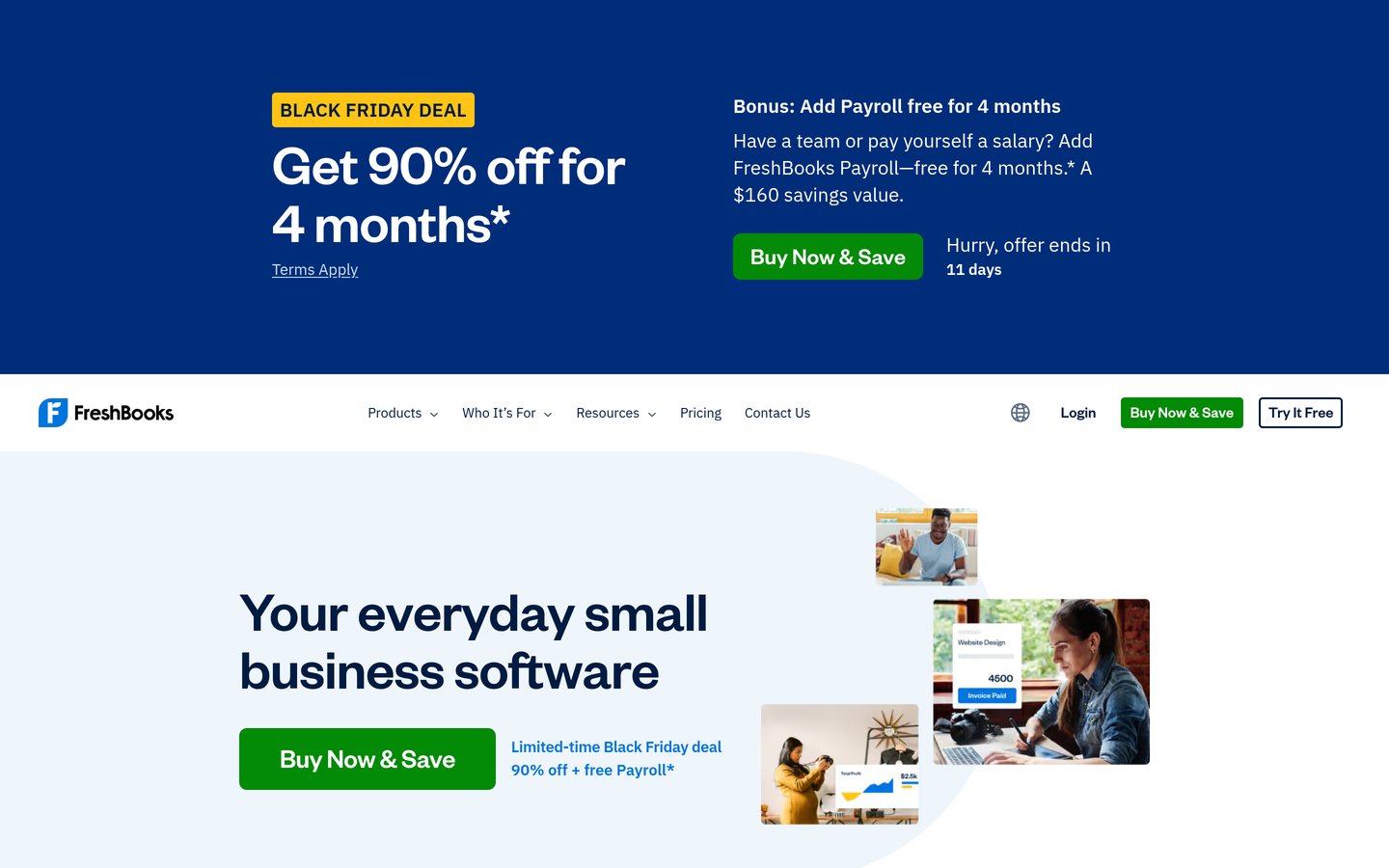
FreshBooks is invoicing and accounting software built for freelancers and service-based startups that live on client billing. Lite at 19 dollars a month covers five billable clients, unlimited invoices, expense tracking and time tracking, with polished client-facing invoices and a mobile app. Plus at 33 dollars a month raises the cap to 50 clients.
The trade off is the client cap and accounting depth. Lite caps at five clients, and full double-entry reports need higher plans, so a growing startup outgrows it faster than Xero or QuickBooks. It suits service startups whose core job is sending invoices and getting paid.
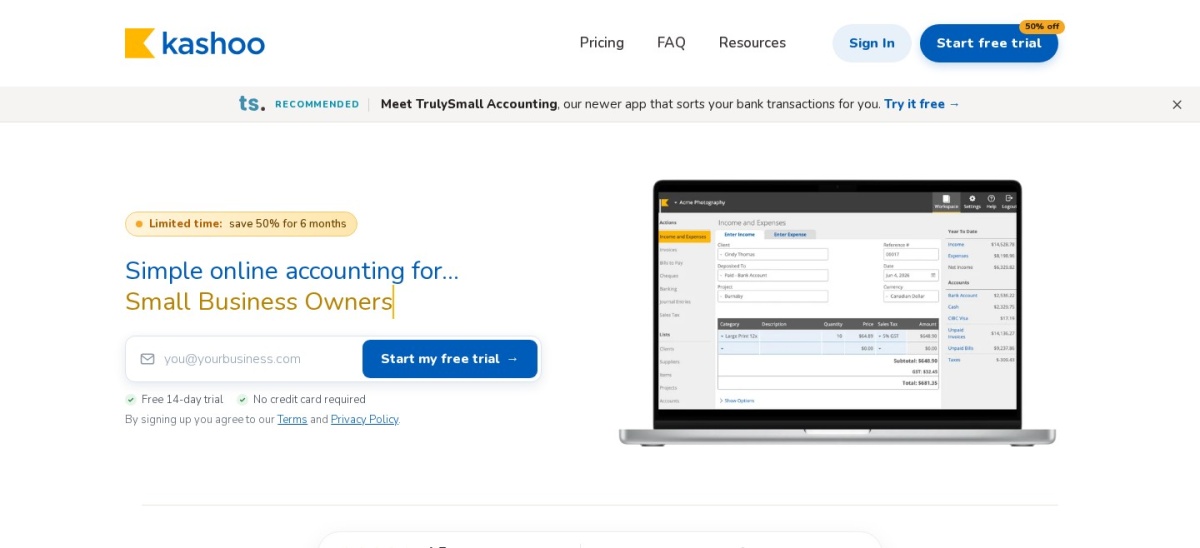
Kashoo is a simple cloud accounting tool for first-time owners with no bookkeeping background. One plan at 30 dollars a month covers invoicing, expense tracking, bank reconciliation and reporting, with live chat support praised in reviews. It sorts transactions automatically and maps deductions to tax categories without asking owners to learn accounting jargon.
The trade off is scale. Kashoo is single-user, has narrow integrations and no payroll connection, so a startup with a team or complex needs will outgrow it. It suits solo founders who want the books done with the least learning curve.
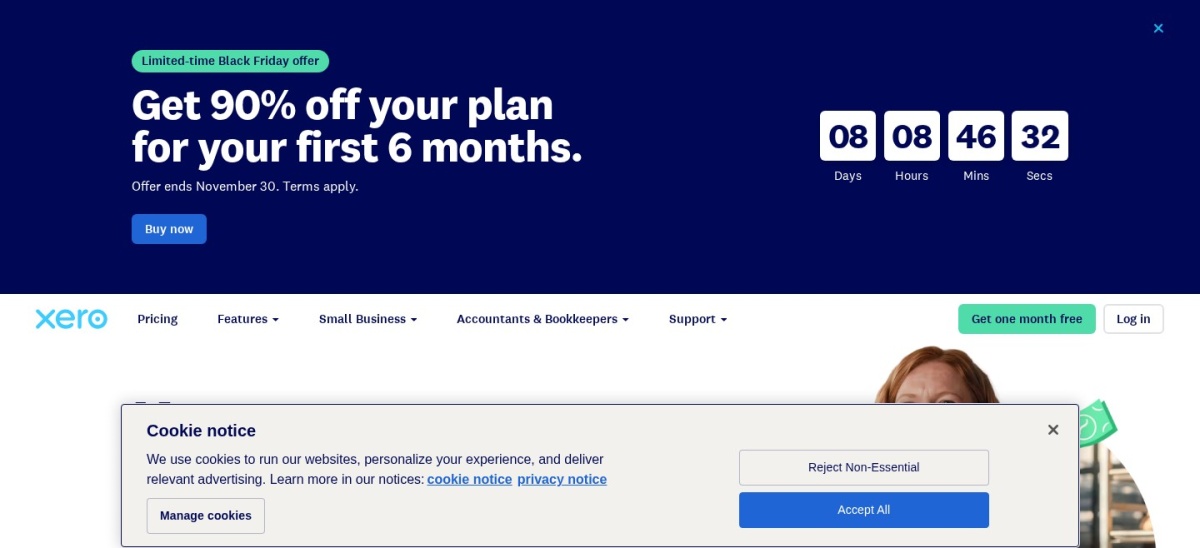
Xero is a cloud accounting platform for growing startups that want proper double-entry books with unlimited users. Early at 15 dollars a month covers 20 invoices and 5 bills a month, while Growing at 42 dollars a month removes the caps and adds multi-currency and cash flow forecasts. Its marketplace of over 1,000 apps connects to banks, payroll and ecommerce tools.
The trade off is the entry cap and US depth. Early limits invoices to 20 a month, and its US payroll and tax ecosystem is thinner than QuickBooks. It suits startups that expect to scale and want accountants to already know the tool.
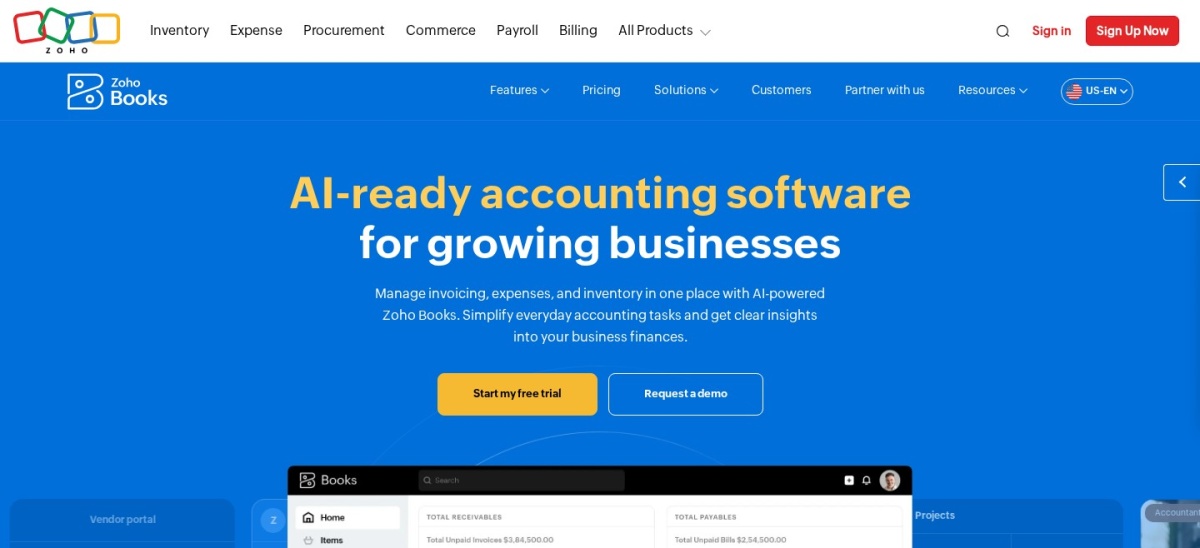
Zoho Books is a cloud accounting platform with a free plan for businesses under 50,000 dollars in annual revenue. Free covers invoicing, expenses, bank reconciliation and over 50 reports for one user plus an accountant. Standard at 15 dollars a month billed annually adds three users, time tracking and bank feeds.
The trade off is payroll and scale. US payroll needs an add-on, and invoice caps rise with each tier, so a fast-growing startup climbs the ladder quickly. It suits startups already using Zoho apps, or tiny teams that want a real free plan.
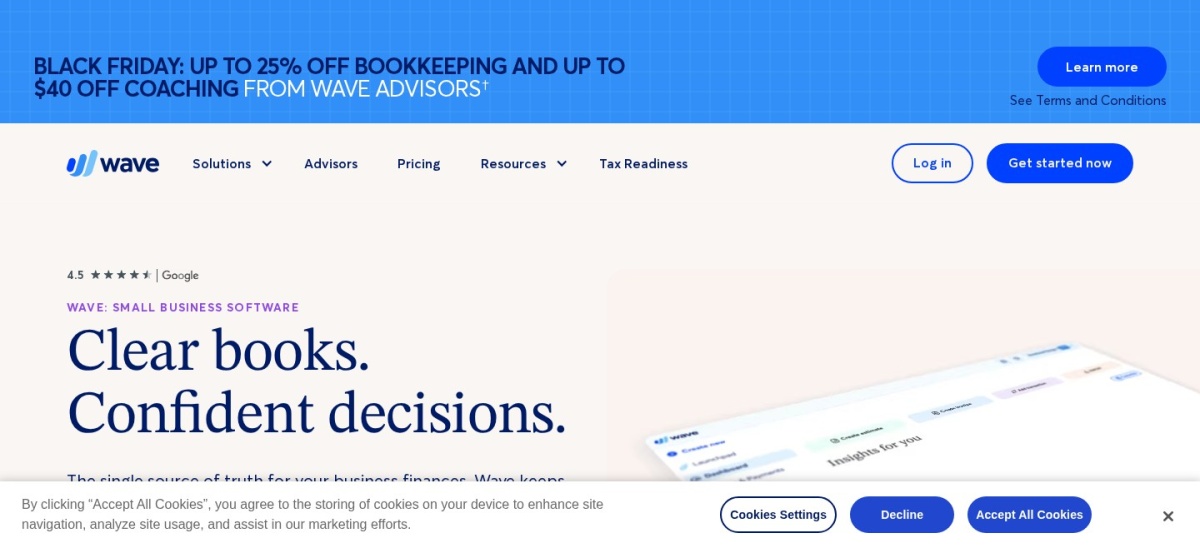
Wave is free accounting and invoicing software for freelancers and micro-businesses. Starter costs nothing and covers unlimited invoices, estimates, bills and bookkeeping records with a cash flow dashboard. Pro at 19 dollars a month adds automatic bank imports, receipt capture and automated payment reminders.
The trade off is automation and support. Bank auto-import and receipt capture moved to Pro, and free-plan support is thin, so reconciliation takes longer than on paid rivals. It suits pre-revenue founders who want genuine double-entry books at zero cost.
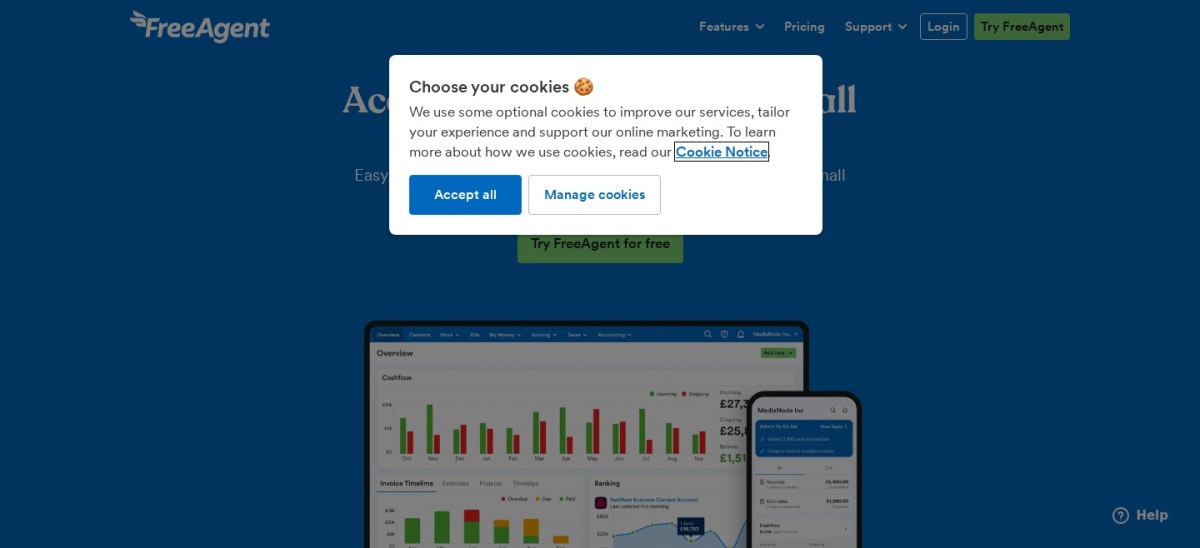
FreeAgent is cloud accounting software built for freelancers and small businesses, with invoicing, bank reconciliation, expense tracking and tax estimates in one dashboard. Its Universal plan is listed at 20 dollars a month on G2, and a 30-day free trial needs no credit card. It also covers project accounting and time tracking for service work.
The trade off is fit. FreeAgent is UK-first, with sole trader and limited company plans priced in pounds, and its US offering is a single Universal plan. It suits founders with UK tax needs or a small service business that wants simple books.
QuickBooks Online is the accounting standard most US accountants expect, with the deepest feature set and the widest integration ecosystem in this list. Simple Start covers invoicing, expense tracking, bank feeds and tax preparation for one user. Essentials at 65 dollars a month adds three users and bill management.
The trade off is cost and complexity. Simple Start is the priciest entry plan here, payroll costs extra, and the interface can feel cluttered for a simple business. It suits startups that want every accountant and bank to already speak their software.
We started from the accounting tools startups shortlist in 2026, then kept those with a verifiable rating on G2 and a published price or a clear free plan. Bench was excluded: it shut down in December 2024 and relaunched under new ownership, so its older ratings no longer describe the service. Puzzle was excluded because its G2 base is only five reviews and the figures conflict.
Prices come from each vendor's pricing page as reported in comparisons checked in November 2026, with Pilot and ZipBooks checked against their vendor pricing pages on 26 November 2026. Ratings and review counts come from G2 on the same day. Where a vendor shows a sale, the list shows the regular price.
No vendor paid for a place, and we do not claim hands-on testing for this list. Tools are ordered by rating first, then by review count, so a 4.7 with 143 reviews leads a 4.7 with 86.
How to choose accounting software for a startup
Start with your revenue stage, then check who will read the books.
Work out your revenue stage. Pre-revenue founders should start free with Wave or ZipBooks. Once invoices pass a handful a month, move to a paid ledger before the books get messy.
Check who will read the books. If an accountant or investor will read them, pick a tool they already use. QuickBooks and Xero are the safest answers in the US.
Price the whole year, not the first month. Introductory discounts and Black Friday deals expire. Compare the regular monthly price times twelve, plus payroll and payment fees.
Test the bank feed before you commit. Connect your bank and card during the trial and check that transactions import and categorise cleanly. A broken feed costs more time than any feature saves.
FAQ
What is the best accounting software for startups?
Pilot is the best pick for funded startups that want investor-ready books without hiring in-house, from 99 dollars a month. Pre-revenue founders should start free with Wave or ZipBooks, and growing teams should look at Xero from 15 dollars a month.
Is there really free accounting software for startups?
Yes. Wave, ZipBooks and Zoho Books all offer free plans with real double-entry accounting, unlimited invoicing and bank reconciliation. The free tiers cap users or invoice volume, so expect to pay once the startup grows past a handful of clients.
Should a startup use QuickBooks or Xero?
QuickBooks is the safer pick in the US because almost every accountant knows it, but it costs 38 dollars a month to start. Xero starts at 15 dollars a month with unlimited users and a bigger app marketplace, and it suits startups with international plans.
When should a startup hire a bookkeeper instead of using software?
Hire help when the books take more than a few hours a month, when investors ask for accrual reports, or when tax season arrives. Pilot starts at 99 dollars a month for AI-run books, while a human bookkeeper on Core starts at 299 dollars a month billed annually.
What does FreshBooks cost for a startup?
FreshBooks Lite costs 19 dollars a month for up to five billable clients, with unlimited invoices, expense tracking and time tracking. Plus at 33 dollars a month raises the cap to 50 clients, and Premium at 65 dollars a month covers unlimited clients.
Can a startup switch accounting software later?
Yes, but switching means exporting the chart of accounts, open invoices and bank history, then re-checking the opening balances. Pick a tool with a real export path, and switch before the first funding round rather than during it.
SaaS SEO and WordPress specialist with about 8 years of experience. Rakib compares WordPress plugins, themes, hosting and software using public pricing, documentation and user reviews. See how we rank.