Best Accounting Software for Musicians in 2026: 7 Tools Compared
WLWPLegible EditorsLast verified 22 Nov 2026How we rank6 min read
★ Short answer
Wave is the top pick for musicians with its free Starter plan for unlimited invoices and bookkeeping, holding a 4.3/5 rating across 328 G2 reviews. Zoho Books suits solo artists under $50,000 in annual revenue on its free tier, while FreshBooks fits session players billing regular clients.
How we make this list: we compare pricing pages, product documentation and public user reviews, then re-check every price before each update. No product paid for a place. Disclosure.
Wave offers a free Starter plan with unlimited invoices and bookkeeping records, with Pro at $19/mo or $190/yr.
Zoho Books provides a free plan for businesses under $50,000 in annual revenue and paid plans starting at $15/mo billed annually.
Patriot Accounting Basic starts at $20/mo with unlimited customers, invoices, and contractors, plus automatic bank imports.
FreshBooks Lite is $23/mo and caps active billable clients at 5, while Plus is $43/mo for up to 50 clients.
Xero Early is $27/mo in the US and limits you to 20 invoices and 5 bills per month before upgrading.
QuickBooks Online Simple Start is $38/mo for 1 user and supports bank feeds and Schedule C or small-business reporting.
What musicians need from accounting software
Musicians rarely earn money from a single steady paycheck. Income arrives from live gigs, session work, teaching, merch tables, sync licenses, and streaming royalties, often across irregular dates and mixed payment methods.
At the same time, expenses span instrument repairs, strings, rehearsal spaces, studio sessions, travel, and 1099 payments to bandmates or engineers. Mixing personal card swipes with gig payouts makes year-end tax prep slow and error-prone.
Dedicated accounting software separates business income from personal spending, tracks deductible gear and travel expenses, and generates profit-and-loss reports your accountant can read. For artists who also send tour quotes or session contracts, workflow features like proposals and client portals matter alongside ledger basics.
Before picking a tool, check whether a plan caps monthly invoices, billable clients, or annual revenue, and verify whether features like multi-currency tracking or contractor payouts require a higher tier.
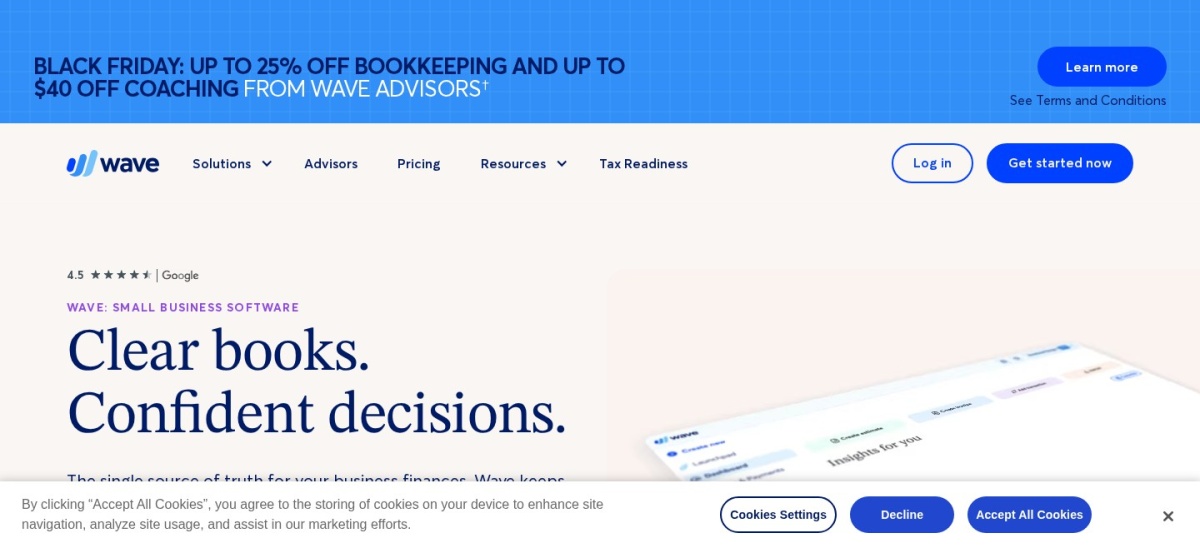
Wave is a cloud accounting and invoicing platform whose free Starter plan lets musicians create unlimited estimates, invoices, bills, and bookkeeping records. It holds a 4.3/5 rating across 328 G2 reviews and supports mobile invoicing on the go.
The trade off is that automated bank transaction imports and receipt capture sit behind the Pro plan at $19/mo regularly ($190/yr billed annually, with a 3-month promo listed on the pricing page). It suits solo musicians and indie acts who want zero monthly software fee while starting out.
What we like
Free Starter plan includes unlimited invoices, bills, and bookkeeping records
Clear split between invoicing, expenses, and basic cash-flow tracking
Optional Pro annual billing brings the regular cost down to $190/yr
Mobile app supports creating and sending invoices away from a desk
Watch out for
Bank transaction auto-import and receipt scanning require upgrading to Pro
Online card processing carries standard per-transaction fees
Add-ons like payroll and bookkeeping coaching raise monthly costs
Pro ($19/mo regular) adds automated bank imports, receipt capture, and late payment reminders.Visit waveapps.com
02
Zoho Books
4.4/5on G2 (332 reviews, checked Nov 2026)
Paid from$15/mo
Best budget accounting under $50K revenue
Free planFree (<$50K/yr revenue)
Entry paid planStandard ($15/mo annual)
G2 rating4.4/5 (332 reviews)
Monthly list$20/mo on Standard
zoho.com
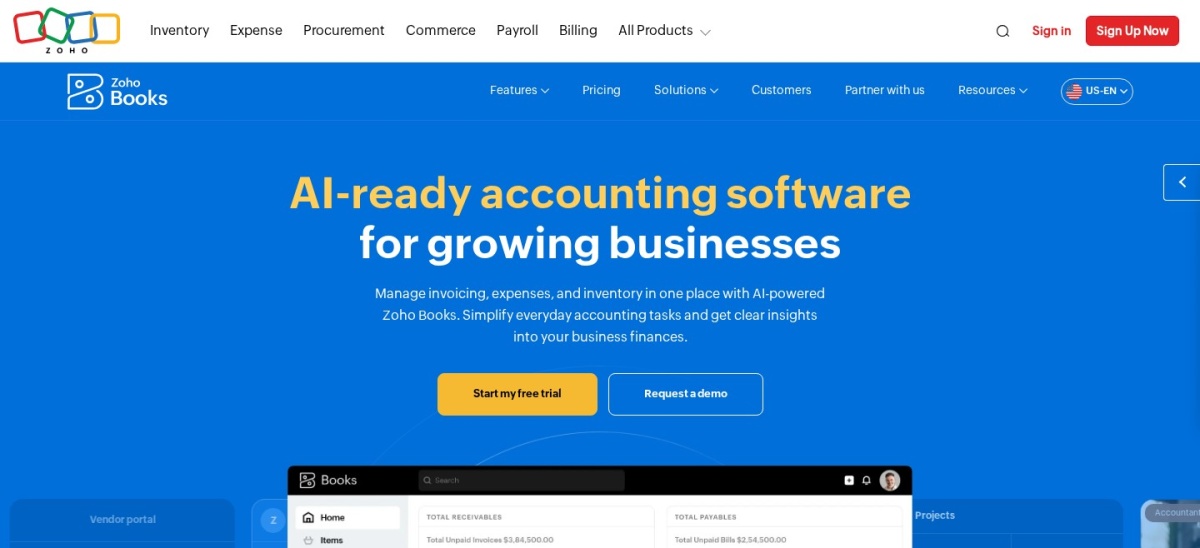
Zoho Books homepage, captured Nov 2026.
Zoho Books is double-entry accounting software offering a free plan for small businesses with annual revenue under $50,000, covering invoices, quotes, expenses, and journals. It earns 4.4/5 across 332 G2 reviews for automated reminders and structured reporting.
The trade off is that annual revenue above $50,000 or extra workflows push you onto paid plans starting at $15/mo billed annually ($20/mo monthly) on Standard. It suits budget-conscious solo musicians and teachers keeping tight tabs on invoices and expenses.
What we like
Free plan available for qualifying small businesses under $50,000 annual revenue
Low entry paid price at $15/mo billed annually ($180/yr)
Strong automated payment reminders and customizable financial reports
Connects with broader Zoho apps as administrative needs grow
Watch out for
Free tier eligibility is capped by annual business revenue
Multi-currency and higher volume limits require higher tiers
Some users report uneven customer support response times
Standard ($15/mo billed annually) expands account workflows, bank feeds, and user capacity.Visit zoho.com
03
Patriot Accounting
4.8/5on G2 (630 reviews, checked Nov 2026)
Starts at$20/mo
Best for unlimited contractors and invoices
Free plan30-day trial only
Entry paid planAccounting Basic ($20/mo)
G2 rating4.8/5 (630 reviews)
User limitUnlimited users
patriotsoftware.com
Patriot Accounting homepage, captured Nov 2026.
Patriot Accounting is cloud bookkeeping software whose Accounting Basic plan costs $20/mo regularly and includes unlimited customers, invoices, vendors, and contractors plus automatic bank imports. It holds a 4.8/5 rating across 630 G2 reviews for straightforward setup and responsive support.
The trade off is that there is no permanent free tier—only a 30-day free trial (with a 50% off for 3 months promo shown on the pricing page)—and estimates require Accounting Premium at $30/mo. It suits bands, producers, and studios paying multiple contractors without per-user fees.
What we like
Includes unlimited users and unlimited contractor or vendor records on Basic
Automatic bank imports and account reconciliation at $20/mo regular price
High 4.8/5 rating on G2 with strong customer support feedback
Pairs cleanly with Patriot payroll if you hire W-2 staff
Watch out for
No free plan after the 30-day trial ends
Sending estimates and setting user-based permissions require the $30/mo Premium plan
Less suited to artists wanting built-in contracts and client portals
Accounting Premium ($30/mo) adds estimates, recurring invoices, payment reminders, and user permissions.Visit patriotsoftware.com
04
FreshBooks
4.5/5on G2 (983 reviews, checked Nov 2026)
Starts at$23/mo
Best for client invoicing and time tracking
Free plan30-day trial only
Entry paid planLite ($23/mo)
G2 rating4.5/5 (983 reviews)
Client cap (Lite)5 billable clients
freshbooks.com
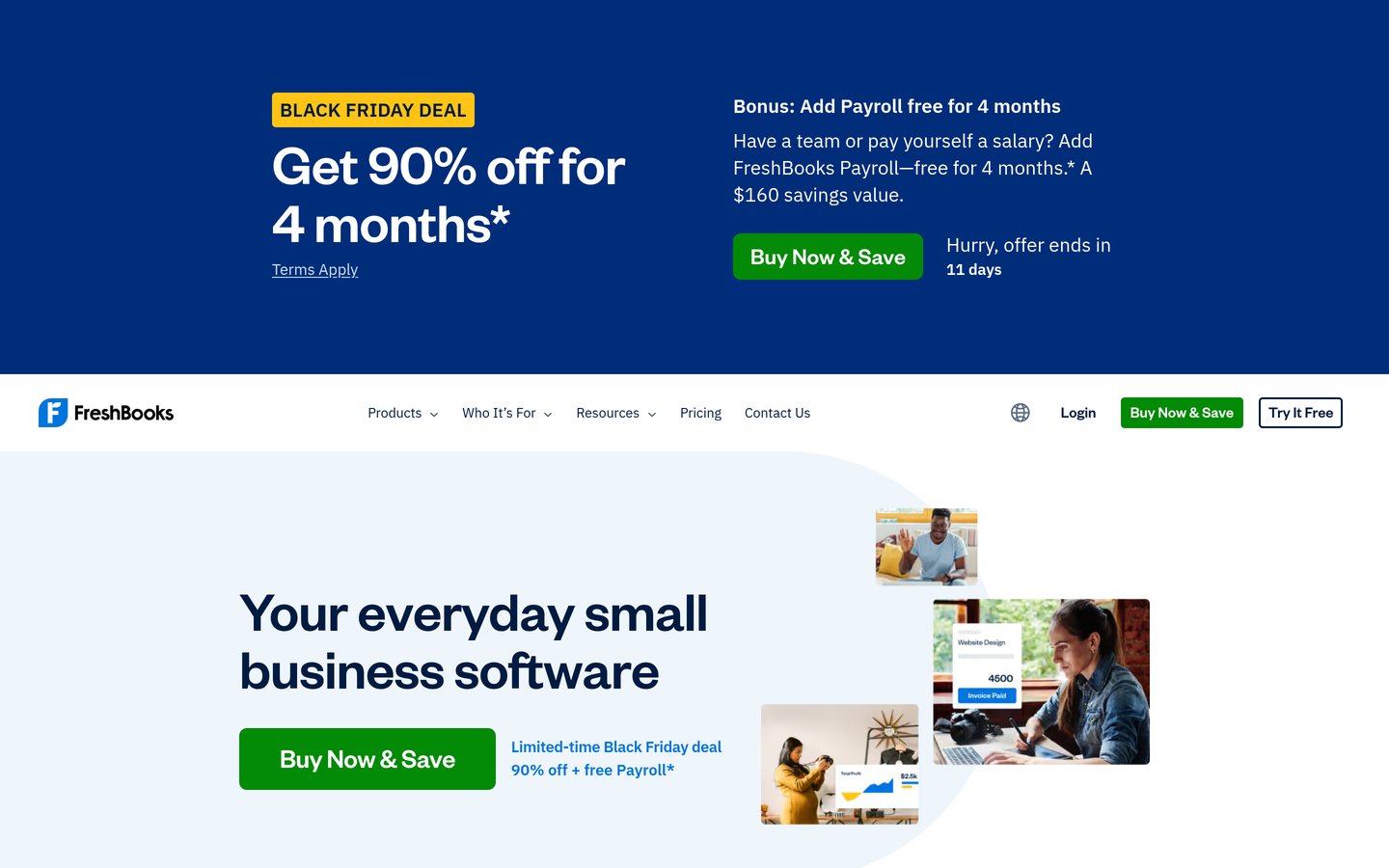
FreshBooks homepage, captured Nov 2026.
FreshBooks is client-focused invoicing and expense software whose Lite plan costs $23/mo regularly and supports unlimited expenses, time tracking, estimates, and card or ACH invoice billing. It holds a 4.5/5 rating across 983 G2 reviews for a clean interface and quick client billing.
The trade off is that Lite caps you at 5 billable clients, pushing active session players or teachers onto Plus at $43/mo for up to 50 clients (a 90% off 4-month promo appears on the pricing page). It suits gigging musicians and instructors who prioritize fast invoices and time logs.
What we like
Polished invoicing with online card and bank payment options
Built-in time tracking helpful for hourly studio, mixing, or lesson work
Mobile app makes receipt capture and invoice follow-ups straightforward
4.5/5 rating across 983 G2 reviews
Watch out for
Lite plan caps active billable clients at 5
Extra team members cost $11/mo per user across paid tiers
Deep accounting reports are lighter than traditional general-ledger suites
Plus ($43/mo) raises the limit to 50 billable clients and adds recurring billing, proposals, and automated late fees.Visit freshbooks.com
05
Xero
4.4/5on G2 (2,183 reviews, checked Nov 2026)
Starts at$27/mo
Best for bank reconciliation and multi-user access
Free plan30-day trial only
Entry paid planEarly ($27/mo US)
G2 rating4.4/5 (2,183 reviews)
Invoice cap (Early)20 invoices & 5 bills/mo
xero.com
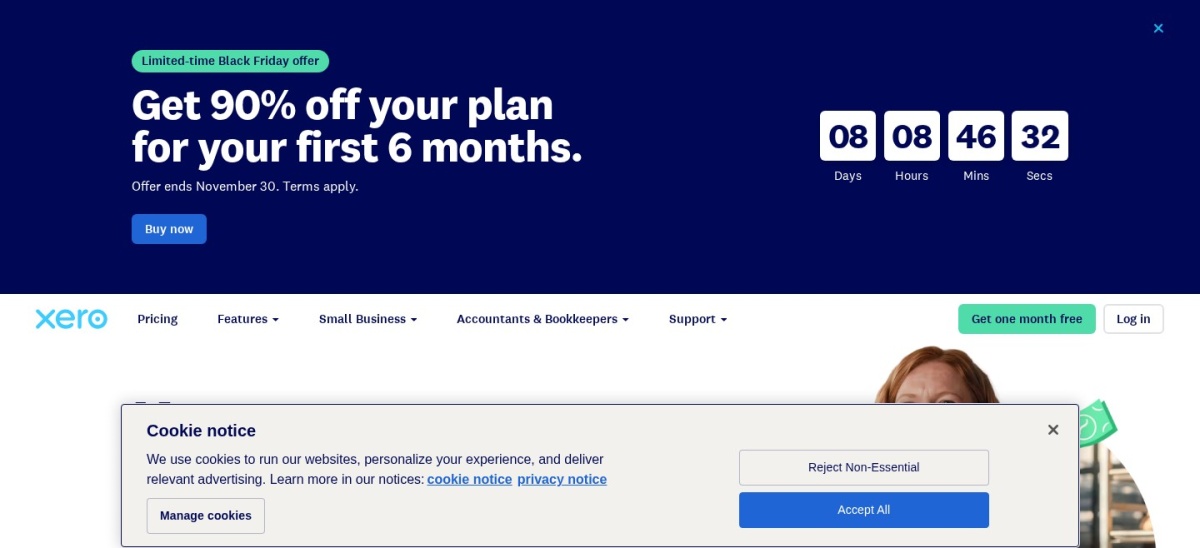
Xero homepage, captured Nov 2026.
Xero is cloud accounting software whose US Early plan costs $27/mo regularly and provides quotes, bank transaction reconciliation, real-time reports, and a 30-day cash-flow forecast. It carries a 4.4/5 rating across 2,183 G2 reviews and allows unlimited users on plans.
The trade off is that Early limits you to 20 invoices and 5 bills per month, while multi-currency support sits on higher tiers (introductory discounts appear on Xero's pricing page). It suits music businesses sharing books with a manager or accountant.
What we like
Strong bank reconciliation and real-time financial reporting
Unlimited users make it easy to invite an accountant or band manager
Large review base with 4.4/5 across 2,183 G2 reviews
Clear upgrade path to Growing and Established plans as volume rises
Watch out for
Early plan caps monthly activity at 20 invoices and 5 bills
Multi-currency accounting requires a higher-tier plan
No free tier past the trial period
Higher tiers remove the 20-invoice and 5-bill monthly caps and unlock multi-currency and expanded forecasting.Visit xero.com
06
Bonsai
4.3/5on G2 (101 reviews, checked Nov 2026)
Starts at$19/mo
Best for contracts, proposals, and client portals
Free planFree trial available
Entry paid planEssentials ($19/mo annual)
G2 rating4.3/5 (101 reviews)
Monthly price$25/mo on Essentials
hellobonsai.com
Bonsai homepage, captured Nov 2026.
Bonsai is a client and finance management platform whose Essentials plan costs $19/mo billed annually ($25/mo monthly) and combines invoices, payments, proposals, contracts, and expense tracking. It holds a 4.3/5 rating across 101 G2 reviews for putting client paperwork and billing in one workspace.
The trade off is that Essentials is priced per user and focuses more on client workflow than deep multi-entity accounting, with Basic starting lower at $9/mo annual without invoicing. It suits freelance producers, sound designers, and event musicians managing contracts alongside invoices.
What we like
Combines proposals, contracts, client portals, and invoicing in one place
Income and expense tracking alongside project and time management
Saves money with annual billing ($19/mo vs. $25/mo on Essentials)
4.3/5 rating across 101 G2 reviews
Watch out for
Per-user pricing increases costs for multi-member teams
Less comprehensive for complex accounting than dedicated general-ledger suites
No free plan beyond a trial
Higher plans expand project reporting, expense markups, and team management controls.Visit hellobonsai.com
07
QuickBooks Online
4/5on G2 (3,913 reviews, checked Nov 2026)
Starts at$38/mo
Best for accountant familiarity and tax prep
Free planTrial available
Entry paid planSimple Start ($38/mo US)
G2 rating4.0/5 (3,913 reviews)
User limit1 user + accountant
quickbooks.intuit.com
QuickBooks Online homepage, captured Nov 2026.
QuickBooks Online is widely used small-business accounting software whose US Simple Start plan costs $38/mo regularly for 1 user and covers invoices, payments, automated bank feeds, and expense tracking. It carries a 4.0/5 rating across 3,913 G2 reviews and connects with hundreds of third-party apps.
The trade off is that Simple Start costs $38/mo regularly and limits you to 1 user, with multi-currency and bill management on higher tiers (promotional discounts appear on QuickBooks pages). It suits musicians whose tax preparer already works inside QuickBooks.
What we like
Widely supported by bookkeepers, CPAs, and tax preparers
Automated bank feeds and broad third-party app ecosystem
Large review volume with 4.0/5 across 3,913 G2 reviews
Clear upgrade tiers as business complexity grows
Watch out for
Higher regular entry price at $38/mo for Simple Start
Simple Start is limited to 1 user
Some reviewers note customer support frustration and price increases over time
Higher plans add multi-currency support, recurring invoices, bill management, and additional users.Visit quickbooks.intuit.com
How musicians can organize gigs, merch, and royalties
Use separate income categories or tags for live performance fees, teaching, studio sessions, merch sales, and royalties so you can see where your money actually comes from before tax season.
Keep a dedicated checking account and debit or credit card for music expenses, then reconcile monthly so gear repairs, strings, software, and travel stay distinct from personal spending.
How we chose
We shortlisted established cloud accounting and client-billing tools commonly used by solo creatives, freelancers, and small businesses, filtering for products with active public review profiles and current pricing pages.
All ratings, review counts, and regular US pricing figures were checked on 22 Nov 2026 directly from vendor pricing pages and G2 review listings, using regular list prices rather than temporary promotional rates.
We excluded products that lacked verifiable current pricing or had minimal review history, and we distinguished full accounting ledgers from contract-focused client tools.
No vendor paid for a place, and we do not claim testing for this list.
How to choose accounting software for your music work
Follow four practical steps to match a platform to how you earn and spend.
Start with your monthly budget and income volume. Check whether a free plan like Wave or Zoho Books fits your stage, or if you need paid bank feeds and invoicing right away.
Check plan caps before signing up. Watch for limits on monthly invoices, active billable clients, or annual revenue so a cheap tier does not bottleneck you mid-year.
Decide if you need contracts alongside bookkeeping. If you book gigs, sessions, or lessons with written agreements, weigh client-workflow tools like Bonsai against general accounting ledgers.
Confirm accountant compatibility and add-on costs. Ask your tax preparer what format or platform they prefer, and factor in payment processing fees or payroll add-ons before committing.
FAQ
What is the best free accounting software for musicians?
Wave is a strong starting point because its free Starter plan includes unlimited invoices, bills, and bookkeeping records, while Zoho Books offers a free plan for qualifying businesses under $50,000 in annual revenue.
Do solo musicians need full double-entry accounting software?
Solo musicians with simple gig income and gear expenses can start with basic bookkeeping or invoicing tools, while bands, studios, or artists with multiple revenue streams and contractors often benefit from fuller accounting reports.
How do regular prices differ from introductory discounts on accounting tools?
Many accounting platforms advertise steep discounts for the first few months before renewing at regular monthly or annual rates, so budget around the regular list price to avoid surprise bill jumps.
Should a band or duo share one accounting subscription?
Yes, sharing one account keeps band income and shared gear or tour expenses in one ledger, provided the plan allows enough users or permissions and everyone agrees on expense rules.
When should a musician upgrade from a free plan to a paid plan?
Upgrade when you need automated bank feeds, receipt scanning, higher invoice or revenue limits, or extra workflow tools that save time during monthly reconciliation and tax filing.
Are payment processing fees included in the monthly software price?
No, accepting credit card or bank payments through an invoice typically carries separate per-transaction processing fees in addition to any monthly subscription fee.