Best Accounting Software for Multiple Entities in 2026: 7 Tools Compared
WLWPLegible EditorsLast verified 22 Nov 2026How we rank8 min read
★ Short answer
Sage Intacct is a top pick for multiple entities in 2026, with a 4.3/5 rating across 4,573 G2 reviews and multi-entity consolidation. Choose Xero for unlimited user seats per organization at $27/mo on US Early, or QuickBooks Online for US small-business workflows starting at $38/mo.
How we make this list: we compare pricing pages, product documentation and public user reviews, then re-check every price before each update. No product paid for a place. Disclosure.
Sage Intacct leads mid-market multi-entity accounting with a 4.3/5 rating across 4,573 G2 reviews and quote-based pricing.
Xero US Early starts at $27/mo ($324/yr) with unlimited users per organization, though each entity requires its own subscription.
QuickBooks Online US Simple Start is $38/mo ($456/yr) for one user plus two accountants, while combined reporting requires higher tiers or add-ons.
Zoho Books offers a free plan for businesses under $50,000 in annual revenue and a US Standard plan at $15/mo billed annually ($180/yr).
Wave provides a $0 Starter plan and a US Pro plan at $190/yr ($19/mo monthly), billing each business profile separately.
FreshBooks starts at $23/mo ($276/yr) on Lite for up to five billable clients, with a 4.5/5 rating across 983 G2 reviews.
What to look for in multi-entity accounting software
Running multiple legal entities, brands, or locations creates two distinct accounting needs: keeping separate ledgers clean and rolling numbers up into group views. Some tools give each company a standalone organization file, while mid-market suites handle shared charts of accounts and intercompany eliminations in one environment.
Subscription structure is where multi-entity costs diverge fast. Per-organization plans charge separately for every entity you add, whereas ERP platforms price around base licenses, entity counts, user seats, and add-on modules.
Consolidation and currency rules also vary widely. Entry-level small-business tools often lack native multi-entity rollups or lock home currency choices once multi-currency is enabled, forcing finance teams into spreadsheets or reporting connectors at month-end.
User permissions and implementation overhead matter just as much as monthly price. Lightweight cloud apps go live quickly for small teams, while full ERP systems require structured onboarding, role controls, and longer setup timelines.
The 7 best accounting software for multiple entities
01
Sage Intacct
4.3/5on G2 (4,573 reviews, checked Nov 2026)
PricingCustom/yr
Best for multi-entity financial consolidation
G2 rating4.3/5 (4,573)
PricingQuote-based
ConsolidationNative multi-entity
Setup time3 to 6 months
sage.com
Sage Intacct homepage, captured Nov 2026.
Sage Intacct is a cloud financial management system built for organizations managing multiple entities, dimensions, and close workflows. Pricing is quote-based and depends on selected entities, user seats, and modules rather than a published flat rate.
The trade off is quote-based pricing plus separate implementation and module fees that can raise total spend. It suits finance teams in growing or mid-market organizations that need multi-entity reporting and dimensional controls.
What we like
Handles multi-entity accounting, dimensional reporting, and financial consolidation
Rated 4.3/5 across 4,573 verified G2 reviews
Supports role-based permissions, AP automation, and audit trails
Integrates with payroll, expense, and reporting tools
Watch out for
Quote-based annual cost compared with small-business accounting tools
Implementation often takes months and requires configuration
Custom report building can take time to learn
Higher tiers and add-ons expand multi-entity consolidation, project accounting, and user seats.Visit sage.com
02
Xero
4.4/5on G2 (1,863 reviews, checked Nov 2026)
Starts at$27/mo
Best for unlimited users across entities
G2 rating4.4/5 (1,863)
US Early price$27/mo ($324/yr)
User limitUnlimited users
Entity modelSeparate orgs
xero.com
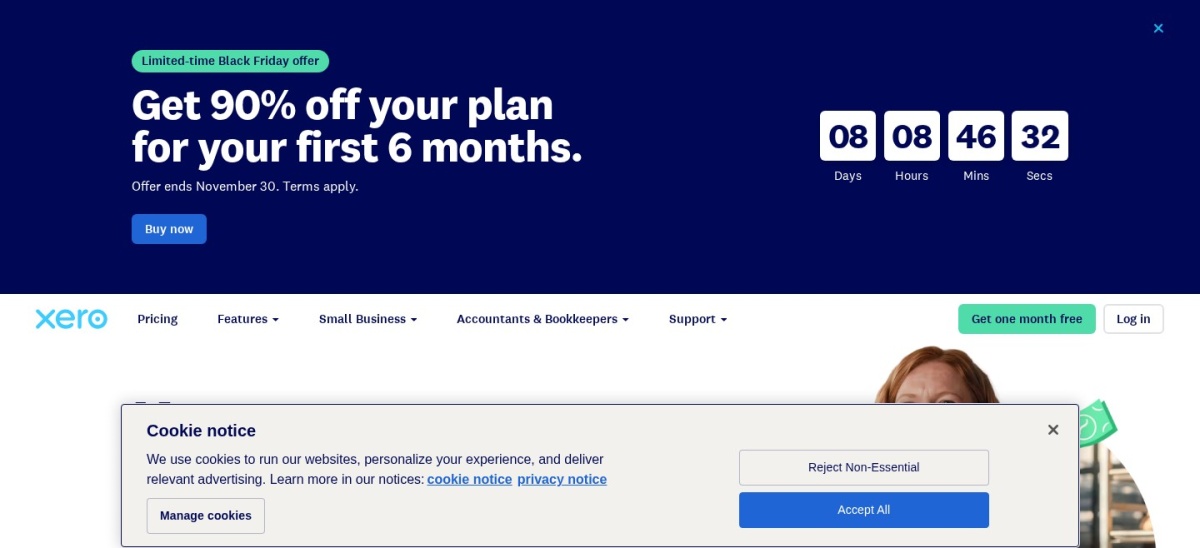
Xero homepage, captured Nov 2026.
Xero is a cloud accounting platform with US plans starting at $27/mo ($324/yr) for Early, which includes unlimited users, bank reconciliation, 20 invoices, and 5 bills per month. Xero US also lists an 80% promotional discount on base Early, Growing, and Established plans for the first three months.
The trade off is that US Early caps monthly invoice and bill counts and each entity requires a separate subscription at $27/mo without built-in group consolidation. It suits multi-entity teams that want unlimited team seats per organization and simple cloud bookkeeping.
What we like
Includes unlimited users on US Early, Growing ($59/mo), and Established ($97/mo) plans
Rated 4.4/5 across 1,863 verified G2 reviews
Offers clean bank reconciliation and real-time financial reports
Connects with over 1,000 third-party apps
Watch out for
US Early limits monthly invoicing and bill entry volume
Requires a separate subscription per entity with no native group consolidation on US plans
Multi-currency support requires the $97/mo Established tier
Growing ($59/mo) removes invoice and bill limits; Established ($97/mo) adds multi-currency and projects.Visit xero.com
03
QuickBooks Online
4/5on G2 (3,913 reviews, checked Nov 2026)
Starts at$38/mo
Best for US small-business ecosystem fit
G2 rating4.0/5 (3,913)
US Simple Start$38/mo ($456/yr)
Included users1 user + 2 accountants
Entity modelSeparate company files
quickbooks.intuit.com
QuickBooks Online homepage, captured Nov 2026.
QuickBooks Online is a cloud accounting platform whose US Simple Start plan costs $38/mo ($456/yr) at regular list price for one user plus two accountant seats. Simple Start covers income and expense tracking, automated bank feeds, invoicing, and standard financial reports.
The trade off is paying $38/mo ($456/yr) per company file on Simple Start and stepping up to Essentials ($85/mo) or Plus ($140/mo) for more users or features. It suits US small businesses that want broad accountant familiarity and standard bookkeeping tools.
What we like
Large review footprint with a 4.0/5 rating across 3,913 G2 reviews
Wide familiarity among US bookkeepers, accountants, and app integrations
Includes automated bank feeds, invoicing, and tax-ready reports
Lets users switch between separate company subscriptions under one login
Watch out for
User seats are capped per tier, increasing costs as teams grow
Some reviewers report interface changes and occasional AI categorization errors
Essentials ($85/mo), Plus ($140/mo), and Advanced ($340/mo) add more users, class tracking, and reporting.Visit quickbooks.intuit.com
04
Zoho Books
4.4/5on G2 (332 reviews, checked Nov 2026)
Paid from$15/mo
Best for low-cost multiple organizations
G2 rating4.4/5 (332)
US Standard$15/mo yr ($180/yr)
Free plan$0 under $50K rev
Entity modelSeparate orgs per account
zoho.com
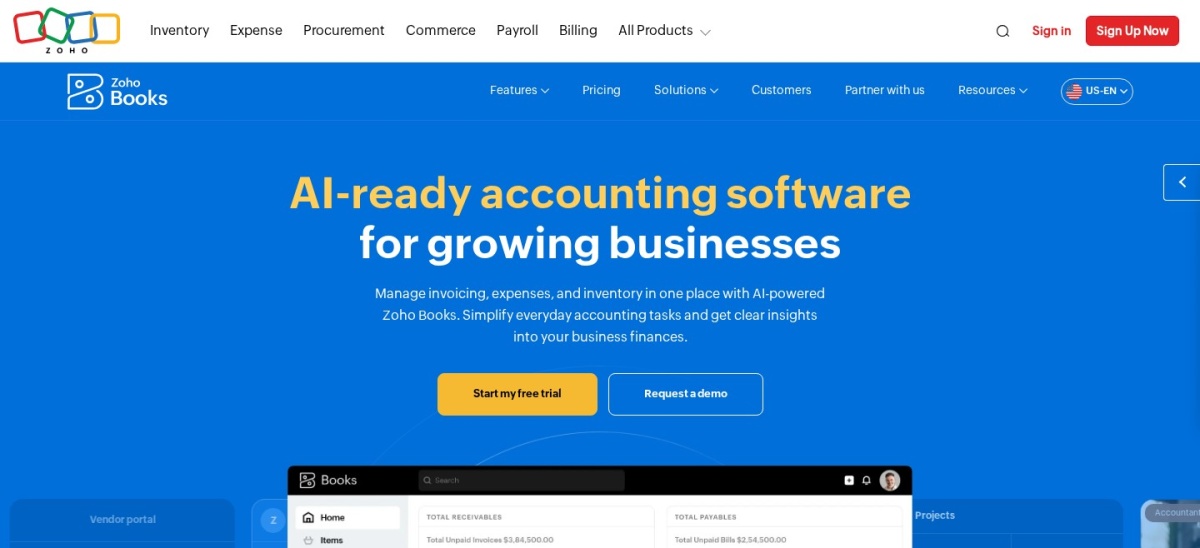
Zoho Books homepage, captured Nov 2026.
Zoho Books is a cloud accounting tool that offers a $0 Free plan for businesses with annual revenue under $50,000, while its US Standard plan costs $15/mo billed annually ($180/yr, or $20/mo billed monthly). Free includes one user plus one accountant, up to 1,000 invoices and 1,000 bills per year, and bank reconciliation.
The trade off is paying $180/yr per organization on US Standard once you exceed the free revenue cap or need more seats, with no native cross-organization consolidation. It suits cost-conscious businesses running multiple separate entities within the Zoho ecosystem.
What we like
Offers a $0 free tier for qualifying businesses under $50,000 annual revenue
US Standard is $15/mo billed annually ($180/yr) with 3 users and 5,000 invoices/year
Rated 4.4/5 across 332 verified G2 reviews
Supports multiple organizations under a single Zoho Books account
Watch out for
Free plan is restricted to businesses under $50,000 in annual revenue
No built-in consolidated reporting across separate organizations
Customer support response times draw mixed feedback in user reviews
Professional ($40/mo yearly) and higher plans add multi-currency, inventory, and up to 15 users.Visit zoho.com
05
Wave
4.3/5on G2 (328 reviews, checked Nov 2026)
Paid from$190/yr
Best for free basic multi-entity bookkeeping
G2 rating4.3/5 (328)
US Pro plan$190/yr ($19/mo)
Free plan$0 Starter plan
Entity modelMultiple business profiles
waveapps.com
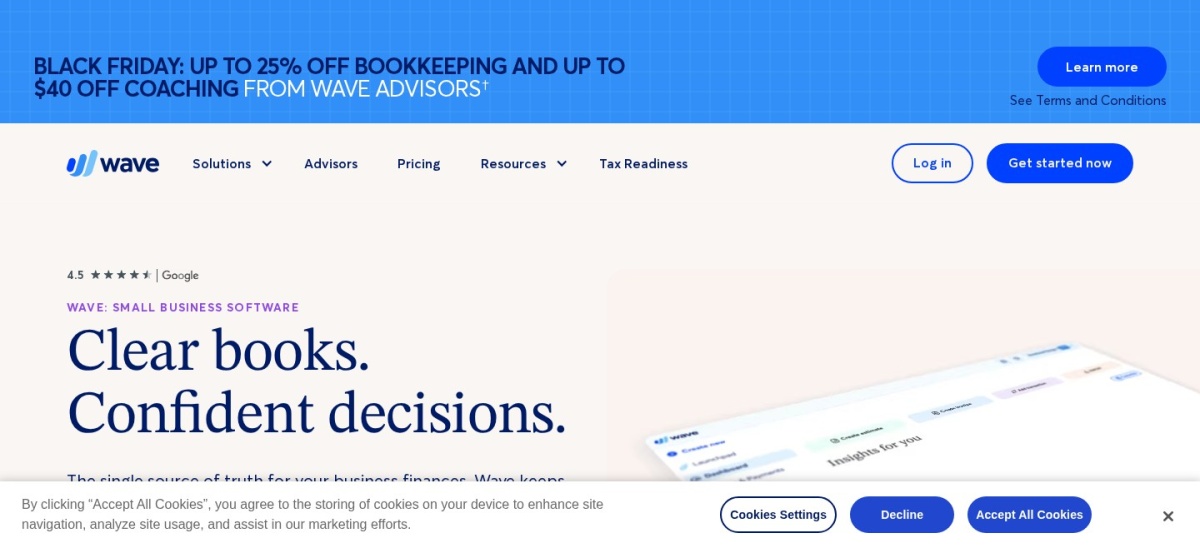
Wave homepage, captured Nov 2026.
Wave is an accounting and invoicing platform with a $0 Starter plan and a US Pro plan priced at $190/yr billed annually ($19/mo billed monthly). Starter covers unlimited invoices, estimates, bills, and bookkeeping records, while Pro adds automatic bank imports and transaction categorization.
The trade off is paying $190/yr for each business profile that needs Pro features like bank feeds, with no cross-entity consolidation. It suits small service businesses and side ventures that want free basic accounting or low-cost per-business bank feeds.
What we like
Free Starter plan includes unlimited invoices, bills, and basic bookkeeping records
US Pro is $190/yr ($19/mo monthly) with automatic bank transaction imports
Rated 4.3/5 across 328 verified G2 reviews
Allows managing multiple business profiles under one Wave login
Watch out for
Pro subscriptions apply per business rather than covering all entities at once
No consolidated reporting across multiple business profiles
Some reviewers report payment holds and support delays
Pro adds automated bank feeds, transaction categorization, and lower card rates on initial monthly transactions.Visit waveapps.com
06
FreshBooks
4.5/5on G2 (983 reviews, checked Nov 2026)
Starts at$23/mo
Best for client invoicing and project billing
G2 rating4.5/5 (983)
US Lite price$23/mo ($276/yr)
Client cap5 billable clients (Lite)
Entity modelSeparate accounts per entity
freshbooks.com
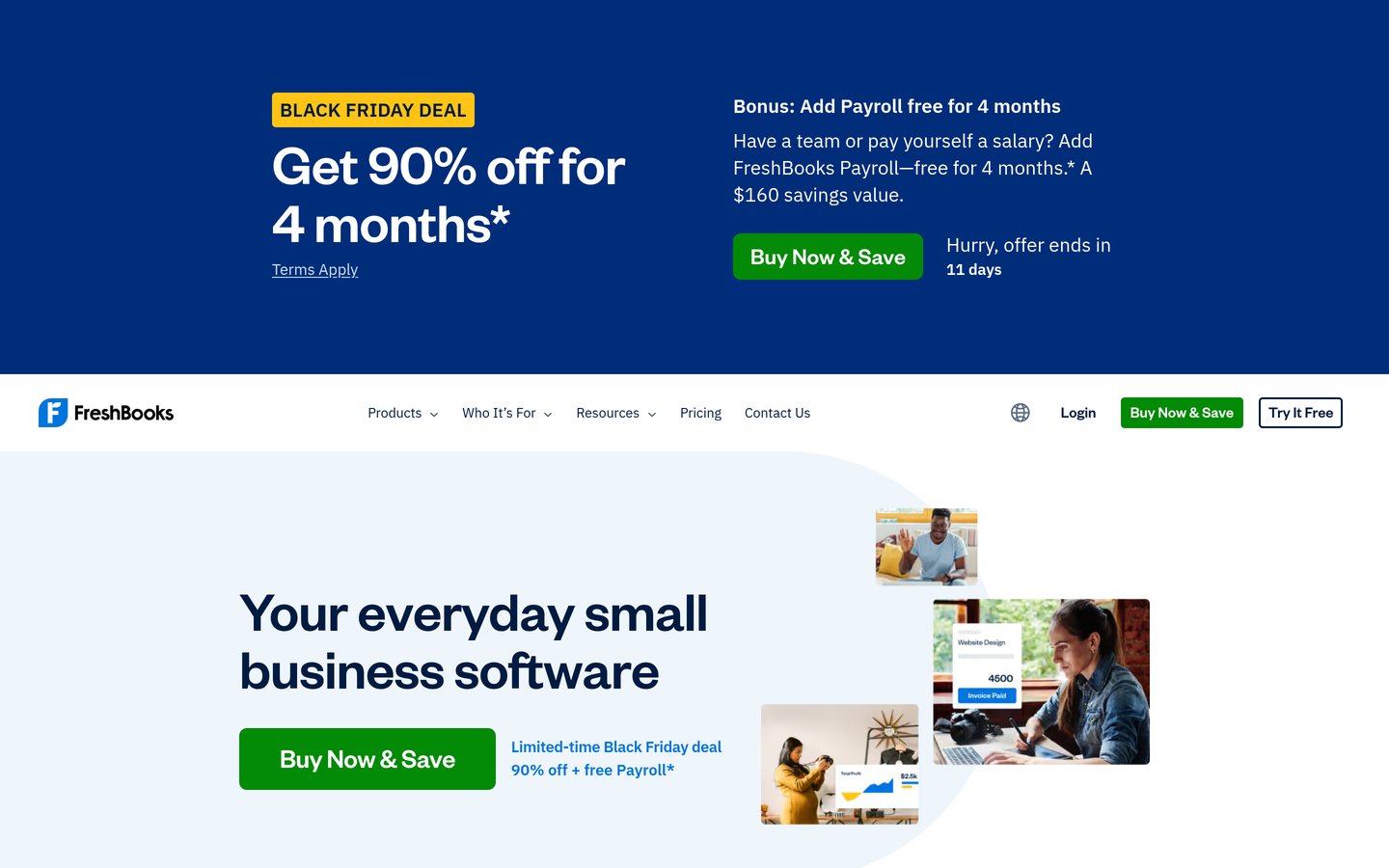
FreshBooks homepage, captured Nov 2026.
FreshBooks is a cloud accounting and invoicing platform whose US Lite plan costs $23/mo ($276/yr) at regular list price for up to five billable clients. Lite includes unlimited estimates, expense tracking, online payments, and tax-time reports, with a 90% promotional discount for four months.
The trade off is a five-client cap on Lite at $23/mo ($276/yr) and separate subscriptions for each entity, plus $11/mo per extra team member. It suits service-based entities focused on client invoicing, proposals, and time tracking.
What we like
High satisfaction with a 4.5/5 rating across 983 verified G2 reviews
Straightforward interface for invoicing, estimates, expenses, and time tracking
Supports online card, ACH, and digital wallet invoice payments
Offers Plus ($43/mo) and Premium ($70/mo) tiers as client volume grows
Watch out for
Lite caps billable clients at 5 and charges extra per team member
Not designed for native multi-entity consolidated financial statements
Limited depth for inventory-heavy operations
Plus ($43/mo) raises the limit to 50 clients and adds accountant access; Premium ($70/mo) allows unlimited clients.Visit freshbooks.com
07
NetSuite
4.1/5on G2 (5,272 reviews, checked Nov 2026)
PricingCustom/yr
Best for global multi-subsidiary ERP scale
G2 rating4.1/5 (5,272)
PricingQuote-based
Entity modelMulti-subsidiary ERP
Setup timeMonths-long rollout
oracle.com
NetSuite homepage, captured Nov 2026.
NetSuite is a cloud ERP platform from Oracle that manages multi-subsidiary accounting, multi-currency transactions, inventory, and financial reporting in one system. Pricing is quote-based and tailored to subsidiary count, user licenses, modules, and implementation scope.
The trade off is quote-based annual licensing, per-user and module add-ons, and lengthy implementation projects. It suits established companies with multiple subsidiaries, complex operations, or international entities.
What we like
Built for multi-subsidiary, multi-currency financial and operational management
Large review base with a 4.1/5 rating across 5,272 verified G2 reviews
Combines accounting, inventory, order management, and reporting in one suite
Supports role permissions, audit trails, and custom workflows
Watch out for
Requires custom quotes with annual licensing and implementation costs
Steep learning curve for administrators and new users
Configuration and changes often require specialist help
Modules and user licenses scale multi-subsidiary consolidation, inventory, and reporting across entities.Visit oracle.com
When separate entity files are enough vs. when you need consolidation
If each entity operates independently, has its own bank accounts, and only needs standalone profit-and-loss and balance sheet reports, separate subscriptions in Xero, QuickBooks Online, or Zoho Books can work cleanly.
Once you need combined financial statements across entities, intercompany eliminations, or shared approval rules across subsidiaries, mid-market platforms like Sage Intacct and NetSuite fit better than standalone small-business accounts.
How we chose
We built this shortlist by reviewing established cloud accounting and ERP platforms used for multi-entity bookkeeping, focusing on products with active public user reviews and clear multi-company or multi-subsidiary workflows.
All US plan prices, promotional notes, and G2 ratings and review counts were checked on 22 Nov 2026 from vendor pricing pages and review listings.
We excluded discontinued or unverified tools, products without public pricing or review data we could confirm, and tools lacking multi-entity or multi-company support. No vendor paid for a place, and we do not claim testing for this list.
How to pick the right multi-entity accounting tool
Follow four practical steps to match software to your entity structure.
Count every active entity and user seat. List each legal entity or brand that needs separate books, plus how many staff and accountants need access.
Decide whether you need consolidated statements. Check if you only need entity-level reports or if you need combined group reporting and intercompany tracking.
Calculate full annual cost beyond entry tiers. Multiply per-entity plans across all companies or factor in ERP licensing, add-ons, and implementation fees.
Verify currency, payroll, and export needs. Confirm multi-currency support, payroll add-ons, and report exports before committing to annual billing.
FAQ
Which accounting software is best for multiple entities?
Sage Intacct is a top choice for multi-entity financial management and consolidation, rated 4.3/5 across 4,573 G2 reviews with quote-based pricing. For smaller budgets, Xero ($27/mo US Early) and QuickBooks Online ($38/mo US Simple Start) are common picks for managing separate entity books.
Do QuickBooks Online and Xero consolidate multiple entities automatically?
Neither QuickBooks Online Simple Start nor Xero US Early provides native full multi-entity consolidation out of the box. Each entity is typically set up as its own subscription, while consolidated views often rely on higher tiers, add-ons, or spreadsheet rollups.
What is the cheapest way to run accounting for multiple small entities?
Zoho Books offers a $0 free plan for businesses under $50,000 in annual revenue and a US Standard plan at $15/mo billed annually ($180/yr). Wave also has a $0 Starter plan and a US Pro plan at $190/yr per business.
Does Xero charge per user for multiple team members?
No, Xero US plans include unlimited users at no extra per-seat fee, with Early at $27/mo, Growing at $59/mo, and Established at $97/mo. However, each separate business entity still requires its own Xero subscription.
When should a business move from small-business accounting to an ERP?
Teams usually consider platforms like Sage Intacct or NetSuite when they manage multiple subsidiaries, need intercompany accounting and deeper reporting dimensions, or outgrow entry-level transaction and workflow limits.
Are promotional prices included in the yearly price ladder?
No, the price ladder uses regular US list pricing for the cheapest paid plan rather than temporary discounts, and marks quote-based plans as Custom. Where vendors run promotional offers, such as discounts on initial months, those are noted in the tool descriptions.