Best Accounting Software for Logistics Business in 2026: 7 Tools Compared
WLWPLegible EditorsLast verified 22 Nov 2026How we rank5 min read
★ Short answer
QuickBooks Online leads for logistics operators with bank feeds, invoicing, and tiered plans starting at $38/mo regular price. Xero suits teams wanting unlimited users from $27/mo, while Zoho Books fits budget fleets starting at $15/mo billed annually.
How we make this list: we compare pricing pages, product documentation and public user reviews, then re-check every price before each update. No product paid for a place. Disclosure.
QuickBooks Online starts at $38/mo regular price on Simple Start and scales up to $340/mo on Advanced.
Xero Early starts at $27/mo regular price and includes unlimited users without per-seat fees.
Zoho Books offers a free plan for eligible micro businesses and paid plans starting at $15/mo billed annually.
Wave provides a $0 Starter plan and a $19/mo Pro plan for straightforward invoicing and receipts.
FreshBooks Lite starts at $23/mo regular price with a 5-client billing cap on its entry tier.
Sage Intacct and NetSuite target mid-market and multi-entity logistics fleets with custom annual quotes.
What logistics teams need from accounting software
Freight brokers, 3PL warehouses, and trucking fleets handle high transaction volume across fuel cards, tolls, carrier payouts, and customer invoices. Matching dispatch activity against bank feeds and vendor bills requires clean categorization and reliable payment tracking.
Multi-entity and multi-currency operations add another layer of complexity when carriers, depots, or shippers span regions. Entry plans often cap monthly invoices, bill counts, or seats, which can bottleneck growing dispatch and billing teams.
Inventory, purchase orders, and project or load profitability sit on higher tiers in many small-business platforms. Checking where bill tracking, batch payments, and reporting live before migrating saves costly plan jumps later.
Promotional discounts are common across cloud accounting vendors, so comparing regular list prices gives a clearer picture of ongoing operating costs. Pairing accounting software with dedicated fleet or TMS tools often keeps day-to-day workflows practical.
The 7 best accounting software for logistics business
01
QuickBooks Online
4/5on G2 (3,879 reviews, checked Nov 2026)
Starts at$38/mo
Best for broad small-business accounting
Regular entry$38/mo
Plans4 tiers
G2 rating4.0/5
G2 reviews3,879
quickbooks.intuit.com
QuickBooks Online homepage, captured Nov 2026.
QuickBooks Online is a cloud accounting platform with bank feeds, expense categorization, invoicing, and reporting across four tiers from Simple Start to Advanced. Simple Start includes 1 user plus accountant access, unlimited invoicing, and receipt capture.
The trade off is a regular price of $38/mo on Simple Start (promotional discounts may apply at signup), and higher tiers like Plus ($140/mo) and Advanced ($340/mo) add more seats and features. It suits small logistics firms that want familiar bookkeeping and wide app support.
What we like
Wide third-party app ecosystem and bank feed support
Clear step-up tiers up to 25 users on Advanced
Includes 1099 contractor preparation and filing tools
Mobile receipt capture and mileage tracking on Simple Start
Watch out for
Simple Start limits usage to a single user
List prices rise noticeably on Plus and Advanced plans
Advanced inventory and project tracking require higher tiers
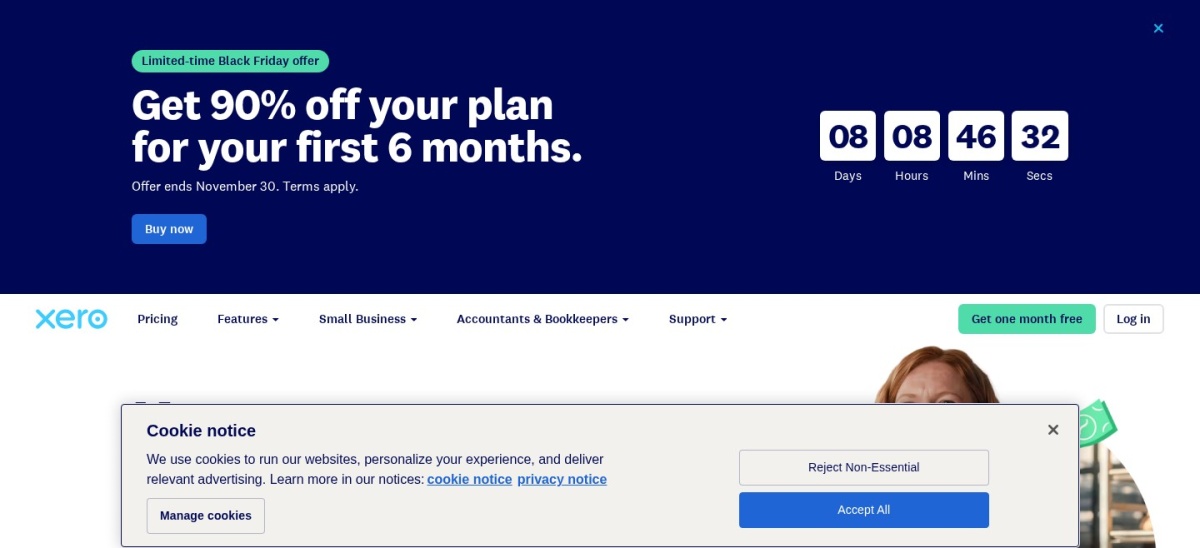
Xero is a cloud accounting platform offering invoicing, bill tracking, bank reconciliation, and cash flow forecasting across Early, Growing, and Established plans. Early includes quotes, up to 20 invoices, 5 bills, and unlimited users.
The trade off is a regular price of $27/mo on Early (promotional offers may apply to new accounts) alongside strict monthly invoice and bill caps. It suits teams that want multiple logins without per-user fees and can step up to Growing ($59/mo) or Established ($97/mo) as volume grows.
What we like
Unlimited users included across plans with no per-seat fee
Clean bank reconciliation and 30-day cash flow view on Early
Includes standard ACH bill payments and W-9/1099 tools
Watch out for
Early plan caps monthly invoices at 20 and bills at 5
Multi-currency requires stepping up to Established ($97/mo)
Payroll is a paid add-on at $36/mo plus $6 per person
Growing and Established unlock unlimited invoices and bills, multi-currency, and projects.Visit xero.com
03
Zoho Books
4.4/5on G2 (332 reviews, checked Nov 2026)
Paid from$15/mo
Best budget paid option
Annual entry$15/mo
Free tierAvailable
G2 rating4.4/5
G2 reviews332
zoho.com
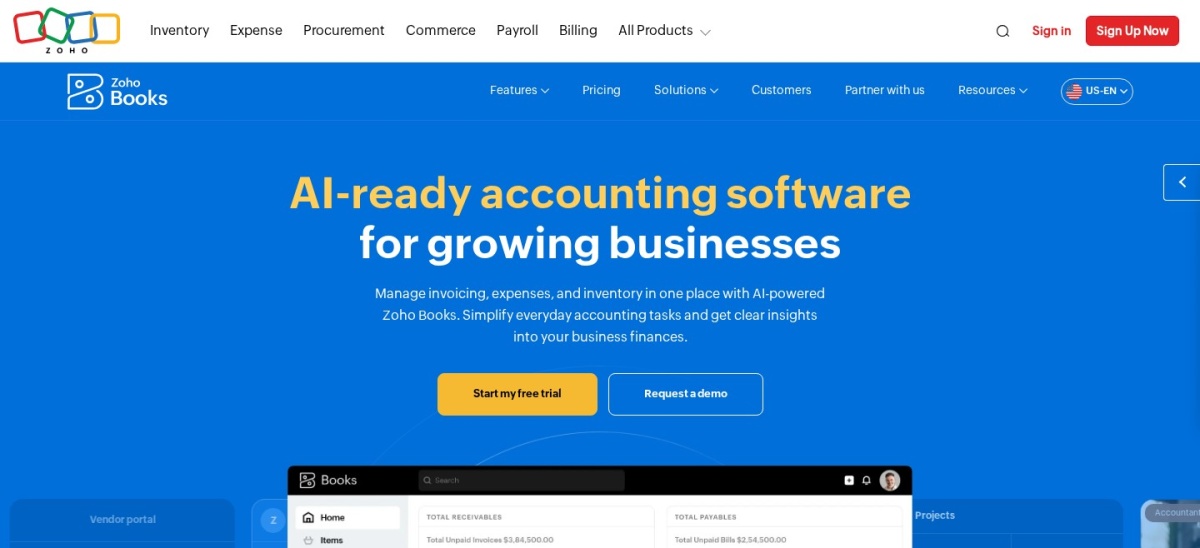
Zoho Books homepage, captured Nov 2026.
Zoho Books is a cloud accounting app covering invoicing, expense tracking, recurring billing, and financial reports with a free plan for eligible micro businesses. Paid plans start on Standard at $15/mo billed annually ($20/mo monthly) for up to 3 users.
The trade off is a regular annual entry price of $180/yr ($15/mo) on Standard, while purchase orders and inventory sit on higher tiers such as Professional ($40/mo billed annually). It suits cost-conscious operators that want low base pricing and tight Zoho app ties.
What we like
Low entry pricing at $15/mo billed annually on Standard
Free plan available for small businesses under revenue limits
Includes 3 users on Standard with optional extra-user add-ons
Watch out for
Purchase order tracking requires upgrading to Professional ($40/mo annual)
Integrations outside the Zoho suite are narrower than major rivals
Add-ons like document autoscans or extra users cost extra
Higher plans add purchase orders, inventory tracking, vendor portals, and higher user limits.Visit zoho.com
04
Wave
4.3/5on G2 (328 reviews, checked Nov 2026)
Paid from$19/mo
Best for simple free bookkeeping
Regular Pro$19/mo
Free tierStarter ($0)
G2 rating4.3/5
G2 reviews328
waveapps.com
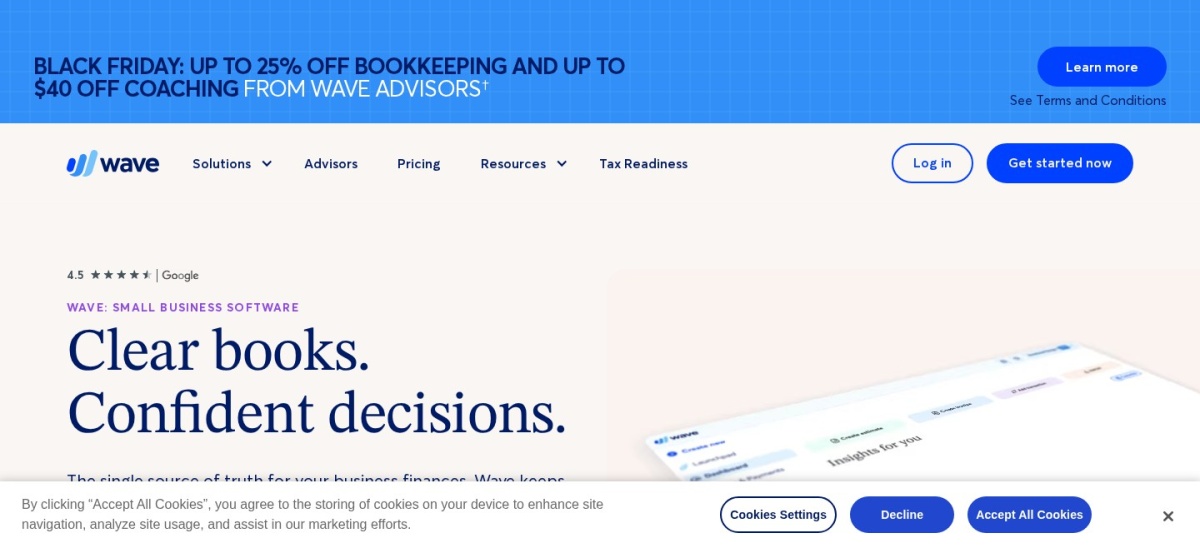
Wave homepage, captured Nov 2026.
Wave is a bookkeeping and invoicing platform offering a $0 Starter plan with unlimited estimates, invoices, bills, and core accounting records. Its paid Pro Plan adds automated bank transaction imports, auto-categorization, and receipt capture.
The trade off is a regular Pro Plan price of $19/mo ($190/yr billed annually; promotional offers may apply), and it lacks multi-entity ERP depth. It suits solo operators and small haulers that want straightforward invoicing and basic cash-flow tracking.
What we like
Starter plan is $0 with unlimited invoices and bills
Pro Plan is straightforward at $19/mo or $190/yr
Automated bank imports and receipt tracking on Pro
Watch out for
Payment processing fees apply on online invoice payments
Payroll and advisory bookkeeping are paid add-ons
Not built for complex multi-warehouse or multi-entity ERP needs
Pro Plan adds automated bank feeds, receipt capture, and discounted card rates.Visit waveapps.com
05
FreshBooks
4.5/5on G2 (983 reviews, checked Nov 2026)
Starts at$23/mo
Best for client invoicing and billing
Regular entry$23/mo
Client cap5 on Lite
G2 rating4.5/5
G2 reviews983
freshbooks.com
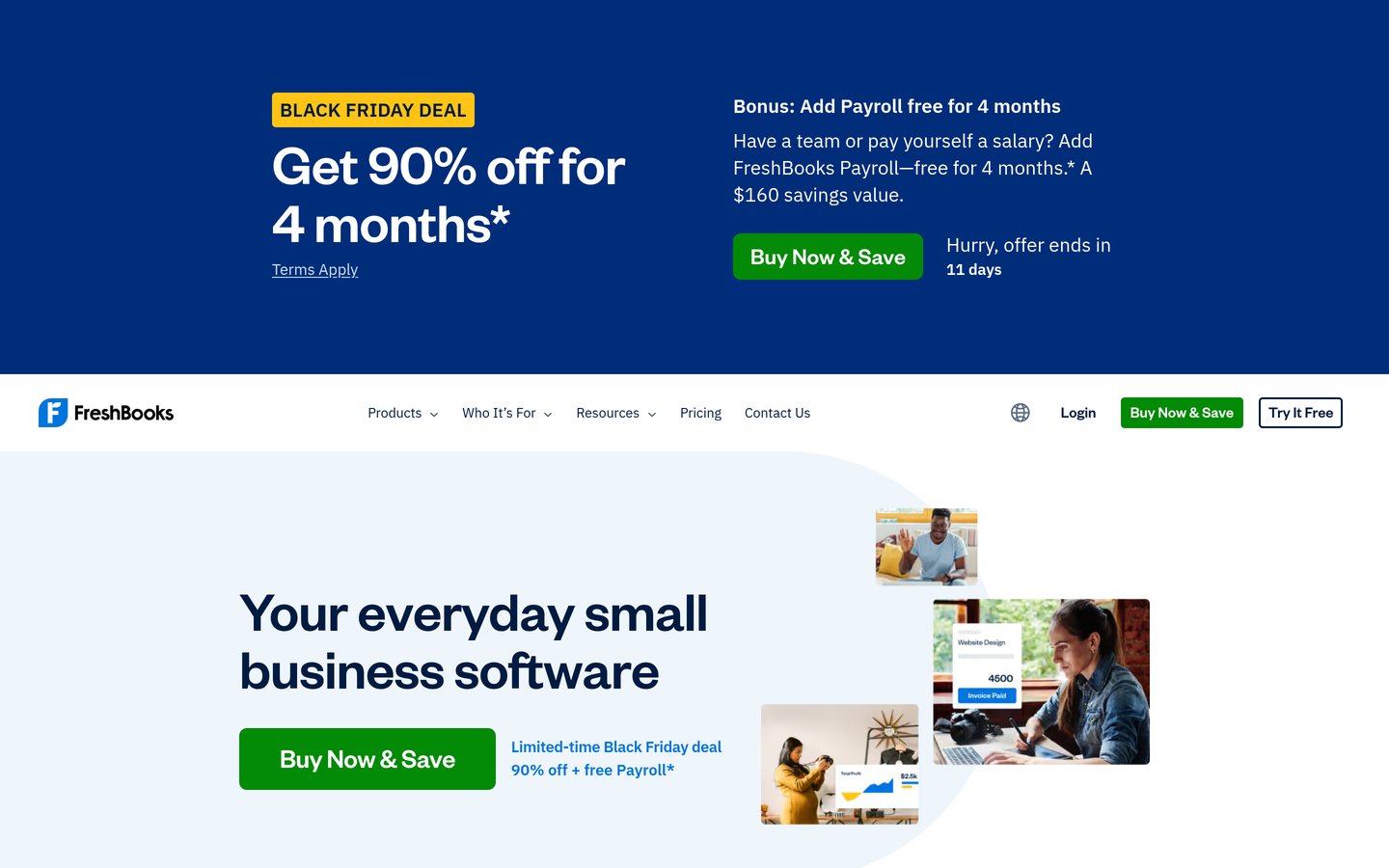
FreshBooks homepage, captured Nov 2026.
FreshBooks is a cloud billing and accounting tool focused on invoices, expense tracking, estimates, and payment reminders across Lite, Plus, and Premium plans. Lite supports up to 5 billable clients with unlimited invoices and expense tracking.
The trade off is a regular price of $23/mo on Lite (promotional discounts may apply), plus a 5-client limit and extra fees for added team members. It suits small logistics consultancies or contractors with a tight client roster.
What we like
High user rating at 4.5/5 across 983 G2 reviews
Straightforward invoicing, estimates, and payment reminders
Mobile app supports receipt capture and expense tracking
Watch out for
Lite plan caps billing at 5 clients before requiring upgrades
Extra team members cost $11/mo per person
Limited depth for inventory-heavy warehouse operations
Plus ($43/mo) and Premium ($70/mo) raise client limits and add project tools.Visit freshbooks.com
06
Sage Intacct
4.3/5on G2 (4,573 reviews, checked Nov 2026)
PricingCustom/yr
Best for multi-entity financial control
PricingCustom quote
Core focusMulti-entity
G2 rating4.3/5
G2 reviews4,573
sage.com
Sage Intacct homepage, captured Nov 2026.
Sage Intacct is a cloud financial management system with general ledger, accounts payable, accounts receivable, cash management, and multi-entity consolidation. It supports dimensional reporting across departments, locations, and entities.
The trade off is custom annual quote pricing with no public self-serve tier, plus longer implementation cycles for finance teams. It suits mid-sized logistics companies managing multiple entities and strict approval workflows.
What we like
Native multi-entity accounting and consolidation capabilities
Flexible dimensional reporting for tracking locations and cost centers
Strong audit trails and AP/AR workflow controls
Watch out for
No published self-serve pricing; requires a custom quote
Setup and configuration can take months for complex fleets
Advanced modules and add-ons increase total annual cost
Custom configurations add modules, extra entities, and deeper reporting.Visit sage.com
07
NetSuite
4.1/5on G2 (5,272 reviews, checked Nov 2026)
PricingCustom/yr
Best for unified ERP and inventory scale
PricingCustom quote
CategoryCloud ERP
G2 rating4.1/5
G2 reviews5,272
netsuite.com
NetSuite homepage, captured Nov 2026.
NetSuite is a cloud ERP platform combining general ledger accounting, financial reporting, order management, inventory, and multi-entity operations. It centralizes financial data across complex organizations and subsidiaries.
The trade off is custom contract pricing without a public starting rate and a steep learning curve during rollout. It suits established mid-market and enterprise logistics businesses replacing separate accounting and ERP tools.
What we like
Unifies core accounting with inventory and order workflows
Handles complex multi-entity and multi-currency structures
Extensive API and connector options for enterprise systems
Watch out for
Custom enterprise pricing is not publicly listed
Implementation often takes several months with specialist help
Overbuilt and costly for small single-entity operators
Custom ERP packages scale seats, subsidiaries, and specialized modules.Visit netsuite.com
Matching accounting software to logistics operations
Small owner-operators and local haulers usually prioritize fast invoicing, fuel and repair expense tracking, and clean bank reconciliation without heavy setup. Entry-level cloud plans or free tiers can handle basic records while keeping monthly software spend low.
Growing carriers, freight brokers, and warehouse operators often run into seat limits, invoice caps, or multi-entity reporting gaps. Checking whether you need purchase orders, batch bill pay, or separate entity books helps narrow candidates quickly.
How we chose
We selected well-known cloud accounting and ERP platforms commonly used by small and growing businesses, including logistics operators, that maintain active documentation and current product support.
All US regular plan prices, billing notes, and G2 ratings and review counts were checked on 22 Nov 2026 from vendor pricing pages and G2 product listings. Where a vendor advertises promotional discounts, we record the regular list price.
We excluded discontinued tools, unverified niche apps with sparse public reviews, and software without clear US pricing or public review data on our checked sources. No vendor paid for a place, and we do not claim testing for this list.
How to choose accounting software for a logistics business
Follow four practical checks before committing to an accounting subscription.
Map your monthly invoice, bill, and seat counts first. Compare your actual billing volume and team logins against plan caps so you do not outgrow the base tier in month two.
Check how bank feeds and carrier or vendor bills enter the system. Verify automated bank imports, receipt capture, and bill-payment workflows so daily reconciliation stays manageable.
Confirm whether you need inventory, purchase orders, or multi-entity tracking. Some entry tiers leave out purchase orders or multi-currency tools, pushing those capabilities onto higher plans.
Factor regular renewal rates and add-ons into your annual budget. Look past introductory discounts and add expected payroll, extra user, or payment processing fees to estimate true yearly cost.
FAQ
What is the best accounting software for a small logistics business?
QuickBooks Online is a strong default for small businesses thanks to broad bank feed support, invoicing, and clear upgrade tiers starting at $38/mo regular price. Xero ($27/mo regular price on Early) is a close alternative if you want unlimited users.
Can logistics companies start with a free accounting plan?
Yes, if your needs are straightforward. Zoho Books offers a free plan for eligible small businesses, and Wave offers a $0 Starter plan with unlimited invoices and bills, though advanced features and higher volumes require paid plans.
Should I compare regular prices instead of promotional offers?
Yes. Many accounting vendors run introductory discounts for the first few months, so checking the regular list price gives a realistic view of what your logistics business will pay over a full year.
Do small-business accounting tools replace dedicated fleet or TMS software?
Usually not. Accounting software tracks invoices, bills, bank accounts, and financial statements, while transportation management or dispatch tools handle routing, loads, and live shipment tracking.
When should a logistics company look at Sage Intacct or NetSuite?
Mid-market and multi-entity organizations often consider Sage Intacct or NetSuite when they need multi-entity consolidation, dimensional reporting, or broader ERP workflows beyond standard small-business accounting.
Are payroll and payment processing included in base prices?
Often they are separate. Payroll and online payment processing typically carry extra monthly base fees, per-person charges, or transaction percentages depending on the vendor and plan.