Best Accountability Software in 2026: 7 Tools Compared
WLWPLegible EditorsLast verified 22 Nov 2026How we rank12 min read
★ Short answer
ClickUp is the best accountability software for most teams, combining task ownership, deadlines, goals, and progress tracking, with a 4.6/5 G2 rating from 15,880 reviews. Asana offers clearer cross-functional project accountability, while Trello provides a simpler visual system for tracking individual commitments.
How we make this list: we compare pricing pages, product documentation and public user reviews, then re-check every price before each update. No product paid for a place. Disclosure.
ClickUp earns 4.6/5 from 15,880 G2 reviews, offers a free plan, and lists Core at a regular $12 per user monthly with annual billing.
Asana earns 4.4/5 from 14,143 G2 reviews and starts at $10.99 per user monthly with annual billing.
Trello costs $5 per user monthly with annual billing and earns 4.4/5 from 14,078 G2 reviews.
monday AI Workspace earns 4.7/5 from 17,975 G2 reviews, with Basic starting at $9 per seat monthly when billed annually.
Todoist Pro starts at $5 per month with annual billing and earns 4.5/5 from 869 G2 reviews.
Teamwork.com Basics starts at $9.99 per user monthly with annual billing, while Wrike Team starts at $10 per user monthly.
What to look for in accountability software
Accountability software helps individuals and teams turn commitments into assigned tasks, deadlines, measurable goals, and documented progress. Instead of relying on verbal updates, everyone can see who owns the work and when it should be completed.
Look for clear task ownership, due dates, reminders, progress indicators, and an activity history. These features help managers identify unfinished commitments without repeatedly requesting status updates.
For larger projects, dependencies and reporting matter. A delayed task may affect several colleagues, so the software should make blockers, overdue work, and changing priorities visible.
Personal accountability has different requirements. Individuals may prefer recurring reminders, daily planning, and completion history rather than dashboards, resource allocation, or formal approval workflows.
Accountability software works best when teams establish clear expectations. A platform can record assignments and progress, but it cannot replace realistic deadlines, constructive feedback, and consistent follow-through.
ClickUp is a work management platform for assigning tasks, setting deadlines, monitoring goals, and recording project progress. Its free plan includes unlimited tasks and members, Kanban boards, calendar views, and time tracking. The paid Core plan adds custom fields, unlimited storage, Gantt charts, goals, and automation.
The trade off is a feature-heavy interface that requires configuration to avoid unnecessary complexity. Core has a regular annual-billed rate of $12 per user monthly, although the vendor currently advertises a $9 promotional rate. It suits growing teams that need task accountability across departments and projects.
What we like
Clear task owners, due dates, and statuses
Free plan with unlimited tasks
Goals, custom fields, and recurring workflows
Time tracking and project dashboards
Automation reduces repetitive follow-ups
Watch out for
Extensive settings can overwhelm beginners
Advanced dashboards require Business
Some automation and AI capabilities have usage limits
Regular paid pricing is higher than the advertised promotion
Asana is a work management platform that organizes projects around assigned tasks, due dates, milestones, and shared progress. Its free Personal plan supports basic task coordination, while Starter at $10.99 per user monthly with annual billing adds timelines, Gantt charts, reporting dashboards, custom fields, and automation.
The trade off is that advanced organizational goal tracking, workload management, and portfolio capabilities require higher subscription tiers. Starter costs $13.49 per user when billed monthly. It suits managers coordinating work across departments who need reliable ownership and deadline visibility without building a complex system.
What we like
Clear ownership and task assignment
Project milestones and deadline tracking
Multiple project views
Reporting dashboards in Starter
Automation and custom fields
Watch out for
Advanced goals and portfolios require higher tiers
Costs increase with larger teams
Some cross-project workflows require configuration
Standard subscription$5/user/month, billed annually
Monthly billing$6/user/month
G2 rating4.4/5 from 14,078 reviews
trello.com
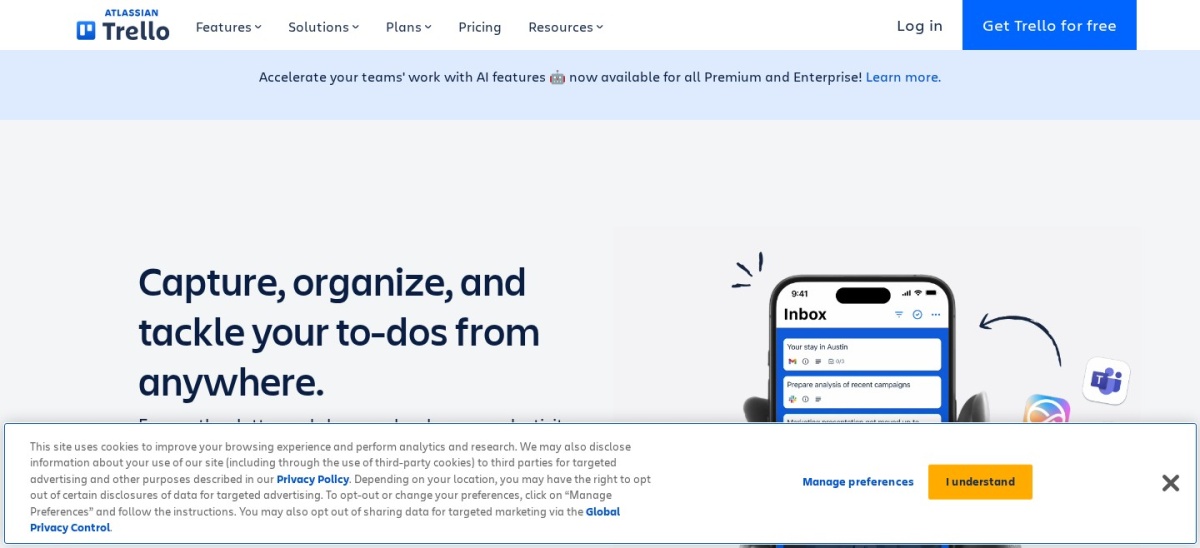
Trello homepage, captured Nov 2026.
Trello is a visual task management platform that organizes commitments into boards, lists, and cards. Its free plan supports up to 10 collaborators per Workspace, unlimited cards, task assignees, due dates, and an activity log. The Standard plan adds unlimited boards, advanced checklists, custom fields, and more automation.
The trade off is limited native reporting and goal management compared with more comprehensive project platforms. Standard costs $5 per user monthly with annual billing, or $6 with monthly billing. It suits smaller teams that want a transparent view of pending, active, and completed commitments.
What we like
Easy-to-understand visual boards
Free task assignment and deadlines
Activity logs show task changes
Affordable Standard subscription
Automation and integrations available
Watch out for
Limited advanced accountability reporting
Complex dependencies need additional tools
Large boards can become difficult to manage
Portfolio oversight is less developed
Standard adds unlimited boards, advanced checklists, custom fields, and expanded automation.Visit trello.com
04
monday
4.7/5on G2 (17,975 reviews, checked Nov 2026)
Paid from$9/mo
Best for customizable accountability dashboards
Free planUp to 2 seats
Basic subscription$9/seat/month, billed annually
Free boardsUp to 3
G2 rating4.7/5 from 17,975 reviews
monday.com
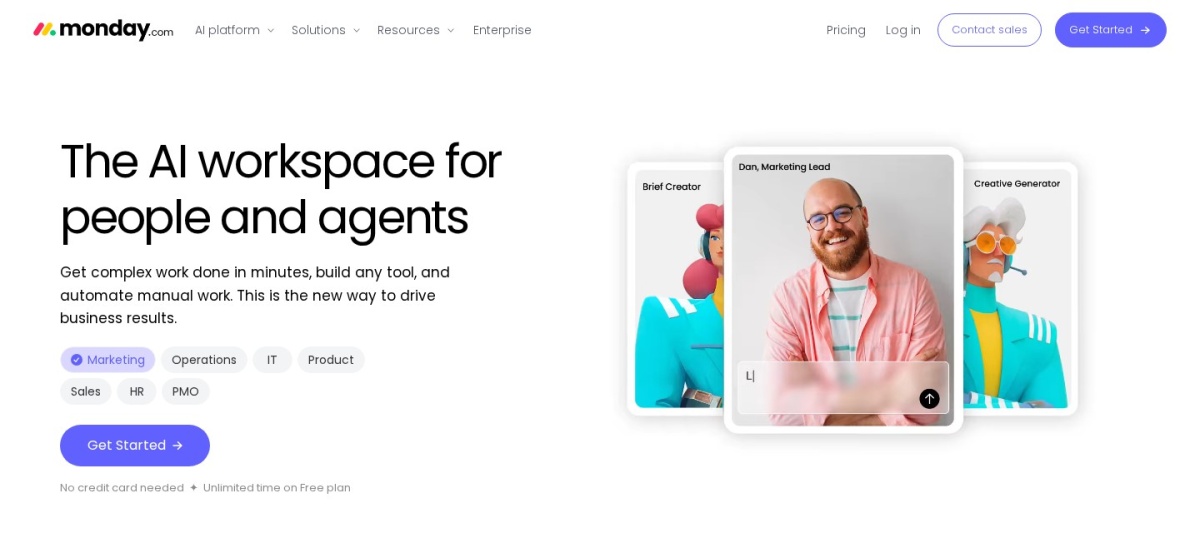
monday homepage, captured Nov 2026.
monday is a configurable work platform for assigning responsibilities, monitoring deadlines, and displaying team progress through shared boards. Its free plan supports up to 2 seats and 3 boards, while Basic starts at $9 per seat monthly with annual billing and adds unlimited items and free viewers.
The trade off is that more detailed collaboration and reporting features depend on higher plans, and paid subscriptions use seat-based purchasing. The vendor also displays promotional discounts that should not be confused with the standard plan rate. It suits teams that want customizable accountability processes built around visual work boards.
What we like
Customizable ownership and status columns
Visual project and workload tracking
Free entry plan
Large selection of workflow templates
Extensive integration and automation options
Watch out for
Free plan has limited seats and boards
Advanced dashboards require higher tiers
Seat-based billing affects small-team costs
Complex customization takes preparation
Basic adds unlimited items and viewers; higher plans extend automation, integrations, and dashboards.Visit monday.com
05
Todoist
4.5/5on G2 (869 reviews, checked Nov 2026)
Paid from$5/mo
Best for personal accountability and daily habits
Beginner planFree
Pro subscription$5/month, billed annually
Business subscription$8/user/month, billed annually
G2 rating4.5/5 from 869 reviews
todoist.com
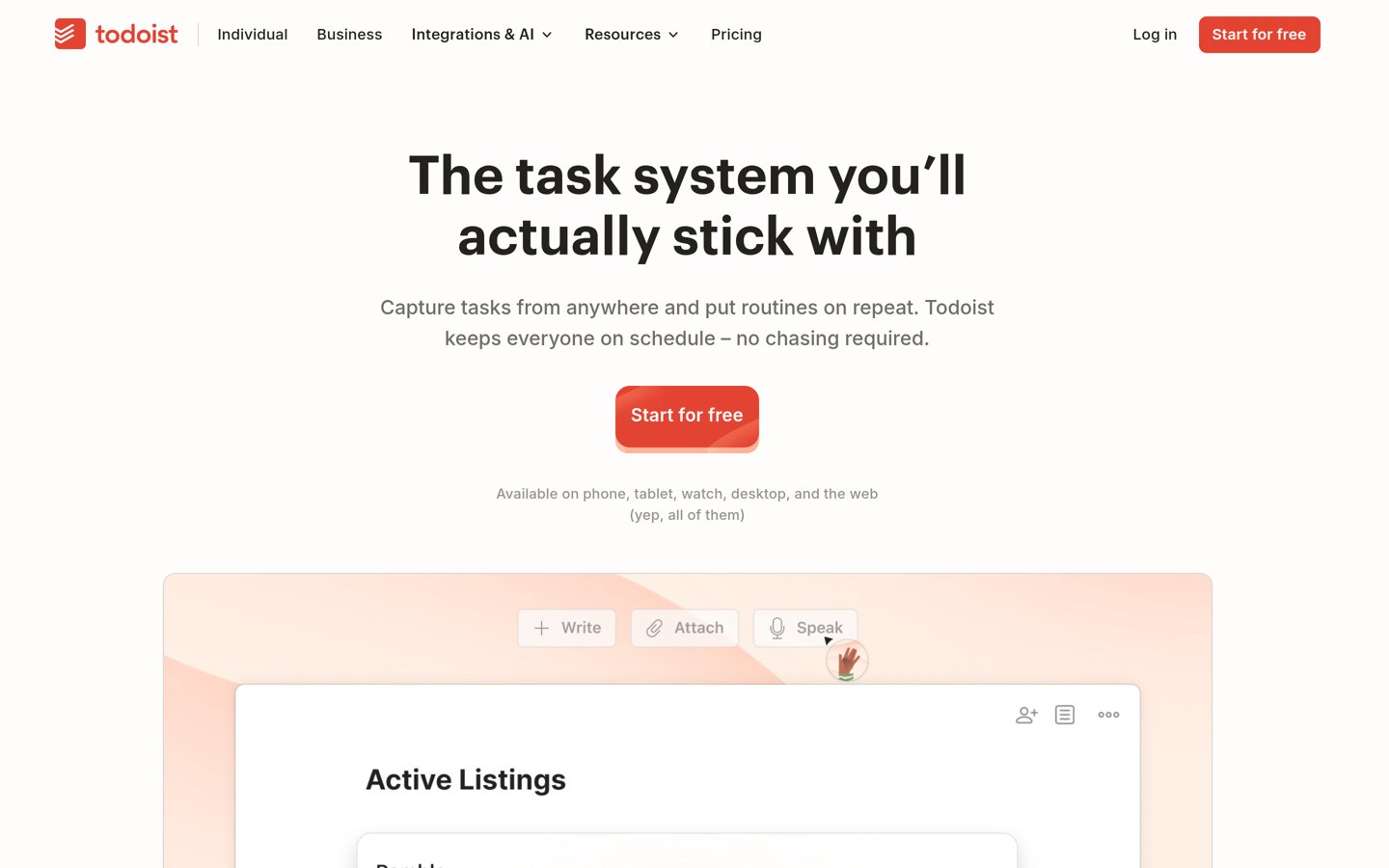
Todoist homepage, captured Nov 2026.
Todoist is a task management application for organizing personal commitments, recurring responsibilities, deadlines, and collaborative projects. Its free Beginner plan includes 5 personal projects, reminders, and flexible task views, while Pro adds more projects, deadlines, calendar layouts, custom reminders, and full reporting history.
The trade off is that Todoist prioritizes personal productivity over detailed project governance and portfolio reporting. Pro costs $5 monthly with annual billing, while team-focused Business costs $8 per user monthly with annual billing. It suits individuals and small teams who need consistent reminders and a manageable daily accountability system.
What we like
Quick task entry and recurring reminders
Free personal task management
Deadlines and reporting history in Pro
Works across desktop and mobile devices
Simple interface for daily commitments
Watch out for
Limited advanced project dependencies
Detailed team activity reporting requires Business
Not designed for complex project portfolios
Pro is primarily an individual subscription
Pro adds more projects, advanced layouts, deadlines, reminders, and full reporting history.Visit todoist.com
06
Teamwork
4.4/5on G2 (1,226 reviews, checked Nov 2026)
Paid from$9.99/mo
Best for client project and deliverable accountability
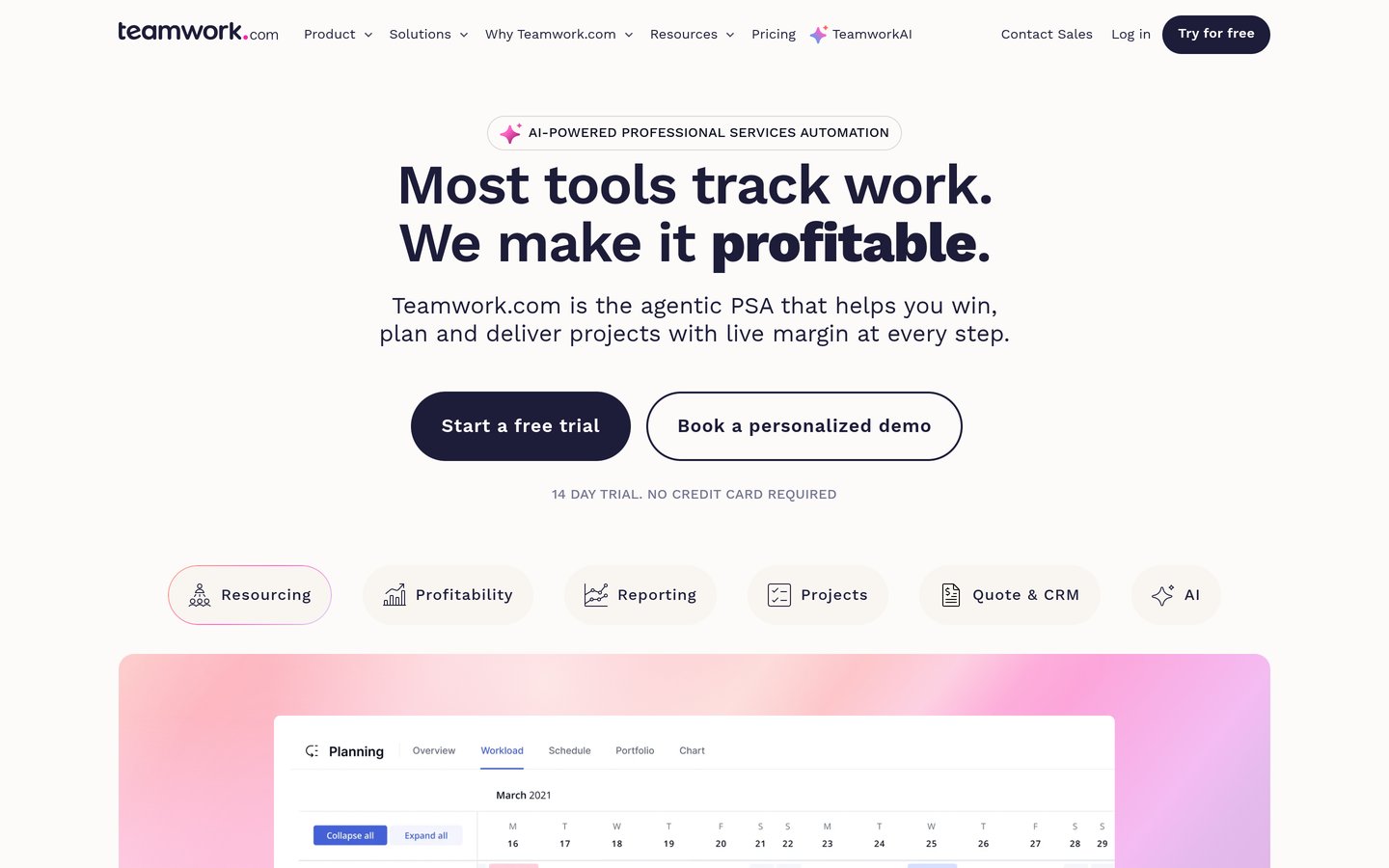
Teamwork is a project and professional services management platform that helps agencies assign work, track deliverables, and manage client commitments. Its free plan supports 5 projects and 5 users, while Basics at $9.99 per user monthly with annual billing adds billable time tracking, project health reporting, custom fields, and automation.
The trade off is that capacity planning, advanced profitability analysis, and resource controls require more expensive tiers. Basics is designed for client projects, making it more extensive than a personal accountability tracker. It suits agencies, consultants, and service teams that need clear ownership of deliverables and deadlines.
What we like
Clear responsibility for client deliverables
Project health and progress reporting
Billable time tracking
Free plan for small teams
Custom workflows and automations
Watch out for
Advanced resource planning requires upgrades
Client-service features may be unnecessary internally
Complex reporting needs configuration
Paid plans increase costs with team size
Basics adds more projects, billable time reporting, custom fields, and automation.Visit teamwork.com
07
Wrike
4.2/5on G2 (4,648 reviews, checked Nov 2026)
Paid from$10/mo
Best for structured project accountability
Free planAvailable
Team subscription$10/user/month
Team user range2 to 15 users
G2 rating4.2/5 from 4,648 reviews
wrike.com
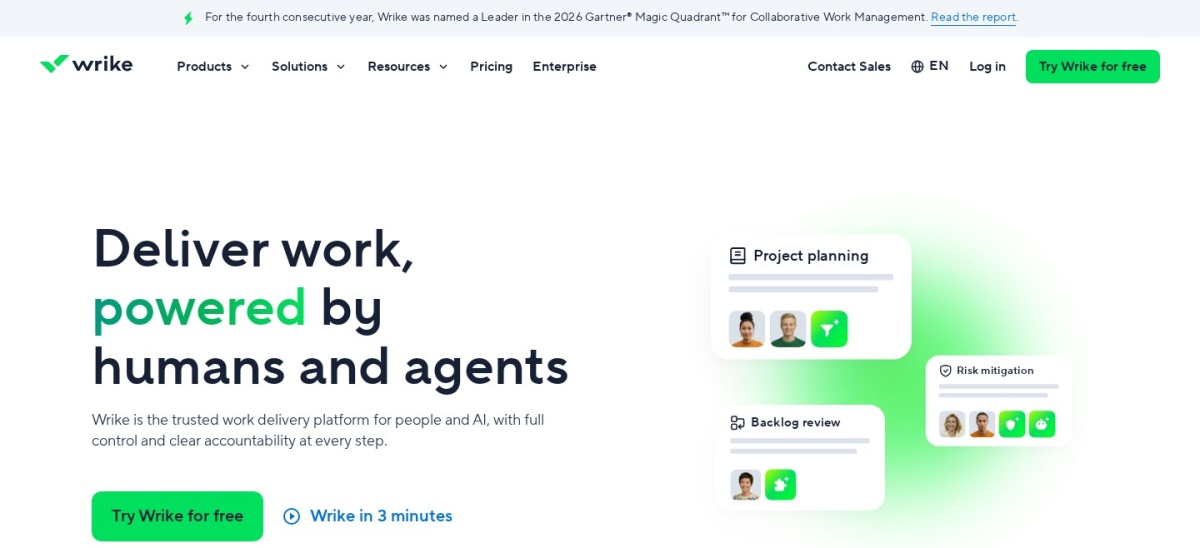
Wrike homepage, captured Nov 2026.
Wrike is a collaborative work management platform that organizes projects around tasks, assignees, deadlines, dependencies, and shared status updates. Its free plan provides basic work management, while the $10-per-user monthly Team plan adds structured project management for teams requiring more visibility and coordination.
The trade off is that Wrike can require significant setup for smaller teams, and subscriptions are sold in seat groups rather than always matching exact headcount. Advanced governance, reporting, and resource management require higher tiers. It suits organizations managing interdependent projects that need documented ownership and escalation.
What we like
Clear task ownership and deadlines
Dependencies and project visibility
Shared workspaces for collaboration
Automation and dashboard capabilities
Scales into more complex work management
Watch out for
Seat-group billing can increase actual costs
Advanced reporting requires higher plans
More setup than simple task boards
Feature depth may be excessive for individual users
Team adds expanded project management; higher tiers add advanced reporting and governance.Visit wrike.com
Accountability software vs. employee monitoring software
Accountability software emphasizes agreed responsibilities, task completion, deadlines, and measurable outcomes. It helps people understand their commitments and makes project progress visible.
Employee monitoring software focuses more directly on observing work activity, such as application usage, screenshots, or computer activity. Those measurements do not necessarily show whether someone completed meaningful work.
For most knowledge-work teams, task ownership and deliverable tracking provide a more useful accountability framework than continuous activity monitoring.
Choose systems that make expectations explicit, give employees access to their own progress, and support constructive conversations about blockers. Review privacy and access controls before introducing workforce tracking.
How to create a practical team accountability system
Begin by assigning every important deliverable to a clearly identified owner. Shared responsibility can create confusion when nobody is explicitly accountable for completing the work.
Add realistic deadlines and define what completion means. A task labeled Finish campaign is less useful than a commitment with a specific deliverable and clear acceptance criteria.
Review upcoming and overdue work regularly. Use dashboards and task histories to identify blockers, adjust workloads, and document changes rather than relying only on verbal status reports.
Measure completed outcomes instead of rewarding task volume. Accountability systems work better when teams can discuss constraints, improve processes, and revise commitments when circumstances change.
How we chose
We selected established task management and project coordination platforms with features relevant to personal or team accountability. Products were evaluated through official feature documentation, pricing pages, and public G2 reviews, with emphasis on task assignment, deadlines, reporting, automation, and progress visibility.
Prices and ratings were checked using pages opened on 24 Nov 2026 for the 22 Nov 2026 editorial reference date. Vendor pages supplied regular entry-plan pricing, while G2 supplied numeric ratings and review counts. Annual equivalents represent the stated per-user or per-seat rates unless explicitly described otherwise.
We excluded tools primarily designed for invasive employee monitoring, products without verifiable paid pricing, and platforms with insufficient public review evidence. Optional AI charges, seat minimums, and promotional prices are not included in the listed annual per-user comparisons. No vendor paid for a place, and we do not claim testing for this list.
How to choose the best accountability software
Define what accountability means for your team before comparing tracking features, reporting, integrations, and subscription costs.
Identify the commitments you need to track. Decide whether the main requirement is personal reminders, team assignments, client deliverables, or complex project dependencies. Choose software that reflects your actual responsibilities rather than introducing unnecessary workflow complexity.
Check task ownership and deadline visibility. Confirm that every important task can have an owner, due date, status, and relevant context. Look for reminders, overdue indicators, recurring work, and activity histories that make commitments easy to review.
Evaluate reporting and collaboration. Managers may need dashboards, workload summaries, and project health reports. Individuals may prefer simple daily planning. Check whether teammates can update progress and explain blockers without creating excessive reporting work.
Compare regular pricing and adoption costs. Use the regular subscription price rather than promotional discounts. Include seat minimums, optional automation charges, and the effort required to configure the system. A simpler application that employees consistently use may provide greater value than a more complicated platform.
FAQ
What is the best accountability software in 2026?
ClickUp is a strong overall choice because it combines task ownership, deadlines, goal tracking, and project progress in one workspace. Asana is particularly useful for coordinated team projects, while Trello offers a straightforward board-based system. The right option depends on whether you need basic follow-through or advanced reporting.
What is the best free accountability software?
ClickUp, Trello, Asana, Todoist, and monday all offer free entry plans. Trello is useful for visual team commitments, Todoist is well suited to personal reminders, and ClickUp provides a broader free task management environment. Free-plan restrictions differ, especially around collaborators, storage, and reporting.
How much does accountability software cost?
Trello Standard and Todoist Pro start at $5 per user or individual monthly with annual billing. monday Basic starts at $9 per seat monthly, and Asana Starter costs $10.99 per user monthly. Costs depend on employee count, billing frequency, seat requirements, and advanced features.
Can accountability software help employees meet deadlines?
Yes. Accountability platforms help by recording commitments, assigning ownership, setting reminders, and highlighting overdue tasks. They can also expose dependencies and blockers before a deadline is missed. However, software alone cannot guarantee delivery; clear priorities, manageable workloads, and regular communication remain essential.
What is the difference between accountability software and project management software?
Accountability software focuses on responsibility, commitments, progress, and follow-through. Project management software covers broader planning, scheduling, dependencies, resources, and coordination. Many platforms, including ClickUp, Asana, and Wrike, provide both functions through assigned tasks, dashboards, and reporting.
Which accountability software is best for small teams?
Trello is a practical option for small teams that want visible commitments without complicated setup. ClickUp offers more configuration and reporting potential, while Todoist provides straightforward recurring tasks and shared projects. Consider which platform employees can maintain consistently rather than choosing solely by feature count.
Can accountability software track personal goals?
Yes. Todoist supports recurring tasks, reminders, deadlines, and completion history, making it useful for daily commitments. ClickUp also includes goal-related functionality in its paid plans. For personal accountability, a consistent review routine is usually more important than advanced dashboards or extensive customization.
Does accountability software replace employee monitoring?
Not directly. Accountability systems focus on assigned work and completed outcomes, while employee monitoring tools may record computer activity or application usage. Many organizations can manage commitments through project dashboards and documented deliverables without continuous surveillance. Privacy, transparency, and proportionality should guide any tracking policy.