Best Interview Scheduling Software in 2026: 9 Tools Compared
WLWPLegible EditorsLast verified 23 Nov 2026How we rank10 min read
★ Short answer
GoodTime is the best interview scheduling software for teams running many interviews a week. It automates multi-interviewer loops, load balancing and reminders, and holds a 4.4 out of 5 G2 rating. Pick Calendly for simple first-round screens and Ashby when scheduling should live inside your ATS.
How we make this list: we compare pricing pages, product documentation and public user reviews, then re-check every price before each update. No product paid for a place. Disclosure.
GoodTime automates complex panel loops and interviewer load balancing, and prices by annual candidate volume rather than seats.
Calendly is the only tool here with a usable free plan, and Standard costs $12 a seat a month.
Ashby puts fast interview plans and scheduling inside one ATS, from $400 a month for companies up to 100 employees.
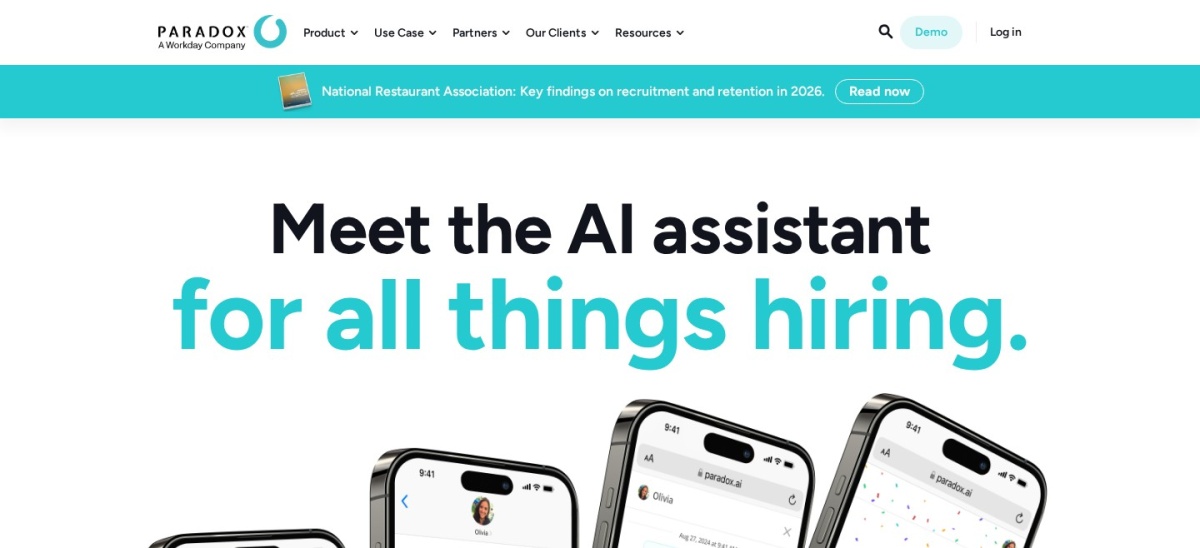
Paradox schedules interviews over chat, text and WhatsApp through its Olivia assistant, built for high-volume hourly hiring.
Six of the nine tools are quote-only, so budget checks need a sales conversation rather than a pricing page.
What interview scheduling software should do
Interview scheduling is more than a booking link. The full job is finding times across interviewers, sending self-scheduling links, adding video links, reminding everyone and handling reschedules.
A simple booking link covers one interviewer and one candidate. A panel loop with four interviewers, a room and a debrief needs a tool that coordinates the whole chain.
Check what your ATS already does first. Many applicant tracking systems include scheduling, so a second tool may duplicate it. Our guide to the best ATS software for small business covers the tracking side.
Price by the unit that matters to you. Seats, company headcount and annual candidate volume produce very different bills for the same team.
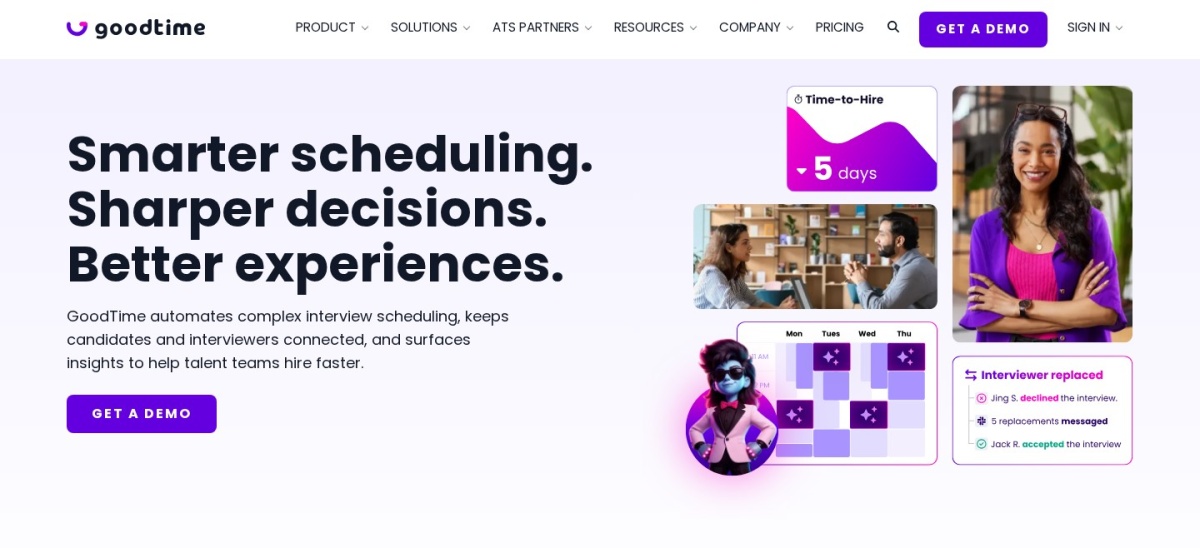
GoodTime is a dedicated interview scheduling platform for teams where coordinators spend their week fitting four to six interviewers into one candidate's day. It automates complex loops, handles candidate engagement and reports on hiring speed, and every integration is included, with two-way sync to the applicant tracking system.
The trade off is price. Pricing is by quote and based on the number of candidates a year, not the number of users, so there is no published price to budget against. It suits companies running hundreds of interviews a month, while a team hiring five people a quarter will find its ATS scheduler enough.
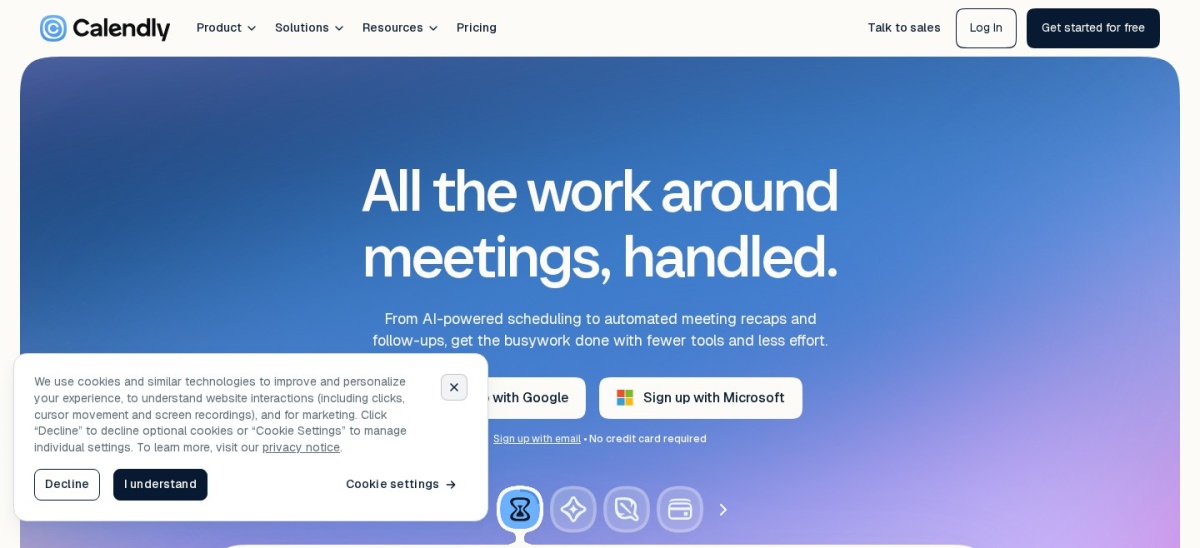
Calendly is the simplest way to stop emailing candidates about times. Send one link, the candidate picks a slot that fits the interviewer's real calendar, and reminders go out automatically, which cuts no-shows. The free plan covers one event type and one calendar, enough for a hiring manager booking screening calls.
The trade off is depth. Standard costs $12 a seat a month, or $10 billed annually, while round-robin and team scheduling need Teams at $16 a seat a month billed annually. It suits first-round screens more than full on-site schedules, since it books single meetings rather than panel loops.
What we like
Fastest setup here: one booking link, no booking cap
Free plan is genuinely usable for a solo hiring manager
Automated reminders that cut no-shows
129 integrations, including Zoom, Google Meet and Salesforce
Watch out for
Built for meetings, not recruiting: no panel coordination
Round-robin and team scheduling need the Teams plan
AI add-ons cost extra on top of the per-seat price
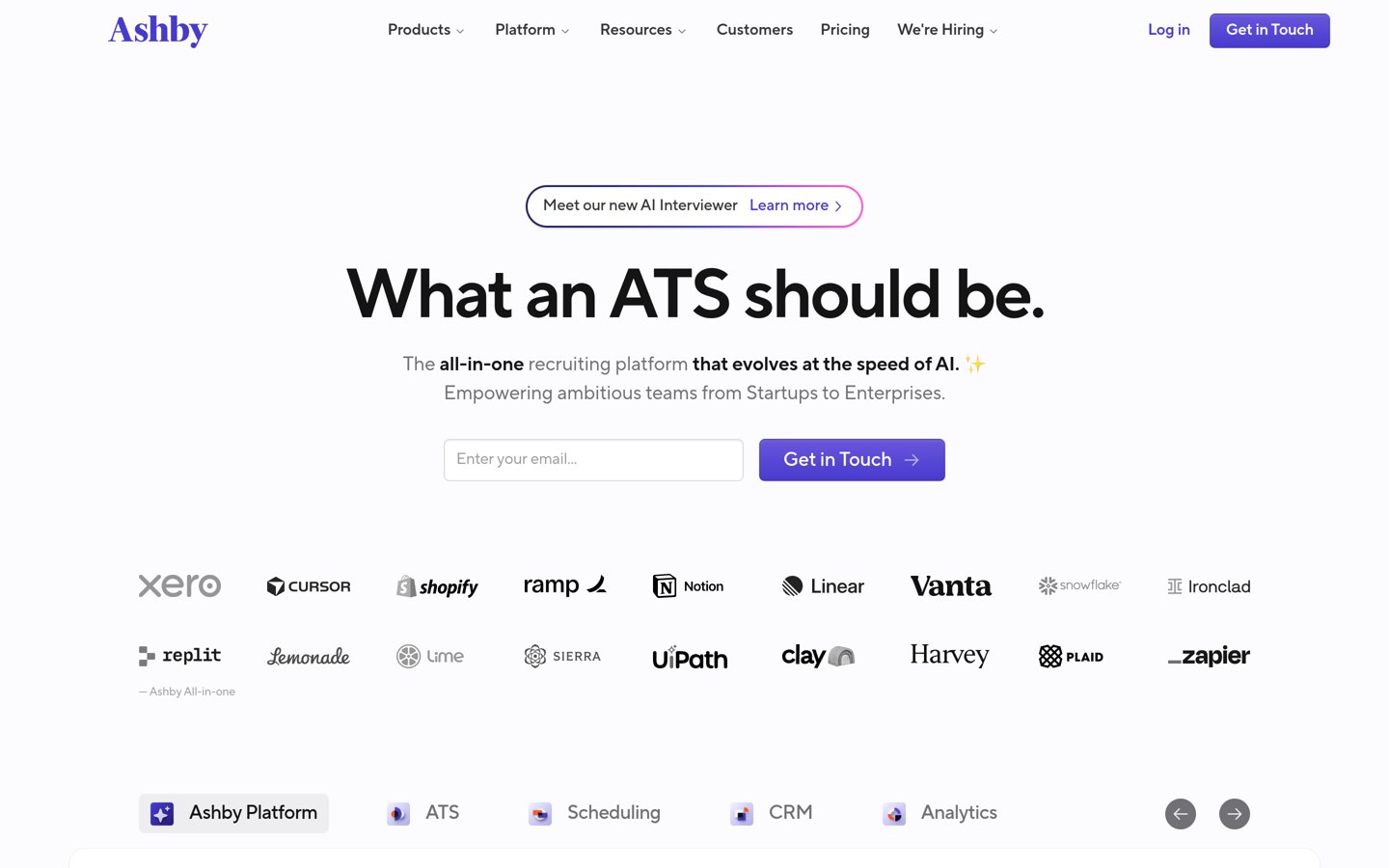
Ashby is an applicant tracking system with scheduling built in, and reviewers single out how fast its scheduling and interview plans are to set up. Recruiters set up interview plans per role inside the same system that tracks candidates, so most growing teams never need a separate scheduling tool.
The trade off is the entry price. Foundations starts at $400 a month for companies with up to 100 employees, with 10% off billed annually, and price rises with headcount. It suits growing companies choosing their first ATS, where scheduling, sourcing and analytics should live in one place.
What we like
Scheduling and interview plans are fast to set up
Analytics and reporting are strong for the price
AI-assisted review ranks candidates against clear criteria
Direct booking links and visual scheduling included
Watch out for
Entry price of $400 a month is steep for very small teams
Pricing scales with headcount, so costs rise as you grow
Fewer native integrations than older enterprise ATS tools
Paradox is a conversational hiring platform whose Olivia assistant talks with candidates over chat, text and WhatsApp: screening, answering questions and scheduling interviews automatically. For hourly and high-volume hiring, where candidates apply from phones at night, the conversational approach converts better than email links.
The trade off is scope and price. Pricing is enterprise and quote-based, and scheduling is one module of a larger platform purchase. It suits retail, hospitality, healthcare and warehouse hiring at scale, where the phone is the candidate's main device.
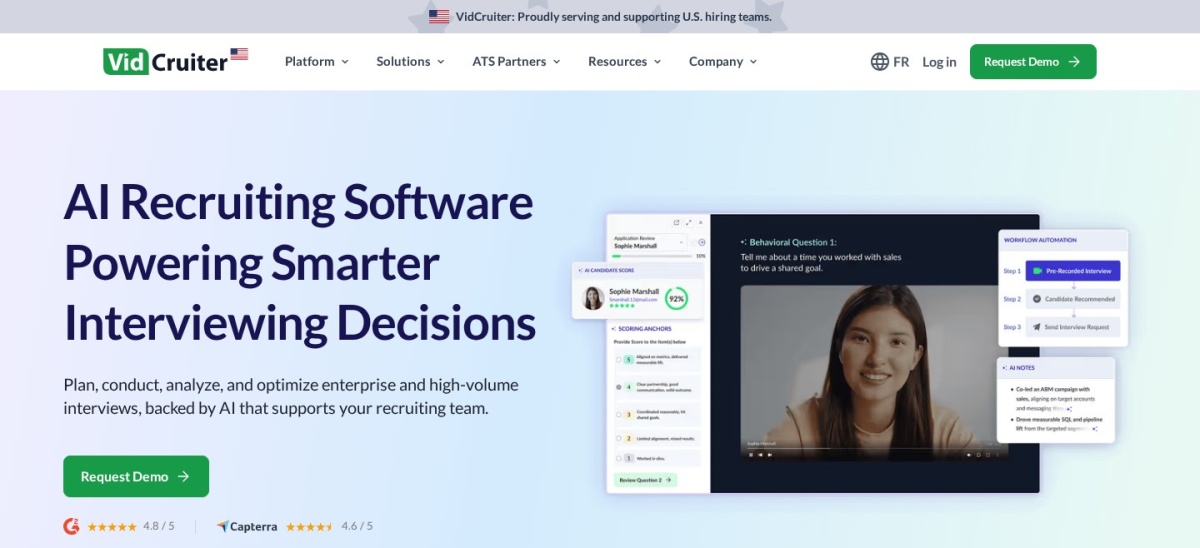
VidCruiter is interview software for high-volume hiring, with recorded and live video interviews, structured interviews, reference checks and scheduling in one platform. It holds the highest G2 rating in this list at 4.8 out of 5 from 282 reviews, and pricing starts at $5,000 a year.
The trade off is the entry cost and setup. The $5,000 starting price and a typical two-month setup suit large employers, not small teams. It suits companies screening many candidates with the same structured interview every time.
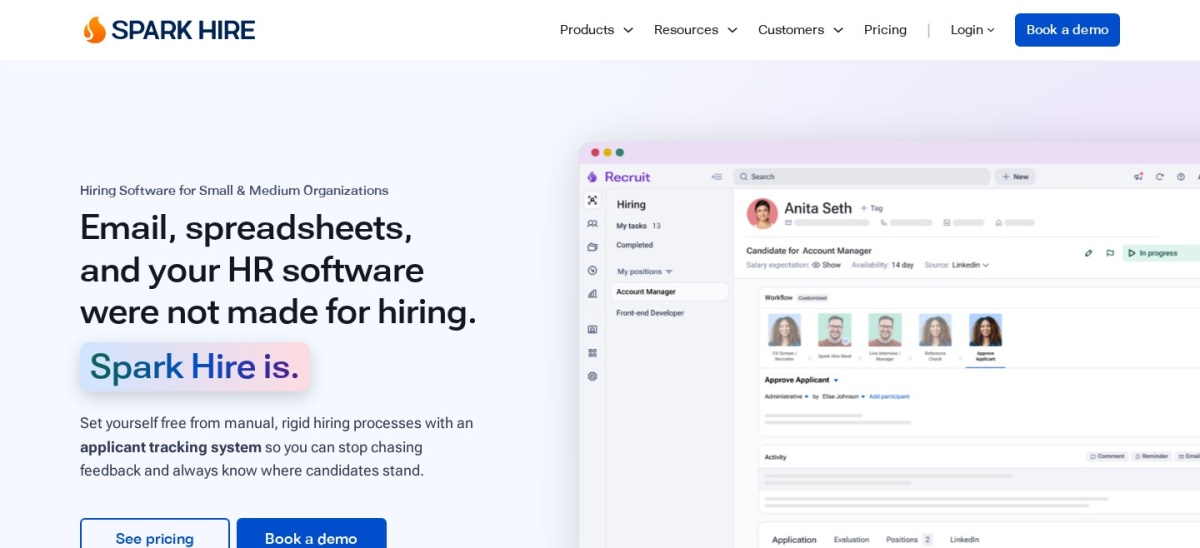
Spark Hire is built around one-way video interviews: candidates record answers to your questions on their own time, and you review them before scheduling live interviews. Video interviews start at $249 a month billed annually, or $299 a month on monthly billing, and the Recruit ATS starts at $335 a month.
The trade off is scheduling depth. Scheduling automation is lighter than GoodTime or VidCruiter, and the monthly video plan caps at 5 active jobs and 5 users. It suits small to mid-size companies adding video screening before live interviews, as the most accessible entry in this list.
What we like
Simple one-way video interviews
Published prices, unlike most tools here
Free trial to start
ATS upgrade path with video built in
Watch out for
Scheduling features are lighter than the specialists
ModernLoop is a scheduling platform that coordinates the interviewers, not just the calendar: panel scheduling, interviewer prep, feedback collection and debrief organization. Hiring managers get visibility without chasing people, and the interface is clean and modern.
The trade off is vendor size. The vendor is smaller than GoodTime or Paradox, so reference checks matter, and pricing is quote-based with no published price. It suits collaborative hiring cultures where interviewer coordination, rather than candidate volume, is the bottleneck.
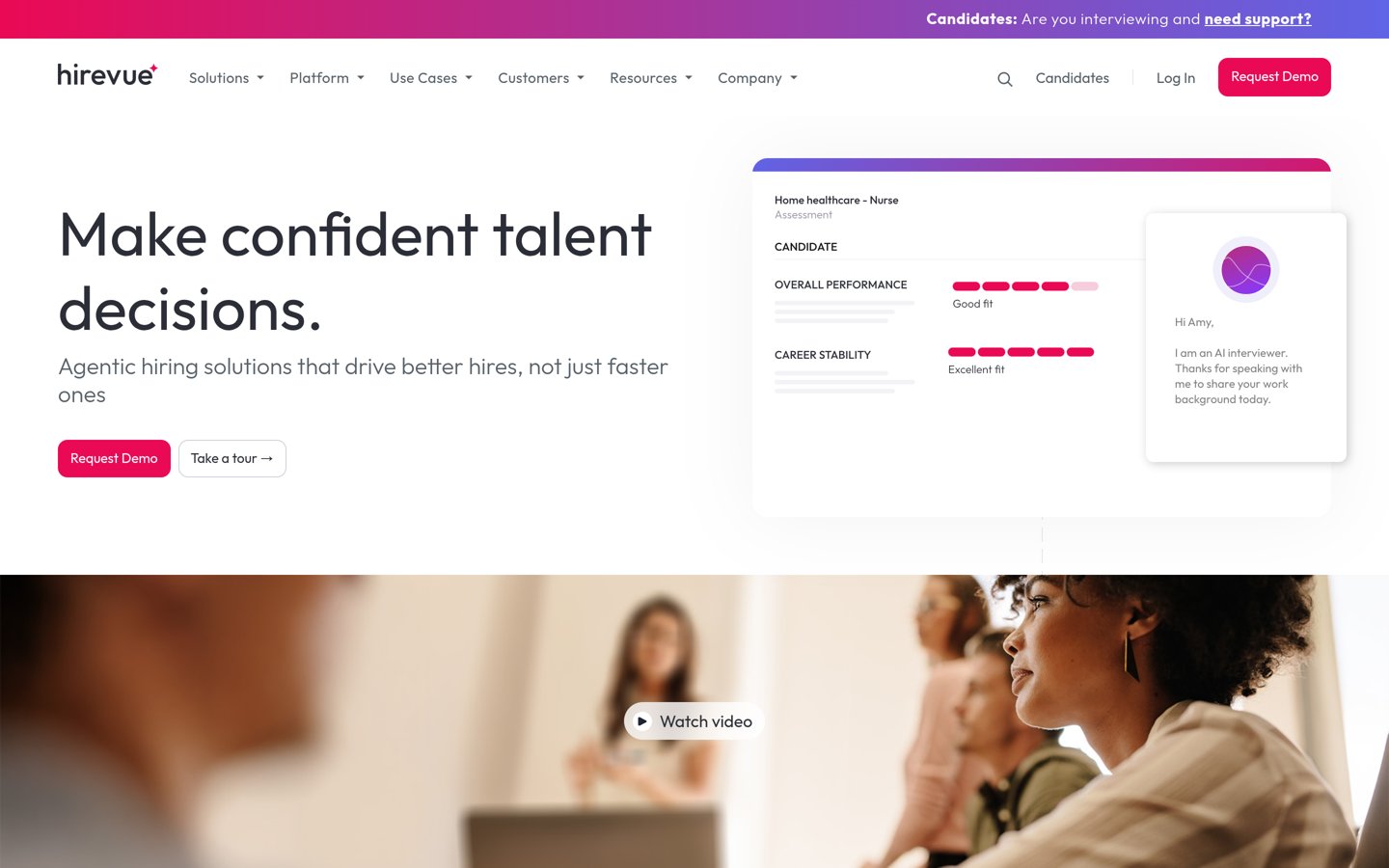
HireVue is an enterprise hiring platform that combines video interviewing, live and on-demand, with interview scheduling and AI-powered assessments. Candidates record answers on their own time, hiring teams review, score and schedule next steps, and large enterprises use it for consistent global hiring.
The trade off is cost and governance. Pricing is quote-based enterprise, and AI assessment features require governance and validation for bias. It suits high-volume hiring that starts with video screening, where one platform should cover the whole funnel.
Greenhouse is the structured-hiring ATS: every role gets an interview plan with scorecards, so each interviewer knows what to assess and feedback arrives in a consistent format. Scheduling sits inside that process, and strong integrations with HRIS, sourcing and assessment tools let teams add more automation where they need it.
The trade off is setup and price. There is no published price, since Greenhouse sells through demos and custom quotes, and setup takes longer than simpler ATS tools. It suits companies hiring at scale across several locations, where consistent interviews matter as much as fast scheduling.
Panel loops are where scheduling tools earn their price
Booking one call is easy. Fitting four interviewers, a room and a video link into one afternoon is the real test, and it is where dedicated tools beat a plain booking link.
Load balancing matters too. In most companies a small group of reliable interviewers carries most interviews, so a tool that spreads the load protects both quality and morale.
If your bottleneck is interview capacity rather than coordination, a video screening tool such as Spark Hire or HireVue may cut the number of live interviews first.
How we chose
We started from the interview scheduling category on G2 and the leading ATS platforms, then kept nine tools with a published G2 rating and a clear scheduling workflow.
Prices come from each vendor's pricing page, checked on 23 November 2026. Ratings and review counts come from G2 on the same day. Where a vendor shows no price, the list shows Custom rather than a guess.
We left out general calendar tools with no recruiting workflow. No vendor paid for a place, and this list is based on pricing, docs and reviews, not on using the tools ourselves.
How to choose interview scheduling software
Start with your hiring volume, then check what your ATS already covers before you buy a second tool.
Count your interviews per week. Five hires a year needs a booking link; 50 interviews a week needs automation and load balancing.
Check what your ATS already does. Many applicant tracking systems include scheduling, so a second tool may duplicate it. See our guide to the best ATS software for small business.
Test panel loops, not just single slots. Booking one call is easy; fitting four interviewers into one afternoon is the real test of a scheduler.
Understand the pricing unit. Seats, company headcount and candidate volume produce very different bills, so compare on your own hiring numbers.
FAQ
What is the best interview scheduling software?
GoodTime is the best pick for high-volume teams, with automated panel loops and interviewer load balancing. Calendly fits small teams doing simple first-round screens, and Ashby fits growing companies that want scheduling inside their ATS.
How much does interview scheduling software cost?
Calendly starts at $12 a seat a month, Ashby at $400 a month and Spark Hire video interviews at $249 a month billed annually. Most dedicated platforms, including GoodTime, Paradox and Greenhouse, are quote-only.
Is there a free interview scheduling tool?
Yes. Calendly has a free plan with one event type and one calendar, which covers basic screening calls for a solo hiring manager. Google Calendar booking pages are also free with a Google account.
Do I need interview scheduling software if I have an ATS?
Often not. Many ATS platforms, including Ashby and Greenhouse, include scheduling with interview plans and scorecards. A dedicated scheduler only pays off when panel coordination is a full-time job.
What is the difference between Calendly and GoodTime?
Calendly books single meetings through a link, which suits phone screens. GoodTime automates full interview loops with several interviewers, load balancing and ATS sync, which suits high-volume hiring.
Can interview scheduling software reduce no-shows?
Yes. Automated reminders by email and text, easy rescheduling links and calendar holds at booking all cut no-shows. VidCruiter and Paradox put the most weight on reminders and candidate experience.