LangSmith is the best Arize AI alternative for most teams, with tracing, evals and prompt management from $39 per seat a month. Langfuse suits open-source teams, while Fiddler AI fits regulated teams that need explainability and fairness checks.
How we make this list: we compare pricing pages, product documentation and public user reviews, then re-check every price before each update. No product paid for a place. Disclosure.
LangSmith leads for LLM teams at $39 per seat a month, with the strongest tracing for LangChain agents.
Langfuse is the cheapest hosted start at $29 a month, and its core is free to self-host.
Fiddler AI fits regulated teams best, but pricing is by quote and G2 shows only four reviews.
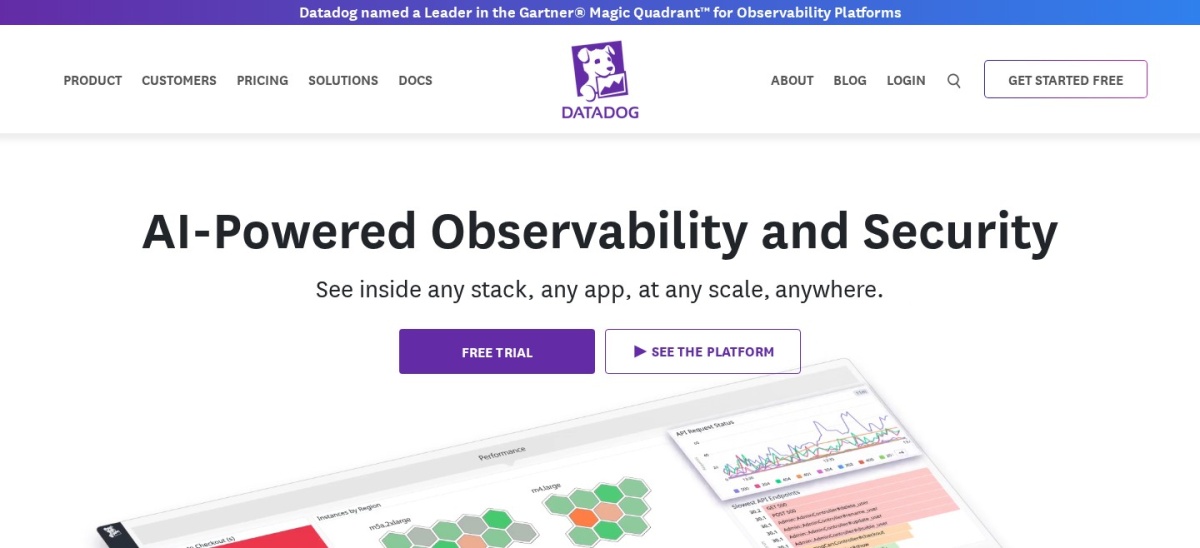
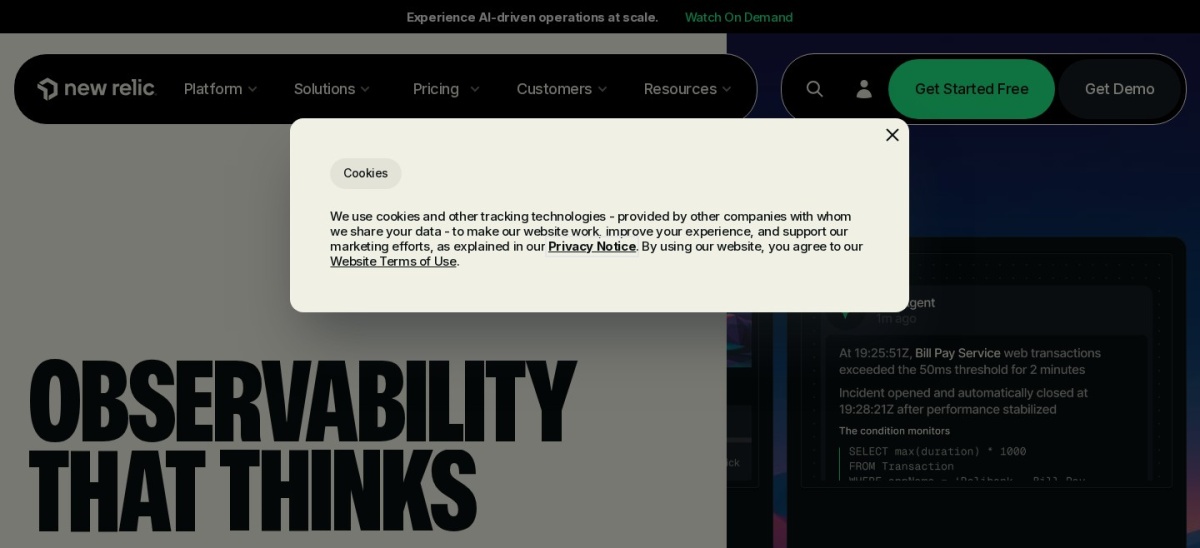
Datadog and New Relic suit teams already on their platforms, with LLM observability billed by usage rather than a flat fee.
Review bases are thin across this category, so test the free tier before you pay.
How do you choose the best Arize AI alternative?
Arize AI covers both classic machine learning monitoring and LLM tracing, so the right alternative depends on which side you run. LLM-first teams need tracing and evals, while classic ML teams need drift and data quality checks.
Open-source control splits the list. Langfuse is free to self-host under the MIT license, while LangSmith, Braintrust, and Portkey run as hosted services with free tiers for small use.
Prices run from $29 a month for Langfuse Core to $249 a month for Braintrust Pro, with Fiddler AI priced by quote and Datadog and New Relic billed by usage. The cheapest plan is rarely the cheapest bill once trace volume grows.
Review bases are thin across this category. Only Datadog and New Relic have more than 700 G2 reviews, so treat scores as a weak signal and lean on free tiers to test the workflow.
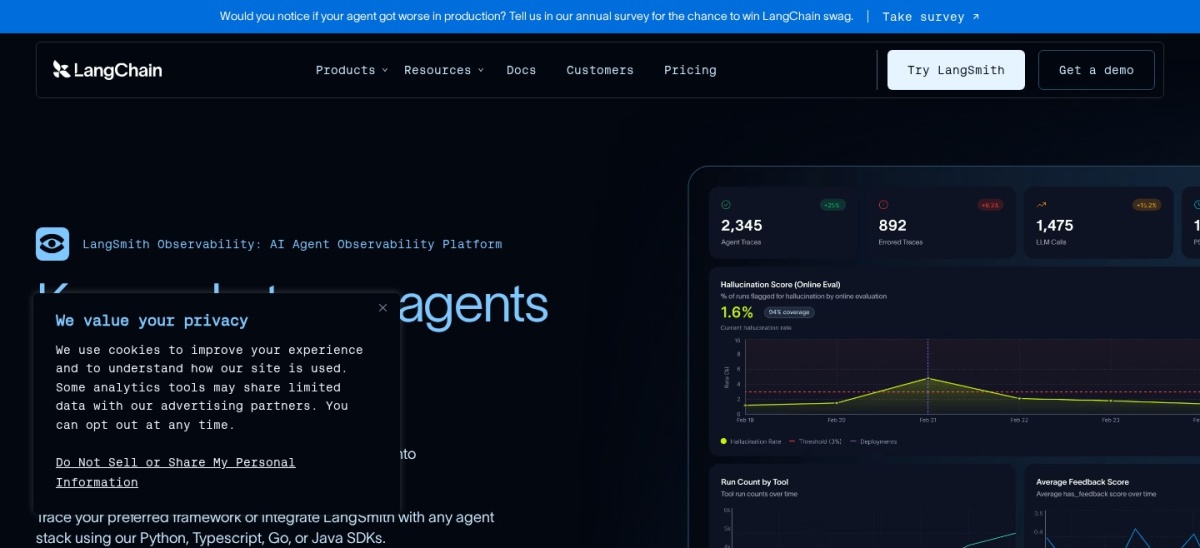
LangSmith is LangChain's platform for tracing, evaluating, and deploying LLM agents, and it works with or without the LangChain frameworks. The free Developer tier covers one seat with 5,000 traces a month, while Plus at $39 per seat a month adds 10,000 traces and team features.
The trade off is cost at volume. Seats plus trace overages can push a five-seat team past $400 a month, and the deepest value sits with LangChain users. It suits teams building agents on LangChain or LangGraph that need production tracing.
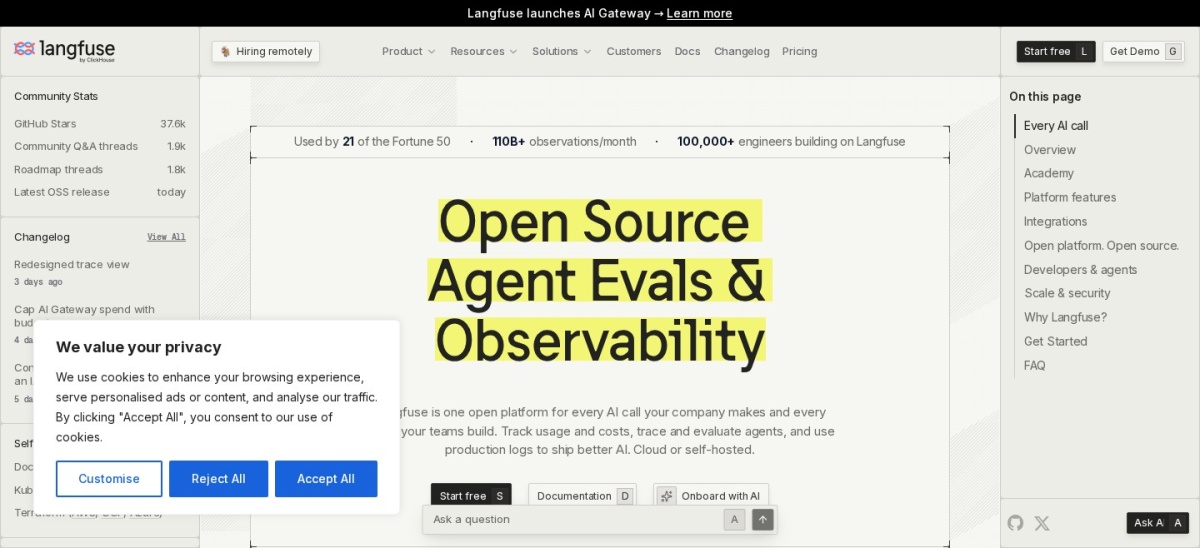
Langfuse is an open-source platform for LLM observability, evaluation, and prompt management, and the core is free to self-host under the MIT license with no usage caps. The hosted Core plan costs $29 a month with a free Hobby tier for small projects.
The trade off is the thin review base. G2 rates it 4.5 out of 5 from a single review, so the score says little, and hosted usage bills on top of the plan fee. It suits teams that want open-source tracing without per-seat pricing.
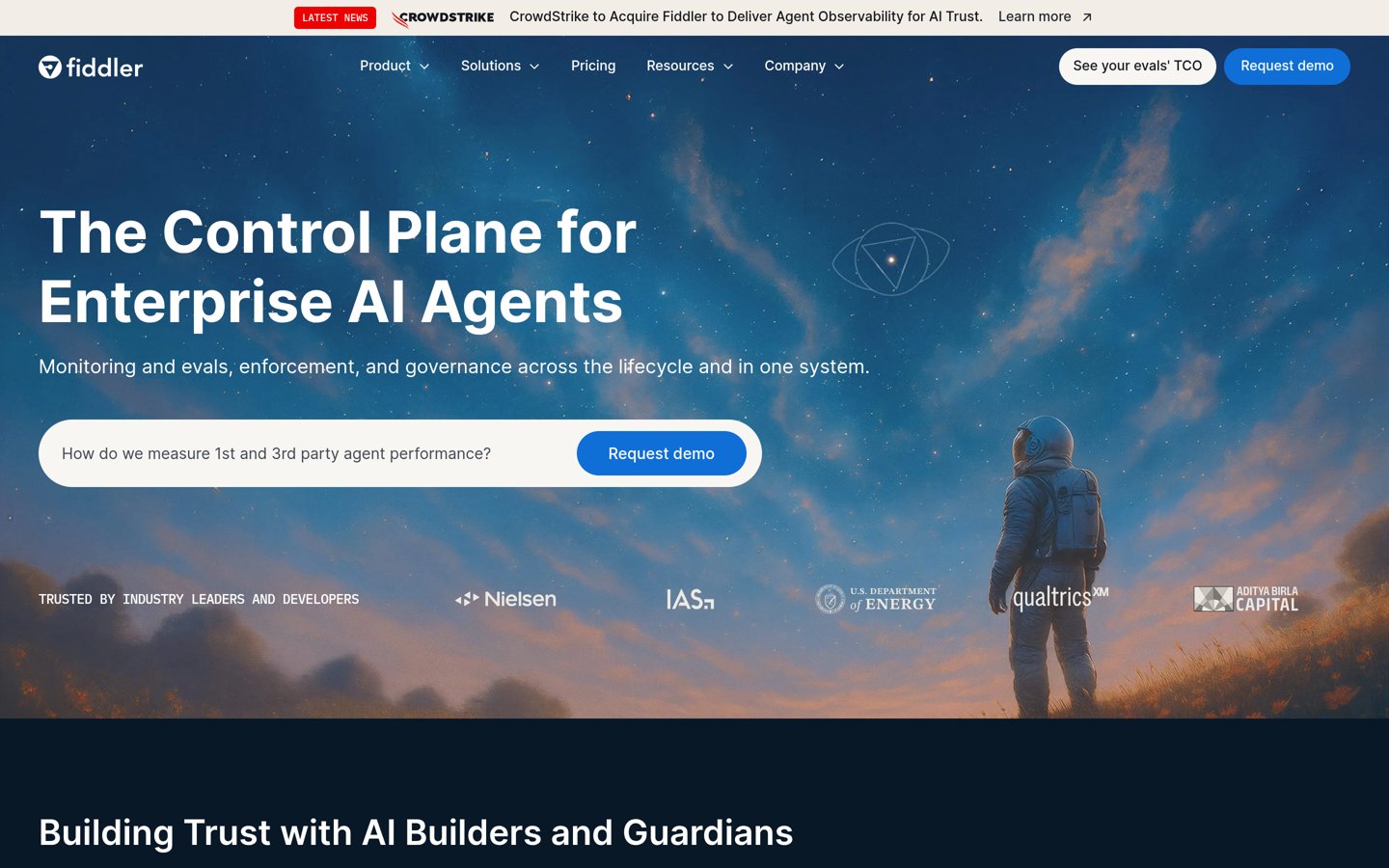
Fiddler AI is a model monitoring platform focused on explainability, fairness, and governance, now part of DataRobot. It tracks model performance and drift, explains individual predictions, and keeps audit trails that regulated teams need for reviews.
The trade off is access. Pricing is by quote with no public tiers, and G2 rates it 4.4 out of 5 from only four reviews. It suits banks, insurers, and health teams that must explain and defend every model decision.
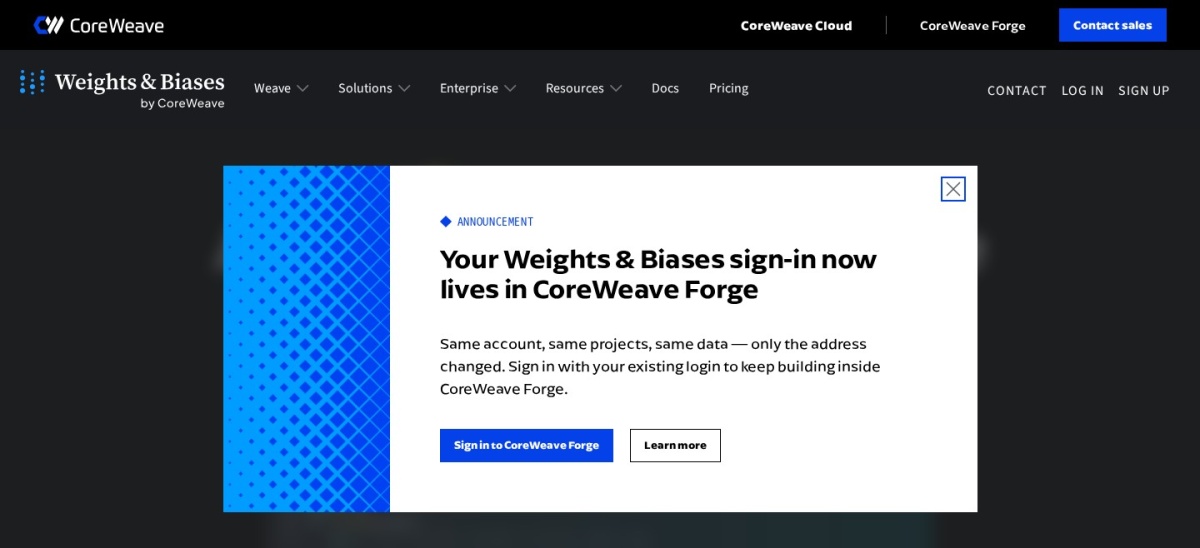
Weights & Biases Weave homepage, captured Nov 2026.
Weights & Biases Weave is the LLM layer inside Weights & Biases, adding traces, evals, guardrails, and a playground to a platform built for ML teams. The free Personal tier covers solo use, and Teams starts at $60 a month for shared workspaces.
The trade off is scope. Weave shines for teams already tracking experiments in W&B, but it is less focused than LangSmith for pure agent debugging. It suits research-heavy teams that want training metrics and LLM evals in one place.
Galileo is an evaluation and observability platform for LLM apps and agents, with packaged evaluators that score outputs for hallucinations, bias, and safety. A free tier covers small use, and Pro starts at $100 a month with real-time guardrails.
The trade off is the review base. G2 rates it 4.4 out of 5 from 17 reviews, and the Pro tier jumps fast with trace volume. It suits teams that want evaluation quality as a product, not a build-it-yourself project.
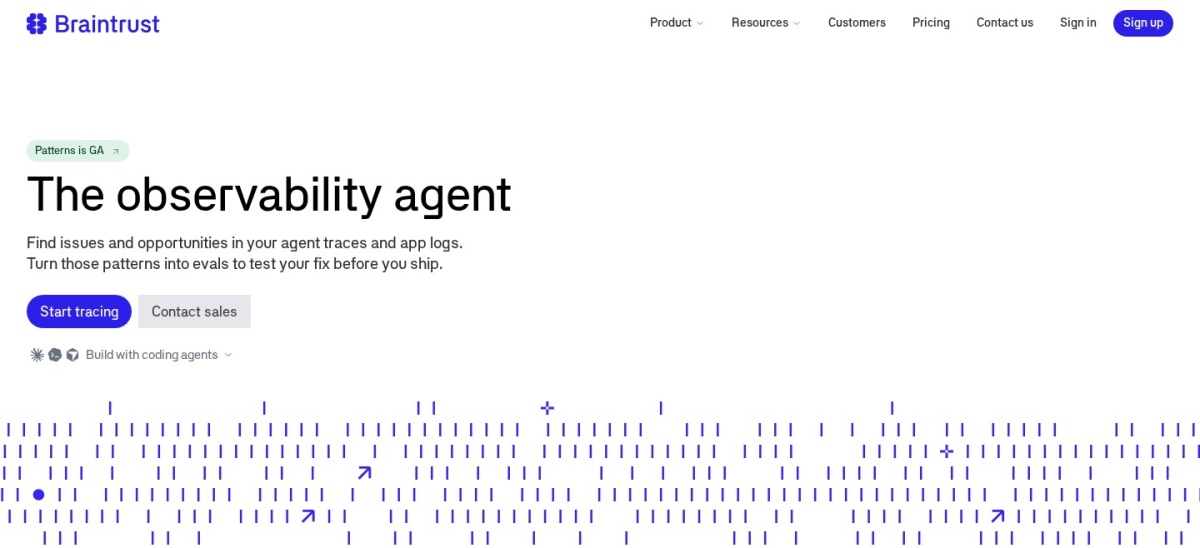
Braintrust is an evaluation-first platform for testing, tracing, and improving LLM apps, built around datasets, evals, and a prompt playground. The free tier is generous for small projects, and Pro costs $249 a month with production monitoring included.
The trade off is the jump. There is nothing between free and Pro at $249 a month, and overage charges on processed data can grow fast. It suits teams that build evals into development from day one.
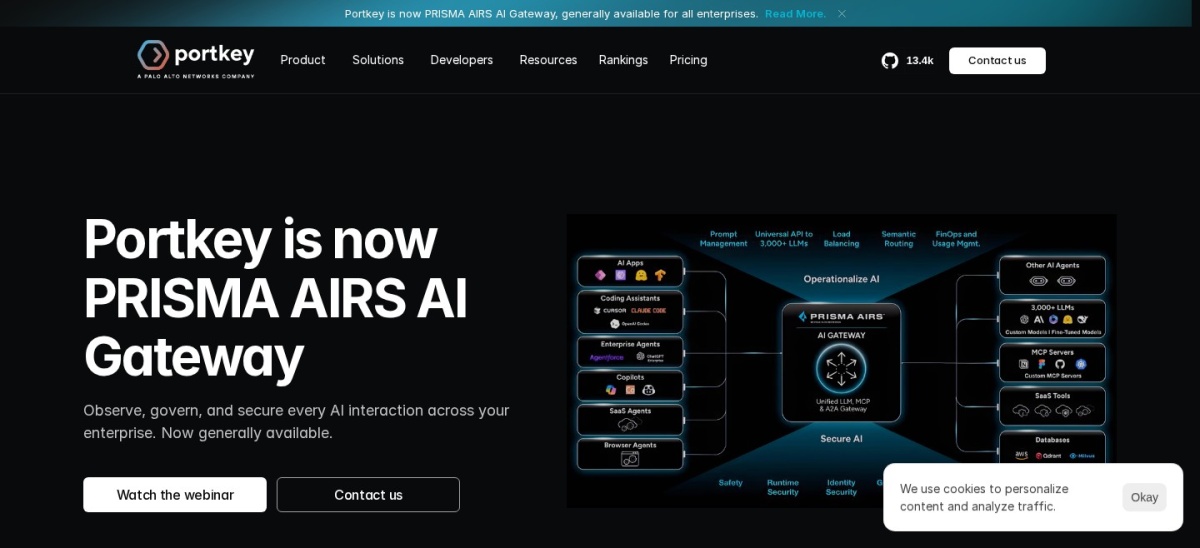
Portkey is an AI gateway and control plane that sits between an app and its model providers, routing calls through one API with tracing, evals, and cost controls in one place. The Production plan costs $49 a month, and a free Developer tier covers 10,000 requests a month.
The trade off is focus. Portkey is a gateway first and an observability tool second, so teams that only need tracing may find the routing layer extra. It suits production apps running many models behind one endpoint.
Datadog is a full-stack observability platform whose LLM Observability product adds tracing, evals, and guardrails to the same dashboards teams use for infrastructure and apps. Pricing is usage-based, so costs follow trace volume rather than a flat monthly fee.
The trade off is breadth. Datadog connects AI failures to infrastructure in one place, but smaller teams may find the platform heavy and the bill hard to predict. It suits teams already running Datadog that want agent failures tied to APM.
New Relic is a full-stack observability platform whose AI monitoring adds LLM traces, evals, and guardrails to the same dashboards teams use for apps and infrastructure. A free tier covers small use, and paid plans bill by usage rather than a flat fee.
The trade off is breadth. New Relic ties AI failures to application performance in one place, but the platform is heavy for small teams and usage bills are hard to predict. It suits teams already running New Relic that want agent issues next to APM data.
Classic ML teams should shortlist Fiddler AI first. It watches drift and performance on tabular models with explainability and fairness checks, and it keeps audit trails for regulated reviews.
LLM teams should shortlist LangSmith, Langfuse, and Galileo first. Tracing, prompt management, and evals matter more than drift charts when the model is a language model.
Teams running both need two tools or one broad platform. Datadog and New Relic cover both worlds through their APM, while Arize itself remains the only tool built for both from the start.
How we chose
We started from the AI observability tools buyers compare with Arize AI, then kept the nine with a verifiable G2 rating and a published plan or a clear quote-only price. Ratings come from G2, checked on 29 November 2026.
Prices come from each vendor's pricing page or vendor-provided G2 pricing data, checked on 29 November 2026, and show the regular price, not a sale. Where a price rests on vendor-provided data rather than the pricing page, we say so in the notes.
We left out WhyLabs, which announced on its homepage that it is discontinuing operations, and tools with no verifiable rating on G2, Capterra, or Trustpilot, including Evidently AI and HoneyHive. No vendor paid for a place, and we do not claim hands-on testing for this list.
How to choose an Arize AI alternative
Match the tool to the models you actually run, then test it on a free tier.
Split your stack into classic ML and LLM. A drift monitor will not debug an agent, and a tracer will not catch tabular drift. Shortlist by the job, not the brand.
Try the free tier on real traffic. Send a week of production traces or predictions through it before you pay, and check what the evals actually catch.
Price the volume, not the plan. Seats are only half the bill. Ask what 100,000 traces or predictions a month costs, including overages.
Check data residency before you sign. If raw predictions cannot leave your cloud, shortlist tools that profile locally or self-host.
FAQ
What is the best Arize AI alternative in 2026?
LangSmith is the best Arize AI alternative for most teams. It covers tracing, evals, prompt management, and deployment from $39 per seat a month, and it is rated 4.4 out of 5 on G2 from 97 reviews.
What is the best free alternative to Arize AI?
Langfuse is the best free alternative to Arize AI. Its core is open source under the MIT license and free to self-host, with a hosted Hobby tier free and Core from $29 a month.
Which Arize AI alternative is best for classic machine learning?
Fiddler AI is the best Arize AI alternative for classic machine learning. It watches model performance and drift with explainability and fairness checks, and it keeps audit trails that regulated teams need for reviews.
How much do Arize AI alternatives cost?
Hosted plans run from $29 a month for Langfuse Core to $249 a month for Braintrust Pro, with LangSmith at $39 per seat and Galileo Pro at $100. Fiddler AI is priced by quote, and Datadog and New Relic bill by usage.
Is LangSmith or Langfuse better than Arize AI?
LangSmith is better than Arize AI for LangChain agent debugging, with deeper tracing and deployment tools. Langfuse is better for teams that want open-source control and no per-seat pricing, while Arize still covers classic ML and LLM work in one platform.
Do Arize AI alternatives offer free plans?
Yes, most do. LangSmith, Langfuse, Galileo, Braintrust, Portkey, and Weights & Biases all offer free tiers, and New Relic and Datadog have free tiers too. Fiddler AI leans on trials and quote-only plans instead.
SaaS SEO and WordPress specialist with about 8 years of experience. Rakib compares WordPress plugins, themes, hosting and software using public pricing, documentation and user reviews. See how we rank.