OpenAI is the best Anthropic API alternative for most production apps, with the widest model range, embeddings, voice and image tools on one bill. Google Gemini is the pick for a real free tier and long context, while Mistral undercuts both on flagship token prices.
How we make this list: we compare pricing pages, product documentation and public user reviews, then re-check every price before each update. No product paid for a place. Disclosure.
OpenAI is the broadest Anthropic API alternative, with chat, embeddings, voice and images on one bill and a 4.6 out of 5 G2 rating.
Google Gemini is the only pick with a real free tier on Flash models, plus native multimodal input and long context windows.
Mistral undercuts the frontier vendors, with Large 4 at $0.70 per million input tokens and $2.10 per million output tokens.
Six of the nine tools here are pay as you go with no subscription, so the bill follows usage rather than seats.
Watch introductory prices: Gemini 4 Argon doubles on 1 December 2026 and Gemini 3.8 Flash doubles on 1 January 2027.
Which Anthropic API alternatives fit a production app?
Anthropic sells chat models only, with Claude Sonnet at two dollars per million input tokens and ten dollars per million output tokens. Teams leave when they need embeddings, reranking, image generation or a cheaper flagship in the same account.
The split that matters most is frontier quality versus price per token. OpenAI and Google compete with Anthropic at the top, while Mistral, DeepSeek and Together AI win on price, and OpenRouter and Bedrock win on model choice under one key.
Pricing here is pay as you go, billed per million tokens, with input and output priced separately. Rates move often, and several vendors run introductory prices with a dated rise, so budget on the regular rate and check the pricing page before you commit.
Every provider in this list publishes a per-token rate card and carries a public G2 rating. Our guide to the best free AI chatbots covers the consumer chat apps from the same vendors.
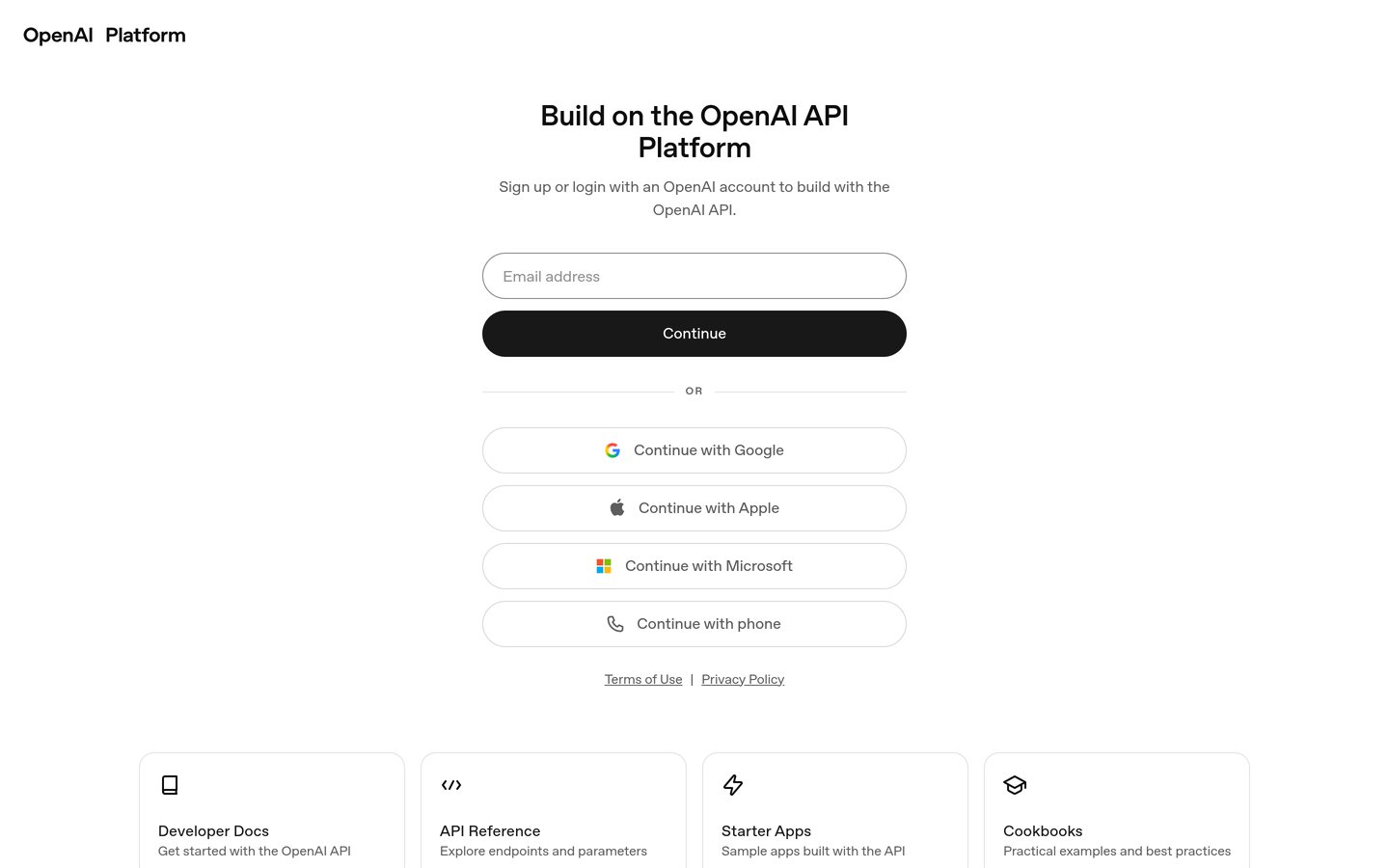
OpenAI API is the broadest model API in this list, serving the GPT-6 family alongside embeddings, voice, image generation and computer use on one bill. The flagship GPT-6.2 Astra costs $8 per million input tokens and $40 per million output tokens, while the small GPT-6 Luna model costs $0.10 input and $0.50 output. New accounts get $5 in starter credit.
The trade off is flagship price. Astra costs more per token than Claude Sonnet, and the bill is usage-based with no subscription cap, so a busy app needs budget alerts. It suits teams building production apps that need many model types behind one key.
What we like
Widest model range in this list
Embeddings, voice and images on one bill
Largest G2 review base here
Rated 4.6 out of 5 on G2
Watch out for
Flagship model costs more than Claude Sonnet
Usage-based billing with no monthly cap
Fine-tuning is closed to new users
GPT-6.2 Sol costs $2 input and $10 output per million tokensVisit openai.com
02
Google Gemini API
4.4/5on G2 (2,673 reviews, checked Nov 2026)
Pricing$2 per 1M input tokens/yr
Best free tier and multimodal API
Flagship modelGemini 4 Argon
Input price$2 per 1M tokens
Output price$10 per 1M tokens
Free tierYes, Flash models
ai.google.dev
Google Gemini API homepage, captured Nov 2026.
Google Gemini API is the best Anthropic API alternative if you already live in Google apps. The Gemini Developer API offers a free tier on Flash models, very long context windows, and multimodal input across text, image, video and audio. The flagship Gemini 4 Argon costs $2 per million input tokens and $10 per million output tokens through 30 November 2026.
The trade off is the dated price rise. Argon doubles to $4 input and $20 output on 1 December 2026, and Gemini 3.8 Flash doubles on 1 January 2027. It suits teams that want a free tier for testing and Google Search grounding built in.
What we like
Real free tier on Flash models
Long context windows
Multimodal input in one API
Rated 4.4 out of 5 on G2 from 2,673 reviews
Watch out for
Flagship rate doubles on 1 December 2026
Flash rate doubles on 1 January 2027
Argon has no free tier
Gemini 3.8 Flash costs $0.75 input and $3.75 output per million tokensVisit ai.google.dev
03
Mistral AI
4.2/5on G2 (57 reviews, checked Nov 2026)
PriceFree
Cheapest flagship API
Flagship modelMistral Large 4
Input price$0.70 per 1M tokens
Output price$2.10 per 1M tokens
Open weightsYes, Large 4
mistral.ai
Mistral AI homepage, captured Nov 2026.
Mistral AI is the European model vendor behind La Plateforme, serving its own open-weight and premier models from one account. The flagship Mistral Large 4 costs $0.70 per million input tokens and $2.10 per million output tokens, with cached input at $0.07. Small 4 costs $0.15 input and $0.60 output, and a free experiment tier exists for testing.
The trade off is breadth. Mistral has no reranker and a smaller ecosystem than OpenAI or Google, and its G2 base is thin at 57 reviews. It suits European buyers and cost-conscious teams that want open weights with a managed API.
What we like
Cheapest flagship rate in this list
Open weights for Large 4
European hosting with EU endpoints
Embeddings and OCR in one account
Watch out for
No dedicated reranker
Smaller ecosystem than OpenAI or Google
Thin G2 base at 57 reviews
Mistral Small 4 costs $0.15 input and $0.60 output per million tokensVisit mistral.ai
04
Cohere
4.3/5on G2 (34 reviews, checked Nov 2026)
PricingPay as you go/yr
Best for retrieval and search stacks
Chat modelsCommand R and Command A
EmbeddingsEmbed 5
RerankingRerank 5
DeploymentCloud, VPC or on-premises
cohere.com
Cohere homepage, captured Nov 2026.
Cohere is the enterprise retrieval vendor in this list, built around Command models for generation plus Embed and Rerank APIs that plug into search stacks. Its platform targets enterprise agent deployments and offers cloud, VPC and on-premises deployment for regulated buyers. It is rated 4.3 out of 5 on G2 from 34 reviews.
The trade off is that Cohere is not a general-purpose chat vendor. Buyers comparing only token prices miss its retrieval pitch, and teams that only need chat tokens can ignore it. It suits companies building enterprise search and grounded assistants.
Together AI is a serverless inference cloud for open models, running Llama, DeepSeek, Qwen and more behind an OpenAI-compatible API. It offers fast, scalable inference with fine-tuning, and switching from OpenAI takes minutes because the API shape matches. It is rated 4.3 out of 5 on G2 from 93 reviews.
The trade off is prepaid billing. Together AI is prepaid only, with no free trial, and access stops when the balance empties. It suits developer teams shipping on open models that want one bill for many model families.
OpenRouter is a model router that offers hundreds of models, open and closed, behind a single API key. It charges provider prices per token and adds automatic failover, so a failing provider swaps without code changes. It is rated 4.5 out of 5 on G2 from 98 reviews, the highest rating in this list.
The trade off is that OpenRouter adds a layer between you and the model vendor. Prices follow the underlying provider, and support sits with OpenRouter rather than the model maker. It suits teams testing many models before committing to one vendor.
AWS Bedrock is Amazon's managed service for foundation models, offering Nova, Claude, Llama, Mistral, Cohere and more through one unified API. It adds managed retrieval, guardrails and agent hosting under one AWS bill with IAM controls, so existing AWS commitments can absorb the spend. It is rated 4.4 out of 5 on G2 from 78 reviews.
The trade off is that Bedrock is a marketplace, not a model maker. Model choice is wide, but the newest frontier models arrive later than on the vendor's own API. It suits teams already on AWS that want many models under one bill.
DeepSeek is the low-cost reasoning vendor in this list, serving its V4 models through an API that stays compatible with OpenAI and Anthropic clients. It pairs strong reasoning with some of the lowest token prices in the market, and its chat app is free. It is rated 4.4 out of 5 on G2 from 19 reviews.
The trade off is a thin review base and peak-hour pricing. Only 19 G2 reviews back the score, and rates vary between peak and off-peak hours. It suits teams that want strong reasoning at the lowest token price and can tolerate variable rates.
Fireworks AI is a serverless inference platform for open models, with fine-tuning and per-second GPU rental behind an OpenAI-style API. It serves base-model tokens at base-model prices and lets teams ship custom fine-tuned models without managing GPUs. It is rated 4.2 out of 5 on G2 from 35 reviews.
The trade off is that Fireworks serves open models only. Teams that need a frontier proprietary model must pair it with another vendor. It suits developer teams shipping on open models that plan to fine-tune.
Several flagship rates in this list are introductory. Gemini 4 Argon doubles on 1 December 2026, and Gemini 3.8 Flash doubles on 1 January 2027, so a workload priced today can cost twice as much next month.
Batch APIs cut most vendors' rates in half for jobs that can wait. OpenAI, Google and Mistral all offer a batch tier at 50% off, which changes the cheapest pick for overnight workloads.
Cached input is the other discount that matters. Repeated prompts cost 10% of the input rate at OpenAI and Google, and Mistral charges 10% too, so chat apps with long histories pay far less than the headline rate.
How we chose
We started from every major model API that sells production access today, then kept the nine with a published per-token rate card and a public G2 rating.
Prices come from each vendor's pricing page, checked on 29 November 2026. Ratings and review counts come from G2 on the same day. Where a vendor shows an introductory price, the list shows the regular rate beside it.
We left out providers without a verifiable G2 rating and providers that sell only through a sales call. No vendor paid for a place, and we do not claim hands-on testing for this list.
How to choose an Anthropic API alternative
Start with what your app actually calls, then price that workload on two vendors.
List the calls your app makes. Chat, embeddings, reranking and images are separate bills at most vendors, so a vendor that looks cheap on chat can cost more overall.
Price one real workload twice. Take a typical month of input and output tokens and cost it on two vendors, using regular rates, not introductory prices.
Check the free tier and rate limits. A free tier covers testing and small apps, but production needs paid rate limits, so confirm the paid tier before launch.
Test the switch cost. Most of these APIs are OpenAI-compatible, so a thin wrapper lets you move providers without rewriting your app.
FAQ
What is the best Anthropic API alternative in 2026?
OpenAI is the best Anthropic API alternative for most production apps. It offers the widest model range, with embeddings, voice, image generation and computer use on one bill, and it is rated 4.6 out of 5 on G2 from more than 5,000 reviews.
How much does the OpenAI API cost compared with Anthropic?
OpenAI's flagship GPT-6.2 Astra costs $8 per million input tokens and $40 per million output tokens. Anthropic's Claude Sonnet costs $2 input and $10 output, so OpenAI's flagship is dearer, while its small GPT-6 Luna model costs $0.10 input and $0.50 output.
Is there a free Anthropic API alternative?
Yes. Google Gemini offers a free tier on Flash models within rate limits, Mistral offers a free experiment tier, and OpenRouter hosts selected models free of charge. OpenAI gives new accounts $5 in starter credit, which is a trial balance rather than a free tier.
Which Anthropic API alternative is cheapest per token?
Mistral is the cheapest flagship here, with Large 4 at $0.70 per million input tokens and $2.10 per million output tokens. DeepSeek and Together AI host open models at lower rates still, though their prices are pay as you go and vary by model.
Which Anthropic API alternative is best for beginners?
Google Gemini is the best Anthropic API alternative for beginners. The free tier lets you build without a card on file, the documentation is thorough, and the same key works across chat, embeddings and image models in Google AI Studio.
OpenAI vs Google Gemini: which Anthropic API alternative should I pick?
Pick OpenAI if you need the broadest toolset, with embeddings, voice, images and agents on one bill. Pick Google Gemini if you want a free tier, long context windows and native multimodal input across text, image, video and audio.
Does any Anthropic API alternative offer open models?
Yes. Mistral, DeepSeek, Together AI, Fireworks AI and AWS Bedrock all serve open-weight models through their APIs, and Mistral publishes the weights for Large 4. OpenRouter goes further, offering hundreds of models, open and closed, behind one key.
SaaS SEO and WordPress specialist with about 8 years of experience. Rakib compares WordPress plugins, themes, hosting and software using public pricing, documentation and user reviews. See how we rank.