PracticeSuite is the best anesthesia billing software for groups that bill in-house, with configurable base-unit and modifier rules for anesthesia claims. RXNT is the cheapest published option, while SimplePractice suits small practices that want billing with a full practice system.
How we make this list: we compare pricing pages, product documentation and public user reviews, then re-check every price before each update. No product paid for a place. Disclosure.
PracticeSuite is the only tool here built around anesthesia base-unit and modifier rules, but pricing is by quote.
RXNT is the cheapest published option, from $126 a month with unlimited claims and a 10 percent annual discount.
AdvancedMD starts at $429 a provider a month and is the strongest pick for high-volume insurance billing.
SimplePractice starts at $49 a month but charges $0.39 per electronic claim since October 2026.
Most anesthesia billing vendors are quote-only, and outsourced services charge a percentage of collections instead of a flat price.
What makes anesthesia billing software different?
Anesthesia billing is unusually fiddly. Claims depend on base units, time units, concurrency and medical direction, so a general billing tool that cannot handle those rules creates denials.
Most of the market is quote-only. Only a few vendors publish a price, and the dedicated anesthesia billing companies mostly sell a service, not software you run yourself.
The honest split is software versus service. PracticeSuite and RXNT are software a group runs in-house, while the big anesthesia names sell outsourced billing charged as a percentage of collections.
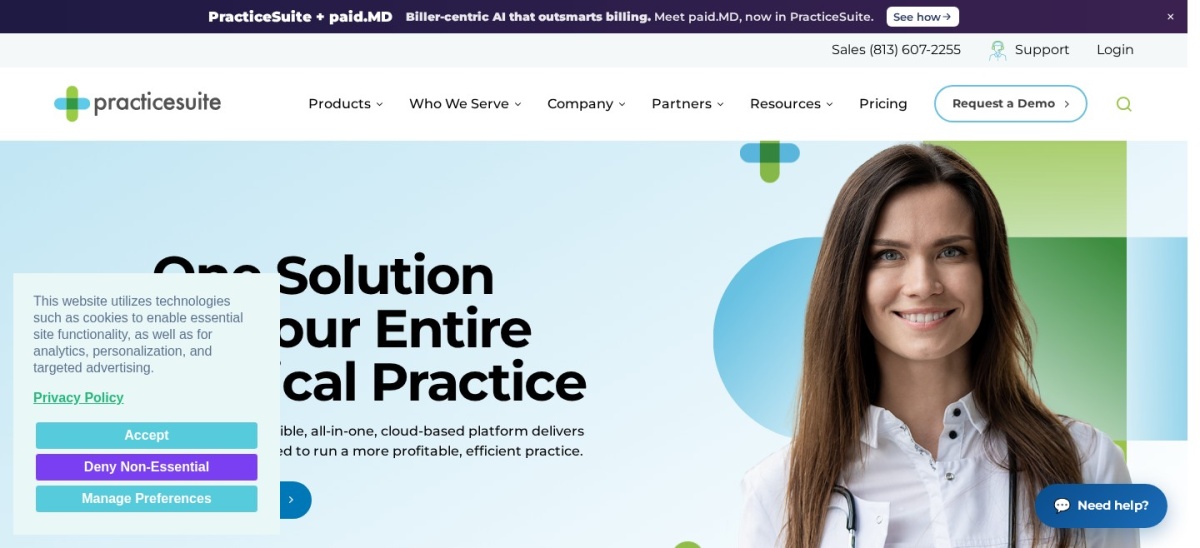
PracticeSuite is a cloud platform for the administrative side of medical practices and the billing companies that serve them. Its configurable base-unit and modifier rules turn anesthesia encounter documentation into claim-ready output, with claim scrubbing aimed at common payer edits.
The trade off is pricing. PracticeSuite sells by custom quote based on practice size, specialty, provider count and features, so you cannot compare its cost without a sales conversation. It suits anesthesia groups and billing services that want coding control.
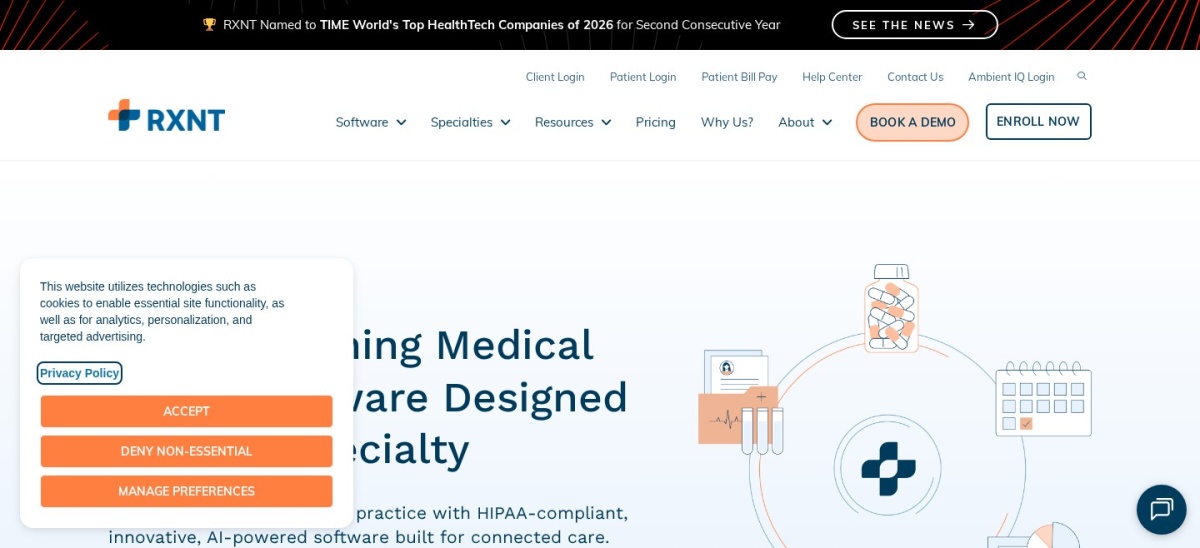
RXNT is a cloud practice management, EHR and billing platform for small and mid-size practices. Its pricing page lists software from $126 a month, with unlimited claims included, and annual billing earns a 10 percent discount.
The trade off is the bundle structure. The $126 figure is the entry bundle, and the full suite with practice management runs higher, while non-prescribing staff carry their own license fee. It suits small practices that want one affordable system for billing and records.
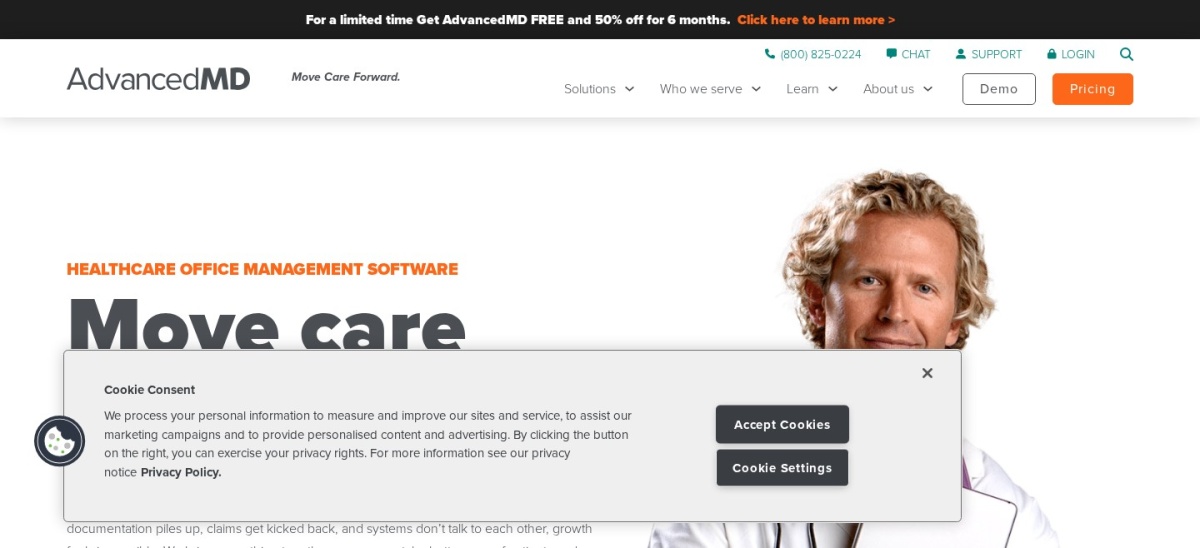
AdvancedMD is a cloud practice management and billing suite with an optional EHR and patient engagement tools. Its medical specialties package starts at $429 a provider a month and runs to $1,070, with denial management and a built-in clearinghouse.
The trade off is cost and complexity. The price moves with specialty and modules, and smaller practices may find the platform heavy. It suits multi-provider and multi-location practices with high claim volume.
4.6/5on Capterra (2,828 reviews, checked Nov 2026)
Starts at$49/mo
Best polished all-in-one for small practices
Entry planStarter, $49 a month
Claims$0.39 each
Free trial30 days
Capterra rating4.6 from 2,828 reviews
simplepractice.com
SimplePractice homepage, captured Nov 2026.
SimplePractice is a cloud EHR and practice management platform for solo and small-group practices. The Starter plan costs $49 a month and includes scheduling, documentation, the client portal, telehealth and a website builder.
The trade off is claims pricing. Since October 2026 every electronic claim costs $0.39, falling to $0.33 after 1,000 claims a month, and the platform is built for therapy practices rather than anesthesia. It suits small practices that want one polished system.
3.9/5on Capterra (1,385 reviews, checked Nov 2026)
Starts at$99/mo
Best for small practices wanting breadth
Entry planBilling Starter, $99
Physician rate$199 a provider a month
Claims cap100 a month on Starter
BundlesUp to $799 a provider
tebra.com
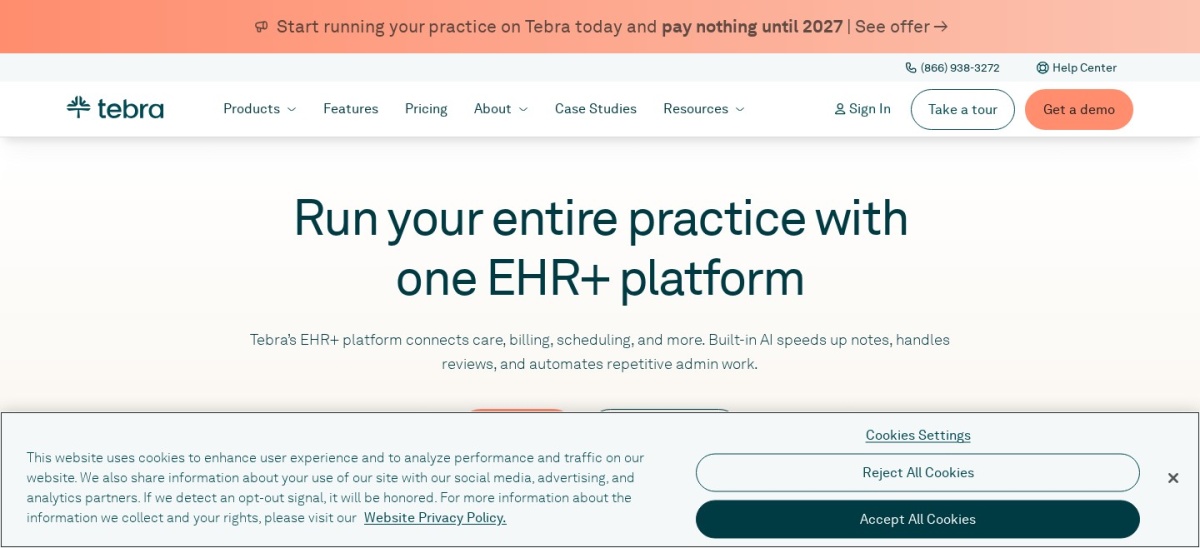
Tebra homepage, captured Nov 2026.
Tebra is a billing, EHR, scheduling and patient engagement platform for small and mid-size practices, formerly known as Kareo. Billing Starter starts at $99 a provider a month for non-physician providers under 100 claims a month, and the physician rate is $199.
The trade off is the range. Tebra publishes starting prices from $49 to $799 a provider a month across its bundles, so the final price depends on configuration. It suits small practices that want billing plus EHR in one system.
CollaborateMD is cloud-based medical billing software for practices and billing companies. Practices pay from about $299 a provider a month, while billing companies pay from $0.32 per claim, with a built-in clearinghouse and multi-client tools.
The trade off is transparency. The $299 figure comes from third-party listings rather than a published vendor price list, so confirm it with the vendor. It suits small practices and billing companies that want affordable cloud billing.
DrChrono is a cloud EHR with billing for specialists that want customizable templates, from EverCommerce. Its highly customizable EHR templates link documentation to billing, and the platform covers scheduling, e-prescribing and patient engagement.
The trade off is pricing. DrChrono sells by contact sales with no published price, so budgeting needs a quote. It suits specialists that want documentation-driven charge capture with solid time-to-claim mapping.
athenahealth is a network-enabled EHR and billing platform for large practices and health systems, sold as athenaOne. Its payer network integrations and clearinghouse handle high claim volumes, with billing sold as a managed service.
The trade off is the model. athenahealth charges a percentage of collections rather than a flat subscription and publishes no dollar price. It suits large groups that want billing handled as a service inside the EHR.
eClinicalWorks is an ambulatory EHR with practice management and billing for multi-specialty practices. EHR Only costs $499 a provider a month, and EHR with Practice Management costs $599, adding scheduling, billing and implementation services.
The trade off is price and rating. At $499 it is the most expensive published price here, and its Capterra rating of 3.3 is the lowest in this list. It suits ambulatory practices that want EHR and billing from one established vendor.
Software fits groups with a billing team. You pay a subscription, your staff codes and submits claims, and you keep control of the revenue cycle.
A service fits groups without billers. The vendor codes, submits and follows up, and charges a percentage of collections, but you lose day-to-day control.
Check the contract either way. Software vendors charge per provider, and service vendors rarely publish their percentage, so get both figures in writing before you compare.
How we chose
We started from the billing platforms most often named for anesthesia groups, then kept those with a published price or a clear quote model and a Capterra rating.
Prices come from vendor pricing pages and vendor-cited listings, checked on 30 November 2026. RXNT lists software from $126 a month on its own pricing page. Ratings and review counts come from Capterra on the same day.
We left out pure billing services with no software to buy, and tools with no aggregator rating. No vendor paid for a place, and we do not claim hands-on testing for this list.
How to choose anesthesia billing software
Start with whether your group bills in-house or outsources, then test the coding rules.
Decide software or service first. If your group has billers, buy software. If it does not, price an outsourced service and compare its percentage of collections against a subscription.
Test the anesthesia coding rules. Ask the vendor to show base-unit calculation, time units, concurrency and modifier handling on a real case before you sign.
Price the whole claim, not the seat. Per-claim fees, clearinghouse charges and percentages of collections can cost more than the subscription, so total them for a typical month.
Check the clearinghouse and payer list. Confirm your main payers are covered and that eligibility checks and denial management are included, not add-ons.
FAQ
What is the best anesthesia billing software in 2026?
PracticeSuite is the best anesthesia billing software for groups that bill in-house. It holds a 4.0 rating from 41 Capterra reviews and offers configurable base-unit and modifier rules built for anesthesia claims.
How much does anesthesia billing software cost?
Published prices run from $49 a month at SimplePractice to $499 a provider a month at eClinicalWorks. Most anesthesia-focused vendors are quote-only, and outsourced billing services charge a percentage of collections instead.
Does anesthesia billing software handle time units and concurrency?
PracticeSuite documents base-unit and modifier rules for anesthesia encounters, and RXNT handles time-based charge capture. Most general billing tools do not document anesthesia-specific concurrency or time-unit features, so ask the vendor directly.
Is there a free plan for anesthesia billing software?
None of the nine tools here offers a free plan. SimplePractice, AdvancedMD and RXNT offer free trials, and RXNT gives a 10 percent discount on annual billing.
What is the cheapest anesthesia billing software?
RXNT is the cheapest published option for a billing-focused practice, from $126 a month. SimplePractice starts at $49 a month, but it is built for therapy practices and charges $0.39 per electronic claim on top.
PracticeSuite vs RXNT: which fits an anesthesia group?
PracticeSuite fits anesthesia groups that want configurable base-unit and modifier rules for claim-ready output. RXNT fits small practices that want a low published price with unlimited claims and a full practice system.
SaaS SEO and WordPress specialist with about 8 years of experience. Rakib compares WordPress plugins, themes, hosting and software using public pricing, documentation and user reviews. See how we rank.