Adyen is the strongest of the alternatives to Stripe Connect for global platforms, with interchange-plus pricing and acquiring licenses in many markets. Checkout suits teams that want a negotiated global rate, while Square is the simplest start for small sellers who also take payments in person.
How we make this list: we compare pricing pages, product documentation and public user reviews, then re-check every price before each update. No product paid for a place. Disclosure.
Adyen charges $0.13 plus interchange and a 0.60% markup, with no setup or monthly fee, but platform fees are quoted per merchant.
Checkout.com publishes no rates at all, so get a written quote before you compare it with Adyen or Square.
Square Free costs $0 a month, with in-person sales at 2.6% plus 15 cents and online sales at 3.3% plus 30 cents.
Finix starts at $250 a month and Stax Connect at $99 a month, the only two picks here with a published monthly fee.
Braintree is the only pick with native PayPal and Venmo, but it holds the lowest G2 rating here at 3.4 out of 5.
Mollie prices in euros, so convert its 1.80% plus 25 cent card rate before you compare it with dollar rates.
How do you choose the best alternative to Stripe Connect?
Stripe Connect is the default because it is fast to launch. A platform can onboard users, split payments and pay out without building its own acquiring setup, and the flat 2.9% plus 30 cent card rate is easy to quote.
The reason to switch is usually volume, geography or control. Interchange-plus pricing from Adyen beats a flat rate once volume grows, Rapyd reaches payout markets Stripe covers weakly, and Finix and Payrix let a platform keep more of the payments margin.
Price is mostly per transaction, not per seat. Compare the card rate, any monthly fee or minimum invoice, payout fees and dispute fees together, because the headline rate hides most of the bill.
Review bases in this category are thin. Most providers here hold under 100 G2 or Capterra reviews, so a high score on a dozen reviews means less than the same score on hundreds.
Adyen is the enterprise payments platform behind large global merchants and marketplaces, with its own acquiring licenses in many markets. Its published United States card rate is $0.13 per transaction plus interchange and scheme fees passed through with a 0.60% markup, and there is no setup or monthly fee.
The trade off is access. Adyen is sales-led, applies a minimum monthly invoice by industry, and platform fees are quoted per merchant rather than published. It suits enterprise platforms with serious volume across several countries that want one acquirer.
Checkout.com is an online payments platform for global merchants and software platforms. It accepts cards, wallets, bank transfers and local payment methods across 150+ countries, with local acquiring in 57 domestic markets, and states there are no setup, account maintenance or surprise fees.
The trade off is transparency. Checkout.com publishes no rates, so every merchant gets a custom Interchange++ or flat-rate quote based on profile and volume. It suits mid-market and enterprise platforms that sell across borders and will negotiate their rates.
Square is the payments and point-of-sale system for small sellers that also offers APIs for platforms. Square Free costs $0 a month, with in-person sales at 2.6% plus 15 cents and online sales at 3.3% plus 30 cents, and it includes invoicing and payment links.
The trade off is scope. Square is built for sellers, not for platforms that need white-label merchant onboarding, split payouts or PayFac economics. It suits small businesses and apps whose users mostly sell in person or through a simple online checkout.
Stax Connect is the embedded payments product from Stax for ISVs and SaaS platforms. Its Basic plan costs $99 a month, passes interchange through at cost with no percentage markup, and adds 15 cents per online card payment.
The trade off is the flat fee. At low volume the $99 a month costs more than pay-as-you-go pricing, and the G2 review base is small at 12 reviews. It suits platforms with steady high-ticket volume that want a fixed monthly cost.
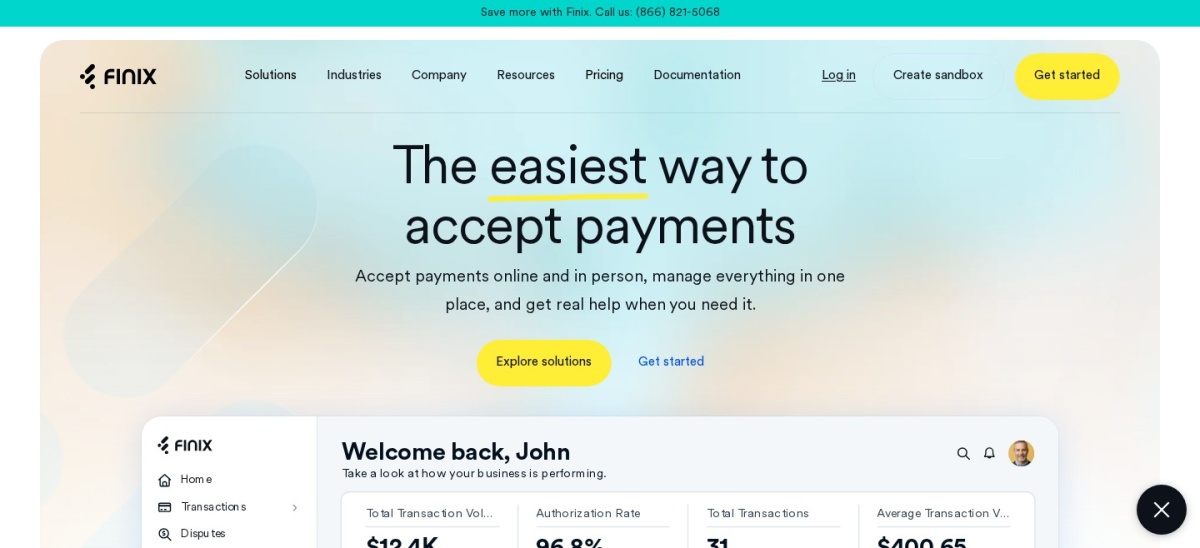
Finix is a full-stack payment processor that lets software platforms embed payments and later graduate to their own payment facilitator registration on the same API. Its starter plan costs $250 a month for businesses under $1 million in annual volume, with interchange-plus pricing and a dedicated merchant account.
The trade off is the monthly floor. The $250 membership makes Finix poor value for low-volume platforms, and it operates in the US and Canada only. It suits vertical SaaS platforms with serious volume that want more of the payments margin.
Braintree is the PayPal-owned payment gateway for online businesses that want cards, PayPal and Venmo in one integration. Its standard card rate is 2.59% plus 49 cents per transaction with no monthly fee, and it includes a single vault, drop-in UI and ACH at 0.75% capped at $5.
The trade off is support and account risk. Braintree holds a 3.4 out of 5 G2 rating from 91 reviews, with slow support and frozen funds among the common complaints. It suits businesses where PayPal and Venmo acceptance matters more than the lowest rate.
Rapyd is a fintech-as-a-service platform for platforms and marketplaces that need to collect and pay out across many markets. Its network covers 190+ markets and 150+ currencies, with local payment methods, card payouts, bank transfers and wallet disbursements through one API.
The trade off is price clarity. Rapyd publishes interchange and scheme fee ranges but quotes its own acquirer fee per merchant, and its G2 base is only 2 reviews. It suits marketplaces with gig or cross-border payouts that Stripe and Adyen do not cover well.
Payrix is a PayFac-as-a-service product for software companies, now sold as Global Payments for Platforms. It offers white-label merchant onboarding, underwriting, risk management, settlement and payouts, with three tiers from managed PayFac to a developer path that runs facilitation in-house.
The trade off is opacity. Payrix publishes no rates, platform fees or revenue terms, and every tier starts with a demo or sales conversation. It suits large vertical software vendors that want a white-label payments program backed by a major acquirer.
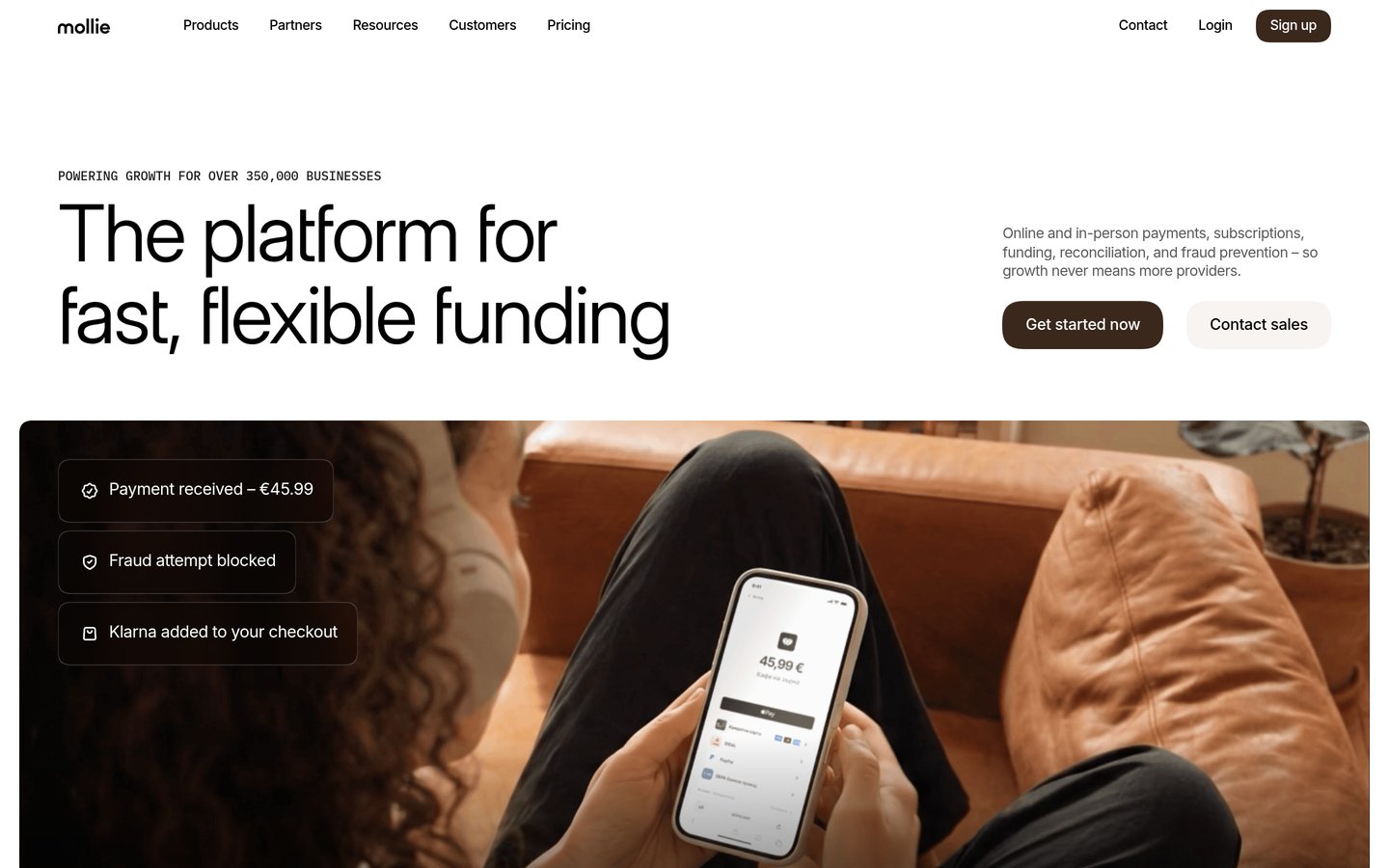
Mollie is a European payment service provider that helps merchants accept online and in-person payments, with 40+ local payment methods including iDEAL, Bancontact and Klarna. Its published rate for EEA Visa and Mastercard consumer cards is 1.80% plus 25 euro cents, with no monthly platform fee.
The trade off is currency and coverage. Prices are in euros, not dollars, and Mollie Connect adds OAuth onboarding and split payouts for platforms, but account holds are a recurring complaint in reviews. It suits European platforms that need local methods more than the lowest dollar rate.
Flat-rate pricing charges one percentage plus a fixed fee on every sale. Stripe, Square and Braintree use it, and it is simple to forecast at low volume.
Interchange-plus passes the card network cost through and adds a small markup. Adyen, Finix and Stax use it, and it usually wins once monthly volume passes a few hundred thousand dollars.
Do the math on your own mix before you sign. A low-ticket store pays more in fixed fees, while a high-volume platform pays more in percentage points.
How we chose
We started from the embedded payments providers named most often in platform comparisons, then kept nine established alternatives to Stripe Connect with a published rate card or a documented quote-only model and a public review listing.
Prices come from each vendor's pricing page or published rate card, checked on 29 November 2026. Ratings come from G2 or Capterra on the same day. Where a vendor shows no public rate, the list says so instead of guessing one.
We left out providers with no public review listing. No vendor paid for a place, and we do not claim hands-on testing for this list.
How to choose an alternative to Stripe Connect
Start with your volume and your users, then match the pricing model to both.
Work out your monthly volume first. Flat rates win below roughly $100,000 a month, while interchange-plus usually wins above it. Ask each vendor to price your own ticket size and card mix.
Decide how much of payments you want to own. A Connect-style provider handles compliance for you. A PayFac-as-a-service provider keeps more margin with you but needs more work from your team.
Check payouts and onboarding, not just the card rate. Ask how fast users get paid, what onboarding looks like for them, and what happens when a payment is disputed.
Get every quote in writing. Three providers here publish no rates at all. Ask for the full fee schedule, including payout, dispute and minimum fees, before you sign.
FAQ
What is the best alternative to Stripe Connect in 2026?
Adyen is the best alternative to Stripe Connect for most global platforms. It charges $0.13 plus interchange and a 0.60% markup on Visa and Mastercard, with no setup or monthly fee, though platform fees are quoted per merchant.
How much do Stripe Connect alternatives cost?
Most alternatives charge per transaction, not per seat. Adyen charges $0.13 plus interchange and a 0.60% markup, Square Free costs $0 a month with in-person sales at 2.6% plus 15 cents, and Finix starts at $250 a month.
Which Stripe Connect alternative is best for marketplaces?
Adyen fits global marketplaces with high volume, Rapyd fits marketplaces that pay out across many countries, and Mollie Connect fits European marketplaces that need local payment methods. Square fits small marketplaces that sell mostly in person.
Is there a free alternative to Stripe Connect?
Yes, in the sense that several alternatives charge no monthly fee. Square Free costs $0 a month, Braintree charges no monthly fee, and Adyen has no setup or monthly fee, so you pay only per transaction on each of them.
Adyen or Checkout.com: which is the better Stripe Connect alternative?
Adyen is better when you want a published interchange-plus rate and your own acquiring licenses, while Checkout.com is better when you want a negotiated flat rate with local acquiring in 57 markets. Both are quote-led for platform fees, so compare written quotes.
What is the difference between Stripe Connect and a PayFac?
Stripe Connect keeps Stripe on the acquiring program while your platform embeds payments. A PayFac-as-a-service provider such as Finix or Payrix makes the provider the facilitator, and your platform can later take over that registration itself.
SaaS SEO and WordPress specialist with about 8 years of experience. Rakib compares WordPress plugins, themes, hosting and software using public pricing, documentation and user reviews. See how we rank.