Aplos is the best of the alternatives to QuickBooks for nonprofits, with fund accounting built in from 79 dollars a month and a top G2 rating from small charities. Xero suits teams that want broad accounting and unlimited users, while Wave covers free basic books for the smallest groups.
How we make this list: we compare pricing pages, product documentation and public user reviews, then re-check every price before each update. No product paid for a place. Disclosure.
Aplos is the only pick built around fund accounting from the first dollar, starting at $79 a month for two users.
Xero and FreshBooks are the strongest general accounting options, from $27 and $21 a month.
Wave and Zoho Books both offer free plans, but neither tracks restricted funds natively.
Sage Intacct, Blackbaud and MIP are quote only and suit larger nonprofits with complex grants.
FastFund is the cheapest true fund accounting here at $50 a month, but its G2 rating rests on only 10 reviews.
How do you choose among the alternatives to QuickBooks for nonprofits?
QuickBooks works well for general books, but it has no native fund accounting. Nonprofits that track restricted grants need a ledger that reports by fund, or they end up reconciling spreadsheets by hand.
Fund accounting is the deciding feature. Aplos, Sage Intacct, Blackbaud, MIP and FastFund keep a separate balance for every fund, while Xero, FreshBooks, Zoho Books and Wave need workarounds or add-ons.
Price spreads are wide. Free plans from Wave and Zoho Books cover the basics, mid-range tools run $19 to $79 a month, and the enterprise fund accounting platforms are quoted from about $8,000 a year.
Start with your grant load. One or two restricted grants can live in a general tool with careful tracking, but a dozen grants across programs calls for a purpose-built fund ledger and an audit trail.
The 9 best alternatives to QuickBooks for nonprofits
01
Aplos
4.7/5on G2 (97 reviews, checked Nov 2026)
Starts at$79/mo
Best alternative to QuickBooks overall
Fund accountingYes, native
Free planNo, 15-day trial
Users on Lite2 included
Paid planLite, $79/mo
aplos.com
Aplos homepage, captured Nov 2026.
Aplos is fund accounting software built for nonprofits and churches, with a general ledger that reports by fund, grant and program. The Lite plan costs $79 a month for two users and covers donation tracking, online giving, bank reconciliation and 1099 management, with a 15-day free trial and no credit card required.
The trade off is price and depth. Lite costs more than general tools such as Wave or Zoho Books, extra users and contacts cost $20 a month each, and the Advanced tier starts at $229 a month by quote. It suits small nonprofits that need true fund accounting without hiring an accountant.
Best for growing nonprofits that outgrow QuickBooks
Fund accountingNo, add-on reports
Free planNo, 30-day trial
UsersUnlimited
Paid planEarly, $27/mo
xero.com
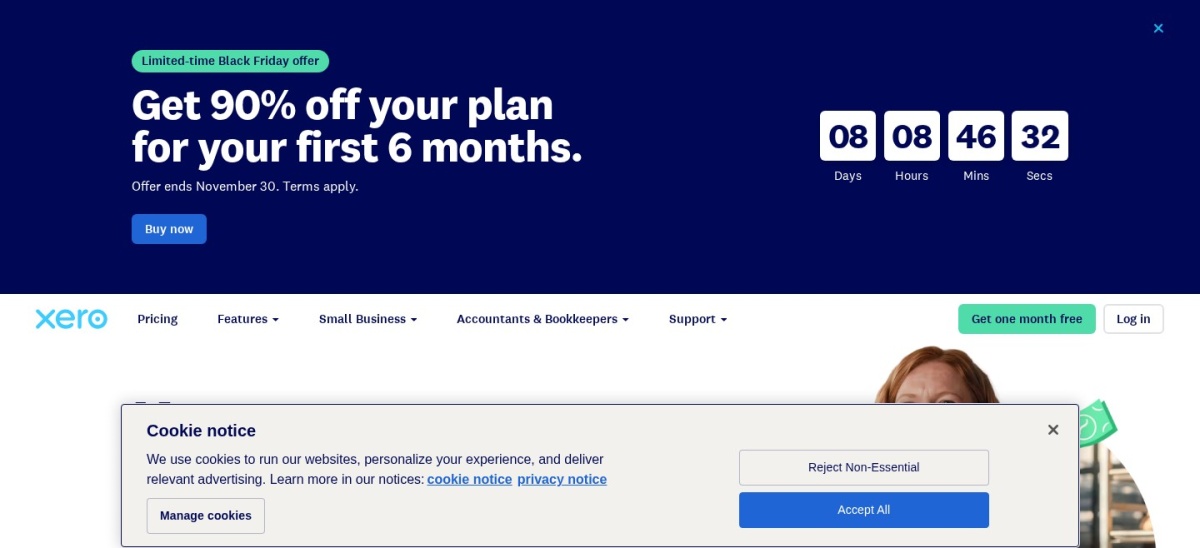
Xero homepage, captured Nov 2026.
Xero is cloud accounting for small businesses, with invoicing, bills, bank reconciliation and reporting in one place. The Early plan costs $27 a month and covers 20 invoices and quotes plus 5 bills, while every plan includes unlimited users, so a whole nonprofit team can share one subscription.
The trade off is fund accounting. Xero has no native fund ledger, so restricted grants need tracking categories or a third-party add-on, and payroll costs extra. It suits nonprofits that want polished general accounting and already track funds in a separate donor system.
What we like
Unlimited users on every plan
Strong bank reconciliation and 1,000+ integrations
Multi-currency on the top plan
Large G2 review base of 1,736 reviews
Watch out for
No native fund accounting
Payroll costs extra
Early plan caps invoices at 20 a month
Growing adds unlimited invoices at $59 a monthVisit xero.com
03
FreshBooks
4.5/5on G2 (981 reviews, checked Nov 2026)
Starts at$21/mo
Best for service-based nonprofits that bill by the hour
Fund accountingNo
Free planNo, 30-day trial
Clients on Lite5 billable clients
Paid planLite, $21/mo
freshbooks.com
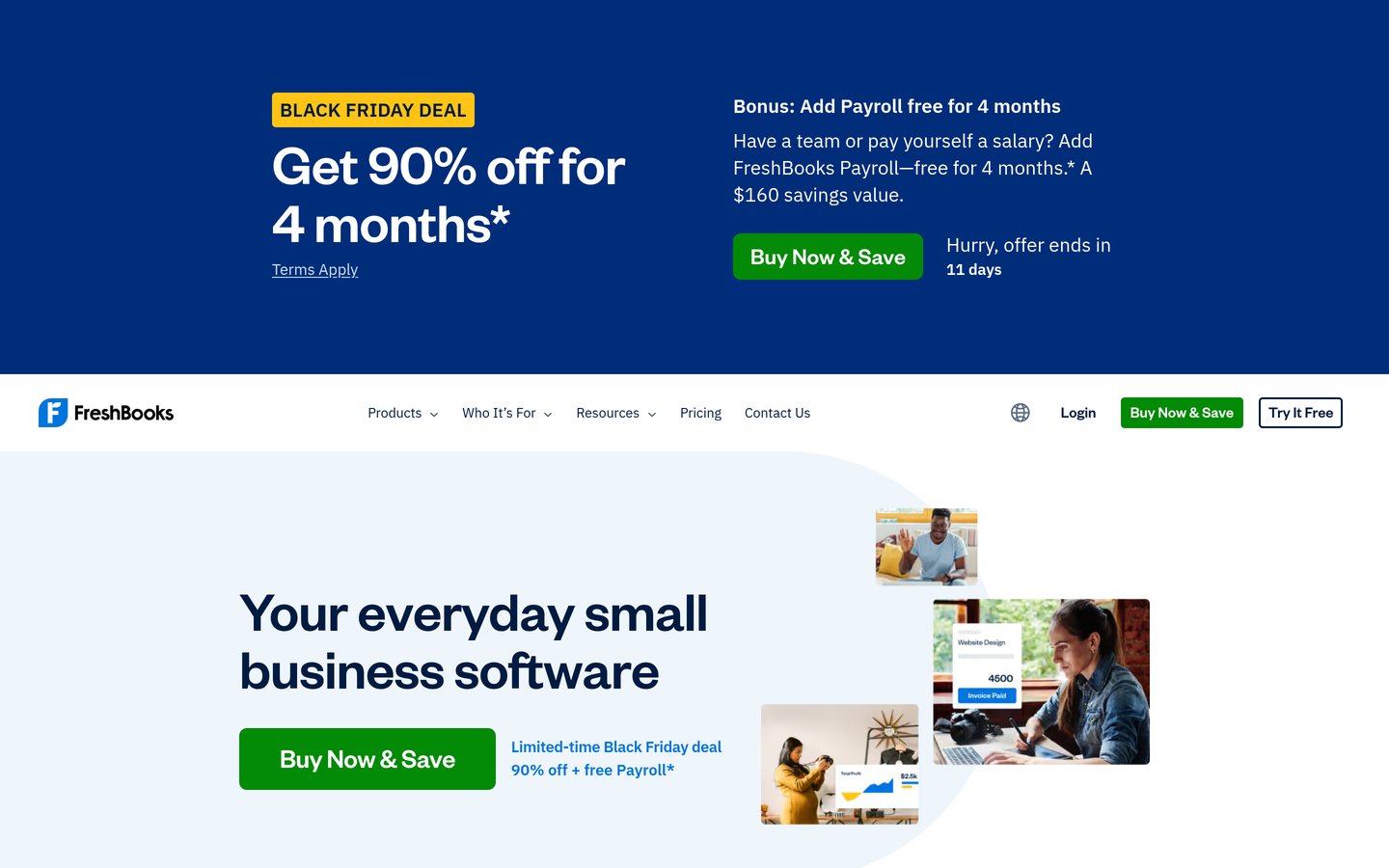
FreshBooks homepage, captured Nov 2026.
FreshBooks is invoicing and time-tracking software for freelancers and small service teams, and it works well for nonprofits that bill for services. The Lite plan costs $21 a month for up to 5 billable clients, with estimates, recurring invoices, expense tracking and payment reminders included.
The trade off is accounting depth. FreshBooks is not double-entry accounting, so it cannot replace a general ledger for audited books, and costs rise as client counts grow. It suits small nonprofits that mainly need clean invoices and billable hours rather than full fund accounting.
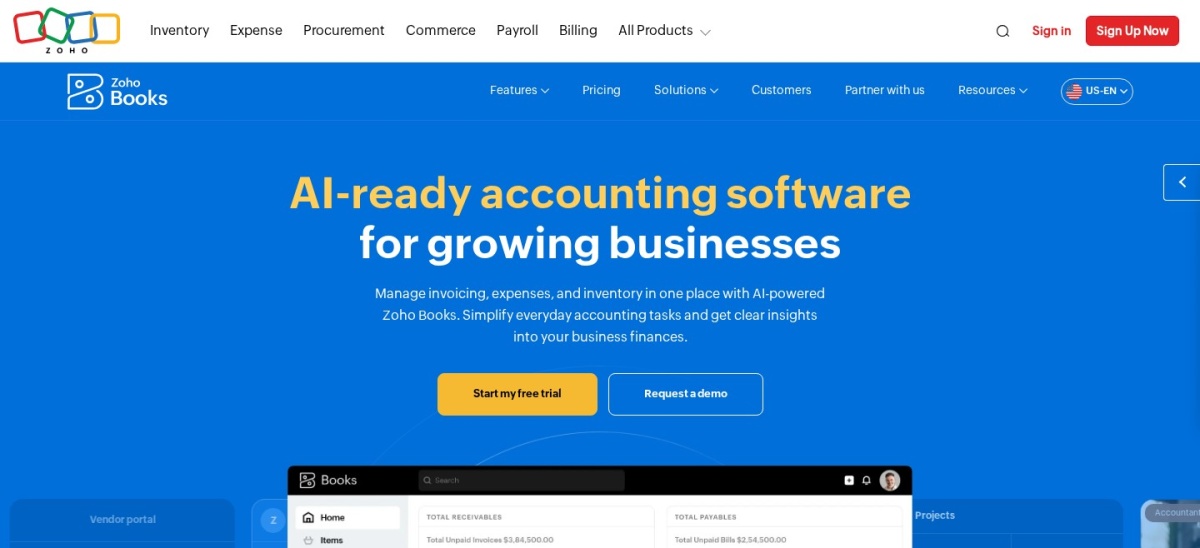
Zoho Books is cloud accounting from Zoho, with invoicing, expenses, bank reconciliation and a client portal. The free plan covers one user plus an accountant for businesses under $50,000 in annual revenue, and Standard costs $20 a month for three users and 5,000 invoices a year.
The trade off is nonprofit depth. Zoho Books has no fund accounting, payroll needs a separate add-on in the United States, and reports are less flexible than Xero. It suits small nonprofits that already use Zoho apps and want a free plan with room to grow.
What we like
Free plan for one user plus an accountant
Low $20 a month Standard plan
Deep integration with the Zoho suite
Rated 4.4 out of 5 on G2
Watch out for
No fund accounting
Payroll needs a paid add-on in the US
Reporting is less flexible than Xero
Professional adds multi-currency at $50 a monthVisit zoho.com
05
Wave
4.3/5on G2 (328 reviews, checked Nov 2026)
Paid from$19/mo
Best truly free books for tiny nonprofits
Fund accountingNo
Free planYes, Starter
Bank importPro only
Paid planPro, $19/mo
waveapps.com
Wave homepage, captured Nov 2026.
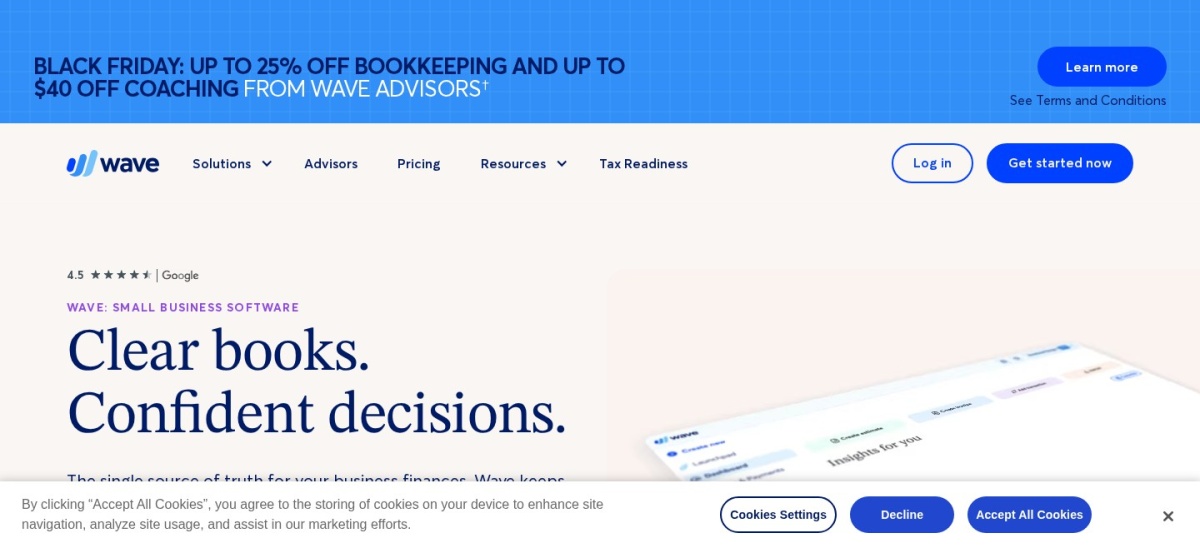
Wave is free accounting software for freelancers and micro-businesses, with unlimited invoices, estimates and bookkeeping records on its Starter plan. The free tier covers double-entry books, expense tracking and dashboards, with no monthly fee and no user cap on the basics.
The trade off is nonprofit fit. Wave has no fund accounting, no payroll on the free plan, and bank auto-import needs Pro at $19 a month, while support is slow by reviewer accounts. It suits the smallest nonprofits that need free books and can track restricted funds elsewhere.
Sage Intacct is a cloud financial platform for mid-size organizations, with multi-entity accounting, dimensional reporting and strong controls. It handles consolidations, grant dimensions and audit trails in one system, and G2 reviewers rate it 4.3 out of 5 from more than 4,400 reviews.
The trade off is cost and setup. Sage publishes no prices, third-party data puts entry subscriptions near $10,000 a year, and implementation often takes months. It suits mid-size nonprofits with many programs, entities or grants that have outgrown QuickBooks entirely.
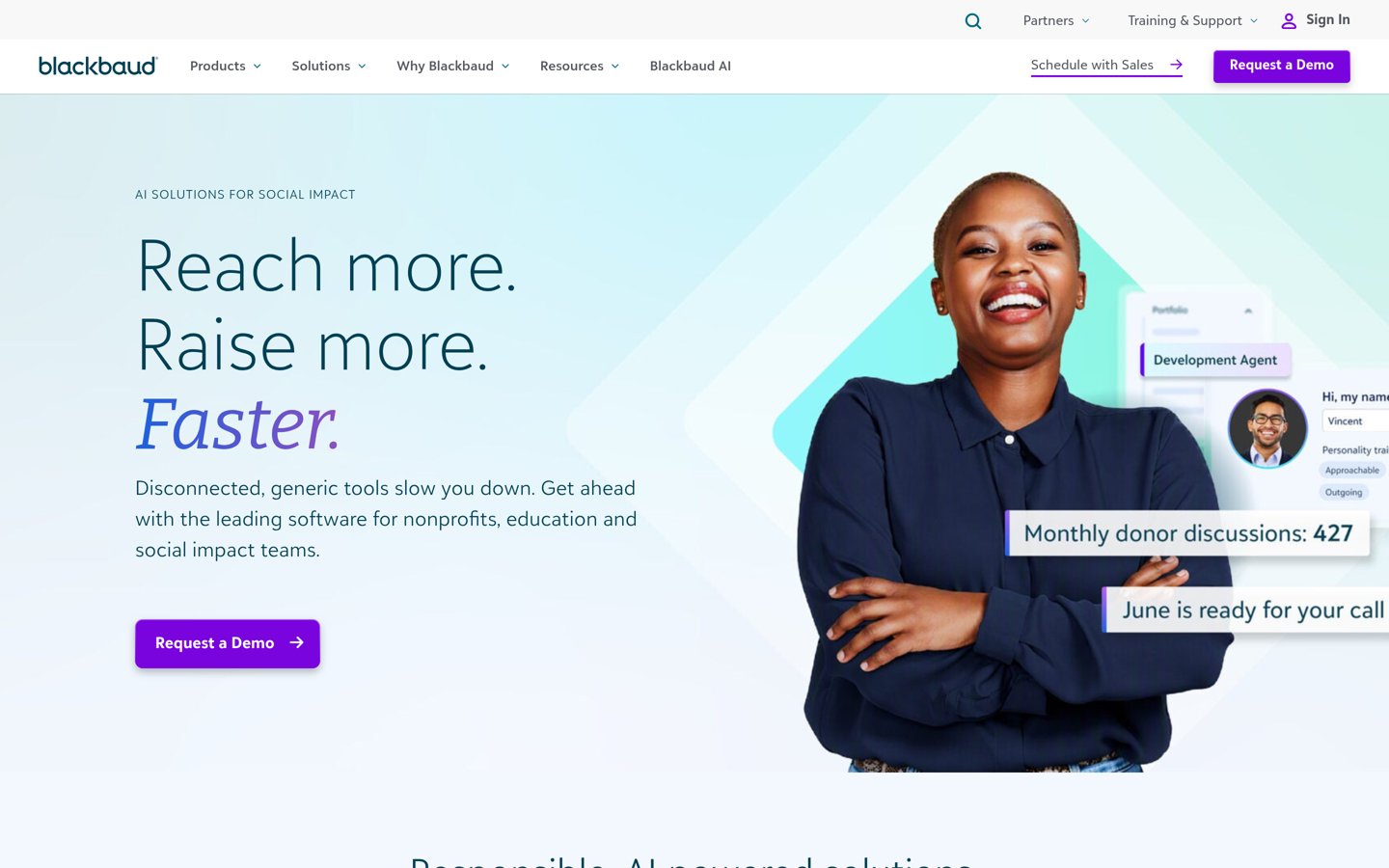
Blackbaud Financial Edge NXT homepage, captured Nov 2026.
Blackbaud Financial Edge NXT is enterprise fund accounting for mid-size to large nonprofits, especially those already using Raiser Edge NXT. Its segmented chart handles grants, projects and endowments, with allocation pools, dashboards and a direct gift-to-ledger link.
The trade off is price and implementation. Blackbaud quotes every deal, buyer-reported contracts start near $8,000 a year, and G2 reviewers report about three months to implement. It suits large nonprofits already on Blackbaud tools that value the donor-to-ledger link over price.
MIP Fund Accounting is fund accounting for nonprofits, schools and government agencies that live on grants. Its multidimensional chart tracks every dollar by fund, grant, program and project, with encumbrance accounting, cost allocations and reports that meet FASB and GASB standards.
The trade off is price and polish. MIP is quote only, with third-party estimates near $10,000 a year or more, and G2 reviewers rate it 3.8 out of 5 from only 38 reviews. It suits nonprofits juggling federal grants that need strict compliance more than a modern interface.
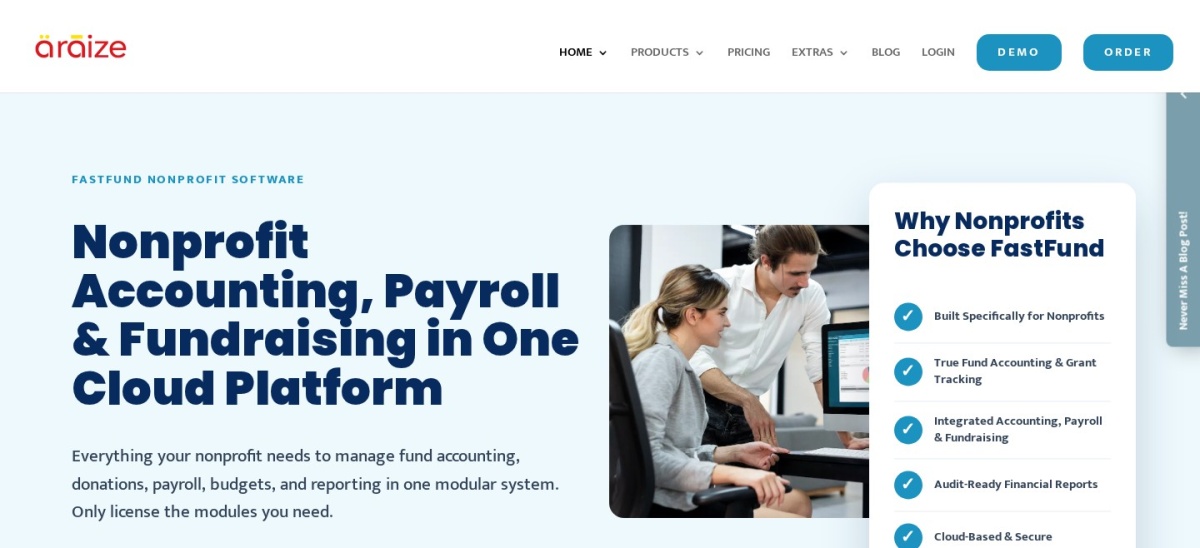
FastFund Online is low-cost fund accounting from Araize, sold in modules so a small charity pays only for what it uses. The Standard accounting plan costs $50 a month and covers cash-basis fund accounting, budgets, project tracking, bank feeds and 990 reporting.
The trade off is a thin review base and an older interface. FastFund holds a 4.7 out of 5 G2 rating from only 10 reviews, and accrual accounting needs the $110 Premium plan. It suits small nonprofits that want real fund accounting on a tight budget.
Fund accounting keeps a separate balance for every restricted gift. A grant for a food program cannot be spent on rent, and the ledger must prove that at any moment.
QuickBooks Online tracks funds with classes or locations, which works for one or two grants but gets fragile as programs multiply. A purpose-built ledger makes each fund a first-class balance instead of a tag.
Auditors ask for a statement of financial position by fund and a functional expense report. Tools with native fund accounting produce both directly, while general tools need exports and manual work.
How we chose
We started from the accounting tools nonprofits actually evaluate when they leave QuickBooks, then kept the nine with a public G2 rating and a published price or a clear quote-only model. Fund accounting depth, grant tracking and price per user decided the order.
Prices come from each vendor pricing page or its G2 pricing listing, checked on 29 November 2026. Aplos at $79 a month was read on its own pricing page today, Xero at $27 a month and FreshBooks at $21 a month rest on vendor-page reads from October and November 2026. Ratings and review counts come from G2 on the same day.
We left out tools with no verifiable rating and general ledgers with no nonprofit angle. No vendor paid for a place, and we do not claim hands-on testing for this list.
How to choose an alternative to QuickBooks for your nonprofit
Start with your grant load, then match the ledger to it.
Count your restricted funds. If you track more than a few grants, pick a tool with a native fund ledger such as Aplos or FastFund. General tools need workarounds that break at audit time.
Check the price per user. Aplos includes two users at $79 a month, Xero has unlimited users, and Wave is free. Add extra-user fees before you compare headline prices.
Test the donor connection. Your accounting tool should sync with your donor system or import gifts cleanly. Blackbaud suits Raiser Edge users, while Xero and Zoho Books rely on integrations.
Run a trial with real books. Import a month of real transactions and run a balance sheet by fund. If the report needs a spreadsheet to finish, the tool is not doing fund accounting.
FAQ
What are the best alternatives to QuickBooks for nonprofits in 2026?
Aplos is the best alternative to QuickBooks for nonprofits, because fund accounting is built in from $79 a month and it is rated 4.7 out of 5 on G2. Xero is the best general accounting pick, and Wave is the best free option for the smallest groups.
Is there a free alternative to QuickBooks for nonprofits?
Yes. Wave offers free double-entry books with unlimited invoices, and Zoho Books has a free plan for one user plus an accountant while revenue stays under $50,000 a year. Neither tracks restricted funds natively, so grant-heavy groups should budget for a fund accounting tool instead.
How much does Aplos cost per month?
Aplos Lite costs $79 a month for two users, Core costs $129 a month, and Advanced starts at $229 a month by quote. A 50 percent discount for three months runs to the end of November 2026, and extra users and contacts each cost $20 a month.
Can Xero handle nonprofit fund accounting?
Not natively. Xero has no fund ledger, so restricted grants must be tracked with tracking categories or a third-party add-on, which adds cost and manual work. Nonprofits with many restricted funds should pick Aplos, Sage Intacct or FastFund instead.
Aplos vs Xero: which is better for a small nonprofit?
Aplos is better for a small nonprofit that needs fund accounting, because its ledger reports by fund from the first plan. Xero is better for a nonprofit that wants broader accounting, unlimited users and more than 1,000 integrations, and tracks grants in a separate donor system.
What should a nonprofit look for when leaving QuickBooks?
Look for native fund accounting, grant and donor tracking, audit trails and 990 reporting first, then check price per user and migration help. Ask whether the vendor offers a free trial, and confirm that bank feeds and your donor system connect before you commit.
SaaS SEO and WordPress specialist with about 8 years of experience. Rakib compares WordPress plugins, themes, hosting and software using public pricing, documentation and user reviews. See how we rank.