TestNG is the best alternative to JUnit for Java teams, because it keeps the annotation style and adds test groups, data providers and parallel runs, rated 4.4/5 on Gartner. Pick Selenium for free browser tests, or Playwright for fast cross-browser runs with Java support.
How we make this list: we compare pricing pages, product documentation and public user reviews, then re-check every price before each update. No product paid for a place. Disclosure.
TestNG is the only direct runner swap here, with groups, dependencies, data providers and parallel runs.
Selenium, Playwright and Cypress drive browsers, not unit tests, so they still need a runner such as TestNG or JUnit.
Four of the seven tools are free and open source, and the cheapest paid plan is Sauce Labs at $39 a month.
Spock, Kotest, Cucumber, Mockito and AssertJ have no public 1–5 rating with a review count, so this list cannot include them yet.
Katalon is the only low-code pick, with a free plan and Professional at $1,800 per seat a year.
What should you look for in alternatives to JUnit?
Only TestNG fully replaces JUnit as a test runner. It keeps the annotation style Java teams know, then adds test groups, dependencies between methods, data providers and parallel execution, which is why it leads this list.
Most tools called JUnit alternatives test a different layer. Selenium, Playwright and Cypress drive real browsers, so they cover end-to-end tests while a runner such as TestNG or JUnit still discovers and runs the tests. Our guide on deploying WordPress with GitHub Actions shows the same split: the runner and the CI pipeline are separate jobs.
Price is rarely the deciding factor in this list. Four tools are free and open source, Cypress has a free Starter plan, and paid plans start at $39 a month, so the real cost is learning time and migration effort.
The JVM-native complements are missing from this list for one reason: ratings. Spock, Kotest, Cucumber, Mockito, AssertJ, Selenide and Serenity BDD have no public 1–5 rating with a review count on G2, Capterra, Trustpilot or Gartner, so they cannot pass the rating rule for this list. That gap is flagged for review, not hidden.
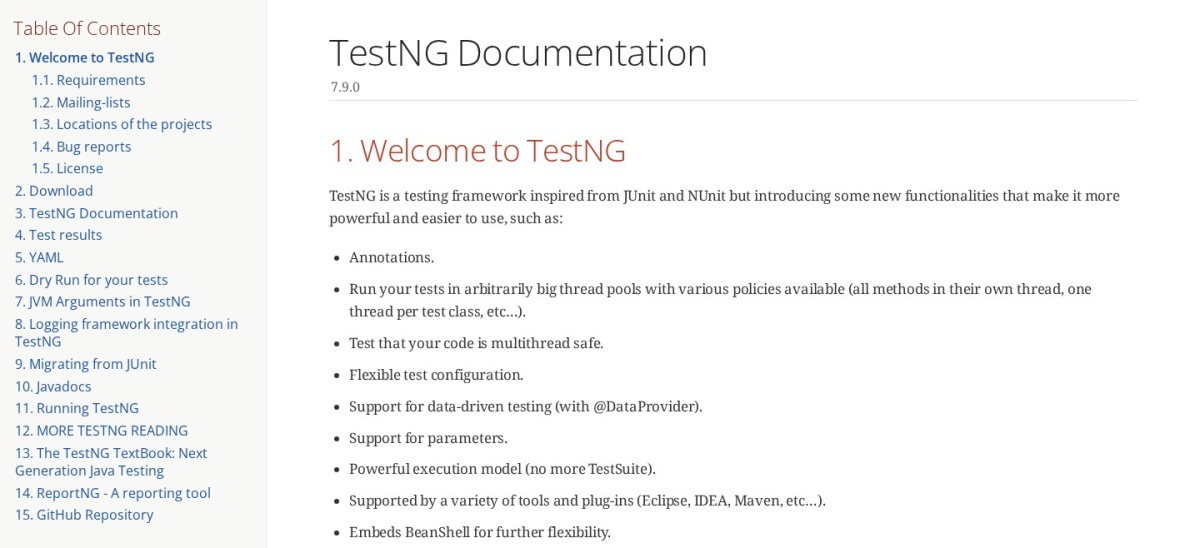
TestNG is a free, open-source testing framework inspired by JUnit and NUnit, and the closest direct replacement on this list. It covers unit, functional, integration and end-to-end tests, with annotations, test groups, dependencies between methods, data providers and parallel execution in configurable thread pools. The current release is 7.9.0 and needs JDK 11 or higher.
The trade off is setup. Suites are configured in XML files, which adds ceremony for small projects, and the community is smaller than JUnit's, so worked examples are fewer. It suits Java teams whose suites have outgrown plain unit tests and need groups, ordering and parallel runs.
What we like
Groups, dependencies and priorities for ordering tests
Data providers for data-driven tests
Parallel execution in configurable thread pools
XML suite configuration with Maven, Gradle and IDE support
Watch out for
XML configuration feels heavy for small projects
Smaller community than JUnit, so examples are fewer
Migration from JUnit needs annotation and setup changes
No paid tier exists, so there is nothing to upgrade toVisit testng.org
02
Selenium
4.5/5on G2 (26 reviews, checked Nov 2026)
PriceFree
Best free classic for any language
BrowsersChrome, Firefox, Edge, Safari
LanguagesJava, Python, C#, Ruby, JS, Kotlin
Free planYes, open source
Paid planNone, free
selenium.dev
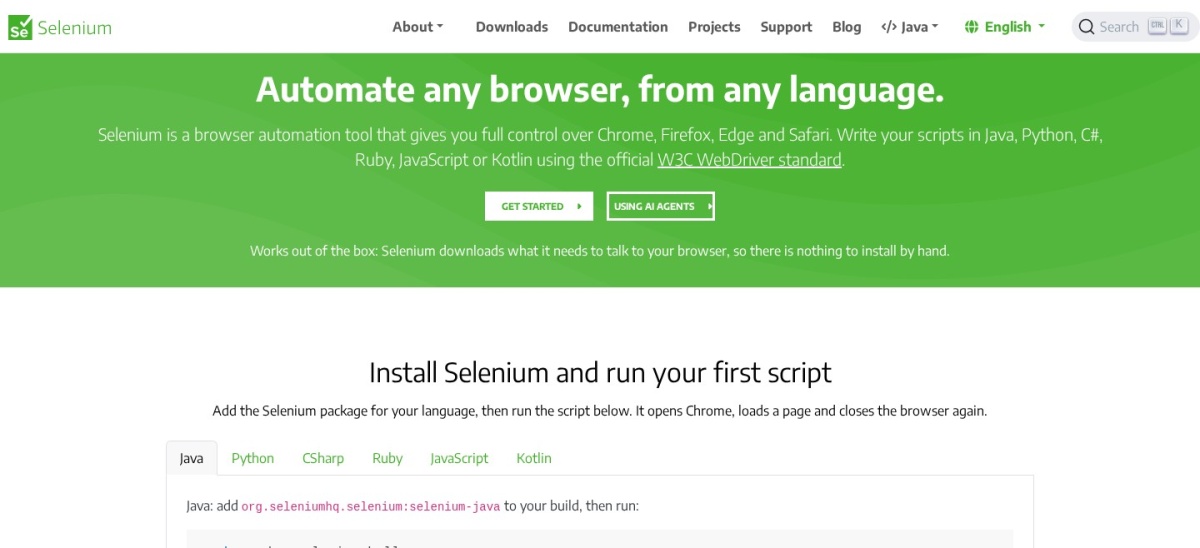
Selenium homepage, captured Nov 2026.
Selenium is the free, open-source browser automation project behind the W3C WebDriver standard. It drives Chrome, Firefox, Edge and Safari from Java, Python, C#, Ruby, JavaScript or Kotlin, and it works with almost every test runner and CI tool. Selenium Grid runs tests in parallel across machines.
The trade off is that Selenium is not a test runner. It gives you the building blocks, not a finished framework, so teams write their own waits, reporting and parallel runs, and still pair it with JUnit or TestNG. It suits teams that need the widest language and browser choice and already have engineers to build the framework.
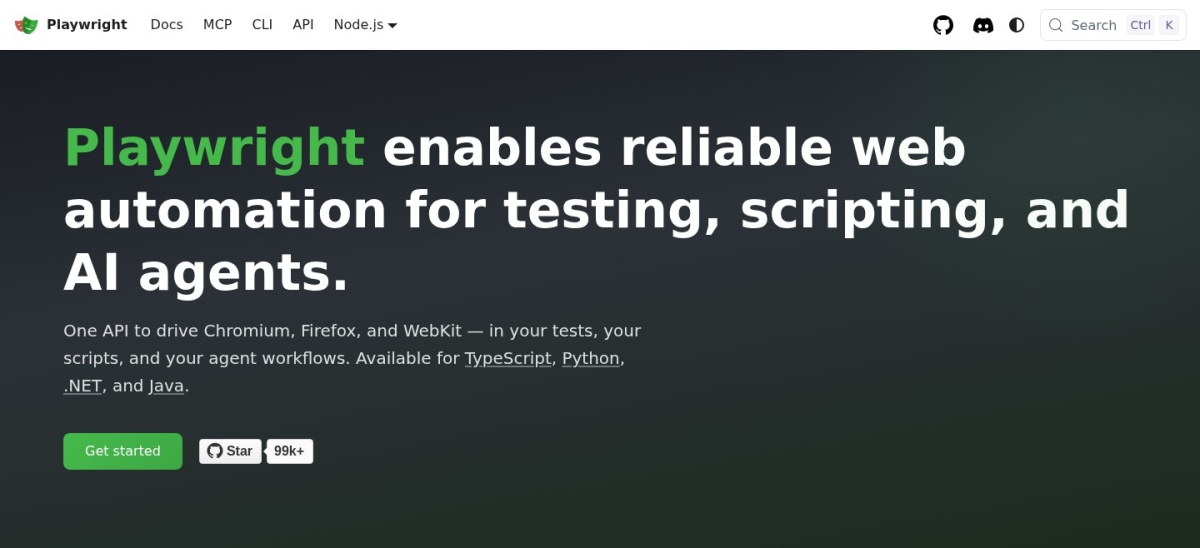
Playwright is Microsoft's free, open-source framework for end-to-end testing, with one API that drives Chromium, Firefox and WebKit. It works in TypeScript, Python, .NET and Java, runs tests in parallel by default, and includes auto-waiting, resilient locators, a test generator and a trace viewer for debugging failures.
The trade off is that Playwright is code-first, so non-developers will find it harder to start than a low-code tool. It also covers browser tests only, so unit tests still need a runner such as JUnit or TestNG. It suits developers who want fast, stable cross-browser tests with strong debugging.
What we like
One API for Chromium, Firefox and WebKit
Auto-waiting and web-first assertions cut flaky tests
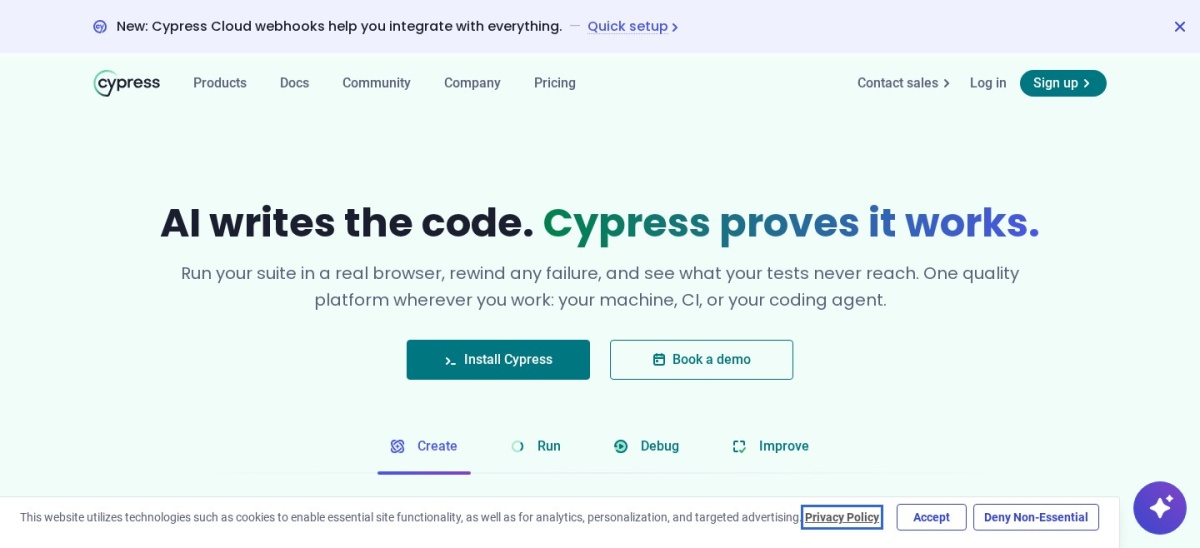
Cypress is a free, open-source test runner for JavaScript and TypeScript apps that runs tests in a real browser. It shows each command as it runs, rewinds failures with time travel, and records runs to Cypress Cloud with Test Replay. The Cloud Starter plan is free for 10 users and 500 test results a month.
The trade off is language. Cypress works in JavaScript and TypeScript only, so a Java team cannot use it for its Java code, and cloud recording beyond the free Starter plan starts with Team at $799 a year. It suits JavaScript teams that want readable, debuggable end-to-end tests and a cloud dashboard for CI runs.
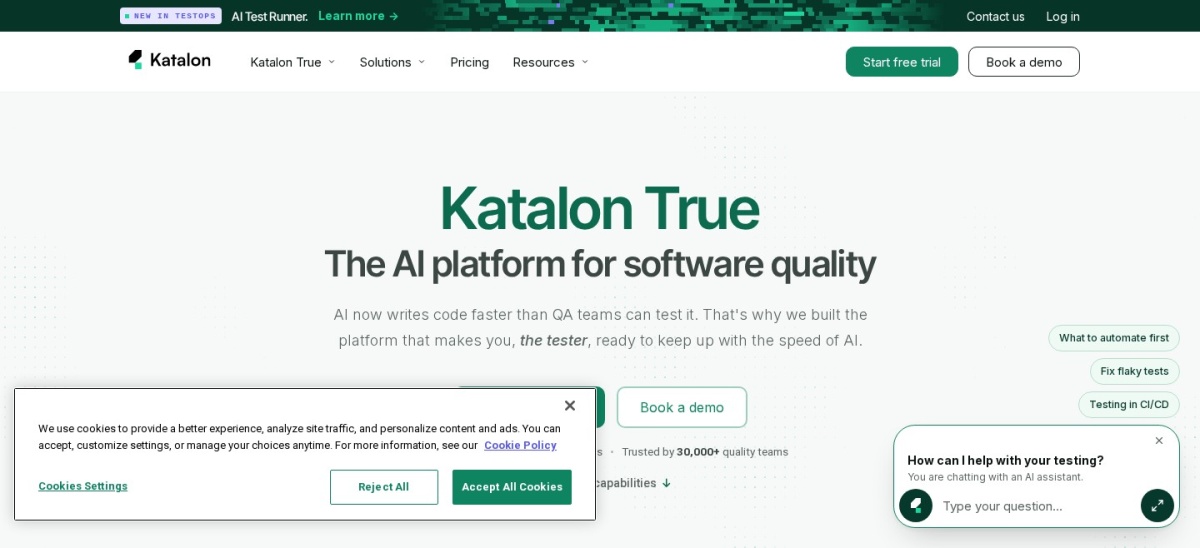
Katalon Studio is a low-code desktop IDE for web, mobile, API and desktop testing, built on Selenium and Appium. The free plan covers local authoring with record and playback, local runs and up to 40 static test suites. Paid plans add AI agents for authoring, failure analysis and self-healing.
The trade off is price. Professional costs $1,800 per seat a year online, against a $2,199 standard price for sales-assisted purchases, and headless CI runs need the separate Runtime Engine add-on, so the bill grows past one seat. It suits QA teams that want one tool for several test types without writing a framework from scratch.
What we like
Record and playback, with no code needed to start
One tool for web, mobile, API and desktop tests
AI self-healing for changing locators
Free plan covers local authoring and runs
Watch out for
Professional is $1,800 per seat a year
CI runs need the separate Runtime Engine add-on
Can feel slow with large test suites
Professional adds AI agents, parallel runs and unlimited suitesVisit katalon.com
06
TestComplete
4.2/5on G2 (96 reviews, checked Nov 2026)
Starts at$1,210/yr
Best for enterprise desktop testing
PlatformsDesktop, web, mobile
ScriptingKeyword-driven or scripted
Free trial14 days
Paid planBasic, $1,210/user/yr
smartbear.com
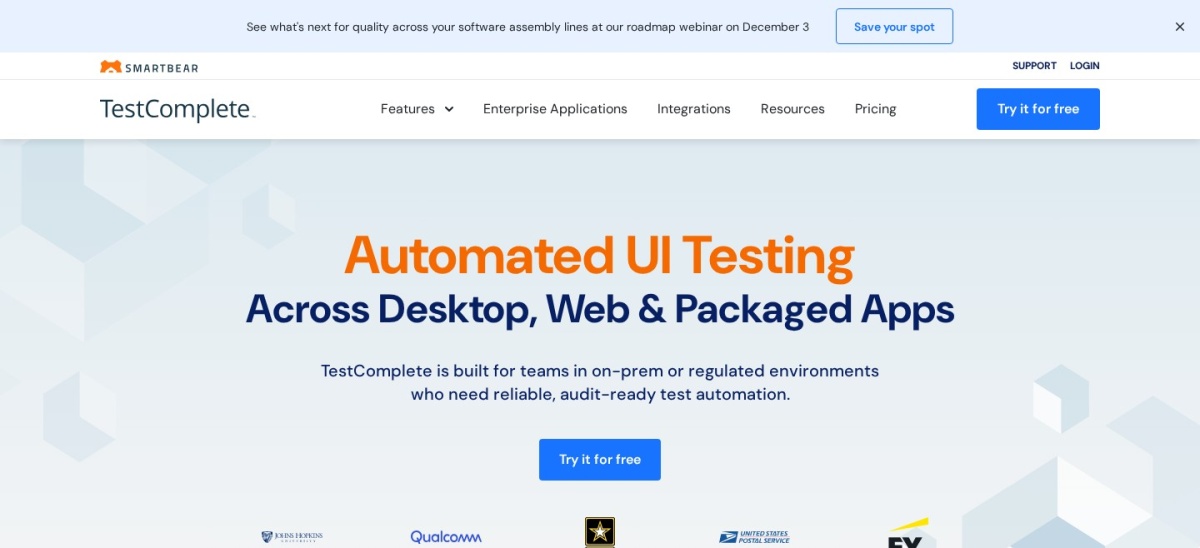
TestComplete homepage, captured Nov 2026.
TestComplete is SmartBear's commercial tool for automated UI testing across desktop, web and mobile apps. It offers keyword-driven tests for non-programmers as well as scripted tests, with AI-powered object recognition. A 14-day trial is available, and there is no free plan.
The trade off is price. Basic lists at $1,210 per user a year on vendor-provided pricing, and there is no free plan, only a 14-day trial. It suits enterprise teams testing Windows desktop apps beside web and mobile.
What we like
Keyword-driven tests need no coding to start
Covers desktop, web and mobile in one tool
AI-powered object recognition
Jira, Jenkins and Git integrations
Watch out for
No free plan, only a 14-day trial
Priced for enterprise budgets
Object recognition can struggle with dynamic controls
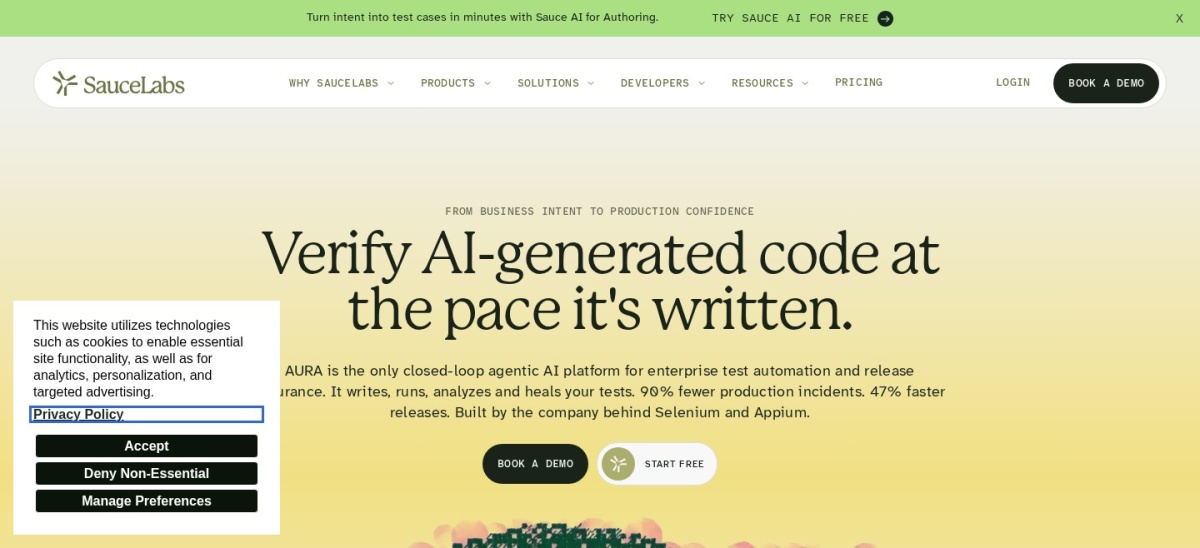
Sauce Labs is a cloud testing platform from the team behind Selenium, running automated tests on virtual and real devices. Every plan includes unlimited users, unlimited testing minutes, videos and screenshots of each test, and REST API access. Live Testing starts at $39 a month billed annually.
The trade off is that the entry plan is built around one parallel test at a time, so large suites need higher tiers or more parallels. It is a cloud to run tests on, not a test framework, so teams still write tests in Selenium, Appium, Cypress or Playwright. It suits teams with existing Selenium suites that want a long-established cloud to run them on.
Spock, Kotest, Cucumber, Mockito, AssertJ, Selenide and Serenity BDD are the names most Java teams ask about first. They are real, established tools, and in a plain research list they would sit near the top.
None of them has a public 1–5 rating with a review count on G2, Capterra, Trustpilot or Gartner. This list requires a rating and a review count for every tool, so they cannot appear here without inventing a number, which the brief forbids.
Mockito and AssertJ are also partial swaps, not runners: they replace mocking and assertions inside a framework, while JUnit or TestNG still runs the tests. If your complaint is mocking or assertion readability, adding one of them may solve it without a migration at all.
If a rating source appears for these tools, they should be added and the list re-ranked, with TestNG still first for a full framework swap.
How we chose
We started from the tools most often named as JUnit replacements in testing guides, then kept only those with a public 1–5 rating and a review count.
Prices come from each vendor's pricing page, checked on 29 November 2026, or from vendor-provided pricing on G2 where the vendor page did not render. Ratings come from G2 on the same day, except TestNG, which is rated on Gartner. Where a vendor shows a sale, the list shows the regular price.
We left out the JVM-native tools with no public rating, listed in the section above. No vendor paid for a place, and we do not claim to have used these tools ourselves.
How to choose an alternative to JUnit
Start with what you are actually replacing, then match the tool to that job.
Decide whether you need a new runner. If you want a drop-in replacement for unit tests, TestNG is the only full swap on this list. If you need browser tests, pick a browser tool instead.
Match the tool to your language. Selenium and Playwright support Java; Cypress works in JavaScript and TypeScript only. A Java team gains nothing from a tool that cannot test Java code.
Check the free tier before paying. Four tools here are free and open source, and Cypress has a free Starter plan. Try the free tier on a real suite before budgeting for a paid plan.
Run both frameworks side by side first. Move one module, run the new suite in CI beside the old one, and keep the old suite green until the new one is stable. Our guide on deploying with GitHub Actions shows how CI runs fit around a live site.
FAQ
What is the best alternative to JUnit in 2026?
TestNG is the best alternative to JUnit for most Java teams. It keeps the annotation style, adds test groups, data providers and parallel runs, and it is rated 4.4 out of 5 on Gartner from 46 reviews.
Is there a free alternative to JUnit?
Yes. TestNG, Selenium and Playwright are all free and open source, and Cypress has a free Starter plan. JUnit itself is free too, so switching costs migration effort and learning time, not a licence fee.
What is the cheapest paid alternative to JUnit?
Sauce Labs is the cheapest paid plan on this list, with Live Testing at $39 a month billed annually. Cypress Cloud Team is next at $799 a year, while Katalon Professional costs $1,800 per seat a year.
Which alternative to JUnit is best for beginners?
Katalon Studio is the easiest start, because record and playback build tests without code and the free plan covers local authoring. Cypress is also friendly for JavaScript teams, with clear docs and a free Starter plan.
TestNG vs Selenium: which should I pick?
Pick TestNG if you want a new test runner, and Selenium if you want browser automation. They solve different problems and often work together: TestNG runs the suite while Selenium drives the browser. Most Java teams that leave JUnit adopt TestNG first.
Can Playwright replace JUnit for Java teams?
Partly. Playwright has Java bindings and a full test runner with auto-waiting and parallel runs, but it covers browser tests, not unit tests. A Java team still needs a unit runner such as JUnit or TestNG for class-level tests.
Do I still need JUnit if I use Mockito or AssertJ?
Yes. Mockito replaces mocking and AssertJ replaces assertions, but neither runs tests, so JUnit or TestNG still discovers and executes the suite. If your complaint is mocking or assertion readability, adding one of them may fix it without a migration.
SaaS SEO and WordPress specialist with about 8 years of experience. Rakib compares WordPress plugins, themes, hosting and software using public pricing, documentation and user reviews. See how we rank.