Plugin how-tos · Guide
How to Install Import Plugin in WordPress (Step by Step)
Short answer
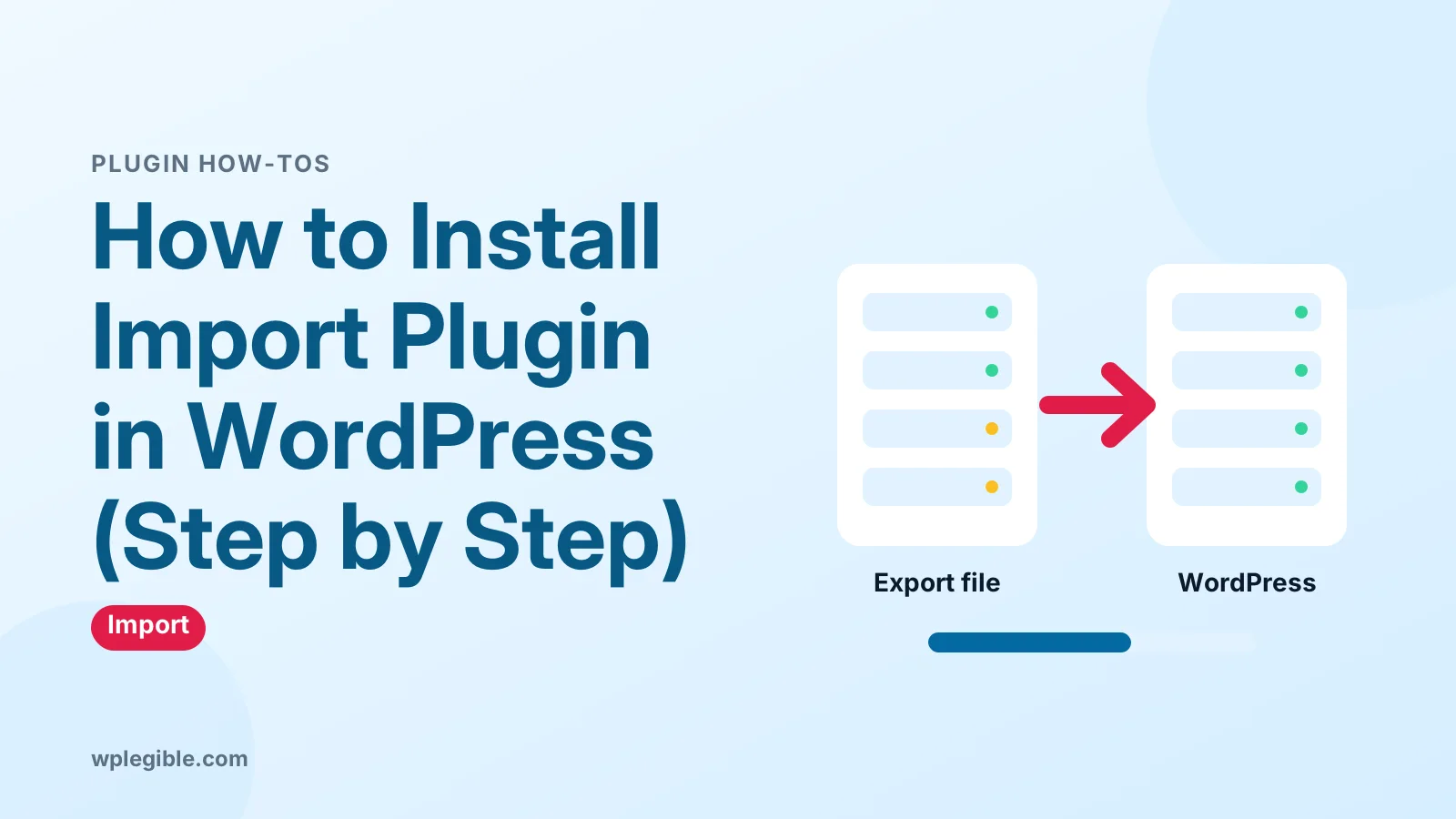
Go to Tools, then Import in the WordPress dashboard, find WordPress in the list and click Install Now. When it finishes, click Run Importer, upload your WXR export file, assign authors, tick the option to import attachments and submit. You can also install WordPress Importer from the Plugins screen.
Key takeaways
- The importer is a separate free plugin installed from Tools, Import.
- The WordPress Importer reads WXR export files only.
- Map authors and tick the attachments option before you submit.
- Upload size limits are the most common import error.
- Use a CSV importer or migration plugin for other jobs.
- You can delete the importer once your import is done.
How do you install the import plugin in WordPress?
Go to Tools, then Import in your dashboard, find WordPress in the list and click Install Now, then click Run Importer once the plugin is installed.
WordPress does not include the importer in core. It installs it as a separate plugin the first time you need it, straight from the Tools screen.
The steps below cover the official WordPress Importer, other built-in importers, manual installation and the most common errors.
If you are moving a whole site rather than just content, a full migration plugin may suit you better. We cover that choice near the end.
What is the WordPress import plugin?
The WordPress Importer is an official free plugin that reads a WordPress export file and adds its posts, pages, comments, custom fields, categories, tags, menus and media to your site.
The export file uses the WXR format, which is an XML file created under Tools, then Export on the source site.
The plugin is maintained by the WordPress project and listed as WordPress Importer on WordPress.org. Its code is also public in the WordPress Importer GitHub repository.
It moves content only. Themes, plugins, widget settings and most site options stay behind, so you set those up separately.
Step 1: How do you open the Import screen?
Log in as an administrator, open the Tools menu in the left sidebar and click Import to see the list of available importers.
Only users who can install plugins see the Install Now links. If you do not see them, ask the site owner or check your user role.
On WordPress multisite, network admins control plugin installs. Individual site admins may only see importers that are already installed.
The official Tools Import screen documentation describes each item on this page.
Step 2: How do you install the importer you need?
Find the importer for your source, such as WordPress, Blogger, Tumblr or RSS, and click its Install Now link under the name.
WordPress downloads and installs the plugin in a few seconds. The link then changes to Run Importer.
Here are the importers you will usually see on that screen:
| Importer | What it imports | Typical use |
|---|---|---|
| WordPress | Posts, pages, comments, terms, menus, media | Moving content between WordPress sites |
| Blogger | Posts and comments from a Blogger blog | Leaving Blogger |
| Tumblr | Posts and media from a Tumblr blog | Leaving Tumblr |
| RSS | Posts from an RSS feed file | Simple content transfers |
| LiveJournal | Entries from LiveJournal | Older blog moves |
| Movable Type and TypePad | Posts from those platforms | Legacy migrations |
| Categories and Tags Converter | Converts categories to tags and back | Tidying taxonomies |
The exact list can change between WordPress versions. The importers you see come from the WordPress.org plugin directory.
Step 3: How do you run the WordPress importer?
Click Run Importer, choose your WXR export file, click Upload file and import, then map authors and choose whether to download attachments.
The plugin first uploads the file. It then shows an author screen.
For each author in the file, you can create a new user, keep the original login name or assign their posts to an existing user on your site.
Tick Download and import file attachments if you want images and other media copied across. The source site must still be online for this to work, since the importer fetches files from their original addresses.
Click Submit and wait. Large imports can take several minutes, so do not close the tab.
When it finishes, the importer shows a short message and a list of anything it skipped. Items such as posts that already exist are skipped rather than duplicated.
Keep a copy of that message if you see errors. It helps when you troubleshoot missing posts or media later.
Step 4: How do you check the imported content?
Open Posts, Pages and Media to confirm the content arrived, then spot-check a few posts for missing images, broken links and the right author and categories.
Menus are imported, but you may need to assign them to a theme location under Appearance, then Menus, or in the Site Editor.
Internal links in old posts may still point to the old domain. A search and replace tool can update them after you confirm the import worked.
Featured images can fail if an attachment download timed out. Running the import again with the same file usually skips existing posts and fills gaps.
How do you install the importer manually?
If Install Now does not work, go to Plugins, then Add New Plugin, search for WordPress Importer, install and activate it, then return to Tools, then Import.
You can also download the plugin ZIP from WordPress.org and upload it under Plugins, then Add New Plugin, then Upload Plugin.
The WordPress guide to managing plugins covers both install methods with screenshots.
Manual install helps when your server blocks outgoing connections or your host limits automatic plugin installs.
If uploads fail too, you can copy the unzipped plugin folder into the plugins directory with SFTP. The WordPress plugin developer handbook explains where plugin folders live and how WordPress loads them.
How do you fix common import plugin errors?
Most import errors come from upload size limits, timeouts on large files, memory limits or attachments that cannot be downloaded from the old site.
File is too large: your server's upload limit is smaller than the export file. Raise the limit with your host, or split the export by post type or date range.
The limits come from PHP settings such as upload_max_filesize and post_max_size, described in the PHP core configuration reference.
Import stops partway: the server hit a time or memory limit. Run the import again, since the importer skips items it already created, or split the file.
Images missing: the old site may be offline, blocking requests or using relative paths. Copy the uploads folder by FTP or SFTP instead.
Failed to import author or category: check the export file is complete. A broken XML file can stop the import early.
If you had trouble creating the file in the first place, our guide to fixing a WordPress export error covers the export side.
Which plugin should you use for CSV or WooCommerce imports?
For CSV or spreadsheet data, use a dedicated tool such as WooCommerce's built-in product importer or a plugin like WP All Import, because the WordPress Importer only reads WXR files.
WooCommerce includes a product CSV importer under Products, then Import. It handles prices, stock, variations and categories.
For moving store data out, our guide on how to export WooCommerce products shows the matching export steps.
WP All Import handles CSV and XML files and maps columns to fields. It is useful for custom post types and large listing sites.
Should you use a migration plugin instead?
Use a migration plugin when you want to move a whole site, including themes, plugins, settings and the database, and the WordPress Importer when you only need content.
Full migration tools copy everything in one package. They save time when moving hosts or launching from staging.
They have their own limits. Our guide on the All-in-One WP Migration import limit explains file size caps.
If a full-site import freezes, see our fix for an import stuck in All-in-One WP Migration.
The WordPress Importer is gentler. It only adds content, so it will not overwrite your theme, plugins or settings, which makes it a safer choice for merging two blogs into one site.
Should you keep the import plugin installed?
You can deactivate and delete the importer once your import is finished, since it is not needed for the site to run and fewer plugins means less to update.
Your imported content stays on the site after you remove the plugin. Only the import tool itself is deleted.
If you plan to import again later, you can reinstall it in a few seconds from the same Tools screen.
Test big imports on a staging copy first. Our guide on setting up a staging site shows how.
Frequently asked questions
Where is the import plugin in WordPress?
Go to Tools, then Import in the dashboard. Each importer has an Install Now link. After installing, the link changes to Run Importer. You can also find WordPress Importer by searching under Plugins, then Add New Plugin.
Why can't I see Install Now on the Import screen?
Your user account probably cannot install plugins. Only administrators on single sites, and network admins on multisite, can install plugins. Some hosts also disable plugin installs. Ask the site owner or your host to install the importer for you.
What file does the WordPress Importer need?
It needs a WordPress eXtended RSS file, an XML file created from Tools, then Export on the source site. It cannot read CSV files, SQL database dumps or ZIP archives from migration plugins, which need their own tools.
Why are images missing after importing?
The importer downloads images from the old site's addresses. If the old site is offline, blocks requests or the import timed out, images are skipped. Run the import again with attachments ticked, or copy the uploads folder manually by FTP or SFTP.
Is the WordPress Importer plugin safe?
Yes. It is an official plugin maintained by the WordPress project and listed in the WordPress.org directory. Only import files from sources you trust, and back up your site before large imports in case you need to undo changes.
Sources
- WordPress Importer WordPress.org
- Tools Import Screen WordPress.org Documentation
- Manage Plugins WordPress.org Documentation
- WordPress Importer repository GitHub
- Description of core php.ini directives PHP.net
- WP All Import WordPress.org
Is your product missing, or something out of date?
Tell us what to add or correct. We read every note and reply when we need a source. A message does not buy a ranking.
Thanks — we review requests within 3 business days.
Related guides

About the editors
Researched from the primary sources listed above and checked against our editorial rules before publishing.