Agorapulse is the best Zoomsphere alternative for most teams, combining scheduling, a unified inbox and client-ready reporting from $79 a user a month, rated 4.5/5 on G2. Pick Sprout Social for deeper analytics, or Buffer if you want the cheapest start at $6 a channel a month.
How we make this list: we compare pricing pages, product documentation and public user reviews, then re-check every price before each update. No product paid for a place. Disclosure.
Agorapulse is the closest all-round Zoomsphere replacement: inbox, publishing and reports from $79 a user a month.
Sprout Social's cheapest plan is Essentials at $79 a seat a month; the shared inbox needs Standard at $199.
Buffer is the cheapest start at $6 a channel a month, with 3 channels free; SocialPilot covers 5 accounts for $30.
Metricool pairs a free plan with competitor tracking, and Planable adds unlimited users with approvals from $33 a workspace.
Per-seat tools (Sprout, Hootsuite, Agorapulse) get expensive fast as teams grow; per-account tools stay flatter.
What to look for in a Zoomsphere alternative
Zoomsphere users usually come for the same mix: scheduling, analytics and reporting in one place. The best replacement depends on which of those three you lean on most.
If the inbox matters most, shortlist Agorapulse, Sprout Social and Hootsuite. All three combine publishing with a shared inbox, but all three charge per seat, so count heads before you compare headline prices.
If you mainly schedule and report, the cheaper tools cover you. Our guide on scheduling posts in WordPress shows the same planning habit works with any scheduler.
Check the billing model, not just the monthly figure. Buffer charges per channel, Planable per workspace, and Sprout, Hootsuite and Agorapulse per user, so the same $30 a month buys very different things.
Agorapulse is a social media management platform built around publishing, a unified inbox and reporting. Standard costs $79 per user a month on annual billing and covers 10 social profiles, unlimited posts, the shared inbox and branded report exports, with 6 months of data.
The trade off is per-user pricing. Every extra team member costs another $79 a month, so a team of five pays about $395 a month before add-ons such as listening. It suits small teams that answer comments and messages daily and want client-ready reports.
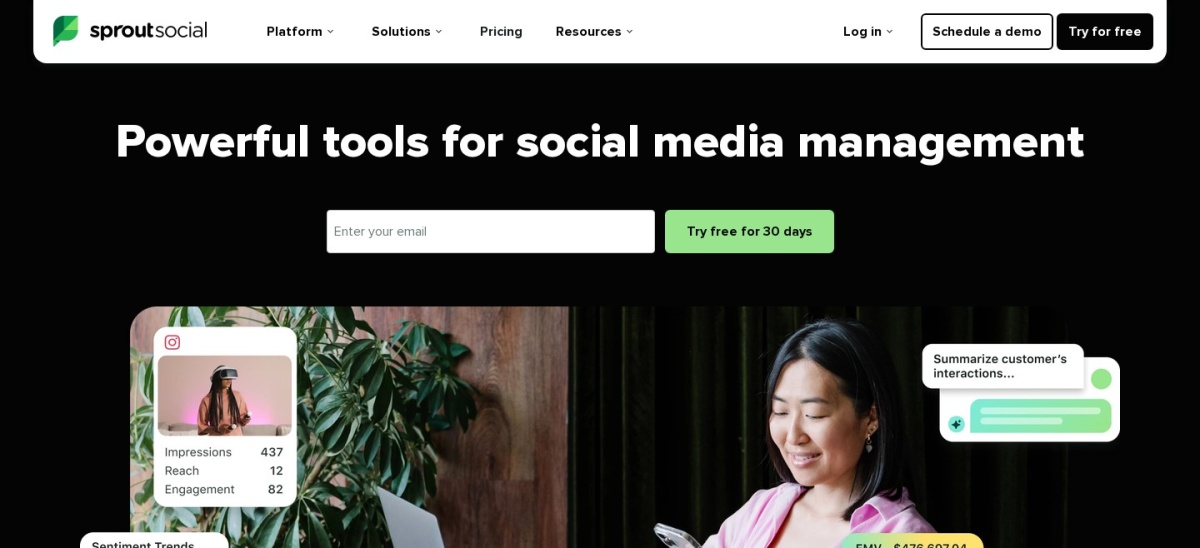
Sprout Social is a social media management suite for publishing, engagement and customer care. Essentials costs $79 per seat a month on annual billing and covers 5 social profiles, scheduling, post reporting and AI help, while Standard at $199 adds the shared inbox and review management.
The trade off is the seat model and the profile cap. Essentials and Standard both stop at 5 profiles, so more accounts mean the $299 Professional plan, and each seat adds $79 a month. It suits larger teams that need strong reporting and a shared inbox for customer care.
Hootsuite is a social media management platform for scheduling, engagement, analytics and brand monitoring. Standard costs $99 per user a month on annual billing and covers 10 social accounts, unlimited post scheduling, a unified inbox, analytics and benchmarking against 5 competitors.
The trade off is price and approvals. Approval workflows start on Advanced at $399 per user a month, and every extra seat adds $99 a month. It suits established teams that publish daily and answer messages from one inbox.
SocialPilot is a scheduling and analytics tool for managing several accounts from one calendar. Essentials costs $30 a month, covers 5 social accounts for 1 user, and includes bulk scheduling, a content library and client-ready reports.
The trade off is depth. The inbox and listening tools are lighter than Agorapulse or Sprout, and white-label reports sit on higher plans. It suits freelancers and small agencies that mainly need affordable scheduling across client accounts.
Buffer is a simple scheduler for planning, publishing and checking basic analytics. The free plan connects 3 channels with 10 scheduled posts per channel, and Essentials costs $6 per channel a month with unlimited scheduled posts, advanced analytics and a hashtag manager.
The trade off is per-channel pricing. Every extra account adds $6 a month, so 10 accounts cost $60 a month before any team features, and listening is light. It suits creators and small businesses that want the cheapest way to keep a few accounts posting.
Later is a visual social media scheduler built around a drag-and-drop calendar, a media library and a link-in-bio page. Starter costs $25 a month and covers 1 social set with 30 posts per profile, scheduling, analytics and 5 AI credits.
The trade off is the post cap and the visual focus. Thirty posts per profile suits steady publishers, but heavy posters outgrow it fast, and reporting is lighter than Metricool. It suits creators and brands that plan Instagram, TikTok and Pinterest visually.
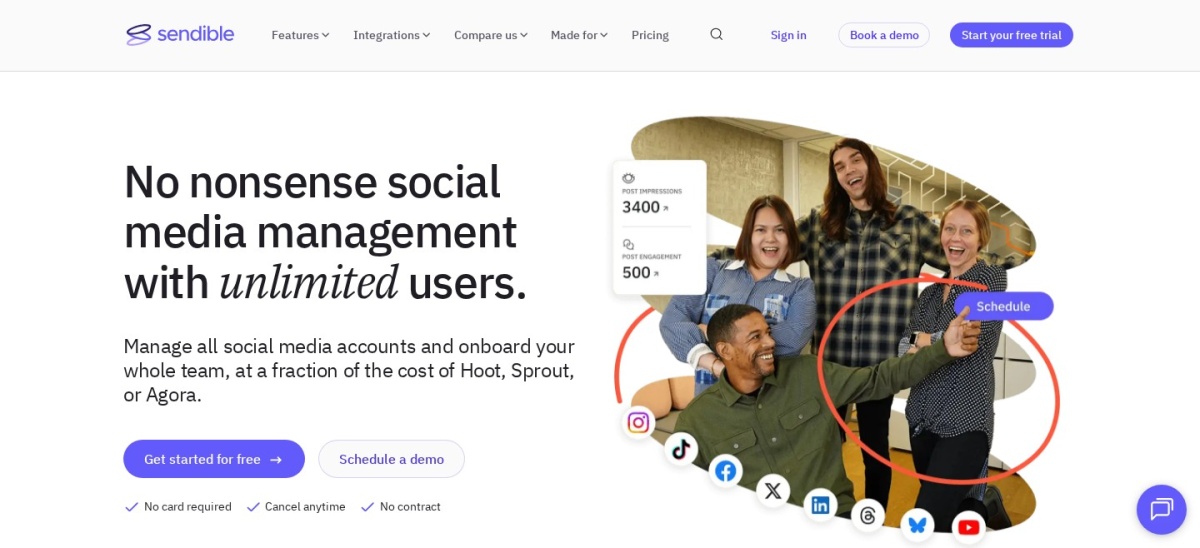
Sendible is a social media management platform for agencies, with scheduling, a Priority Inbox and deep reporting. Creator costs $29 a month for 1 user and 6 profiles, with unlimited scheduling, the inbox, basic reporting and AI Assist.
The trade off is the step up to team plans. Collaboration, approval workflows and white-label dashboards need Traction at $89 a month, and the interface takes time to learn. It suits solo marketers and small agencies that report to clients every month.
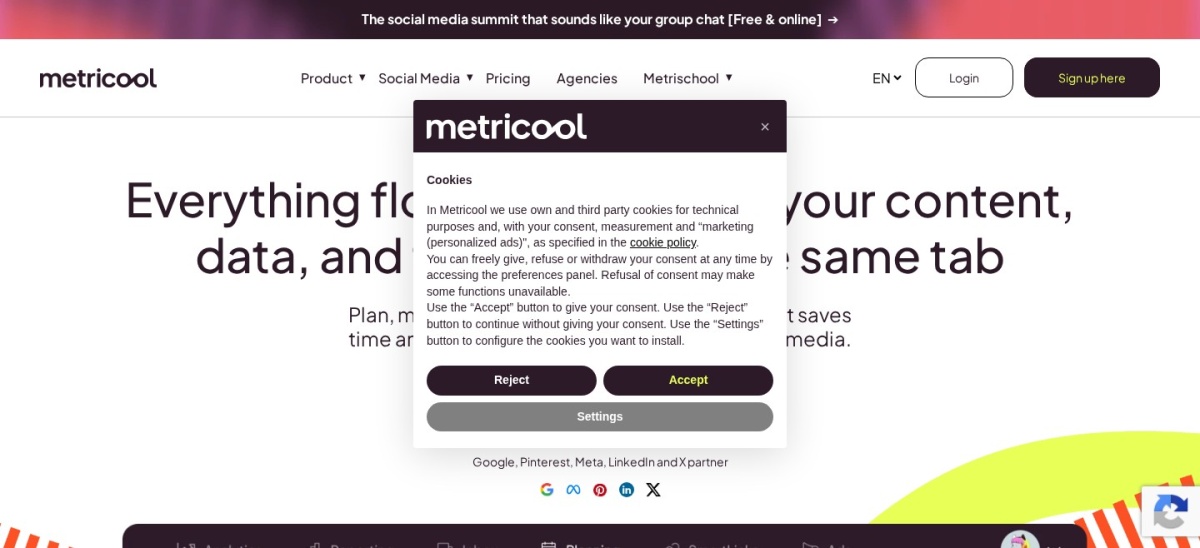
Metricool is a social media management and analytics platform that combines publishing, competitor monitoring and reporting. The free plan manages 1 brand, schedules 20 posts a month and tracks 5 competitors, while Starter costs $20 a month with annual billing and supports up to 10 brands.
The trade off is the free plan's network limits. It excludes LinkedIn and X connections, and some integrations and X features need paid tiers or add-ons. It suits marketers who want publishing and performance analysis in the same dashboard.
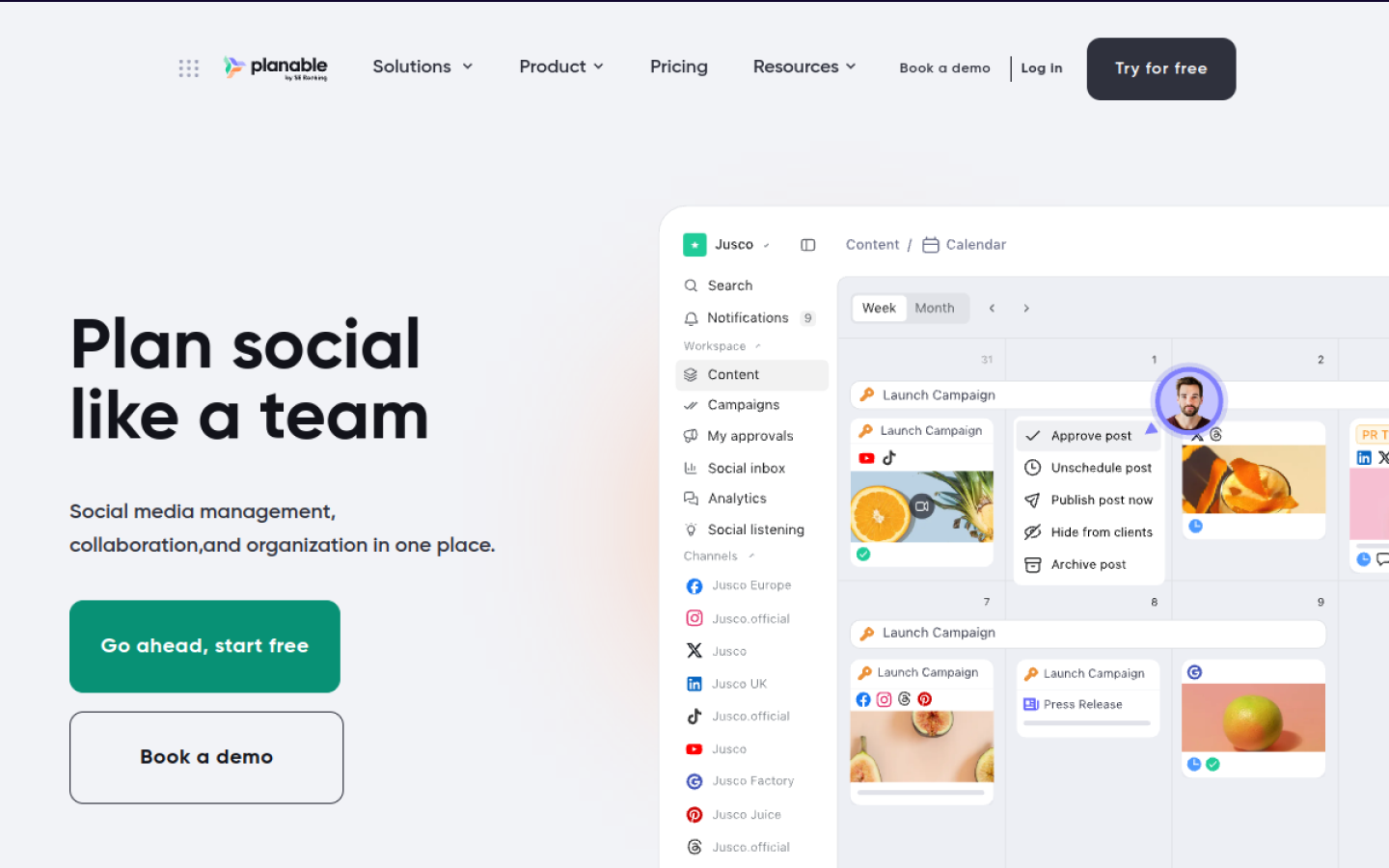
Planable is a collaborative planning platform for drafting, reviewing, approving and scheduling social posts. Basic costs $33 per workspace a month on annual billing and includes 60 posts, 4 social pages, unlimited users and approval workflows, with the first 50 posts free.
The trade off is volume and analytics. Basic caps posts at 60 a month per workspace, and the analytics add-on costs $12 more a month. It suits agencies and teams that need clients or managers to sign off on content before it goes live.
Export your scheduled posts and reports first. Most tools import a CSV of planned content, but scheduled posts do not move between platforms on their own.
Reconnect every account and re-authorise publishing. Instagram and TikTok often need a fresh connection, and some formats only publish with a mobile reminder.
Run both tools for one billing cycle if you can. A month of overlap costs less than a missed campaign, and it shows whether the new analytics match the numbers you relied on.
How we chose
We started from the established social media management tools most often named as Zoomsphere alternatives, then kept those with public USD pricing and a substantial G2 review base.
Prices come from each vendor's pricing page, checked on 29 November 2026. Ratings and review counts come from G2 on the same day. Where a vendor shows a sale, the list shows the regular price.
We left out tools without a public price and tools built only for listening or influencer search. No vendor paid for a place, and we do not claim to have used these tools ourselves.
How to choose a Zoomsphere alternative
Count your accounts, your seats and your monthly posts before you compare prices.
List the accounts and networks you manage. A tool that covers 5 profiles will not fit a brand with 12. Check Instagram, TikTok, LinkedIn and X support for every format you post.
Count the people who need a login. Per-seat tools charge for every team member, while Planable includes unlimited users and Buffer charges per channel instead.
Decide what reporting you need. If clients expect branded monthly reports, check whether they are included or sold as an add-on, as Planable charges extra for analytics.
Try the free plan or trial on your busiest week. Schedule, reply and export a report. That shows the real limits faster than a feature page.
FAQ
What is the best Zoomsphere alternative?
Agorapulse is the closest all-round replacement. It combines scheduling, a unified inbox and client-ready reporting from $79 a user a month, and it is rated 4.5 out of 5 on G2 from 974 reviews. Sprout Social suits larger teams that need deeper analytics.
What is the cheapest Zoomsphere alternative?
Buffer is the cheapest way to start, with 3 channels free and Essentials at $6 a channel a month. Metricool is also free for 1 brand and 20 posts a month, with Starter at $20 a month, while SocialPilot covers 5 accounts for $30 a month.
Is there a free Zoomsphere alternative?
Yes. Buffer, Metricool, Later and Planable all offer free access with limits: Buffer covers 3 channels, Metricool 1 brand, Later 1 social set and Planable the first 50 posts. Paid plans remove the caps and add reporting.
Which Zoomsphere alternative is best for agencies?
Sendible and SocialPilot fit small agencies best. Sendible's Creator plan costs $29 a month with client reporting, while SocialPilot covers 5 accounts for $30. Planable suits agencies that need client approvals, and Agorapulse fits teams that answer messages daily.
Does a Zoomsphere alternative need a shared inbox?
Only if you answer comments and messages often. Agorapulse, Sprout Social, Hootsuite and Sendible include a shared inbox. If you mainly schedule posts, Buffer, Later or Metricool cost less and cover the publishing job well.
Can I switch from Zoomsphere without losing scheduled posts?
Not automatically. Scheduled posts do not move between platforms, so export your content calendar first and rebuild the queue in the new tool. Reconnect each social account, then run both tools for a week to check publishing and reporting match.
SaaS SEO and WordPress specialist with about 8 years of experience. Rakib compares WordPress plugins, themes, hosting and software using public pricing, documentation and user reviews. See how we rank.