Odoo Inventory is the best of the Zoho Inventory alternatives for most sellers: its One App Free plan covers unlimited users, and the paid Standard plan starts at $31.10 per user a month. Veeqo is the cheapest paid entry at $19 a month, while Xero suits sellers who want accounting and stock in one place.
How we make this list: we compare pricing pages, product documentation and public user reviews, then re-check every price before each update. No product paid for a place. Disclosure.
Odoo Inventory is the only pick with a free plan that covers unlimited users, and paid Standard starts at $31.10 per user a month.
Veeqo is the cheapest paid entry at $19 a month, but its free plan covers shipping, not inventory.
Xero and QuickBooks Online bundle basic stock with accounting, yet real inventory needs Xero Growing or QuickBooks Plus at $140 a month.
Cin7 Core and Ordoro both start at $349 a month, so only growing multichannel sellers should shortlist them.
Katana no longer publishes a paid price, so it is left out of this list.
What should you look for in Zoho Inventory alternatives?
Zoho Inventory is cheap and capable, so an alternative has to beat it on something specific: a free plan with more room, deeper accounting, or multichannel scale. The nine tools below each win on at least one of those fronts, and none of them is a straight clone of Zoho.
Free plans are where the limits hide. Odoo gives unlimited users on one free app, Sortly caps at 100 items, and Veeqo's free plan covers shipping only, so check the cap that will bite first before you move your stock data.
Accounting tools look cheap until inventory is added. QuickBooks Online starts at $38 a month, but stock tracking needs Plus at $140, and Xero's full inventory add-on sits on Growing at $59. Sellers on WooCommerce should check the integration first: our guide to adding products in WooCommerce shows how stock flows through a store.
Price is only half the decision. Ratings in this list come from G2 or Capterra, checked on 29 November 2026, and small samples such as Ordoro's 14 reviews deserve more care than Cin7 Core's 353.
Odoo Inventory is a modular warehouse and stock app inside the Odoo business suite, with double-entry stock moves, multi-warehouse transfers, barcode scanning and replenishment rules. Its One App Free plan costs $0 with unlimited users on Odoo Online when Inventory is the only app you run.
The trade off is per-user pricing and setup time. Standard costs $31.10 per user a month billed annually and unlocks every Odoo app, so the bill grows with each seat, and configuring warehouses takes longer than in a single-purpose stock app. It suits sellers who want inventory today and a full ERP later.
What we like
Free single-app plan with unlimited users
Multi-warehouse transfers and barcode scanning
Replenishment rules and drop-shipping
Scales into sales, purchase and accounting apps
Watch out for
Paid plans charge per user
Setup takes longer than simpler stock apps
First-year $24.90 rate rises to $31.10
Standard adds all Odoo apps at $31.10 per user a monthVisit odoo.com
02
Veeqo
4.5/5on G2 (47 reviews, checked Nov 2026)
Paid from$19/mo
Cheapest paid entry for marketplace sellers
Free planShipping free, unlimited users
Inventory planFrom $19/mo
G2 rating4.5/5, 47 reviews
ChannelsAmazon, Shopify, eBay, Walmart
veeqo.com
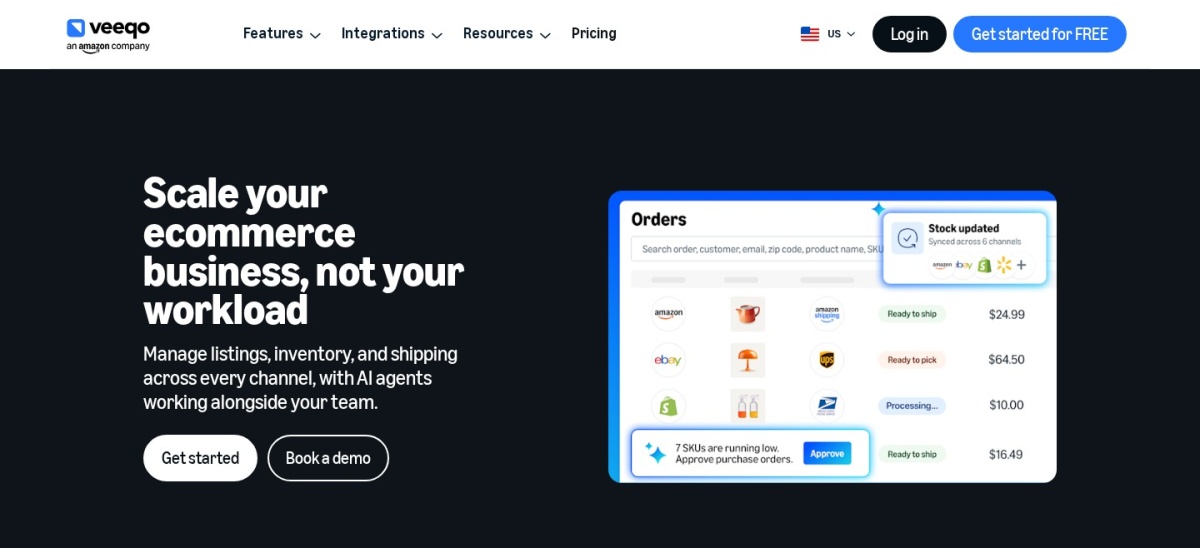
Veeqo homepage, captured Nov 2026.
Veeqo is Amazon-owned shipping and inventory software for sellers on marketplaces and Shopify. The free Shipping plan covers unlimited users, orders and labels with discounted carrier rates, and the Inventory plan from $19 a month adds automated stock sync, demand forecasting and digital picking.
The trade off is that the free plan covers shipping, not inventory. Real-time stock sync and purchasing need the paid Inventory plan, and the monthly price flexes with order volume instead of staying fixed. It suits marketplace sellers who ship a lot and want the cheapest inventory entry.
What we like
Free shipping plan with unlimited users
Cheapest inventory entry at $19 a month
Automated stock sync across channels
Discounted carrier rates with credits back
Watch out for
Inventory sync is paid, not free
Price flexes with monthly order volume
Thin B2B and wholesale tools
Inventory adds stock sync and forecasting from $19 a monthVisit veeqo.com
03
Xero
4.4/5on G2 (1,739 reviews, checked Nov 2026)
Starts at$27/mo
Best for accounting plus basic inventory
Free planNo, 30-day trial
Cheapest planEarly, $27/mo
G2 rating4.4/5, 1,739 reviews
UsersUnlimited on every plan
xero.com
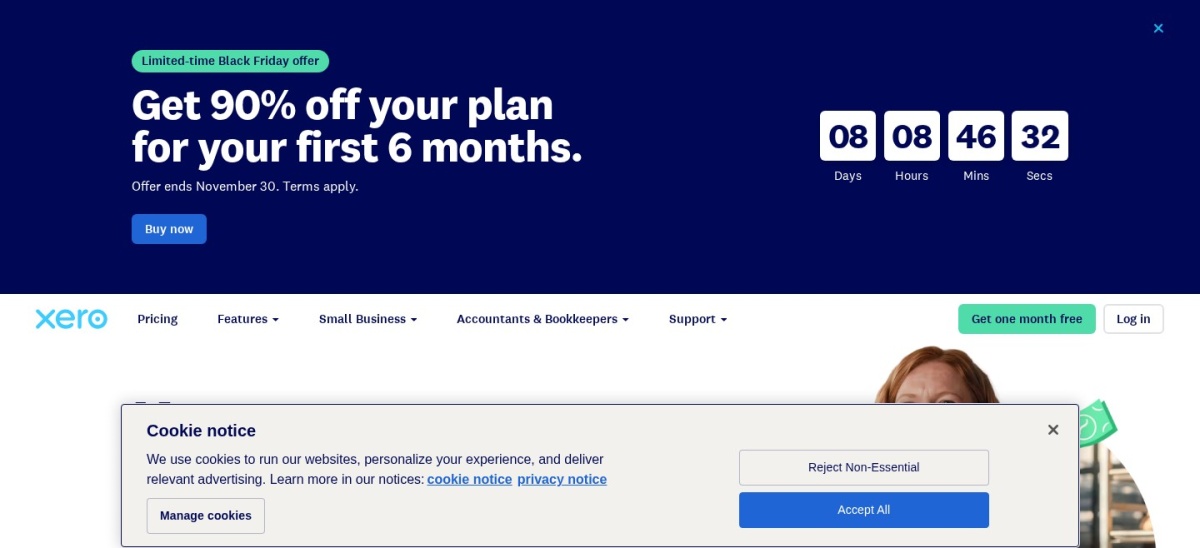
Xero homepage, captured Nov 2026.
Xero is cloud accounting software with invoicing, bills, bank reconciliation and basic inventory tracking built in. Early costs $27 a month with no per-user fees, and it covers quotes, 20 invoices and 5 bills a month plus purchase orders and bank feeds.
The trade off is that inventory stays basic on the entry plan. Early caps invoices at 20 a month, and the Inventory Plus add-on for multichannel stock sits on the Growing plan at $59 a month. It suits sellers who want the books and basic stock in one place.
What we like
No per-user fees on any plan
1,000+ app integrations
Basic inventory included from Early
Strong bank reconciliation
Watch out for
Early caps invoices at 20 a month
Full inventory needs the Growing plan add-on
No phone support
Growing at $59 a month removes the invoice capVisit xero.com
04
Sortly
4.3/5on G2 (27 reviews, checked Nov 2026)
Paid from$49/mo
Simplest visual stock tracking
Free plan100 items, 1 user
Paid planAdvanced, $49/mo
G2 rating4.3/5, 27 reviews
TrackingPhotos, QR codes, barcodes
sortly.com
Sortly homepage, captured Nov 2026.
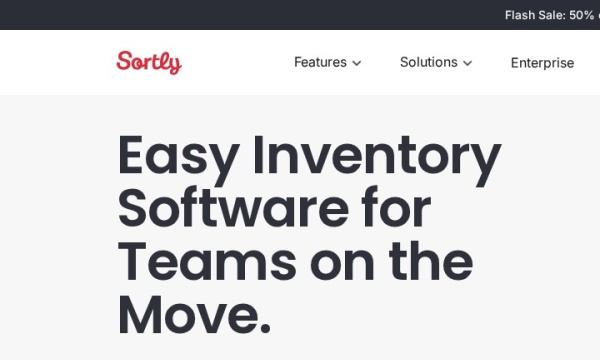
Sortly is a visual inventory app that tracks stock, tools and equipment with photos, custom fields and QR codes. The free plan covers 100 unique items for one user, and Advanced at $49 a month adds 500 items, 2 user licences, low-stock alerts and unlimited QR labels.
The trade off is the first-year price. The pricing page shows $24 a month on yearly billing, but that is a 50% first-year offer, so the regular price is $49 a month. It suits small teams that want simple visual stock tracking without a full warehouse system.
QuickBooks Online is the cloud accounting platform most US accountants already use, with invoicing, expense tracking, bank feeds and reporting. Simple Start costs $38 a month for 1 user, and a $0 Free tier covers basic bookkeeping for solo sellers.
The trade off is that inventory is not in the entry plan. Stock tracking, purchase orders and project profitability need Plus at $140 a month, so the real inventory price is nearly four times the headline. It suits sellers whose accountant already works in QuickBooks.
inFlow Inventory is a cloud inventory and order system for wholesale, retail and light assembly businesses. Every plan includes unlimited products, sales, purchases and integrations after a 14-day trial, and Lite starts at $99 a month billed annually with 2 users.
The trade off is that there is no free plan, and the entry price reads differently across sources, with $129 a month on monthly billing and older Entrepreneur figures of $89 a month. It suits B2B sellers who need structure, barcode workflows and a customer portal.
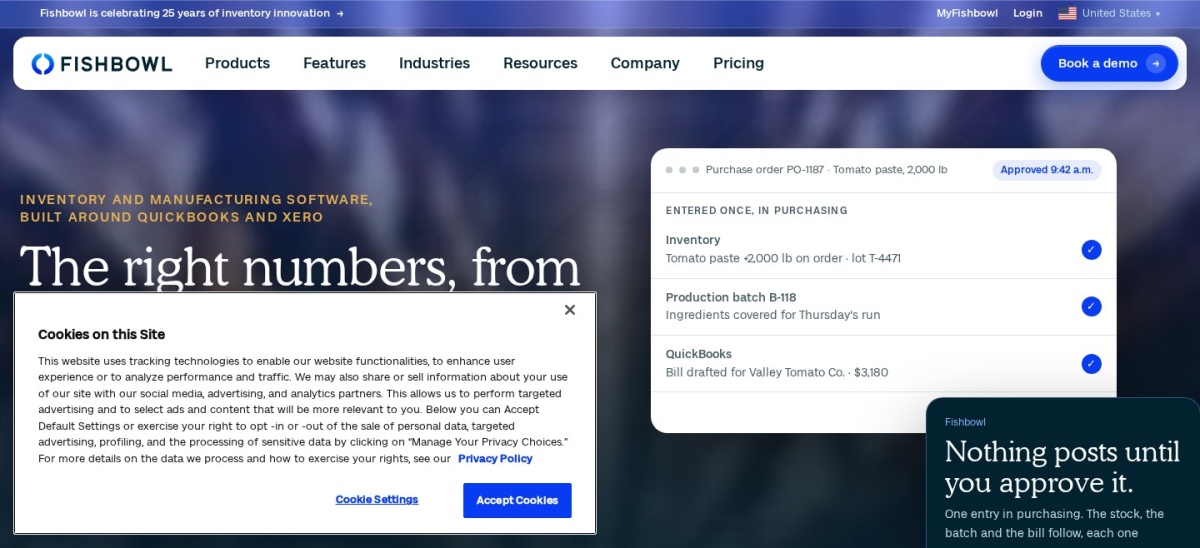
Fishbowl Inventory is cloud inventory, warehouse and purchasing software built to sit beside QuickBooks or Xero. Essentials starts at $229 a month billed annually for 2 users, and Growth at $429 a month adds unlimited warehouses and 5 users.
The trade off is that manufacturing is a separate product. The Inventory plans exclude bills of materials, work orders and MRP, which live in Fishbowl Advanced from $595 a month, and an implementation package is required. It suits distributors who keep their ledger in QuickBooks.
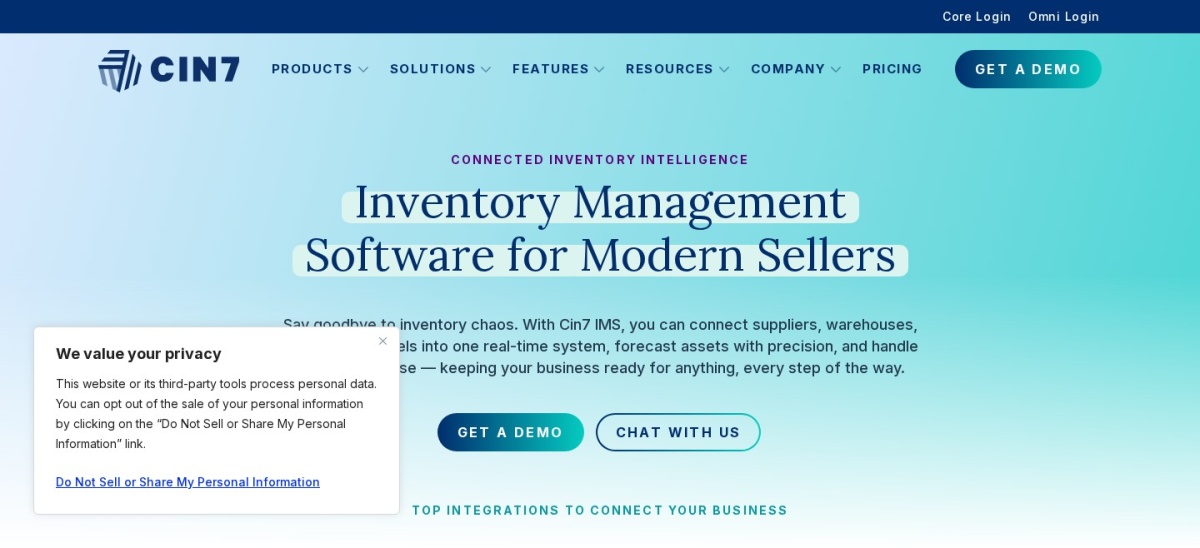
Cin7 Core is a cloud inventory and order platform for brands that sell on several channels at once. The Standard plan costs $349 a month on a 12-month contract, covers 5 users and 6,000 sales orders a year, and connects to 700+ integrations.
The trade off is price and commitment. There is no free plan, only a 14-day trial, and the entry plan is $349 a month on an annual contract, so small or single-channel sellers pay for scale they may not use. It suits growing brands where an oversell costs real money.
What we like
Strong multichannel and 3PL workflows
Built-in demand forecasting
700+ integrations
B2B portal available as an add-on
Watch out for
High entry price for small sellers
Annual contract required for the $349 rate
B2B portal and POS cost extra
Pro adds more users and workflows at $599 a monthVisit cin7.com
09
Ordoro
4.8/5on G2 (14 reviews, checked Nov 2026)
Paid from$349/mo
Best for shipping plus inventory
Free planShipping free, 100 orders/mo
Inventory planAdvanced, $349/mo
G2 rating4.8/5, 14 reviews
Order cap1,000 orders a month
ordoro.com
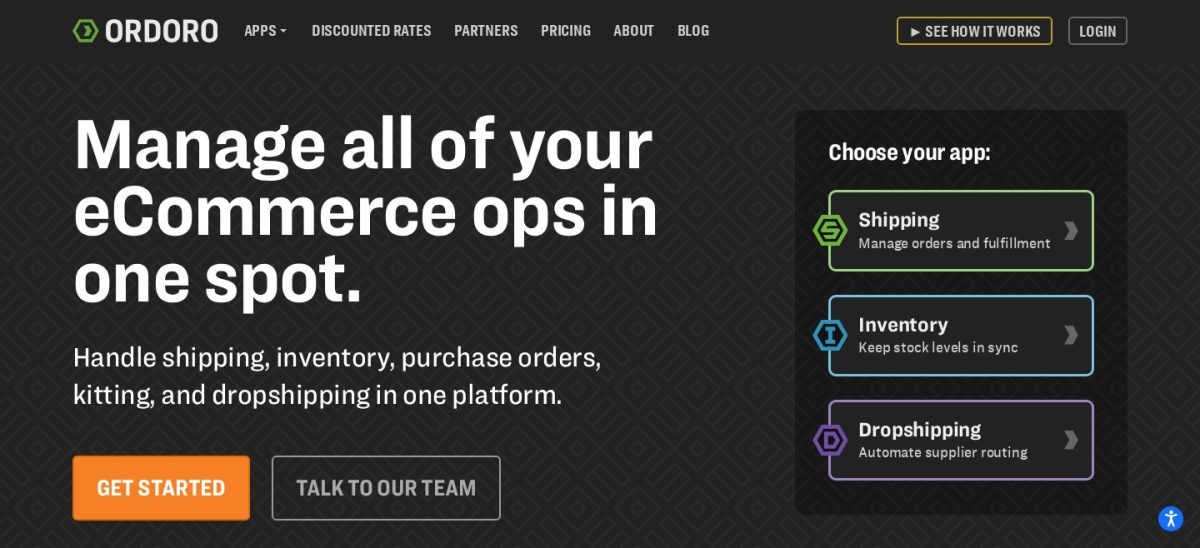
Ordoro homepage, captured Nov 2026.
Ordoro combines shipping and inventory for multichannel ecommerce sellers. The Inventory app starts at $349 a month with unlimited users, warehouses and sales channels, while the Shipping app has a free tier for labels.
The trade off is the price floor and a thin review base. At $349 a month it costs as much as Cin7 while doing less on manufacturing and B2B, and its 4.8 rating rests on only 14 G2 reviews. It suits sellers who want labels and stock in one modular system.
What we like
Free Shipping plan for up to 100 orders
Unlimited users and warehouses on Inventory
Modular apps bought separately
Kitting and routing included
Watch out for
Inventory starts at $349 a month
4.8 rating rests on only 14 reviews
No manufacturing or raw-material tracking
Premium Inventory at $499 a month raises order limitsVisit ordoro.com
Free vs paid: what the $0 tier really covers
Free plans cover the basics well. Odoo lets unlimited users run one app free, Sortly covers 100 items, and Veeqo ships free with no user limit.
Paid plans mostly add order volume and depth. Inventory sync, purchase orders, B2B portals and multi-warehouse tools sit behind the paywall on every tool here.
If your store earns money every day, the first paid tier often costs less than one stockout. Veeqo starts at $19 a month and Odoo at $31.10 per user a month, while the multichannel tools start at $349.
How we chose
We started from the established inventory tools sold to small and mid-size product businesses, then kept the nine with a published entry price and a public G2 or Capterra rating.
Prices come from each vendor's pricing page or its G2 pricing listing, checked on 29 November 2026, and ratings come from G2 or Capterra on the same day. Where a vendor shows a sale, the list shows the regular price.
We left out Katana, which no longer publishes a paid price, plus quote-only enterprise systems and tools with no public rating. No vendor paid for a place, and we do not claim hands-on testing for this list.
How to choose a Zoho Inventory alternative
Start from your order volume and your accounting setup, then shortlist two tools and trial them with real stock data.
Count your orders, items and users first. Zoho Inventory's free tier stops at 50 orders a month, so a tool that looks cheap can cost more once your volume passes its cap. Write down all three numbers before comparing prices.
Check what the free plan actually covers. Odoo gives unlimited users on one free app, Sortly caps at 100 items, and Veeqo's free plan is shipping only. The cap that bites first decides whether the free tier is real.
Price the inventory tier, not the headline. QuickBooks Online starts at $38 a month, but stock needs Plus at $140, and Xero's full inventory add-on sits on Growing at $59. Compare the tier you would actually buy.
Trial it with your real catalogue. Import your best-selling products, run a purchase order and a sale through it, and check the accounting sync before you move your stock data.
FAQ
What are the best Zoho Inventory alternatives in 2026?
Odoo Inventory is the best overall Zoho Inventory alternative, with a free plan for unlimited users and paid Standard from $31.10 per user a month. Veeqo is the cheapest paid entry at $19 a month, and Xero is the strongest pick when accounting matters as much as stock.
What is the best free alternative to Zoho Inventory?
Odoo Inventory is the best free alternative, because its One App Free plan covers unlimited users with no item cap. Sortly is free up to 100 items for one user, and Veeqo's free plan covers shipping, not inventory sync.
How much do Zoho Inventory alternatives cost?
Cheapest paid plans in this list run from $19 a month for Veeqo Inventory to $349 a month for Cin7 Core and Ordoro. Odoo Inventory costs $31.10 per user a month, Xero $27 a month, and QuickBooks Online $38 a month before inventory.
Which Zoho Inventory alternative is best for small businesses?
Veeqo is the best pick for small marketplace sellers, with free shipping and inventory from $19 a month. Sortly suits small teams that want simple photo-based stock lists, and Odoo suits sellers who may grow into a full ERP later.
Is Katana still a good Zoho Inventory alternative?
Katana is no longer a priced alternative. Its paid plans were replaced by Advantage, a custom annual contract with no published price, so buyers cannot budget it from the website. The free plan still covers 30 SKUs, but it is a trial-sized tier, not a paid replacement.
Odoo Inventory vs QuickBooks Online: which is better for inventory?
Odoo Inventory is better for pure inventory work, with multi-warehouse transfers, barcode scanning and a free plan for unlimited users. QuickBooks Online is better when the books come first, but stock tracking needs Plus at $140 a month, against Odoo Standard at $31.10 per user a month.
SaaS SEO and WordPress specialist with about 8 years of experience. Rakib compares WordPress plugins, themes, hosting and software using public pricing, documentation and user reviews. See how we rank.