Ghost is the best WordPress blog alternative for serious bloggers, with built-in memberships and newsletters on its $15-a-month Starter plan and a 4.0 out of 5 G2 rating. Pick Substack if you want to publish free and pay only 10% once readers subscribe, or Medium to reach readers from day one.
How we make this list: we compare pricing pages, product documentation and public user reviews, then re-check every price before each update. No product paid for a place. Disclosure.
Ghost is the top pick: memberships, newsletters and a 0% revenue cut from $15 a month billed yearly.
Substack and Medium cost nothing to publish on; Substack takes 10% only when readers pay, while Medium charges readers $50 a year.
beehiiv's free plan covers 2,500 subscribers, the most generous free tier for growing a newsletter.
Framer Mini at $5 a month is the cheapest paid plan here; Squarespace Basic is $16 and Wix Light is $17.
Blogger is the only completely free option with no paid plan at all, but it has the thinnest ratings base in this list.
How do you choose the best WordPress blog alternative?
A WordPress blog alternative should remove the work WordPress adds. Hosting, updates, backups and plugins are the hidden jobs of a WordPress blog, and every tool here takes some or all of them away. Our guide on starting a blog with WordPress shows how much setup WordPress needs before you write a word.
Audience ownership is the decision that matters most. Ghost, Substack and beehiiv let you keep and export your subscriber list, so you can leave with your readers. Medium rents you its audience instead, which is fast at first and hard to move later.
Price is not the monthly number alone. A flat fee such as Ghost's $15 a month stays the same as you grow, while Substack's 10% cut grows with your revenue and beehiiv's price rises with your list size, so work out the cost at 1,000 paying readers, not at zero.
Free plans are real here, but they all have a ceiling. Blogger is free forever, Wix is free with its branding, and beehiiv is free to 2,500 subscribers, while Squarespace has no free plan at all, only a trial.
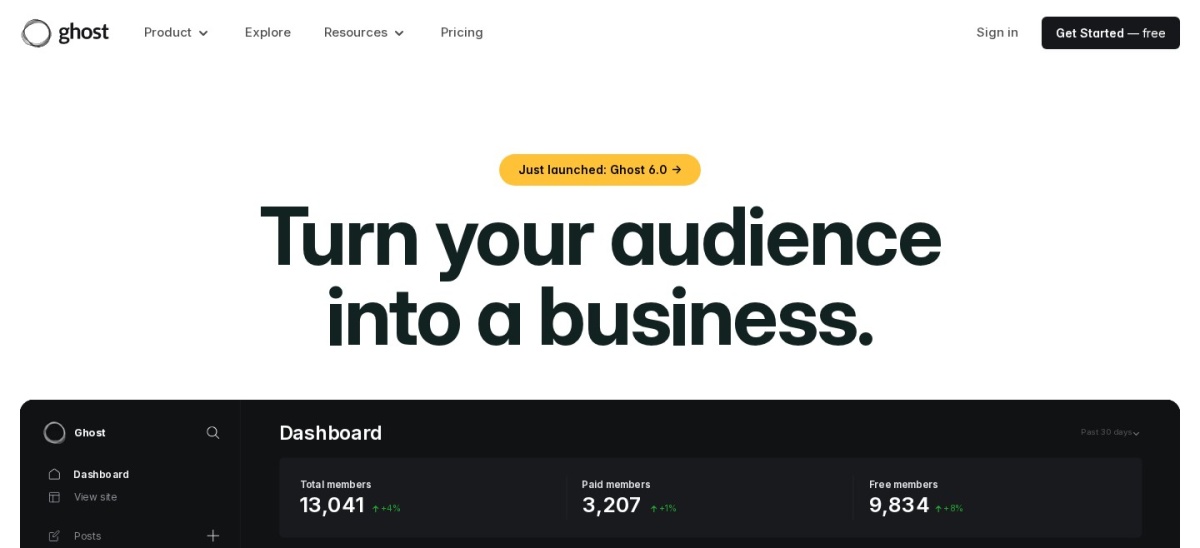
Ghost is an open-source publishing platform built for blogs, newsletters and paid memberships, with the editor, member sign-ups and email delivery in one place. The software is free to self-host, and Ghost(Pro) hosting starts at $15 a month billed yearly for up to 1,000 members.
The trade off is that Starter cannot take paid subscriptions, so charging readers needs Publisher at $29 a month billed yearly. It suits independent publishers who want to own their audience and keep all subscription revenue, with no cut taken by the platform.
What we like
Built-in memberships and newsletters
0% cut on paid subscription revenue
Free to self-host under an open licence
Watch out for
Starter has no paid subscriptions or custom themes
Price rises with member count
Publisher adds paid subscriptions and custom themesVisit ghost.org
02
Substack
4.3/5on G2 (18 reviews, checked Nov 2026)
PriceFree
Best free start for newsletters
Cheapest paid planNone, revenue share
Free planYes, unlimited posts
Platform fee10% of paid subs
Custom domain$50 one-time
substack.com
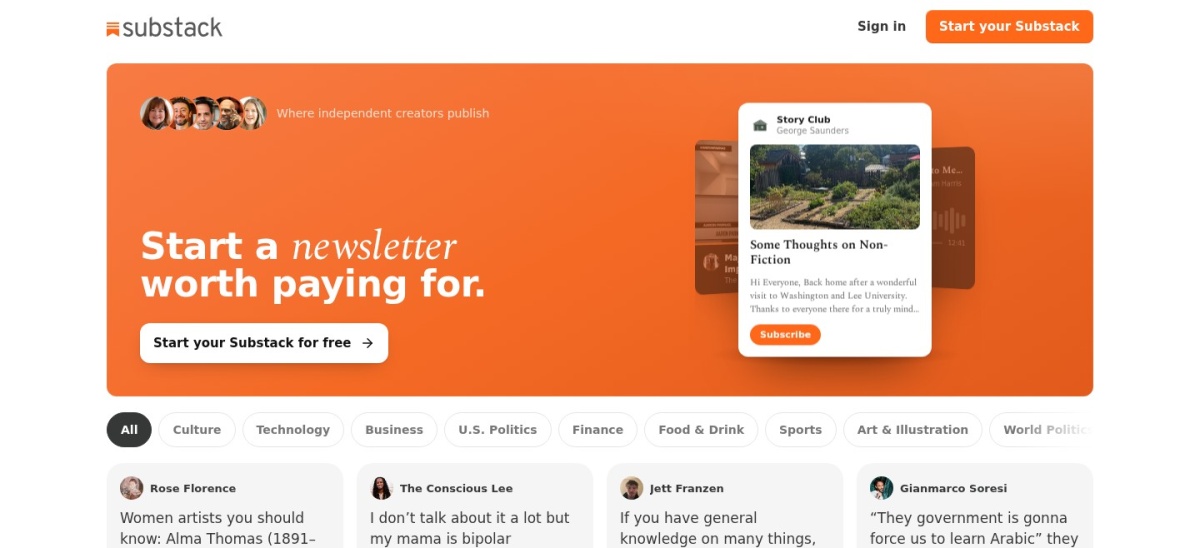
Substack homepage, captured Nov 2026.
Substack is a newsletter-led publishing platform where you write posts, send them by email and build a subscriber list without paying anything. Publishing, hosting and unlimited subscribers are free, and you only pay when readers subscribe, with Substack taking 10% of paid subscription revenue.
The trade off is the 10% cut, which never falls as you grow, plus card processing fees on top. It suits writers starting from zero who want the fastest route to a paid newsletter and built-in discovery through recommendations and the Substack app.
What we like
Free at any list size
Built-in discovery and recommendations
Paid subscriptions work on day one
Watch out for
10% revenue cut forever, plus Stripe fees
Limited design control and no custom sending domain
4.7/5on Toolradar (5,708 reviews, checked Nov 2026)
Paid from$50/yr
Best for reaching readers fast
Cheapest paid planMember, $50/yr
Free planYes, free to publish
Built-in audience100M+ monthly readers
Partner ProgramPay based on read time
medium.com
Medium homepage, captured Nov 2026.
Medium is a reading network where your posts can reach more than 100 million monthly readers without building an audience first. Publishing is free, and a $50-a-year membership unlocks unlimited reading and eligibility for the Partner Program, which pays writers from member reading time.
The trade off is ownership. Your posts live on Medium's domain and distribution, and you cannot take your subscriber list with you the way you can on Ghost or Substack. It suits writers who want discovery first and are happy to trade control for reach.
What we like
Huge built-in readership
Free to publish, no hosting to manage
Clean editor with no setup
Watch out for
You do not own your audience or domain
Earnings depend on Medium's algorithm and Partner Program rules
Membership adds unlimited reading and Partner Program payVisit medium.com
04
beehiiv
4.5/5on G2 (40 reviews, checked Nov 2026)
Paid from$49/mo
Best for growing a newsletter
Cheapest paid planScale, $49/mo
Free planYes, to 2,500 subs
Paid subscriptions0% platform cut
Ad networkYes, on paid plans
beehiiv.com
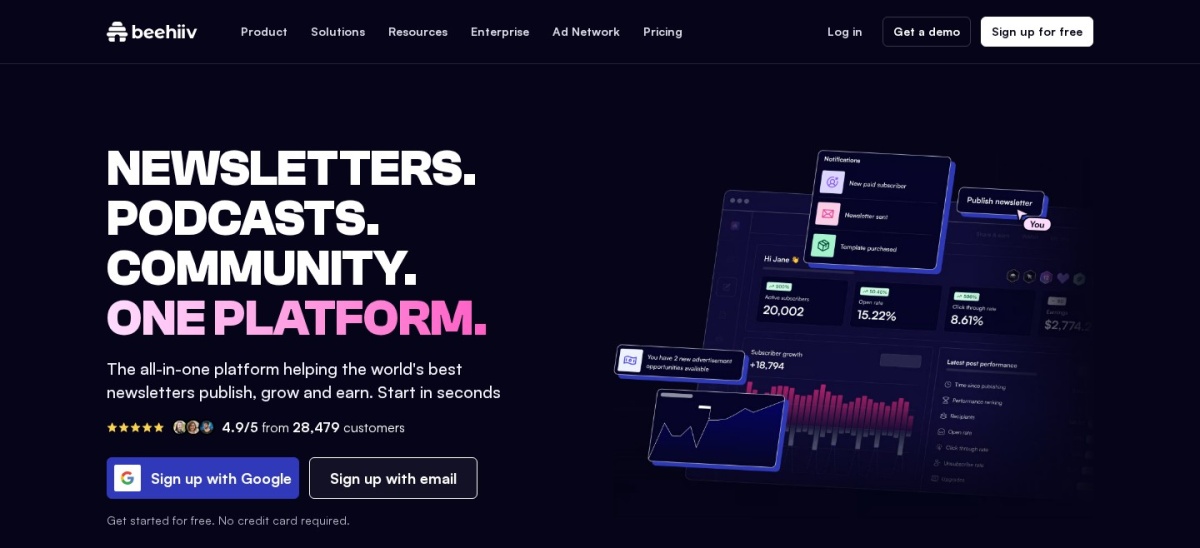
beehiiv homepage, captured Nov 2026.
beehiiv is a newsletter platform built by former Morning Brew staff, with a website, email sends, analytics and growth tools in one place. The free Launch plan covers up to 2,500 subscribers with unlimited sends, and Scale starts at $49 a month with automations, referral programs and paid subscriptions at a 0% platform cut.
The trade off is price at scale. Scale is billed by list size, so the monthly cost climbs as your audience grows, and branding removal needs the higher Max plan. It suits creators who want to grow fast and earn from ads and paid subscriptions.
What we like
Free plan to 2,500 subscribers
Recommendation network and Boosts for growth
0% cut on paid subscriptions
Watch out for
Price rises with list size
Automations are simpler than dedicated email tools
Squarespace is an all-in-one website builder with polished templates, hosting, a custom domain and blogging tools in a single subscription. The Basic plan costs $16 a month billed yearly and includes unlimited bandwidth, SSL and a free domain for the first year.
The trade off is blogging depth. Squarespace has no built-in newsletter or membership system to match Ghost, and its blogging tools are simpler than WordPress. It suits creatives and small businesses who want a beautiful blog beside the rest of their site.
Wix is a drag-and-drop website builder with more than 900 templates, a built-in blog, hosting and a free plan. The free plan runs on a Wix subdomain with Wix branding, and Light costs $17 a month with a custom domain and no Wix ads.
The trade off is that the blog is one feature inside a general builder, so it lacks the newsletter and membership depth of Ghost or beehiiv. It suits beginners who want a blog up quickly without touching code or hosting settings.
What we like
Free plan to try before paying
Huge template library
Easiest editor for beginners
Watch out for
Free plan shows Wix branding
Blogging tools are simpler than dedicated platforms
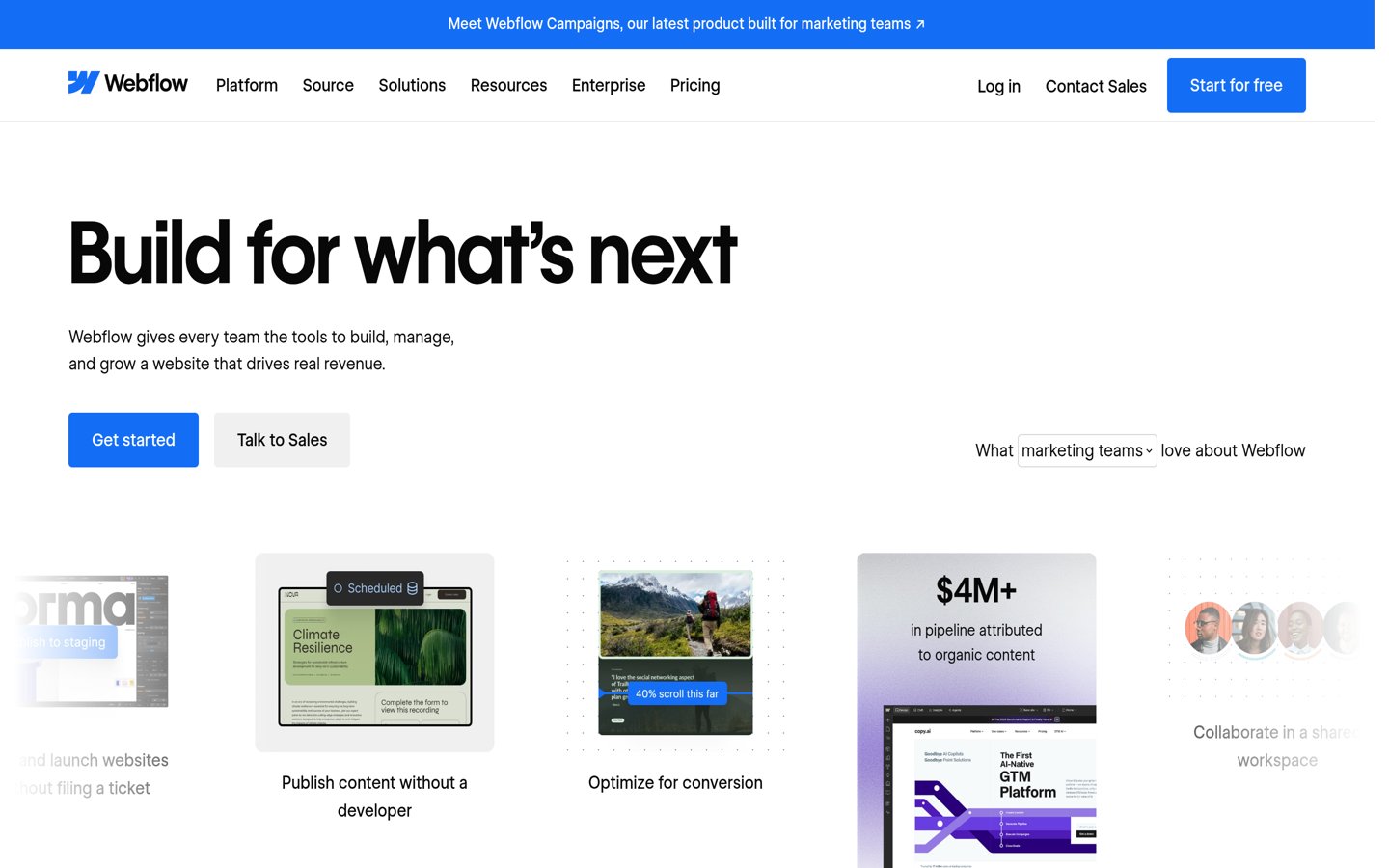
Webflow is a visual website builder that turns a design canvas into clean, live code, with hosting, a CMS and SEO controls built in. The free Starter plan covers two projects on a webflow.io subdomain, and Basic costs $14 a month billed yearly with a custom domain and 150 pages.
The trade off is the learning curve. Webflow's designer is powerful but takes longer to learn than Wix or Squarespace, and the CMS plan costs $23 a month. It suits designers and teams who want full control over how a blog looks and behaves.
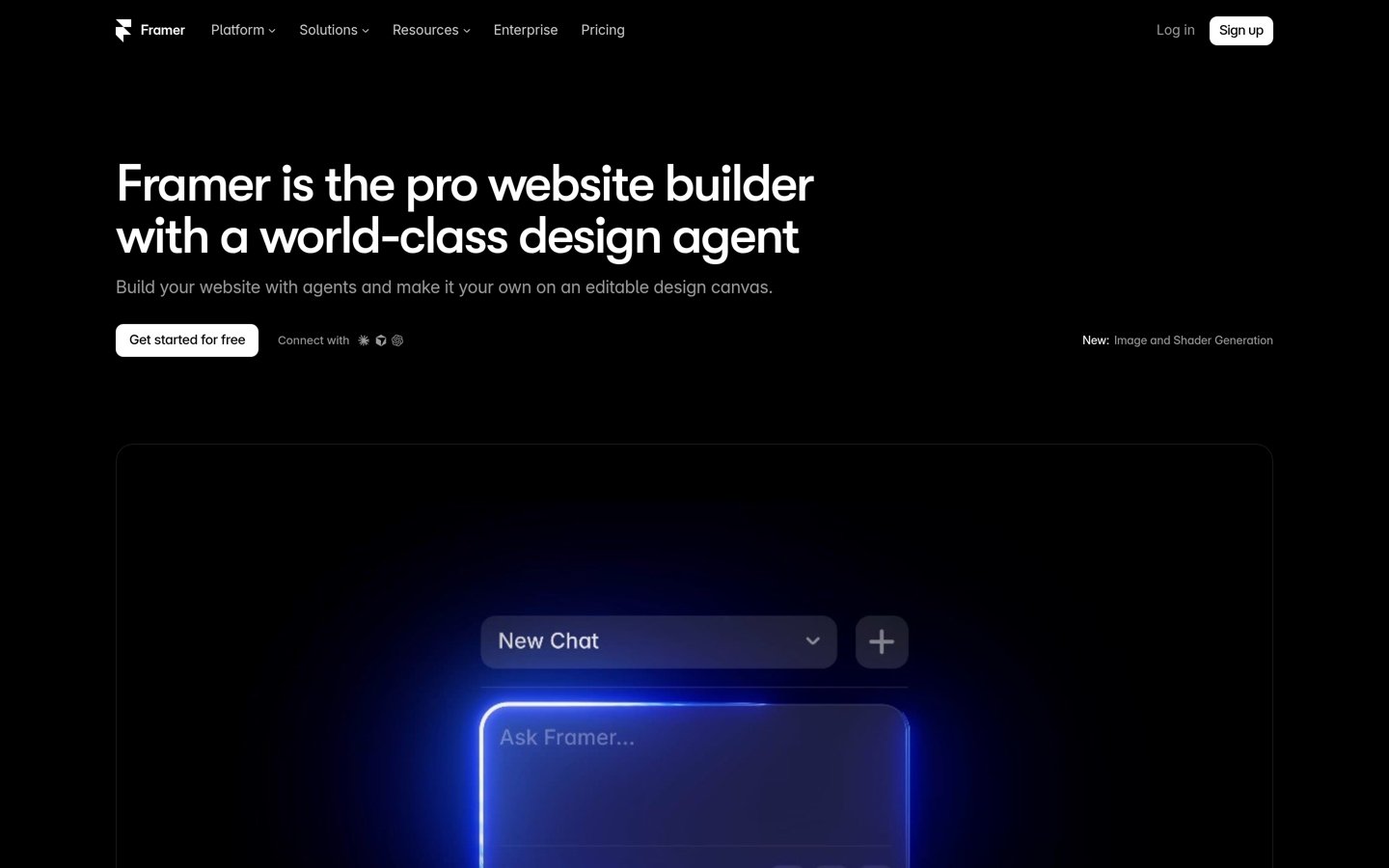
Framer is a design-led website builder with a freeform canvas, animations and a built-in CMS for blog collections. The free plan publishes one site on a framer.site subdomain, and Mini costs $5 a month with a custom domain.
The trade off is scale. Mini covers a small personal site, and the CMS collections a blog needs start on Basic at $15 a month, billed per site. It suits designers and startups who want a striking blog without code.
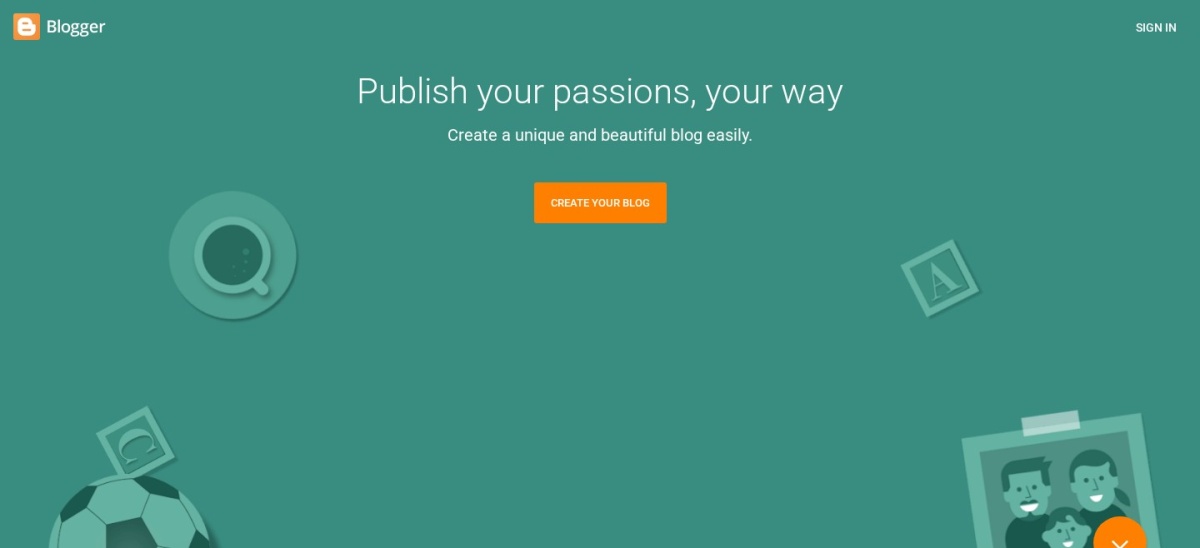
Blogger is Google's free blogging platform, running on a blogspot.com address with hosting included and no bill at all. You can connect a custom domain for free, edit templates with HTML and earn from AdSense, all from your Google account.
The trade off is that Blogger has seen little development in years, with dated templates and no upgrade path to a bigger site. It suits hobby bloggers who want a free, simple home for writing and nothing else.
Newsletter-led tools put the email list first. Substack, beehiiv and Ghost all treat the post as an email that also lives on the web, so every reader becomes a subscriber you can reach again.
Discovery-led tools put the reader first. Medium shows your work to people who never heard of you, which is the fastest way to be read, but the readers belong to the platform, not to you.
Site builders put the website first. Squarespace, Wix, Webflow and Framer give you a blog as one page of a wider site, which fits a business or portfolio better than a pure writing habit.
How we chose
We started from the platforms that appear most often in WordPress-alternative round-ups and blogging guides, then kept the nine with a real blogging product, a public price and a public rating.
Prices come from each vendor's pricing page or its G2 pricing listing, checked on 29 November 2026, and show the regular price, not a sale price. Ratings come from G2 unless noted, with Medium's figure from Toolradar's cross-site average because its G2 review count could not be verified.
We left out platforms with no public rating, such as Hashnode, and site builders without a real blog. No vendor paid for a place, and we do not claim to have used these tools ourselves.
How to choose a WordPress blog alternative
Start with how you want readers to find you, then check what the platform charges once you grow.
Decide whether you need an audience or a website. If you have no readers yet, Medium or Substack gives you discovery on day one. If you already have readers, Ghost or beehiiv lets you keep them.
Work out what you pay at 1,000 readers. Substack takes 10% of what those readers pay, while Ghost Publisher is a flat $29 a month, so do the maths at your own subscription price before you commit.
Check who owns the subscriber list. Ghost, Substack and beehiiv all export your list, while Medium keeps readers on its platform, so moving later is harder.
Try the editor before you migrate. Publish three posts on the free plan first, and read our guide to choosing a blog niche to make sure the topic fits the platform.
FAQ
What is the best WordPress blog alternative?
Ghost is the best WordPress blog alternative for serious bloggers. Its $15-a-month Starter plan includes memberships and newsletters with no revenue cut, and it holds 4.0 out of 5 on G2 from 40 reviews.
What is the cheapest WordPress blog alternative?
Blogger is the cheapest, because it is completely free with hosting included. The cheapest paid plan is Framer Mini at $5 a month, and Substack is free until your readers start paying.
Is there a free WordPress blog alternative?
Yes. Blogger, Substack and Medium are all free to publish on, Ghost is free to self-host, and beehiiv is free up to 2,500 subscribers. Squarespace is the only tool here with no free plan, only a 14-day trial.
Which WordPress blog alternative is best for beginners?
Wix is the easiest for beginners, with a drag-and-drop editor and a free plan to learn on. Substack is the fastest way to publish your first post, and Blogger is the simplest free start if you already have a Google account.
Ghost vs Substack: which is better for a paid newsletter?
Ghost wins once you earn real money, because Publisher is a flat $29 a month with a 0% cut, so it beats Substack's 10% once paid subscriptions pass $290 a month. Substack wins at the start, because it costs nothing until readers pay.
Can I use my own domain with these alternatives?
Yes, with most of them. Ghost, Squarespace, Wix, Webflow, Framer and Blogger all support a custom domain, though Squarespace, Wix, Webflow and Framer need a paid plan for it. Medium publishes on medium.com instead.
Can I move my WordPress posts to Ghost or Substack?
Yes, both offer WordPress import tools that bring over posts and images. Export your WordPress content first, check that images and formatting survive the import, and keep your WordPress site live until the move is checked.
SaaS SEO and WordPress specialist with about 8 years of experience. Rakib compares WordPress plugins, themes, hosting and software using public pricing, documentation and user reviews. See how we rank.