HubSpot CRM is the best way to manage contacts across platforms because its free plan covers two users and one thousand contacts, and it syncs with email, calendars and more than two thousand apps. Zoho CRM is the best value paid pick, while Pipedrive is the clearest pipeline for sales-led teams.
How we make this list: we compare pricing pages, product documentation and public user reviews, then re-check every price before each update. No product paid for a place. Disclosure.
HubSpot is free for two users and one thousand contacts, with more than two thousand integrations.
Zoho and Pipedrive both cost $14 a seat a month billed annually, the joint cheapest full CRMs here.
Bigin costs $7 a user a month billed annually, the cheapest paid plan in this list.
Freshsales includes built-in calling and email from $9 a user a month, with a free plan for three users.
Nimble costs $30 a seat a month, the most expensive tool here, while Less Annoying CRM is $15 flat.
What is the best way to manage contacts across platforms?
Contacts live everywhere now: email, phones, social profiles, spreadsheets and three different apps. The tool that wins is the one that pulls those records into one place and keeps them in sync.
Start with the free plan, not the feature list. HubSpot, Zoho, Freshsales and Bigin all offer a real free plan, and the differences between them only matter once your contact list grows past a few hundred.
Sync matters more than storage. A CRM that syncs with Gmail, Outlook and your phone contacts keeps every record current, while a CRM you update by hand goes stale within weeks.
Price is per seat, so a small team pays little and a growing team pays a lot. At $14 a user a month, Zoho and Pipedrive cost $168 a year per seat, while Nimble at $30 a seat costs more than twice as much. Our CRM software guide compares the wider category.
The 9 best ways to manage contacts across platforms
01
HubSpot CRM
4.4/5on G2 (13,909 reviews, checked Nov 2026)
Paid from$20/seat/mo
Best way to manage contacts across platforms overall
Free plan2 users, 1,000 contacts
Paid planStarter, $20/seat/mo
Integrations2,000+
Mobile appYes, iOS and Android
hubspot.com
HubSpot CRM homepage, captured Nov 2026.
HubSpot CRM is a free CRM that stores contacts, deals, pipelines and email tracking in one database, and it syncs with email, calendars and more than two thousand apps. The free plan covers two users and one thousand contacts, and the paid Starter seat costs $20 a month billed monthly.
The trade off is the jump to paid tiers. Starter adds sequences and deal routing, but Professional costs five times more, so a team that outgrows Starter pays a lot overnight. It suits small teams that want a free CRM to start and one shared database as they grow.
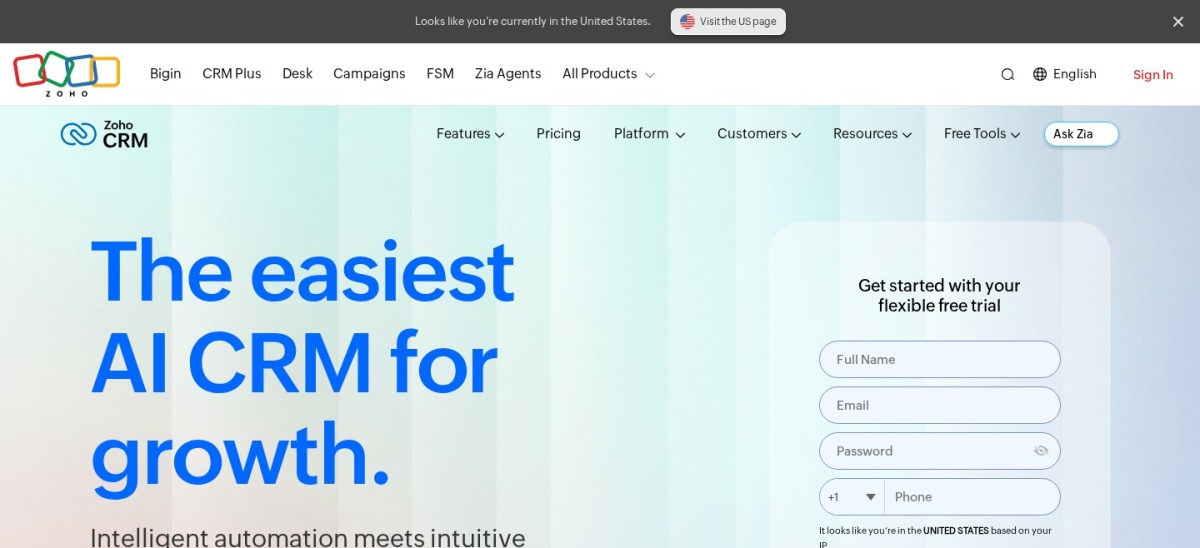
Zoho CRM is a configurable CRM with custom modules, workflow design and multichannel tracking for small teams. The free edition covers three users, and Standard costs $14 a user a month billed annually with five pipelines, sales forecasting, scoring rules and email integration.
The trade off is the learning curve. G2 reviewers call out a steep setup and a crowded interface, and Zia AI agents wait for Professional at $23 a user a month. It suits budget-conscious teams that want a full-featured CRM plus a free plan.
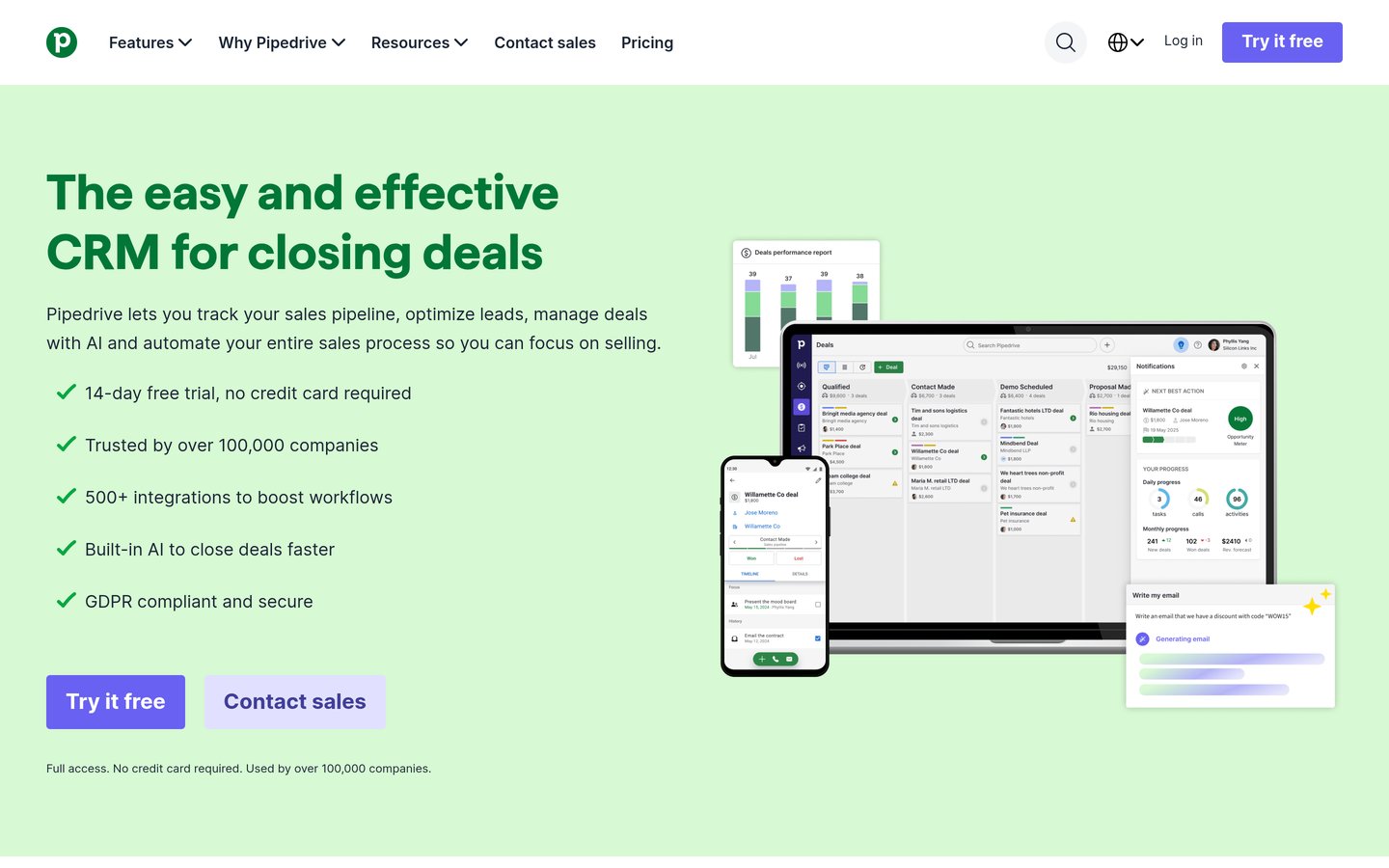
Pipedrive is a pipeline-first CRM where deals drag across visual stages and activities sit on the deal. The Lite plan costs $14 a seat a month billed annually and includes the AI assistant, more than four hundred integrations and a mobile app that works offline.
The trade off is add-ons. Advanced features such as automation and extra storage are priced separately, and there is no free plan, only a fourteen-day trial. It suits sales-led teams that want the clearest visual pipeline for the least setup.
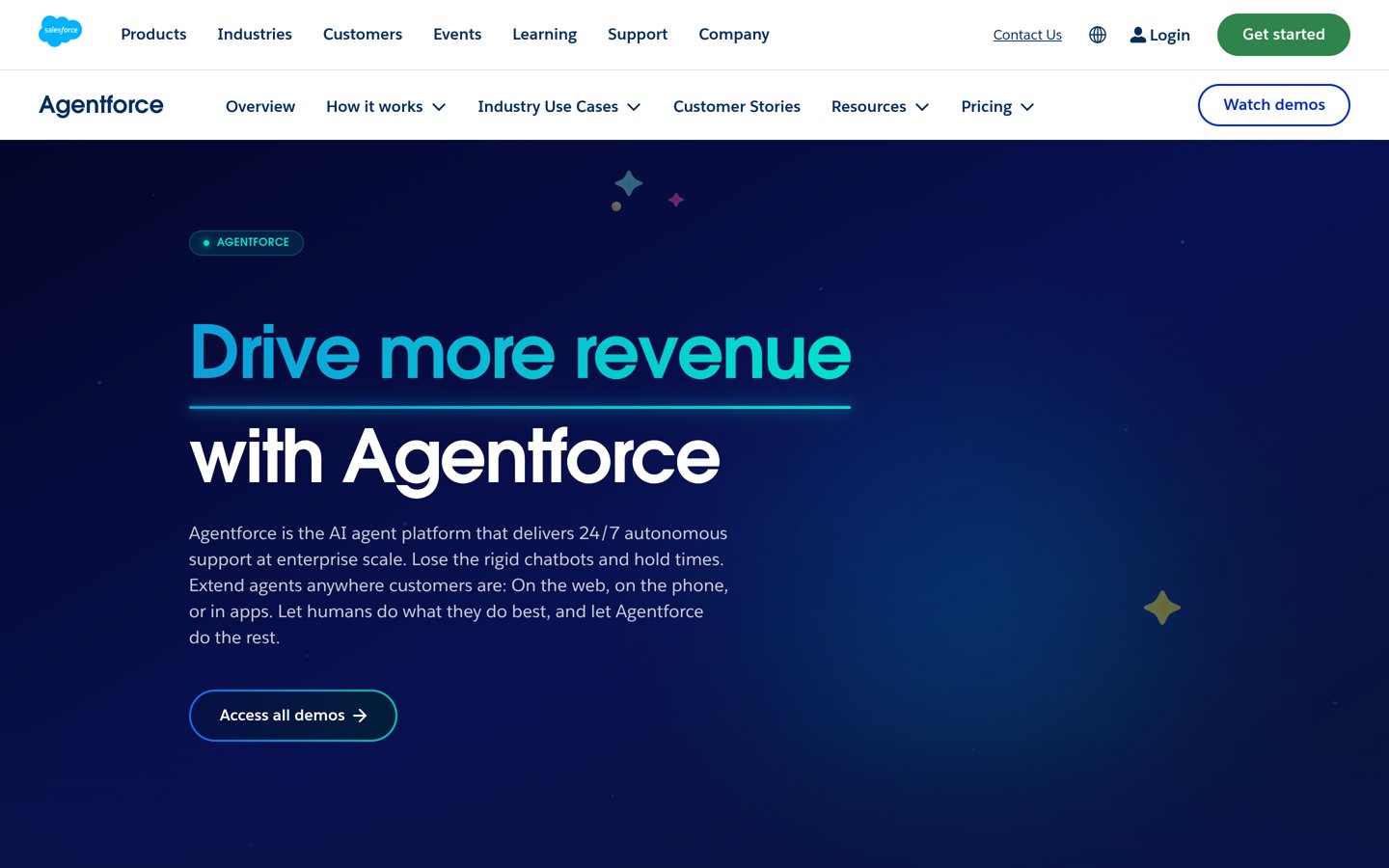
Salesforce is the deepest CRM ecosystem in this list, with the largest app marketplace and the most-reviewed product on G2. The Starter Suite costs $25 a user a month and covers leads, accounts, contacts, opportunities, built-in sales flows and email sync.
The trade off is that it is built to grow. Small teams pay for depth they may not use for years, and the wider Salesforce platform can feel heavy for a team that only needs contacts. It suits growing businesses that plan to scale past a small team.
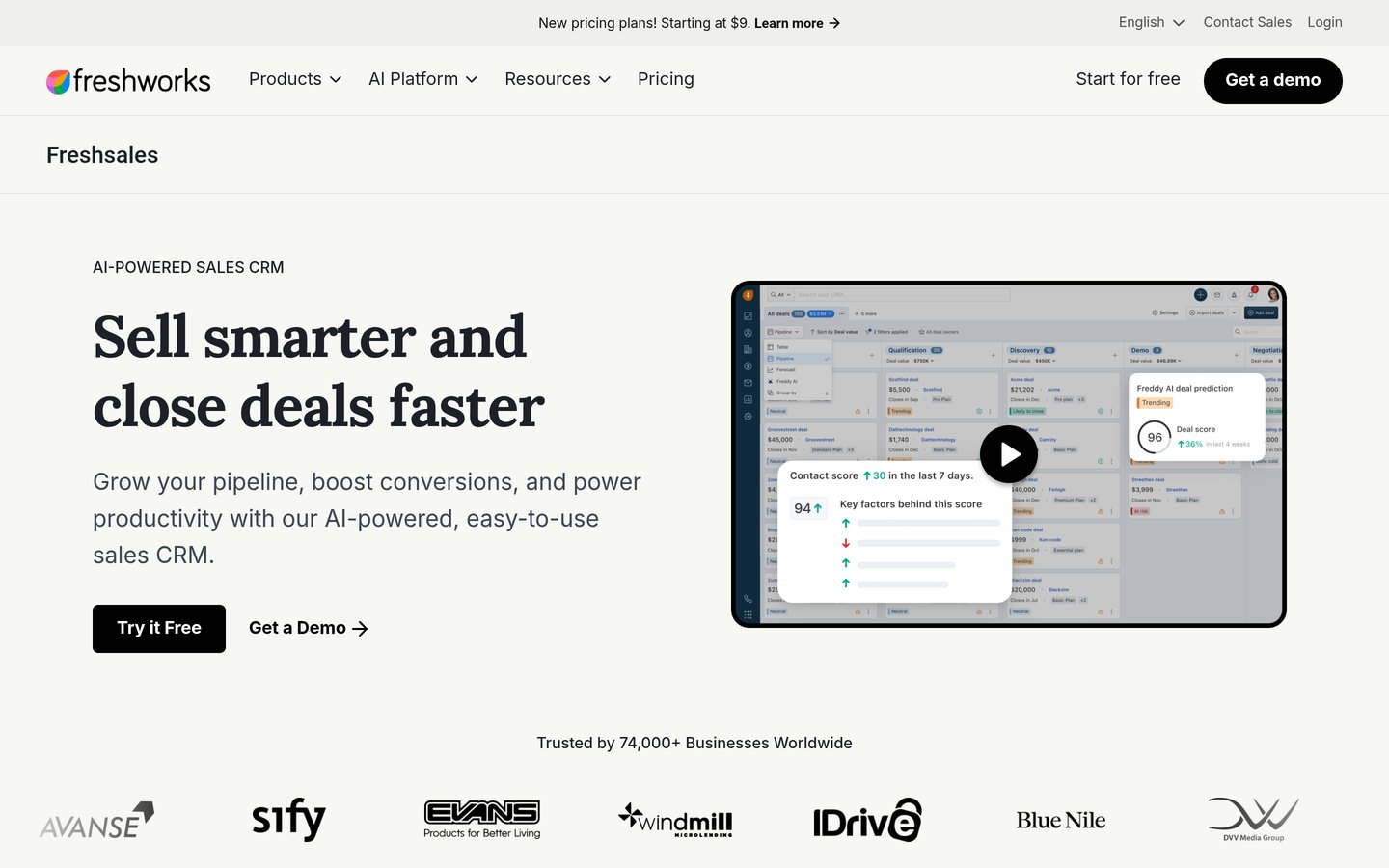
Freshsales is a sales CRM from Freshworks with contact timelines, built-in calling and email, and Freddy AI for deal predictions. The free plan covers three users, and Growth costs $9 a user a month billed annually with sales sequences and contact lifecycle tracking.
The trade off is that its G2 rating is the hardest to pin down of the tools here, with recent roundups omitting a current score. It suits small teams that want phone and email inside the CRM instead of paying for separate tools.
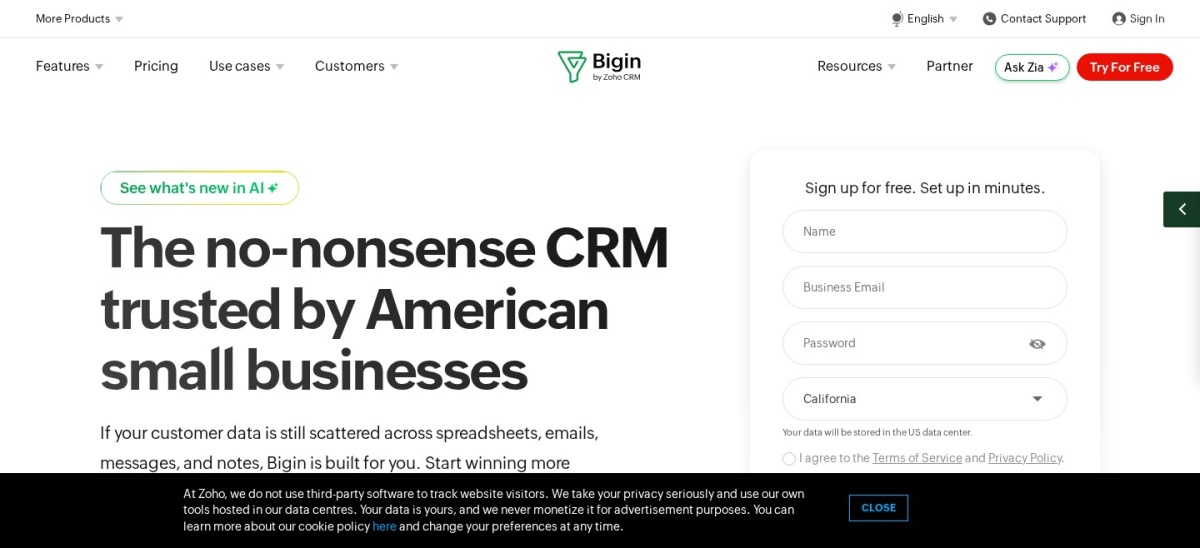
Bigin by Zoho CRM is a focused pipeline tool for small businesses managing customer data and sales pipelines. The free plan supports one user, and Express costs $7 a user a month billed annually with pipelines, communication tools and a mobile app.
The trade off is scale. Bigin is built for small teams, and a business that needs custom modules, advanced automation or many pipelines will outgrow it and move to Zoho CRM. It suits small teams that want a simple pipeline without the full Zoho CRM setup.
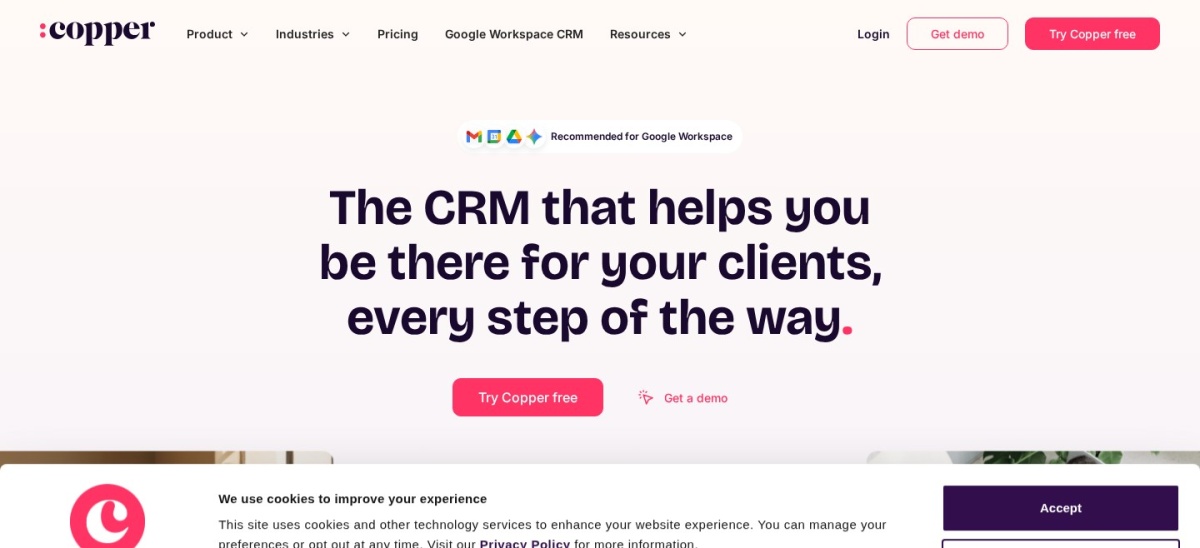
Copper is a CRM that lives inside Google Workspace, keeping contacts, email, calendar and projects in one place. The Basic plan costs $23 a seat a month billed annually, or $29 month to month, and includes relationship tracking, projects and a Chrome extension.
The trade off is that it is built for Google. Teams on Microsoft 365 get far less from Copper, and its price sits above Zoho and Pipedrive for similar depth. It suits Google Workspace teams that want contacts without leaving Gmail.
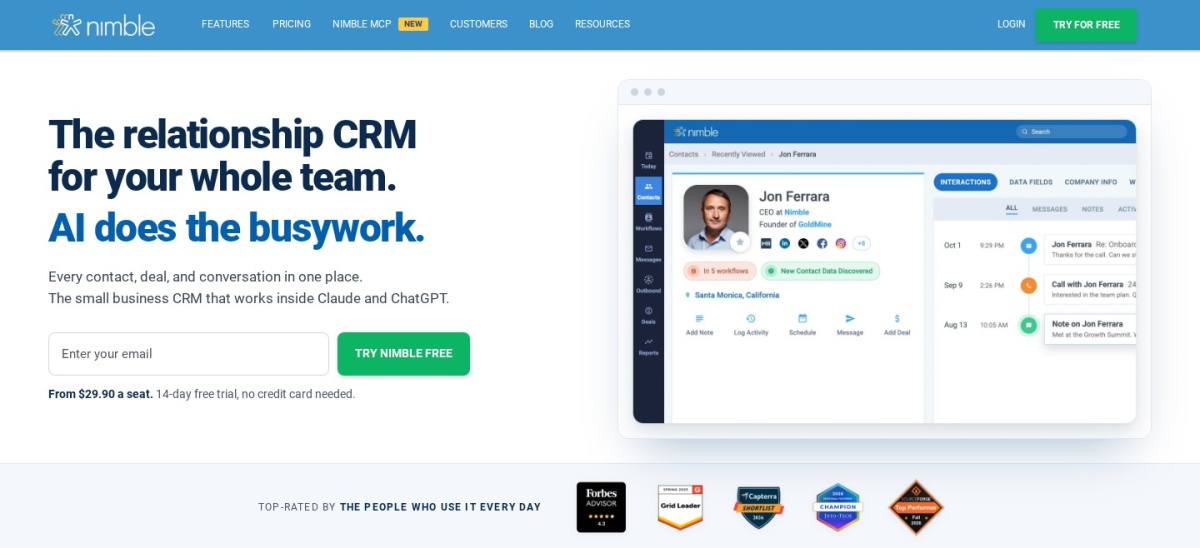
Nimble is a relationship CRM that builds rich contact profiles from social media, email and calendar activity in one place. It costs just under $30 a seat a month and includes social enrichment, email tracking and a unified inbox for every contact.
The trade off is price. Nimble is the most expensive tool in this list, and its pipeline and automation are lighter than Zoho or Pipedrive at half the price. It suits solopreneurs and small teams that sell through relationships and social profiles.
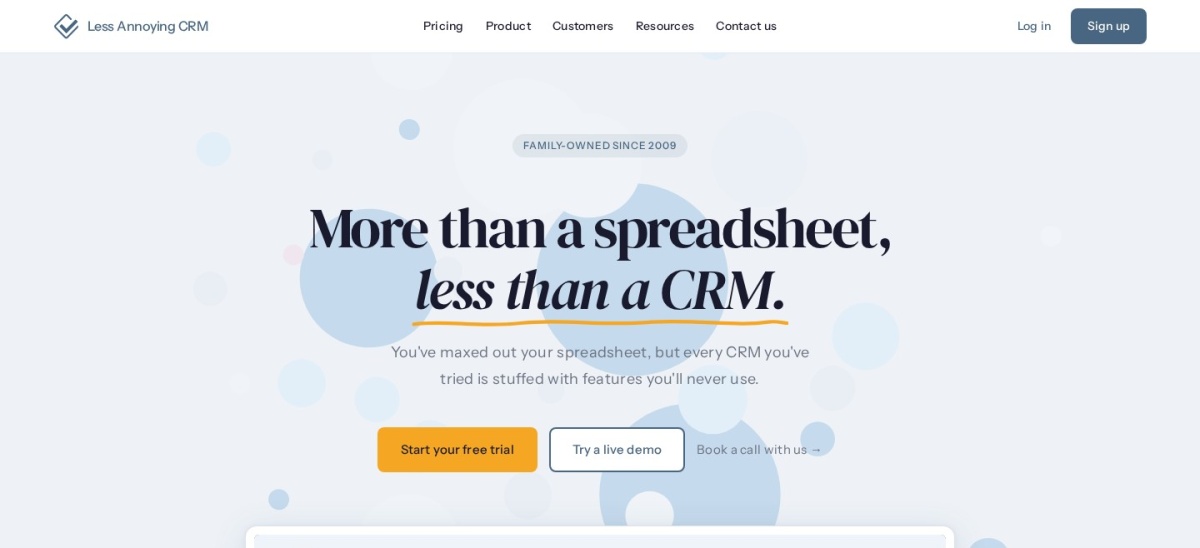
Less Annoying CRM is a straightforward CRM with one plan and all features included. It costs $15 a user a month billed monthly, with no seat minimum, and it is known for simple administration and real-person support that small teams actually use.
The trade off is depth. It has no tiers to grow into, so a team that later needs advanced automation or custom modules will have to move. It suits small teams that want contacts, tasks and calendars without any setup project.
Free plans cover the basics well. HubSpot gives two users and one thousand contacts, Zoho gives three users, and Freshsales gives three users, all with real pipelines and email tracking.
Paid plans mostly add automation and volume. The first paid step costs $7 to $20 a seat a month, and it buys more contacts, more pipelines and workflow automation that a growing team needs.
How we chose
We started from the CRMs most often recommended for contact management, then kept the ones with a live G2 rating and a real free or low-cost plan.
Prices come from each vendor's pricing page, checked on 30 November 2026. Zoho, Pipedrive, Salesforce, Freshsales, Bigin, Copper, Nimble and Less Annoying CRM publish their prices; HubSpot Starter is $20 a seat a month billed monthly.
We left out tools with no review profile on G2, Capterra or Trustpilot. No vendor paid for a place, and we do not claim hands-on testing for this list.
How to choose a way to manage contacts across platforms
Start with where your contacts live today, then pick the tool that syncs with those places first.
List where your contacts live today. Email, phones, spreadsheets and social profiles each need a sync, and the list decides which CRM fits.
Test the free plan with real contacts. Import a few hundred real contacts, check duplicates and see how the sync handles changes on each platform.
Check the per-seat price at your team size. A $14 seat costs $168 a year, so a team of ten pays $1,680 a year before add-ons.
Check the mobile app before you commit. Field staff live on phones, so test offline access, calling and contact lookup on the app you will actually use.
FAQ
What is the best way to manage contacts across platforms in 2026?
HubSpot CRM is the best way to manage contacts across platforms because its free plan covers two users and one thousand contacts, and it syncs with email, calendars and more than two thousand apps. Zoho CRM is the best value paid pick, and Pipedrive has the clearest pipeline.
How much does contact management software cost?
Free plans here cover two to three users, and paid plans run from $7 a user a month for Bigin to $30 a seat a month for Nimble. Zoho and Pipedrive both cost $14 a seat a month billed annually, which is $168 a year per seat.
Is there a free way to manage contacts across platforms?
Yes. HubSpot is free for two users and one thousand contacts, Zoho is free for three users, Freshsales is free for three users, and Bigin is free for one user. All four sync contacts with email and calendars without a paid plan.
HubSpot or Zoho CRM: which is better for contacts?
HubSpot is better when you want the simplest free start and the widest app ecosystem, with more than two thousand integrations. Zoho is better when you want a cheaper paid plan with deeper customisation, at $14 a user a month with five pipelines included.
Can a CRM sync contacts with Google Workspace?
Yes. Copper is built for Google Workspace and syncs contacts, email and calendar natively, while HubSpot, Zoho and Pipedrive all offer Google integrations. Copper costs $23 a seat a month billed annually.
Does contact management software work on phones?
Yes, every tool here has an iOS and Android app. Pipedrive and Bigin both offer mobile apps that work offline, so field staff can check contacts without a signal.
SaaS SEO and WordPress specialist with about 8 years of experience. Rakib compares WordPress plugins, themes, hosting and software using public pricing, documentation and user reviews. See how we rank.