Synology DSM is the best of these TrueNAS alternatives for most buyers, rated 4.6 out of 5 on G2 from 94 reviews and bundled free with Synology hardware. Unraid is the best DIY pick at $49 one-time for mixed drives, while OpenMediaVault costs nothing and runs on old hardware.
How we make this list: we compare pricing pages, product documentation and public user reviews, then re-check every price before each update. No product paid for a place. Disclosure.
Synology DSM is the top pick for most buyers: 4.6 out of 5 on G2 from 94 reviews, bundled free with the hardware.
Unraid is the only paid DIY pick here at $49 one-time, and the only one built for mixed drive sizes.
Eight of the nine tools have a free plan; Unraid is the only one with no free plan beyond its 30-day trial.
QNAP QTS has the lowest rating here at 3.9 out of 5 on G2, from only 18 reviews.
MinIO is the odd one out: object storage with an S3 API, not a NAS, and its paid tiers are quote-only.
ZFS is native in XigmaNAS and Proxmox VE, a plugin in OpenMediaVault, and absent in Unraid, which uses parity instead.
What should you look for in TrueNAS alternatives?
Price is the first split. Six tools in this list cost nothing in software, while Unraid charges $49 one-time and Nextcloud support starts at €3,400 a year, but hardware is the real cost for every option, so budget for drives before you compare licences.
ZFS matters if you care about bit-rot. TrueNAS built its name on OpenZFS checksums and snapshots, and XigmaNAS keeps that FreeBSD ZFS core for free, while Proxmox VE bundles ZFS beside its VMs and OpenMediaVault adds it through a plugin.
Appliance or DIY is the second split. Synology DSM and QNAP QTS only run on their own boxes, which is why they feel finished, while Unraid, OpenMediaVault, Rockstor and XigmaNAS run on hardware you already own. Our guide on the 3-2-1 backup rule explains why the box matters less than having a second copy somewhere else.
Ratings in this list come from different places for a reason. Appliance NAS tools are rated on G2, while the free DIY projects live on SourceForge, so compare the review counts beside the scores: Nextcloud has 199 G2 reviews, Rockstor only 21 on SourceForge.
Object storage is a different job. MinIO speaks S3 to apps and AI pipelines, but it will not serve SMB shares to your laptop, so pick it when your software talks S3 and a NAS when your family talks folders.
List prices in each vendor's currency, checked Nov 2026
DSMFree
QTSFree
OMVFree
RockstorFree
XigmaNASFree
MinIOFREEQuote
Unraid$49
ProxmoxFREE$137
NextcloudFREE€3,400
The 9 best TrueNAS alternatives
01
Synology DSM
4.6/5on G2 (94 reviews, checked Nov 2026)
PriceFree
Best TrueNAS alternative overall
Bundled withSynology hardware
App storePackage Center
File protocolsSMB, NFS, iSCSI
Paid planHardware only
synology.com
Synology DSM homepage, captured Nov 2026.
Synology DSM is the operating system that runs on Synology NAS boxes, and it is the most polished interface in this list. It bundles file sharing, Synology Photos, Drive sync and Active Backup for Business in one desktop-style web UI, with no separate software licence to buy.
The trade off is lock-in. DSM only runs on Synology hardware, so the software price is $0 but the box is the cost, and recent models restrict third-party drives. It suits buyers who want a NAS that works out of the box and are happy to pay for the hardware.
What we like
Easiest interface in this list
Strong backup and photo apps included
Rated 4.6 out of 5 on G2 from 94 reviews
Watch out for
Only runs on Synology hardware
Newer models limit third-party drives
DSM ships free with Synology hardware; the box is the costVisit synology.com
02
Unraid
4/5on Trustpilot (20 reviews, checked Nov 2026)
Starts at$49/once
Best for mixed drives and Docker apps
Cheapest licenceStarter, $49 one-time
Drive limit6 devices
ParityMixed sizes, 1-2 drives
Free trial30 days
unraid.net
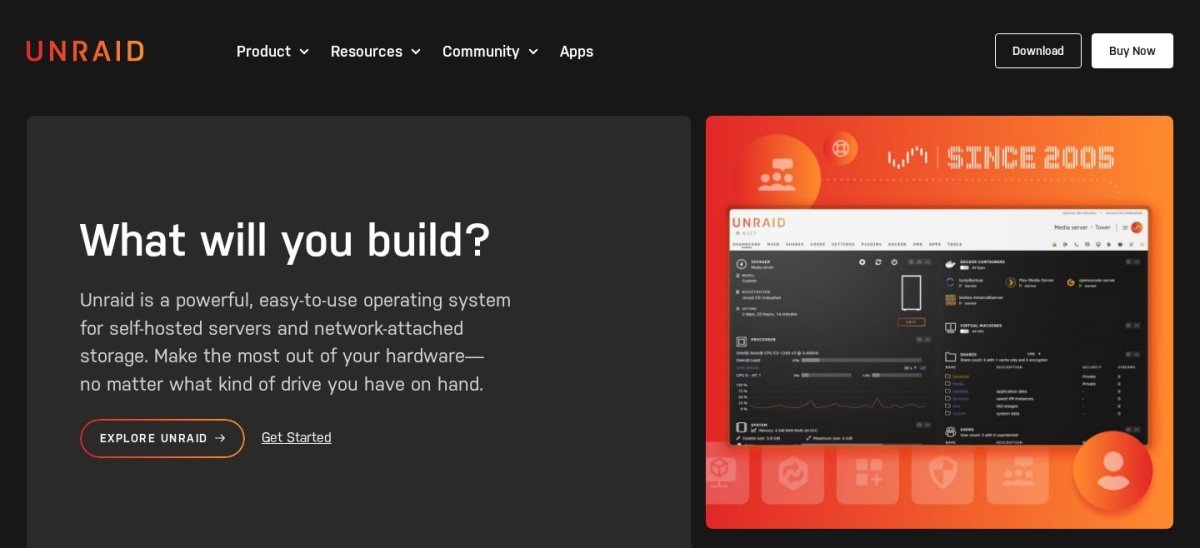
Unraid homepage, captured Nov 2026.
Unraid is a Linux NAS OS built for drives bought at different times. Its parity array accepts mixed sizes and brands, grows one drive at a time, and runs Docker containers and virtual machines beside file shares, with more than 10,000 apps in Community Apps.
The trade off is the licence. Starter costs $49 one-time for up to 6 storage devices, with Unleashed at $109 for unlimited devices and Lifetime at $249, and there is no free plan beyond the 30-day trial. It suits home labs that keep adding drives as budget allows.
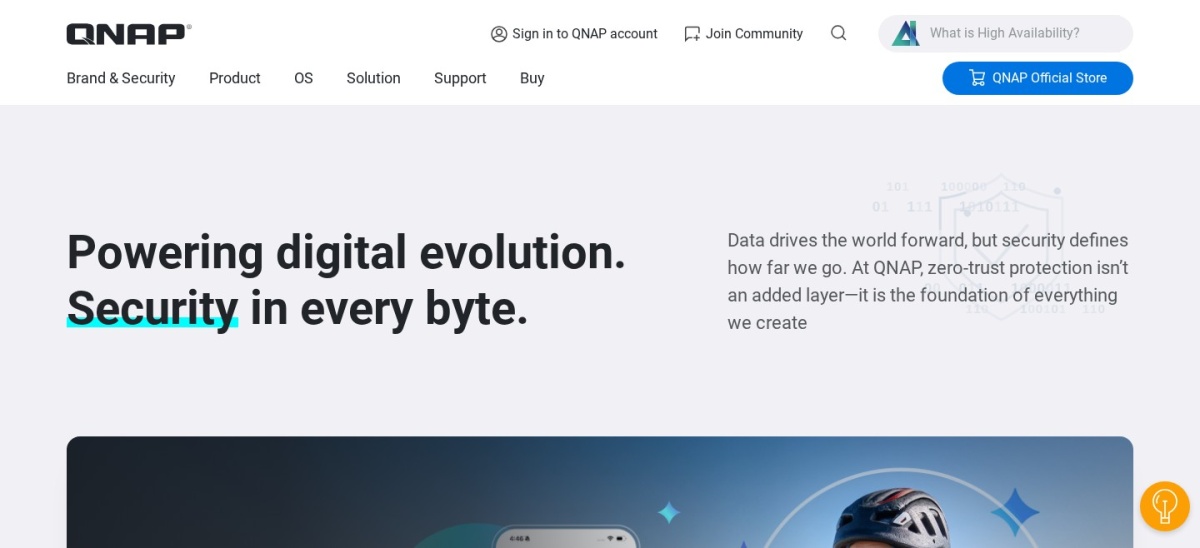
QNAP QTS is the operating system on QNAP NAS boxes, and it leans powerful. It covers file sharing, backup, surveillance, virtualization and containers, with HDMI models for direct media playback, and the QuTS hero variant adds ZFS on higher-end hardware.
The trade off is complexity and upkeep. The interface packs in more settings than DSM, and QNAP has faced high-profile ransomware attacks, so keeping updates current is essential. It suits buyers who want strong hardware value and deep settings.
What we like
Wide hardware range, from 2-bay to rackmount
QuTS hero brings ZFS to QNAP
Strong multimedia and HDMI options
Watch out for
Busier interface than DSM
Lowest G2 rating in this list at 3.9
QTS ships free with QNAP hardware; the box is the costVisit qnap.com
04
OpenMediaVault
4.8/5on SourceForge (169 reviews, checked Nov 2026)
PriceFree
Best free NAS for old hardware
LicenceGPL-3.0, free
BaseDebian Linux
Latest release8.6.0, Oct 2026
DockerVia OMV-Extras plugin
openmediavault.org
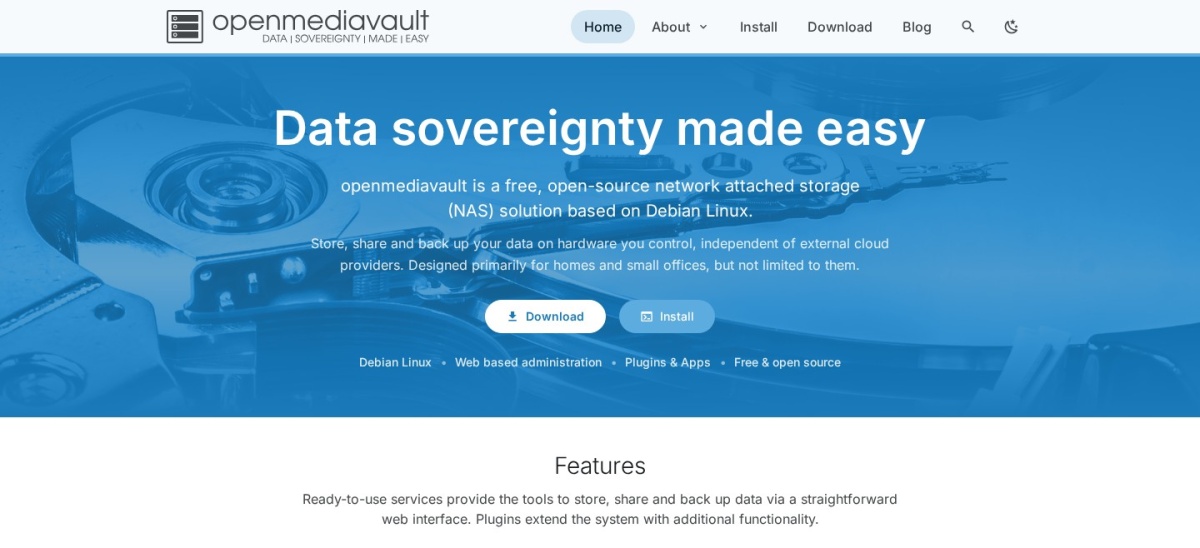
OpenMediaVault homepage, captured Nov 2026.
OpenMediaVault is a free, open-source NAS system based on Debian Linux, built for small and older hardware such as a Raspberry Pi or an old PC. Release 8.6.0 arrived in October 2026, and plugins add Docker, snapshots and extra services around SMB, NFS and iSCSI shares.
The trade off is polish and depth. The interface is functional rather than slick, and ZFS comes through a plugin instead of being native the way it is in TrueNAS. It suits anyone with spare hardware who wants a free NAS without buying a box.
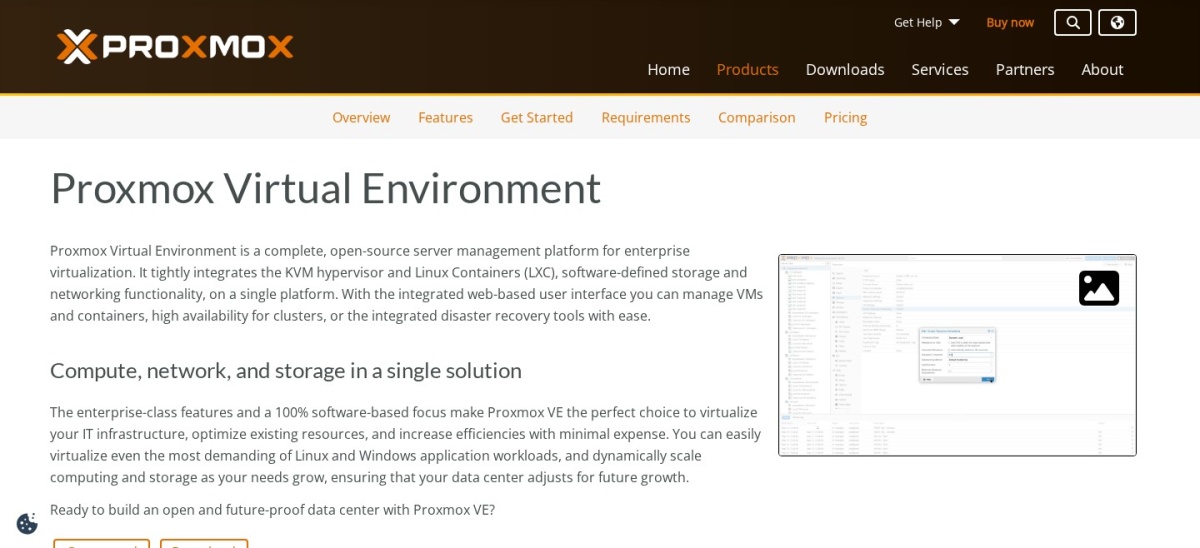
Proxmox VE is a free, open-source hypervisor that runs KVM virtual machines and LXC containers with ZFS and Ceph storage built in. Every feature is unlocked free under the AGPLv3 licence, so you can run a NAS virtual machine beside other servers on one box.
The trade off is that it is a hypervisor first, not a NAS interface. You build the file sharing yourself, usually in a VM, and the stable Enterprise update repository needs a Community subscription at €120 a year per CPU socket, about $137. It suits home labs that want VMs and storage together.
What we like
All features free, including clustering
ZFS and Ceph storage built in
Rated 4.6 out of 5 on G2
Watch out for
No ready-made NAS interface
Paid subscription is per CPU socket
Community subscription adds the stable update repositoryVisit proxmox.com
06
Nextcloud
4.4/5on G2 (199 reviews, checked Nov 2026)
Paid from€3,400/yr
Best for self-hosted file sync
LicenceAGPL, free self-hosted
AppsFiles, Talk, Office, Calendar
Paid planStandard, €3,400/yr
Paid plan covers50 users
nextcloud.com
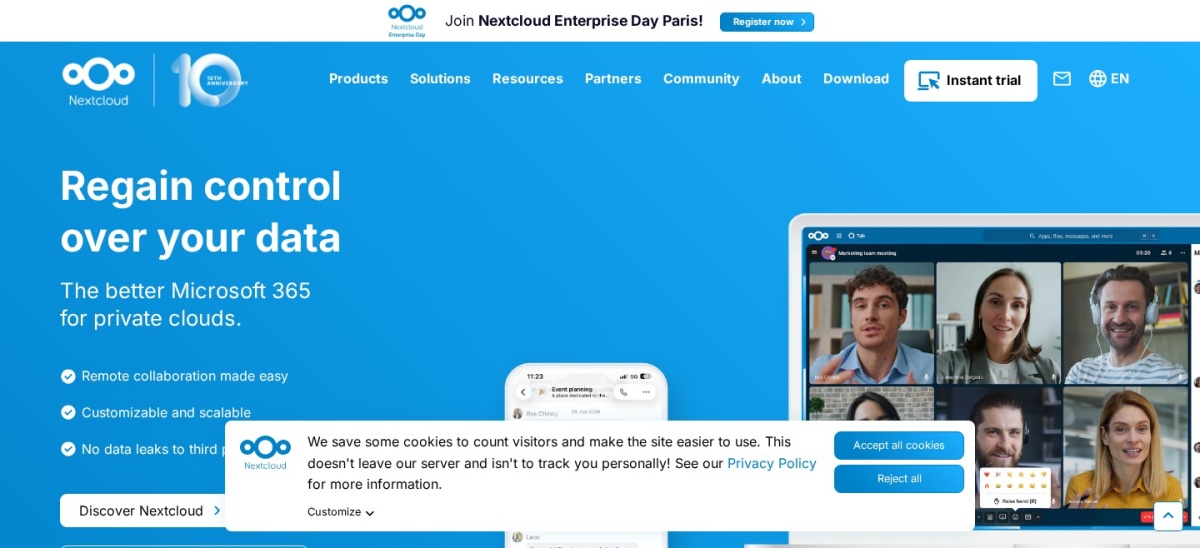
Nextcloud homepage, captured Nov 2026.
Nextcloud is a free, open-source private cloud that turns your server into a file sync, sharing and collaboration hub. Nextcloud Hub adds Talk video calls, Office documents, Calendar and Mail, so it replaces a cloud drive and a small office suite in one install.
The trade off is scope and support cost. It is a collaboration platform, not a storage OS, so RAID and pools still come from the system underneath, and the Standard support subscription costs €3,400 a year for 50 users. It suits teams that want their files and apps self-hosted.
4.8/5on SourceForge (21 reviews, checked Nov 2026)
PriceFree
Best Btrfs NAS for tinkerers
LicenceFree, open source
FilesystemBtrfs
SnapshotsBuilt in, with replication
Docker appsRock-ons
rockstor.com
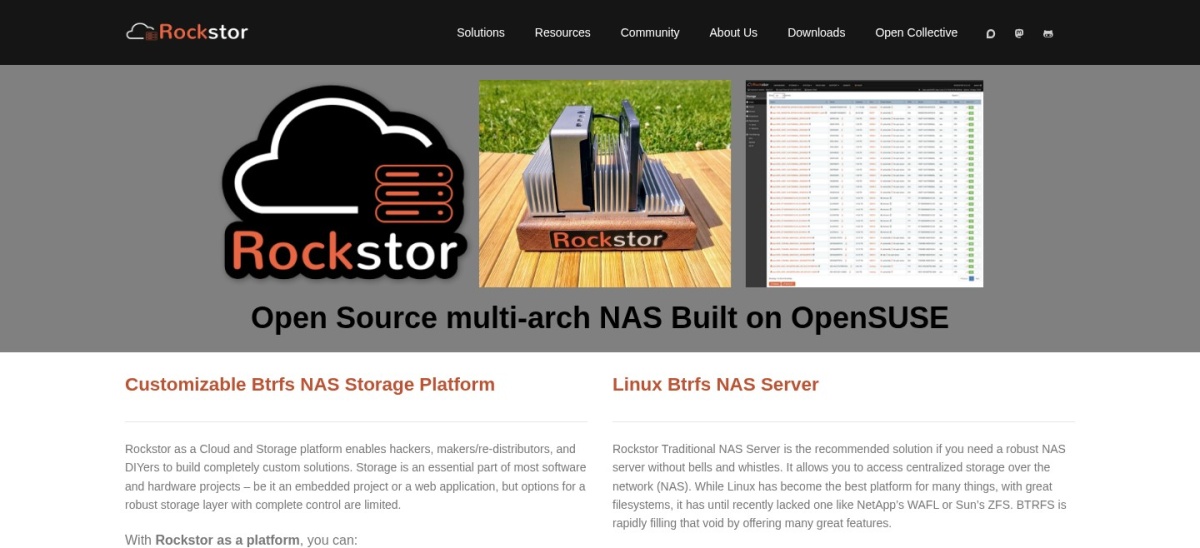
Rockstor homepage, captured Nov 2026.
Rockstor is a free, open-source NAS built on Btrfs and openSUSE, with snapshots, replication and bit-rot protection from the filesystem itself. Its Rock-ons run Docker apps such as Syncthing and Plex beside file shares.
The trade off is scale and polish. Its review base is small, with 21 SourceForge reviews, and the interface feels more technical than Unraid or DSM. It suits tinkerers who want Btrfs snapshots without paying for a licence.
4.8/5on SourceForge (84 reviews, checked Nov 2026)
PriceFree
Best free FreeBSD NAS with ZFS
LicenceFree, open source
BaseFreeBSD
FilesystemZFS v5000
Latest release14.3.0.5, Sep 2025
xigmanas.com
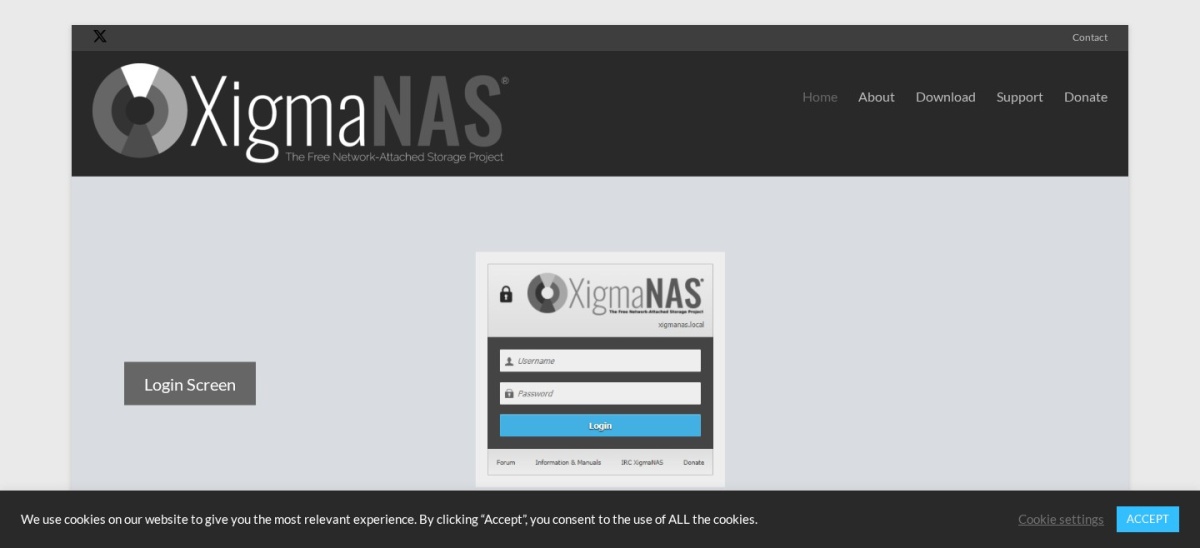
XigmaNAS homepage, captured Nov 2026.
XigmaNAS is a free, open-source NAS OS based on FreeBSD, and it descends from the original FreeNAS line before TrueNAS took that name. It supports ZFS v5000, software RAID, disk encryption and iSCSI, and installs on almost any hardware from a USB stick or hard disk.
The trade off is the interface and pace. The web UI is dated next to DSM or Unraid, and releases move slower than TrueNAS, with 14.3.0.5 arriving in September 2025. It suits FreeBSD fans who want ZFS for free on hardware they already own.
MinIO AIStor is self-hosted, S3-compatible object storage for apps, backups and AI workloads. The free tier covers single-node deployments at no cost, and the same S3 API your code already uses works on your own hardware.
The trade off is that it is object storage, not a NAS. There are no SMB file shares or media apps out of the box, and multi-node Enterprise tiers are quoted per usable capacity with no list price. It suits developers and teams storing objects, not family file shares.
What we like
S3 API works with existing tools
Free single-node tier
Built for large AI and data workloads
Watch out for
No SMB file shares or NAS apps
Paid tiers are quote-only
Enterprise tiers are quoted per usable capacityVisit min.io
Free vs paid: what the $0 tools leave out
Free tools in this list cover the storage itself. OpenMediaVault, Rockstor, XigmaNAS and MinIO charge nothing for the software, and DSM and QTS ship with their hardware.
Paid plans mostly buy support and updates. Proxmox VE charges €120 a year per socket for the stable Enterprise repository, and Nextcloud support starts at €3,400 a year for 50 users.
Unraid is the only tool with no free plan. Its $49 Starter licence is a one-time purchase, and the 30-day trial is the only free taste.
How we chose
We started from the NAS and storage tools people actually run instead of TrueNAS, then kept those with a public rating and review count on G2, Capterra, Trustpilot or SourceForge.
Prices come from each vendor's pricing page, checked on 29 November 2026. Ratings and review counts come from the review sites named on the same day. Where a vendor shows a sale, the list shows the regular price.
We left out HexOS and CasaOS: neither has a public rating on G2, Capterra, Trustpilot or SourceForge yet. No vendor paid for a place, and we do not claim hands-on testing for this list.
How to choose a TrueNAS alternative
Start with the hardware you already own, then match the software to it.
Decide appliance or DIY. If you want a box that just works, buy Synology or QNAP. If you have a spare PC, pick from Unraid, OpenMediaVault, Rockstor or XigmaNAS.
Count your drives and their sizes. Mixed sizes point to Unraid parity; matched drives point to ZFS in XigmaNAS or Proxmox VE.
Check what you need beyond files. Media apps and VMs favour Unraid or Proxmox VE; file sync and collaboration favour Nextcloud; S3 apps favour MinIO.
Plan the backup before the build. A NAS is not a backup on its own. Keep a second copy off the box, and see our 3-2-1 backup rule guide for the pattern.
FAQ
What is the best TrueNAS alternative in 2026?
Synology DSM is the best TrueNAS alternative for most buyers in 2026. It is rated 4.6 out of 5 on G2 from 94 reviews, bundles file sharing, photos and backup in the most polished interface here, and ships free with Synology hardware.
What is the best free alternative to TrueNAS?
OpenMediaVault is the best free alternative to TrueNAS. It costs nothing, runs on old hardware, and is rated 4.8 out of 5 on SourceForge from 169 reviews. XigmaNAS is the free pick if you want native ZFS.
Is Unraid better than TrueNAS?
Unraid is better than TrueNAS for mixed drive sizes and easy Docker apps, since its parity array grows one drive at a time. TrueNAS is better for ZFS data integrity and costs nothing, while Unraid starts at $49 one-time.
How much does a TrueNAS alternative cost?
Six of the nine tools here cost nothing in software. Unraid is the cheapest paid option at $49 one-time, Proxmox VE support starts at about $137 a year per socket, and Nextcloud support starts at €3,400 a year for 50 users.
Which TrueNAS alternative is best for beginners?
Synology DSM is the easiest for beginners because it ships finished on Synology hardware with a guided setup. For DIY builders, Unraid is the friendliest paid option and OpenMediaVault the friendliest free one.
Synology DSM vs QNAP QTS: which is better?
Synology DSM is better for ease of use and polish, with a 4.6 G2 rating from 94 reviews. QNAP QTS is better for hardware value and raw features, but it is rated 3.9 on G2 from 18 reviews and needs more upkeep.
SaaS SEO and WordPress specialist with about 8 years of experience. Rakib compares WordPress plugins, themes, hosting and software using public pricing, documentation and user reviews. See how we rank.