WooCommerce is the best top open source ecommerce cms software for most stores, with a free core, more than 7 million installs and the largest extension library in this list. PrestaShop suits merchants who want a ready store out of the box, while Magento Open Source fits large catalogs with developer help.
How we make this list: we compare pricing pages, product documentation and public user reviews, then re-check every price before each update. No product paid for a place. Disclosure.
WooCommerce is the safest default: free core, 7M+ installs and the biggest extension library.
Every core in this list is free to download; hosting, extensions and developer time are the real costs.
PrestaShop and OpenCart give you a ready storefront, while Sylius, Spree and Bagisto need developer skill.
Magento Open Source and Shopware fit large or B2B catalogs, but their paid editions are quote-only or start at 600 euros a month.
Match the stack to your team: PHP, .NET, Laravel, Symfony or Rails matters more than the feature list.
How do you choose the top open source ecommerce cms software?
Start with your team's stack, not the feature list. A PHP team ships faster on WooCommerce or PrestaShop, a .NET team on nopCommerce, and a Rails team on Spree, because fighting an unfamiliar stack costs more than any feature saves.
Free software still costs money. Hosting, security patching, backups and upgrades fall on you, and premium modules or extensions are a common added cost on PrestaShop, WooCommerce and OpenCart.
Check the licence before you build on it. GPL platforms such as WooCommerce and OpenCart and OSL platforms such as Magento and PrestaShop carry copyleft terms, while MIT platforms such as Bagisto and Sylius do not restrict redistribution the same way.
Decide whether you need a storefront or an API. Monolithic platforms such as PrestaShop, WooCommerce and Magento ship a working frontend out of the box, while headless engines such as Sylius, Spree and Bagisto expect you to build or plug in a storefront. Our ecommerce platform comparison shows how the open source options sit next to hosted builders.
4.5/5on WordPress.org (4,834 reviews, checked Nov 2026)
PriceFree
Best open source ecommerce CMS overall
Core priceFree
LicenceGPLv2 or later
StackPHP and WordPress
StorefrontBuilt in with themes
woocommerce.com
WooCommerce homepage, captured Nov 2026.
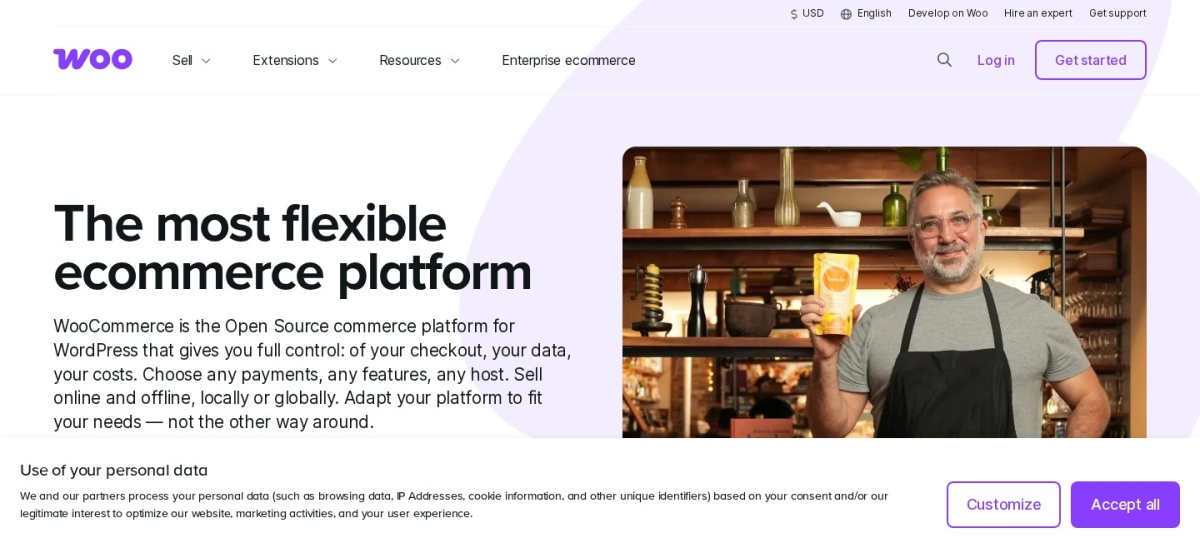
WooCommerce is the free, open source plugin that turns a WordPress site into a full store. It covers products, cart, checkout, orders, coupons, shipping and tax settings, and WordPress.org lists more than 7 million active installs. Thousands of free and paid extensions add subscriptions, bookings and extra payment gateways.
The trade off is upkeep. Hosting, security patching, updates and extension costs sit with you, and a busy store can need paid extensions for subscriptions or advanced shipping. It suits WordPress site owners who want to own their store and shape it with plugins.
PrestaShop is a free, open source store platform with a working storefront and admin panel out of the box. The Classic edition covers products, orders, shipping and taxes, and the vendor says it serves around 250,000 merchants. It handles multiple languages and currencies in the core, which suits European sellers.
The trade off is modules. Premium modules for payments, shipping and marketing are a common added cost, and module quality varies widely across the marketplace. The hosted plan lists at 24 euros a month on the annual plan. It suits small to mid-sized retailers who want a complete store without building a frontend.
Magento Open Source is the free, self-hosted edition of Adobe Commerce, built for merchants who need deep customization at scale. It includes catalogue management, layered navigation, promotions, customer accounts, multi-store support and REST and GraphQL APIs. There is no licence fee and no revenue cap on the software.
The trade off is the team it needs. Hosting, upgrades, security patches and extensions turn a free licence into a real yearly budget, and most stores need a developer or agency. Adobe Commerce, the paid edition, is quote-only. It suits mid-market and enterprise stores with complex catalogs or B2B selling.
What we like
Free licence with no revenue cap
Multi-store, multi-currency and complex catalog rules
nopCommerce is a free, open source store platform built on ASP.NET Core for teams that already run Microsoft infrastructure. Multi-store, multi-vendor and B2B features are included in the core rather than gated behind a paid tier. The full source code is public, and the core carries no licence fee.
The trade off is the talent pool. ASP.NET Core hosting knowledge is less common than PHP, so finding developers can take longer. The default install also shows a required Powered by nopCommerce footer link unless you buy a copyright-removal licence. It suits .NET shops that want a self-hosted store on their own stack.
4.9/5on Trustpilot (382 reviews, checked Nov 2026)
PriceFree
Best Laravel store with marketplace built in
Core priceFree
LicenceMIT
StackPHP and Laravel
MarketplaceMulti-vendor built in
bagisto.com
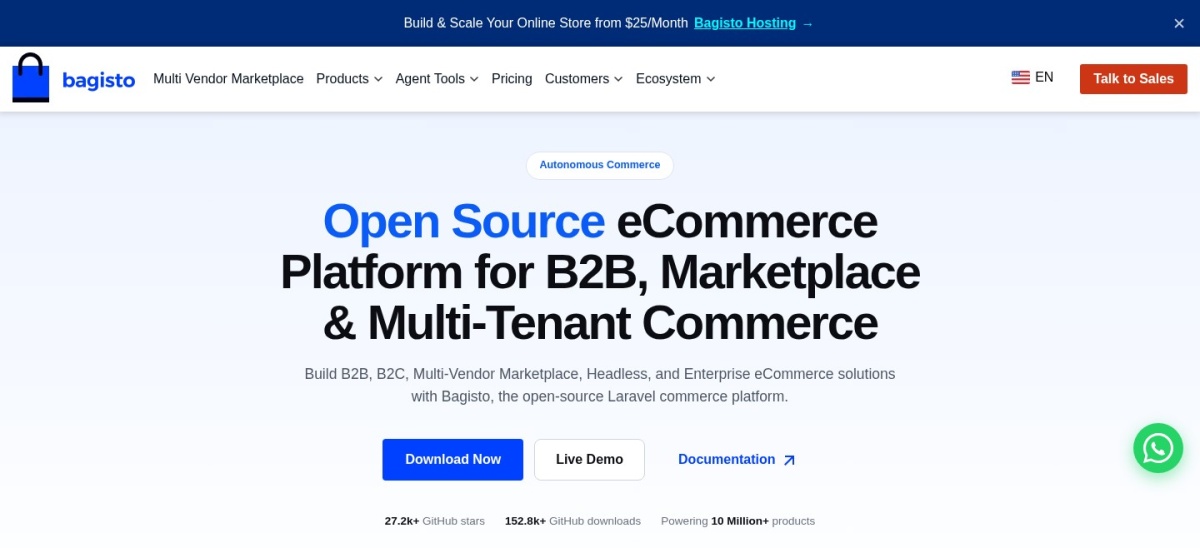
Bagisto homepage, captured Nov 2026.
Bagisto is a free, open source Laravel ecommerce platform for stores, multi-vendor marketplaces and B2B selling. The core includes a storefront, an admin panel and a built-in marketplace, with the full source code public on GitHub. It carries no licence fee and no revenue cap.
The trade off is youth. Bagisto has a younger, smaller community than WooCommerce, Magento or PrestaShop, and fewer ready-made extensions and themes. Advanced features often mean custom development on Laravel. It suits PHP and Laravel developers who want a modern, budget-friendly self-hosted store or marketplace.
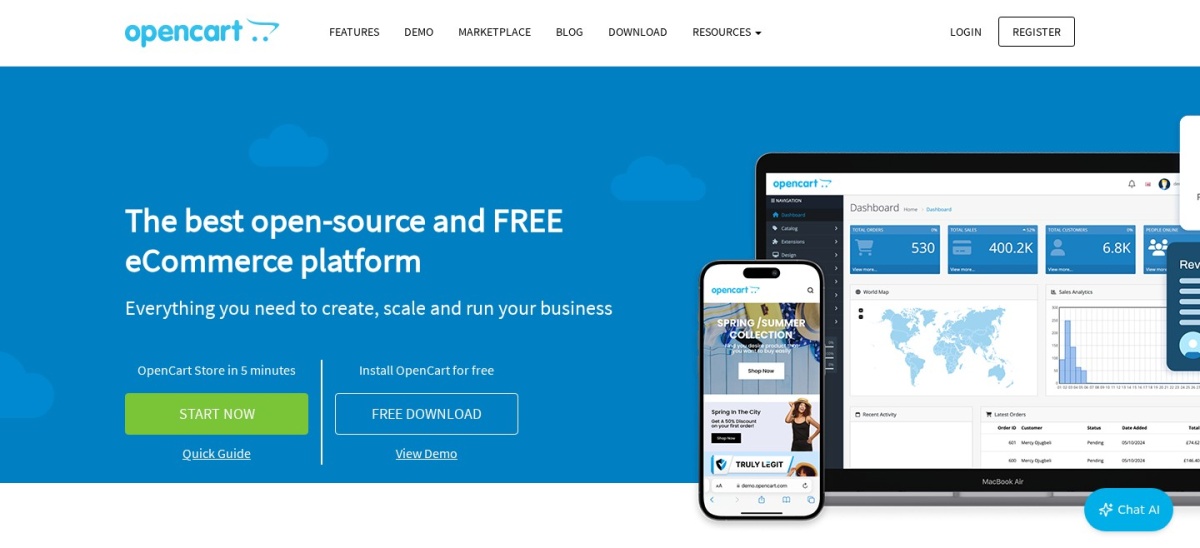
OpenCart is a lightweight, open source PHP shopping cart built for simplicity over enterprise scale. It runs several stores from one back end, ships with a large extension marketplace and runs well on basic shared or VPS hosting. The software is free to download and self-host with no licence fee.
The trade off is depth. The feature set is thinner out of the box than Magento or PrestaShop for complex catalogs, and extension quality varies because the marketplace is community-run. It suits small merchants and developers who want a simple self-hosted cart without a steep learning curve.
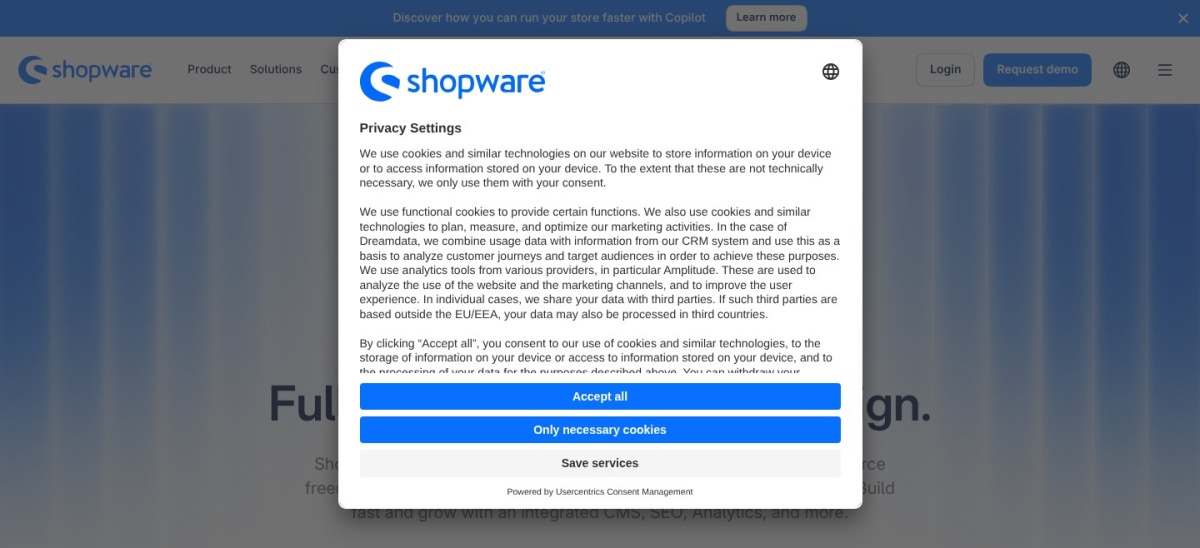
Shopware is an open source ecommerce platform with a free Community Edition and a strong B2B feature set. It covers catalogs, shopping experiences, rules-based pricing and content, with an API-first design that also powers headless storefronts. The core is free to self-host.
The trade off is price once you leave the free edition. The Rise plan lists at 600 euros a month, and Evolve at 2,400 euros a month, so growing stores face a steep jump. It suits businesses that need B2B commerce and custom shopping experiences on an open core.
What we like
Free Community Edition to self-host
Strong B2B features and rule-based pricing
API-first design for headless builds
Rated 4.2 on G2 from 223 reviews
Watch out for
Paid plans start at 600 euros a month
Needs developer help for custom builds
Smaller English-speaking community than WooCommerce
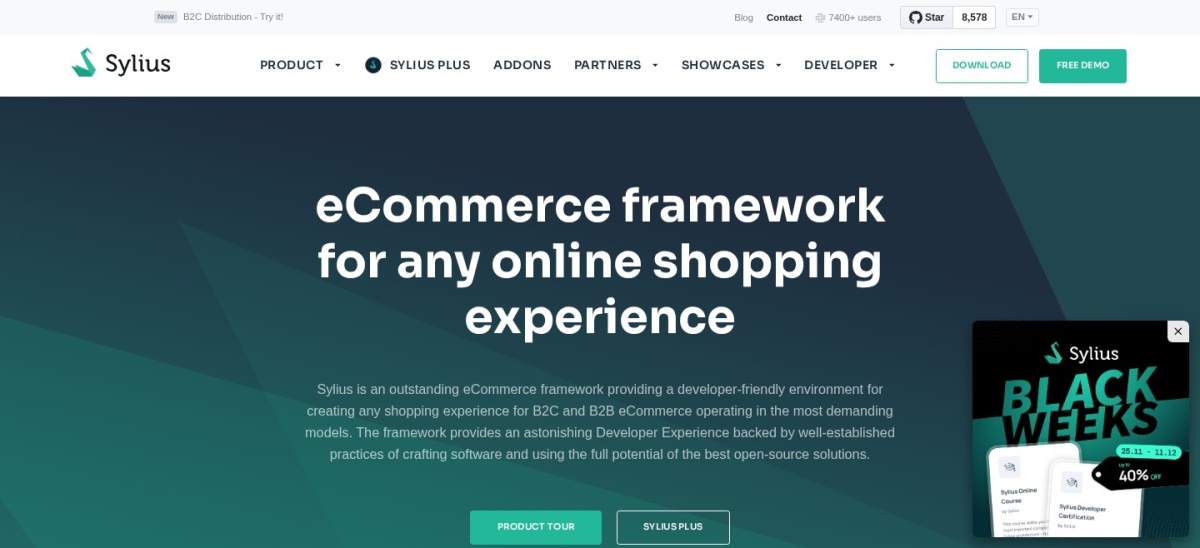
Sylius is an open source ecommerce framework built on Symfony for teams that want full control over a custom store. It ships as a framework rather than a locked-down cart, with REST and GraphQL APIs included, so it can power a headless build or a traditional storefront. The MIT licence lets you self-host and modify it freely.
The trade off is skill. Sylius needs real Symfony development experience, and its plugin marketplace is smaller than WooCommerce or PrestaShop. It suits PHP and Symfony shops that want an API-first commerce framework instead of a ready-made cart.
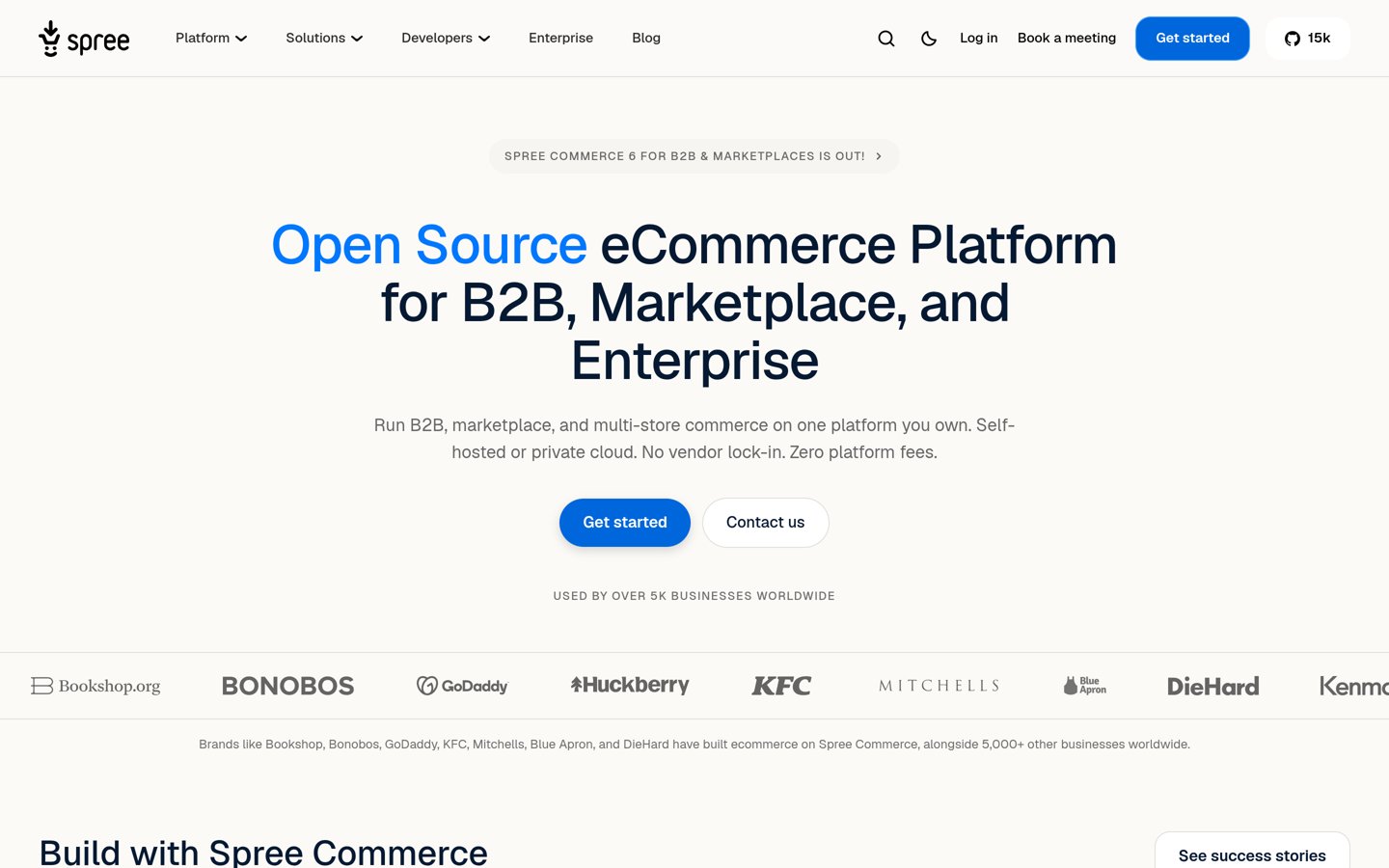
Spree Commerce is a mature, open source Ruby on Rails ecommerce platform for custom stores and marketplaces. It supports B2B, marketplace and multi-tenant storefronts, and the vendor says more than 5,000 businesses run on it. The core engine is free to self-host with no platform fees.
The trade off is expertise. Spree needs real Rails skill on the team and is not friendly to non-developers, and its rating is the lowest in this list at 3.7 on G2. It suits Ruby on Rails teams that want a customizable commerce engine with marketplace and multi-tenant support.
What we like
Free core with no platform fees
Built for B2B, marketplace and multi-tenant stores
The software is free, but the store is not. Hosting, a domain, security patching and backups are the base cost on every platform in this list.
Extensions are the next bill. WooCommerce subscriptions, PrestaShop payment modules and OpenCart add-ons are usually paid, and a busy store can need several.
Developer time is the biggest line. Magento and Shopware builds often need an agency, while WooCommerce and PrestaShop can start with a freelancer or a skilled owner.
Paid editions jump the price. PrestaShop Hosted lists at 24 euros a month, Shopware Rise at 600 euros a month, and Adobe Commerce is quote-only.
How we chose
We started from the established open source ecommerce platforms with a public repository under active development, then kept those with a verifiable rating on G2, Capterra, Trustpilot or WordPress.org and a free, self-hostable core.
Prices and ratings were checked on 29 November 2026. Every core in this list is free to download, so the list shows $0; paid hosted tiers are noted in the text, including PrestaShop Hosted at 24 euros a month and Shopware Rise at 600 euros a month.
We left out Medusa and Saleor because neither had a verifiable rating on G2, Capterra or Trustpilot, and Vendure because its review base was only 10 reviews. No vendor paid for a place, and we do not claim hands-on testing for this list.
How to choose open source ecommerce CMS software
Start with what your team already runs, then check the real yearly cost before you commit.
Match the stack to your team. Pick the platform your developers already know: PHP for WooCommerce or PrestaShop, .NET for nopCommerce, Laravel for Bagisto, Symfony for Sylius or Rails for Spree.
Decide storefront or headless. If you need to sell this week, take a platform with a built-in storefront such as PrestaShop or WooCommerce. Headless engines need a frontend build first.
Budget hosting and upkeep, not just software. The core is free, but hosting, patching, backups and extensions are real costs. Price a year of those before you commit.
Check the licence and the community. Read the licence terms for redistribution rules, and check recent releases and review volume so you do not build on an abandoned fork.
FAQ
What is the best top open source ecommerce cms software in 2026?
WooCommerce is the best top open source ecommerce cms software for most stores in 2026. Its core is free, WordPress.org lists more than 7 million active installs, and its extension library is the largest in this list. PrestaShop is the better pick for merchants who want a ready storefront without WordPress.
Is open source ecommerce software really free?
The software is free to download and self-host, with no licence fee on any platform in this list. You still pay for hosting, a domain, security patching and usually some paid extensions, so budget those costs before you compare the $0 licence against a hosted builder.
Which open source ecommerce CMS is best for beginners?
PrestaShop is the easiest starting point for beginners, because the Classic edition ships with a working storefront and admin panel out of the box. WooCommerce is also friendly if you already run WordPress, while Magento, Sylius and Spree need developer help from day one.
What is the cheapest open source ecommerce platform?
Every core in this list is free, so the cheapest platform is the one with the lowest hosting and extension bill. OpenCart and WooCommerce run well on basic shared hosting, while Magento needs stronger hosting and developer time, which makes it the most expensive free option to run.
WooCommerce vs PrestaShop: which is better?
WooCommerce is better if you already run WordPress and want the largest extension library, with more than 7 million active installs behind it. PrestaShop is better if you want a standalone store with a ready storefront, strong European language support and no WordPress to maintain.
Do I need a developer for open source ecommerce software?
You need a developer for Magento, Sylius, Spree and Shopware, which are built for technical teams and custom builds. WooCommerce, PrestaShop and OpenCart can be launched by a skilled owner, though paid help is still wise for security, upgrades and custom features.
SaaS SEO and WordPress specialist with about 8 years of experience. Rakib compares WordPress plugins, themes, hosting and software using public pricing, documentation and user reviews. See how we rank.