Optro leads the top ERM software with 1,674 G2 reviews and unlimited stakeholder licences for enterprise risk teams. LogicGate Risk Cloud suits teams that want no-code workflows, while OneTrust is the pick for privacy-led risk programmes.
How we make this list: we compare pricing pages, product documentation and public user reviews, then re-check every price before each update. No product paid for a place. Disclosure.
Optro is the most reviewed ERM platform here, with 1,674 G2 reviews and a 4.6 rating.
No ERM vendor in this list publishes a price — all nine are quote-only.
LogicGate Risk Cloud is the no-code pick, with 214 G2 reviews and a 4.6 rating.
Riskonnect has the thinnest review base here, with 71 G2 reviews.
ServiceNow GRC suits teams already running ServiceNow, with three packages from Foundation to Prime.
How do you choose top ERM software?
Quote-only pricing is the norm. No ERM vendor here publishes a list price, so every shortlist needs a sales call and a scoped quote.
Risk registers are the core. Every tool here keeps a central register, but they differ on workflows, control testing and how they link risks to frameworks.
Frameworks decide the fit. Look for built-in content for ISO 27001, NIST, COSO or your regulator before you compare dashboards.
Check who can use it. Optro offers unlimited stakeholder licences, and LogicManager includes unlimited users, while most rivals price by user or module. Our GRC software guide covers the wider governance market.
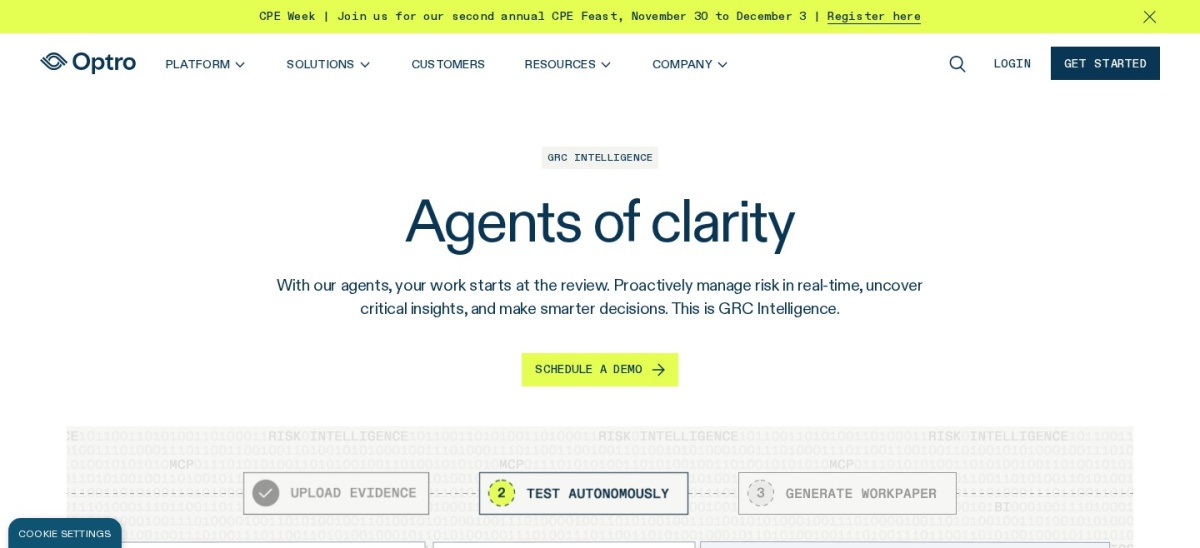
Optro is the enterprise risk platform formerly known as AuditBoard, renamed in March 2026. It covers risk registers, controls, audits and reporting, with unlimited stakeholder licences so the whole business can see its risks.
The trade off is that pricing is quote-only, so there is no list price to compare against rivals. It suits large teams that want one risk platform for audit, compliance and enterprise risk together.
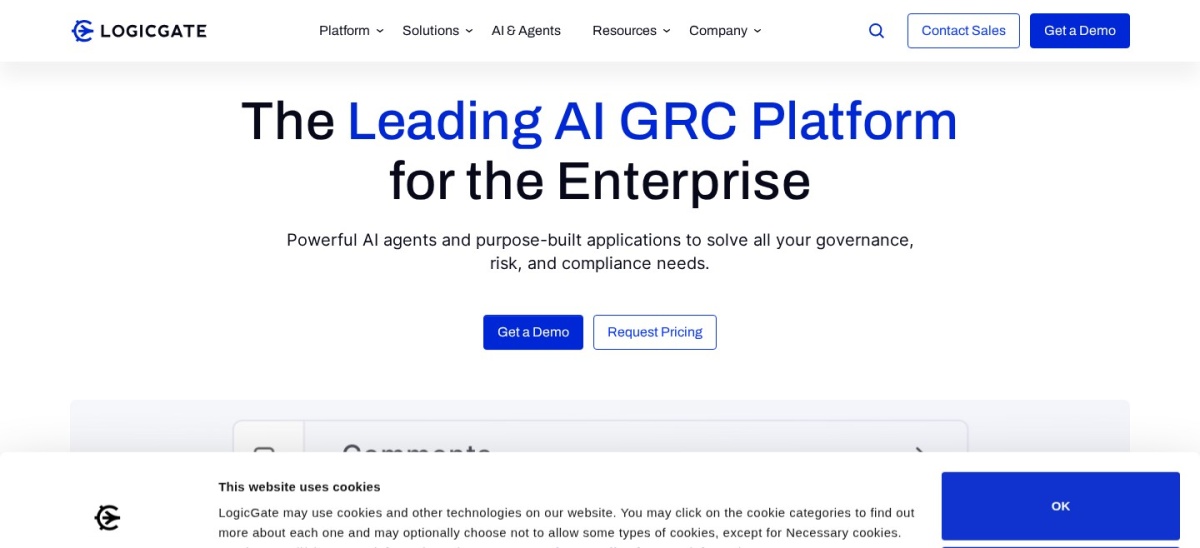
LogicGate Risk Cloud is a no-code GRC platform that lets risk teams build their own workflows, forms and dashboards without developers. It covers risk registers, controls and third-party risk, with pricing custom to scope.
The trade off is that no-code still needs someone to design the workflows, and the entry price is unverified. It suits teams that want to shape the platform around their own risk process.
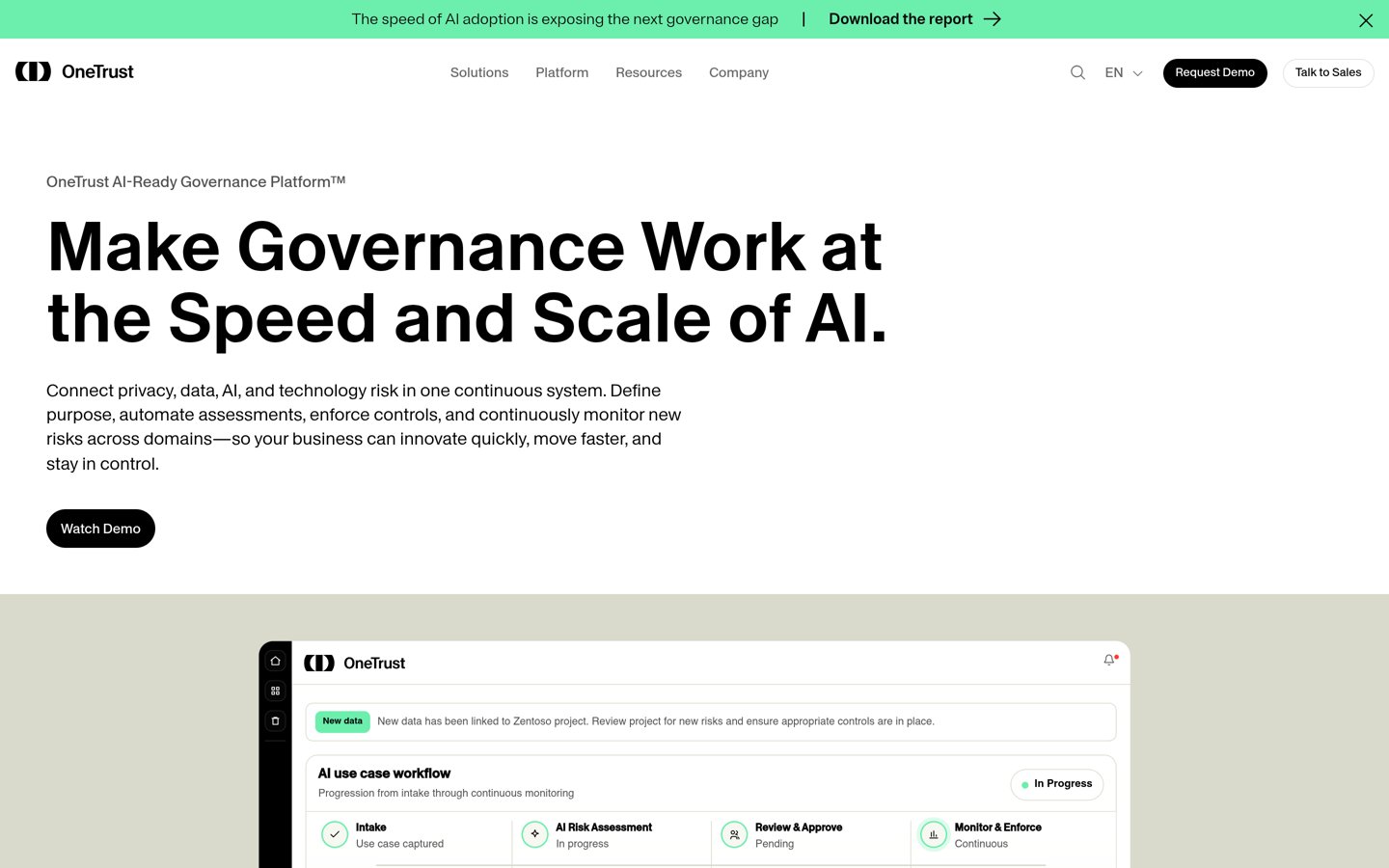
OneTrust Tech Risk & Compliance homepage, captured Nov 2026.
OneTrust Tech Risk & Compliance is the risk module of the OneTrust platform, built on the company's privacy roots. It links technology risks to controls and frameworks, with pricing custom to scope.
The trade off is the review base. With 108 G2 reviews, it is one of the least-reviewed tools here, and it makes most sense inside a OneTrust estate. It suits teams that run privacy and risk together.
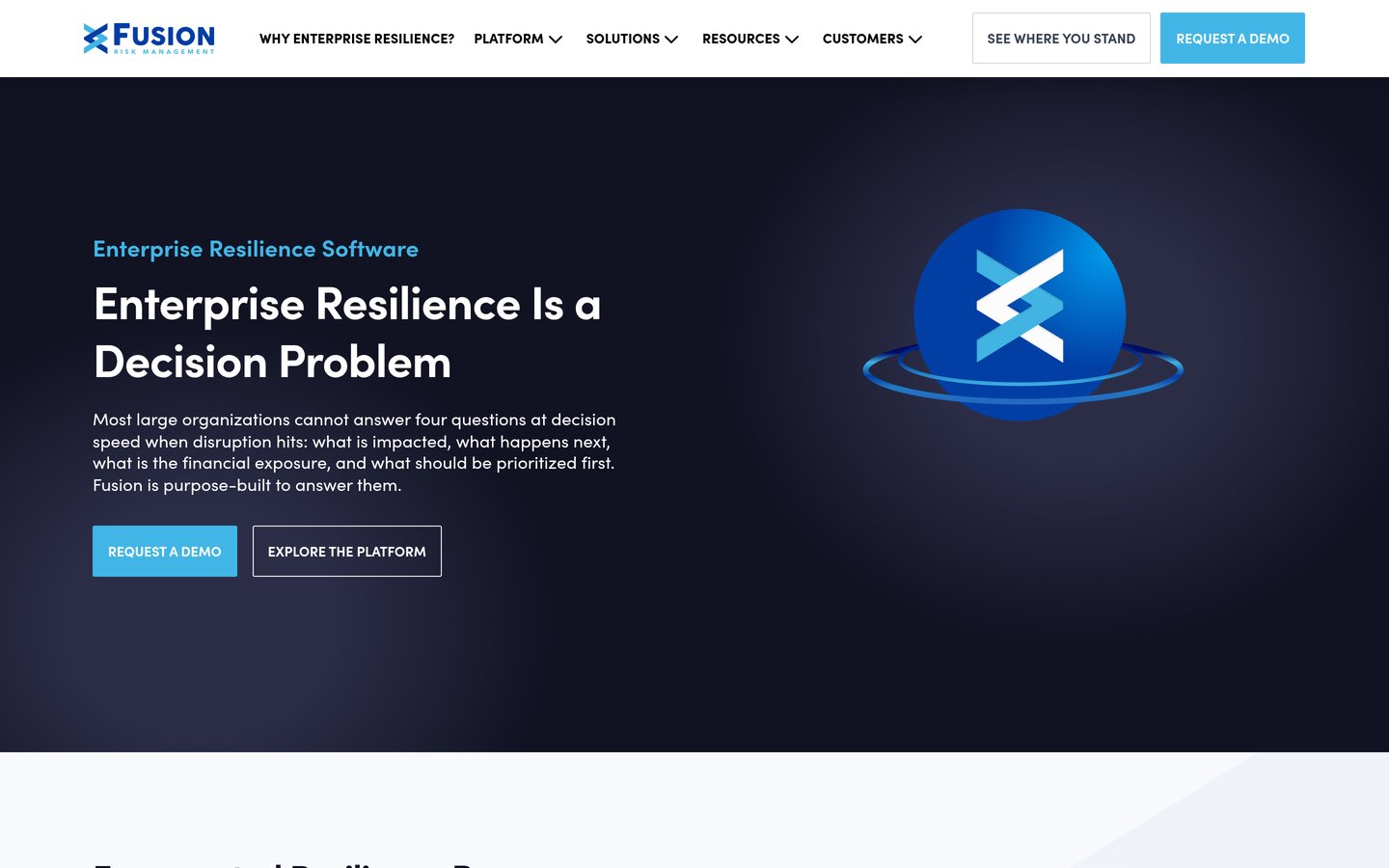
Fusion Risk Management homepage, captured Nov 2026.
Fusion Risk Management is an enterprise resilience platform that ties risk registers to business continuity, scenario testing and third-party risk. Pricing is custom and quote-based.
The trade off is scope. Fusion is built for resilience programmes, so teams that only need a risk register pay for more than they use. It suits large organisations that plan for disruption.
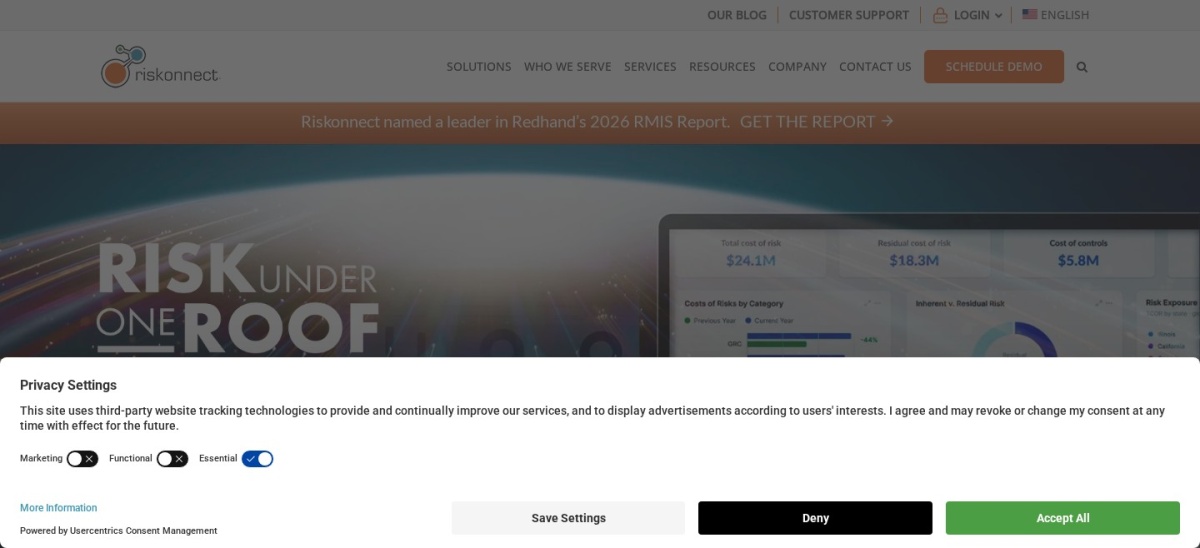
Riskonnect is an integrated risk management platform that brings risk, claims, safety and compliance data into one place. Pricing is custom and quote-based.
The trade off is the review base. With 71 G2 reviews, Riskonnect is the least-reviewed tool in this list. It suits enterprises that want risk, claims and safety on one platform.
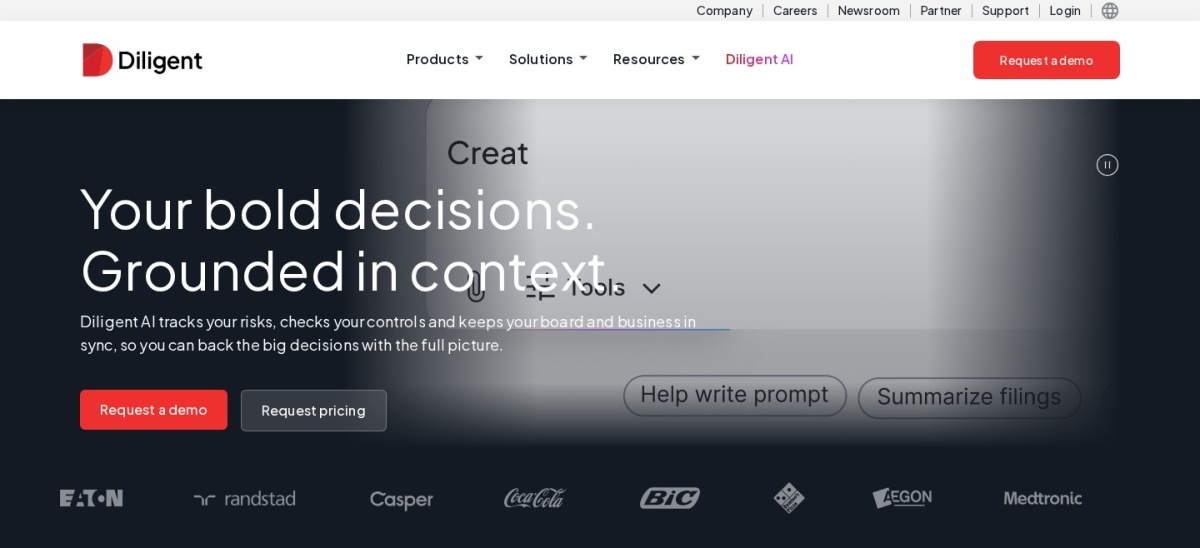
Diligent One Platform homepage, captured Nov 2026.
Diligent One Platform is a governance, risk, compliance and audit suite that sits beside the company's board management software. Pricing is custom and quote-based.
The trade off is that the platform is broad, so risk-only buyers pay for governance tools they may not need. It suits boards and governance teams that want risk beside board work.
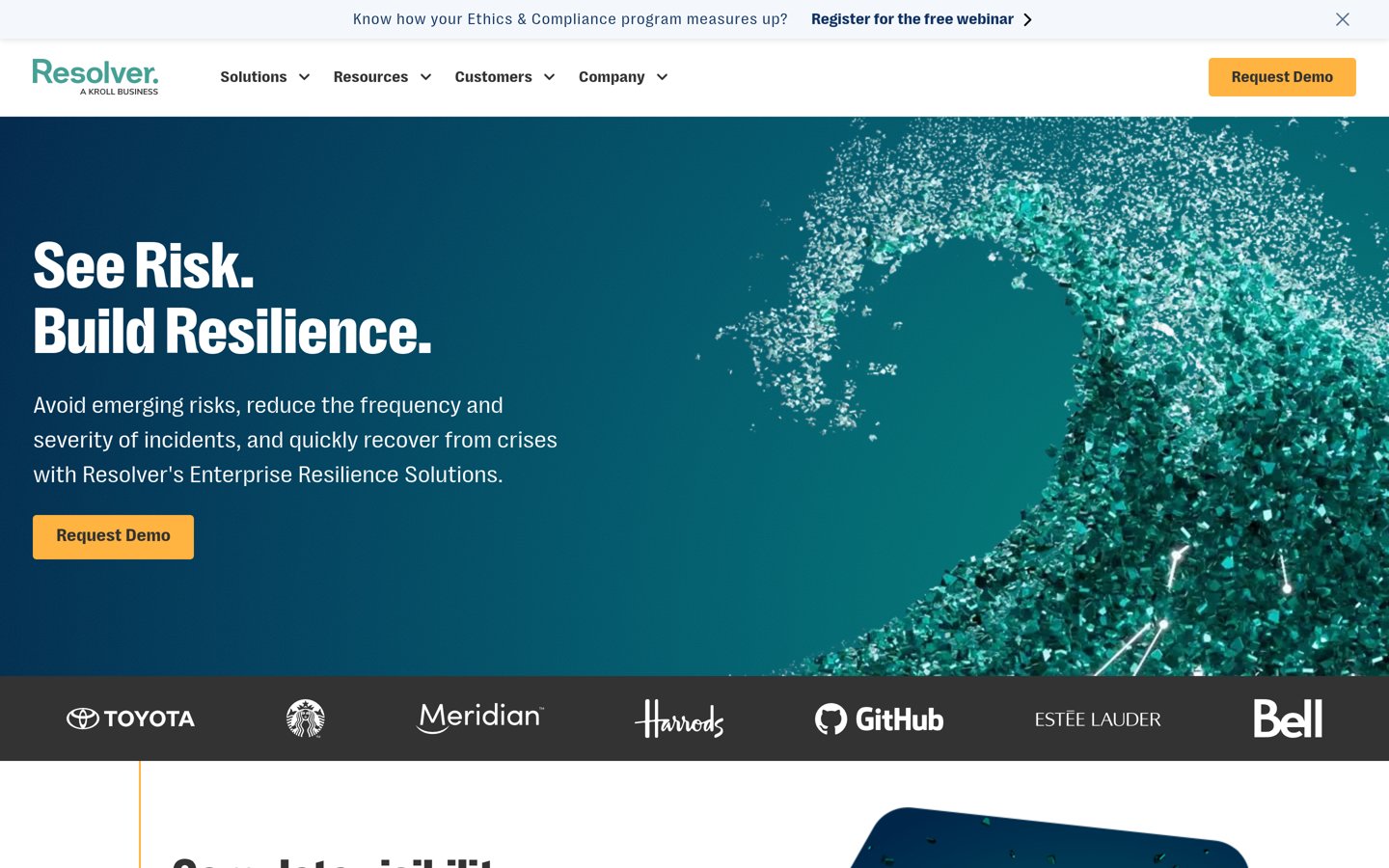
Resolver is a risk management platform that covers risk registers, incidents, audits and compliance with configurable workflows. Pricing is custom and quote-based.
The trade off is that pricing is quote-only, so there is no list price to compare. It suits teams that want risk and incident tracking together.
ServiceNow GRC is the governance, risk and compliance module of the ServiceNow platform, with risk registers, control testing and policy management. It comes in three packages: IRM Foundation, Advanced and Prime.
The trade off is that it makes most sense inside a ServiceNow estate, and pricing is quote-only. It suits large teams already running ServiceNow for IT or HR.
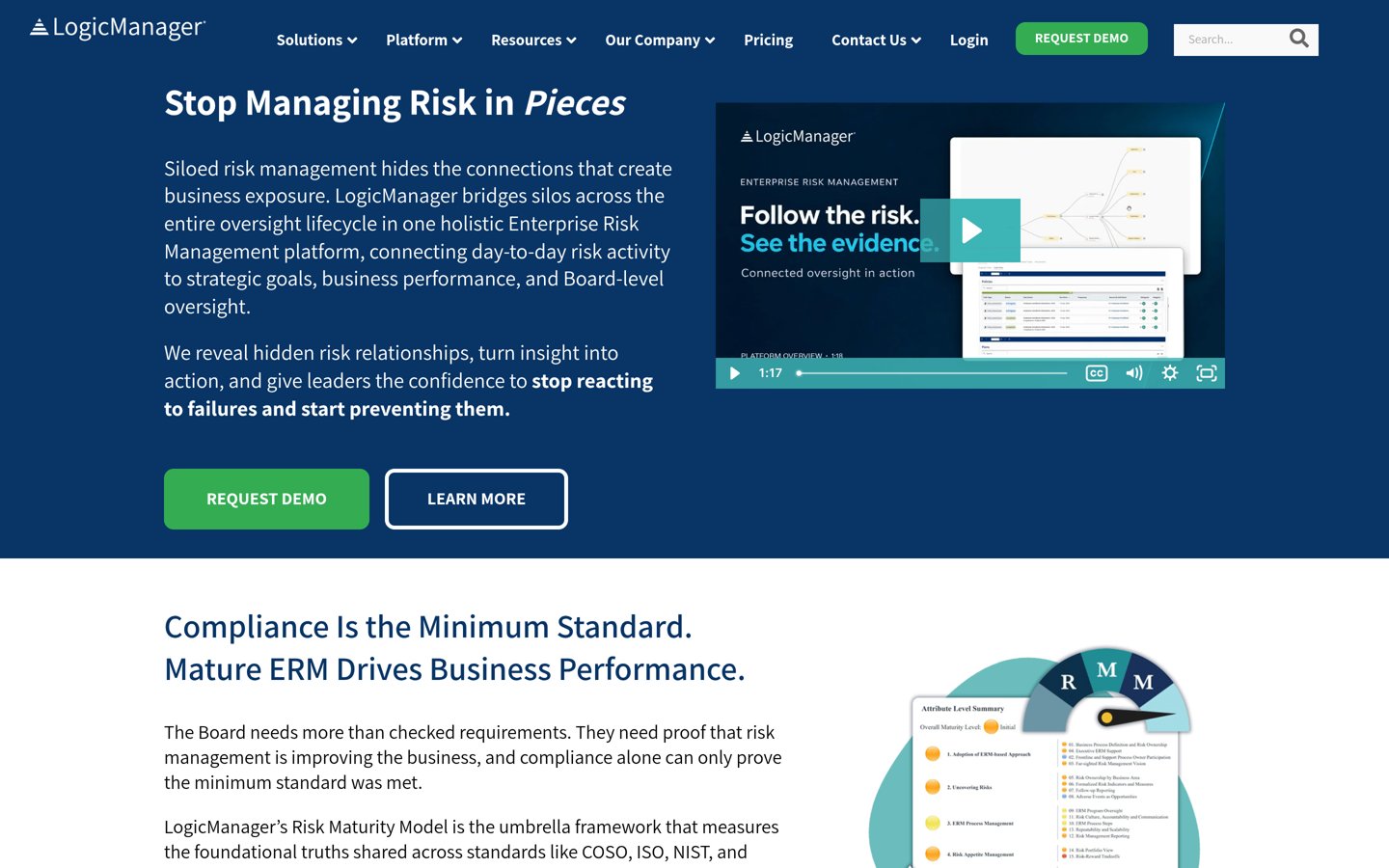
LogicManager is a risk management platform that pairs its software with advisory services, so teams get help designing their risk programme. It offers unlimited users and covers risk registers, controls and incidents.
The trade off is the review base. With 126 G2 reviews and a 4.2 rating, LogicManager is the joint lowest-rated tool in this list. It suits teams that want a vendor who helps build the programme.
Every tool in this list is quote-only. ERM pricing depends on users, modules, frameworks and implementation, so vendors scope each deal by hand.
That makes comparison hard. Ask each vendor for a quote at the same user count and module set, with implementation included, before you rank them.
Secondary price figures exist for some tools, but none are confirmed on the vendor's own site, so this list does not repeat them as prices.
Unlimited licences change the maths. Optro offers unlimited stakeholder licences and LogicManager unlimited users, so the quote may be lower than a per-user rival.
How we chose
We started from the ERM platforms most often named in G2 reviews and buyer guides, then kept the nine with a verifiable G2 rating and a live vendor page.
Prices come from each vendor's site, checked on 29 November 2026. Ratings and review counts come from G2 on the same day. No vendor publishes a list price, so the list shows Custom throughout.
We left out MetricStream ERM, with a 3.5 G2 rating from 3 reviews, and Archer, with a 3.6 rating from 20 reviews. No vendor paid for a place, and we do not claim hands-on testing for this list.
How to choose top ERM software
Start with the frameworks you must follow and the people who will use the register, then shortlist by workflow.
List your frameworks. ISO 27001, NIST, COSO and your regulator's rules decide which built-in content matters. Check the framework library before the demo.
Count your users and stakeholders. Optro and LogicManager offer unlimited licences, while most rivals price by user. Work out the real headcount first.
Ask for a scoped quote. Every vendor here is quote-only. Ask for the same user count, modules and implementation everywhere so the numbers compare.
Test the register workflow. A risk register is only useful if people update it. Check how risks move from identification to treatment in each tool.
FAQ
What is the best ERM software in 2026?
Optro is the best ERM software for most enterprise teams. It holds a 4.6 rating from 1,674 G2 reviews, covers risk, audit and compliance, and offers unlimited stakeholder licences.
How much does ERM software cost?
No ERM vendor in this list publishes a price, so all nine are quote-only. Expect the quote to depend on users, modules and implementation, and ask every vendor for the same scope before you compare.
Is there a free ERM software?
There is no free ERM platform in this list. Every tool here is quote-only, and the usual starting point is a demo or a scoped trial agreed with the vendor.
Which ERM software is best for small teams?
LogicGate Risk Cloud suits smaller teams best, with no-code workflows and a 4.6 rating from 214 reviews. Even so, ERM platforms are built for enterprise scale, so small teams should check the minimum scope first.
Optro vs LogicGate: which is better?
Optro is better for large teams that want audit, compliance and risk in one platform with unlimited stakeholder licences. LogicGate is better for teams that want to build their own no-code risk workflows.
What is the difference between ERM and GRC software?
ERM software focuses on identifying and managing enterprise risks, while GRC software covers governance, risk and compliance together. Most tools in this list do both, and the labels overlap in practice.
SaaS SEO and WordPress specialist with about 8 years of experience. Rakib compares WordPress plugins, themes, hosting and software using public pricing, documentation and user reviews. See how we rank.