Optro is the best enterprise risk management software for most teams, with 1639 G2 reviews behind it. LogicGate suits teams that want to configure their own GRC, while Workiva is the pick for finance-led risk.
How we make this list: we compare pricing pages, product documentation and public user reviews, then re-check every price before each update. No product paid for a place. Disclosure.
Optro leads with a 4.6 G2 rating from 1,639 reviews, after AuditBoard's March 2026 rename.
Every tool here is quote-only; the best public signals are Vendr medians near $46,000 to $54,000 a year.
LogicGate is the configurable middle ground, with a no-code builder and a median contract near $53,800 a year.
Archer is the reference platform for large regulated programmes, but its 3.6 G2 rating rests on only 20 reviews.
MetricStream was left out: its 3.5 G2 rating rests on only 3 reviews.
What enterprise risk management software must cover
Enterprise risk management software runs risk, compliance, audit and third-party risk in one system, and every tool in this list is quote-only. Optro leads for most teams, LogicGate for configurability, and Workiva for finance-led risk.
Published prices do not exist in this market. The best public signals are Vendr medians from real purchases: LogicGate near $53,800 a year, Optro near $45,900, and Onspring near $33,800.
Two big names changed in 2026. AuditBoard renamed itself Optro in March 2026, and Resolver was acquired by Kroll and continues as a Kroll business.
Implementation is the hidden cost. Enterprise GRC suites typically add 50 to 100 percent of the first-year licence cost in implementation, and rollouts run four to twelve months.
Optro is the GRC intelligence platform formerly known as AuditBoard, connecting enterprise risk, controls, audit and compliance in one system. It holds a 4.6 G2 rating from 1,639 reviews, the largest review base in this list, and Gartner named it a Leader in its 2025 Magic Quadrant for GRC.
The trade off is modular cost. Full ERM needs several modules, and pricing is quote-only, with a Vendr median near $45,900 a year. It suits audit-led organisations that want connected risk, compliance and ESG.
LogicGate Risk Cloud is a configurable GRC platform built on a no-code graph database that connects controls, assets and risks. A drag-and-drop builder lets risk teams design their own applications, fields and workflows without waiting on IT or consultants.
The trade off is self-service effort. You design and maintain more yourself, and advanced reporting needs configuration or third-party tools. It suits teams with small risk staffs and big ambitions.
Workiva is a finance-led risk platform that ties risk and controls to SEC and SOX filings, with reporting-grade data behind every control. It holds a 4.5 G2 rating from 2,268 reviews, the second largest base in this list.
The trade off is focus. Workiva is finance-first, so risk is a use case rather than the centre, and pricing is quote-only at a premium. It suits finance-led teams that run SOX and controls beside financial reporting.
Resolver is a mid-market risk platform from Kroll that groups corporate security, incident management and GRC under one roof. It targets teams formalising risk management without an enterprise GRC team to operate it.
The trade off is analytics depth. Advanced analytics sit on an upgrade tier, and pricing is quote-only, estimated at $40,000 to $150,000 a year. It suits mid-market teams that need security risk management with an audit trail.
LogicManager is a mid-market enterprise risk management platform with taxonomy-driven linking of risks, controls and board reporting in one system. It licenses for unlimited users, so costs do not creep up every time you add a reviewer from finance or HR.
The trade off is suite depth. LogicManager's mid-market focus may lack the depth of Archer or MetricStream for the largest programmes. It suits mid-size firms starting enterprise risk management with a dedicated advisory analyst included.
ServiceNow IRM is the risk and compliance module of the Now Platform, running risks, incidents, changes and controls on the same system as IT service management. It holds a 4.2 G2 rating from 122 reviews.
The trade off is platform lock-in. The value case is strongest for existing ServiceNow customers, and standalone buyers pay for a platform they may not need. It suits companies already running ITSM on ServiceNow.
IBM OpenPages is a risk platform with a financial services heritage, covering model risk, operational risk and compliance for banks and insurers. It holds a 4.2 G2 rating from 76 reviews.
The trade off is industry fit. OpenPages is strongest in financial services, so teams outside banking should ask for references in their own industry. It suits financial services firms that need model and operational risk in one system.
NAVEX One is an ethics and compliance platform that extends into risk management, covering policy management, whistleblowing, training and third-party risk. It holds a 3.7 G2 rating from 86 reviews.
The trade off is rating. NAVEX One holds the second lowest G2 rating here at 3.7, and its risk depth is lighter than the GRC suites. It suits ethics and compliance programmes that want risk beside policy and training.
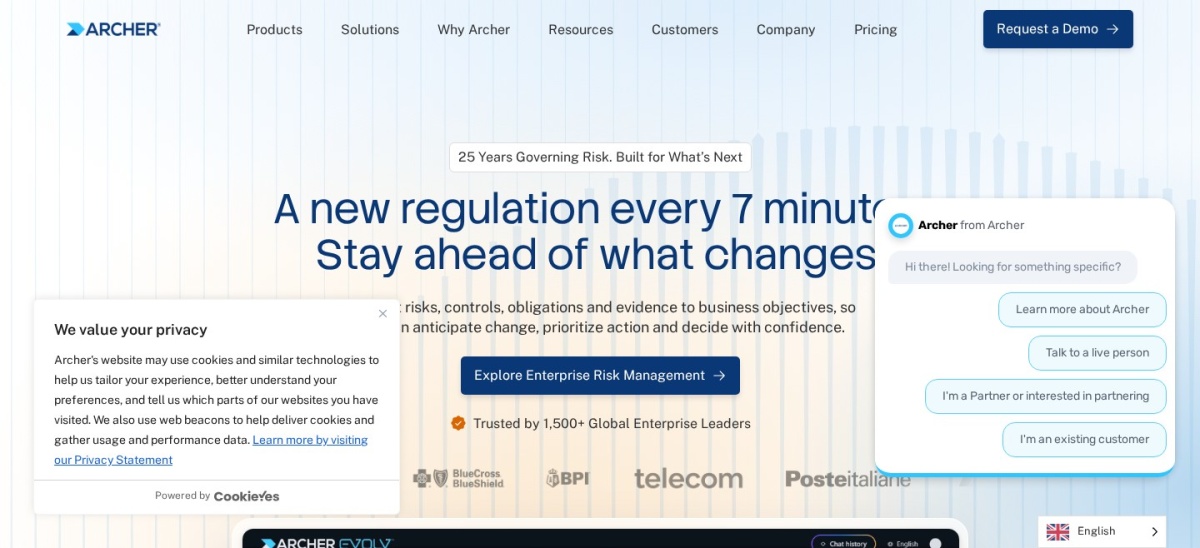
Archer IRM is the pioneer of the integrated risk management category, with more than two decades in the market and a customer base including over half of the Fortune 500. It covers operational risk, IT risk, compliance, audit and business continuity in one system.
The trade off is age and evidence. Archer's interface and reporting date from an earlier era, and its 3.6 G2 rating rests on only 20 reviews. It suits banks and regulated enterprises with mature GRC programmes and dedicated admins.
Vendr purchase data puts the median LogicGate contract near $53,800 a year, with deals ranging from about $12,300 to $136,100. Optro's median is near $45,900 a year, with a range from about $21,200 to $111,200.
Archer is the most expensive tier, with analyst guides putting contracts at $100,000 to $400,000 a year or more. Resolver is estimated at $40,000 to $150,000 a year, and LogicManager charges a fixed fee with unlimited users.
Implementation typically adds 50 to 100 percent to the first-year licence cost, and rollouts run four to twelve months for the large suites. Always ask for the total first-year cost in writing, including implementation and training.
How we chose
We started from the risk management platforms most compared on G2 in 2026, keeping those with a verifiable G2 rating and enterprise customers.
Prices and ratings were checked on 25 November 2026. No vendor in this list publishes a price, so every tool says Custom and the article records the best public contract signals from Vendr purchase data.
We left out tools with no verifiable rating. No vendor paid for a place, and we do not claim hands-on testing for this list.
How to choose an enterprise risk management tool
Start with whether risk is audit-led or finance-led, then shortlist by platform fit.
Decide whether risk is audit-led or finance-led. Audit-led teams should start with Optro, while finance-led teams should look at Workiva.
Check what you already run. ServiceNow shops should start with IRM, and IBM shops with OpenPages, before buying a standalone suite.
Ask for contract ranges before the demo. Vendr medians near $46,000 to $54,000 a year are the best public guide, so ask vendors to confirm their range in writing.
Budget implementation at 50 to 100 percent of year one. Enterprise GRC rollouts run four to twelve months, so the first-year cost is far above the licence alone.
FAQ
What is the best enterprise risk management software?
Optro is the best overall pick, rated 4.6 out of 5 on G2 from 1,639 reviews. It connects enterprise risk, controls, audit and compliance in one system, and Gartner named it a Leader in its 2025 Magic Quadrant for GRC.
How much does enterprise risk management software cost?
Every tool here is quote-only, with no published price. The best public signals are Vendr medians near $45,900 a year for Optro and $53,800 for LogicGate, while Archer runs $100,000 to $400,000 a year or more.
What happened to AuditBoard?
AuditBoard renamed itself Optro in March 2026. The platform, team and auditboard.com domain continue under the new brand, and Gartner named Optro a Leader in its 2025 Magic Quadrant for GRC.
Which risk tool is best for mid-market teams?
Resolver and LogicManager are the mid-market picks. Resolver groups security, incidents and GRC in one platform, while LogicManager licenses unlimited users with a dedicated advisory analyst included.
What is the difference between LogicGate and Archer?
LogicGate is the configurable pick, with a no-code builder that lets risk teams design their own workflows. Archer is the regulated-enterprise pick, with the deepest framework library and over half of the Fortune 500 as customers.
Does ServiceNow include risk management?
Yes, ServiceNow sells Integrated Risk Management as a module of the Now Platform. It suits companies already running ITSM on ServiceNow, since risks, incidents and changes share data and workflows.
SaaS SEO and WordPress specialist with about 8 years of experience. Rakib compares WordPress plugins, themes, hosting and software using public pricing, documentation and user reviews. See how we rank.