Anaplan is the top demand planning software for most enterprises, with connected planning across sales, supply chain and finance and the largest review base in this list. Slimstock is the highest rated pick for mid-market teams, while Netstock is the cheapest published option for ERP-connected planning.
How we make this list: we compare pricing pages, product documentation and public user reviews, then re-check every price before each update. No product paid for a place. Disclosure.
Anaplan leads for connected planning across teams, with the largest G2 review base in this list.
Slimstock holds the highest G2 rating at 4.8, but sells by quote only.
Netstock and Forecast Pro are the only tools with published prices, at 900 and 199 dollars a month.
Seven of the nine tools sell on custom quotes, so budget for a sales cycle with most of this list.
o9 Solutions has the thinnest review base here at 19 G2 reviews, despite its enterprise reputation.
How do you choose top demand planning software?
Start with the size of your operation. Enterprise suites like Anaplan and SAP IBP are built for global planning across many sites, while Netstock and Slimstock fit mid-market teams that need results in weeks rather than months.
Published prices are rare in this category. Only Netstock and Forecast Pro print a starting rate, so most shortlists need a sales conversation before any budget can be set.
Forecast accuracy is only half the job. The best tools turn the forecast into purchase orders, replenishment plans and inventory targets without a spreadsheet step in between.
Ratings need reading in context. Anaplan holds its rating across 462 reviews, while o9 Solutions holds a lower rating from only 19, which is too thin a base to compare directly.
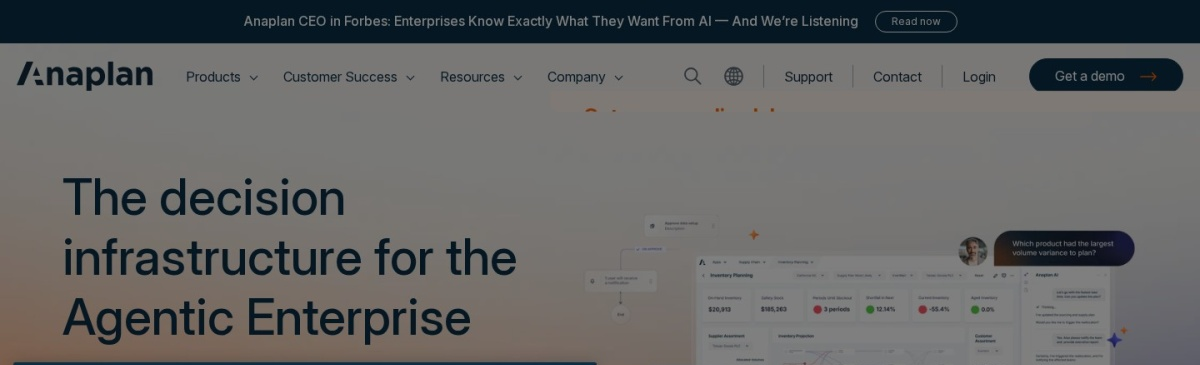
Anaplan is a cloud planning platform built on its Hyperblock calculation engine, and it connects sales, supply chain, finance and HR plans in one live model. Planners run rolling forecasts, driver-based plans and what-if scenarios without rebuilding spreadsheets, and AI now sits inside the planning workflow.
The trade off is that Anaplan is a general planning platform, not a dedicated supply chain suite, so demand planning depth depends on how the model is built. Pricing is quote only, and enterprise deployments take months to implement. It suits large teams that plan across functions, not just the supply chain.
What we like
Largest G2 review base in this list
One live model across functions
Strong what-if scenario planning
AI inside the planning workflow
Watch out for
Not a dedicated supply chain suite
Quote-only pricing, months to implement
Anaplan publishes no prices; expect an enterprise quoteVisit anaplan.com
02
Slimstock
4.8/5on G2 (76 reviews, checked Nov 2026)
PricingCustom/yr
Best for demand sensing at mid-market
ProductSlim4 planning platform
Demand sensingYes, across channels
ERP linksHundreds of systems
Free planNo
slimstock.com
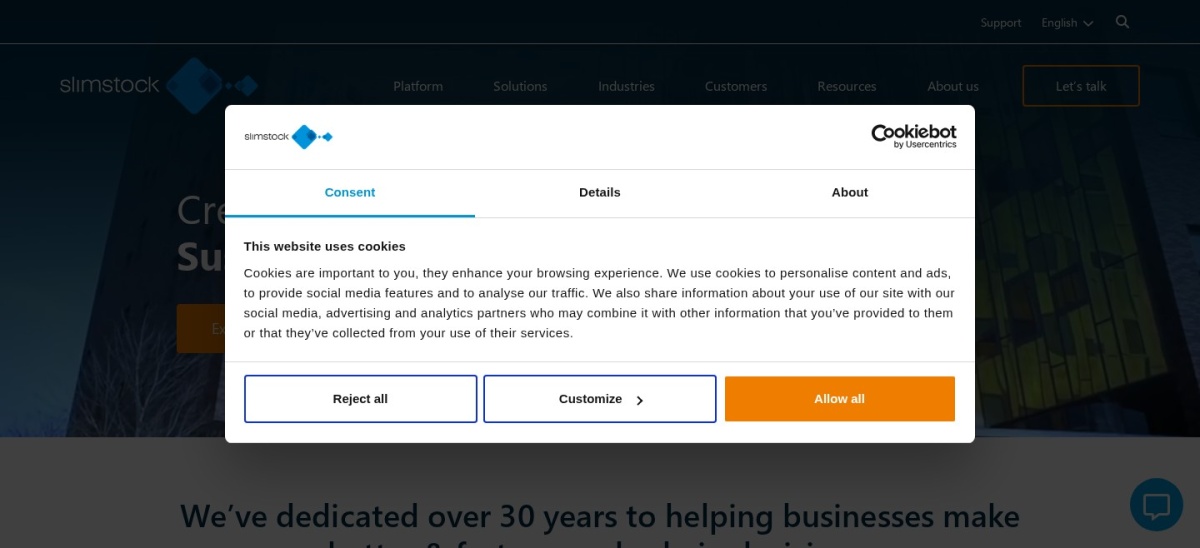
Slimstock homepage, captured Nov 2026.
Slimstock is an AI-powered supply chain planning platform whose Slim4 product combines forecasting with demand sensing across channels. It adds inventory optimisation, replenishment and multi-echelon planning, and links to hundreds of ERP systems through a central control tower dashboard.
The trade off is price transparency. Slimstock publishes no starting price, so budgeting needs a quote and a sales process, and the vendor is better established in Europe than in North America. It suits mid-sized distributors and manufacturers replacing spreadsheet planning.
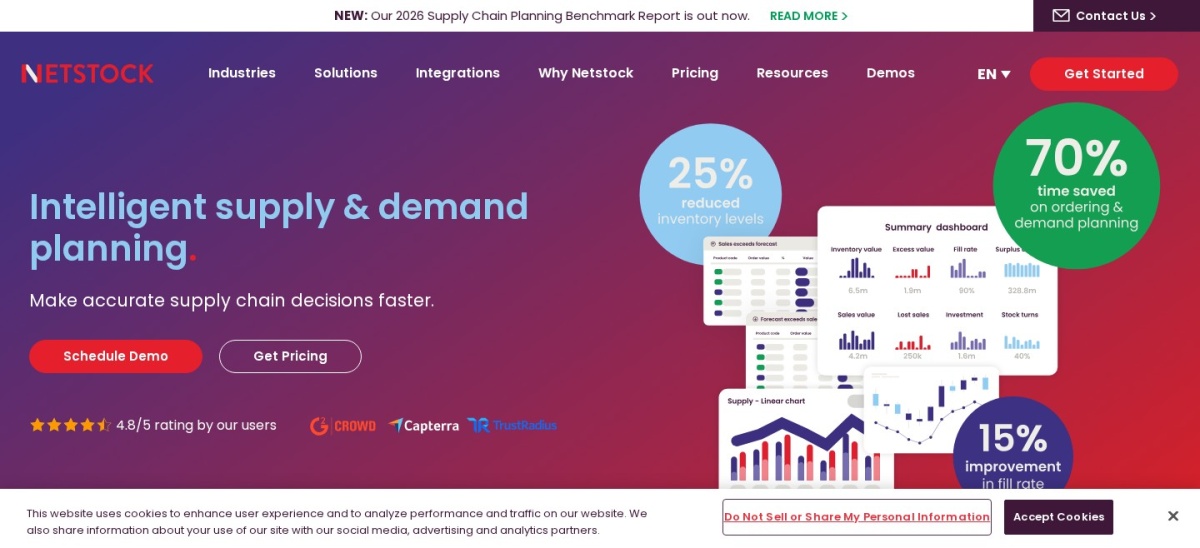
Netstock is a cloud demand and supply planning platform that plugs into your ERP and turns raw ERP data into predictive inventory insights. It covers forecasting, inventory optimisation and replenishment, with Pivot Forecasting for slow movers, and implementation typically takes 6 to 10 weeks.
The trade off is scope. Netstock is built for mid-market teams on an ERP, so very large or highly custom supply chains will outgrow it. Pricing starts at 900 dollars a month on an annual subscription, which is the cheapest published enterprise-grade entry in this list.
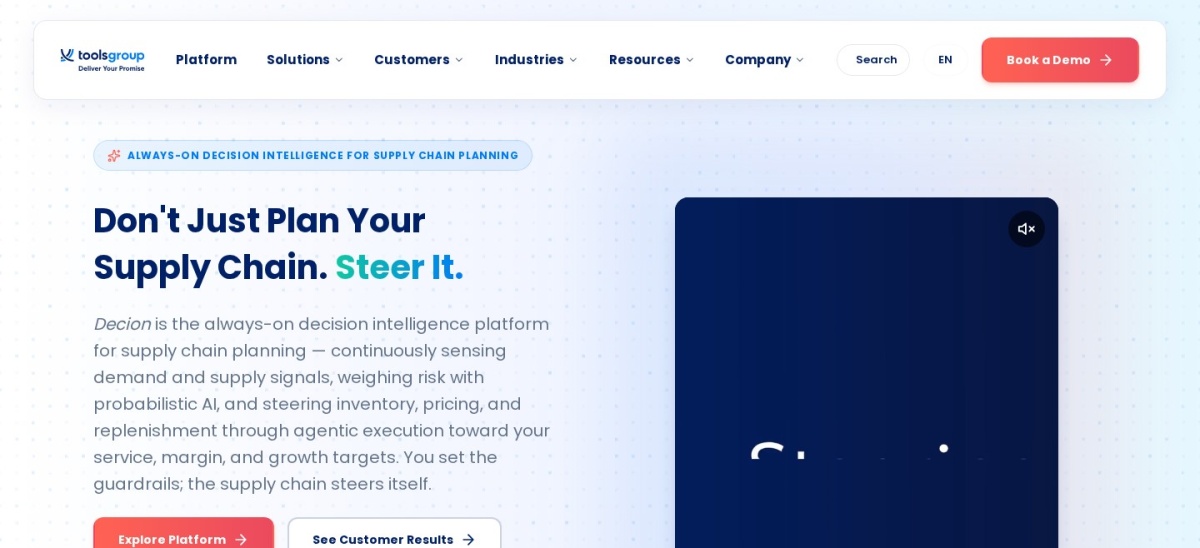
ToolsGroup is a supply chain planning vendor whose Decion platform combines demand forecasting, inventory positioning, replenishment and production planning. Its probabilistic AI models demand uncertainty instead of a single point forecast, and multi-echelon optimisation sets stock targets across the whole network.
The trade off is complexity. Probabilistic planning and multi-echelon optimisation need clean data and trained planners, and ToolsGroup publishes no price, so costs come from a quote. It suits distributors and manufacturers with complex networks and strict service-level targets.
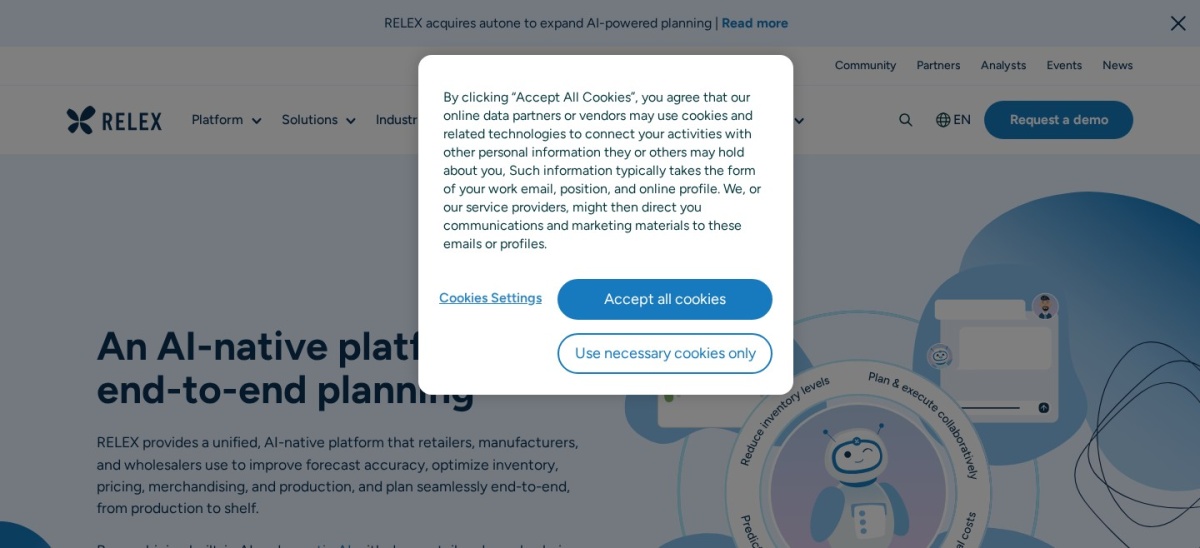
RELEX is an AI-native planning platform for large retailers, wholesalers and manufacturers. It unifies demand, inventory, merchandising, pricing, supply and production planning, with store-level machine learning forecasts and space and workforce planning in the same system.
The trade off is scale and price. RELEX is built for retail networks, so smaller teams will find it too much platform, and it publishes no price: G2 lists a Basic tier in euros, but the vendor sells by quote. It suits grocery and retail chains planning from forecast to shelf.
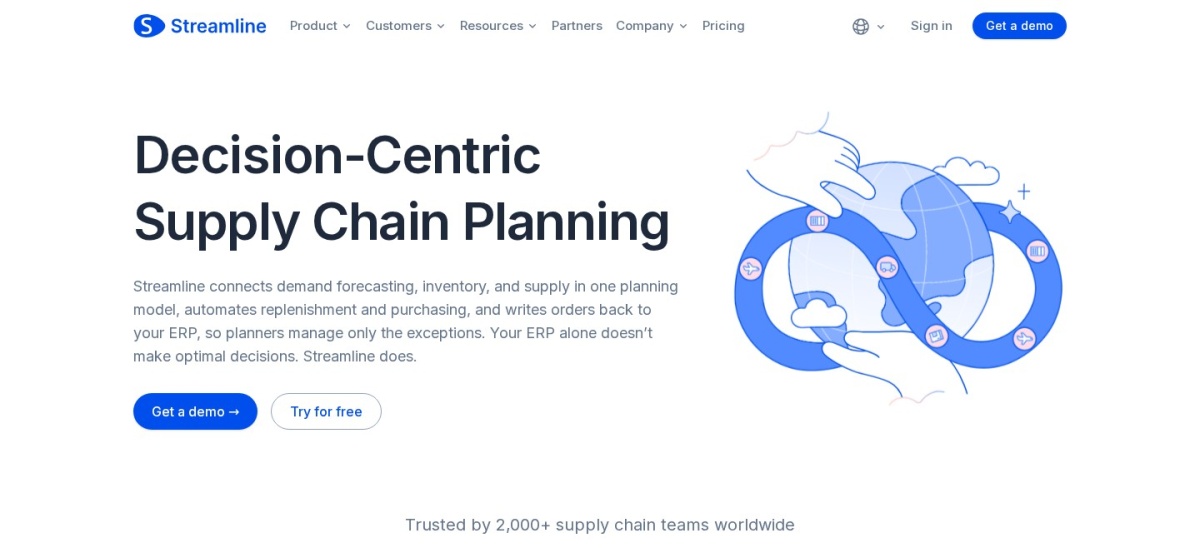
Streamline is a supply chain planning platform from GMDH that connects demand forecasting, inventory and supply in one planning model. It automates replenishment and purchasing, writes approved orders back to your ERP, and planners manage only the exceptions.
The trade off is pricing. Streamline publishes no paid prices, so costs come from a quote, and its free trial is the only way to test the forecast before buying. It suits mid-market manufacturers, distributors and retailers that want accurate forecasts with fast setup.
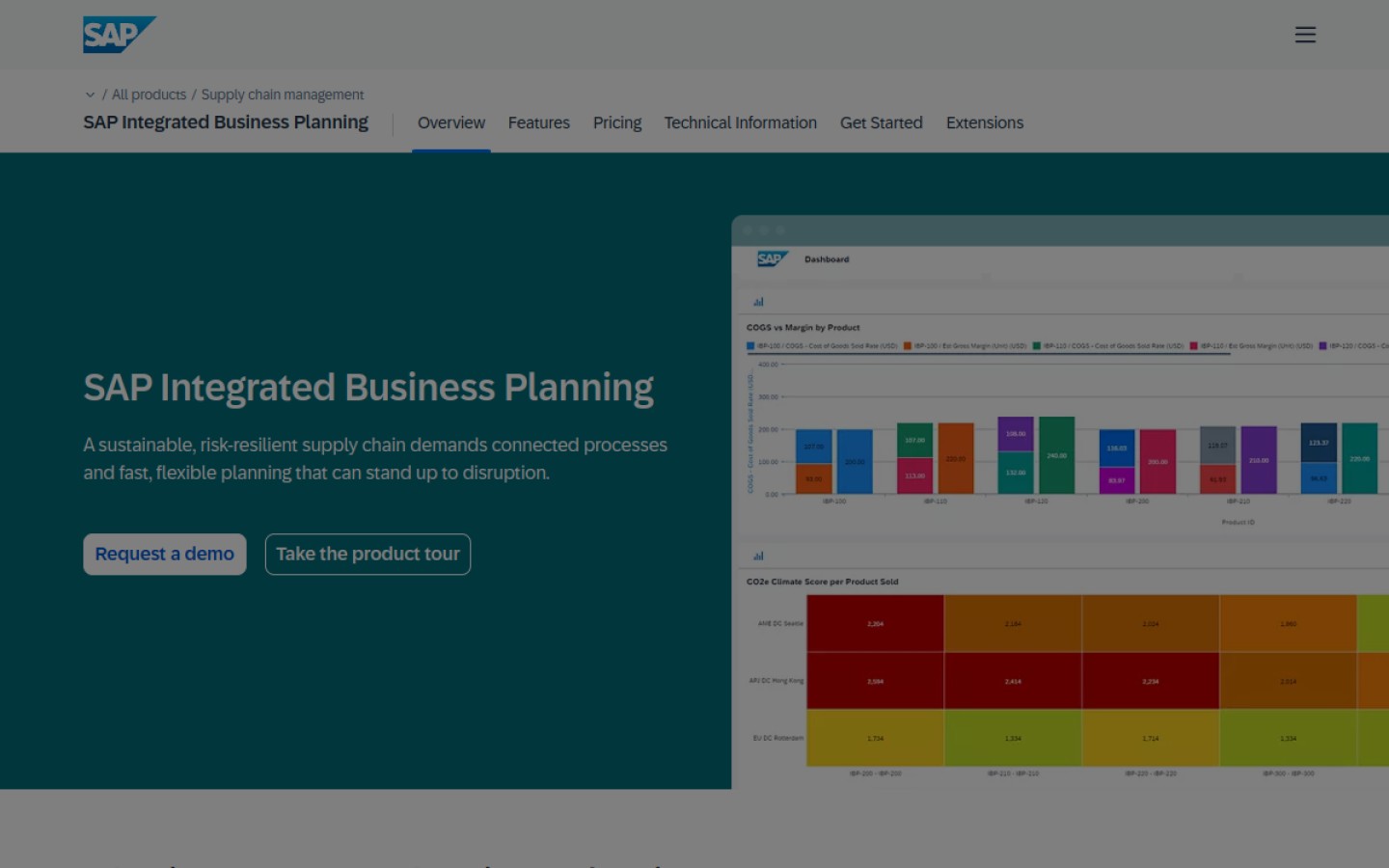
SAP Integrated Business Planning homepage, captured Nov 2026.
SAP Integrated Business Planning is SAP's cloud platform for demand planning, supply planning, inventory optimisation and S&OP. It runs on SAP HANA and works best beside S/4HANA, with an Excel-style front end planners already know, plus AI forecasting and demand sensing.
The trade off is implementation time. G2 reports an average implementation of 7 months, and SAP IBP publishes no price, so costs come from a quote. It suits companies already running SAP that want planning inside the same ecosystem.
o9 Solutions is an AI-native planning platform built around the Digital Brain, a single connected data model that links products, customers, suppliers and market signals. Its Enterprise Knowledge Graph powers forecasts, a digital twin and collaborative S&OP on one platform.
The trade off is evidence. o9 holds only 19 G2 reviews, the thinnest base in this list, and it publishes no price, so enterprise buyers face a long implementation and a quote. It suits large process-industry companies modernising legacy planning.
Forecast Pro is a forecasting workbench for teams that build their own forecast models. Planners pick the statistical model, set seasonality and trend handling, add promotion effects and override results where judgment beats the model. The Professional plan costs 199 dollars per named user a month.
The trade off is scope. Forecast Pro forecasts and does nothing else, so replenishment, allocation and ordering need another tool or a manual step. It suits a small warehouse with a planner who owns the forecast and wants to prove accuracy gains before buying a wider system.
A forecast predicts what customers will buy. It is a number, and on its own it changes nothing.
Planning turns that number into purchase orders, safety stock levels and production schedules. The tools in this list are judged on that second step as much as the first.
That is why Forecast Pro sits last here despite its published price: it forecasts brilliantly and does nothing else, so the plan still needs another tool or a spreadsheet.
If your team only needs the number, a forecasting workbench is enough. If you need the orders too, pick a platform that writes them back to your ERP.
How we chose
We started from the tools that dominate demand planning shortlists in 2026 comparison guides and G2's supply chain planning category, then kept the nine with a verifiable G2 rating. Every tool here forecasts demand and turns it into inventory or replenishment plans.
Prices come from each vendor's pricing page, checked on 29 November 2026. Only Netstock and Forecast Pro publish a starting price; the other seven sell by quote, so they are listed as Custom. Ratings and review counts come from G2 on the same day.
We left out tools with no verifiable G2 rating, including John Galt Atlas, and tools built only for forecasting with no planning workflow. No vendor paid for a place, and we do not claim hands-on testing for this list.
How to choose top demand planning software
Start with your planning scope and your ERP, then get the quote early, because most of this list publishes no price.
Map your planning scope first. Decide whether you need forecasting alone or forecasting plus inventory, replenishment and S&OP, because that split halves the shortlist.
Check ERP fit before features. A tool that reads your ERP data natively saves months of integration work, so confirm your exact ERP is supported.
Get the quote early. Seven of these nine tools publish no price, so start the sales conversation before you fall in love with a feature set.
Pilot on one product family. Run the forecast against one category first, compare accuracy against your spreadsheet, then roll out wider.
FAQ
What is the best demand planning software?
Anaplan is the best demand planning software for most enterprises, because it connects sales, supply chain, finance and HR plans in one model and holds the largest G2 review base here. Slimstock is the best mid-market pick, and Netstock is the best value for teams already on an ERP.
How much does demand planning software cost?
Only two tools here publish a price: Netstock starts at 900 dollars a month and Forecast Pro at 199 dollars per user a month. The other seven sell on custom quotes, and enterprise suites typically run from 50,000 dollars a year upward depending on users and modules.
Which demand planning software is best for small teams?
Netstock is the best fit for a smaller team on an ERP, from 900 dollars a month with implementation in 6 to 10 weeks. Forecast Pro is the best value for a single planner, at 199 dollars a user a month. Both publish their prices, so there is no sales call to get started.
Anaplan vs o9 Solutions: which is better?
Anaplan is better for connected planning across finance, HR and supply chain in one model, with far more G2 reviews behind its rating. o9 Solutions is better for AI-native demand planning on a single data model, but its 19 G2 reviews are a thin base. Pick Anaplan for breadth and o9 for AI-first forecasting.
Does demand planning software work with my ERP?
Yes, if you pick the right one. Netstock integrates with more than 60 ERP systems, Streamline writes orders back to your ERP, and SAP IBP is the natural pick for S/4HANA. Slimstock links to hundreds of ERP systems, so check your exact ERP is supported before you shortlist.
What is the difference between demand planning and demand forecasting?
Demand forecasting predicts what customers will buy, while demand planning turns that forecast into inventory, replenishment and production plans. Forecasting is one step inside planning, which is why this list includes tools that also optimise stock and write orders back to your ERP.
SaaS SEO and WordPress specialist with about 8 years of experience. Rakib compares WordPress plugins, themes, hosting and software using public pricing, documentation and user reviews. See how we rank.