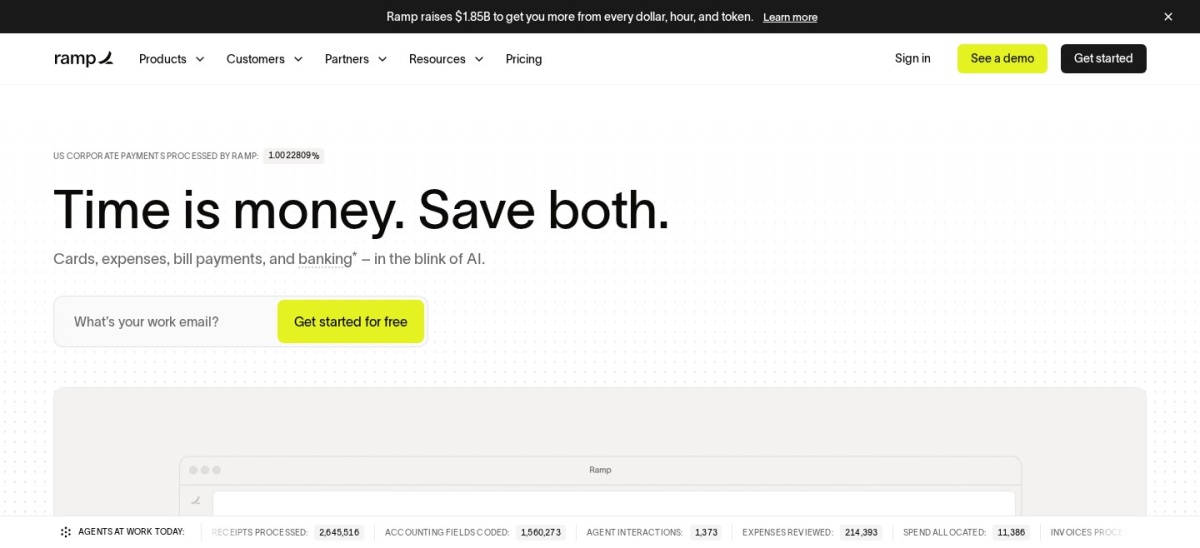
Ramp is the top AI financial software for most teams, pairing corporate cards with invoice capture and approvals on a free plan. Brex suits global teams that need cards in many countries, while Tipalti fits businesses paying suppliers across borders.
How we make this list: we compare pricing pages, product documentation and public user reviews, then re-check every price before each update. No product paid for a place. Disclosure.
Ramp leads on rating at 4.8 out of 5 from 2,578 G2 reviews, and its free plan already covers invoice capture and approvals.
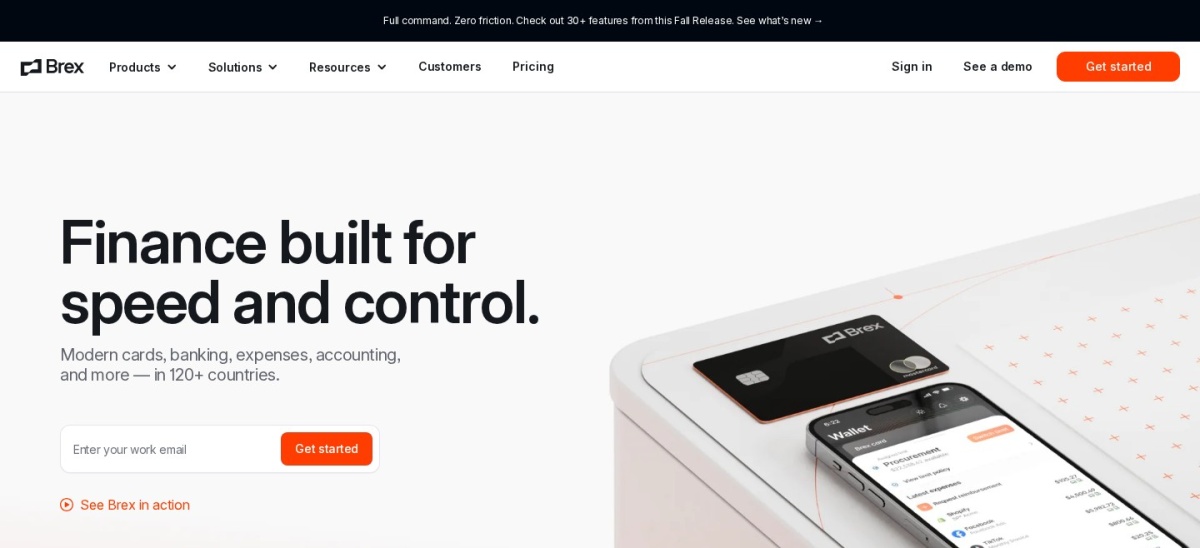
Brex matches Ramp on rating and adds cards that work in more than 210 countries, with Premium at $12 per user a month.
Tipalti pays suppliers in more than 200 countries in over 120 currencies, starting at $99 a month with unlimited users.
Five of the nine tools publish no price, so expect a sales quote for Stampli, FloQast, Datarails, BlackLine and Vic.ai.
Vic.ai aims for the most autonomous processing, but its 4.7 rating rests on only 27 G2 reviews.
How do you choose the top AI financial software?
Start with the job, not the AI label. A team drowning in invoices needs AP automation, while a team missing the close needs reconciliation and matching.
Check what the AI actually does. Invoice capture, coding suggestions, duplicate flags and three-way matching are concrete features; a chatbot alone is not automation.
Price follows the job. Card-led spend tools such as Ramp and Brex start free, while close and planning platforms are quoted per contract.
Mind the review base. A 4.7 rating from 27 reviews is a weaker signal than a 4.6 from nearly 2,000, so weigh both the score and the count.
Ramp is a spend platform that bundles corporate cards, expenses and accounts payable in one place, with AI handling invoice capture, coding and approvals. The free plan already covers invoice capture and approvals, and Plus at $15 per user a month adds deeper controls.
The trade off is add-on pricing. Procurement features such as three-way matching sit on a paid add-on, and Plus carries an unpublished platform fee on top of the per-user price. It suits US finance teams that want cards, expenses and bill pay in one system.
Brex is a corporate card and spend platform built for teams that spend across borders, with cards that work in more than 210 countries. The Essentials plan is free per user, and Premium at $12 per user a month adds advanced controls, travel booking and multi-entity features.
The trade off is depth on bill pay. Brex covers cards and expenses best, while dedicated AP tools go deeper on invoice matching and supplier payments. It suits startups and scale-ups with global teams and several entities to manage.
What we like
Cards work in more than 210 countries
Free Essentials plan with no per-user fee
Strong multi-entity controls on Premium
Watch out for
AP automation is lighter than dedicated AP tools
Capital One completed its acquisition in April 2026
Premium features need the paid tier
Premium adds travel, controls and multi-entity toolsVisit brex.com
03
Stampli
4.6/5on G2 (1,978 reviews, checked Nov 2026)
PricingCustom/yr
Best for AI invoice coding
AI invoice codingYes, Billy AI
Free planNo
Paid planCustom quote
IntegrationsNetSuite, Sage, Dynamics
stampli.com
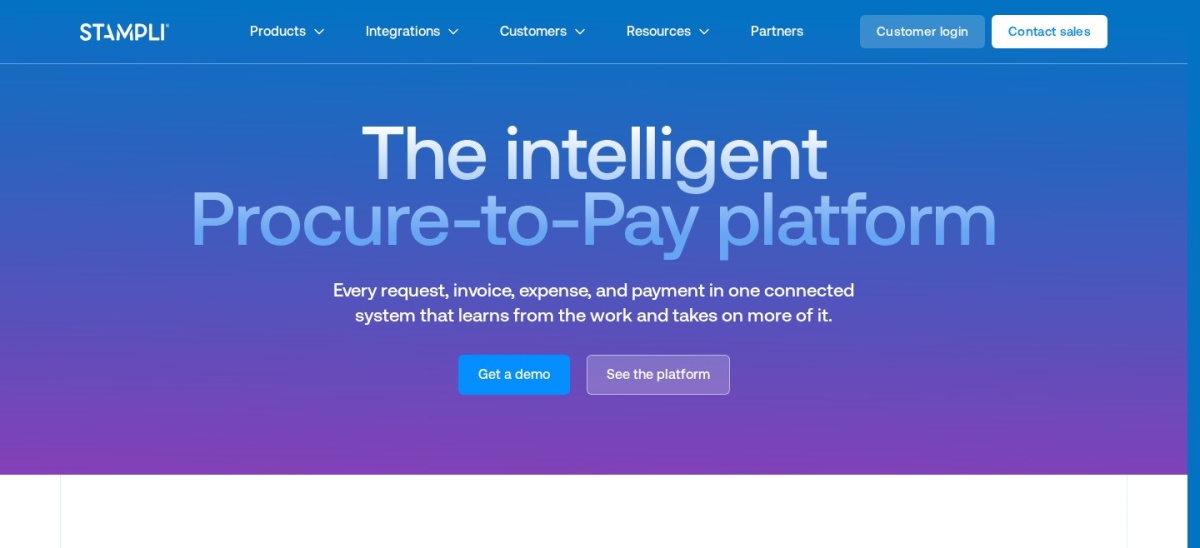
Stampli homepage, captured Nov 2026.
Stampli is an AP platform built around the invoice itself, with every comment, document and approval kept on one screen. Its Billy AI assistant learns how your team coded past invoices, then pre-fills fields, suggests coding and routing, and flags possible duplicates.
The trade off is price transparency. Stampli publishes no list price, so every deal is a custom quote and budgeting needs a sales conversation. It suits mid-market teams on complex or legacy ERPs that need approvals to follow the invoice, not the other way round.
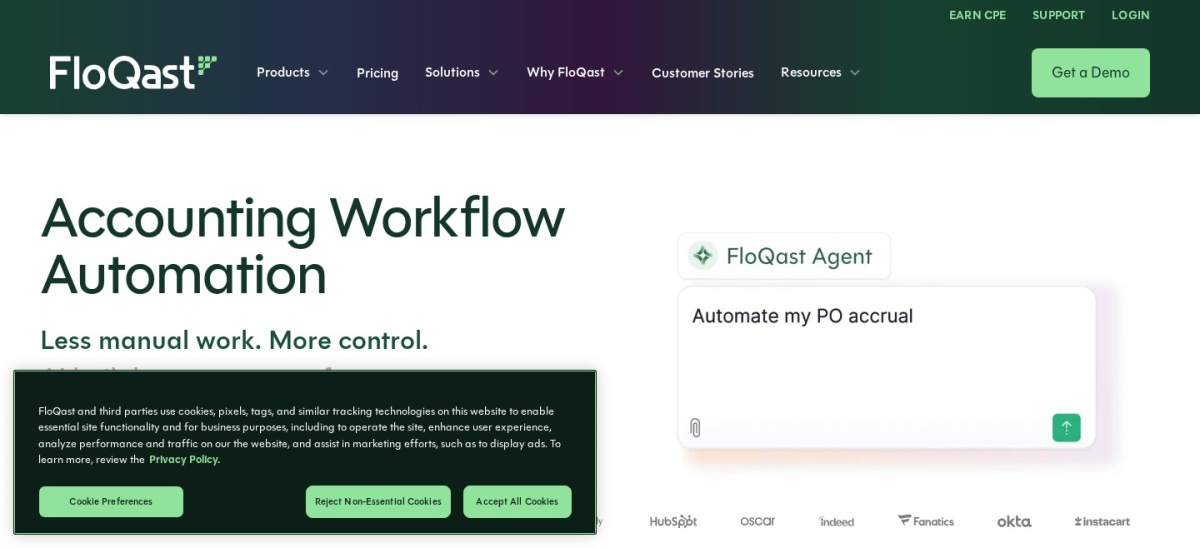
FloQast is a close automation platform that pairs month-end close checklists with AI matching and automatic journal posting, so accountants can see every task, owner and deadline in one place. It connects to the ERP and pulls balances straight into reconciliations instead of relying on spreadsheets passed around by email.
The trade off is that it is a close tool, not a full finance suite. It does not handle supplier payments or cards, and pricing is quoted per contract. It suits accounting teams that close every month and want the checklist and the matching in the same system.
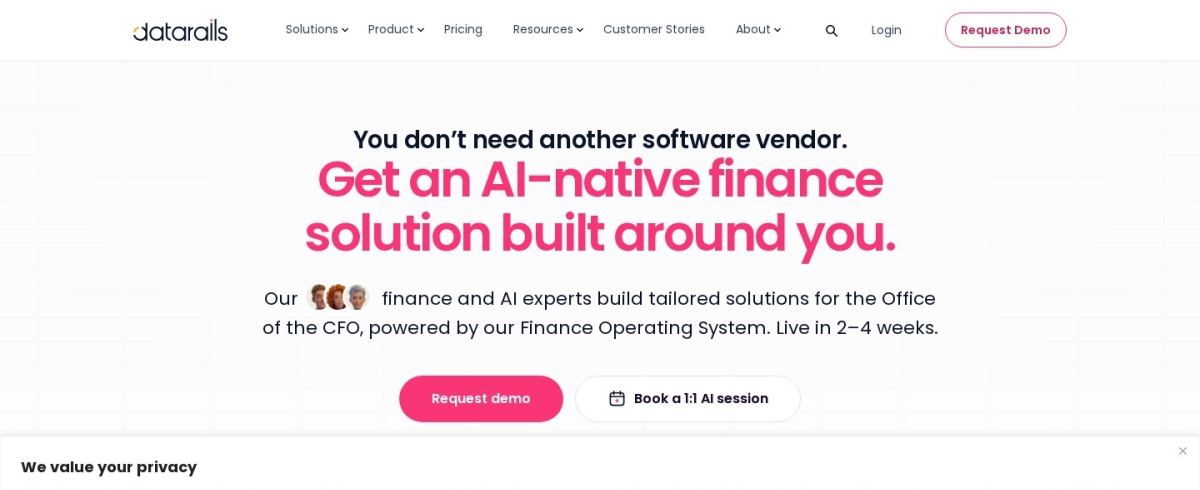
Datarails is an Excel-native FP&A platform that connects a central database to the spreadsheets finance teams already use. It builds profit and loss, balance sheet and cash flow reports for Excel and PowerPoint, and consolidates entities with currency translation and intercompany eliminations.
The trade off is cost and setup. Every tier is quote only, with third-party estimates starting around $24,000 a year, and reviewers report implementation taking months. It suits mid-market finance teams that build the monthly pack in Excel and want it fed from mapped ledger data.
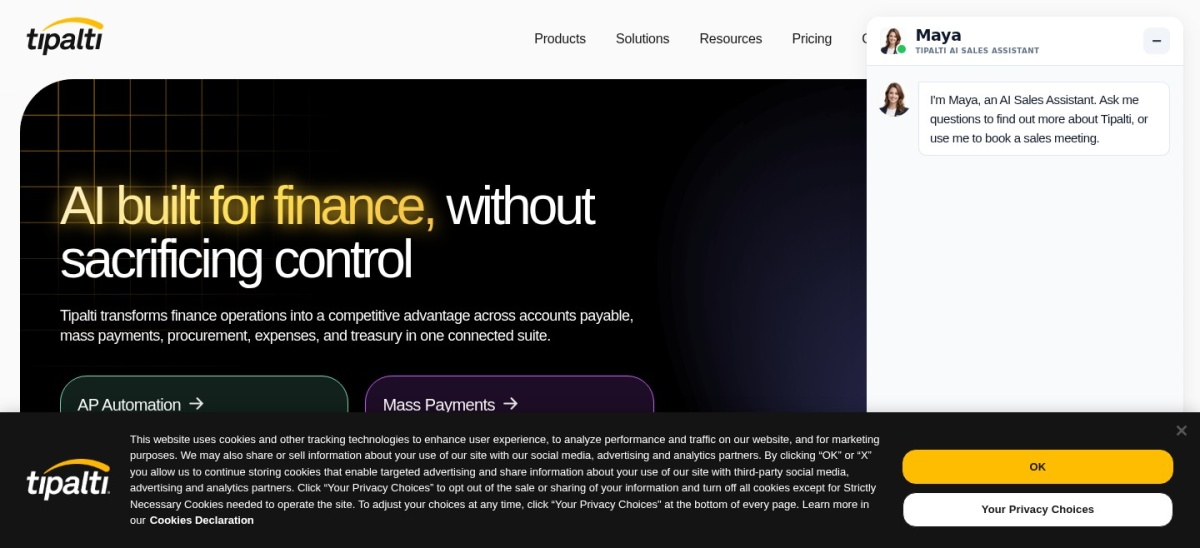
Tipalti is an AP and mass-payments platform for teams that pay suppliers across borders. Its AI agents handle invoice capture and coding, PO matching, approvals, tax scans and reporting, and it pays in more than 200 countries and territories in over 120 currencies.
The trade off is transaction fees. The $99 a month AP plan covers unlimited users, but invoice and payment transaction fees sit on top, so the real cost grows with volume. It suits businesses with a global supplier base that need tax compliance built into every payment.
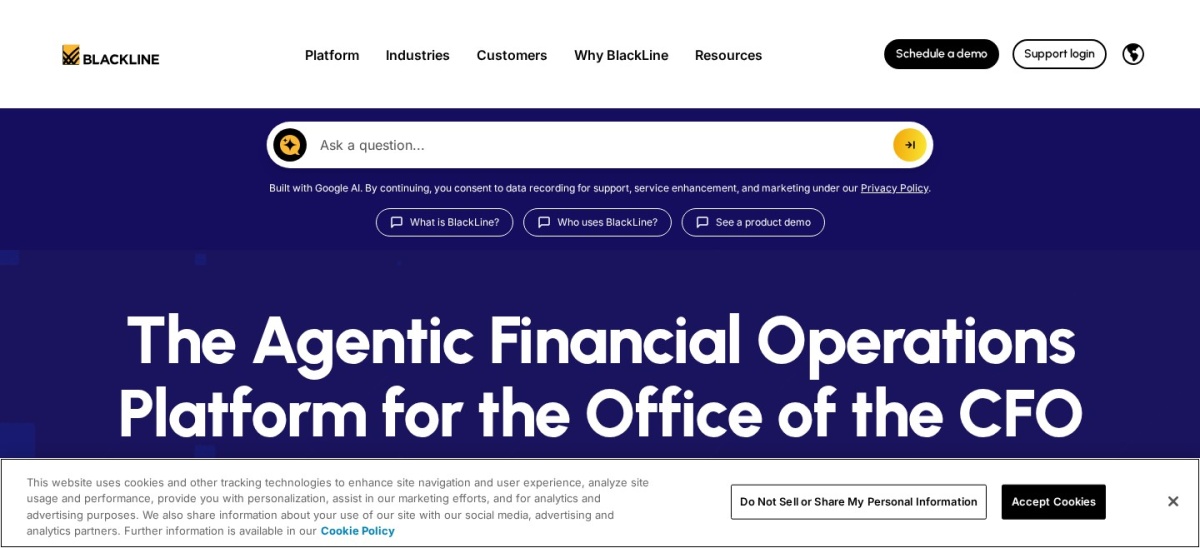
BlackLine is a cloud platform that automates account reconciliations, transaction matching, journal entries and month-end close tasks beside an existing ERP. It is built for large finance teams that need audit-ready controls and a single record of every reconciliation.
The trade off is scale and price. BlackLine is an enterprise project with custom pricing, so small teams will find it too heavy and too costly. It suits enterprises with high reconciliation volumes that need matching and controls their auditors can trust.
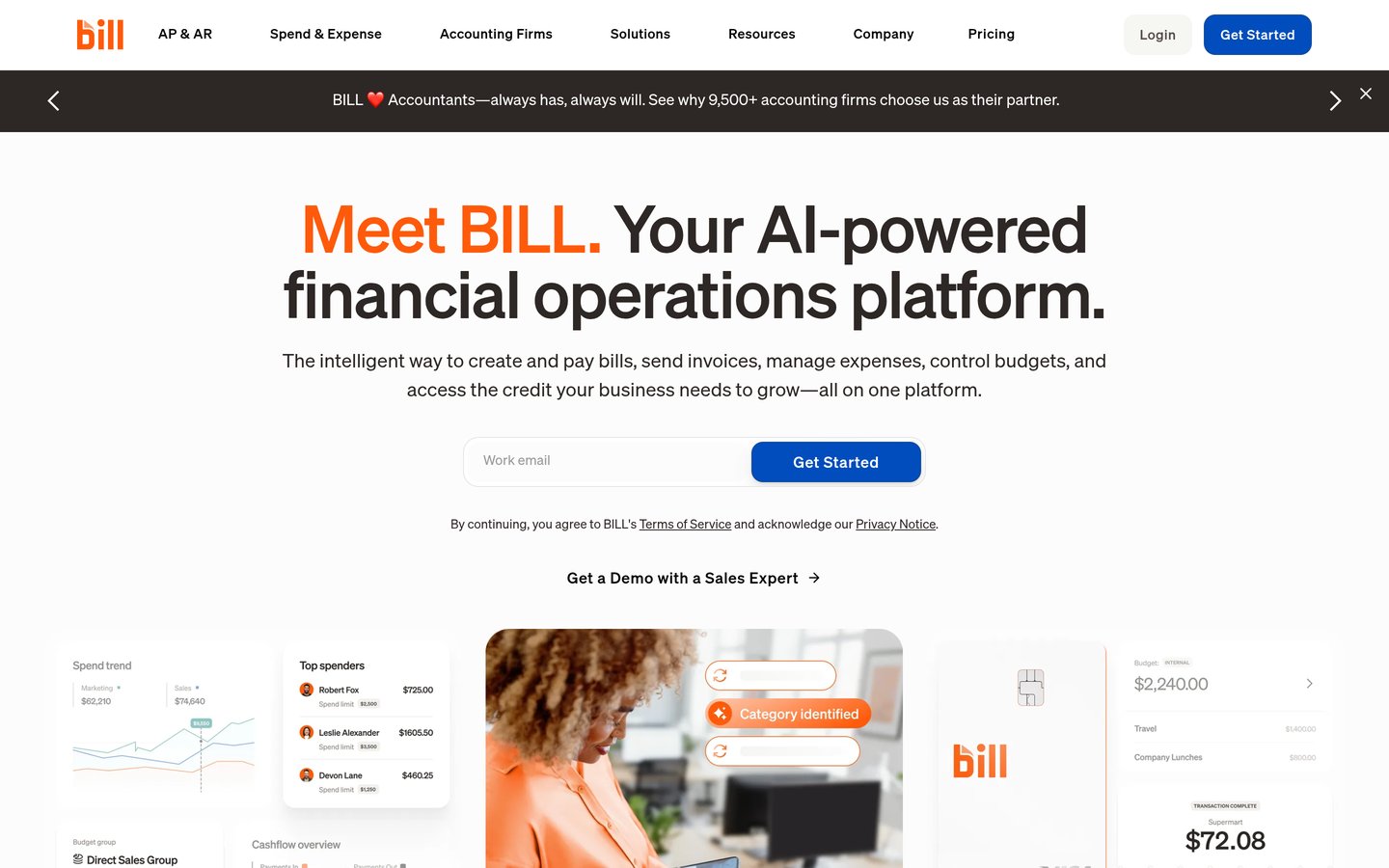
BILL is a dedicated AP and AR platform that pairs AI invoice capture with a large payments network. Its invoice coding agent reads header and line-item data, and BILL says its extraction is about 99% accurate, with payments in more than 130 countries.
The trade off is per-user pricing. Essentials costs $49 per user a month, so the bill grows with every approver added, and spend cards are a separate product. It suits small and mid-size businesses and accounting firms that want payables and receivables in one place.
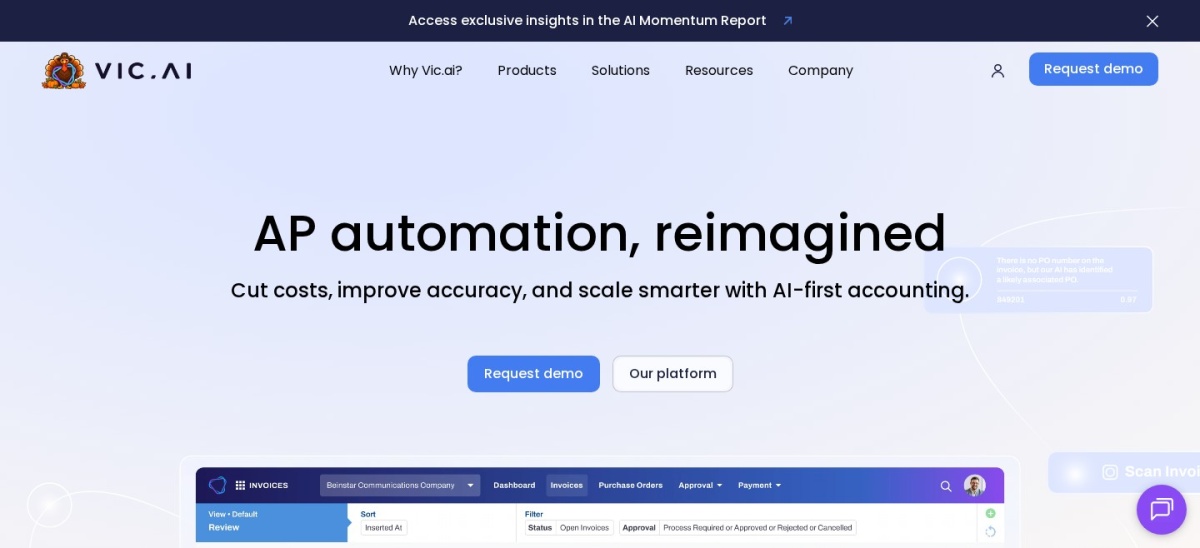
Vic.ai is a finance-trained AI platform built to push invoice processing toward no-touch. Its template-free AI extracts and codes invoices in many languages and formats, and Vic.ai says it reaches 99% accuracy and an 85% no-touch rate.
The trade off is evidence. The 4.7 rating rests on only 27 G2 reviews, the smallest base in this list, and pricing is quote only. It suits teams that process high invoice volumes and want the most autonomous option, if they can validate the claims on a trial.
Invoice capture is the most common AI feature here. The tool reads a PDF or scanned invoice, pulls out the vendor, amounts and dates, and codes it to the right account.
Coding suggestions come next. Stampli and Vic.ai learn from past invoices, so the second hundred invoices need less fixing than the first ten.
Matching and flags close the loop. Three-way matching checks the invoice against the PO and the receipt, while duplicate detection stops the same bill being paid twice.
None of these tools removes the finance team. Approvals, exceptions and supplier questions still need a person, and the best setups keep that human step visible.
How we chose
We started from the AP automation, close automation and FP&A leaders on G2, then kept nine tools with a public G2 rating and a real AI feature, not just a chatbot.
Prices come from each vendor's pricing page, checked on 29 November 2026, using regular prices rather than first-year discounts. Ramp at $15 per user a month, Brex at $12 and Tipalti at $99 were confirmed on the vendors' own pricing pages that day.
We left out tools with no verifiable G2 rating and tools that publish neither a price nor a clear product. No vendor paid for a place, and we do not claim hands-on testing for this list.
How to choose the top AI financial software
Match the tool to the bottleneck first, then check price and review depth before you buy.
Name the bottleneck. Invoice volume points to AP tools such as Tipalti or Stampli, while a slow close points to FloQast or BlackLine.
Check the free tier. Ramp and Brex both start free, so test cards and approvals there before paying for a quoted platform.
Read the rating with its review count. A 4.7 from 27 reviews is weaker evidence than a 4.6 from nearly 2,000, so weigh both numbers together.
Ask for the full price. Custom quotes hide transaction fees and implementation, so get the whole first-year cost in writing.
FAQ
What is the top AI financial software in 2026?
Ramp is the top AI financial software for most teams. It pairs corporate cards with invoice capture and approvals on a free plan, and it holds the highest G2 rating here at 4.8 out of 5 from more than 2,500 reviews.
How much does AI financial software cost?
Entry prices run from free on Ramp and Brex to $99 a month for Tipalti AP. Five of the nine tools publish no price at all, so expect a custom quote for Stampli, FloQast, Datarails, BlackLine and Vic.ai.
Is there a free AI financial software option?
Yes. Ramp and Brex both offer free plans that cover corporate cards, expenses and basic invoice capture. The free tiers suit small teams, while larger teams usually need a paid plan for deeper controls.
Which AI financial software is best for small teams?
Ramp is the best fit for most small teams because the free plan covers cards, expenses and invoice approvals. Brex is the alternative for teams that spend in many countries.
Ramp vs Brex: which is better?
Ramp leads for most teams with a higher review count and deeper bill pay, while Brex wins for global spend because its cards work in more than 210 countries. Both start free, so the deciding factor is where your team spends.
Does AI financial software replace accountants?
No. These tools automate capture, coding and matching, but approvals, exceptions and supplier questions still need people. The best setups use AI to clear routine work so accountants can focus on the close.
SaaS SEO and WordPress specialist with about 8 years of experience. Rakib compares WordPress plugins, themes, hosting and software using public pricing, documentation and user reviews. See how we rank.