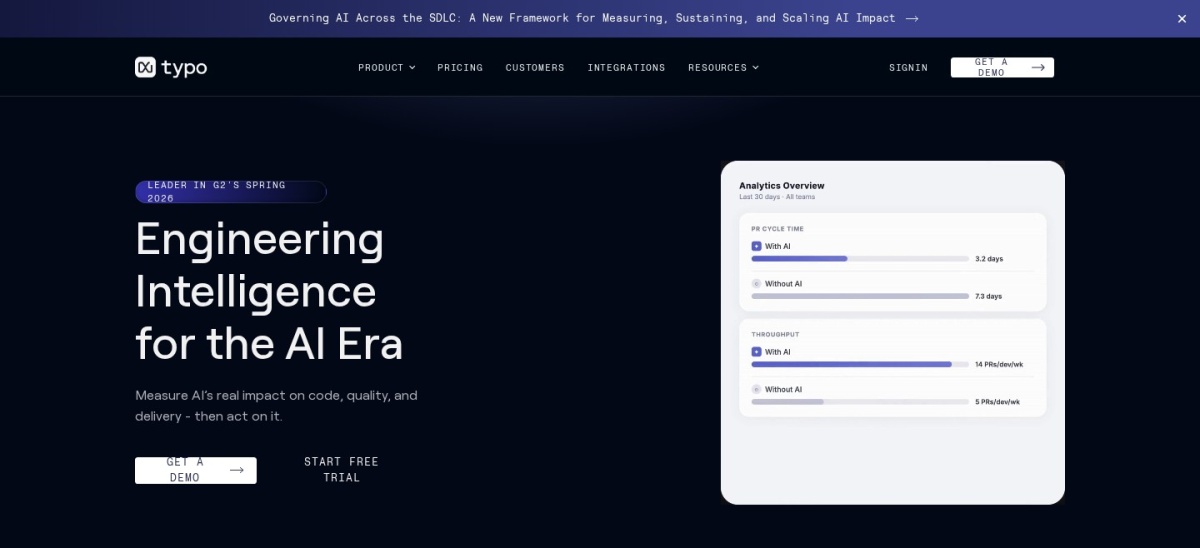
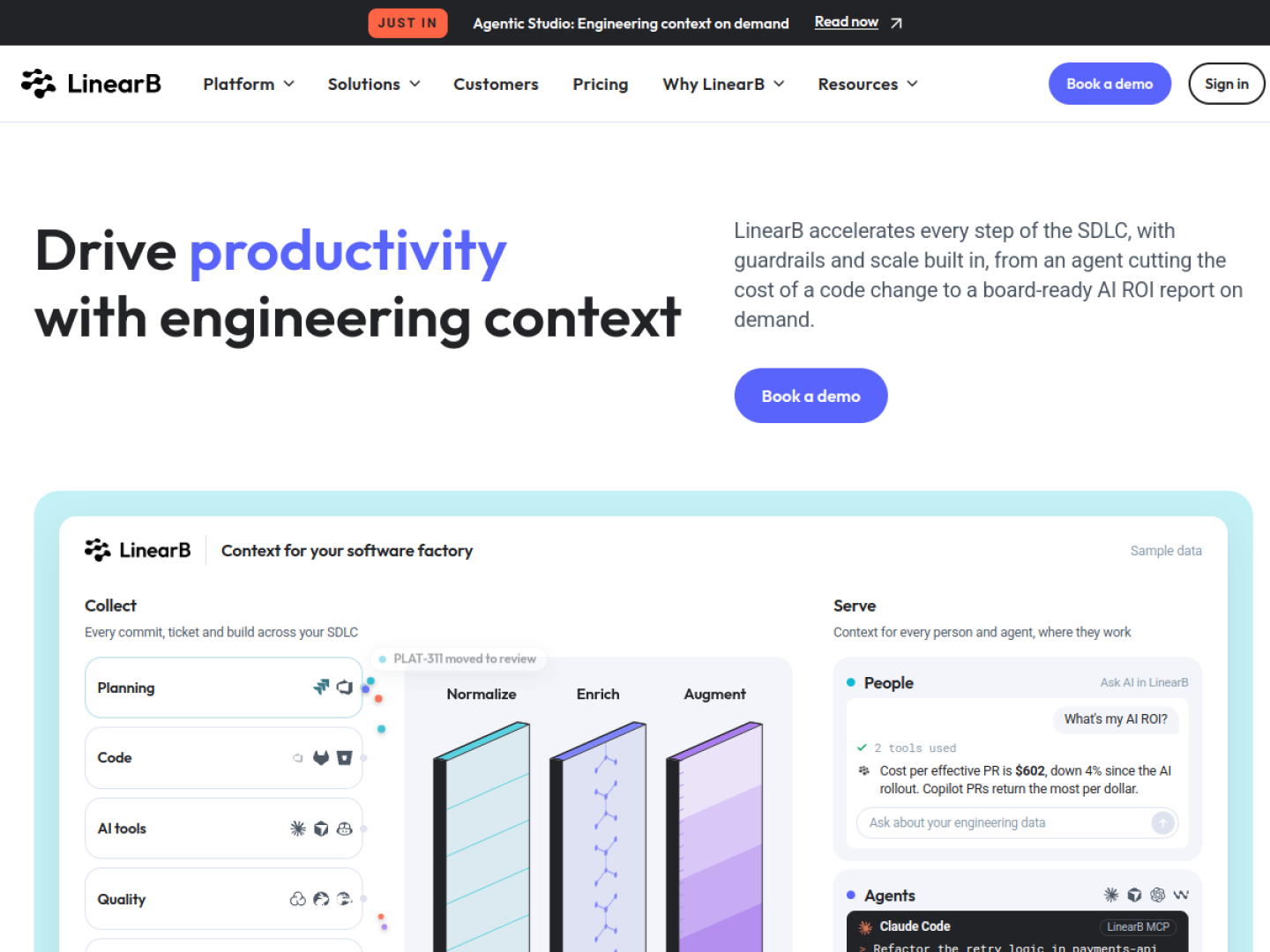
Typo is the best Swarmia alternative for most teams, at $20 per developer a month with a free plan, DORA metrics, AI impact tracking and AI code reviews, rated 4.6 out of 5 on G2. Pick LinearB for workflow automation on pull requests, or Jellyfish when finance reporting and software capitalization matter most.
How we make this list: we compare pricing pages, product documentation and public user reviews, then re-check every price before each update. No product paid for a place. Disclosure.
Typo is the cheapest published pick at $20 per developer a month, with a free plan and a 4.6 G2 rating from 152 reviews.
LinearB is the only other tool here with a free plan, and its gitStream automation enforces rules on pull requests.
Jellyfish and DX sell by quote only; third-party purchase data puts typical annual contracts near $57,500 and $54,000.
Waydev lists Pro at $449 per contributor a year, the lowest annual rate for a full Git analytics platform.
Haystack holds the highest G2 rating at 4.8, but from only 11 reviews, and Faros AI matches it from 13.
Five of the nine tools publish a price; the other four need a sales quote before you can budget.
What should you look for in Swarmia alternatives?
Swarmia sells one job: turning Git, CI and issue-tracker data into delivery metrics, surveys and AI impact reports that managers and developers both trust. A good alternative should cover the same ground without forcing you to rebuild dashboards by hand.
Price is the first real split. Five tools here publish a per-developer price from $20 to $29 a month, or $400 to $449 a year, while Jellyfish, DX, Faros AI and Sleuth sell by quote and need a sales call before you can budget.
DORA metrics are the common core. Every tool on this list tracks deployment frequency, lead time, change failure rate or recovery time, so the choice comes down to what sits on top: surveys, capitalization, workflow automation or AI impact.
AI measurement is the newest dividing line. Typo, LinearB, DX, Jellyfish and Faros AI all track AI coding tool adoption and spend, while Haystack and Sleuth stay focused on delivery metrics alone.
Review volume matters as much as the score. Jellyfish has 430 G2 reviews behind its 4.5 rating, while Haystack and Faros AI score 4.8 from 11 and 13 reviews, so read the review themes before trusting the stars.
Typo is an engineering intelligence platform that tracks DORA metrics, sprint delivery and developer experience, and measures how AI coding tools affect code quality and speed. The free plan covers DORA metrics, pull request insights and team performance, and paid plans start at $20 per developer a month.
The trade off is that AI code reviews and code health analysis need the Pro plan at $28 per developer a month. It suits small and mid-size teams that want Swarmia-style metrics plus a read on AI impact without an enterprise sales call.
LinearB is an engineering effectiveness platform that pairs DORA and cycle-time metrics with workflow automation that acts on pull requests. The free plan covers team metrics, and Essentials at $29 per user a month adds programmable workflows, developer surveys and AI code reviews.
The trade off is scale. Essentials is built for teams of 50 developers or more, so smaller teams may find the entry point steep even with a free plan. It suits larger teams that want metrics plus rules that enforce review and delivery standards on every pull request.
What we like
Strongest pull request workflow automation here
Free plan for evaluation before buying
AI code reviews included on paid plans
45-day free trial with no card required
Watch out for
Essentials is aimed at teams of 50 or more
Higher entry price than Typo
Enterprise costs $59 per user a month
Enterprise adds SSO, custom metrics and dedicated supportVisit linearb.io
03
Jellyfish
4.5/5on G2 (430 reviews, checked Nov 2026)
PricingCustom/yr
Best for finance and executive reporting
Free planNo
PricingBy quote, per seat and module
CapitalizationYes, DevFinOps module
AI ImpactYes, AI Impact module
jellyfish.co
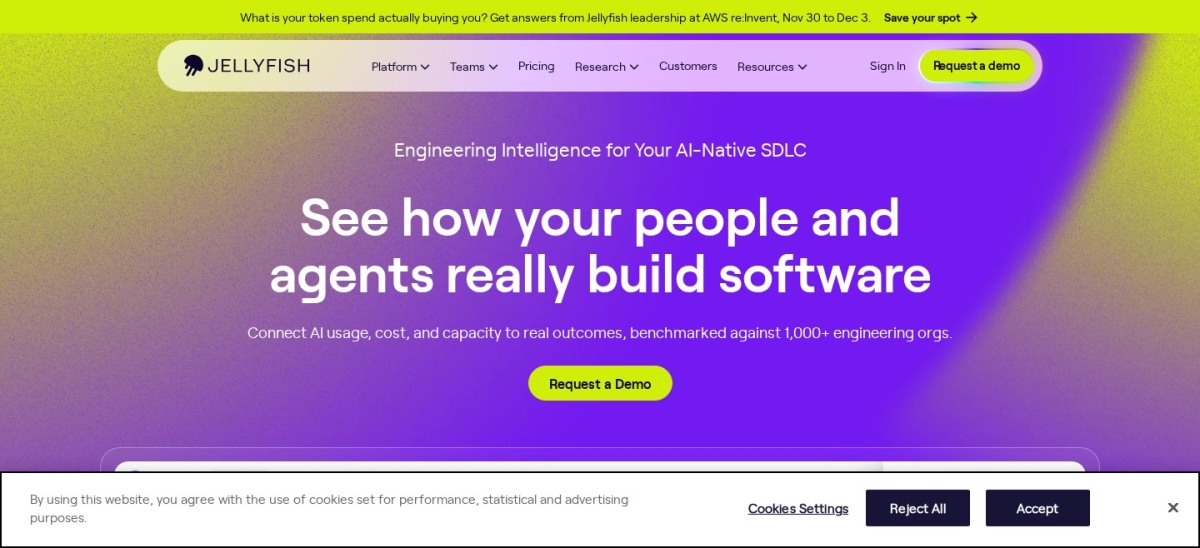
Jellyfish homepage, captured Nov 2026.
Jellyfish is an engineering intelligence platform built for leaders who need to show where engineering budget goes. It connects Jira, Git and AI tool data into allocation, delivery and investment views, with a DevFinOps module for software capitalization and R&D tax reporting.
The trade off is price and setup. Jellyfish publishes no list price and sells by quote, with third-party purchase data putting a typical annual contract near $57,500, and reviewers note a steep setup curve. It suits larger organisations whose main buyer is finance or an executive team.
What we like
Deepest allocation and capitalization reporting here
Largest review base on this list, 430 G2 reviews
AI Impact module tracks adoption and spend
Benchmarks across more than 1,000 engineering orgs
DX is an engineering intelligence platform built around developer experience research. It pairs system data from Git, CI and issue trackers with developer surveys scored on its Developer Experience Index, plus AI measurement that tracks AI-generated code by commit and pull request.
The trade off is that DX publishes no pricing and is now part of Atlassian after its 2025 acquisition, which raises questions about bundling for teams outside Atlassian tools. It suits larger teams that want survey signals beside system metrics and can run a survey programme.
What we like
Research-backed survey framework and DXI score
Industry benchmarking against a large dataset
AI adoption measurement built in
Strong G2 review base of 384 reviews
Watch out for
Quote-only pricing with no public rate
Atlassian acquisition adds roadmap uncertainty
Surveys need mature teams willing to act on them
Quote covers surveys, benchmarks and AI measurementVisit getdx.com
05
Waydev
4.7/5on G2 (61 reviews, checked Nov 2026)
Starts at$449/yr
Best budget Git analytics pick
Free planNo, free TokenMeter only
Cheapest paid planPro, $449/contributor/yr
Git hostsGitHub, GitLab, Bitbucket, Azure
AI adoptionYes, on Premium
waydev.co
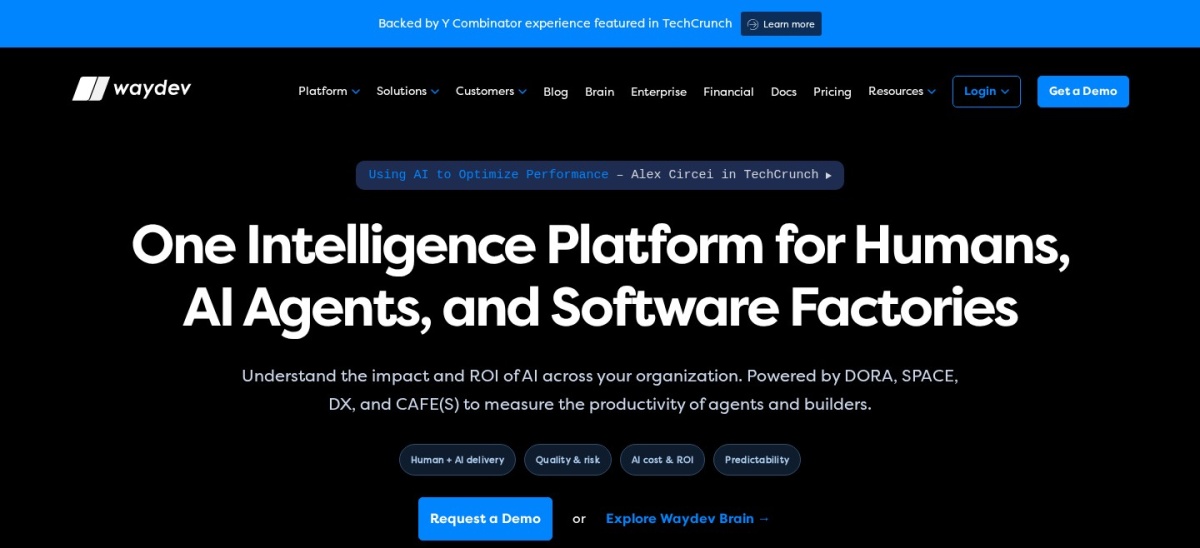
Waydev homepage, captured Nov 2026.
Waydev is a Git analytics platform that covers DORA and SPACE metrics, delivery forecasting and AI adoption tracking across GitHub, GitLab, Bitbucket and Azure DevOps. Pro costs $449 per contributor a year, and managers and executives get free seats to read reports.
The trade off is that the cheapest plan caps repositories and data history, and AI adoption detail sits on the Premium plan at $649 per contributor a year. It suits teams that want Swarmia-style Git analytics on more Git hosts, including self-hosted setups, at a lower annual rate.
What we like
Published annual pricing, no quote needed
Free seats for managers and executives
Covers all four major Git hosts
90-day money-back guarantee
Watch out for
Per-contributor billing grows with headcount
AI adoption detail needs the Premium plan
G2 price listings disagree with the official page
Premium adds AI adoption tracking and longer historyVisit waydev.co
06
Haystack
4.8/5on G2 (11 reviews, checked Nov 2026)
Starts at$25/mo
Best simple DORA tracker
Free planNo, free trial
Cheapest paid planStartup, $25/dev/mo
DORA metricsYes, team-level
IntegrationsGitHub, Jira, Slack
usehaystack.io
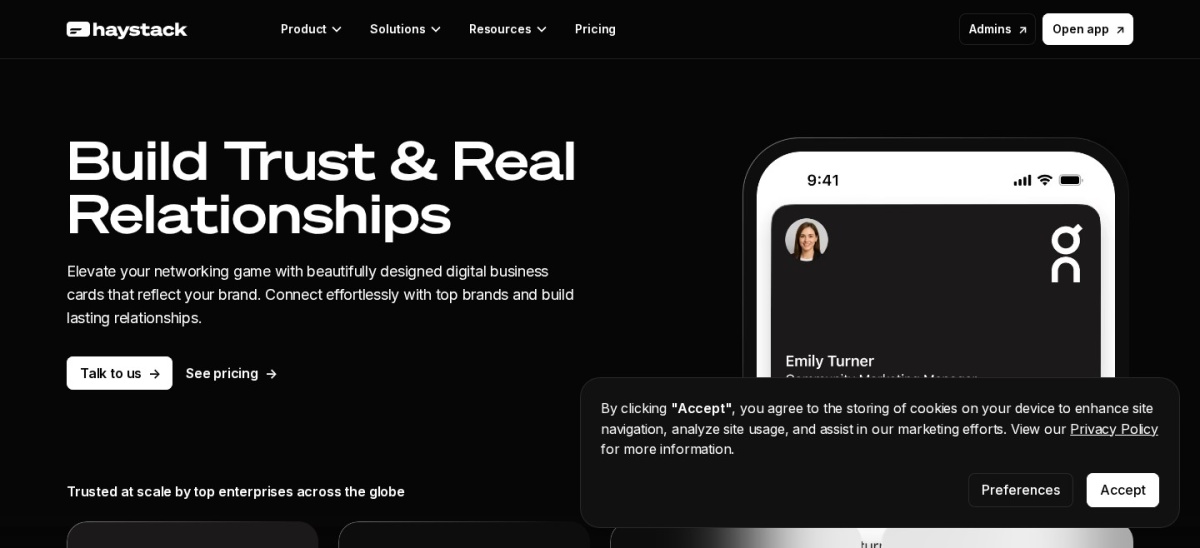
Haystack homepage, captured Nov 2026.
Haystack is a focused engineering analytics tool that turns GitHub data into team-level DORA metrics such as cycle time, deployment frequency and change failure rate. Startup costs $25 per developer a month, and reviewers praise its simple setup and clear graphs.
The trade off is breadth. Haystack covers fewer integrations than the bigger platforms and its 4.8 G2 rating rests on only 11 reviews, so the score is less proven. It suits small teams that want DORA metrics quickly without a broad platform or a sales process.
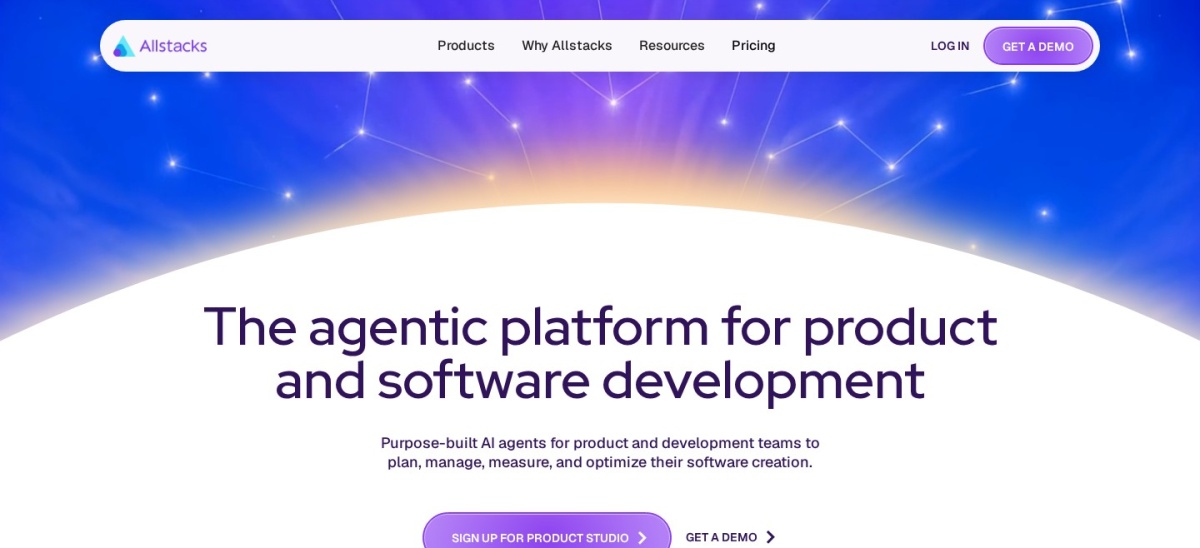
Allstacks is an engineering intelligence platform that uses AI agents to flag delivery risk, explain root causes and forecast outcomes from Jira, Git and deployment data. Growth costs $400 per contributor a year, and the platform also covers software capitalization reporting.
The trade off is that Growth is capped at 500 contributors on shared hosting, and Enterprise at $600 per contributor a year needs at least 100 contributors. It suits product and engineering leaders who plan around risk and delivery dates rather than activity counts.
What we like
Predictive forecasting and risk alerts
Capitalization reporting included
Published annual pricing
Strong support ratings on G2
Watch out for
Enterprise has a 100-contributor minimum
No free plan, trial only
Smaller review base than Jellyfish or DX
Enterprise adds single-tenant hosting and unlimited contributorsVisit allstacks.com
08
Sleuth
4.6/5on G2 (41 reviews, checked Nov 2026)
PricingCustom/yr
Best for deployment-focused DORA
Free planNo, free trial
PricingBy quote for DORA
DORA metricsYes, deploy-linked
ReportsCustomisable review templates
sleuth.io
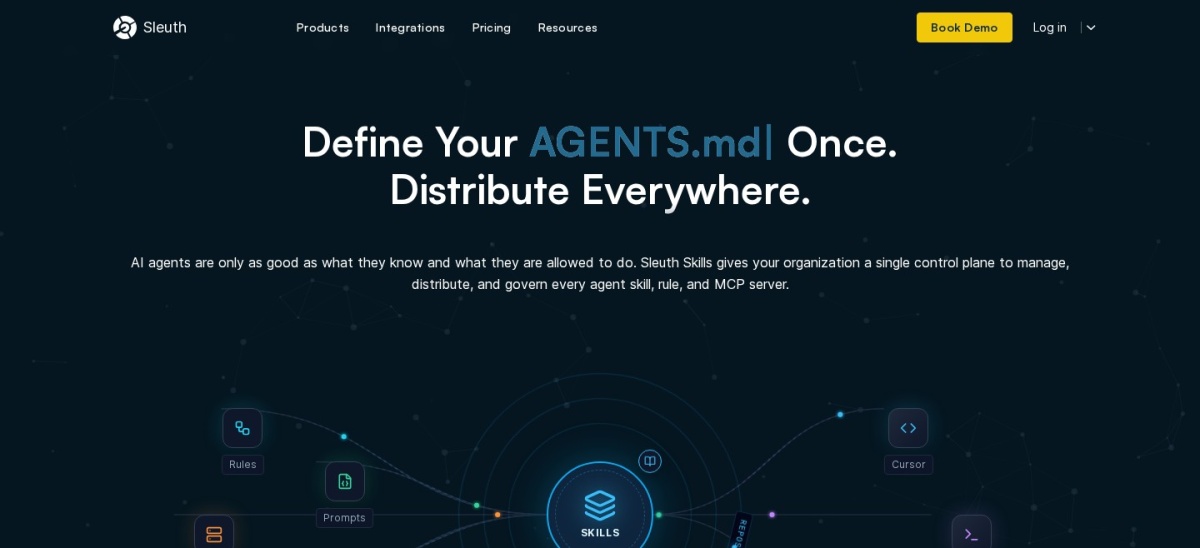
Sleuth homepage, captured Nov 2026.
Sleuth is a deployment-focused DORA tracker that links each deploy to its pull requests, issues, commits and authors, so lead time runs from first commit to production. It tracks deployment frequency, lead time, change failure rate and MTTR by team and project.
The trade off is focus and direction. Sleuth's homepage now leads with Sleuth Skills, an AI agent governance product, and its public pricing page no longer lists DORA pricing, so buyers should ask about the DORA roadmap before signing. It suits small teams that want deployment tracking and little else.
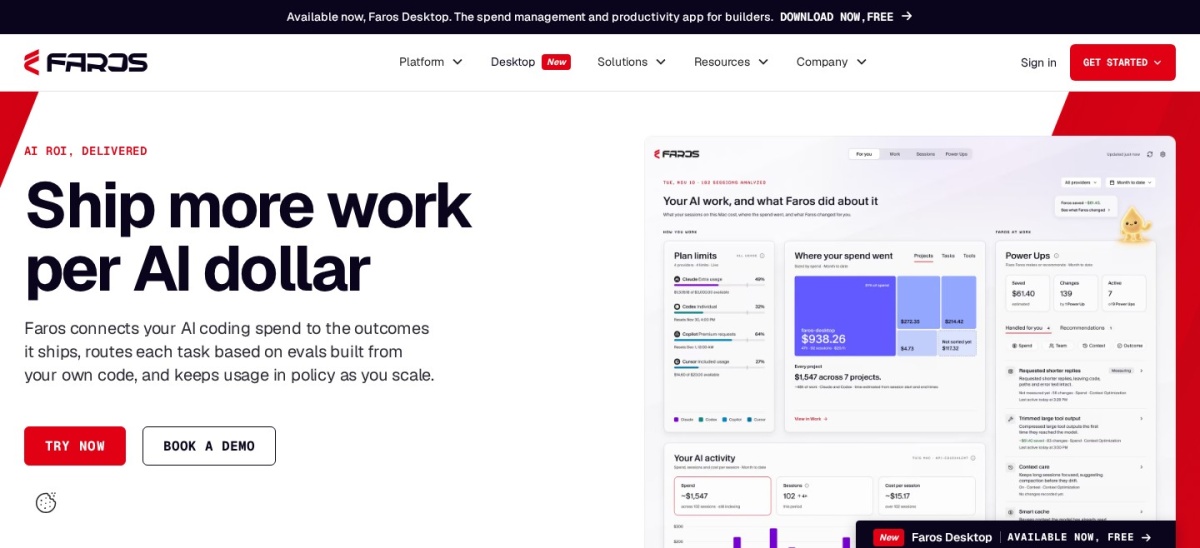
Faros AI is an engineering intelligence platform built on an open data model with more than 50 entities, connecting over 100 tools across source control, ticketing, CI/CD and incidents. Its Community Edition is open source under the Apache licence, and a free Faros Desktop app tracks AI spend and productivity.
The trade off is cost at scale. The cloud platform is sold by quote, with third-party purchase data putting a typical annual contract near $186,000, and its 4.8 G2 rating rests on only 13 reviews. It suits large organisations that want a customisable data model and API-first analytics.
Four tools on this list publish no price: Jellyfish, DX, Faros AI and Sleuth for its DORA product. That is normal for enterprise platforms, but it means you cannot budget from the website alone.
Ask for the per-contributor rate, the minimum seat count and every add-on in writing. Jellyfish prices by seat and module, Allstacks Enterprise needs 100 contributors, and DX bundles surveys with its platform price.
Third-party purchase data gives a rough guide: typical annual contracts run near $57,500 for Jellyfish, $54,000 for DX and $186,000 for Faros AI. Treat those as starting points for negotiation, not list prices.
How we chose
We started from G2's Swarmia alternatives list and recent engineering intelligence roundups, then kept nine established platforms with public G2 ratings and verifiable pricing or quote models.
Prices come from each vendor's pricing page or G2 pricing data, checked on 29 November 2026. Ratings and review counts come from G2 on the same day. Where a vendor shows a sale, the list shows the regular price.
We left out tools with no public rating, and Pluralsight Flow, which is being retired at the end of 2027. No vendor paid for a place, and we do not claim to have used these tools ourselves.
How to choose a Swarmia alternative
Start with the job Swarmia did for you, then match the tool to that job.
Name the job you are replacing. DORA dashboards, surveys, capitalization and AI impact need different tools, so write down the one job that matters most before you compare prices.
Check the free route first. Typo and LinearB both have free plans, and Faros AI has an open-source edition, so run a short pilot before any sales call.
Ask quote-only vendors for a written number. Jellyfish, DX, Faros AI and Sleuth do not publish prices, so get the per-contributor rate, minimum seats and add-ons in writing.
Confirm your Git host and integrations. Waydev covers the widest set of Git hosts, while Haystack is GitHub-only, so check your stack against each vendor's integration list.
FAQ
What is the best Swarmia alternative in 2026?
Typo is the best Swarmia alternative for most teams. At $20 per developer a month with a free plan, it covers DORA metrics, AI impact tracking and AI code reviews, and it is rated 4.6 out of 5 from 152 G2 reviews.
How much do Swarmia alternatives cost?
Published prices run from $20 per developer a month for Typo to $29 for LinearB, or $400 to $449 per contributor a year for Allstacks and Waydev. Jellyfish, DX, Faros AI and Sleuth sell by quote, so budget only after a written offer.
Is there a free Swarmia alternative?
Yes. Typo and LinearB both have free plans that include DORA metrics, and Faros AI has an open-source Community Edition plus a free Desktop app. The free plans cover team-level metrics; AI code reviews and capitalization reporting need paid plans.
Which Swarmia alternative is best for small teams?
Typo is the best pick for small teams, with a free plan and the lowest published price at $20 per developer a month. Haystack is the simpler option at $25 per developer a month if you only need team-level DORA metrics.
Typo vs LinearB: which is better?
Typo is better for most teams because it costs less at $20 per developer a month, has more G2 reviews at 152, and adds AI code reviews. LinearB is better for teams of 50 or more that want gitStream rules enforcing review and delivery standards on every pull request.
Which Swarmia alternative is best for finance reporting?
Jellyfish is the best Swarmia alternative for finance reporting. Its DevFinOps module handles software capitalization and R&D tax reporting, and its allocation views show where engineering budget goes, backed by 430 G2 reviews.
SaaS SEO and WordPress specialist with about 8 years of experience. Rakib compares WordPress plugins, themes, hosting and software using public pricing, documentation and user reviews. See how we rank.