DealHub is the best of the Salesforce CPQ alternatives for most teams leaving the old CPQ, rated 4.7 out of 5 on G2 from 866 reviews with no-code quoting rules. Pick Conga CPQ to stay inside Salesforce, or Zoho CRM at $23 a user a month when your catalog is simple and the budget is tight.
How we make this list: we compare pricing pages, product documentation and public user reviews, then re-check every price before each update. No product paid for a place. Disclosure.
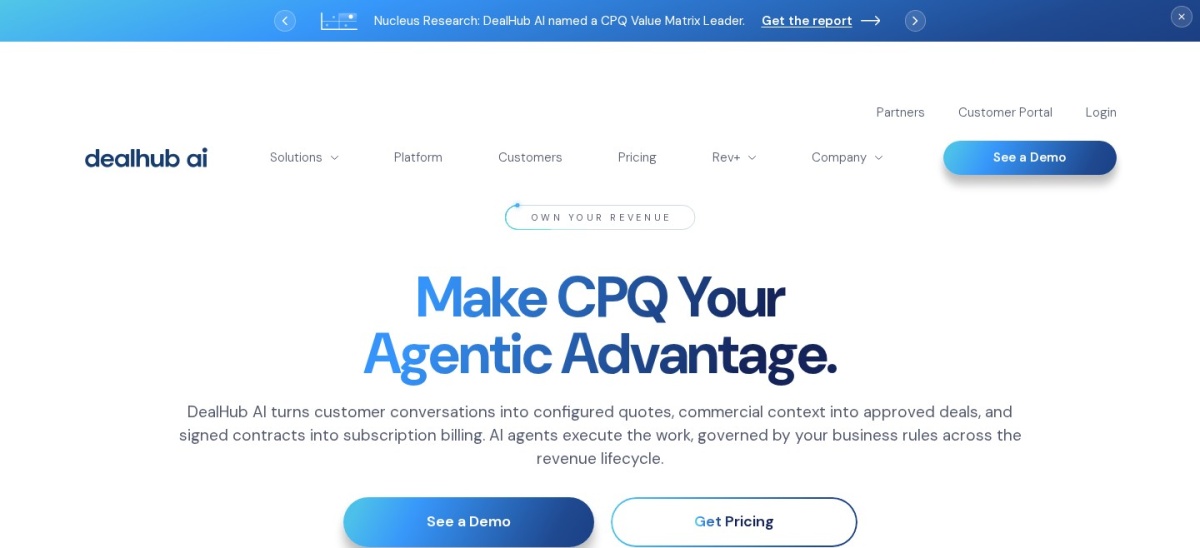
DealHub is the highest-rated true CPQ here at 4.7/5 from 866 G2 reviews, and it adds contracts, billing and a buyer DealRoom.
Salesforce stopped selling CPQ to new customers; its named successor is Revenue Cloud at $150 to $200 a user a month, with a 3 to 6 month migration.
Only three tools publish a CPQ price: Oracle CPQ at $240 a user a month, HubSpot Revenue Hub from $85 a seat, and Zoho CRM Professional at $23.
PandaDoc and Proposify are proposal tools, not rules engines; PandaDoc's real CPQ is an Enterprise-only add-on.
Qwilr and Proposify start at $35 and $39 a user a month, the cheapest paid seats for simple quotes.
How do you choose between Salesforce CPQ alternatives?
Salesforce CPQ is end of sale, not end of life. New customers cannot buy it, existing customers can renew it, and Salesforce puts all new quoting investment into Revenue Cloud instead.
Your CRM decides most of the shortlist. Conga CPQ and Zuora CPQ run inside Salesforce, DealHub plugs into Salesforce, HubSpot or Dynamics, and HubSpot Revenue Hub only works if HubSpot is your CRM.
Price transparency is rare in CPQ. DealHub, Conga and Zuora publish no prices at all, so the cheapest honest comparison starts with the three that do: Oracle CPQ, HubSpot and Zoho CRM. Our guide to quoting in WordPress shows how simple quoting stays cheap when rules are few.
A proposal tool is not a CPQ engine. Qwilr, Proposify and PandaDoc make quotes look good and easy to sign, but only a CPQ checks every line against your product rules before the quote goes out.
DealHub is a quote-to-revenue platform that combines CPQ with contract management, subscription billing and a buyer-facing DealRoom. Its guided selling builds valid quotes from product rules and discount limits, then routes approvals without code, and it connects natively to Salesforce, HubSpot and Microsoft Dynamics 365.
The trade off is price and setup. DealHub publishes no prices and sells Growth and Scale tiers by quote, and G2 reviewers report about 3 months to implement. It suits mid-market SaaS teams that want RevOps to own quoting without a Salesforce admin.
What we like
Top CPQ on the G2 Grid at 4.7/5
No-code rules RevOps can change
CPQ, contracts, billing and DealRoom in one
Native Salesforce, HubSpot and Dynamics integrations
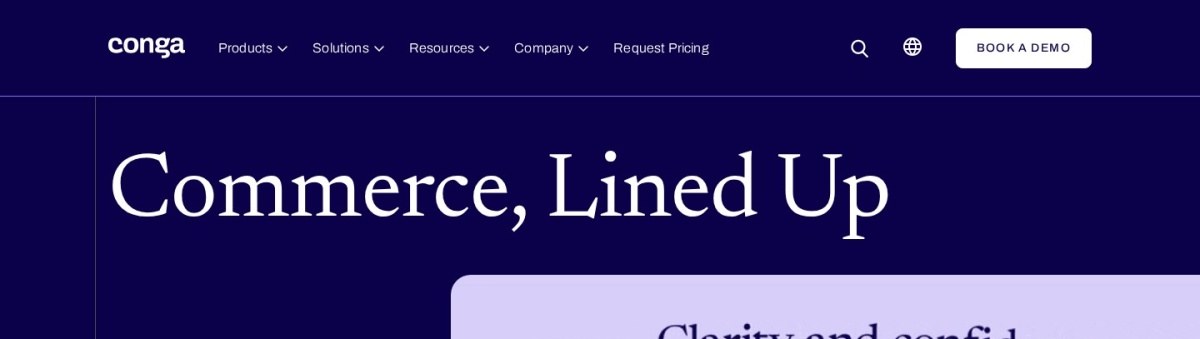
Conga CPQ is the Salesforce-native replacement for Salesforce CPQ, sold as Advantage CPQ for Salesforce orgs and Smart CPQ for Salesforce and Dynamics 365. It handles rules-based configuration, contracted pricing, approvals and renewal quotes, and pairs with Conga CLM and Sign for the full quote-to-contract flow.
The trade off is that it is still an implementer's tool. Pricing is quote-only, installation needs the Conga Base Library, and reviewers cite costly customization and heavy reliance on support. It suits teams that want to keep the Salesforce screens their reps already know.
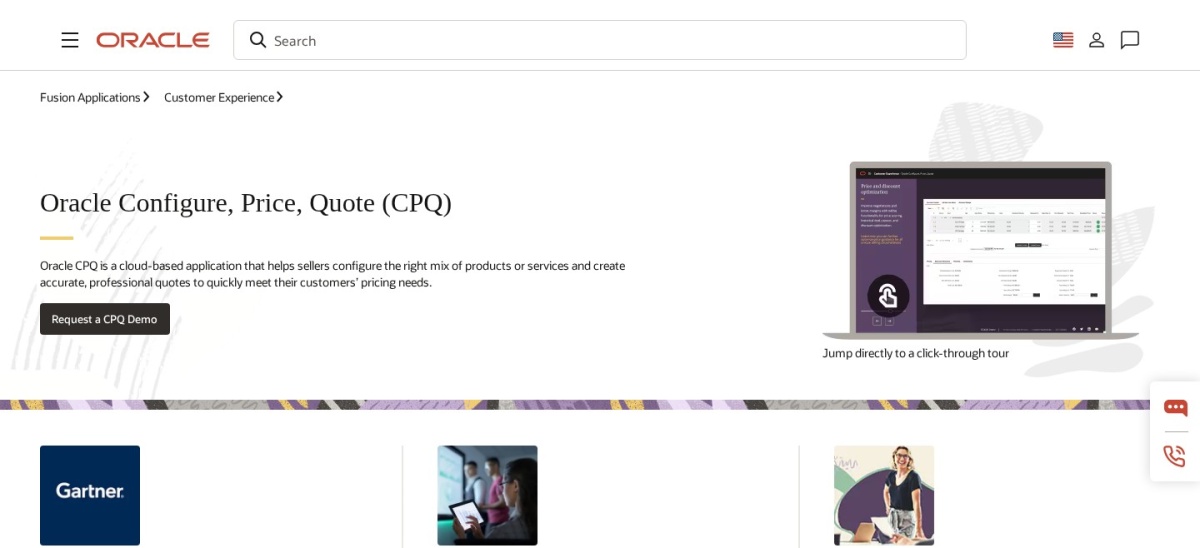
Oracle CPQ is a cloud application on Oracle Fusion that configures complex products, applies price rules and produces quotes for large manufacturers and distributors. It offers guided selling, channel pricing, approval routing and multi-language proposals, and a $5 per user per month connector links it to Salesforce.
The trade off is scale and cost. The $240 per user per month price needs 25 users and a three-year term, and connecting it to Salesforce is an integration project, not a plug-in. It suits enterprises with engineered products and thousands of SKUs.
HubSpot Revenue Hub is HubSpot's quoting, billing and payments product, built on the HubSpot CRM. It creates and approves quotes, lets buyers review, accept and pay, and handles recurring payments through subscriptions, with a rules engine for compatibility, price and quantity rules on Enterprise.
The trade off is that it only works if HubSpot is your CRM. Professional starts at $85 a seat a month, quote rules need Enterprise at $140, and users report a 200 line item cap per quote. It suits small and mid-size teams whose catalogs are simple and who already live in HubSpot.
What we like
Quotes, approvals and payments in one CRM
Free CRM for up to 2 users
14-day free trial of Revenue Hub
Named a Leader in Forrester's CPQ Wave
Watch out for
Leaving Salesforce CPQ this way means a CRM migration
Quote rules need the $140 Enterprise tier
200 line item cap reported by users
Professional adds approvals; Enterprise adds the rules engineVisit hubspot.com
05
PandaDoc
4.7/5on G2 (3,868 reviews, checked Nov 2026)
Paid from$19/user/mo
Best for polished quotes and e-signatures
Cheapest paidStarter, $19/user/mo
Real CPQEnterprise add-on only
CRM integrationsBusiness plan, $49
Free planeSign, 5 docs a month
pandadoc.com
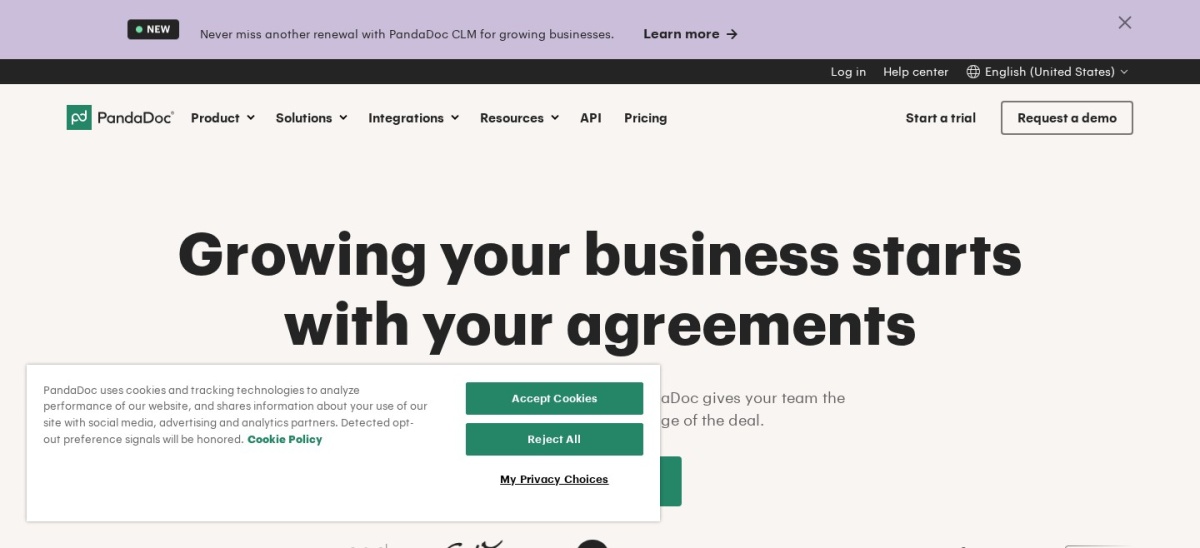
PandaDoc homepage, captured Nov 2026.
PandaDoc is a document platform for proposals, quotes and contracts with e-signatures, pricing tables and approval workflows. Its Business plan at $49 a user a month adds CRM integrations, a content library and bulk sending, and it integrates with Salesforce and HubSpot.
The trade off is that PandaDoc is not a rules engine. Real CPQ is a paid add-on on Enterprise only, and the Salesforce integration costs extra even on Business. It suits teams whose main need is a clean, approved quote document rather than complex configuration.
Zoho CRM is a CRM with CPQ built in from the Professional edition at $23 a user a month on annual billing. It covers quotes, price lists, discount rules and inventory, plus Blueprints for enforced sales stages, and the free edition supports up to three users.
The trade off is depth. Zoho's CPQ fits simple catalogs and discount rules, and reviewers note a learning curve and uneven support. It suits small teams that already use Zoho and want the cheapest path to governed quoting.
What we like
Cheapest real CPQ in this list
CPQ bundled with CRM, inventory and invoicing
Free edition for up to 3 users
Every edition price is published
Watch out for
CPQ fits simple catalogs only
Reviewers cite a learning curve
Support quality is a common complaint
Professional adds CPQ, Blueprints and inventoryVisit zoho.com
07
Zuora CPQ
3.9/5on G2 (311 reviews, checked Nov 2026)
PricingCustom/yr
Best for subscription quoting on Zuora
Runs asManaged package on Salesforce
BillingSends quotes to Zuora
Pricing modelUsage and subscriptions
Published priceNone, quote only
zuora.com
Zuora CPQ homepage, captured Nov 2026.
Zuora CPQ is a managed package built on the Salesforce platform for quoting subscriptions, amendments and renewals. Reps build quotes from one product catalog that also feeds e-commerce and self-service, then send them to Zuora for invoicing and revenue recognition.
The trade off is that it only pays off inside Zuora. Pricing is quote-only, and as a standalone quoting tool it adds little over the CRM. It suits subscription businesses that already run billing on Zuora.
Qwilr is a proposal tool that turns quotes into interactive web pages with quote blocks, e-signatures and payments. Starter at $35 a user a month includes e-sign, analytics and QwilrPay, and it integrates with HubSpot, Zoho and Pipedrive.
The trade off is that Qwilr has no product rules engine. It is a document tool, not CPQ, and the Salesforce integration needs the Scale plan with a 10-user minimum. It suits teams whose quotes are simple but need to look sharp and close fast.
Proposify is proposal and quote software with a product catalog, pricing tables and approval workflows. Build at $39 a user a month includes unlimited documents and signatures, Grow adds approvals, roles and API access, and Scale is priced at $12,800 a year for 10 users.
The trade off is that Proposify controls documents, not configuration. There is no product rules engine, and the Salesforce managed package is a premium add-on. It suits teams that want locked-down proposal content before they need full CPQ.
A CPQ engine checks every line before the quote goes out. It blocks invalid bundles, enforces discount limits and routes exceptions, so the quote a rep sends is one finance can honor.
A proposal tool makes the quote look good and easy to sign. It adds templates, pricing tables, e-signatures and open tracking, but it trusts the rep to get the numbers right.
If a wrong quote costs you margin or a failed implementation, buy CPQ. If wrong quotes are rare and your pain is slow, ugly documents, a proposal tool is the cheaper fix.
How we chose
We started from every CPQ and quoting tool named as a Salesforce CPQ replacement in 2026 comparisons, then kept nine with a public G2 rating and a verifiable price or a confirmed quote-only model.
Prices come from each vendor's pricing page and published price lists, checked on 29 November 2026. Ratings and review counts come from G2 on the same day. Where a vendor shows a sale, the list shows the regular price.
We left out Salesforce Revenue Cloud, Salesforce's own successor to CPQ, because this list covers third-party alternatives. No vendor paid for a place, and we do not claim to have used these tools ourselves.
How to choose a Salesforce CPQ alternative
Start with your CRM and your catalog, then let price and rules narrow the list.
Check whether you are staying on Salesforce. If Salesforce stays, Conga CPQ or DealHub keep quoting close to your opportunities. Leaving Salesforce means a CRM migration too, so HubSpot only fits if you are moving anyway.
Count your rules, not your reps. List product rules, price rules, bundles and approval chains. Simple catalogs run fine on Zoho CRM, PandaDoc or Qwilr; hundreds of rules need DealHub, Conga or Oracle CPQ.
Ask for the full project price. Most enterprise CPQ vendors publish no price, and implementation often costs as much as the first year of licenses. Get implementation and onboarding in writing before you sign.
Rebuild your five hardest quotes first. Test each shortlisted tool on your toughest real deals and compare totals line by line before you migrate the catalog.
FAQ
What is the best Salesforce CPQ alternative in 2026?
DealHub is the best Salesforce CPQ alternative for most teams. It is the top-rated CPQ on G2 at 4.7 out of 5 from 866 reviews, with no-code quoting rules, contracts, billing and a buyer DealRoom in one platform.
How much do Salesforce CPQ alternatives cost?
Prices run from $19 a user a month for PandaDoc Starter to $240 a user a month for Oracle CPQ, while DealHub, Conga and Zuora publish no price and quote per deal. Zoho CRM Professional is the cheapest real CPQ at $23 a user a month, and HubSpot Revenue Hub starts at $85 a seat.
Is there a free Salesforce CPQ alternative?
There is no free full CPQ here, but Zoho CRM has a free edition for up to 3 users and HubSpot CRM is free for 2 users. PandaDoc has a free eSign plan for 5 documents a month, though its real CPQ needs an Enterprise add-on.
Which Salesforce CPQ alternative is best for small teams?
Zoho CRM is the best fit for small teams, with CPQ included in Professional at $23 a user a month. PandaDoc and Qwilr work when quotes are simple and need to look good, starting at $19 and $35 a user a month.
DealHub vs Conga CPQ: which is better?
DealHub is better for RevOps teams that want no-code quoting across Salesforce, HubSpot or Dynamics, and it leads on G2 at 4.7 out of 5. Conga CPQ is better if you want to stay inside the Salesforce screens your reps already use.
Should I move to Salesforce Revenue Cloud instead?
Revenue Cloud is Salesforce's official successor, at $150 a user a month for Growth or $200 for Advanced, on top of Sales Cloud. It fits teams staying on Salesforce with complex rules, but Salesforce says migration typically takes 3 to 6 months.
SaaS SEO and WordPress specialist with about 8 years of experience. Rakib compares WordPress plugins, themes, hosting and software using public pricing, documentation and user reviews. See how we rank.