HubSpot is the best Salesforce alternative for most teams, with a free CRM for two users and paid plans from $20 a seat. Close suits inside sales teams that live on the phone, while Freshsales is the cheapest paid pick for small teams.
How we make this list: we compare pricing pages, product documentation and public user reviews, then re-check every price before each update. No product paid for a place. Disclosure.
HubSpot is the best all-round pick, with a free CRM for 2 users and Starter at $20 a seat a month.
Close and Freshsales are the cheapest paid entries at $9 a user a month, but Close Solo covers one user only.
Zoho CRM at $14 is the cheapest full-featured option, but it has the lowest G2 rating here at 4.1 out of 5.
Less Annoying CRM has the highest rating at 4.9 out of 5 from 674 G2 reviews, with one flat $15 price.
Microsoft Dynamics 365 Sales is the most expensive here at $65 a user a month, and suits teams that run on Microsoft 365.
How do you choose a Salesforce alternative?
Salesforce is the most powerful CRM on the market, and it is priced like it. Its sales pricing runs from a Starter Suite at $25 per user a month to Core at $195, before admins, add-ons and consultants, so most teams switch to escape cost and complexity.
Start with the free plan, not the cheapest paid plan. HubSpot gives you a free CRM for 2 users, Zoho CRM for 3 users and Freshsales for 3 users, so a small team can run for months before paying. Our guide to cloud CRM software compares the same tools on free plans and entry prices.
Ease of use decides whether a CRM gets used at all. Pipedrive and Less Annoying CRM are the easiest to set up here, while Zoho CRM and Dynamics 365 take the most configuration, so weigh the learning curve against the feature list.
Watch the per-seat math at your team size. Close Solo at $9 covers one user only, monday CRM Basic needs a 3-seat minimum, and HubSpot Professional adds a $1,500 onboarding fee, so the headline price is rarely the whole bill.
HubSpot is a cloud CRM platform connecting customer records with sales, marketing and service tools. Its free plan supports 2 users and includes core contact and deal management, while Sales Hub Starter adds paid sales features and access to a broader customer platform with 2,000+ integrations.
The trade off is that HubSpot's advanced automation, reporting and sales management features require higher plans, while Starter has a regular price of $20 per seat monthly despite a lower introductory offer. It suits growing companies that want power without the admin load.
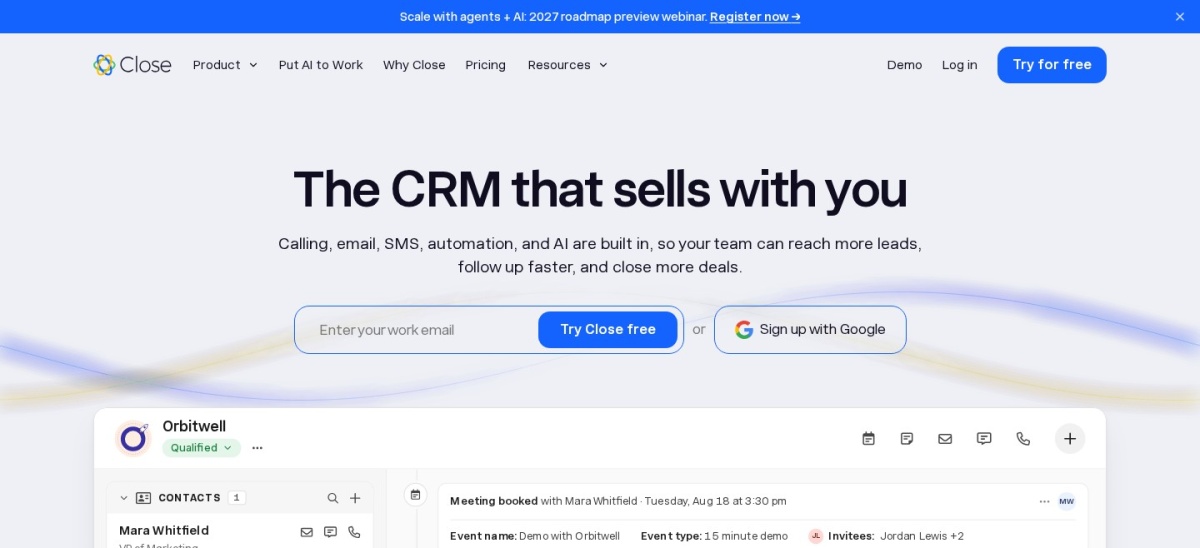
Close is a sales CRM built around calling and email, so reps work deals without switching tools. The Solo plan costs $9 per user a month when billed yearly and covers one user with up to 10,000 leads, while Essentials at $35 adds team features and reporting.
The trade off is that Solo covers one user only, so a team pays $35 a user on Essentials, and marketing features are thin. It suits inside sales teams that need speed on the phone.
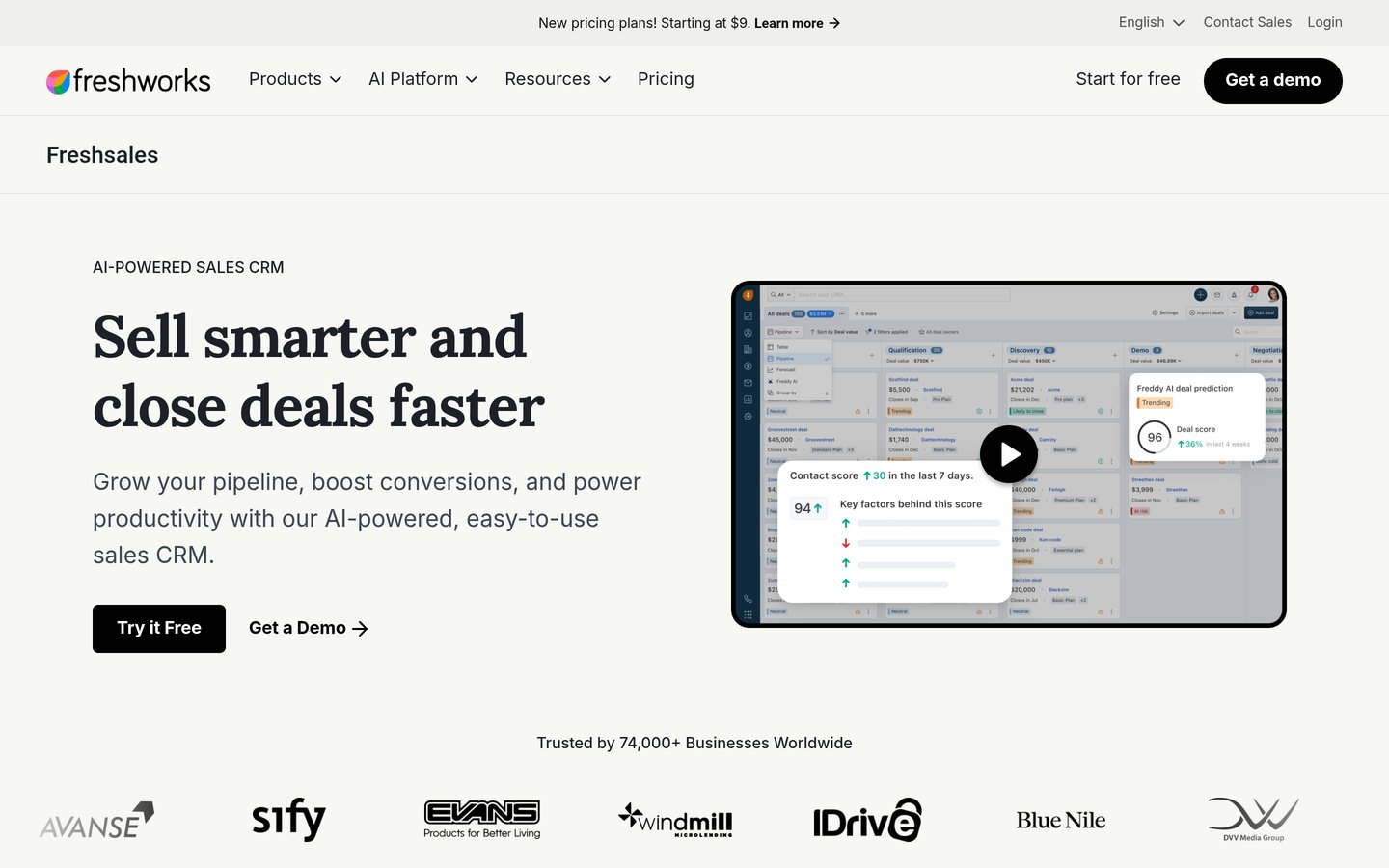
Freshsales is the sales CRM from Freshworks, and it pairs a usable free plan with a $9 Growth tier. The free plan covers up to three users with contact and deal management, while Growth adds AI deal insights, workflows and more custom fields.
The trade off is that the best AI features sit on Pro at $39, and reporting stays basic on Growth. It suits small businesses that want a free start and a cheap paid upgrade.
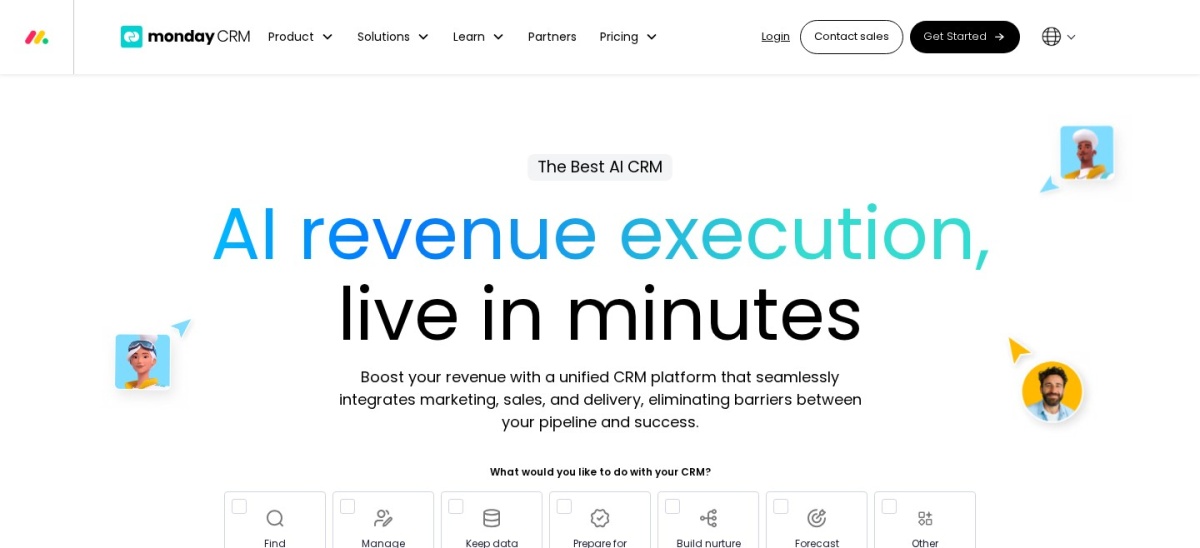
monday CRM is a sales CRM that turns work into visual boards, so a team can track deals, tasks and emails in one view. The Basic plan costs $12 per seat a month when billed yearly, with a three-seat minimum, and Standard at $17 adds automation and integrations.
The trade off is the three-seat minimum, so the smallest bill is $36 a month, and the CRM feels light next to HubSpot for marketing. It suits teams that want a customisable, visual CRM.
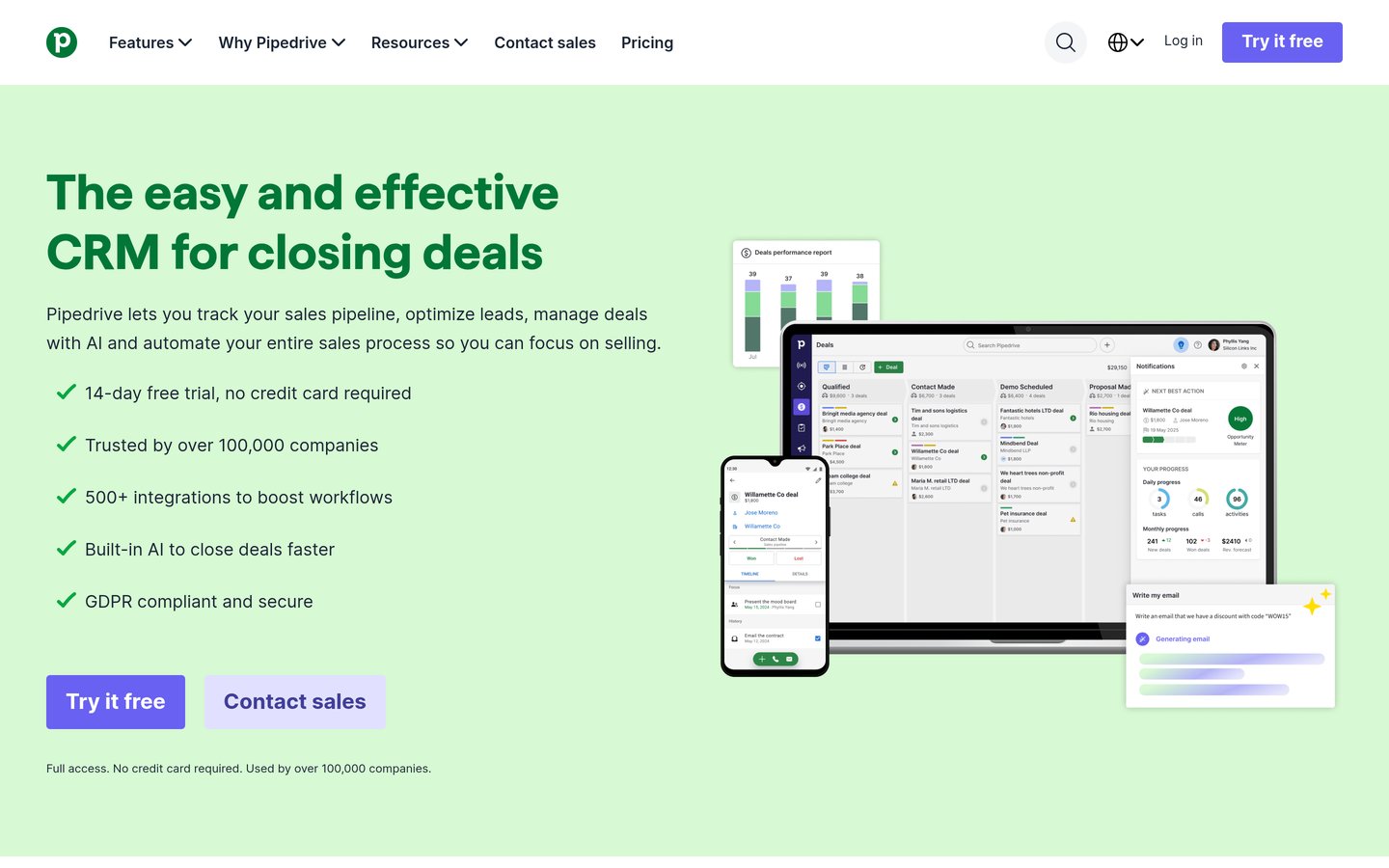
Pipedrive is a visual sales pipeline CRM that keeps reps focused on the next action for every deal. Its Lite plan costs $14 per seat a month when billed yearly, and the vendor says more than 100,000 sales teams use it. It connects with 500+ apps.
The trade off is that Pipedrive is a sales CRM only, so marketing and service need other tools, and AI features start on Growth. It suits sales teams that only need a great pipeline.
Zoho CRM is an online customer management platform covering leads, accounts, deals, activities and sales reporting. The free edition supports 3 users, while Standard costs $14 per user monthly with annual billing and adds features such as sales forecasting, email insights and more flexible pipeline management.
The trade off is a dense interface and a lot to configure, and the lowest G2 rating in this list at 4.1 out of 5. It suits feature-hungry, price-conscious teams that will invest time in setup.
Less Annoying CRM is a simple CRM for small businesses, with one flat price and no tiers to compare. It charges $15 per user a month, and it earns 4.9 out of 5 from 674 G2 reviews, the highest rating in this list.
The trade off is that it stays simple on purpose, so teams that outgrow it need a bigger CRM, and there is no free plan, only a 30-day trial. It suits small businesses that want a CRM their whole team will actually use.
Insightly is a CRM that pairs sales with project management, so a deal can turn into a project without moving to another tool. The Plus plan costs $29 per user a month when billed yearly, and Professional at $49 adds workflow automation and more customisation.
The trade off is price, since $29 is more than most tools here charge, and the CRM side is thinner than HubSpot. It suits teams that run projects from the same deals they sell.
Microsoft Dynamics 365 Sales homepage, captured Nov 2026.
Microsoft Dynamics 365 Sales is the enterprise CRM for teams that run on Microsoft 365, with native Outlook, Teams and Excel integration. The Professional plan costs $65 per user a month, and Copilot AI is built in across the sales workflow.
The trade off is cost and complexity, since $65 a user is the highest entry price here and setup needs Microsoft expertise. It suits enterprises that already standardised on Microsoft 365.
Salesforce Starter Suite costs $25 per user a month, while Core costs $195, so a 10-user team pays $2,340 to $23,400 a year before add-ons.
Every tool in this list starts below $25 a user a month except Dynamics 365 at $65, and six of the nine start at $15 or less.
The gap is widest for small teams. A 5-user team pays $540 a year for Close Solo or Freshsales Growth, against $1,500 for Salesforce Starter.
Enterprise features still cost more everywhere. HubSpot Professional at $90 a seat and Insightly Professional at $49 both sit well above their entry plans, so budget for the tier you actually need.
How we chose
We started from the CRMs that appear in G2 comparisons with Salesforce Sales Cloud, then kept the nine with a public G2 rating, a published entry price and a current product page.
Prices come from each vendor's pricing page, checked on 29 November 2026, with annual billing used for the yearly figure. Ratings and review counts come from G2 on the same day.
We left out CRMs with no verifiable G2 rating or no published entry price. No vendor paid for a place, and we do not claim hands-on testing for this list.
How to choose a Salesforce alternative
Match the CRM to your team size and sales process, then check the price at that size.
List your sales process first. Write down how deals move from lead to close, then check each CRM covers those stages without add-ons.
Try the free plan with real deals. Import a small set of real contacts and deals, and see whether reps actually update records without being chased.
Price it at your team size. Multiply the per-seat price by your team, then add onboarding fees and the tier that holds the features you need.
Check the exit cost. Confirm how you export contacts, deals and notes before you sign, so switching again stays cheap.
FAQ
What is the best Salesforce alternative in 2026?
HubSpot is the best Salesforce alternative for most teams. It offers a free CRM for 2 users, Starter at $20 a seat a month, and a 4.4 out of 5 G2 rating from 14,397 reviews. Close is the better pick for inside sales teams.
What is the cheapest Salesforce alternative?
Close Solo and Freshsales Growth both cost $9 a user a month, the lowest paid entries here. Freshsales also has a free plan for 3 users, while Close Solo covers one user only, so Freshsales is cheaper for a small team.
Is there a free alternative to Salesforce?
Yes. HubSpot offers a free CRM for 2 users, Zoho CRM for 3 users and Freshsales for 3 users. All three cover contacts, deals and basic reporting free, with paid plans adding automation, forecasting and more users.
HubSpot vs Pipedrive: which replaces Salesforce better?
HubSpot replaces Salesforce better for teams that want sales, marketing and service in one platform. Pipedrive is better for teams that only need a great visual pipeline and want the simplest possible CRM.
Which Salesforce alternative is easiest to use?
Less Annoying CRM is the easiest to use, with a 4.9 out of 5 G2 rating and one flat $15 price. Pipedrive is close behind with its visual pipeline, while Zoho CRM and Dynamics 365 take the most setup.
How much does a Salesforce alternative cost?
Paid plans here start at $9 a user a month for Close and Freshsales and run to $65 for Dynamics 365 Sales. Most teams pay between $12 and $20 a user a month for monday CRM, Pipedrive, Zoho CRM or HubSpot Starter.
SaaS SEO and WordPress specialist with about 8 years of experience. Rakib compares WordPress plugins, themes, hosting and software using public pricing, documentation and user reviews. See how we rank.