WLWPLegible EditorsLast verified 22 Nov 2026How we rank13 min read
★ Short answer
HubSpot is the best cloud CRM software for most growing businesses, with a free plan for 2 users and a paid Starter plan at a regular $20 per seat monthly. Zoho CRM offers broader customization at $14 per user monthly with annual billing, while Pipedrive is better for teams focused on visual sales pipelines.
How we make this list: we compare pricing pages, product documentation and public user reviews, then re-check every price before each update. No product paid for a place. Disclosure.
HubSpot offers free CRM access for 2 users and a regular Starter price of $20 per seat monthly.
Zoho CRM supports 3 free users, with Standard starting at $14 per user monthly on annual billing.
Pipedrive Lite costs $14 per seat monthly when billed annually and connects with 500+ apps.
Freshsales Growth starts at $9 per user monthly on annual billing, making it the lowest-priced paid entry in this comparison.
Less Annoying CRM charges a flat $15 per user monthly and earns 4.9/5 from 674 G2 reviews.
Salesforce Starter Suite costs $25 per user monthly, while monday CRM Basic starts at $18 per seat monthly with annual billing.
What matters when choosing cloud CRM software
Cloud customer relationship management software stores contact records, sales opportunities, communication history and customer activity in an online system. Sales teams can update records from different devices without maintaining their own CRM servers.
Start with contact management and sales pipelines. A useful CRM should make it easy to assign leads, schedule follow-ups, record conversations and identify deals that need attention.
Automation is another major difference. Some entry plans handle basic tasks and reminders, while advanced email sequences, lead scoring, forecasting and workflow automation require higher subscriptions.
Compare subscription costs using the number of paid users you actually need. Per-seat pricing, minimum seat requirements, annual commitments and optional add-ons can make similar-looking plans cost very different amounts.
Finally, consider integrations, reporting, permissions and data portability. A CRM should work with your existing communication tools and support the processes your team expects to use as it grows.
HubSpot is a cloud CRM platform connecting customer records with sales, marketing and service tools. Its free plan supports 2 users and includes core contact and deal management, while Sales Hub Starter adds paid sales features and access to a broader customer platform with 2,000+ integrations.
The trade off is that HubSpot's advanced automation, reporting and sales management features require higher plans, while Starter has a regular price of $20 per seat monthly despite a lower introductory offer. It suits growing businesses wanting to manage customer relationships and expand into connected sales and marketing tools.
What we like
Free CRM plan supports 2 users
Sales, marketing and service tools share customer records
More than 2,000 integrations
Clear upgrade path for growing sales teams
Watch out for
Advanced automation and forecasting require higher plans
Introductory discounts can obscure regular subscription costs
Additional products and higher tiers increase total spending
Starter adds paid sales features; Professional expands automation and reportingVisit hubspot.com
02
Zoho CRM
4.1/5on G2 (2,963 reviews, checked Nov 2026)
Paid from$14/mo
Best value for customizable CRM
Free users3
Entry planStandard
Paid price$14/user/month, annually
App integrations500+
zoho.com
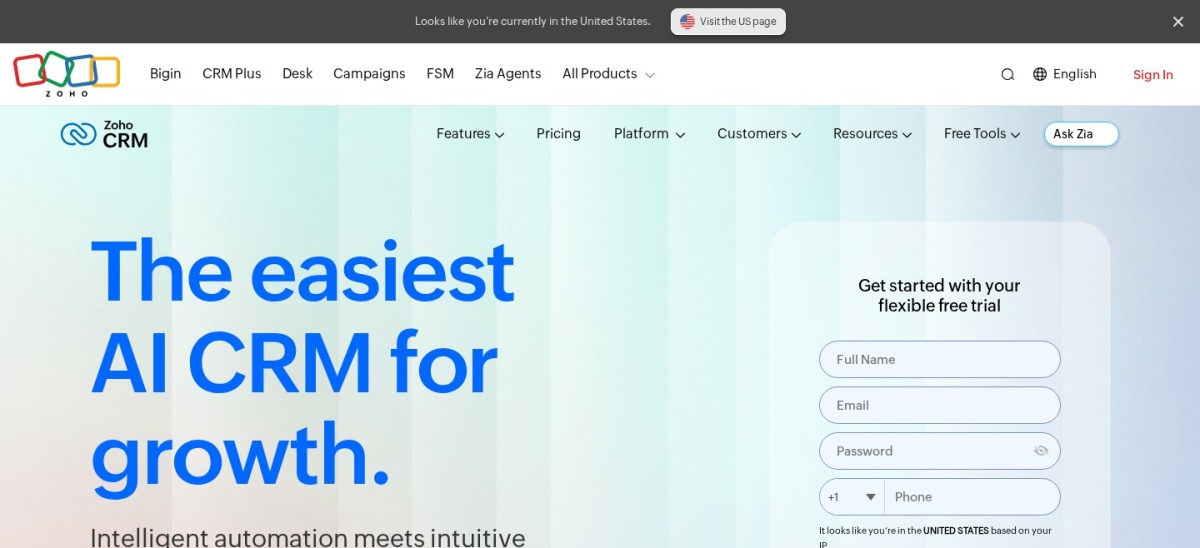
Zoho CRM homepage, captured Nov 2026.
Zoho CRM is an online customer management platform covering leads, accounts, deals, activities and sales reporting. The free edition supports 3 users, while Standard costs $14 per user monthly with annual billing and adds features such as sales forecasting, email insights and more flexible pipeline management.
The trade off is that deeper process management, inventory features and more advanced automation require higher editions, while the monthly-billed Standard rate rises to $20 per user. It suits budget-conscious businesses that need configurable workflows and may already use other Zoho applications.
What we like
Free edition supports 3 users
Standard costs $168 per user annually
Multiple sales pipelines and forecasting on Standard
Integrates with a broad selection of business applications
Watch out for
Configuration can take time for new administrators
Advanced process automation requires higher editions
Monthly billing costs more than annual billing
Standard adds forecasting and email insights; Professional expands process automationVisit zoho.com
03
Pipedrive
4.3/5on G2 (5,131 reviews, checked Nov 2026)
Starts at$14/mo
Best for visual sales pipeline management
Free trial14 days
Entry planLite
Paid price$14/seat/month, annually
Integrations500+
pipedrive.com
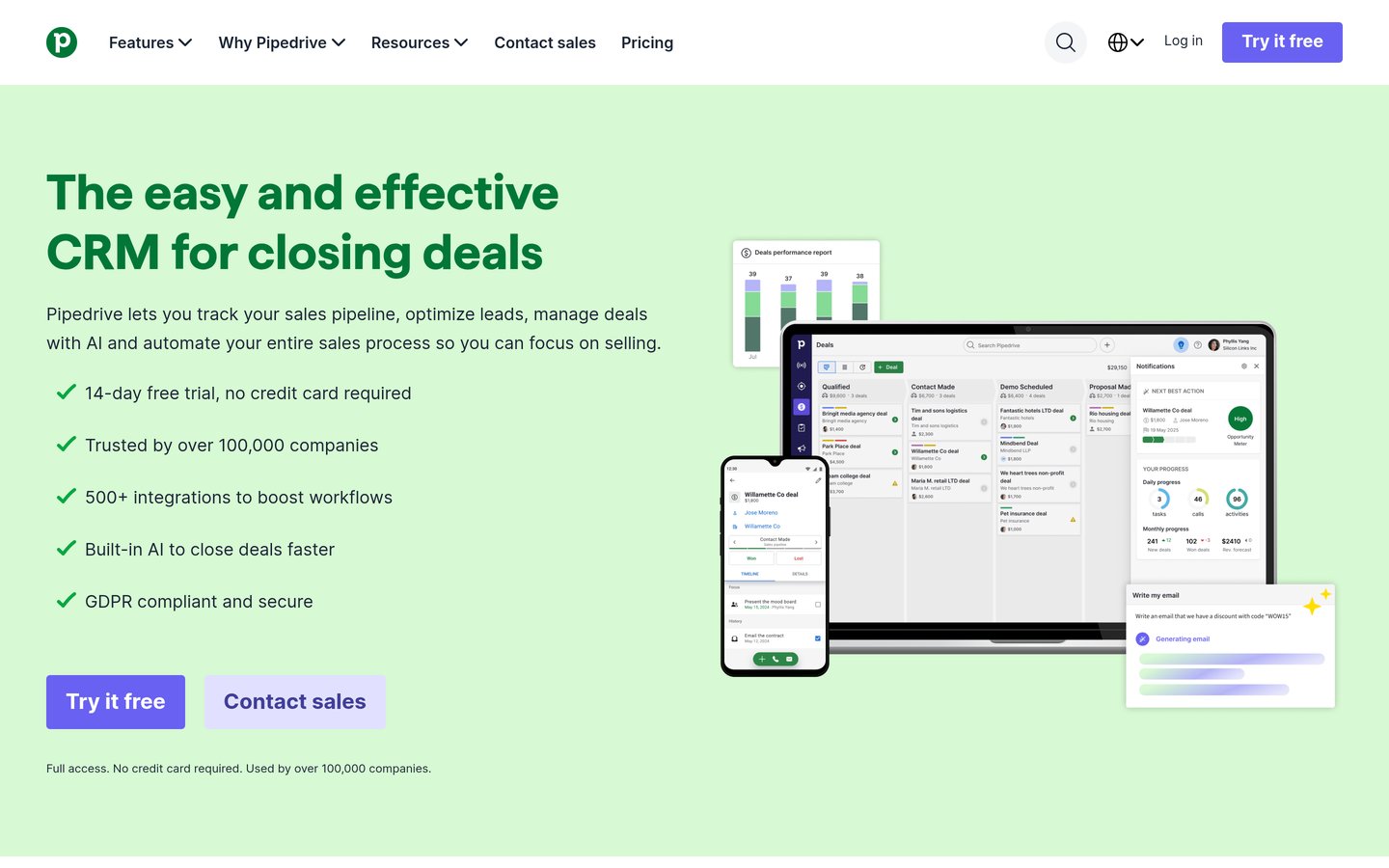
Pipedrive homepage, captured Nov 2026.
Pipedrive is a sales-focused cloud CRM built around tracking leads and deals through visual pipelines. Lite costs $14 per seat monthly with annual billing and includes contact management, calendars, pipeline tracking, AI-assisted reporting and access to 500+ integrations.
The trade off is that Pipedrive offers a 14-day trial rather than a permanent free plan, and expanded sales automation and communication features require higher tiers. It suits small and midsize sales teams that prioritize deal visibility and daily follow-up activities over broad marketing or service management.
What we like
Visual pipeline management keeps deals organized
Lite includes AI-assisted report creation
More than 500 integrations
Straightforward sales-focused interface
Watch out for
No permanent free plan
Advanced automation requires higher tiers
Additional sales and marketing tools may add cost
Growth adds broader sales automation and communication featuresVisit pipedrive.com
04
Freshsales
4.5/5on G2 (1,244 reviews, checked Nov 2026)
Paid from$9/mo
Best affordable CRM with built-in communication
Free usersUp to 3
Entry planGrowth
Paid price$9/user/month, annually
Trial21 days
freshworks.com
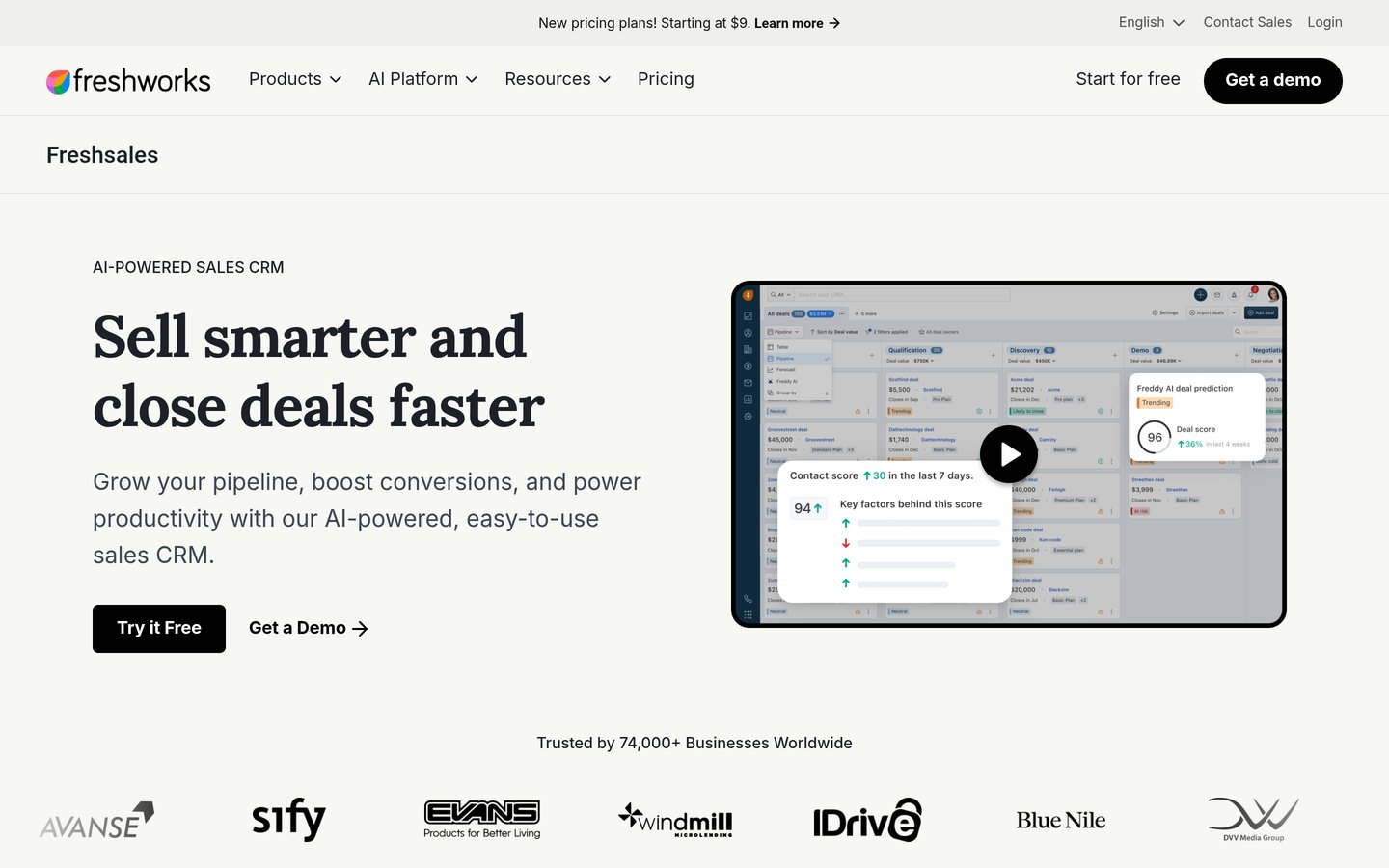
Freshsales homepage, captured Nov 2026.
Freshsales is a cloud sales CRM combining contact management, deal tracking and customer communication. Its free tier supports up to 3 users, while Growth costs $9 per user monthly with annual billing and includes Kanban views, contact lifecycle stages, email templates, custom fields and basic workflows.
The trade off is that contact scoring, sales sequences and advanced territory management require Pro at $39 per user monthly with annual billing, while selected AI capabilities are paid add-ons. It suits smaller sales teams wanting built-in communication and basic automation at a relatively low entry price.
What we like
Free CRM tier supports up to 3 users
Growth costs $108 per user annually
Email, chat and phone features available
Basic workflows included in Growth
Watch out for
Advanced lead scoring and sequences require Pro
Some AI features have additional charges
Advanced reporting and permissions sit in higher plans
Growth adds basic workflows; Pro adds scoring, sequences and territory managementVisit freshworks.com
05
Less Annoying CRM
4.9/5on G2 (674 reviews, checked Nov 2026)
Starts at$15/mo
Best simple CRM for small businesses
Free trial30 days
Pricing modelOne plan
Paid price$15/user/month
File storage25GB/user
lessannoyingcrm.com
Less Annoying CRM homepage, captured Nov 2026.
Less Annoying CRM is a browser-based customer management tool designed around simplicity and predictable billing. Its single $15-per-user monthly plan includes unlimited contacts, unlimited pipelines, unlimited custom fields, task management, email logging, mobile access and 25GB of file storage per user.
The trade off is that the product concentrates on everyday contact tracking rather than the more elaborate marketing automation and enterprise sales systems found elsewhere, although its $15 monthly price includes all advertised features. It suits consultants, independent professionals and smaller teams that want fewer settings and predictable costs.
What we like
Single price with no feature-based upgrade tiers
Unlimited contacts, pipelines and custom fields
30-day free trial without a credit card
Rated 4.9/5 on G2
Watch out for
No permanent free subscription
Less suitable for advanced enterprise sales operations
Not designed as a complete marketing automation platform
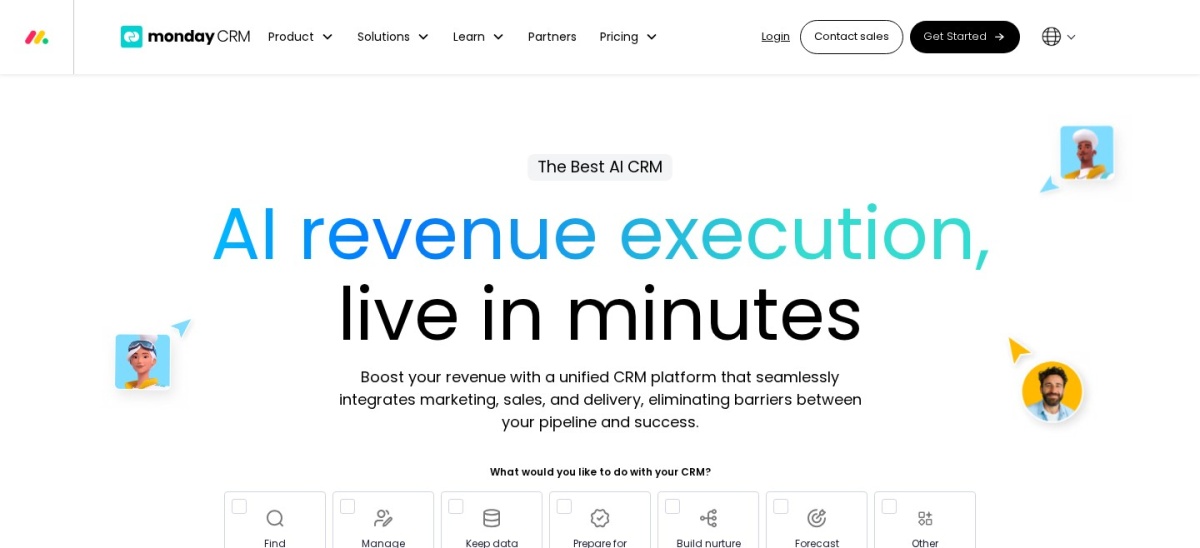
monday CRM is a cloud-based sales management system using configurable boards, dashboards and connected workflows. Basic starts at $18 per seat monthly with annual billing and includes 1 workspace, 1 custom dashboard, 1,000 active contacts and deals, and 20 quotes or invoices monthly.
The trade off is that entry pricing requires at least 3 seats, while Standard unlocks more automation, communication features and higher record limits. It suits teams that prefer visual boards and want to connect sales processes with broader project and work management activities.
What we like
Customizable boards and sales workflows
Basic includes quote and invoice capabilities
Visual dashboards for managing opportunities
Higher plans add workflow automation and communication tools
Watch out for
Minimum seat requirement increases starting cost
Basic limits active contacts and deals to 1,000
Automation is restricted on the entry plan
Standard adds automation, a communication hub and higher contact limitsVisit mondaycrm.ai
07
Salesforce
4.4/5on G2 (27,596 reviews, checked Nov 2026)
Starts at$25/mo
Best for complex and growing sales operations
Entry planStarter Suite
Paid price$25/user/month
BillingMonthly or annually
Next suitePro Suite, $100/user/month
salesforce.com
Salesforce homepage, captured Nov 2026.
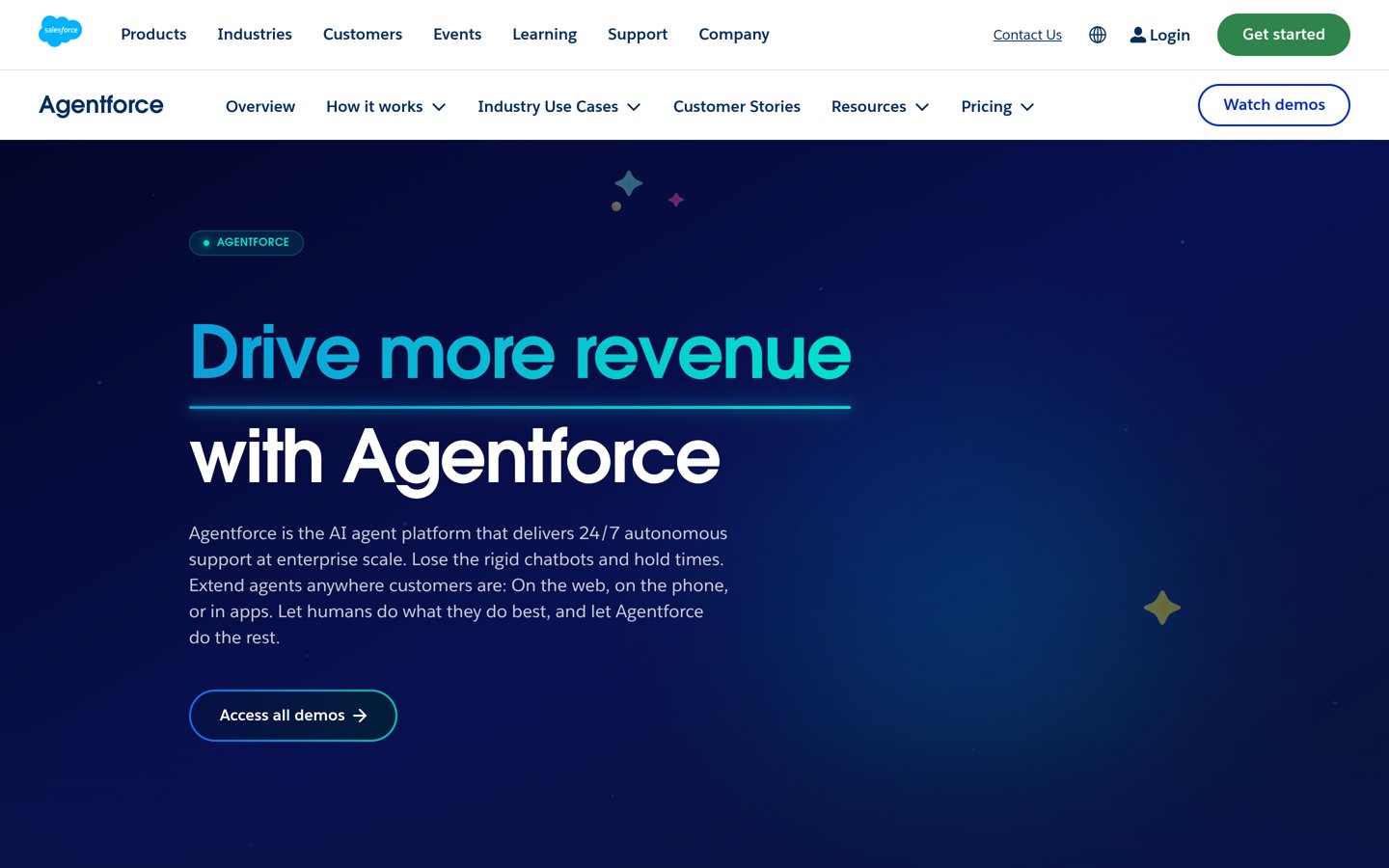
Salesforce is a cloud CRM platform for managing customer records, sales opportunities and connected business processes. Starter Suite costs $25 per user monthly and includes lead, account, contact and opportunity management, built-in sales flows, lead routing, email synchronization and marketing analytics.
The trade off is that deeper customization, sales quoting and forecasting require Pro Suite at $100 per user monthly with annual billing, while advanced Sales Cloud editions cost more. It suits organizations expecting increasingly complex customer processes, reporting requirements and CRM administration.
What we like
Starter Suite combines sales and customer management
Includes lead routing and built-in sales flows
Broad upgrade path for complex operations
Large public review base on G2
Watch out for
Entry price exceeds several small-business alternatives
Cloud CRM subscriptions usually charge per user or seat. In this comparison, the lowest paid entry is Freshsales Growth at $9 per user monthly with annual billing, followed by Zoho CRM and Pipedrive at $14 per user or seat monthly with annual billing.
The yearly cost for a single paid seat ranges from $108 on Freshsales Growth to $300 on Salesforce Starter Suite. These figures exclude taxes, optional add-ons and any extra seat requirements.
Minimum seat commitments matter. For example, monday CRM Basic requires at least 3 seats, so its $18 per-seat monthly annual-billing price produces a minimum annual subscription of $648.
Before committing, confirm which features your team requires. Automation, lead scoring, multiple pipelines, reporting, calling services and customer communication tools may have different limits depending on the subscription.
Should you choose a free or paid cloud CRM?
A free cloud CRM can be sufficient when your main goal is keeping contacts organized, tracking deals and assigning follow-up activities. HubSpot, Zoho CRM and Freshsales all have permanent free tiers with user limits.
A paid subscription becomes more useful when your team needs greater automation, sophisticated reporting, additional permissions or more detailed sales processes. Not every paid entry plan includes advanced features.
Choose based on the work your CRM must handle today and the features likely to become necessary later. Moving data and retraining users can cost more than choosing a suitable subscription at the beginning.
How we chose
This comparison covers established cloud CRM products with documented sales management capabilities and substantial public user feedback. We focused on contact management, pipeline visibility, automation, integrations, administrative requirements and suitability for different business sizes.
Pricing and user ratings were reviewed against vendor pricing information and G2 product listings for the November 22, 2026 comparison date. The annual price ladder uses the cheapest advertised paid subscription, with annual-billing rates where specified, and does not treat introductory promotions as regular prices.
We excluded products without sufficiently clear public pricing, tools focused mainly on unrelated business functions and options without meaningful public review coverage. We also avoided claims about application performance that would require independent product evaluation. No vendor paid for a place, and we do not claim testing for this list.
How to choose the right cloud CRM
Start by mapping your sales process and identifying the customer information your team needs to manage. Then compare the actual cost and included capabilities rather than choosing a CRM based on its feature list alone.
Define your sales process. List the stages from lead capture to closed deal, including follow-up tasks, account ownership and reporting needs. Choose software that can represent these stages without unnecessary configuration.
Calculate the full subscription cost. Multiply the paid seat price by the users you need and account for annual commitments, minimum seat counts and optional add-ons. Compare regular rates rather than temporary discounts.
Check integrations and automation. Confirm that the CRM connects with your email, calendar, calling tools and other business applications. Verify whether important workflows are available in the entry plan or require an upgrade.
Review growth and migration requirements. Consider permissions, reporting, data export, additional pipelines and future automation needs. A suitable CRM should support the next stage of your business without requiring an expensive replacement.
FAQ
What is the best cloud CRM software in 2026?
HubSpot is our top choice for businesses wanting a free starting point and a connected customer platform. Its free CRM supports 2 users, while the regular Sales Hub Starter price is $20 per seat monthly. Zoho CRM is a strong alternative for lower-cost customization, and Pipedrive is better suited to pipeline-focused selling.
What is the cheapest cloud CRM software?
Among the paid entry plans compared here, Freshsales Growth has the lowest published annual-billing rate at $9 per user monthly, equivalent to $108 per user annually. Zoho CRM and Pipedrive follow at $14 per user or seat monthly with annual billing. Free plans may be sufficient for smaller teams.
Is there a free cloud CRM for small businesses?
Yes. HubSpot offers a free CRM for up to 2 users, while Zoho CRM and Freshsales offer free editions supporting up to 3 users. These plans can handle essential contact and opportunity tracking, although advanced automation, reporting and specialized sales features may require paid subscriptions.
What is the difference between cloud CRM and traditional CRM?
Cloud CRM software runs on infrastructure managed by the provider and is typically accessed through a browser or mobile application. Traditional on-premises CRM software is installed and maintained on company-managed systems. Cloud services generally reduce server administration, although access, security, data governance and subscription requirements still need consideration.
Which cloud CRM is best for sales pipeline management?
Pipedrive is particularly suited to teams that organize daily work around sales opportunities and pipeline stages. Its Lite plan includes leads, deals, calendars and reporting for $14 per seat monthly with annual billing. HubSpot and Zoho CRM also offer pipeline management alongside broader customer relationship tools.
Is Salesforce better than HubSpot?
Salesforce may be a better long-term fit for organizations with complex sales processes, specialized reporting and extensive customization requirements. HubSpot offers an accessible free tier and connected sales and marketing tools. Salesforce Starter Suite costs $25 per user monthly, while HubSpot Sales Hub Starter has a regular price of $20 per seat monthly.
How much should a small business budget for CRM software?
Start by counting users who need paid access and identifying the required features. Entry plans in this comparison range from $9 to $25 per user or seat monthly, depending on the provider and billing terms. Include minimum seats, annual commitments and extra services before deciding on a budget.
Can cloud CRM software automate sales follow-ups?
Yes, many cloud CRM platforms support workflow rules, activity reminders, lead assignment and automated sales communication. Freshsales Growth includes basic workflows, while higher subscriptions across several providers add advanced sequences or process automation. Check the exact plan because automation limits vary considerably.
Can I move my contacts from one cloud CRM to another?
Most established cloud CRMs provide ways to import or export customer records, often using spreadsheet files or integrations. However, complex custom fields, relationships, activity histories and automation rules may require additional migration work. Review export options and test a representative data sample before switching systems.