Best Sales Prospecting Tools in 2026: 9 Tools Compared
WLWPLegible EditorsLast verified 23 Nov 2026How we rank12 min read
★ Short answer
Apollo is the best sales prospecting tool for most small teams, rated 4.7 out of 5 on G2 from 9,861 reviews, with a 275 million contact database and email sequences in one subscription from $49 per user a month. Pick ZoomInfo for enterprise data depth, or LinkedIn Sales Navigator if you prospect on LinkedIn daily.
How we make this list: we compare pricing pages, product documentation and public user reviews, then re-check every price before each update. No product paid for a place. Disclosure.
Apollo holds the largest useful database for small teams at 275 million contacts, rated 4.7 out of 5 on G2 from 9,861 reviews, from $49 per user a month.
ZoomInfo is the enterprise standard with 321 million contacts and intent data, rated 4.5 out of 5 from 9,234 reviews, with buyer reports near $14,995 a year.
LinkedIn Sales Navigator has the freshest B2B data, since people update their own profiles, at $79.99 per user a month billed annually.
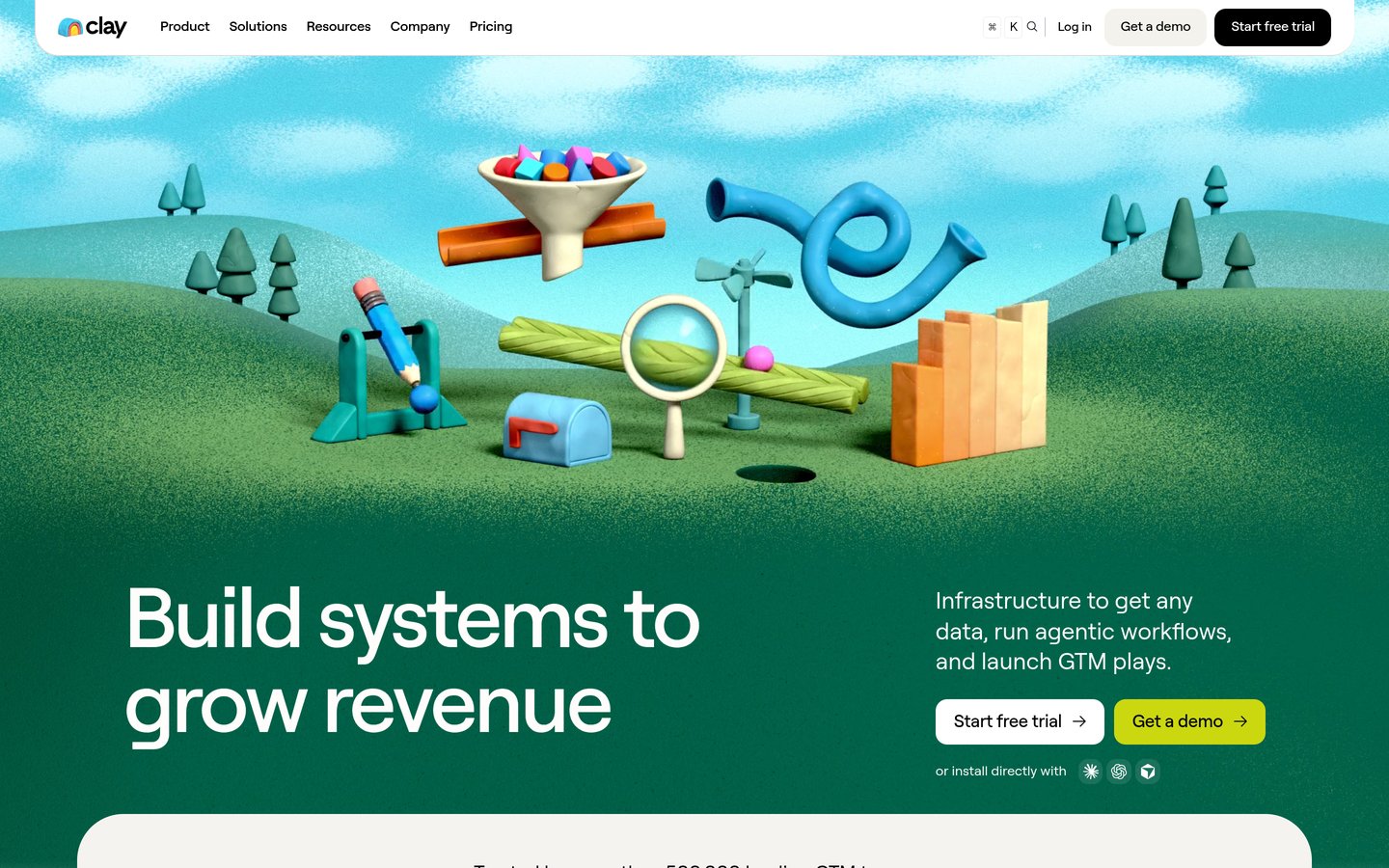
Clay enriches lists across 150-plus data providers from $167 a month, and it is the best pick for teams that already have lists to improve.
Hunter and Saleshandy are the cheapest paid starts at $34 a month, with free plans for testing data quality.
What sales prospecting tools should do
Sales prospecting tools find the right people, verify their contact details and hand you a list you can actually email or call. The database is the product: size, freshness and accuracy decide everything.
The tools here split into all-in-one platforms like Apollo, enterprise databases like ZoomInfo and Cognism, LinkedIn-first tools like Sales Navigator and Lusha, and enrichment tools like Clay that improve lists you already have.
Credits are the hidden cost. Most tools ration lookups by monthly credits, so check how many contacts you need a month before you compare prices.
Data accuracy varies by region. ZoomInfo and Cognism lead on North American and European coverage, while Apollo and Lusha are stronger value picks for global lists.
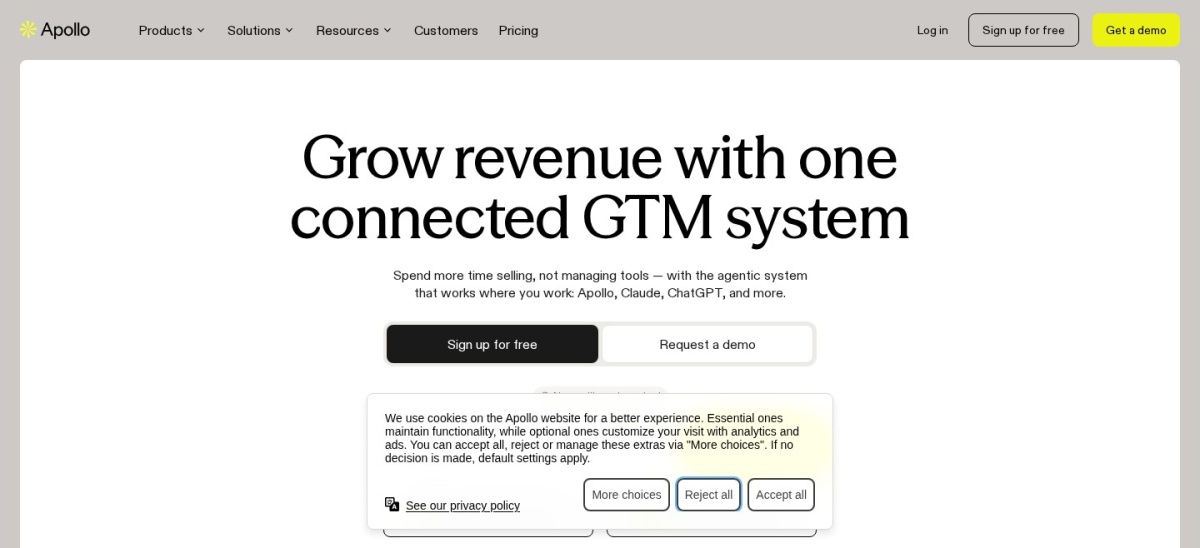
Apollo.io is the default prospecting tool for a small B2B team because it covers the two jobs most teams start with: finding contacts and emailing them. The database holds about 275 million contacts across 73 million companies, Basic includes 30,000 credits a year with unlimited sequences, and it holds 4.7 out of 5 on G2 from 9,861 reviews.
The trade off is that the built-in dialer waits for Professional at $79 a user a month billed annually, and data quality varies by region. Basic costs $49 a user a month billed annually, or $65 billed monthly. It suits small sales teams that want a contact database and email sequences in one subscription.
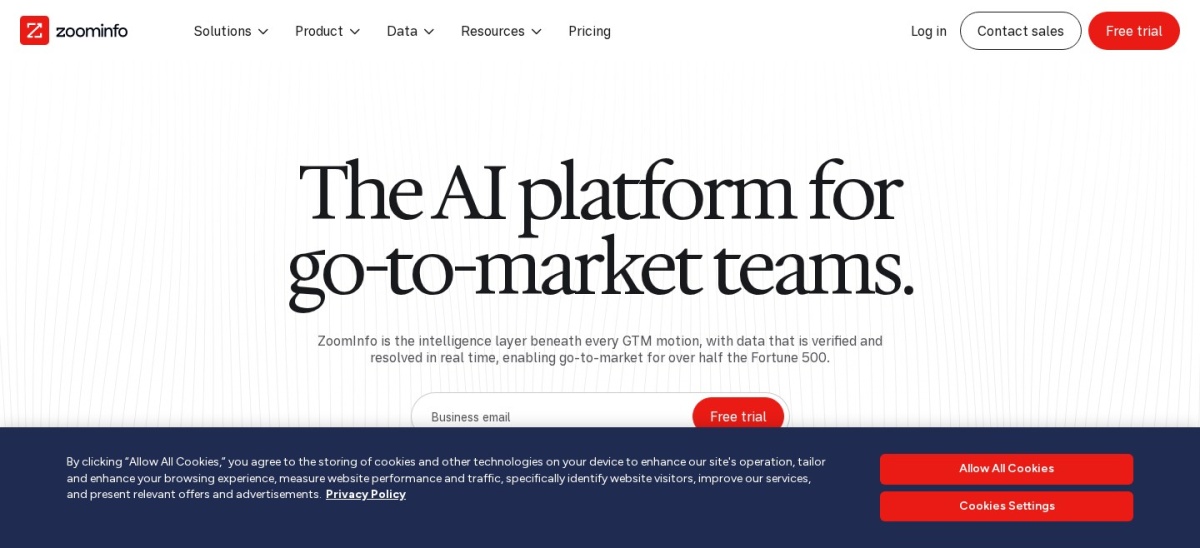
ZoomInfo is the heavyweight of sales prospecting: verified contact and company records, intent signals that flag accounts researching your category, and deep Salesforce and HubSpot integrations. It holds 4.5 out of 5 on G2 from 9,234 reviews, with over 321 million contacts across 104 million companies.
The trade off is the contract. ZoomInfo is quote-only on annual contracts, with no monthly billing or self-serve checkout, and buyer reports put Professional near $14,995 a year. It suits mid-market and enterprise teams that need deep contact data with intent signals.
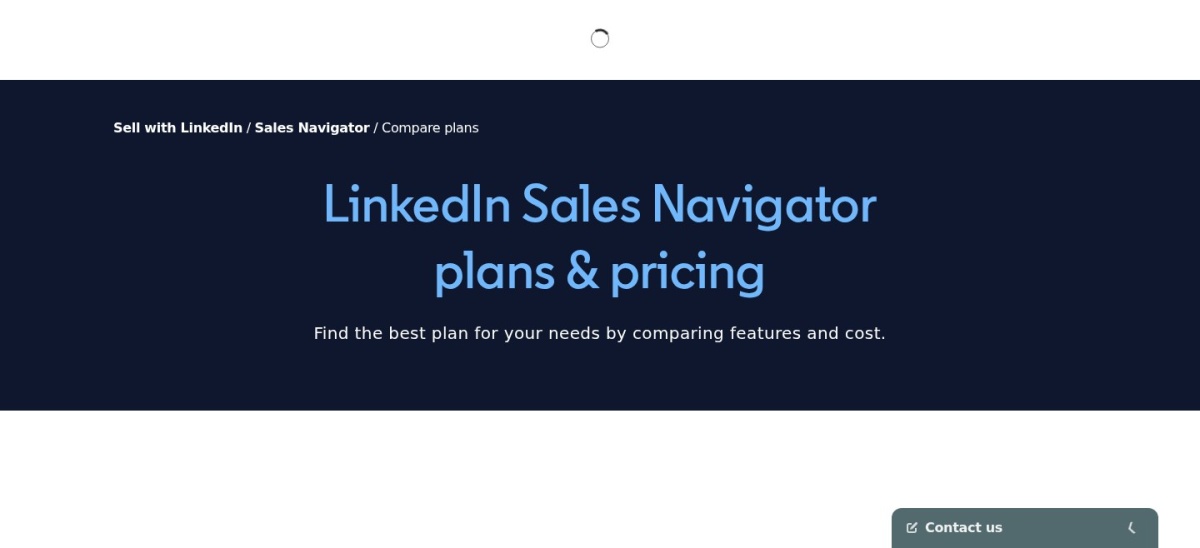
LinkedIn Sales Navigator homepage, captured Nov 2026.
LinkedIn Sales Navigator leverages the largest professional network to help sales teams find decision-makers, watch job changes and build lists. Core gives 40-plus search filters across more than a billion profiles, real-time job-change alerts, saved lead lists and 50 InMail credits a month, and it holds 4.3 out of 5 on G2 from 2,000 reviews.
The trade off is that it works only inside LinkedIn, with no email finder or enrichment of its own. Core costs $99.99 a user a month billed monthly, or $79.99 billed annually, after a 30-day free trial. It suits reps who prospect on LinkedIn daily.
Clay enriches and scores lead lists across 150-plus data providers, with waterfall enrichment, AI research agents and custom scoring workflows. It holds 4.6 out of 5 on G2 from 200 reviews, and it is the best pick when you already have a list and need it cleaned, enriched and ranked.
The trade off is that Clay is not a database you search from scratch, and it is priced by credits, so heavy enrichment runs up the bill. Launch costs $167 a month billed annually. It suits teams that build lists from several sources and need one enrichment layer.
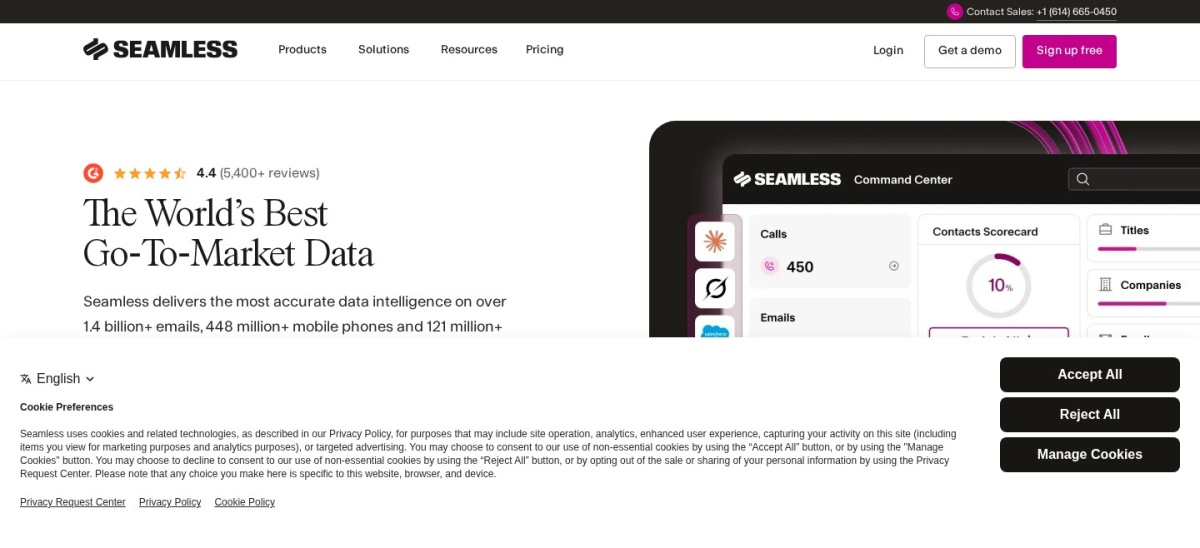
Seamless.AI finds leads with an AI search engine that verifies contact data in real time, rather than serving a static database. It claims over 1.9 billion records, gives credit back for invalid data, and holds 4.2 out of 5 on G2 from 1,200 reviews.
The trade off is pricing. Seamless.AI is custom-priced by sales, with buyer reports near $147 a month, and it is the lowest-rated tool in this list at 4.2. It suits teams that want AI-powered list building with real-time verification.
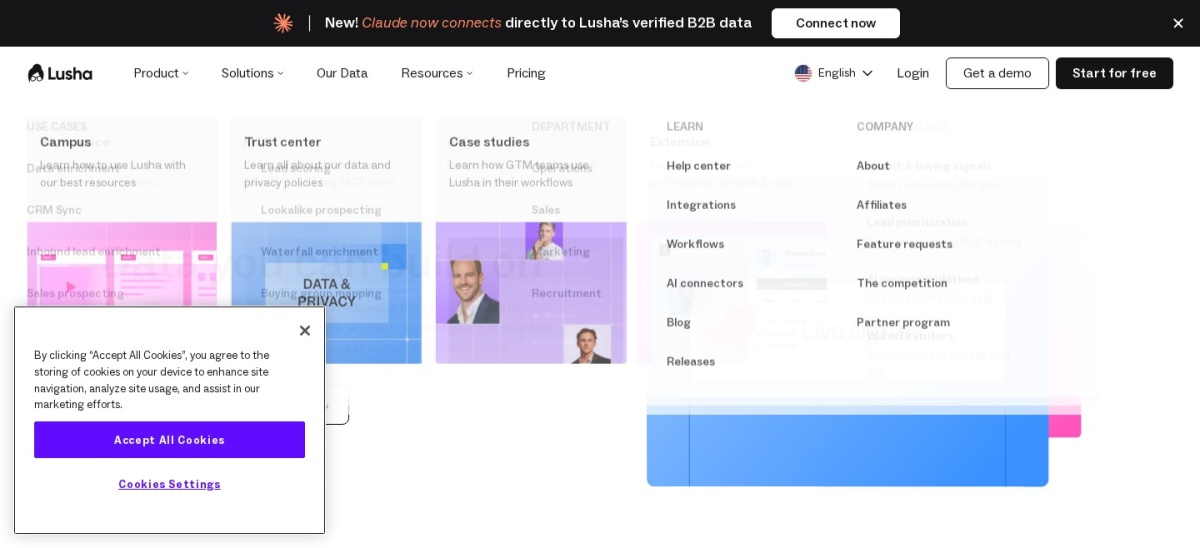
Lusha finds verified emails and phone numbers from LinkedIn profiles in one click, with a Chrome extension, 24 buying signals and GDPR compliance. It holds 4.3 out of 5 on G2 from 1,400 reviews, and it covers about 290 million contacts across 26 million companies.
The trade off is credit rationing. The free plan gives 40 credits a month, and Starter costs $49.90 a month with rollover capped at twice the monthly credits. It suits reps who find prospects on LinkedIn and need verified contact details fast.
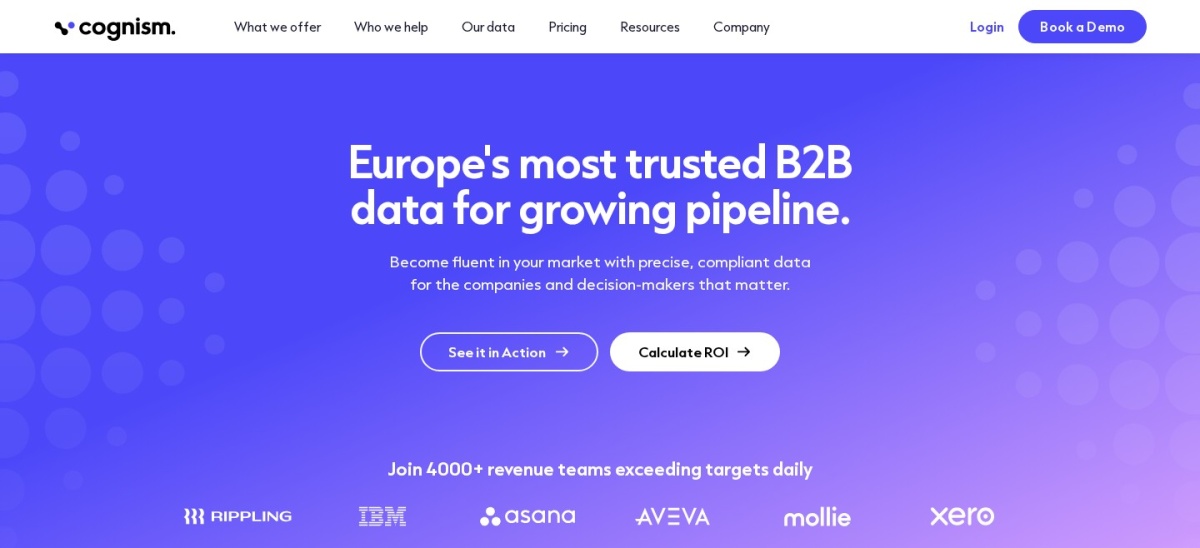
Cognism is the enterprise prospecting tool for teams selling into Europe, with phone-verified Diamond Data mobiles, DNC checking across 15 countries and GDPR-first compliance. It holds 4.5 out of 5 on G2 from 1,338 reviews, and it claims up to 3 times the connect rates of unverified data.
The trade off is pricing. Cognism is custom-priced by annual contract, with buyer reports near $147 a month, and there is no self-serve plan. It suits teams that need compliant European phone data and verified direct dials.
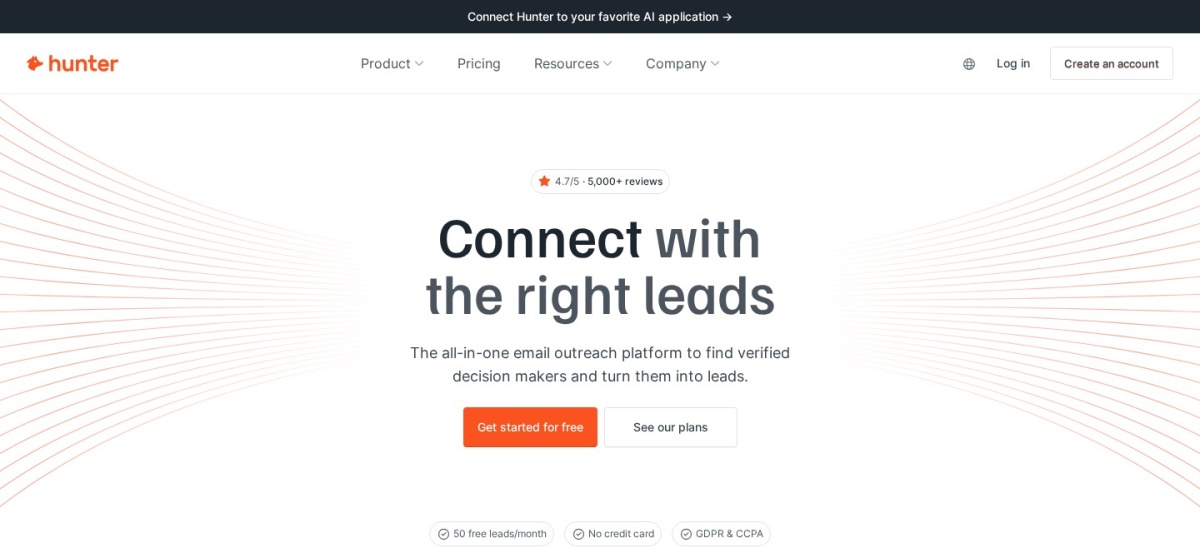
Hunter is the domain-based email finder for teams that need every public email tied to a company, verified with confidence scores. It holds 4.4 out of 5 on G2 from 590 reviews, and the free plan gives 50 email searches a month.
The trade off is scope. Hunter finds emails, not phone numbers or full company records, and the $34 a month Starter plan is email-only. It suits teams that only need verified business emails and already have their lists.
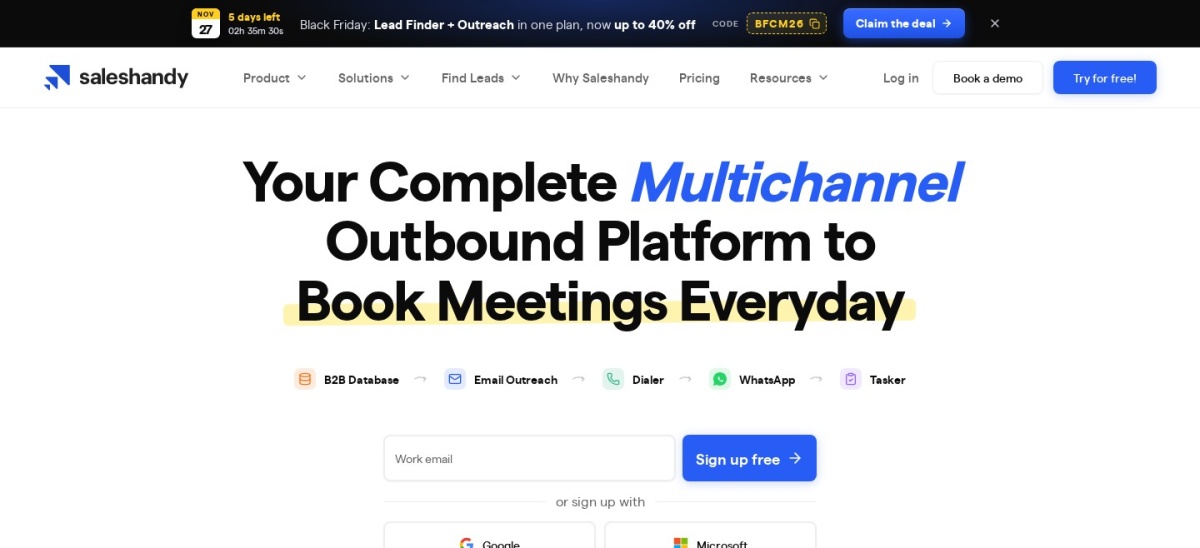
Saleshandy combines a verified lead database with cold email outreach in one subscription. Lead Finder covers 852 million contacts across 60 million companies, with real-time waterfall enrichment and a 92 percent claimed accuracy rate, and it holds 4.6 out of 5 on G2 from 805 reviews.
The trade off is that the cheapest plan is email-only prospecting, and the full outreach features need higher tiers. Starter costs $34 a month. It suits teams that want verified leads and multichannel outreach without buying two tools.
Apollo, Lusha and Hunter ration lookups by credits: Apollo Basic includes 30,000 credits a year, Lusha Starter includes 40 credits a month on its free plan, and Hunter gives 50 free searches a month.
ZoomInfo and Cognism sell annual contracts priced by seats and credits, with no monthly billing or self-serve checkout. Buyer reports put ZoomInfo Professional near $14,995 a year.
Clay charges by credits across 150-plus data providers, so the bill depends on how much enrichment you run. Start with the free tier and measure your monthly credit use before you commit.
How we chose
We started from the prospecting tools with the largest G2 review bases and the clearest pricing, then kept the nine that cover databases, LinkedIn prospecting and enrichment.
Prices and ratings were checked on 23 November 2026. Published prices come from vendor pricing pages; quote-based figures are reported ranges, and the text says so where that applies.
We left out tools with no public rating. No vendor paid for a place, and this list is based on pricing, docs and reviews, not on using the tools ourselves.
How to choose a sales prospecting tool
Start with where your buyers are and how many contacts you need a month.
Count the contacts you need a month. Credit limits decide the real cost. A rep who needs 500 lookups a month fits a different plan than a team building 10,000-contact lists.
Decide where you prospect. Pick Sales Navigator or Lusha for LinkedIn, ZoomInfo or Cognism for enterprise data, and Apollo if you want the database plus outreach in one bill.
Test data quality with the free plan. Run the same 50 target accounts through two free plans and compare bounce rates before you pay.
Check the CRM integration. Apollo, ZoomInfo and Sales Navigator all sync with Salesforce and HubSpot. Confirm the sync covers the fields your team actually uses.
FAQ
What is the best sales prospecting tool?
Apollo is the best sales prospecting tool for most small teams, rated 4.7 out of 5 on G2 from 9,861 reviews. It combines a 275 million contact database with email sequences from $49 per user a month.
How much do sales prospecting tools cost?
Apollo starts at $49 per user a month, Hunter and Saleshandy at $34 a month, and Lusha at $49.90 a month. ZoomInfo is quote-only, with buyer reports near $14,995 a year for Professional.
What is the difference between Apollo and ZoomInfo?
Apollo is an all-in-one tool for small teams, with a database plus sequences from $49 a month. ZoomInfo is an enterprise database with deeper data, intent signals and org charts, priced by annual contract.
Is there a free sales prospecting tool?
Apollo, Lusha, Hunter, Clay and Saleshandy all have free plans with limited monthly credits. ZoomInfo Lite is free for 10 credits a month, and LinkedIn Sales Navigator offers a 30-day trial.
Which prospecting tool is best for LinkedIn?
LinkedIn Sales Navigator is the best pick for reps who live on LinkedIn, with 40-plus search filters and job-change alerts. Lusha is the best add-on for pulling verified emails and phones from LinkedIn profiles.
How accurate is prospecting data?
Accuracy varies by vendor and region. Most vendors claim 90 percent or better on verified emails, but bounce rates vary, so verify a sample list before you buy a large plan.