Shopify Plus is the best Salesforce Commerce Cloud alternative for growing brands, with checkout control from $2,300 a month and no revenue share up to $800,000 in monthly sales. BigCommerce suits small stores at $29 a month, while WooCommerce suits WordPress sites with a free core.
How we make this list: we compare pricing pages, product documentation and public user reviews, then re-check every price before each update. No product paid for a place. Disclosure.
Shopify Plus costs $2,300 a month on a three-year term, against $2,500 on a one-year term.
BigCommerce Core costs $29 a month on annual billing, with no revenue share and a $50,000 revenue cap.
WooCommerce core is free, but hosting runs $25 to $350 a month and extensions cost $29 to $299 a year.
Adobe Commerce, SAP, commercetools, VTEX, Spryker and OroCommerce are all quote-only.
Salesforce Commerce Cloud itself charges 1 to 3 percent of GMV, with no published rate card.
How do you choose the best Salesforce Commerce Cloud alternative?
Start with the business model, because it decides the price shape. Hosted platforms like Shopify Plus and BigCommerce charge a flat monthly fee, while Salesforce and VTEX take a share of sales.
Quote-only platforms need a sales call before you can compare. Six of the nine tools here publish no price, so budget a week for quotes from Adobe, SAP, commercetools, VTEX, Spryker and OroCommerce.
WordPress changes the maths. WooCommerce core is free and BigCommerce Core is $29 a month, so small stores can trade a low platform fee for hosting and plugin costs they control.
B2B needs different features from consumer retail. OroCommerce and Spryker are built for quotes, price lists and distributors, while Shopify Plus and BigCommerce are built for consumer checkout first.
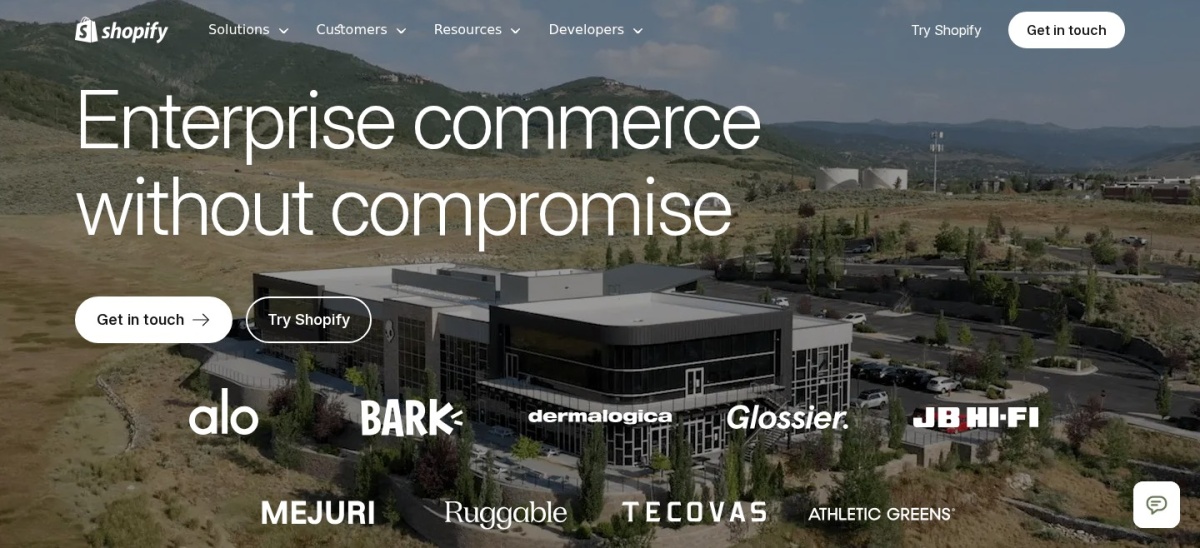
Shopify Plus is the enterprise tier of Shopify, sold on one, two and three-year terms with checkout customisation, Shopify Markets and Shopify Flow automation. It costs $2,300 a month on a three-year term or $2,500 on a one-year term, with no revenue share up to $800,000 in monthly sales.
The trade off is cost at small scale. The $2,300 entry price is far above BigCommerce Core at $29 a month, and the 0.25 percent revenue share above $800,000 in monthly sales adds up fast. It suits brands already growing on Shopify that need checkout control.
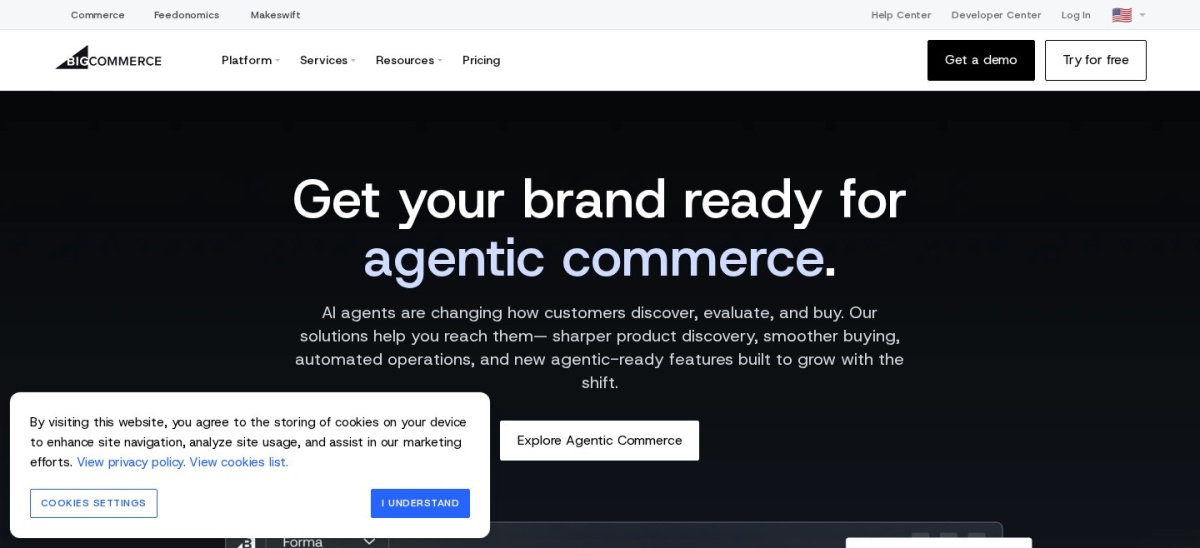
BigCommerce is a hosted ecommerce platform with no revenue share and built-in multi-channel selling to Amazon, eBay and social channels. Core costs $29 a month on annual billing or $39 monthly, with no transaction fees and a $50,000 cap on annual online revenue.
The trade off is the revenue ceiling. Growth costs $105 a month and Scale $399, and the cheapest plan caps annual online revenue at $50,000, so fast-growing stores upgrade quickly. It suits small stores that want hosting, checkout and channels without revenue share.
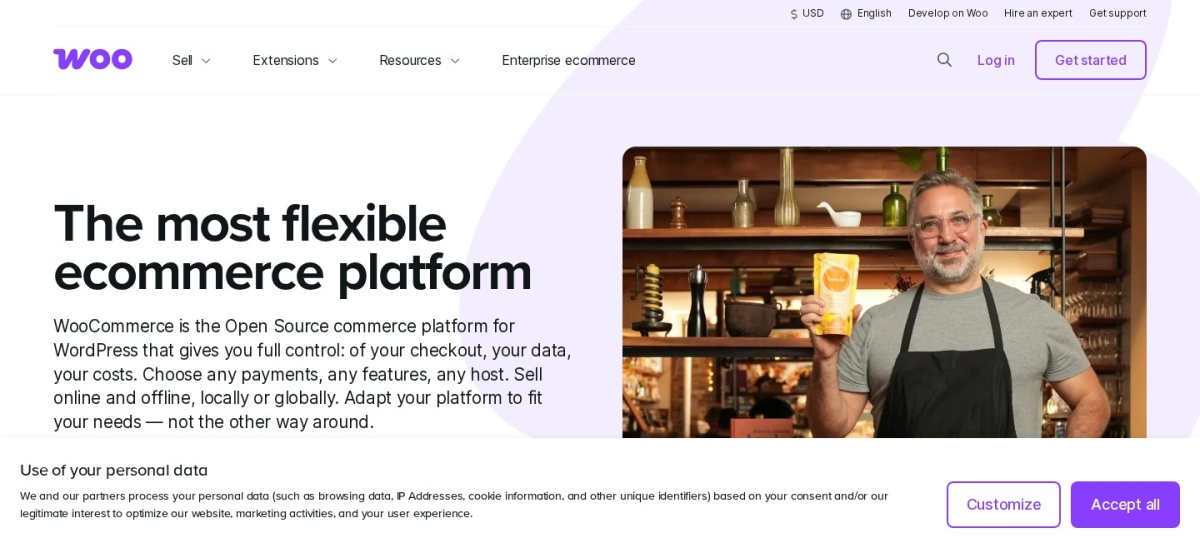
WooCommerce is the free open-source store plugin for WordPress, with no monthly subscription and no revenue share. The core platform costs nothing, but hosting runs $25 to $350 a month for most stores and extensions cost $29 to $299 a year each.
The trade off is running the store yourself. Hosting, security, updates and support are your job unless you pay an agency, so total cost depends on the host and plugins you choose. It suits WordPress sites that want full control over their store.
Adobe Commerce is the enterprise store platform formerly known as Magento Commerce, built for large catalogs, multiple stores and complex B2B pricing. Pricing is custom and quote-only, with industry estimates putting cloud at $40,000 to $190,000 or more a year.
The trade off is total cost. The licence alone can reach six figures, and implementation, hosting and development add more on top. It suits large merchants that need deep catalog and B2B flexibility and have the budget to run it.
SAP Commerce Cloud is the enterprise store platform from SAP, built for B2B buyers, complex catalogs and companies already running SAP ERP. Pricing is custom and quote-only, and G2 users report a typical implementation of around five months.
The trade off is lock-in and lead time. The platform works best inside an SAP estate, and five months to go live is slow next to hosted rivals. It suits SAP shops that want commerce tied to their ERP.
What we like
Rated 4.3 out of 5 from 331 G2 reviews
Deep B2B and catalog features
Native SAP ERP integration
Omnichannel order management
Watch out for
Quote-only pricing
Typical implementation around five months
Best inside an SAP estate
SAP Commerce Cloud pricing is negotiated per dealVisit sap.com
06
commercetools
4.5/5on G2 (17 reviews, checked Nov 2026)
PricingCustom/yr
Best for composable, API-first builds
PricingCustom, order-based
ModelAPI-first headless
StorefrontNone built in
StrengthComposable commerce
commercetools.com
commercetools homepage, captured Nov 2026.
commercetools is an API-first headless commerce platform for companies that build a custom storefront on top of commerce APIs. Pricing is custom and order-based, and there is no built-in storefront, so every front end is built or bought separately.
The trade off is build cost. Teams need developers and a front-end platform to ship anything, which puts it out of reach for small stores. It suits engineering-led brands that want composable commerce without a fixed storefront.
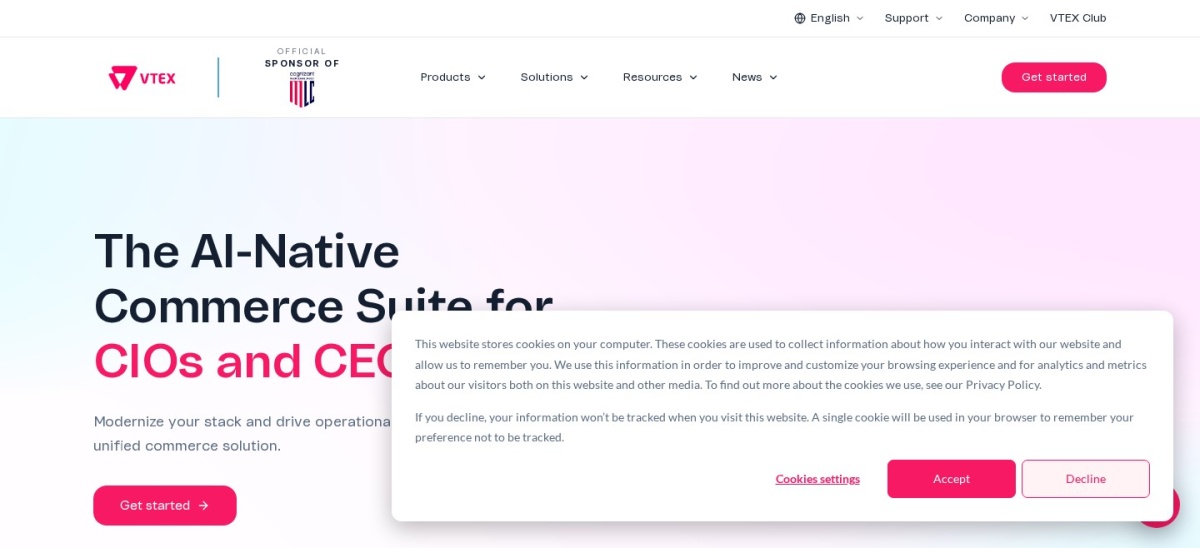
VTEX is a composable commerce platform with marketplace, order management and native storefront apps built in. Pricing is custom, with a platform fee plus a take rate on gross merchandise value, and the platform is used by large retailers and marketplaces.
The trade off is the GMV take. The fee grows with sales, so high-volume stores pay more than on a fixed-price platform. It suits retailers that run marketplaces or sell across several countries from one platform.
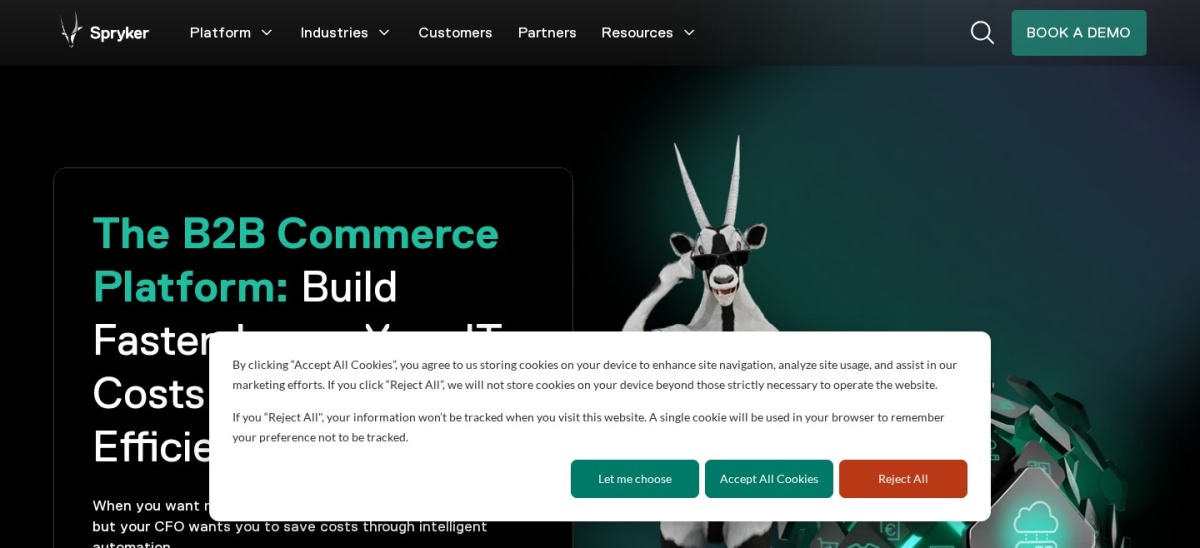
Spryker is a modular composable commerce platform aimed at B2B and marketplace operators that build exactly the store they need. Pricing is custom and quote-only, and G2 users report a typical implementation of around nine months.
The trade off is time to value. Nine months to go live is the longest in this list, and every build needs developer effort. It suits B2B and marketplace teams with a clear spec and the budget to build it.
OroCommerce is a B2B-first commerce platform built for distributors and manufacturers, with quote workflows, price lists and multi-warehouse stock built in. Pricing is custom and quote-only, and an open-source edition exists for teams that self-host.
The trade off is audience. The B2B workflows are deep, but consumer storefront features are thinner than on Shopify Plus or BigCommerce. It suits distributors and manufacturers that sell to businesses, not consumers.
Revenue share: the cost that hides behind the monthly fee
Salesforce Commerce Cloud charges 1 to 3 percent of gross merchandise value, with no published rate card, so a store doing $1 million a year pays $10,000 to $30,000 in platform fees alone.
Shopify Plus is gentler but not free of it. The platform takes 0.25 percent of monthly sales above $800,000, so a $1 million month adds $500 in fees on top of the $2,300 seat.
BigCommerce and WooCommerce take nothing. BigCommerce charges a flat monthly fee with no revenue share, and WooCommerce core is free, so their costs stay flat as sales grow.
How we chose
We started from the platforms G2 lists as Salesforce Commerce Cloud alternatives, then kept the nine with published prices or clear quote-only terms, a public homepage and a G2 rating.
Prices come from each vendor's pricing page, checked on 29 November 2026. BigCommerce Core is $29 a month on annual billing and $39 monthly, and Shopify Plus at $2,300 a month appears in WooCommerce's own comparison table of rival platforms. Ratings and review counts come from G2 on the same day.
We left out niche platforms with no review base and no public price. No vendor paid for a place, and we do not claim hands-on testing for this list.
How to choose a Salesforce Commerce Cloud alternative
Decide hosted, headless or open source first, then check the revenue share.
Decide hosted, headless or open source. Hosted suits small teams, headless suits developers, and WooCommerce suits WordPress sites that want control.
Check the revenue share before the monthly fee. Salesforce takes 1 to 3 percent of GMV and VTEX takes a cut too, while BigCommerce and WooCommerce take nothing.
Price the build, not just the licence. commercetools and Spryker need developers, and SAP takes around five months to implement, so add build time to the budget.
Ask for quotes from the custom-priced tools. Six tools here are quote-only, so request prices from Adobe, SAP, commercetools, VTEX, Spryker and OroCommerce before you shortlist.
FAQ
What is the best Salesforce Commerce Cloud alternative in 2026?
Shopify Plus is the best Salesforce Commerce Cloud alternative for most growing brands. It costs $2,300 a month on a three-year term, includes checkout customisation, Markets and Flow, and holds a 4.4 out of 5 rating from 869 G2 reviews.
What is the cheapest Salesforce Commerce Cloud alternative?
WooCommerce is the cheapest, with a free core and no revenue share, though hosting costs $25 to $350 a month. BigCommerce Core is the cheapest paid platform at $29 a month on annual billing.
Is there a free Salesforce Commerce Cloud alternative?
WooCommerce is free at the core, with no monthly subscription and no revenue share. OroCommerce has an open-source edition too, but it needs self-hosting and technical setup.
Is Shopify Plus cheaper than Salesforce Commerce Cloud?
Shopify Plus starts at $2,300 a month with published pricing, while Salesforce Commerce Cloud charges 1 to 3 percent of GMV with no published rate card. Large stores may pay less on Salesforce at low volumes, but Plus is easier to budget.
Which Salesforce Commerce Cloud alternative is best for B2B?
OroCommerce is the best B2B pick, with quote workflows, price lists and multi-warehouse stock built in. Spryker and SAP Commerce Cloud also suit B2B, while Shopify Plus needs add-ons for deep B2B pricing.
Which Salesforce Commerce Cloud alternative is best for small businesses?
BigCommerce Core is the best small-business pick at $29 a month on annual billing, with hosting, checkout and multi-channel selling included. WooCommerce suits WordPress sites that want a free core and full control.
SaaS SEO and WordPress specialist with about 8 years of experience. Rakib compares WordPress plugins, themes, hosting and software using public pricing, documentation and user reviews. See how we rank.