Best Enterprise Ecommerce Platforms in 2026: 9 Tools Compared
WLWPLegible EditorsLast verified 23 Nov 2026How we rank10 min read
★ Short answer
Shopify Plus is the best enterprise ecommerce platform for most large brands, starting at $2,300 a month on a 3-year term with built-in B2B and automation. Pick BigCommerce for open SaaS flexibility, or Adobe Commerce for deep customization.
How we make this list: we compare pricing pages, product documentation and public user reviews, then re-check every price before each update. No product paid for a place. Disclosure.
Shopify Plus is the only platform here with a published entry price: $2,300 a month on a 3-year term.
BigCommerce, Adobe Commerce, Salesforce, SAP, commercetools, VTEX and Spryker are all custom-quoted, so budget for a sales call, not a checkout page.
WooCommerce is the only free core in the list, but you pay for hosting, extensions and development instead.
commercetools and VTEX hold the highest G2 scores at 4.5 out of 5, but both rest on fewer than 40 reviews.
Typical implementations run about 5 months for Adobe Commerce and SAP Commerce Cloud, and about 9 months for Spryker, according to G2 data.
What makes a platform enterprise-grade
Enterprise ecommerce is less about the storefront and more about what sits behind it: high order volumes, B2B buyers with negotiated prices, several brands or regions on one system, and integrations with ERP, CRM and warehouse software.
The first split is hosting. Shopify Plus, BigCommerce, Salesforce, SAP and VTEX host the store for you. Adobe Commerce, commercetools and Spryker give you far more control but expect your team, or an agency, to build and run the storefront.
The second split is price. Only Shopify Plus publishes an entry price. Every other vendor in this list quotes per contract, often tied to order volume or gross merchandise value, so the number on the pricing page is the start of a negotiation, not the final bill.
Market context helps too. Our guide on ecommerce platform market share shows how the big platforms divide the market, which matters when you hire developers or look for agencies.
Finally, count the whole cost. Implementation, apps or extensions, payment fees and support tiers often cost more than the platform licence in year one.
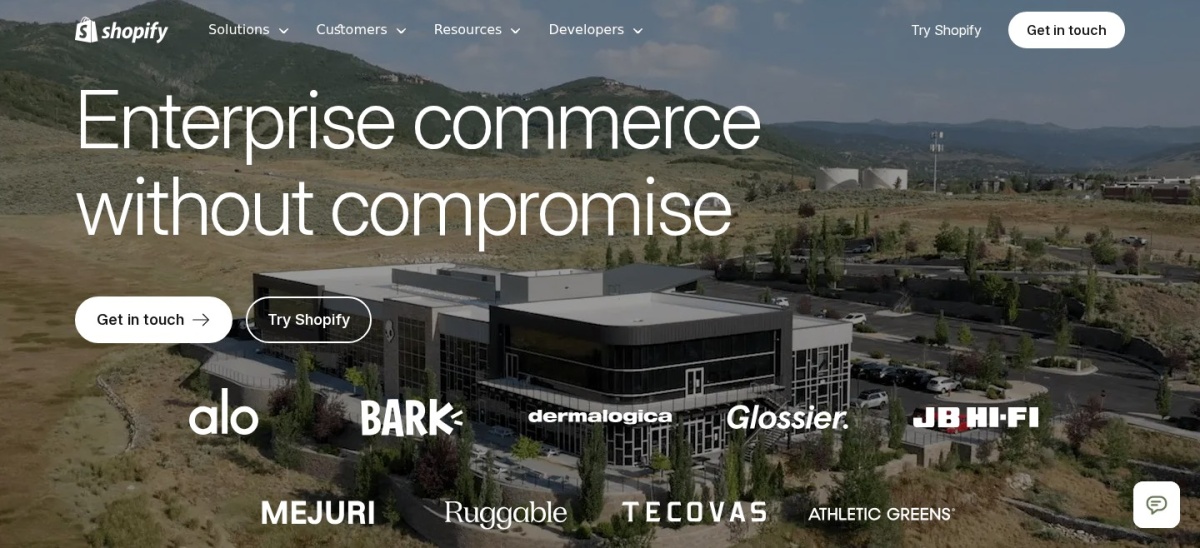
Shopify Plus is the enterprise tier of Shopify, and it is the only platform in this list with a published entry price: $2,300 a month on a 3-year term, or $2,500 a month on a 1-year term. It adds B2B wholesale storefronts, checkout customization, Shopify Flow automation, Launchpad for scheduled campaigns, higher API limits and multi-store management under one admin.
The trade off is the ceiling and the add-ons. Very high-volume stores move to a variable fee based on revenue, and paid apps, custom development and payment fees push the real monthly cost above the headline price. It suits fast-growing DTC and wholesale brands that want to launch quickly without building their own stack.
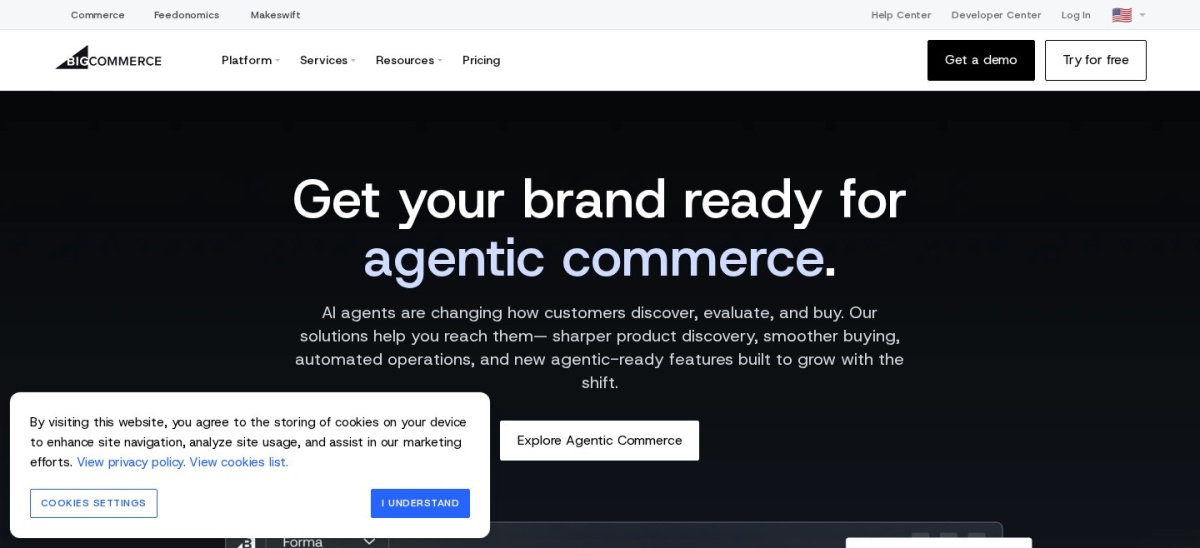
BigCommerce is a hosted SaaS platform that sits between fully managed commerce and open, API-first commerce. Its enterprise tier, Performance, is custom-priced and adds B2B Edition with price lists, purchase orders and account hierarchies, plus higher API limits, a dedicated success manager and 24/7 support.
The trade off is pricing that moves with your sales. Performance is custom-quoted, and lower plans auto-upgrade when annual sales cross a threshold, which reviewers name as the most common billing complaint. It suits brands that want hosted simplicity with more API freedom than Shopify Plus allows.
Adobe Commerce is the enterprise platform formerly known as Magento Commerce, built for large catalogs, several brands and regions, and complex B2B selling. It covers B2B quoting and negotiated pricing, advanced merchandising, Live Search and product recommendations, and it connects to the wider Adobe Experience Cloud.
The trade off is effort. Adobe publishes no prices, implementations typically take about 5 months according to G2 data, and the platform needs developers for setup, customization and upgrades. It suits manufacturers and retailers with complex product rules that a simpler SaaS platform cannot model.
Salesforce Commerce Cloud homepage, captured Nov 2026.
Salesforce Commerce Cloud is a fully managed commerce platform for large B2C and B2B brands, sold as B2C Commerce and B2B Commerce editions. Pricing is a negotiated percentage of gross merchandise value, with no published rate card. It brings a strong promotion engine, Einstein merchandising and Agentforce agents, plus native links to Sales, Service and Marketing Cloud.
The trade off is cost and lock-in. The licence alone is only part of the bill, implementation work by Salesforce or a partner is expensive, and the platform needs experienced developers. It suits enterprises already running Salesforce that want commerce on the same customer data.
SAP Commerce Cloud is the enterprise commerce platform for companies already running SAP, covering complex B2B sales, large catalogs and multi-region stores. It handles contract pricing, approval workflows and multi-region catalogs, and it syncs with SAP S/4HANA for inventory, pricing and orders.
The trade off is weight. Licensing alone is expensive, implementations typically take about 5 months according to G2 data, and reviewers call the learning curve steep and the out-of-the-box interface dated. It suits large enterprises whose commerce must sit on top of SAP, not beside it.
What we like
Deepest SAP ERP integration in this list
Strong B2B contract pricing and approvals
Rated 4.3 out of 5 from 357 G2 reviews
Handles complex, multi-region catalogs
Watch out for
No published prices; custom quotes only
High total cost of ownership
Steep learning curve and dated interface
Value shows only for large, SAP-based operationsVisit sap.com
06
commercetools
4.5/5on G2 (17 reviews, checked Nov 2026)
PricingCustom/yr
Best composable commerce for engineering-led teams
ModelAPI-first, headless
PricingOrder-based
StorefrontBuild your own
B2BExtension kit
commercetools.com
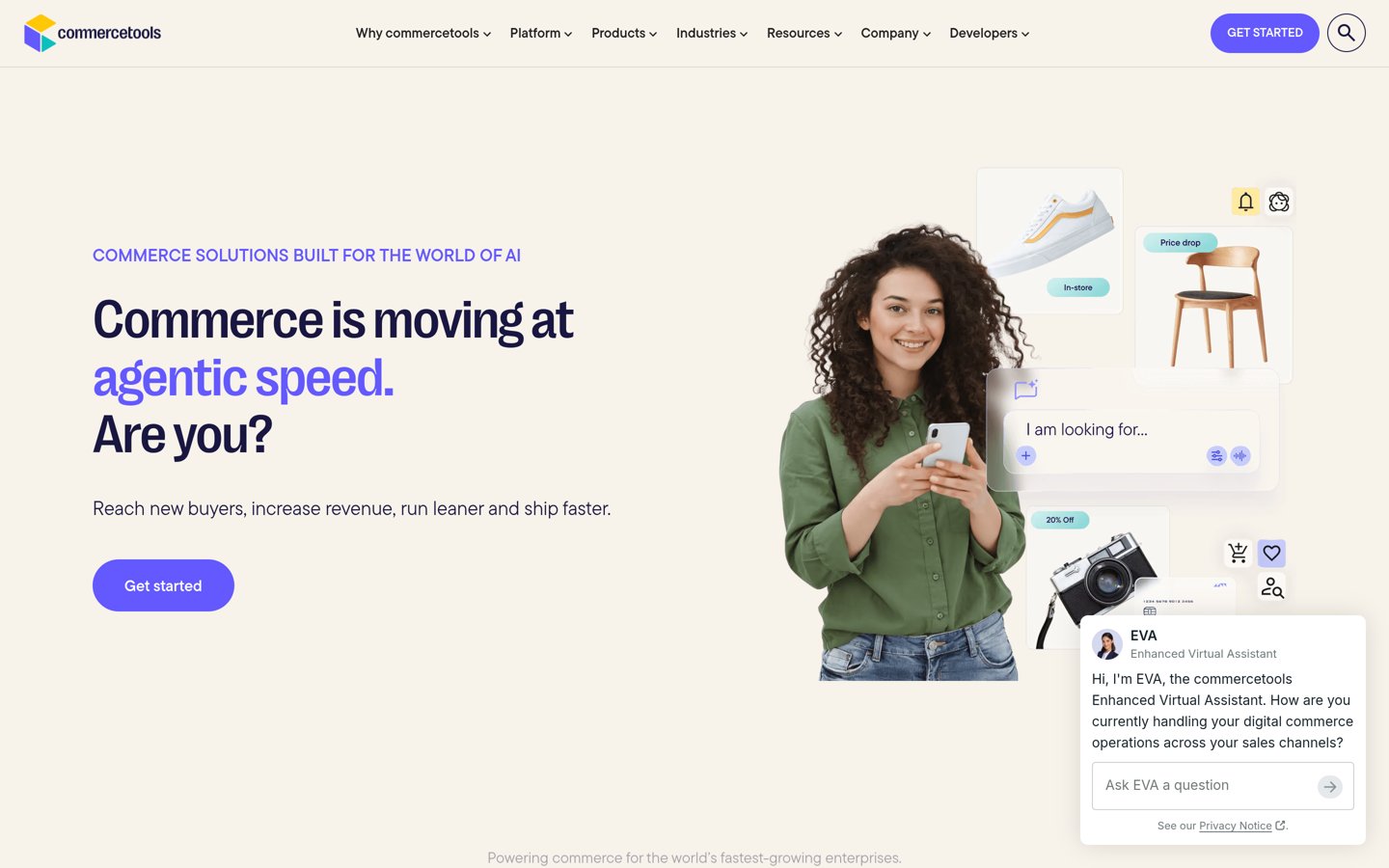
commercetools homepage, captured Nov 2026.
commercetools is a headless commerce platform built as separate APIs for catalog, cart, orders and pricing, following the MACH model. There is no built-in storefront: your team builds the front end and connects it to the APIs, while merchandisers work in the Merchant Center. Pricing is order-based and custom-quoted.
The trade off is that it is a toolkit, not a store. It needs a platform engineering team, has no storefront theme editor, and checkout, advanced B2B APIs and extra regions are paid add-ons. It suits enterprises with unusual commerce logic that no packaged platform can model.
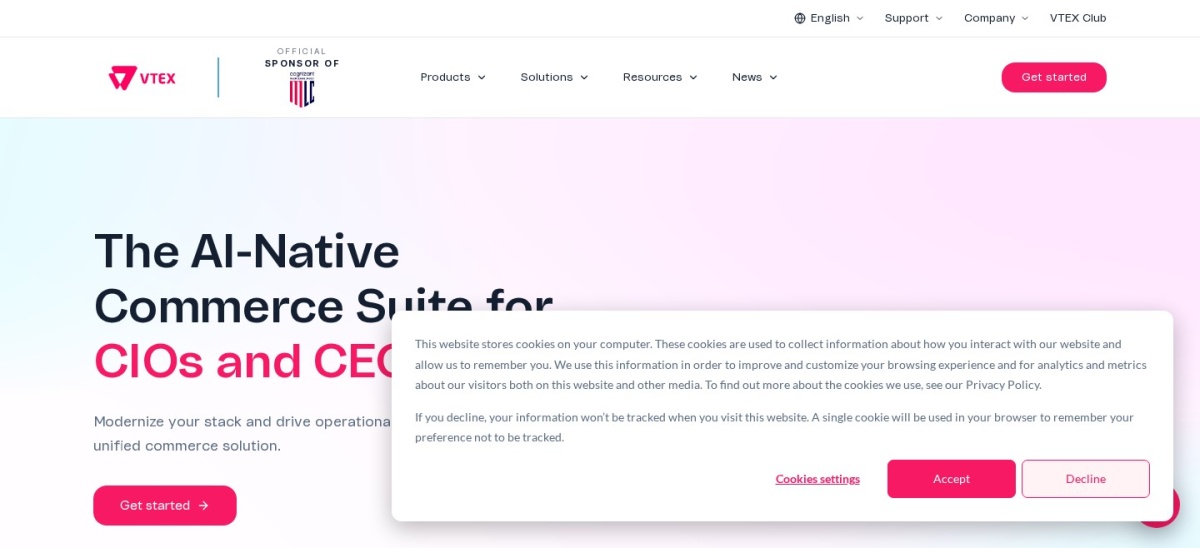
VTEX is a multi-tenant SaaS commerce platform aimed at large retailers, with marketplace and order management built in rather than added through apps. It is API-first and headless-ready, and it is a strong fit for multi-country commerce, where one platform runs several stores, currencies and seller networks.
The trade off is transparency. VTEX charges a platform fee plus a variable take rate on orders, but exact rates and module prices are not published, so buyers need a full quote. It suits retailers planning a marketplace or operating across several countries at once.
What we like
Marketplace and OMS included, not bolted on
Highest G2 score in this list at 4.5 out of 5
Strong fit for multi-country commerce
API-first with headless storefront options
Watch out for
Only 37 G2 reviews, a thin sample
Take rate and module prices not published
Learning curve and partner-led setup
Cost scales with order volume through the take rateVisit vtex.com
08
WooCommerce
4.4/5on G2 (1,281 reviews, checked Nov 2026)
PriceFree
Best free core for WordPress-based stores
Core priceFree, open source
HostingYour own host
Revenue share0%
Extensions$29-$299/yr each
woocommerce.com
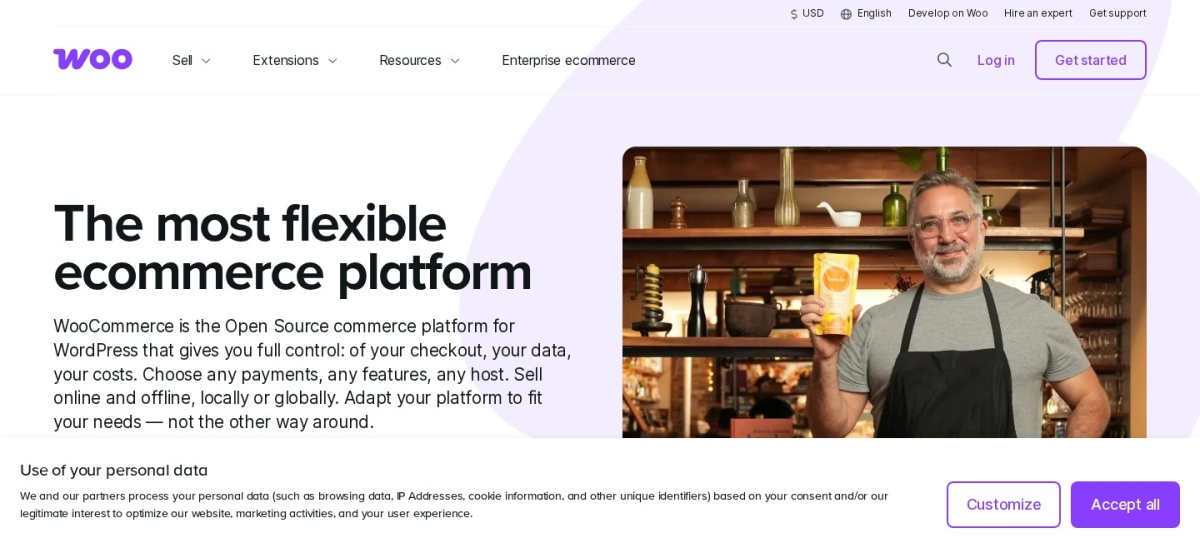
WooCommerce homepage, captured Nov 2026.
WooCommerce is a free, open-source ecommerce plugin for WordPress, with unlimited products and orders and no revenue share. The core covers physical and digital products, variable products, inventory, checkout, coupons, shipping zones and taxes, and the marketplace adds paid extensions for subscriptions, bookings and advanced shipping.
The trade off is that you own everything else. Hosting, security, performance tuning and support are your responsibility, and there is no managed enterprise tier with a sales team or SLA. It suits large WordPress sites with developers in-house that want full control and no platform fee.
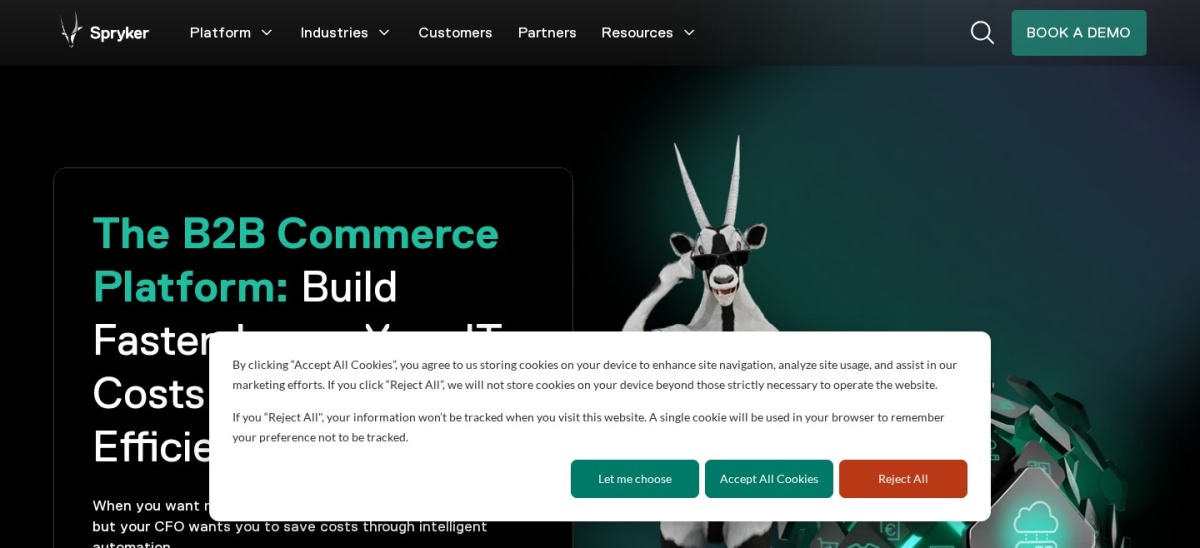
Spryker is a modular, composable commerce platform for enterprise B2B, B2C and marketplace models, with a demo shop that already includes B2B features. Its packaged business capabilities cover complex product structures, multi-vendor selling and customer-specific pricing, and teams extend it with modules rather than rebuilding the core.
The trade off is time and effort. G2 data puts typical implementation at about 9 months, reviewers note a steep learning curve for new developers, and cost and maintenance run high. It suits mid-market and enterprise teams with developers who need B2B and marketplace depth.
Seven of the nine platforms here publish no price, so the quote is the product. Ask every vendor for the same written breakdown: platform licence, hosting, support tier, and any fee tied to orders or gross merchandise value.
Watch the pricing basis. Shopify Plus and BigCommerce charge a flat subscription, Salesforce and VTEX take a share of sales, and commercetools charges per order. The same store can cost very different amounts under each model as volume grows.
Ask what implementation includes and who does it. Adobe Commerce and SAP Commerce Cloud typically take about 5 months to implement, and Spryker about 9 months, according to G2 data, and that work is usually billed separately.
Finally, ask for the renewal terms in writing. Discounts, GMV bands and support tiers all change at renewal, and a low first-year quote can hide a steep second year.
How we chose
We started from the platforms that appear on enterprise shortlists and Gartner and G2 enterprise commerce reports, then kept the nine with a real enterprise tier, a public homepage and pricing page, and enough public reviews to rate.
Prices come from each vendor's own pricing page, checked on 23 November 2026. Only Shopify Plus publishes an entry price, at $2,300 a month on a 3-year term; every other vendor shows custom pricing or no price, and the list says so instead of guessing. Ratings and review counts come from G2 on the same day.
We left out niche and regional platforms with too few public reviews to judge, and marketplace-only tools that do not run a full storefront. No vendor paid for a place, and we do not claim hands-on testing for this list.
How to choose an enterprise ecommerce platform
Start with your order volume and B2B needs, then match the hosting model to your team.
Count your volume and channels. Add up annual orders, B2B buyers and regions. High DTC volume suits Shopify Plus; multi-brand or multi-country selling points to Adobe, SAP or VTEX.
Decide who builds and runs it. A small team should pick hosted SaaS. Only choose commercetools, Adobe Commerce or Spryker if you have developers to build and maintain the storefront.
Get written quotes on the same basis. Ask each vendor for licence, hosting, support and volume fees in one document, and compare them at your expected order volume, not at list price.
Check B2B needs before you sign. If buyers need negotiated prices, quotes or purchase orders, confirm those features are in the quoted edition. See how to choose hosting for an online store for the infrastructure side.
FAQ
What is the best enterprise ecommerce platform?
Shopify Plus is the best pick for most large brands. It starts at $2,300 a month on a 3-year term, includes B2B wholesale and automation, and holds a 4.4 out of 5 rating from 872 G2 reviews.
How much does an enterprise ecommerce platform cost?
Only Shopify Plus publishes an entry price, at $2,300 a month on a 3-year term. The other platforms in this list are custom-quoted, often tied to order volume or gross merchandise value, so expect a sales call and a written quote.
Is WooCommerce good for enterprise stores?
It can be, with the right team. The core plugin is free with no revenue share, and it is rated 4.4 out of 5 from 1,281 G2 reviews. But there is no managed enterprise tier, so hosting, security and performance are your responsibility.
What is the difference between SaaS and composable commerce?
SaaS platforms such as Shopify Plus and BigCommerce host the store and ship most features ready made. Composable platforms such as commercetools and Spryker provide APIs and modules, and your team builds the storefront around them.
Which enterprise platform is best for B2B?
BigCommerce, Adobe Commerce, Salesforce Commerce Cloud, SAP Commerce Cloud and Spryker all have serious B2B tools, including negotiated pricing, quotes and approval workflows. BigCommerce is the easiest to start with; Adobe and SAP suit the most complex B2B rules.
How long does it take to launch an enterprise store?
G2 data puts typical implementation at about 5 months for Adobe Commerce and SAP Commerce Cloud, and about 9 months for Spryker. Hosted SaaS platforms such as Shopify Plus and BigCommerce usually launch faster, depending on design and integrations.