Databricks is the best SageMaker alternative for most teams: it pairs data engineering and ML in one lakehouse and is rated 4.6/5 on G2 from 1,366 reviews. Pick Google Vertex AI for the closest like-for-like swap, or Google Colab for free GPU notebooks.
How we make this list: we compare pricing pages, product documentation and public user reviews, then re-check every price before each update. No product paid for a place. Disclosure.
Databricks leads at 4.6/5 from 1,366 G2 reviews; Jobs Compute starts at $0.30 per DBU on Premium.
Vertex AI is the closest like-for-like swap, with custom training from about $0.14 per node-hour.
Azure Machine Learning charges no platform fee, so you pay only for the compute you use.
Three tools start free: KNIME's open-source desktop, Colab's GPU notebooks and Dataiku's Free Edition.
The cheapest paid plans run from $9.99 a month (Colab Pro) to $250 a month (Alteryx Starter).
How do you choose between SageMaker alternatives?
Start with the reason you are leaving SageMaker. Teams move because usage bills are hard to predict, because data already lives in another cloud, or because they only need notebooks and experiment tracking rather than a full managed platform.
Price in this category is usage, not seats. Databricks bills in DBUs, Vertex AI in node-hours and Azure ML in compute seconds, so only Alteryx, KNIME, ClearML and Colab publish a simple per-seat price you can compare directly.
Ratings here come from G2, and the review bases vary widely. Databricks carries 1,366 reviews behind its 4.6 out of 5, while ClearML's 4.7 rests on just 13, so treat the smaller scores as weak evidence.
Free tiers cover learning and prototyping, not production. Colab's free GPU time is capped, Dataiku's Free Edition excludes deployment, and KNIME's free desktop has no scheduling, so budget for the paid tier your real workflow needs. If you want to wire a model into a site, our guide on connecting an AI model to WordPress walks through it.
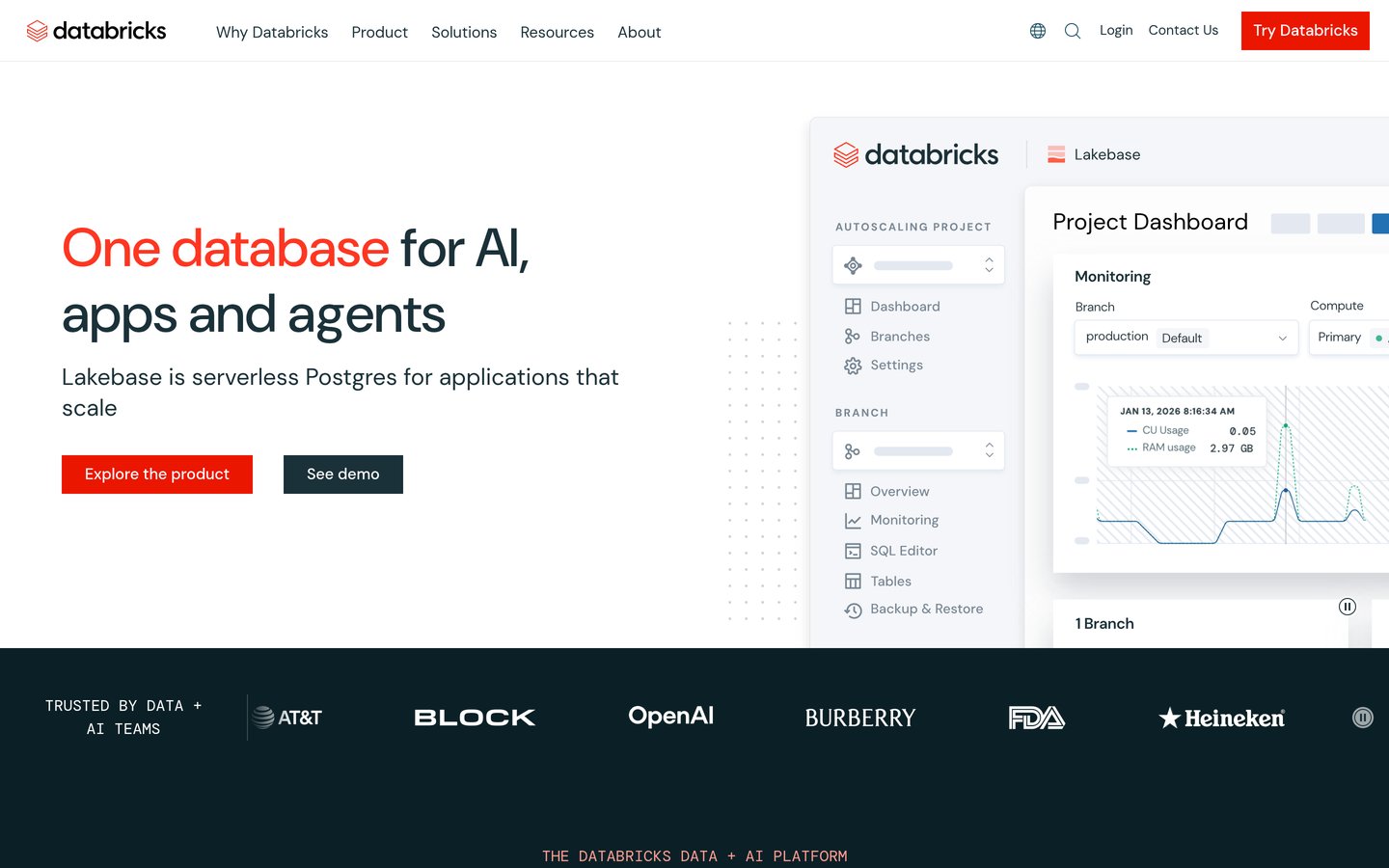
Databricks is a unified lakehouse that runs data engineering, SQL analytics and machine learning on one platform, with Unity Catalog governing data and models together. Jobs Compute starts at $0.30 per DBU on the Premium tier, with cloud VMs billed separately, and a free edition covers learning use.
The trade off is that the bill is hard to predict. DBU rates change by workload, tier and cloud, and the cheaper Standard tier was retired, so Premium rates now set the floor. It suits teams that already keep their data in a lakehouse and want ML beside it.
What we like
Highest G2 rating here with the largest review base
Data engineering, analytics and ML in one platform
Unity Catalog governs data and models together
Collaborative notebooks and MLflow built in
Watch out for
Usage-based billing is hard to forecast
Standard tier retired, so Premium rates are the floor
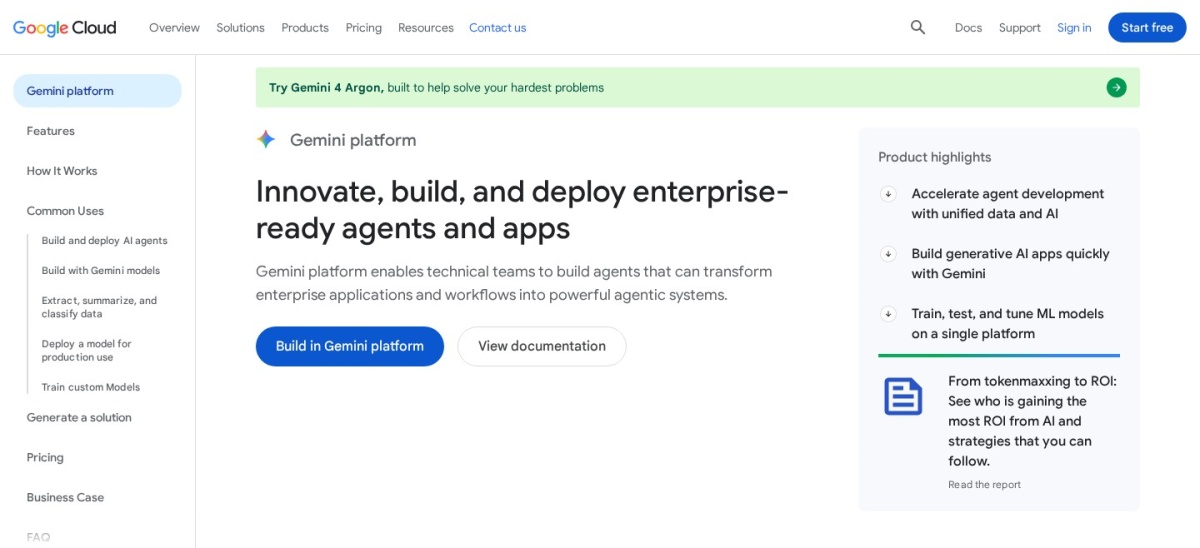
Google Vertex AI is the closest like-for-like SageMaker replacement: a managed platform that covers custom training, AutoML, pipelines and hosted endpoints in one place. Training bills per node-hour, from about $0.14 an hour for the smallest machine type, and it plugs straight into BigQuery and Cloud Storage.
The trade off is naming and billing complexity. Google renamed Vertex AI to the Gemini Enterprise Agent Platform in April 2026, and the price depends on machine type, GPU and region, so small jobs stay cheap while large ones need a calculator. It suits teams already standardised on Google Cloud.
What we like
Full training-to-endpoint lifecycle in one platform
Deep BigQuery and Google Cloud integration
AutoML for teams without a modelling specialist
30-second billing increments on training
Watch out for
Pay-as-you-go pricing is hard to forecast
Steep learning curve for Google Cloud newcomers
Renamed in 2026, so docs and listings use two names
Compute billingPer second, no long-term commitment
azure.microsoft.com
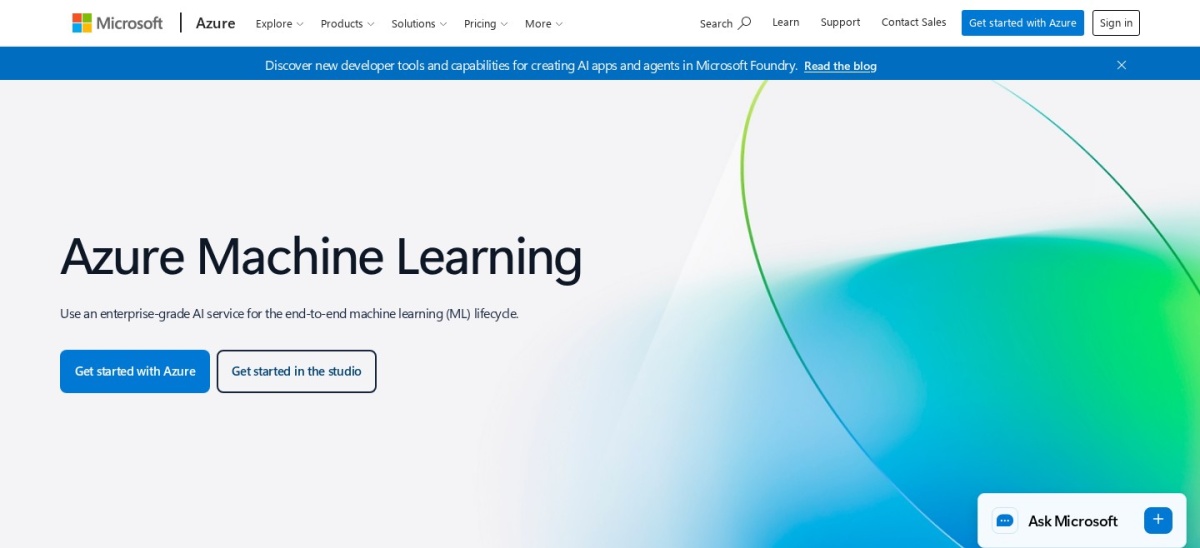
Azure Machine Learning homepage, captured Nov 2026.
Azure Machine Learning is Microsoft's managed ML platform, and its sharpest argument against SageMaker is price structure: the studio carries no service charge, so you pay only for the compute, storage and supporting Azure services your jobs use. It covers notebooks, automated ML, pipelines and managed endpoints.
The trade off is that the bill still grows with the infrastructure. Managed endpoints bill for the VM as long as the deployment exists, with no scale to zero, and storage, Key Vault and Container Registry add separate charges. It suits enterprises already running on Azure.
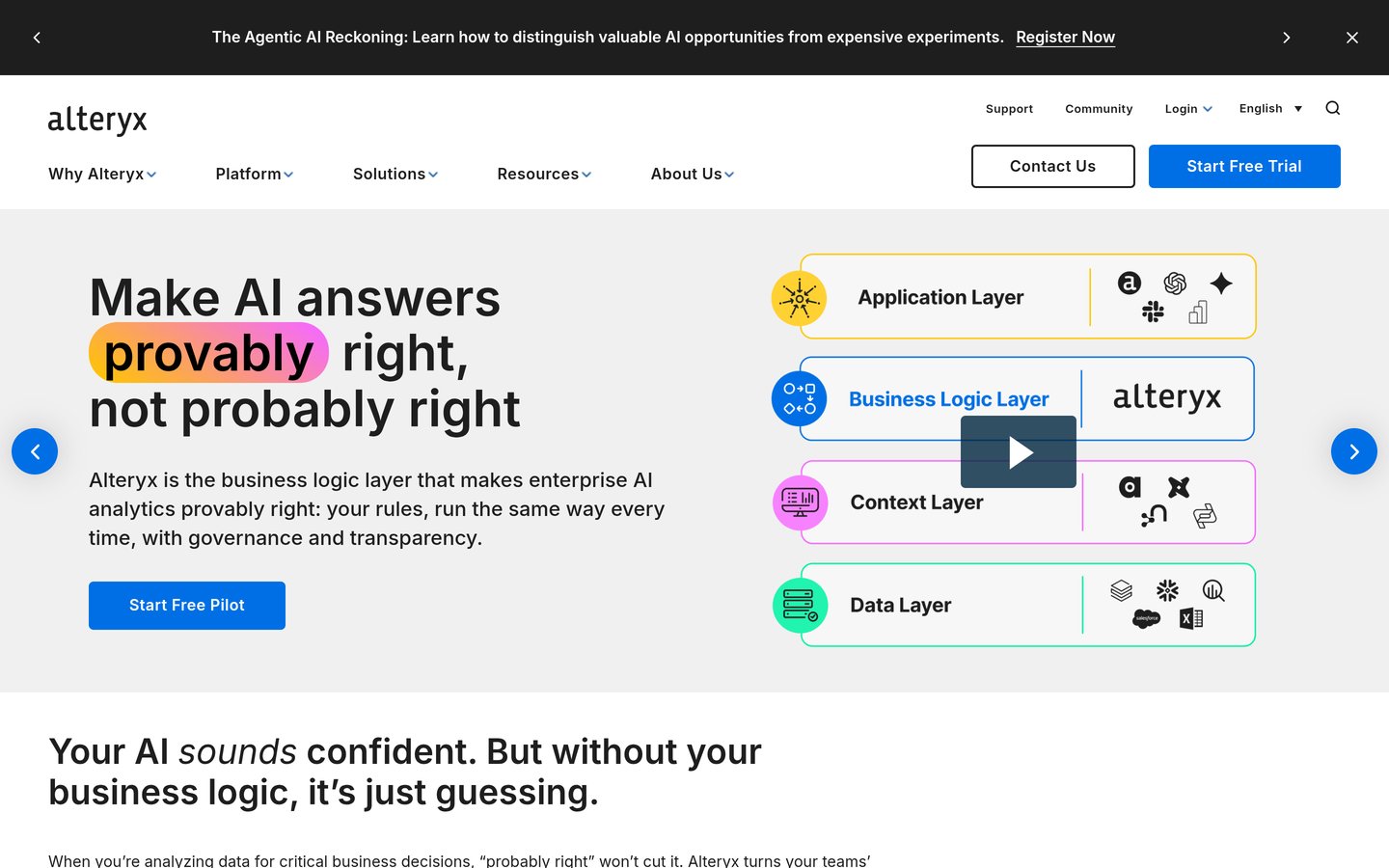
Alteryx is a drag-and-drop platform for cleaning, blending and automating data preparation, with AutoML and text analytics layered on top for teams that need models without writing code. The Starter edition costs $250 per user a month when billed annually, and reviewers rate it 4.6 out of 5 on G2.
The trade off is price. Starter is the only published tier and Professional and Enterprise are quote-only, so a team quickly pays far more than a usage-based cloud platform for light work. It suits analysts who prepare data every week and want repeatable workflows.
What we like
Visual workflows need no SQL or Python
Strongest G2 review base of the desktop tools here
Repeatable, scheduled data preparation
Large community and connector library
Watch out for
$250 per user a month is the cheapest published tier
Higher tiers are quote-only
Windows-only desktop for Designer
Paid plans add automation, scheduling and server deploymentVisit alteryx.com
05
Dataiku
4.4/5on G2 (267 reviews, checked Nov 2026)
PricingCustom/yr
Best for governed team ML
Pricing modelCustom quote, licence-based
Free optionFree Edition, up to 3 users
Trial14-day cloud trial
Entry paid planDiscover, up to 5 users, quote-only
dataiku.com
Dataiku homepage, captured Nov 2026.
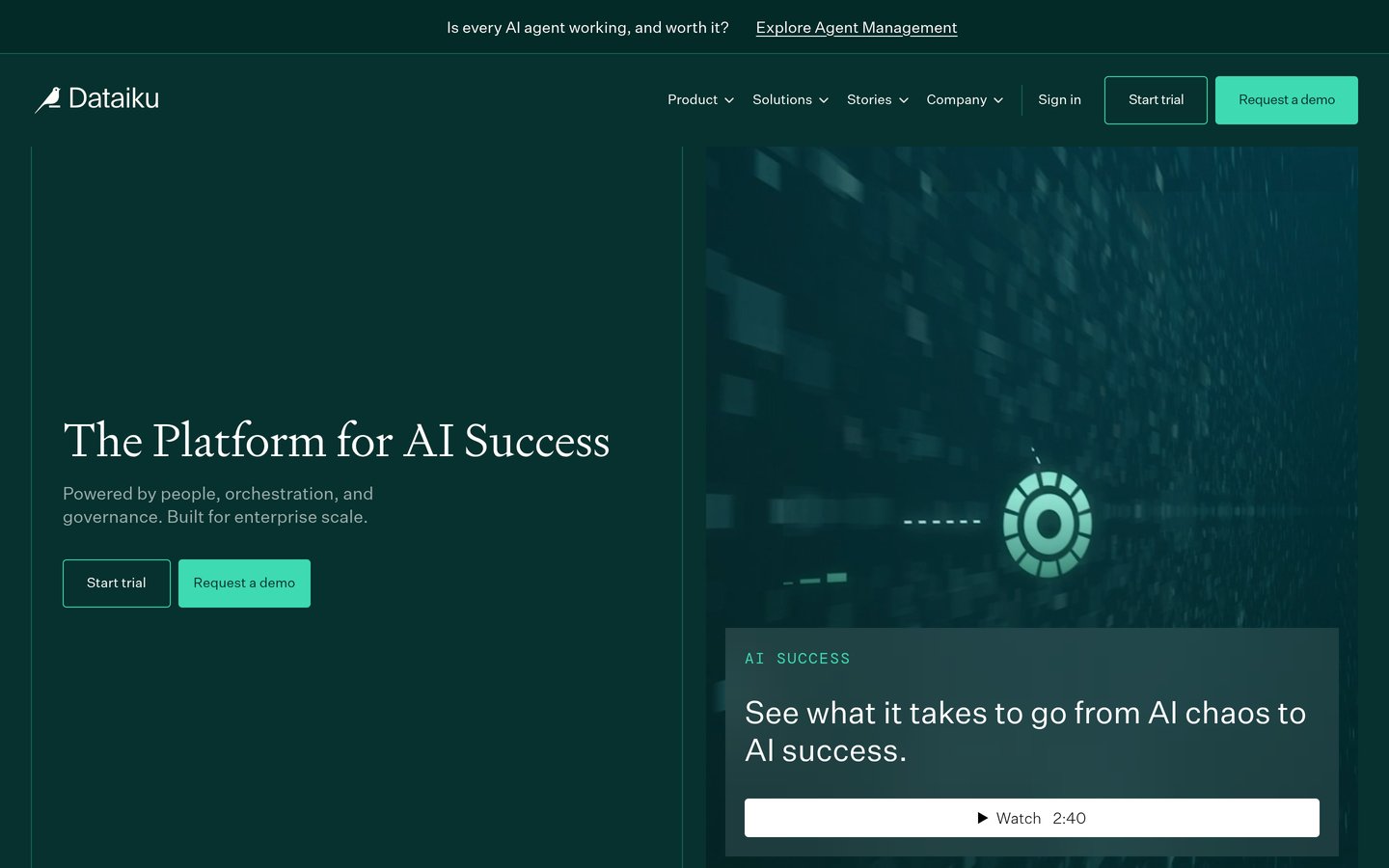
Dataiku is a collaborative platform where data experts and business teams build, deploy and govern analytics and ML work in one place, with visual workflows beside code notebooks. The Free Edition supports up to three users on local infrastructure, and paid plans are licence-based quotes.
The trade off is that production costs nothing like the free tier. Deployment, automation and governance are excluded from the Free Edition, and the paid Discover plan publishes no price, so budgeting starts with a sales quote. It suits regulated teams that need governed AI.
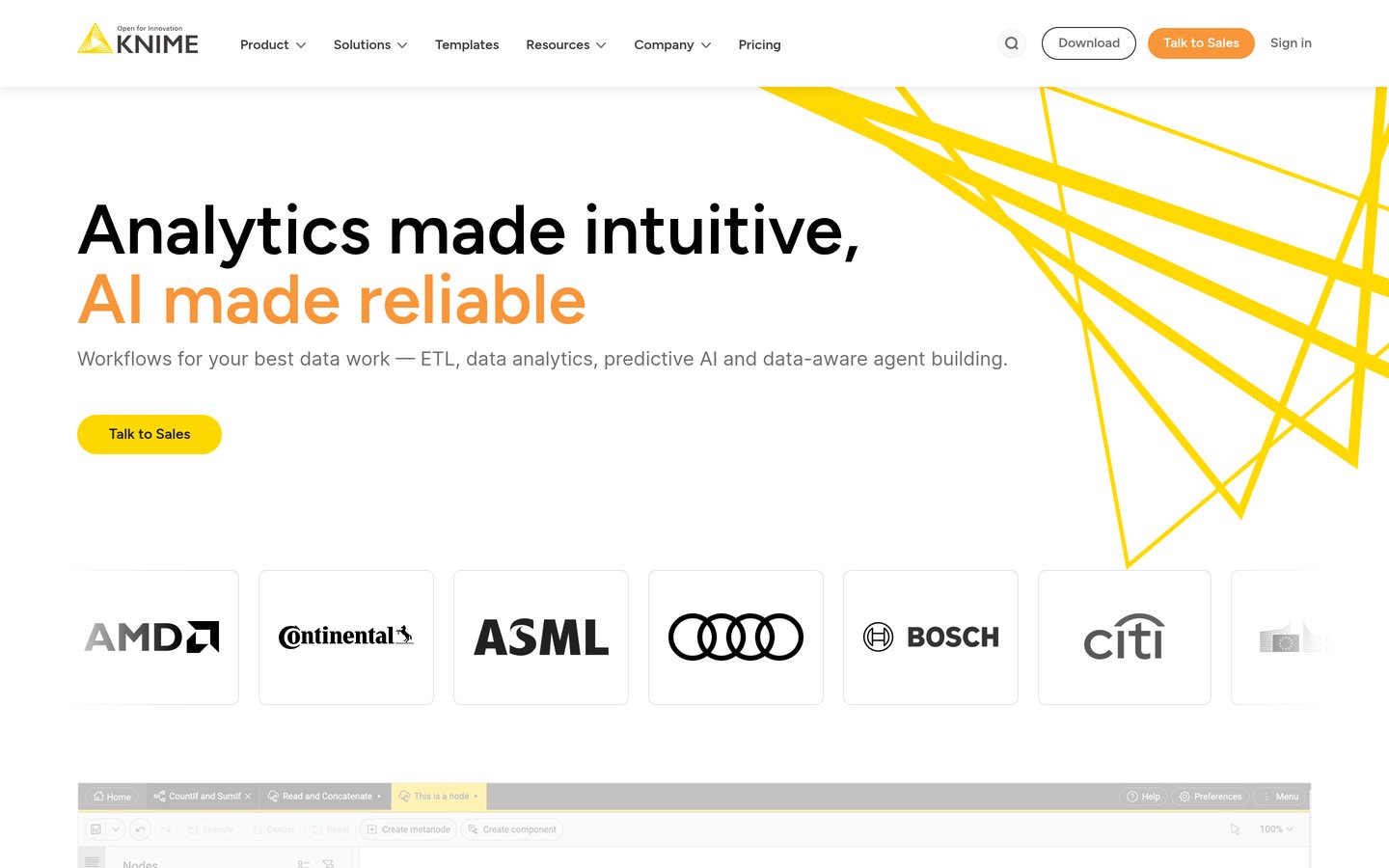
KNIME is an open-source analytics workbench built around visual node pipelines for data blending, transformation and machine learning, with Python and R scripting alongside drag-and-drop steps. The desktop Analytics Platform is completely free, and Hub Pro adds scheduled cloud runs for $19 a month.
The trade off is that automation costs extra. Scheduling, data apps and REST services need Hub Pro at $19 a month, which includes 120 runtime credits, and extra runtime bills at $0.025 per vCore minute. It suits analysts who want a capable free core and cheap automation.
What we like
Free open-source desktop with no seat limits
300+ connectors and visual AutoML
Cheapest paid automation here at $19 a month
Strong ease-of-setup scores on G2
Watch out for
Scheduling needs a paid Hub plan
Large files can strain local memory
No managed training endpoints like SageMaker
Hub Pro adds scheduling, data apps and 120 runtime credits a monthVisit knime.com
07
IBM watsonx.ai
4.2/5on G2 (170 reviews, checked Nov 2026)
PricingPay-as-you-go/mo
Best for regulated enterprises
Pricing modelPay-as-you-go, plus subscriptions
Entry paid tierEssentials, $0 base fee
Fixed planStandard, from $1,110/mo
Free optionLite tier, 1 user, capped usage
ibm.com
IBM watsonx.ai homepage, captured Nov 2026.
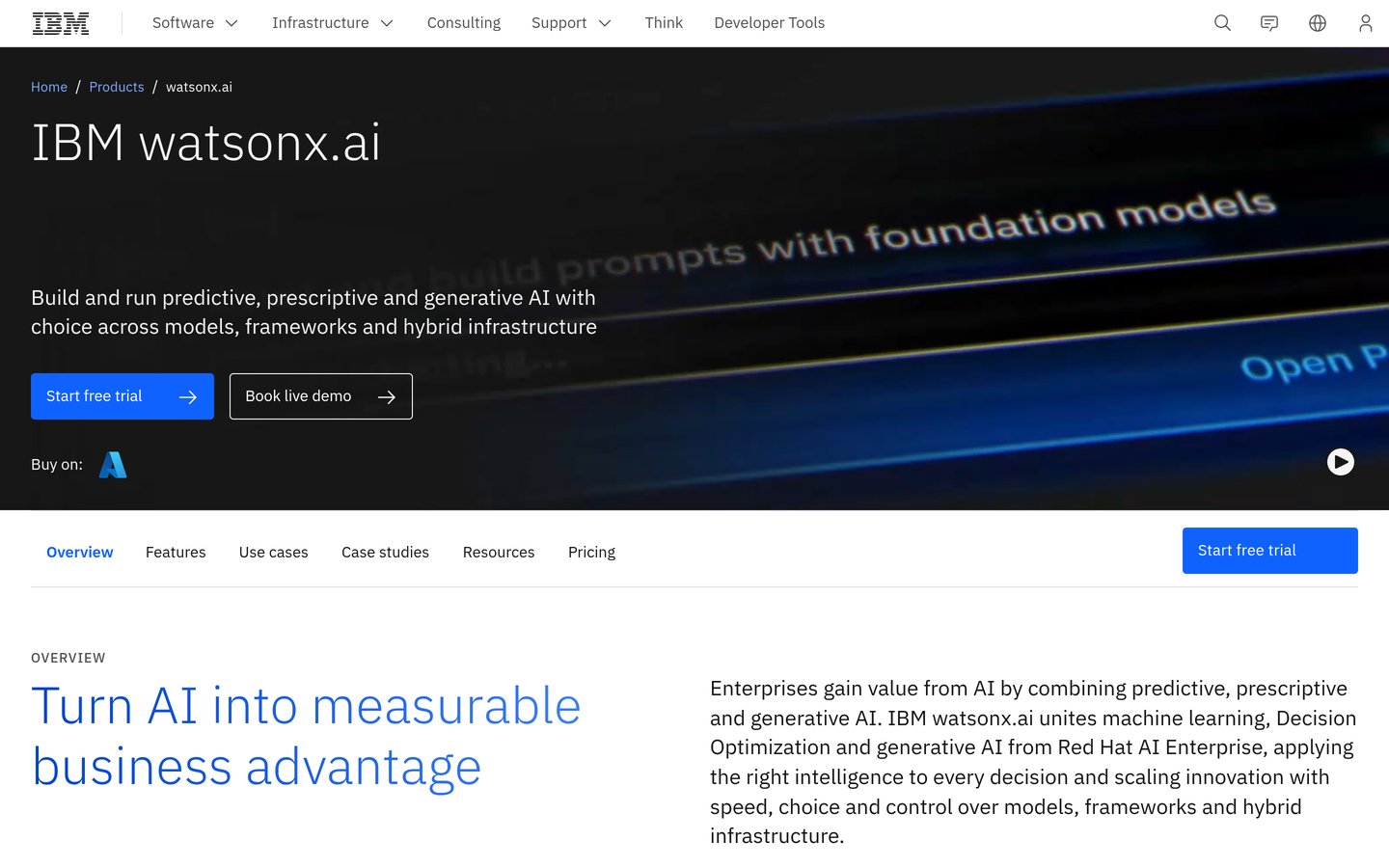
IBM watsonx.ai is an enterprise AI studio that combines machine learning, Decision Optimization and generative AI, with IBM Granite and open models plus governance for regulated work. The Essentials tier has no base fee and bills by usage, while Standard starts at $1,110 per instance a month with 2,500 capacity units included.
The trade off is packaging complexity. Essentials bills separately for capacity units, tokens and GPU hosting, so the monthly total depends on consumption, and annual prices are not published. It suits large enterprises that need governed, hybrid deployment.
What we like
Strong governance and compliance depth
Runs on cloud, on-premises or hybrid
Granite plus open and partner models
Essentials tier has no base fee
Watch out for
Usage-based totals are hard to predict
Standard jumps to $1,110 a month
Documentation is hard to navigate, per reviewers
Standard adds included capacity, support and deployment optionsVisit ibm.com
08
ClearML
4.7/5on G2 (13 reviews, checked Nov 2026)
Paid from$15/mo
Best value full MLOps platform
Pricing modelPer user, plus usage overages
Entry paid planPro, $15/user/mo
Free optionCommunity, up to 3 users
Open-source coreYes, Apache 2.0, self-hostable
clear.ml
ClearML homepage, captured Nov 2026.
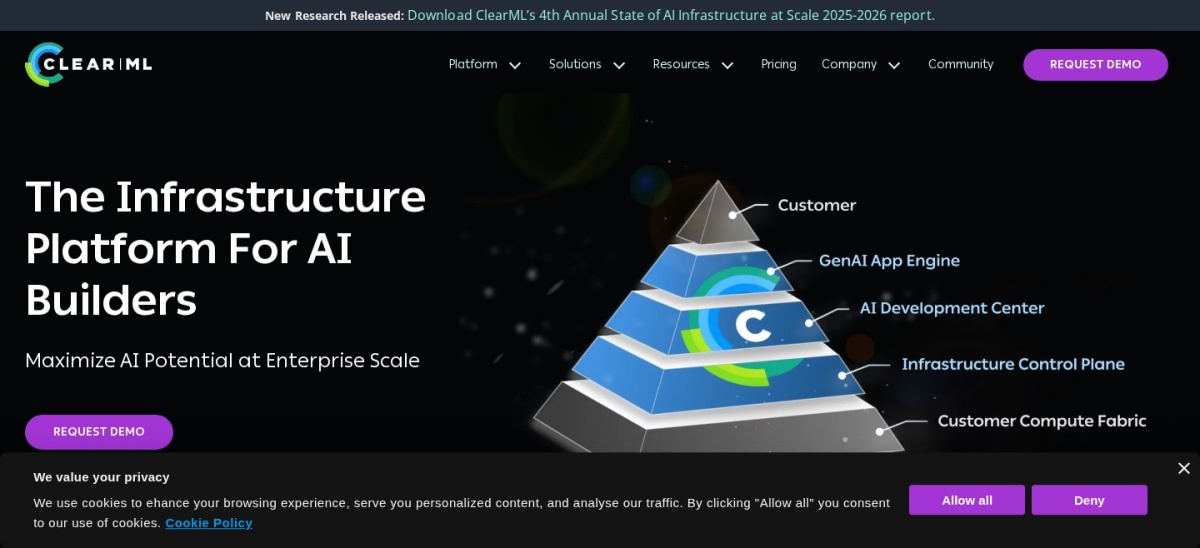
ClearML is an open-core MLOps platform that goes past experiment tracking into dataset versioning, pipeline orchestration, GPU scheduling and model serving. The self-hosted core is free under Apache 2.0, and hosted Pro costs $15 per user a month for up to 10 users.
The trade off is the thin public record. ClearML is rated 4.7 out of 5 on G2, but from only 13 reviews, so the score is weak evidence, and hosted plans add metered overages for storage, metrics and API calls. It suits teams that want full MLOps at the lowest seat price here.
What we like
Tracking, orchestration and serving in one platform
Lowest paid seat price here at $15 a month
Free self-hosted core under Apache 2.0
GPU scheduling and autoscaling included
Watch out for
Only 13 G2 reviews, so the rating is thin
Hosted overages for storage and metrics
Self-hosting needs Kubernetes know-how
Pro adds cloud autoscaling, hyperparameter tuning and pipelinesVisit clear.ml
09
Google Colab
4.7/5on G2 (381 reviews, checked Nov 2026)
Paid from$9.99/mo
Best free GPU notebooks
Pricing modelFree tier, Pro by subscription
Entry paid planPro, $9.99/mo
Free optionGPU and TPU access, with limits
StorageGoogle Drive and GitHub
colab.research.google.com
Google Colab homepage, captured Nov 2026.
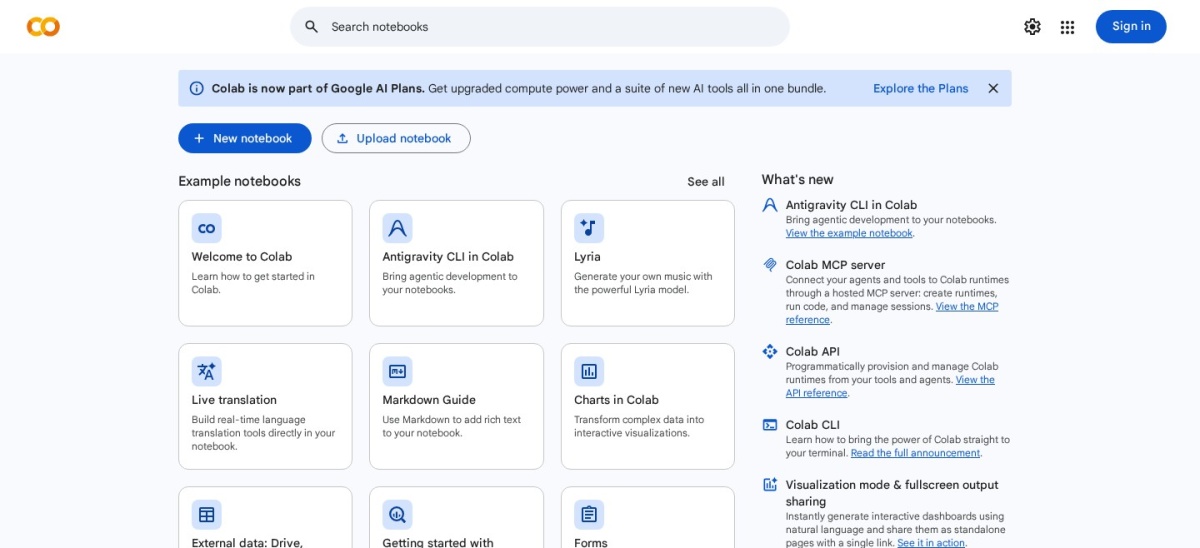
Google Colab is a hosted Jupyter notebook service that opens in a browser with no installation, and the free tier gives access to GPUs and TPUs, so a student can train a small model without buying hardware. Pro costs $9.99 a month and adds 100 compute units, faster GPUs and longer sessions.
The trade off is that Colab is a notebook, not a platform. Free GPU access is limited and sessions disconnect, Pro still caps usage in compute units, and there is no managed training pipeline or model endpoint. It suits learning, prototyping and benchmarking before production.
What we like
Free GPU and TPU access with no setup
Rated 4.7 out of 5 on G2 from 381 reviews
Notebooks live in Drive and share by link
Pro is the cheapest paid plan here at $9.99 a month
Why most SageMaker alternative prices are usage-based
Five of the nine tools in this list bill by consumption rather than by seat. Databricks charges per DBU, Vertex AI per node-hour, Azure ML per compute second and watsonx.ai per capacity unit, so two teams can pay very different amounts for the same platform.
The cheapest published seat prices are the exceptions: Colab Pro at $9.99 a month, ClearML Pro at $15 a user a month, KNIME Hub Pro at $19 a month and Alteryx Starter at $250 a user a month. Dataiku publishes no paid price at all.
Watch for retired tiers when you compare old lists. Databricks retired its Standard tier, so the $0.07 and $0.15 per DBU rates in older comparisons no longer apply, and Premium Jobs Compute at $0.30 per DBU now sets the floor.
How we chose
We started from G2's SageMaker alternatives page and the platforms buyers actually compare against SageMaker, then kept only tools with a numeric G2 rating and a verifiable price. Every rating, review count and entry price in this list was checked on 29 Nov 2026 against G2 product pages and the vendors' own pricing pages.
Three natural picks were swapped out because their homepages block every capture bot we tried: Altair AI Studio, Weights & Biases and Kaggle. Altair was replaced by KNIME, Weights & Biases by ClearML and Kaggle by Google Colab, all with published ratings and prices. Paperspace was excluded because it is being folded into DigitalOcean, and H2O.ai because it publishes no price and its G2 base is thin.
No vendor paid for a place, and we do not claim hands-on testing for this list.
How to choose a SageMaker alternative
Match the platform to the workload before you compare prices.
Name the job first. Training, AutoML, experiment tracking and hosted notebooks are different jobs, and a notebook service will not replace a managed training platform.
Check which cloud you already pay for. Vertex AI, Azure ML and Databricks bill through their clouds, so the cheapest option is usually the one that reuses your existing spend and data.
Price a real week of work, not the headline rate. A $0.30 DBU or a $0.14 node-hour means little alone, so estimate training hours, endpoint uptime and storage before you compare.
Try the free tier with your own data. Colab, KNIME and Dataiku all let you start free, so run one real workflow before you commit to a paid plan.
FAQ
What is the best SageMaker alternative in 2026?
Databricks is the best SageMaker alternative for most teams. It pairs data engineering and ML in one lakehouse, is rated 4.6 out of 5 on G2 from 1,366 reviews, and Jobs Compute starts at $0.30 per DBU on the Premium tier.
What is the cheapest SageMaker alternative?
Google Colab is the cheapest way in: the free tier gives GPU access in the browser, and Pro costs $9.99 a month. KNIME's desktop is free too, and its paid Hub Pro starts at $19 a month.
Is there a free alternative to SageMaker?
Yes. Google Colab gives free GPU notebooks, KNIME's Analytics Platform desktop is free and open source, and Dataiku's Free Edition supports up to three users. All three cap what you can run in production.
Which SageMaker alternative is best for Google Cloud teams?
Google Vertex AI is the best pick for Google Cloud teams. It is the closest like-for-like SageMaker swap, covering custom training, AutoML and hosted endpoints, and it integrates with BigQuery and Cloud Storage.
Databricks vs Vertex AI: which is better as a SageMaker alternative?
Databricks wins on ratings and breadth, at 4.6 out of 5 from 1,366 G2 reviews against Vertex AI's 4.3 from 736, and it unifies data and ML. Vertex AI wins if your data and team already live on Google Cloud.
Is Azure Machine Learning cheaper than SageMaker?
It can be, because Azure Machine Learning charges no platform fee: you pay only for the compute, storage and supporting services your jobs use. The total still depends on the VMs you choose and how long endpoints stay up.
Do I need to know how to code to use these alternatives?
Not for all of them. Alteryx, Dataiku and KNIME use visual drag-and-drop workflows, while Databricks, Vertex AI and ClearML expect Python or SQL for most serious work.
SaaS SEO and WordPress specialist with about 8 years of experience. Rakib compares WordPress plugins, themes, hosting and software using public pricing, documentation and user reviews. See how we rank.