Laravel is the best of these Ruby on Rails alternatives, rated 4.7/5 on G2 from 161 reviews, with a full-stack toolkit that mirrors Rails most closely. Choose Django for Python teams or Express.js for a light, flexible Node.js API layer.
How we make this list: we compare pricing pages, product documentation and public user reviews, then re-check every price before each update. No product paid for a place. Disclosure.
Laravel is the top pick: 4.7/5 on G2 from 161 reviews, and the closest full-stack match to Rails.
Django is the Python answer: 4.5/5 from 177 reviews, with an admin panel and ORM built in.
All 9 frameworks are free and open source, so the real cost is hosting and developer time.
Spring Boot leads for enterprise Java, rated 4.5/5 from 321 reviews, the largest review base here.
Express.js and Flask are the light picks: no ORM or admin built in, so teams assemble their own stack.
How do you pick from Ruby on Rails alternatives?
Language is the first filter. A Python team should start with Django or Flask, a PHP team with Laravel or Symfony, and a JavaScript team with Express.js or Next.js. Our What Is PHP? guide explains the language Laravel and Symfony use.
Full-stack frameworks replace the most Rails features. Laravel, Django and Spring Boot include an ORM, authentication and scaffolding, while Express.js and Flask leave those choices to the team.
Free does not mean zero cost. Every framework here is free to download, but hosting, databases and developer time still cost money, so budget for the server, not the licence.
Review counts matter as much as ratings. Spring Boot has 321 G2 reviews behind its 4.5, while Next.js has only 17 behind its 4.7, so the smaller number is less certain.
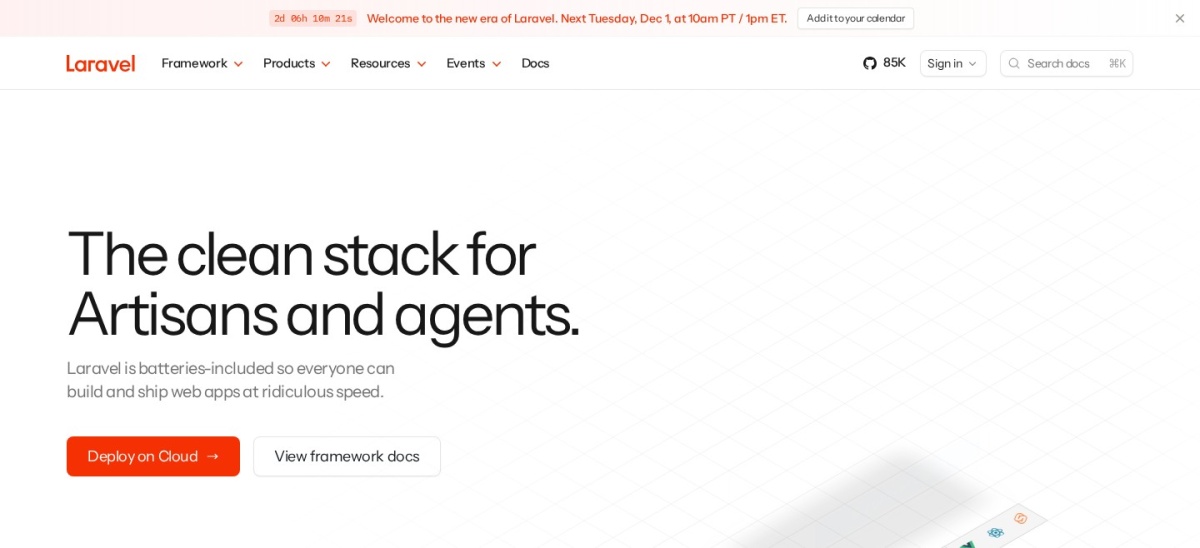
Laravel is a full-stack PHP framework with routing, an ORM, queues, authentication and testing built in, so a small team can ship a complete app without assembling parts. The framework itself is free under the MIT licence, and its documentation and Laracasts tutorials cover most first builds.
The trade off is hosting and add-ons. Laravel is free, but running it in production still needs hosting, and managed options such as Laravel Cloud and Forge are paid. It suits PHP teams that want the closest thing to Rails in another language.
What we like
Closest Rails-like full-stack experience
Large ecosystem of packages and tutorials
Strong documentation and starter kits
Watch out for
PHP only, so Python or Java teams must switch
Managed hosting and add-ons cost extra
Paid hosting and add-ons are separate from the free frameworkVisit laravel.com
02
Django
4.5/5on G2 (177 reviews, checked Nov 2026)
PriceFree
Best for Python teams
LanguagePython
LicenceBSD, free
ORMBuilt in
Admin panelBuilt in
djangoproject.com
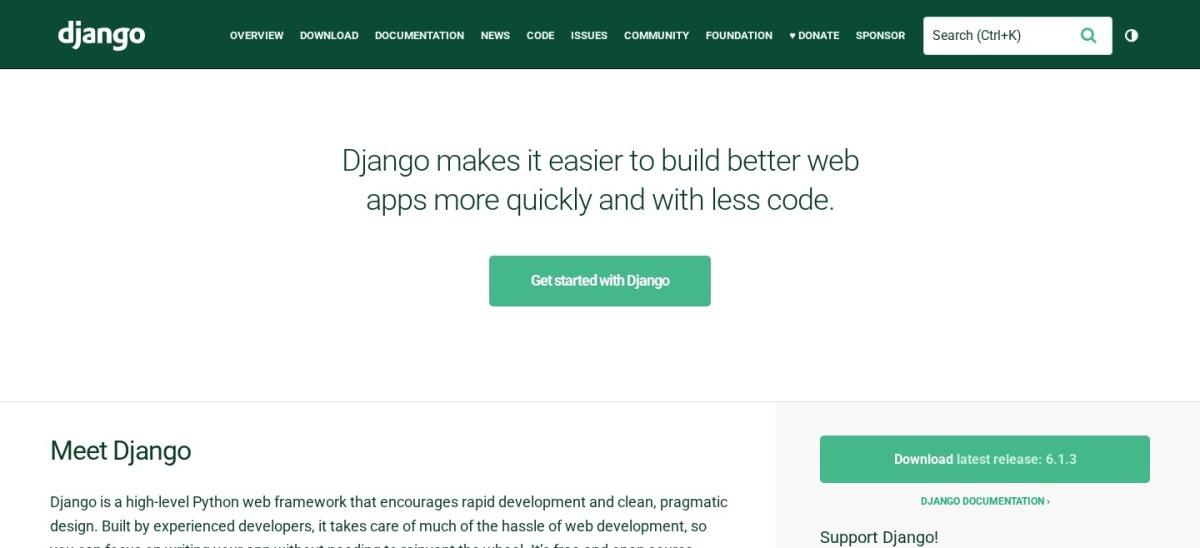
Django homepage, captured Nov 2026.
Django is a Python web framework with an ORM, authentication, an admin panel and security defaults built in, which is why it is the usual pick for Python teams leaving Rails. The framework is free under the BSD licence, and its admin panel alone saves weeks on internal tools.
The trade off is weight. Django brings more built-in structure than a small API needs, and its monolithic style can feel heavy for a single microservice. It suits data-heavy apps and teams that already write Python.
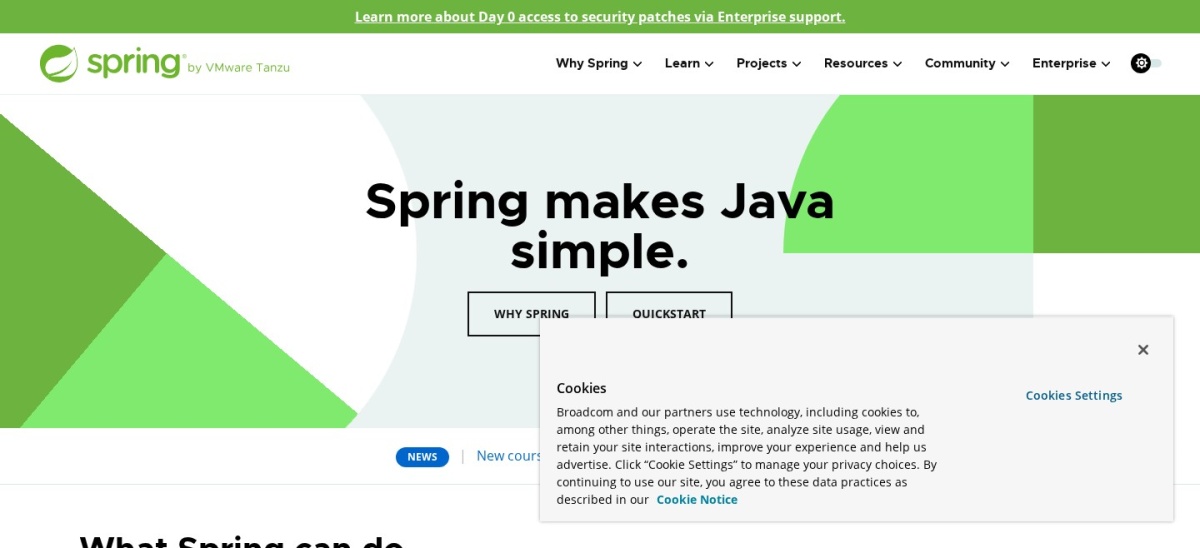
Spring Boot is a Java framework that turns the Spring ecosystem into production-ready apps with little configuration, using embedded servers and starter dependencies. The framework is free and open source under Apache 2.0, and Spring Initializr generates a working project in minutes.
The trade off is size and learning curve. Spring Boot apps use more memory than a Rails app, and the ecosystem is large enough to take time to learn. It suits enterprise Java teams building services that must last for years.
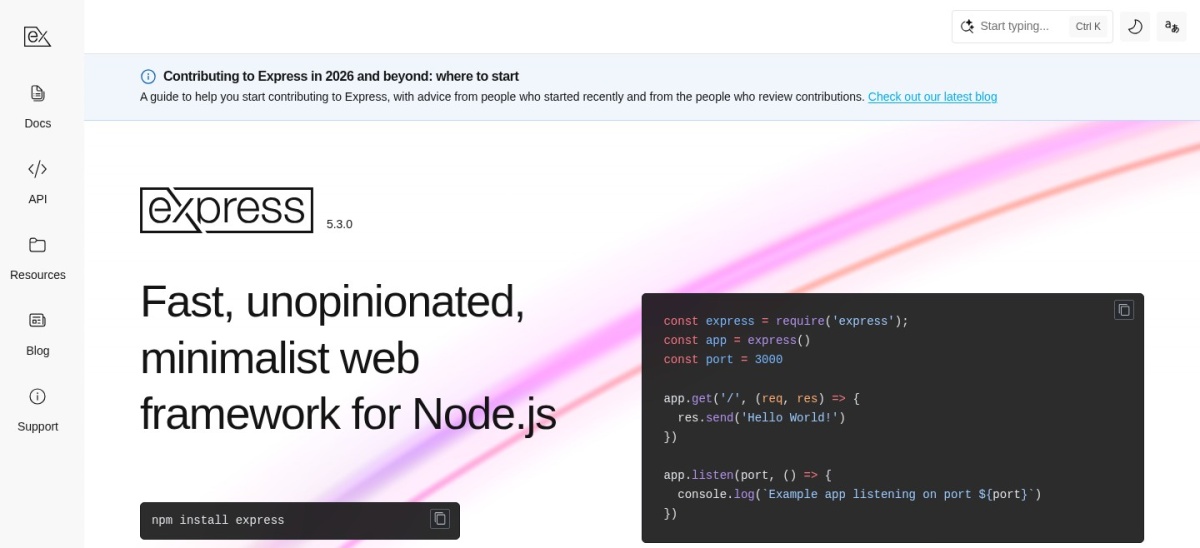
Express.js is a minimal Node.js framework for APIs and web servers, with routing and middleware and little else imposed on the developer. It is free under the MIT licence, and its small core is why so many Node.js tools build on top of it.
The trade off is assembly. Express.js gives no ORM, authentication or admin panel, so a team must choose and wire those parts itself. It suits JavaScript teams that want control and already know the Node.js ecosystem.
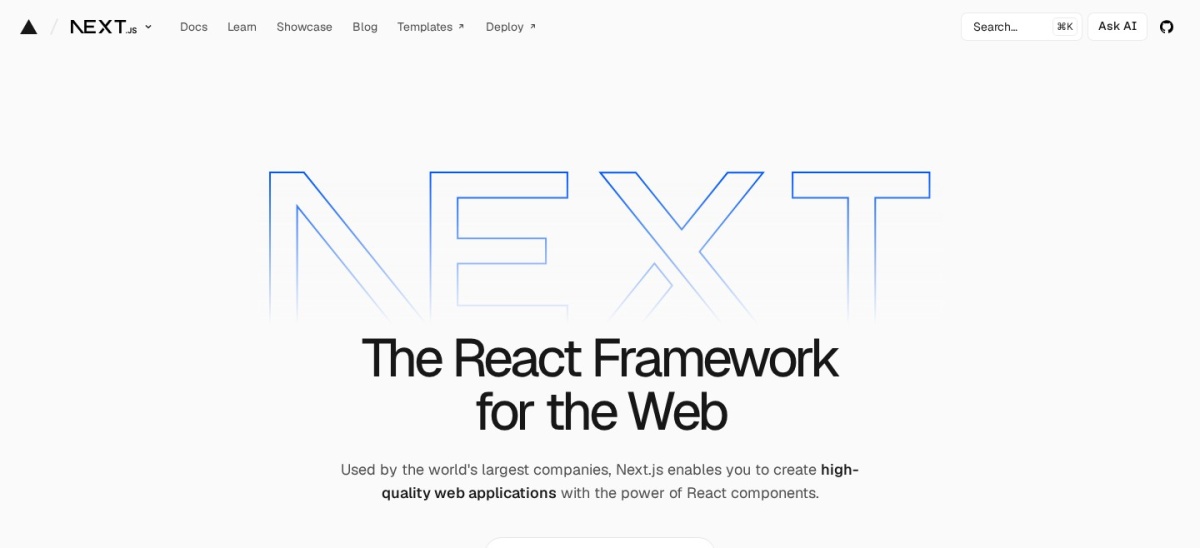
Next.js is a React framework that adds routing, server rendering and API routes to React, so one codebase can cover the front end and the back end. The framework is free under the MIT licence, and Vercel, the company behind it, offers optional paid hosting.
The trade off is the React learning curve. Next.js assumes comfort with React and modern JavaScript, and its server features add concepts a Rails developer must learn. It suits teams already building with React that want a full-stack home for it.
What we like
One codebase for front end and back end
Server rendering and static pages built in
API routes included
Watch out for
Needs React and modern JavaScript skills
Small G2 review base, so the rating is less certain
Vercel hosting is optional and paid; the framework is freeVisit nextjs.org
06
Flask
4.5/5on G2 (49 reviews, checked Nov 2026)
PriceFree
Best for small Python services
LanguagePython
LicenceBSD, free
ORMAdd your own
ExtensionsHundreds available
flask.palletsprojects.com
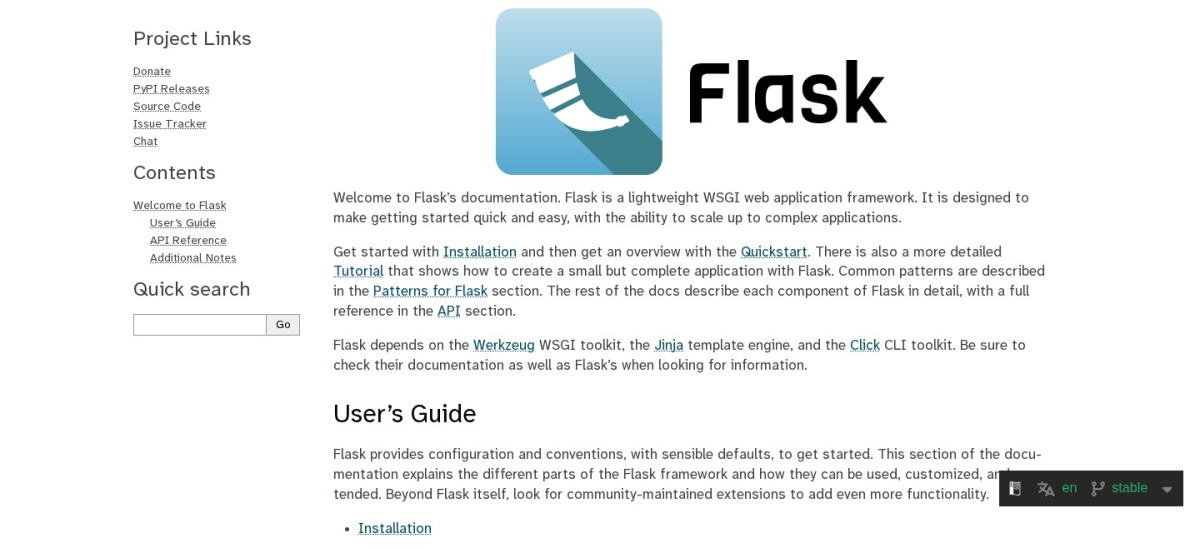
Flask homepage, captured Nov 2026.
Flask is a light Python microframework that provides routing and request handling and leaves the rest to extensions the developer chooses. It is free under the BSD licence, and a working API can be running in an afternoon.
The trade off is the same as Express.js: no built-in ORM, authentication or admin, so larger apps need more decisions up front. It suits small Python services, prototypes and machine-learning APIs.
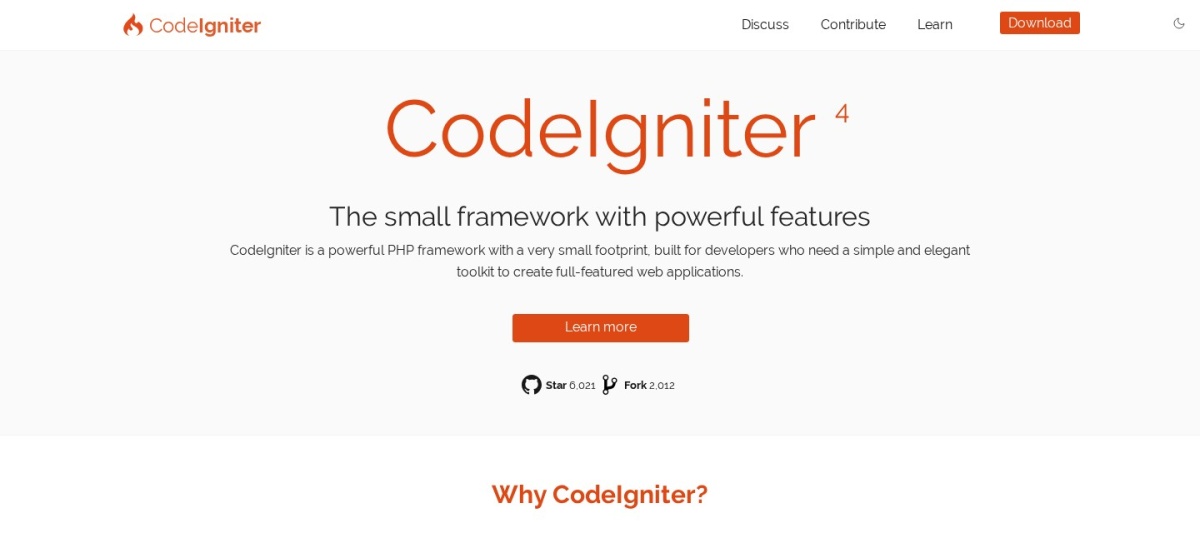
CodeIgniter is a PHP framework with a small footprint, built for developers who need a simple toolkit to create full-featured web applications. It is free under the MIT licence, and its setup is quick: G2 reviewers give it 9.2 out of 10 for ease of setup.
The trade off is scope. CodeIgniter covers less out of the box than Laravel, and its ecosystem is smaller, so large apps need more custom code. It suits small PHP sites and teams on modest hosting.
Symfony is a PHP framework built from reusable components, with a dependency-injection container and a long release-support policy. It is free under the MIT licence, and its components power many other PHP tools, including parts of Laravel.
The trade off is complexity. Symfony asks more of beginners than Laravel, and its configuration takes time to learn. It suits large PHP projects and teams that value long-term support over speed of first build.
ASP.NET is a Microsoft web framework for building dynamic websites, web apps and APIs in C#, and it runs on Windows, Linux and macOS. The framework is free and open source, and it fits teams already using C# and Microsoft tools.
The trade off is weight and tooling. ASP.NET can feel heavy for small projects, and it works best with Microsoft tooling such as Visual Studio. It suits enterprise teams on the Microsoft stack.
Every framework in this list is free and open source. There is no licence fee for Laravel, Django, Spring Boot or any of the others.
The bill comes from hosting. A production app needs a server, a database and usually a queue or cache, and those are paid separately.
Paid add-ons exist but are optional. Laravel Cloud and Forge, Vercel hosting for Next.js and commercial Spring support all cost money, but none is required to run the framework.
How we chose
We started from the frameworks developers most often name as Rails replacements, then kept the 9 with a public G2 rating and review count.
Ratings come from G2, checked on 29 November 2026. All 9 frameworks are free and open source, so prices show $0 and the comparison turns on language, built-in features and review volume.
We left out frameworks with no public rating, including FastAPI and Phoenix, rather than guessing a score. No vendor paid for a place, and we do not claim to have used these tools ourselves.
How to choose a Ruby on Rails alternative
Match the framework to your team's language first, then to the size of the app.
Start with the language your team already knows. Switching language and framework at once doubles the learning curve. Pick the best framework in a language the team writes every day.
Decide how much structure you want built in. Laravel, Django and Spring Boot include an ORM, authentication and scaffolding. Express.js and Flask give freedom but need more decisions.
Check the ecosystem for your must-have parts. Look for the database driver, authentication library and admin tools your app needs before committing, not after.
Budget for hosting, not the licence. Every framework here is free. The money goes to the server, the database and the team that builds and runs the app.
FAQ
What is the best Ruby on Rails alternative in 2026?
Laravel is the best Ruby on Rails alternative for most teams in 2026. It is rated 4.7 out of 5 on G2 from 161 reviews, it is free, and its full-stack toolkit of routing, ORM, queues and auth mirrors Rails more closely than any other framework here.
Are Ruby on Rails alternatives free?
Yes, all 9 frameworks in this list are free and open source. The cost of switching comes from hosting, databases and developer time, not from a licence fee, though optional services such as managed hosting are paid.
Which Ruby on Rails alternative is best for beginners?
Django is the friendliest full-stack pick for beginners, with a built-in admin panel, ORM and clear documentation. Flask is simpler still for a first API, but it leaves more decisions, such as the database layer, to the developer.
Which Ruby on Rails alternative is best for small teams?
Laravel suits small teams best, because one framework covers routing, database, auth and queues without extra assembly. Django is the same deal for Python teams, while Express.js fits small teams that only need an API.
Laravel vs Django: which is better as a Rails alternative?
Laravel is the closer match to Rails, with the same batteries-included style in PHP and a higher G2 rating of 4.7 against 4.5. Django wins for Python teams and data-heavy apps, thanks to its admin panel and the wider Python library ecosystem.
Do I need to rewrite my whole app to leave Rails?
Yes, in practice. These frameworks use different languages and conventions, so a move means rebuilding the app, not converting it. Many teams start by moving one service, such as an API, and keep Rails running beside it.
SaaS SEO and WordPress specialist with about 8 years of experience. Rakib compares WordPress plugins, themes, hosting and software using public pricing, documentation and user reviews. See how we rank.