ScrapingBee is the best ScraperAPI alternative for most developers, at $19 a month for 75,000 credits with JavaScript rendering included. Oxylabs suits high-volume teams from $15 a month, while Apify fits ready-made scrapers from $19 a month.
How we make this list: we compare pricing pages, product documentation and public user reviews, then re-check every price before each update. No product paid for a place. Disclosure.
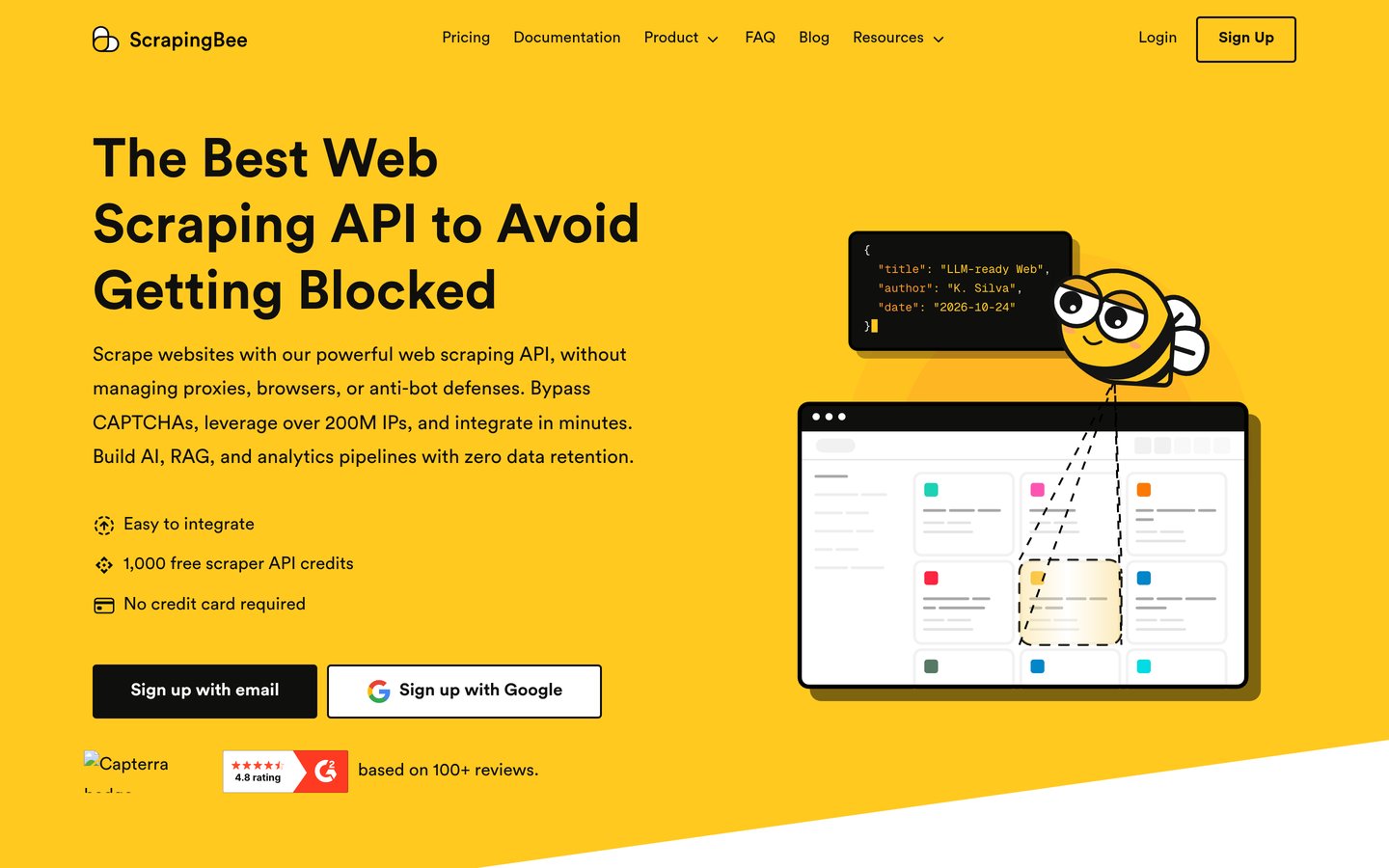
ScrapingBee is the closest direct replacement: one API call, JavaScript rendering and proxy rotation for $19 a month.
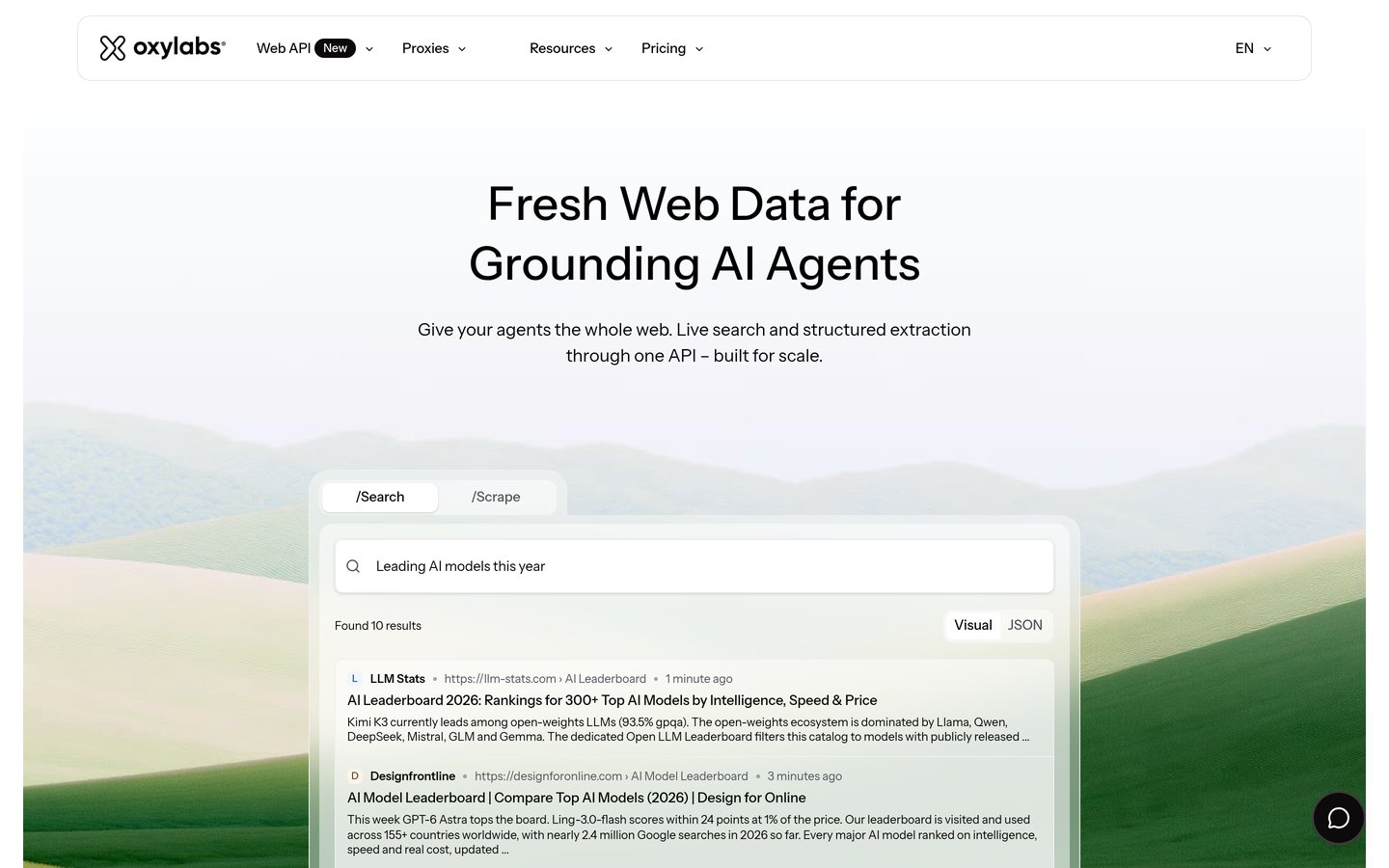
Oxylabs has the cheapest entry plan at $15 a month, with usage from $0.50 per 1,000 results.
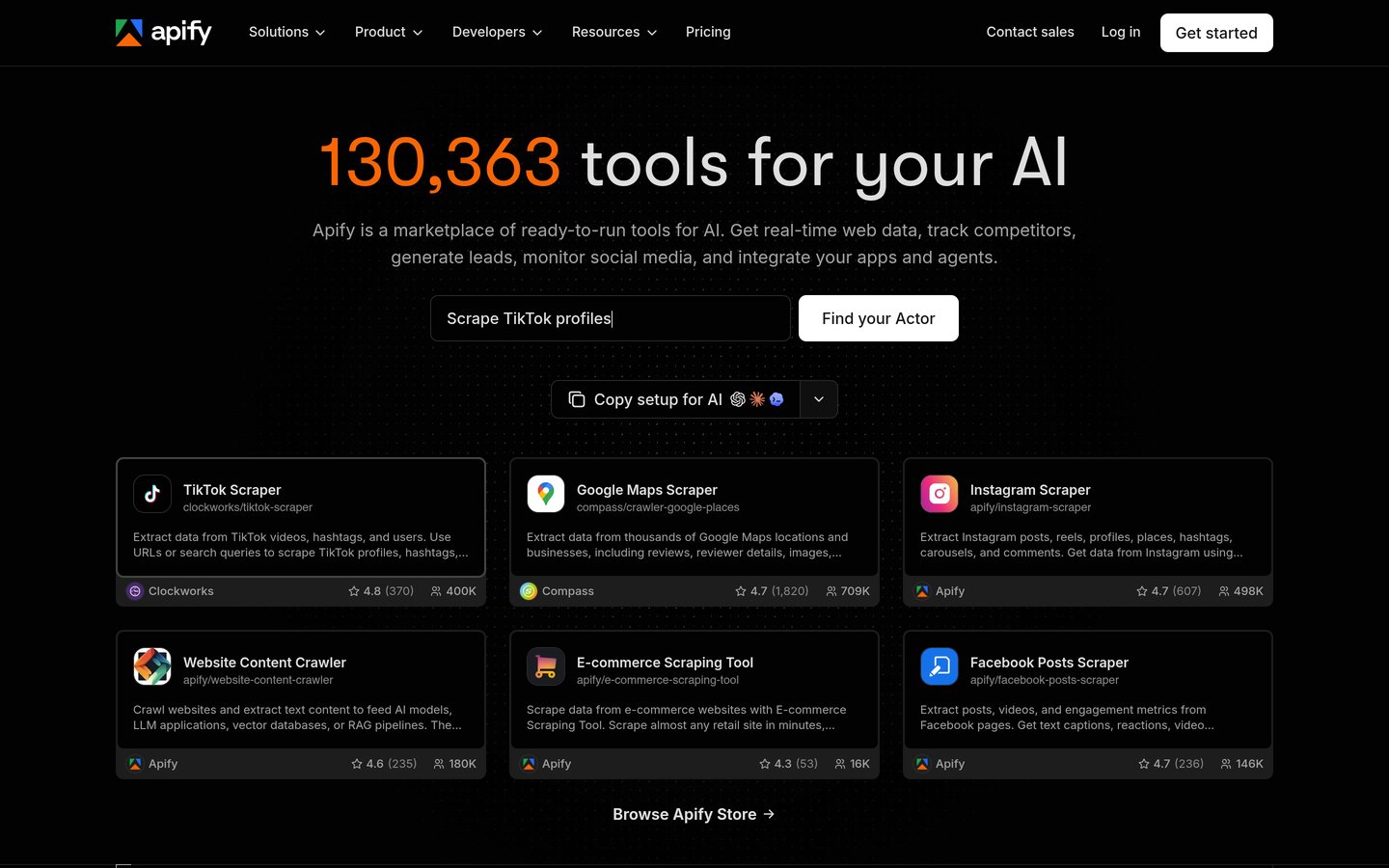
Apify adds a store of more than 100,000 ready-made scrapers, plus a free $5 of usage a month.
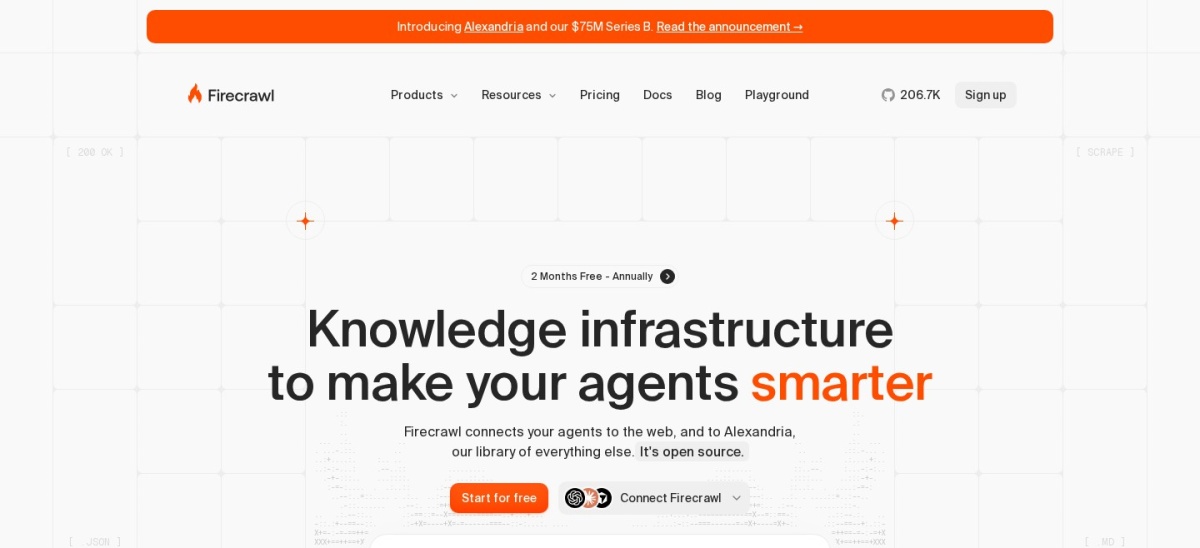
Firecrawl gives the best free tier for AI work: 1,000 credits a month, with pages returned as clean Markdown.
Bright Data and Zyte charge only for successful requests, so blocked pages cost nothing on pay as you go.
Paid plans here run from $9 a month for Zyte to $499 a month for Bright Data Scale.
How do you choose the best ScraperAPI alternative?
Start with what you actually pay ScraperAPI today. Hobby costs $49 a month for 100,000 credits, so any alternative under that price only saves money if its credits stretch as far on your pages.
Credit math is where the savings hide or vanish. JavaScript rendering costs extra credits on most APIs, and premium proxies can cost 10 to 25 times a basic request, so count rendered pages separately before you compare headline prices.
A free tier beats a free trial when you are still deciding. Firecrawl gives 1,000 credits every month, Apify gives $5 of usage a month, and Bright Data gives 5,000 records a month, while ScrapingBee offers a one-time trial of 1,000 credits.
Check the anti-bot cover for your hardest target, not the easiest one. Our guide on blocking bad bots in WordPress shows how aggressively sites now filter automated traffic, and the same defences are what these APIs have to get past.
Finally, weigh code changes against savings. A one-endpoint API such as ScrapingBee swaps in with a small change, while a platform such as Apify or Octoparse needs a new workflow but removes more maintenance later.
ScrapingBee is a single API endpoint that handles headless Chrome rendering, proxy rotation and CAPTCHA avoidance behind one call. A free trial gives 1,000 API credits with no card, and the Hobby plan costs $19 a month for 75,000 credits, undercutting ScraperAPI Hobby at $49 a month.
The trade off is that you write the extraction logic yourself, and credits run out fast on heavy pages or premium proxies. It suits developers who want a simple API for straightforward scraping without managing browser infrastructure.
Oxylabs is a web data platform that sells proxy infrastructure first and scraping second, with a Web Scraper API, a Web Unblocker and a headless browser on top. The Starter subscription costs $15 a month, and Web API usage starts from $0.50 per 1,000 results.
The trade off is predictability. Per-result and per-gigabyte billing makes a heavy month hard to forecast, and new accounts pass a verification step before they can buy. It suits teams running high-volume extraction that need compliance-grade sourcing.
Apify is a cloud platform for running web crawlers and browser automation, with a store of more than 100,000 ready-made crawlers called Actors. The free plan gives $5 of usage a month with no card, and Starter at $19 a month includes the same $19 as usage credit.
The trade off is usage billing. Compute, proxies, storage and paid Actors sit on top of the plan price, so a large crawl costs more than the headline $19, and unused credit does not roll over. It suits teams that want a ready-made crawler now and room to run custom code later.
Firecrawl is a web data API that turns pages into clean Markdown or structured JSON for AI tools and agents, with scrape, crawl, search and monitoring behind one key. The free plan gives 1,000 credits a month, and the open-source core runs on GitHub.
The trade off is credit math. One page costs 1 credit, but JSON extraction costs 5 credits a page, so heavy extraction burns the Hobby allowance of 5,000 credits fast. It suits developers feeding pages to language models rather than bulk HTML collection.
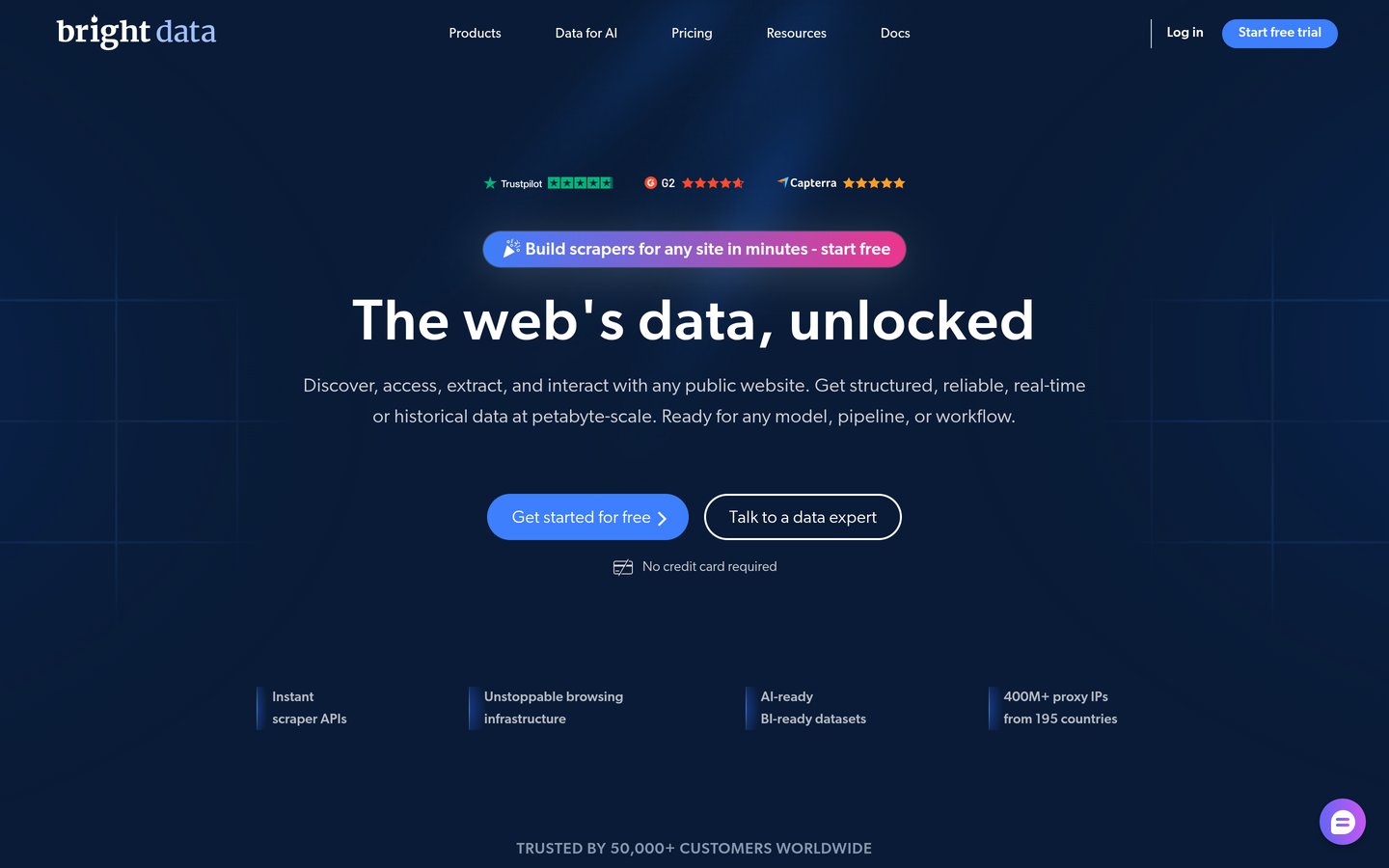
Bright Data is the largest scraping infrastructure in this list, with scraper APIs, a web unlocker, SERP APIs and a proxy network of more than 150 million IPs. The Web Scraper API gives 5,000 records a month free, then charges $1.50 per 1,000 records pay as you go.
The trade off is that there is no flat entry plan. The cheapest named monthly plan is Scale at $499 a month for 384,000 records, and proxy and browser usage adds more. It suits large teams scraping sites that actively block scrapers.
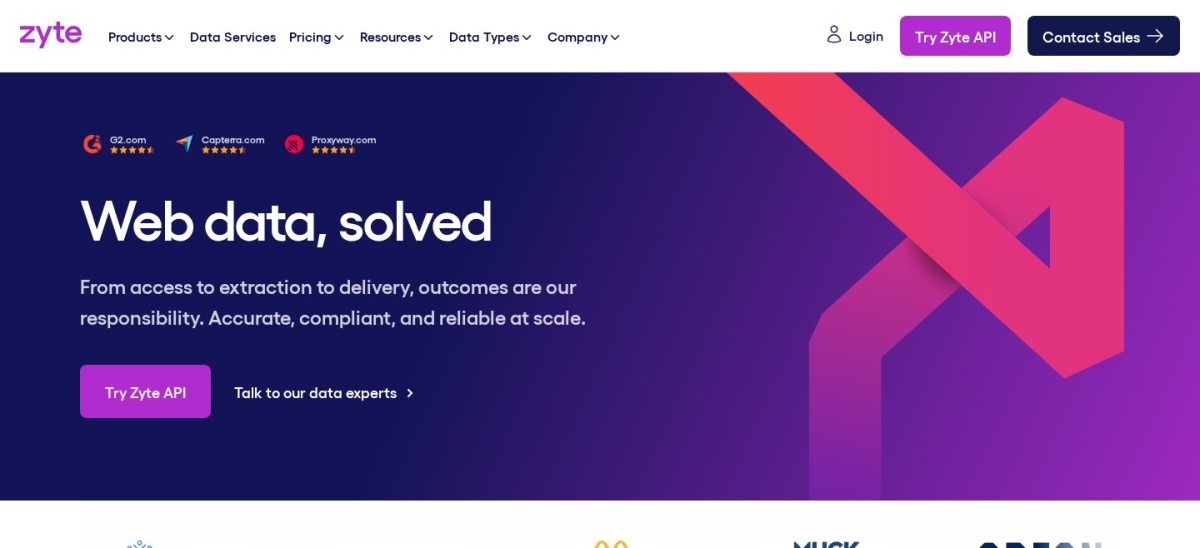
Zyte is the company behind Scrapy, the open-source Python crawling framework, and sells the commercial stack around it. Scrapy Cloud hosts and schedules your spiders, with a free Starter tier, and Zyte API handles bans and browser rendering per request.
The trade off is tiered pricing. Zyte puts each site in a difficulty tier that sets the per-request price, from $0.13 per 1,000 plain responses, and browser-rendered requests cost far more. It suits Python teams already building crawlers on Scrapy.
What we like
Made by the team behind Scrapy
Scrapy Cloud Starter is free forever
API handles bans and rendering for you
Managed data feeds for hands-off teams
Watch out for
Site difficulty tiers make pricing opaque
Browser rendering costs much more than HTTP
Pay-as-you-go stops at a $100 spending limit
Scrapy Cloud Pro adds unlimited crawl time and longer retentionVisit zyte.com
07
Octoparse
4.8/5on G2 (52 reviews, checked Nov 2026)
Paid from$19/mo
Best no-code ScraperAPI alternative
No-code builderPoint and click
Cloud runsStandard and up
Free plan10 tasks, local runs
Paid planBasic, $19/mo
octoparse.com
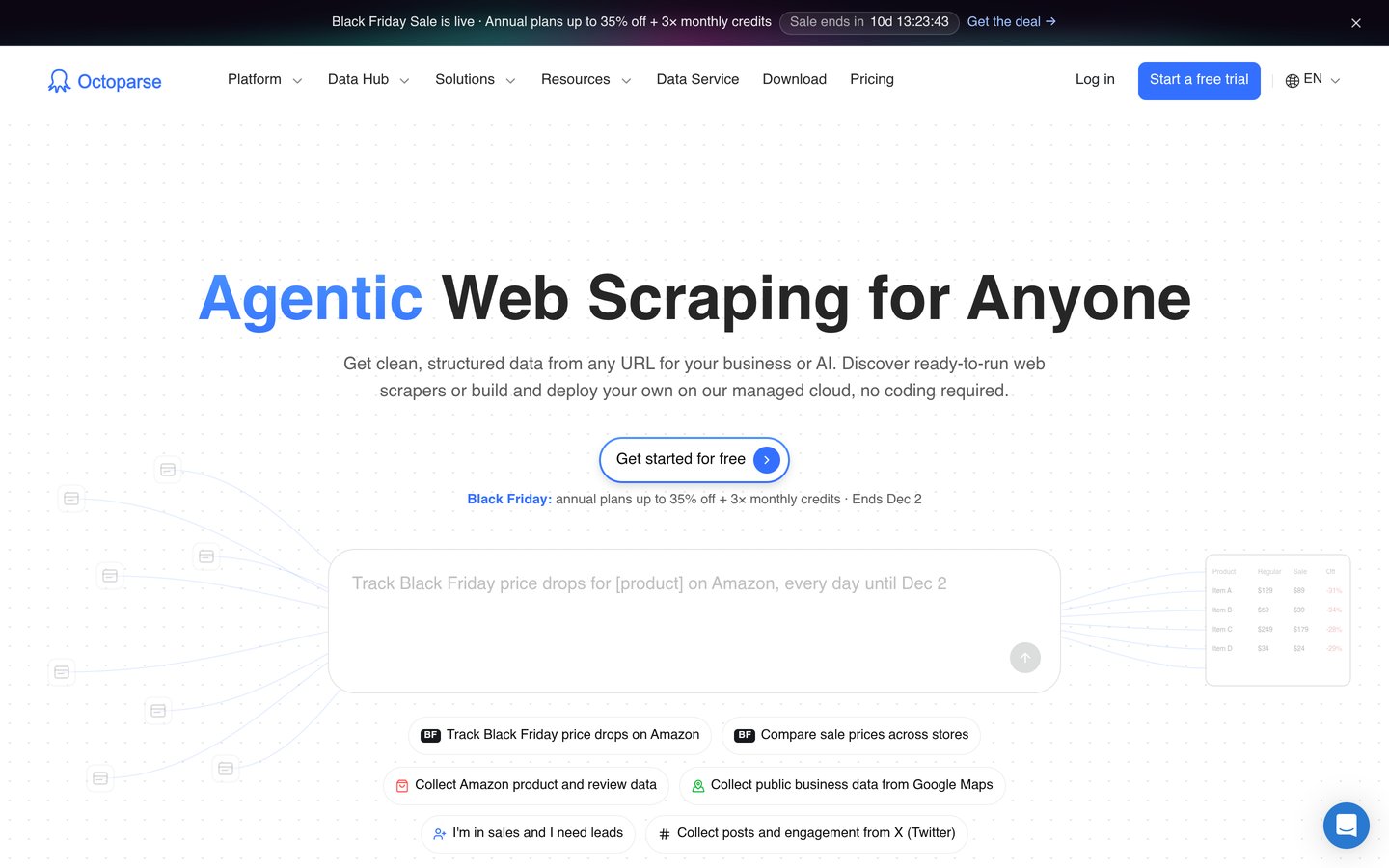
Octoparse homepage, captured Nov 2026.
Octoparse is a no-code web crawler with a desktop app for Windows and Mac and optional cloud runs. The free plan covers 10 tasks on your own computer with 50,000 exported rows a month, and more than 500 ready-made templates cover common sites.
The trade off is that cloud runs, scheduling and IP rotation need a paid plan. Basic costs $19 a month for faster local runs, while Standard starts at $69 a month billed yearly for cloud extraction. It suits non-technical teams that want scheduled crawls without writing code.
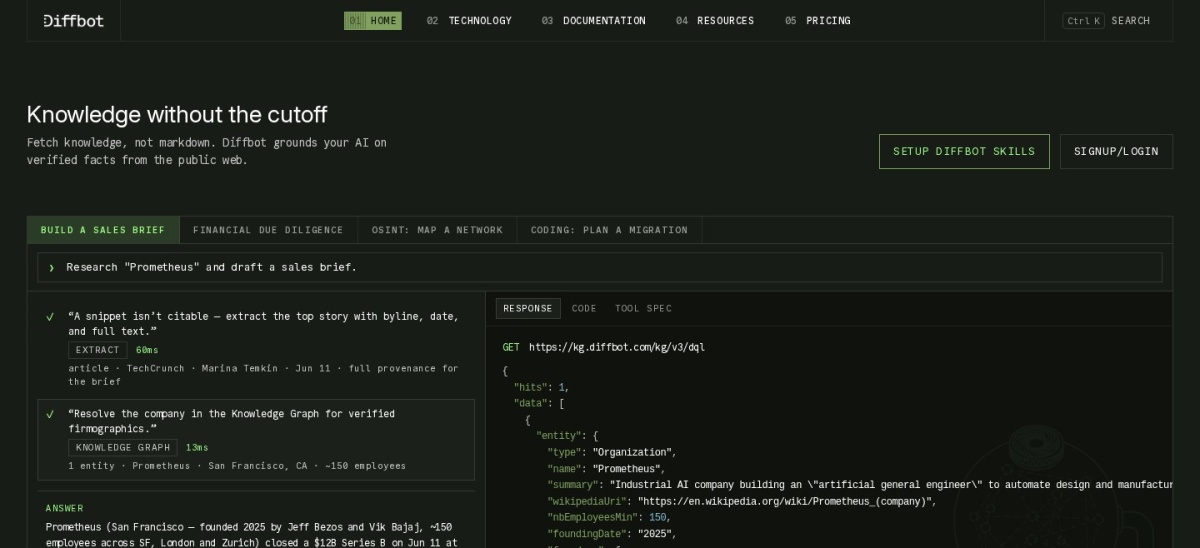
Diffbot is a tool that uses machine learning to read a page and return structured data directly, so a product or article page comes back as clean fields with no selectors to write. The free tier gives 10,000 credits a month, and its Knowledge Graph holds more than 10 billion entities.
The trade off is price and review depth. Startup costs $299 a month for 250,000 credits, Crawl access needs the $899 Plus plan, and the 4.9 out of 5 G2 rating rests on only 29 reviews. It suits teams that need clean structured data and entity data for AI work.
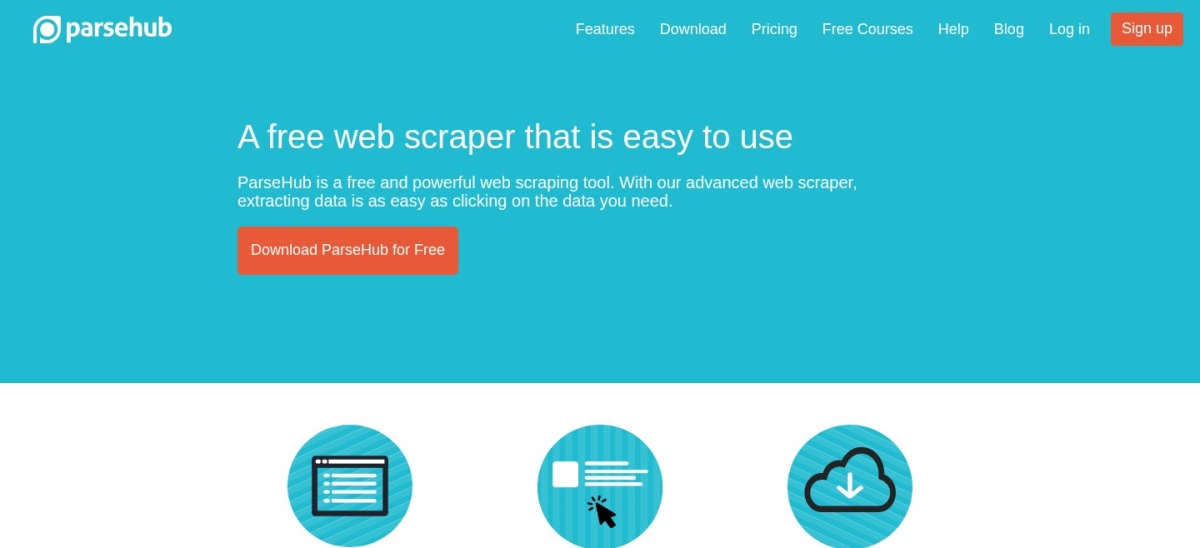
ParseHub is a visual desktop scraper for complex pages: click the data you want and it learns the pattern, handling logins, dropdowns, infinite scroll and AJAX content. The free plan covers 5 public projects at 200 pages per run, with no card needed.
The trade off is the price jump. There is no plan between free and Standard at $189 a month, which adds 20 private projects, 10,000 pages per run, IP rotation and scheduling. It suits researchers pulling data from tricky pages on a desktop.
What we like
Handles logins, scroll and dynamic content
Free plan covers real small projects
No code needed to build a scraper
Watch out for
Steep jump from free to $189 a month
Only 10 G2 reviews, a thin sample
Desktop-bound, not a cloud platform
Standard adds private projects, scheduling and IP rotationVisit parsehub.com
Before you switch from ScraperAPI
Run the same 100 pages through a trial first. Compare the credits each API burns on your hardest pages, not the marketing pages, because rendering and premium proxies change the bill.
Check how each API charges for failures. Zyte and Bright Data bill only for successful responses, so a blocked page costs nothing, while credit plans can still charge for retries.
Keep your extraction code separate from the fetch call. If the API only fetches HTML, your parsing stays the same when you switch vendors, and the move takes an afternoon instead of a week.
Respect the sites you scrape. Read each target's terms and robots.txt before you crawl it, and keep request rates low even when the API can go faster.
How we chose
We started from the best-known scraping APIs and tools with a public G2 rating, then kept those with published pricing and a free plan or trial.
Prices come from each vendor pricing page, checked on 29 November 2026. Ratings and review counts come from G2 on the same day. Where a vendor shows a sale, the list shows the regular price.
We left out tools with no public rating and open-source frameworks with no vendor pricing. No vendor paid for a place, and we do not claim to have used these tools ourselves.
How to choose a ScraperAPI alternative
Start with your current ScraperAPI bill, then match the replacement to the pages that cost you most.
Count your rendered pages separately. JavaScript pages cost more credits almost everywhere, so a plan that looks cheap for plain HTML can cost double on rendered pages.
Try the free tier on your hardest target. A free trial on an easy page tells you little. Run the site that blocks you most and see whether the API gets through.
Compare the full month, not the plan price. Add usage charges for compute, proxies and extraction on top of the subscription before you decide which plan is cheaper.
Pick the workflow, not just the API. A one-call API suits developers, a ready-made scraper store suits recurring jobs, and a no-code builder suits teams without developers.
FAQ
What is the best free alternative to ScraperAPI?
Firecrawl is the best free alternative to ScraperAPI. Its free plan gives 1,000 credits every month with no card, and pages come back as clean Markdown or JSON. Apify also gives $5 of usage a month, and Bright Data gives 5,000 records a month free.
How much does a ScraperAPI alternative cost?
Entry prices run from $9 a month for Zyte Scrapy Cloud Pro to $499 a month for Bright Data Scale. Most direct replacements cost $15 to $19 a month: Oxylabs at $15, and ScrapingBee, Apify, Firecrawl and Octoparse at $19 each, before usage charges.
Which ScraperAPI alternative is best for beginners?
Octoparse is the best pick for beginners. Its point-and-click builder needs no code, the free plan covers 10 tasks, and more than 500 templates cover common sites. ParseHub is the other no-code pick, with a free plan for 5 public projects.
ScrapingBee vs Oxylabs: which is the better ScraperAPI alternative?
ScrapingBee is better for a simple switch, with one API call, rendering included and a flat $19 a month for 75,000 credits. Oxylabs is better at volume, from $15 a month with per-result pricing down to $0.25 per 1,000 results and a much larger proxy network.
Does ScraperAPI have a free plan?
No, ScraperAPI has no ongoing free plan. It offers a 7-day trial with 5,000 credits and no card, then paid plans start at $49 a month for 100,000 credits. Firecrawl, Apify, Bright Data, Zyte, Octoparse, Diffbot and ParseHub all offer a recurring free tier instead.
Can I switch from ScraperAPI without rewriting my scraper?
Yes, if your code separates fetching from parsing. ScrapingBee and Zyte both take a URL and return the page, so you change the request and keep your extraction logic. Apify and Octoparse need more rework because they replace the whole workflow, not just the fetch step.
Which ScraperAPI alternative is best for AI and language models?
Firecrawl is the best pick for AI work. It returns pages as clean Markdown or structured JSON, which language models read well, and it adds search, crawl and monitoring behind one key. Diffbot is the other AI pick, returning structured fields with no selectors to write.
SaaS SEO and WordPress specialist with about 8 years of experience. Rakib compares WordPress plugins, themes, hosting and software using public pricing, documentation and user reviews. See how we rank.