Lightspeed Retail is the best retail management software for electronics stores, with serial number tracking, repairs and multi-location stock from eighty-nine dollars a month. Square is the best free start for a small shop, while Shopify POS wins when online sales matter as much as the counter.
How we make this list: we compare pricing pages, product documentation and public user reviews, then re-check every price before each update. No product paid for a place. Disclosure.
Lightspeed Retail leads on serial tracking, repairs and multi-location stock at $1,068 a year.
Square is the best free start, with Plus at $588 a year per location for advanced inventory.
Shopify POS is the strongest pick when online sales matter, with Pro at $89 a month per location.
KORONA POS holds the highest G2 rating here at 4.7 out of 5 and lets you keep your own card processor.
PayPal POS charges no monthly fee at all, with in-person sales at 2.29% plus 9 cents each.
What should retail management software for electronics stores cover?
Electronics stores sell high-value items that need tracking by serial number. A phone, a laptop or a TV is not interchangeable stock, so the POS must follow each unit from purchase order to warranty claim.
Repairs matter as much as sales. Many electronics shops take in devices for repair, so look for repair tickets, parts tracking and a customer record that shows what was bought and when.
Multi-location stock is the next test. A second shop or a warehouse needs live stock levels, transfers and purchase orders, which cheap POS tools often lack.
Price spreads are wide here. Free POS costs nothing per month but charges per card sale, while full retail systems run from $39 to $89 a month before processing fees.
Hardware is part of the decision. Clover and Square sell their own terminals, while KORONA and Epos Now run on tablets you already own. Our guide on best retail software compares the wider retail category.
The 8 best retail management software tools for electronics stores
01
Lightspeed Retail
4/5on G2 (295 reviews, checked Nov 2026)
Starts at$89/mo
Best retail management software for electronics stores
Serial trackingYes
Registers1 included on Basic
Card rate2.6% + 10¢
Paid planBasic, per location
lightspeedhq.com
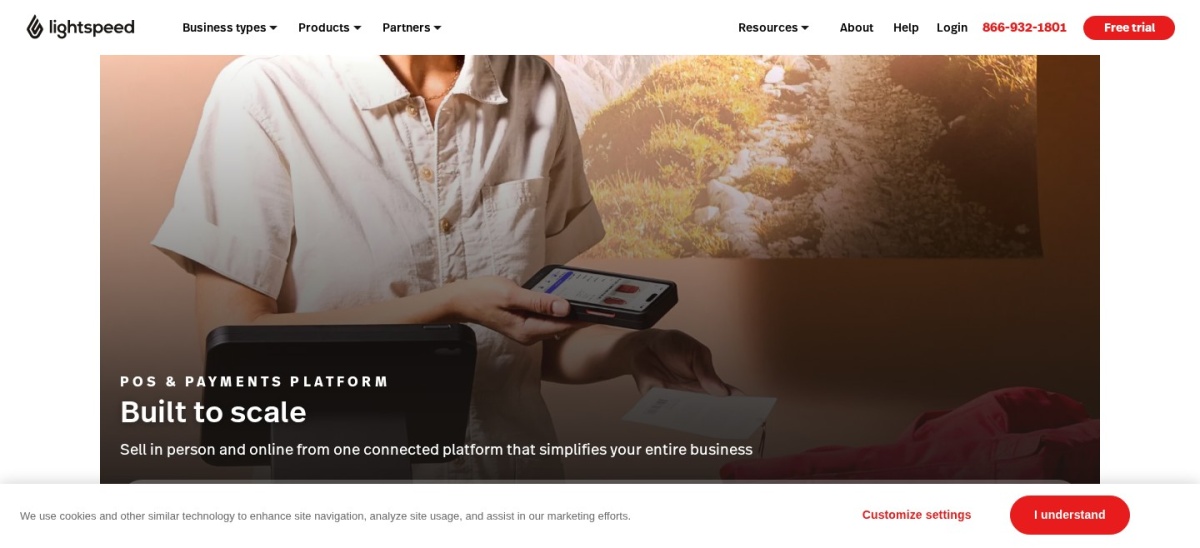
Lightspeed Retail homepage, captured Nov 2026.
Lightspeed Retail is a cloud POS built around inventory, with multi-location stock, supplier management, purchase orders and variant tracking in one system. The Basic plan costs $89 a month billed annually, or $109 month to month, and includes one register, ecommerce and loyalty tools, with card-present processing at 2.6% plus 10 cents.
The trade off is price. Advanced inventory reports and extra registers sit on the Core plan at $149 a month billed annually, and add-ons push the bill higher. It suits electronics stores that track serials, run repairs and manage stock across more than one location.
Square is a point of sale, payments and back office in one account, with a retail version that adds inventory, barcode tools and customer records. The free plan costs $0 a month per location with card-present processing at 2.6% plus 15 cents, and hardware starts with a free card reader.
The trade off is inventory depth. Advanced inventory, barcode label printing and COGS reports need Plus at $49 a month per location, which also cuts the card rate to 2.5% plus 15 cents. It suits a small single shop that wants to start free and upgrade later.
Best when online sales matter as much as the counter
POS LiteIncluded with Shopify plans
POS Pro$89 per location a month
Staff rolesYes, on Pro
Paid planPOS Pro, per location
shopify.com
Shopify POS homepage, captured Nov 2026.
Shopify POS is the in-person selling add-on for a Shopify online store, with stock synced between the website and the shop in real time. POS Lite is included with every Shopify plan, while POS Pro costs $89 a month per location and adds unlimited staff, smart inventory, staff roles and omnichannel selling.
The trade off is the stacked cost. POS Pro sits on top of a Shopify plan from $29 a month, so a single location costs at least $118 a month before processing. It suits electronics stores where the website drives a large share of revenue.
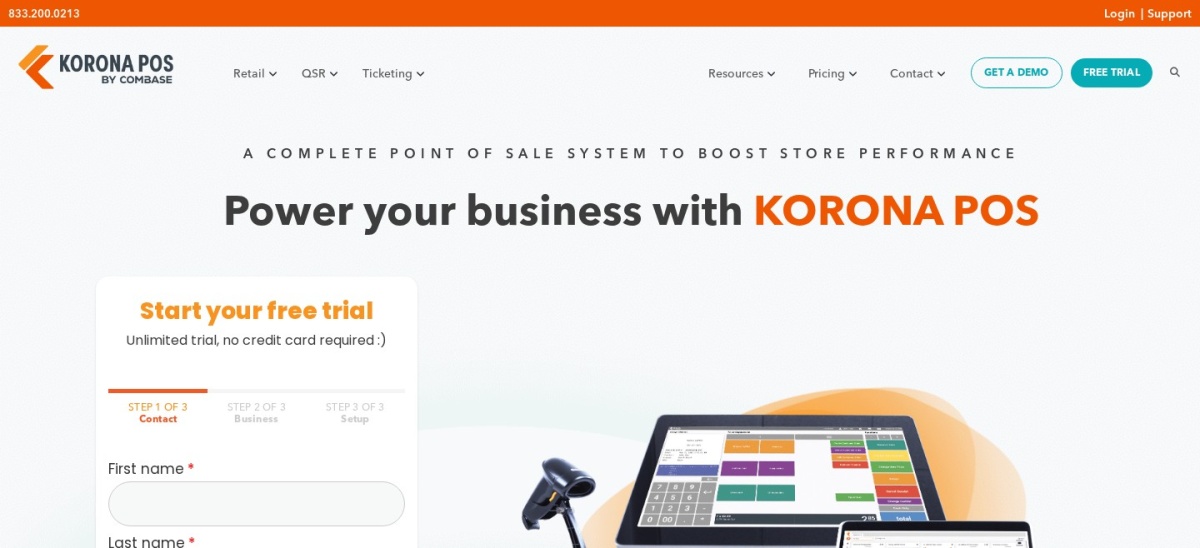
KORONA POS is a cloud POS with clear per-terminal pricing and no payment-processor lock-in, so a store can keep its existing processor. The Core plan costs $59 a month per terminal and covers unlimited users, promotions, gift cards, KPI reports and API access, with an unlimited free trial and no card required.
The trade off is scale. KORONA suits independent shops and small chains, but large chains will want the Plus plan at $99 a month per terminal for franchise tools. It suits electronics stores that want honest pricing and control over their own card processor.
Heartland Retail is a cloud POS and retail management system from Global Payments, built for growth-stage retailers. It covers inventory, purchasing, customer loyalty and multi-location management, with payments, POS and back office from one vendor and a free trial available.
The trade off is transparency. Heartland starts at $89 a month per selling station, but detailed pricing is not published on its own site, and payments run through Heartland only. It suits electronics stores that want one vendor for the till, the payments and the back office.
Clover is a retail POS built on purpose-built Android hardware from the $49 Go handheld to the Station Duo register, with retail software, an app market and offline mode. The Starter plan costs $14.95 a month per device, Standard costs $49.95 and Advanced costs $69.95, with card-present processing from 2.3% plus 10 cents direct from Clover.
The trade off is where you buy it. Direct from Clover is month to month, but most Clover systems come through banks and resellers on 36-month contracts with extra fees. It suits electronics stores that want strong counter hardware and are happy to buy direct.
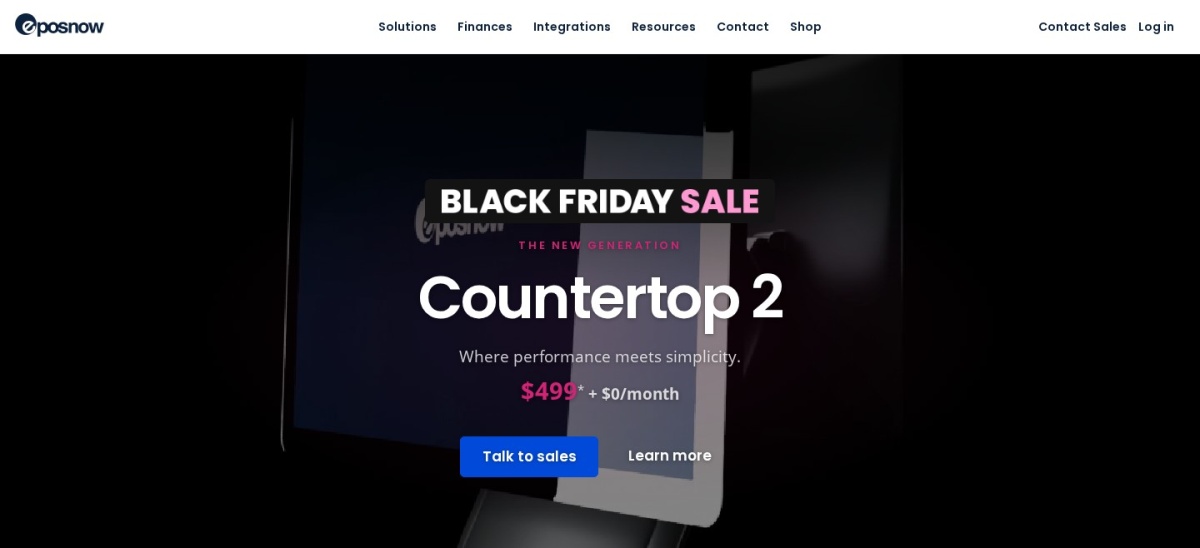
Epos Now is a cloud POS with a flat software fee, retail checkout, inventory, staff management and reporting, plus more than 100 app integrations. The software-only plan costs $39 a month with a 30-day free trial, and hardware bundles are sold separately for countertop setups.
The trade off is the thin rating and the contract. Its G2 score rests on only 29 reviews, and Epos Now commonly sells terms of one to five years, with a $349 hardware bundle also on offer. It suits small electronics shops that want one flat software fee on tablets they already own.
PayPal POS is a free POS app, formerly Zettle by PayPal, that turns a phone or tablet into a till with no monthly fee. In-person card sales cost 2.29% plus 9 cents each, the card reader costs $79 with the first one at $29, and it accepts PayPal and Venmo payments as well as cards.
The trade off is depth. There is no serial tracking, repair ticketing or multi-location stock, so it fits occasional selling rather than a full shop. It suits electronics sellers at pop-ups, markets and trade fairs who already use PayPal.
Free POS covers the basics well. Square and PayPal POS charge no monthly fee and include inventory, sales reports and a card reader option.
Paid plans mostly add depth and control. You get serial number tracking, purchase orders, multi-location stock and staff permissions.
Card rates matter as much as the monthly fee. PayPal POS charges 2.29% plus 9 cents per in-person sale, while Square charges 2.6% plus 15 cents on its free plan.
For a single small shop, free POS is often enough. Once you track serials across two locations, a paid plan such as Lightspeed Basic pays for itself.
How we chose
We started from retail POS systems with a published G2 or Capterra rating and a real inventory feature, then kept those that fit electronics stores selling high-value, serialized items.
Prices come from each vendor pricing page or G2 pricing data, checked on 30 November 2026. Ratings come from G2 or Capterra on the same day. Where a vendor shows a sale, the list shows the regular price.
We left out tools with no aggregator rating and tools built only for restaurants. No vendor paid for a place, and we do not claim hands-on testing for this list.
How to choose retail management software for electronics stores
Start with how you track stock, then match the price model to your volume.
List what you must track by serial number. Phones, laptops and TVs need serial tracking for warranty and theft control. If a tool cannot track serials, it is out.
Decide if repairs are part of the business. Shops that take in repairs need repair tickets and parts tracking. Lightspeed and Heartland cover this; free POS tools mostly do not.
Count your locations and registers. Per-location plans such as Lightspeed and Square charge per shop, while KORONA charges per terminal. Price it for every till you run.
Add the card rate to the monthly fee. A free plan at 2.6% plus 15 cents per sale can cost more than a $49 plan at 2.5% once volume grows. Work out the total, not just the headline.
FAQ
What is the best retail management software for electronics stores in 2026?
Lightspeed Retail is the best pick for most electronics stores. It handles serial number tracking, repairs, supplier purchase orders and multi-location stock, with Basic at $89 a month billed annually.
Is there free retail management software for electronics stores?
Yes. Square and PayPal POS both charge no monthly fee and only take a cut of each card sale. Square is the stronger free option for a shop, with inventory, an online store and staff tools, while PayPal POS suits pop-ups and market stalls.
How much does retail management software for electronics stores cost?
Paid plans in this list start at $39 a month for Epos Now and $49 a month for Square Plus, and reach $89 a month for Lightspeed Retail and Heartland Retail. PayPal POS has no monthly fee and charges 2.29% plus 9 cents per in-person sale.
Which retail software is best for serial number tracking?
Lightspeed Retail is the best pick for serial number tracking. It follows each unit by serial number through sales, repairs and warranty claims, with multi-location stock control built in.
Lightspeed Retail vs Square: which is better for an electronics store?
Lightspeed Retail is better for stores that track serials, run repairs and manage stock across locations. Square is better for a small single shop that wants free POS, fast setup and low hardware cost.
Does Shopify POS work for an electronics store?
Yes, if your online store matters as much as the counter. Shopify POS syncs stock between the website and the shop in real time, with POS Pro at $89 a month per location on top of a Shopify plan from $29 a month.
SaaS SEO and WordPress specialist with about 8 years of experience. Rakib compares WordPress plugins, themes, hosting and software using public pricing, documentation and user reviews. See how we rank.