Square POS is the best software for a grocery store for most small shops, because the free plan costs nothing per location and Plus adds stock control at 49 dollars a month. IT Retail is the best grocery-first pick, with scales, EBT and perishables built in, while Lightspeed suits multi-location stores with large catalogs.
How we make this list: we compare pricing pages, product documentation and public user reviews, then re-check every price before each update. No product paid for a place. Disclosure.
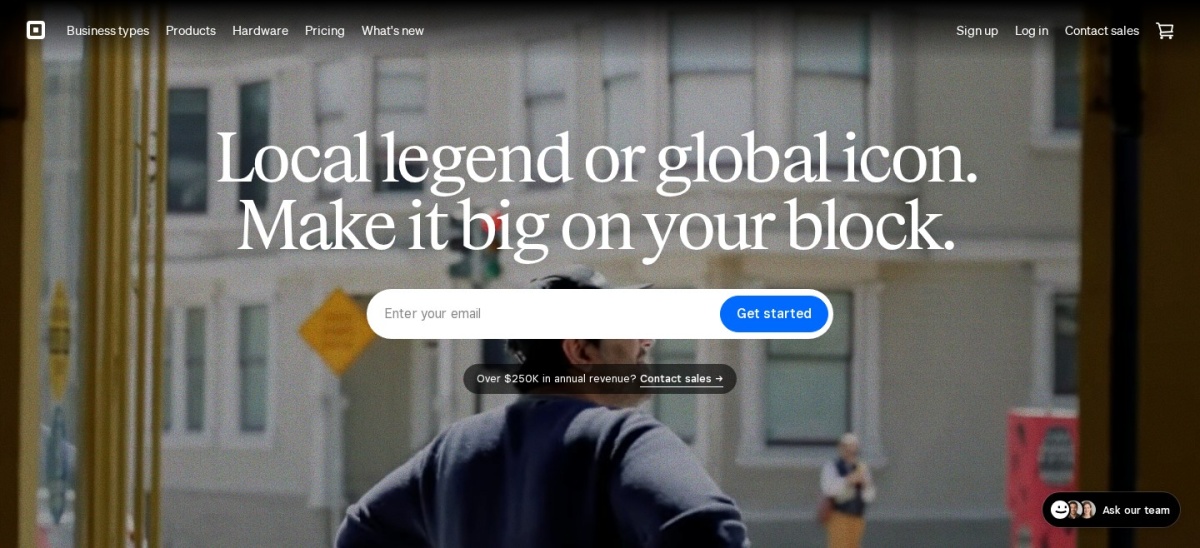
Square POS is the best pick for most small grocery stores, with a free plan and Plus at $49 a month.
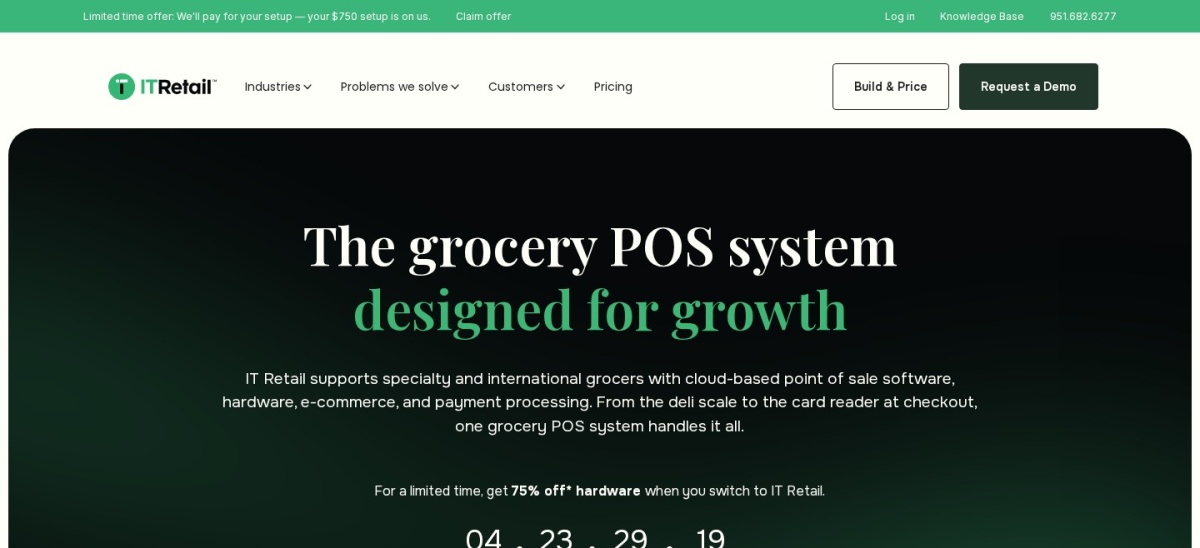
IT Retail is the best grocery-first system, with scales, EBT and perishables built in from $49 a month.
Compare prices per location, per terminal and per register — the headline price hides the real cost.
Card fees can cost more than the subscription, so multiply your card sales by the rate before you choose.
ECRS CATAPULT is quote-only; budget for a sales conversation and setup fees.
What grocery store software should cover
Grocery store software is mostly point-of-sale software with grocery features on top. A general retail till can ring up a sale, but only a grocery-first system handles weighed produce, SNAP and EBT, age checks on alcohol, loyalty pricing and perishable stock without workarounds. That gap decides most of this list.
Prices are charged in different units, so compare carefully. Square and Lightspeed charge per location per month, KORONA charges per terminal, Clover charges per plan, and ECRS and NCR quote by register count. A $49 plan per location is not the same as a $59 plan per terminal when a store runs four lanes.
Card rates are the hidden cost. Square Free costs $0 a month but takes 2.6 percent plus 15 cents on every in-person card sale, while Lightspeed publishes a 1.5 percent card-present rate. A busy store can pay more in card fees in a month than in software fees all year.
Free does not mean complete. Square moved stock tracking, purchase orders and label printing behind its $49 Plus plan in October 2025, and Clover keeps stock tracking behind its $29.95 Essentials plan. Check which plan first adds real stock control before you choose.
Square POS is a point-of-sale system for small grocery stores, with a free plan that costs $0 per location per month and covers the register, an item library and an online store. Plus costs $49 a month and adds stock tracking, purchase orders and label printing, with in-person card sales at 2.5 percent plus 15 cents. It holds 4.6 out of 5 on G2 from 1,208 reviews.
The trade off is grocery depth. Square has no built-in scale integration or perishable tracking, and stock control moved behind the $49 Plus plan in October 2025, so a store that lives in its stock list will outgrow the free plan fast. It suits small grocers and farm shops that want a $0 start.
IT Retail is a point-of-sale system built for grocery, with weighed produce, SNAP and EBT, WIC acceptance, age checks, loyalty pricing and perishable inventory out of the box. Starter costs $49 a month for up to 5 employees, and Growth and Premium are priced on request. It holds 4.6 out of 5 on Capterra from 22 reviews.
The trade off is the buying process. Pricing beyond Starter is quoted through a Build and Price tool, hardware means commercial scales and scanners, and setup is a project rather than a download. It suits independent grocers that want a grocery-first system and will pay for setup.
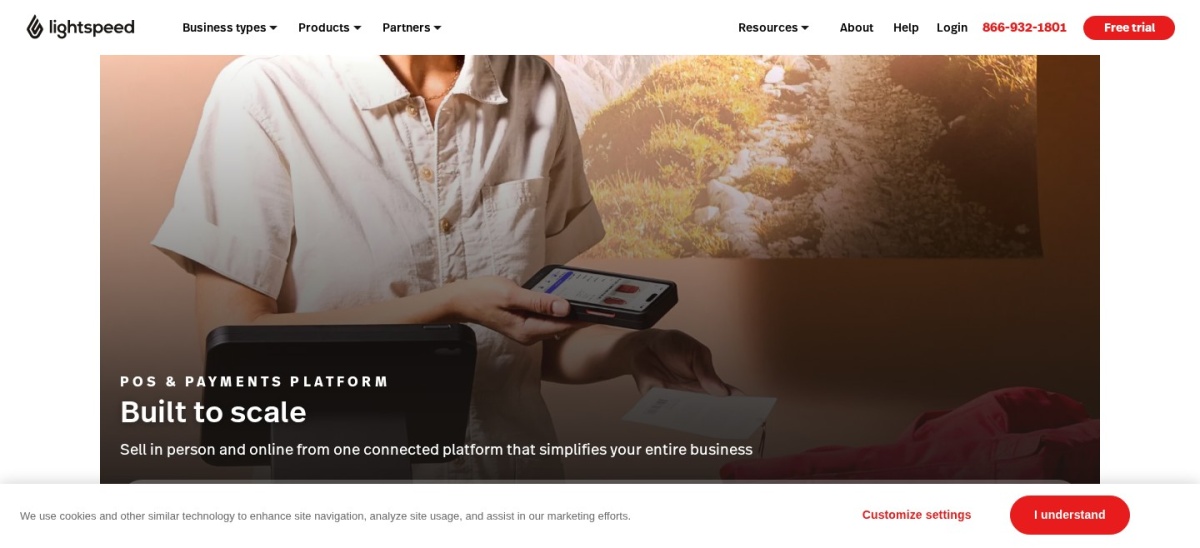
Lightspeed Retail is a cloud point-of-sale system built around inventory depth, with matrix stock, purchase orders, vendor catalogs and multi-location sync. Basic costs $89 a month billed annually, or $109 a month billed monthly, with one register included and a 1.5 percent card-present rate. It holds 4.0 out of 5 on G2 from 294 reviews.
The trade off is price and grocery fit. Lightspeed has no built-in scale or EBT handling, and reviewers describe it as expensive once add-ons and extra registers are counted. It suits multi-location grocers with large catalogs that need deep stock control across stores.
Shopify POS is the in-store register for Shopify, so the till and the online store share one product catalog, one stock count and one customer record. Basic costs $29 a month billed annually, or $39 a month billed monthly, and POS Pro costs $89 per location a month. It holds 4.4 out of 5 on G2 from 368 reviews.
The trade off is that it is not a grocery system. Shopify POS has no scale integration, no EBT handling and no perishable tracking, and the register needs a Shopify store plan to work at all. It suits grocers who already sell online through Shopify and want one stock count everywhere.
Clover is a countertop point-of-sale system from Fiserv, with customizable hardware from compact terminals to full stations and an app marketplace for retail features. Starter costs $0 a month, Essentials costs $29.95 a month and adds an item catalog and stock tracking, and Retail Growth costs $84.95 a month. It holds 3.8 out of 5 on G2 from 108 reviews.
The trade off is the rating and the price confusion. The 3.8 G2 score is the lowest in this list, and Clover prices by business type, so the Register plan reads $49.95 a month in some guides against $29.95 for retail Essentials. It suits markets that want polished counter hardware and software together.
KORONA POS is a cloud point-of-sale system that lets a store keep its own card processor instead of locking into one vendor. Core costs $59 per terminal per month, Retail costs $79 and Plus costs $99, with offline mode and bring-your-own-device support for existing tablets. It holds 4.7 out of 5 on G2 from 72 reviews.
The trade off is the per-terminal maths. A store with four lanes pays $236 a month on Core before card fees, and KORONA has no grocery-specific scale or EBT tools, so it suits general retail more than fresh-food stores. It suits high-volume stores that want processor freedom and strong inventory.
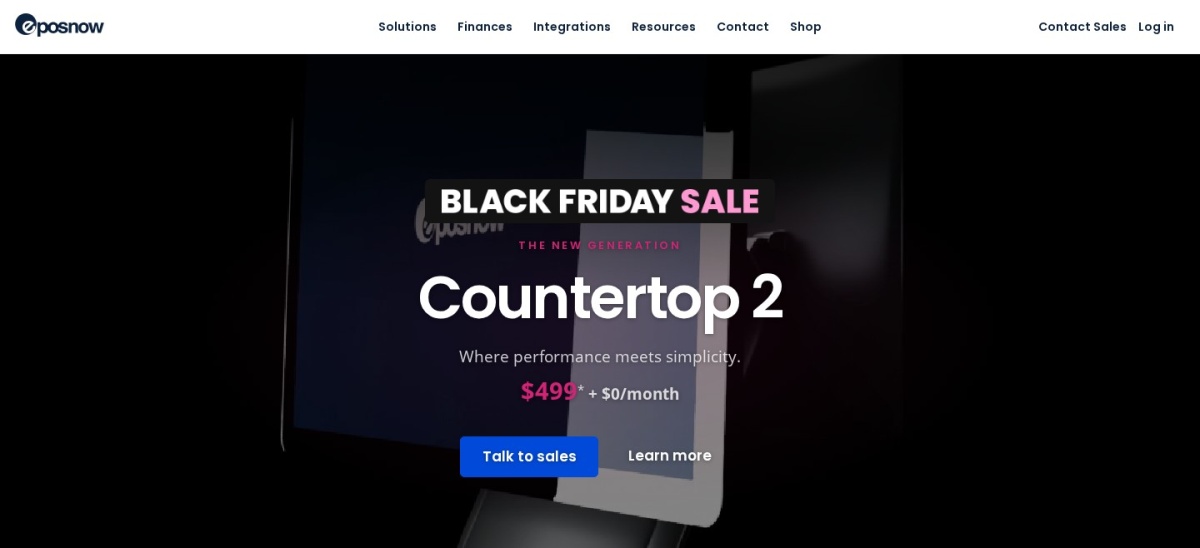
Epos Now is a cloud point-of-sale system for retail and hospitality, with checkout, inventory, customer records and reporting for $39 a month for software only. Hardware bundles cover countertop setups, and a 30-day free trial lets a store test the register before paying. It holds 4.6 out of 5 on G2 from 29 reviews.
The trade off is the thin rating and the price reads. The 4.6 G2 score rests on only 29 reviews, and G2's own comparison page says there are not enough Epos Now reviews for buying insight, while a $349 one-time Complete Solution also appears in guides. It suits budget small grocers that want a simple cloud till.
ECRS CATAPULT is an enterprise point-of-sale platform for larger supermarkets, linking registers, back-office receiving, loyalty, gift cards and e-commerce on one database. It handles fresh-food weight detection, automated ordering and multi-department reporting, and all pricing is custom. It holds 4.4 out of 5 on G2 from 4 reviews.
The trade off is scale and the thin rating. The 4.4 G2 score rests on only 4 reviews, with other reads at 4.1 and 4.3, and there is no published price or free tier, with training billed separately. It suits high-volume, multi-department supermarkets that want one system for the whole store.
What we like
One database for registers, back office and e-commerce
eHopper is a cloud point-of-sale system for small retail, grocery and convenience stores, with free software when you use its payment processing. Paid plans start at $14.99 a month for Essential Plus with your own processor, and Freedom adds EBT at $24.99 a month per device. It holds 4.3 out of 5 on Capterra from 66 reviews.
The trade off is the processing catch. The free plan needs eHopper processing, the paid plans are priced per device, and price reads vary from $14.99 to $49 a month across guides, so confirm the plan at checkout. It suits small grocers that want a free start with EBT available.
Per location vs per terminal: how the price is charged
Square and Lightspeed charge per location per month. Square Free is $0 per location and Plus is $49, while Lightspeed Basic is $89 per location with one register included. A second location doubles the bill on both.
KORONA charges per terminal per month. Core is $59 per terminal, so a store with four lanes pays $236 a month before card fees. Count your lanes, not your locations, when you compare KORONA with the others.
Clover and Shopify charge per plan, not per lane. Clover Essentials is $29.95 a month and Shopify Basic is $29 a month billed annually, with POS Pro at $89 per location a month on top. Hardware is a separate cost on every system here.
ECRS CATAPULT is priced on request, by register, scale and volume. NCR Counterpoint is also quote-only, with cloud licences reported near $149 a month per licence and on-premise licences near $1,190 to $1,500 each. Get the quote in writing before you budget.
How we chose
We compared nine grocery store software systems, checking each one against its vendor pricing page and review profiles in November 2026. Every tool here has a verifiable rating on G2 or Capterra, and a published price or a stated quote model. Square POS, IT Retail, Lightspeed Retail, Shopify POS, Clover, KORONA POS, Epos Now, ECRS CATAPULT and eHopper all made the cut.
Prices come from the vendor pricing pages we opened on 26 November 2026, or from dated vendor-page reads in October and November 2026. Square Free at $0 and Plus at $49 a month were confirmed on Square's own pricing page today, while the Lightspeed page renders without figures and its $89 a month Basic price is corroborated by vendor-page reads from November 2026.
We ranked the tools by overall fit for a typical grocery store, not by rating alone. A grocery-first system that handles scales and EBT outranks a general retail till with a higher score, and a published price counts for more than a quote-only enterprise system. Quote-only tools are flagged in each tool's notes.
How to choose software for a grocery store
Start with what your store sells, then count the lanes and check EBT before you buy.
List what your store actually sells. Weighed produce, deli items, alcohol, tobacco and prepared food each need different checkout features. A store that sells mostly packaged goods can use a general retail till, while a store with a deli counter needs scales and perishable tracking.
Count the lanes and locations. Square and Lightspeed charge per location, KORONA charges per terminal, and ECRS quotes by register. Work out the monthly cost for your real lane count, not the headline price for one till.
Check EBT, WIC and loyalty before you buy. SNAP and EBT acceptance is required for many grocery stores, and loyalty pricing drives repeat visits. Confirm both work on the plan you would buy, not just on the top tier.
Add up card fees, not just the subscription. A $0 plan at 2.6 percent plus 15 cents can cost more than a $49 plan at 2.5 percent once card volume grows. Multiply your monthly card sales by the rate to find the real monthly cost.
FAQ
What is the best software for a grocery store?
Square POS is the best pick for most small grocery stores, because the free plan costs $0 per location and Plus adds stock control at $49 a month. It holds 4.6 out of 5 on G2 from 1,208 reviews, the largest review base in this list.
What is the best grocery-first POS system?
IT Retail is the best grocery-first pick, built for independent grocers with weighed items, EBT and WIC, age checks, loyalty pricing and perishable inventory out of the box. Starter costs $49 a month, and it holds 4.6 out of 5 on Capterra from 22 reviews.
How much does Square POS cost?
Square Free costs $0 per location per month, with in-person card sales at 2.6 percent plus 15 cents. Plus costs $49 a month and cuts the rate to 2.5 percent plus 15 cents, while Premium costs $149 a month at 2.4 percent plus 15 cents.
How much does Lightspeed Retail cost?
Lightspeed Retail Basic costs $89 a month billed annually, or $109 a month billed monthly, with one register included and a 1.5 percent card-present rate. Core costs $149 a month billed annually, and Plus costs $289 a month billed annually.
Do grocery POS systems accept EBT?
Yes, grocery-first systems accept SNAP and EBT as standard, including IT Retail, ECRS CATAPULT and eHopper, and general retail systems such as Square and Clover accept EBT where the store is authorised. Confirm EBT works on the plan you buy before you sign up.
What does KORONA POS cost?
KORONA POS Core costs $59 per terminal per month, Retail costs $79 and Plus costs $99, all billed monthly. It lets a store keep its own card processor, which suits stores that already have a processing contract they like.
Is there free POS software for a grocery store?
Yes. Square Free costs $0 per location per month, Clover Starter costs $0 a month, and eHopper is free when you use its payment processing. All three charge card fees on every sale, so the free plan is not free to run.
Why is ECRS CATAPULT priced on request?
ECRS sells CATAPULT to larger, multi-department supermarkets, so the price depends on registers, scales and processing volume. There is no published starting price and no free tier, and training is billed separately. Expect a sales conversation before you get a number.
SaaS SEO and WordPress specialist with about 8 years of experience. Rakib compares WordPress plugins, themes, hosting and software using public pricing, documentation and user reviews. See how we rank.