Genemod is the best of the Quartzy alternatives for most labs, with a free plan for 10 users covering inventory, notebook, orders and equipment, and a 4.8/5 G2 rating from 49 reviews. Pick Labguru for ELN plus LIMS in one system, and ProcureDesk when finance-controlled purchasing and 3-way matching matter most.
How we make this list: we compare pricing pages, product documentation and public user reviews, then re-check every price before each update. No product paid for a place. Disclosure.
Genemod is the only pick with a usable free plan for 10 users covering inventory, notebook, orders and equipment.
QBench is the cheapest priced LIMS with inventory at $325 per user per month on Growth; CloudLIMS starts at $285 for a 5-user team.
LabArchives publishes the clearest lab prices: ELN plus Inventory is $360 per academic user per year.
Five of the nine tools publish no paid price, so get a written quote and check export options before committing.
ProcureDesk is the only pick built for finance-controlled purchasing, with 3-way matching from $830 a month.
How do you choose between Quartzy alternatives?
Quartzy's 2026 repackaging pushed many labs to look elsewhere. It moved 3-way matching, PunchOut, QuickBooks and NetSuite links and SDS automation into paid add-ons, on top of plans at $50 a month for academia and $250 for industry.
The right replacement depends on which Quartzy job matters most. Labs that mainly track reagents and freezers need an inventory-first tool, while teams that live in notebooks need inventory tied to experiment records.
Price transparency is the biggest surprise in this category. Five of the nine tools publish no paid price at all, so a shortlist should always include at least one tool with a public price, such as QBench or LabArchives, to anchor the budget.
Free plans are real here, but they have edges. Genemod covers 10 users free, Benchling is free for academics and SciNote is free for individuals, yet paid tiers, inventory modules and compliance features usually sit behind a quote.
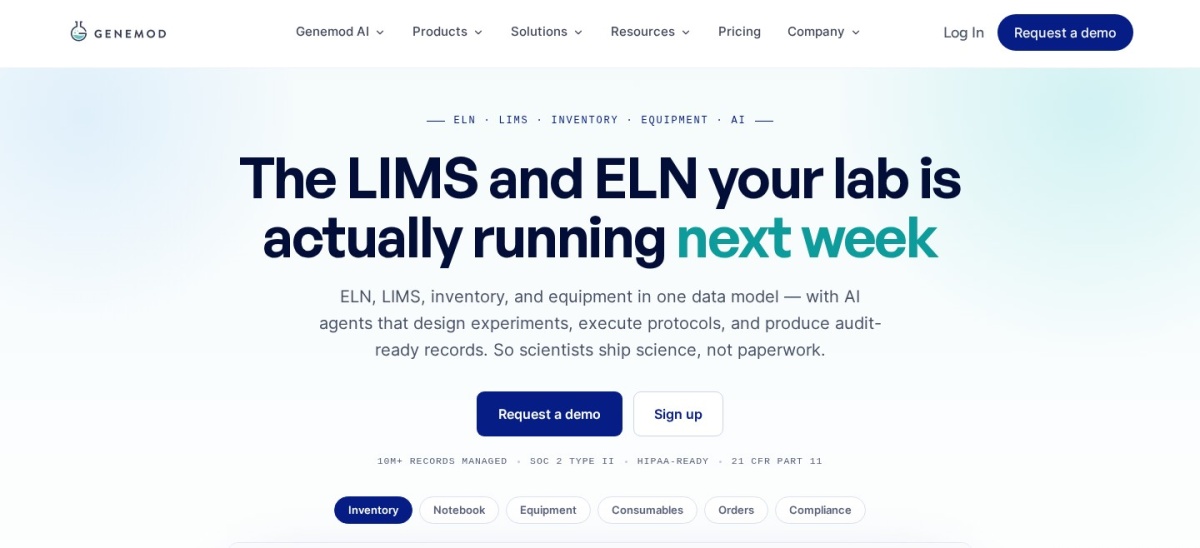
Genemod is a lab platform that covers the same ground as Quartzy in one place: inventory, notebook, orders and equipment. The free plan covers 10 users with all modules at base caps, so a small lab can run real work without paying first. It also includes custom fields and an AI agent for routine lookups.
The trade off is the paid wall. Business plans for 10 to 25 users and Enterprise plans are sold after a demo, with no per-seat list price published. It suits small and academic labs that want Quartzy-style inventory plus a notebook without starting with a sales call.
What we like
Free plan covers 10 users with all modules
Inventory, notebook, orders and equipment in one system
Highest G2 rating in this list at 4.8/5
G2 reviewers rate ease of setup at 9.4/10
Watch out for
Paid Business and Enterprise plans are quote-only
Free plan runs at base caps, so larger labs outgrow it
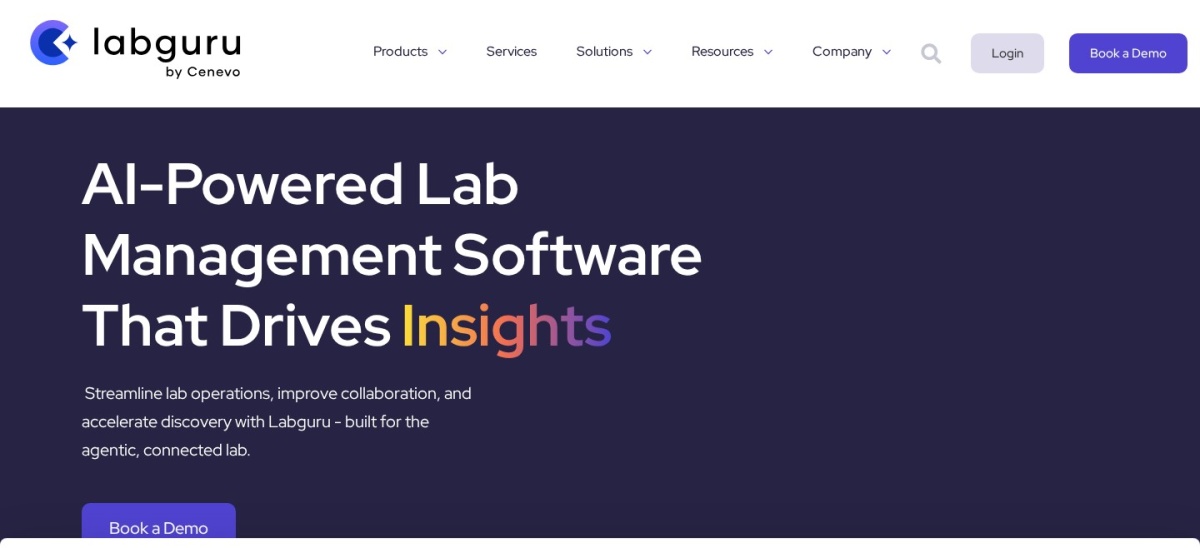
Labguru is the closest all-in-one replacement for Quartzy, combining an electronic lab notebook, LIMS-style sample tracking and inventory in one system. Stock records carry lot numbers, receipt dates and expiry alerts, and shopping-list requests handle the ordering side. It is used by more than 800 companies.
The trade off is price opacity. Labguru publishes no list price and sells per user per year on quotation, with chemistry, batch records and equipment modules quoted on top. It suits R&D teams that want one system for experiments, samples and stock and can run a sales process.
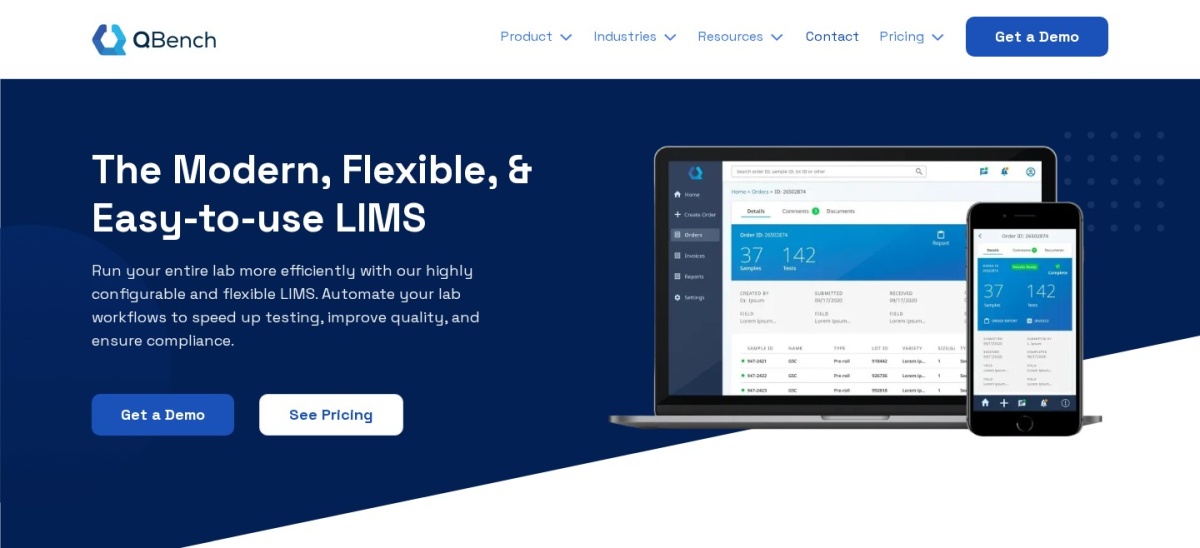
QBench is a cloud LIMS with inventory management built in, covering stock consumption, low-stock alerts and expired-stock flags. The Growth plan costs $19,500 a year for 5 users, which works out at $325 per user per month, and includes a customer portal for 1,000 end users. Instrument integrations start at $1,500 a year.
The trade off is the entry tier. The cheaper Foundation plan at $16,500 a year does not include inventory management, so a lab switching for stock tracking must buy Growth. It suits testing and production labs that need a real LIMS with inventory rather than a notebook with stock added on.
What we like
Inventory included in Growth with low-stock and expiry alerts
Benchling is a cloud R&D platform built around life-science research, with the notebook, molecular biology tools, registry and inventory in one place. The free academic plan covers the Notebook and Molecular Biology tools, and it serves more than 200,000 scientists at 7,500-plus universities. It is used by more than 1,300 biotech companies.
The trade off is the price wall between academia and industry. Commercial plans are quote-only with no published price, and the Registry and Inventory modules are not part of the free academic plan. It suits biotech teams that want inventory tied to sequences, plasmids and experiment records.
CloudLIMS is a cloud LIMS aimed at testing labs, with sample, inventory and workflow tracking in one system. Its pricing page lists $285 per user per month for a 5-user team billed annually, falling to $200 for 10 users and $100 for 25. G2 reviewers rate its support quality at 9.2 out of 10.
The trade off is scope. It is built for testing and QC labs rather than research groups, so labs wanting a notebook or molecular biology tools will need a second system. It suits small testing labs that want a published price and a LIMS that covers samples and stock.
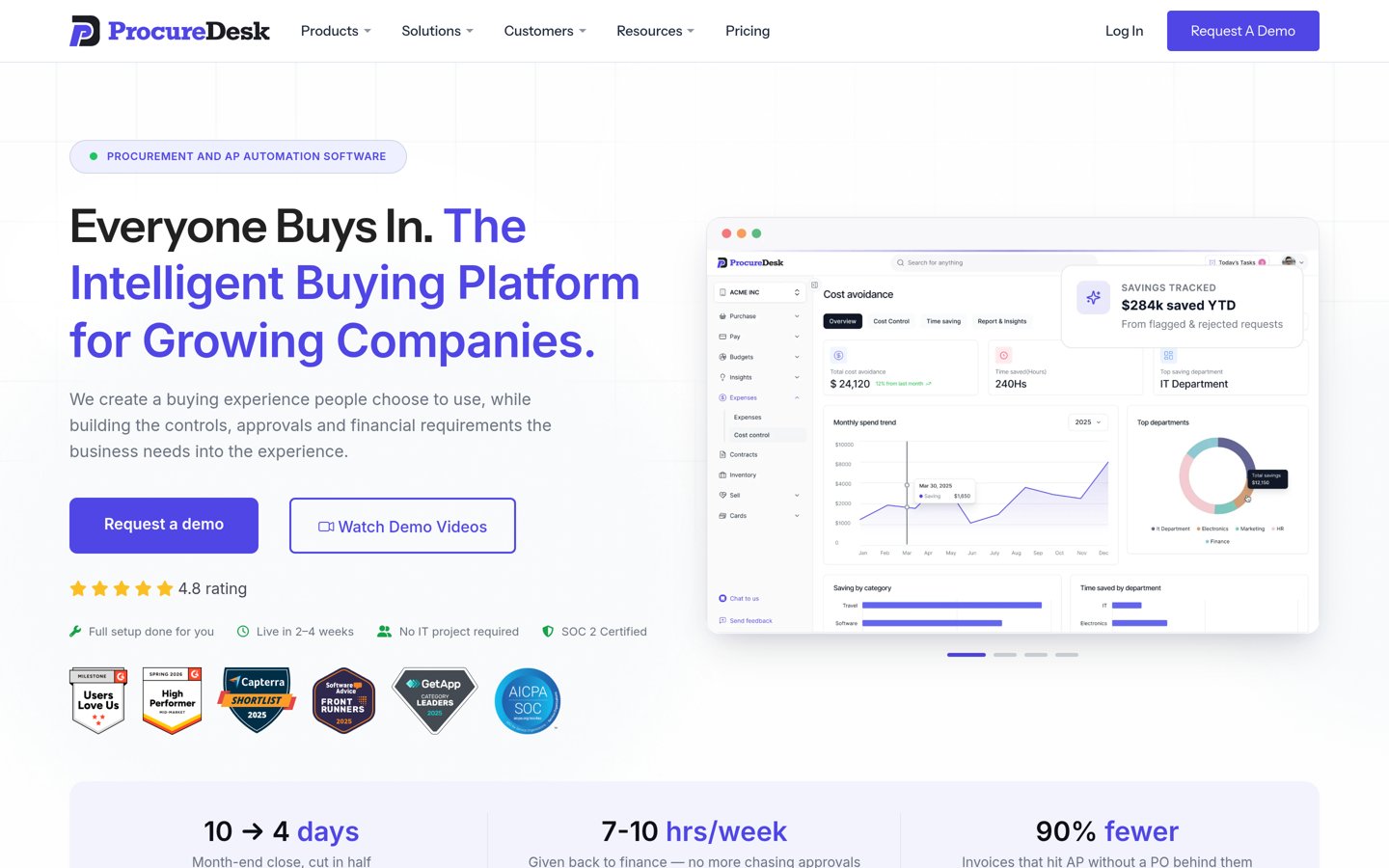
ProcureDesk is a procurement platform for the ordering half of Quartzy: requests, purchase orders, receiving and invoice matching. The Startup plan costs $830 a month billed annually and includes 10 users, approval workflows, basic 3-way matching with OCR and QuickBooks or Xero links. It goes live in 2 to 4 weeks and is used by more than 500 finance teams.
The trade off is that it is not a lab system. There is no inventory, freezer map or notebook, so it replaces Quartzy's purchasing loop only and must sit beside a stock tool. It suits labs where finance controls buying and wants approvals, budgets and 3-way matching before money moves.
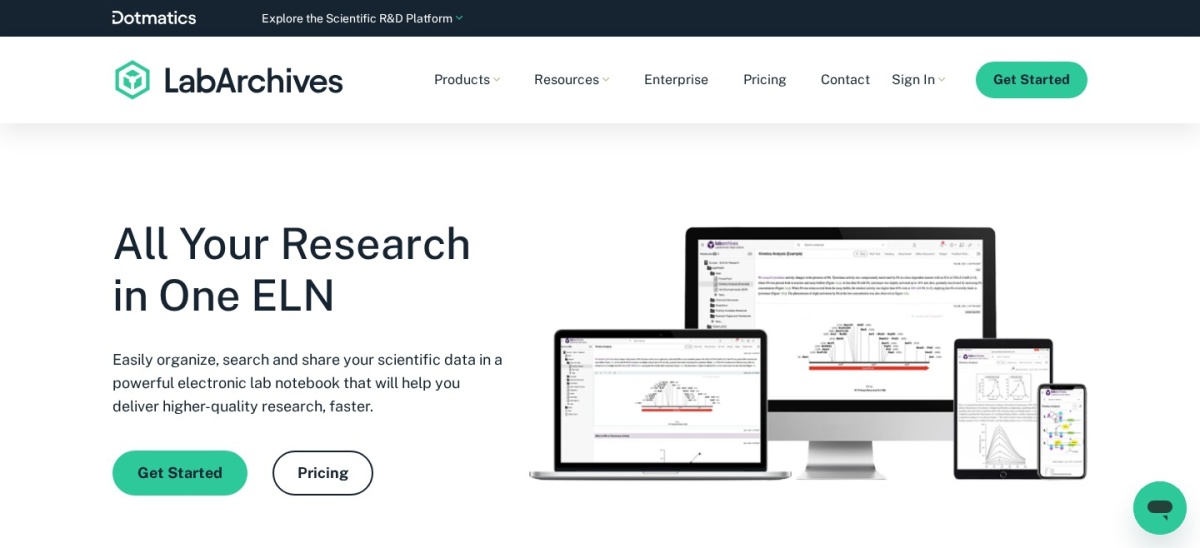
LabArchives is a cloud electronic notebook with inventory sold as a connected product, and it publishes the clearest prices in this list. The ELN plus Inventory bundle costs $360 per academic user per year or $675 for corporate labs, while Inventory alone is $99 academic. The free plan gives individuals two notebooks, and inventory can be tried free for 90 days.
The trade off is a thin review base. Its G2 rating of 4.3 out of 5 rests on only 3 reviews, so treat the score with care, and inventory is a separate product rather than one system. It suits labs that want to see the price before the sales call and already run on notebooks.
What we like
Clearest published pricing in this list
Free plan and 90-day inventory trial
ELN plus Inventory bundle links reagents to experiments
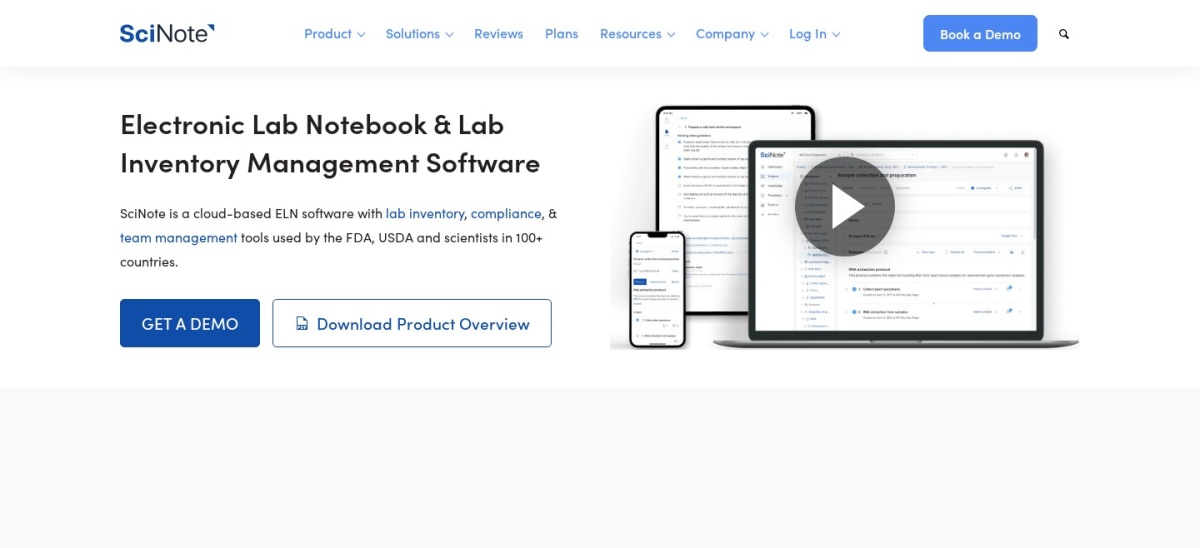
SciNote is a cloud electronic lab notebook with built-in inventory, protocol templates and team management, used by the FDA and USDA and by scientists in more than 100 countries. Its projects, experiments and tasks structure mirrors how research happens, and the free plan covers the core notebook. Mobile apps let scientists record results at the bench.
The trade off is pricing opacity. Paid plans are quote-only with no published tiers, and stock management and label printing are paid add-ons. It suits regulated labs on a budget that need signatures, audit trails and inventory without enterprise prices.
What we like
Free plan with real compliance features
4.2/5 on G2 from 303 reviews, the largest base here
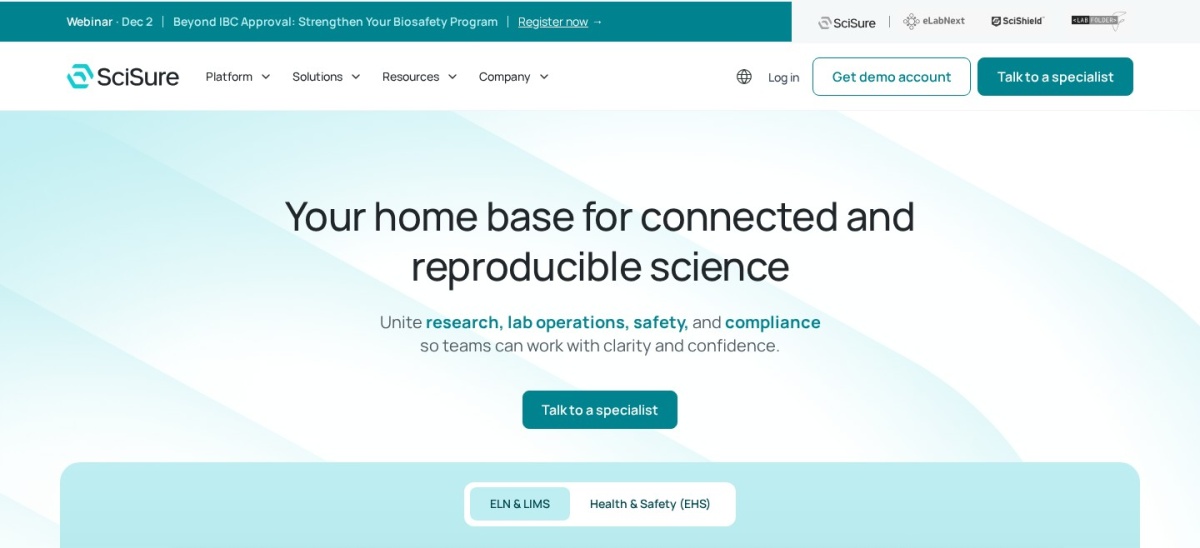
SciSure is a platform that bundles eLabJournal, eLabInventory and SciShield chemical safety tools in one place. Inventory items link directly to journal entries, so a reagent used in an experiment stays traceable, and the safety tools cover chemical storage and compliance. Academic, Industry and Startup tiers are offered, with a free trial.
The trade off is pricing and polish. Paid plans are quote-only with no published price, and some G2 reviewers call the interface clunky, especially for instrument and permission management. It suits labs that want the notebook, inventory and chemical safety record from one vendor.
What we like
Notebook, inventory and chemical safety in one platform
Inventory-first tools win when the pain is lost reagents. Genemod, QBench, CloudLIMS and LabArchives track lots, locations and expiry dates, so a lab stops reordering stock it already owns.
Ordering-first tools win when the pain is approvals and invoices. ProcureDesk controls spend before money moves, while Labguru's shopping lists cover lighter request workflows inside a research system.
Most labs need both jobs, so the honest answer is often a pair. A free inventory tool such as Genemod plus ProcureDesk for purchasing costs less than one enterprise LIMS and covers each job with a tool built for it.
How we chose
We started from the tools G2 lists as Quartzy alternatives and the lab inventory tools labs actually discuss, then kept nine with a public numeric rating and a live product.
Prices and ratings were checked on 29 November 2026. Prices come from each vendor's own pricing page, and ratings come from G2 with the review count shown. Where a vendor shows a sale, the list shows the regular price.
We left out ZAGENO and Labsistant because neither has a public numeric rating, and LabCollector because its homepage is blocked by Cloudflare. No vendor paid for a place, and we do not claim hands-on testing for this list.
How to choose a Quartzy alternative
Start with the job, not the brand, then prove the shortlist with your own stock.
Name the job Quartzy did for you. If it was stock tracking, shortlist inventory-first tools; if it was approvals and invoices, start with ProcureDesk.
Try a free plan before any demo. Genemod covers 10 users free and SciNote is free for individuals, so run your real stock list through one before committing.
Get one published price on the table. QBench, CloudLIMS, ProcureDesk and LabArchives all publish prices, which gives your budget an anchor before quote-only vendors reply.
Check export before you sign. Ask each vendor how your inventory, orders and notebook entries export, and confirm the format before migrating a freezer full of stock.
FAQ
What is the best alternative to Quartzy in 2026?
Genemod is the best Quartzy alternative for most labs. Its free plan covers 10 users with inventory, notebook, orders and equipment, and it holds a 4.8/5 G2 rating from 49 reviews. Labguru is the stronger all-in-one for larger R&D teams.
What is the cheapest Quartzy alternative?
Genemod, Benchling and SciNote all have free plans, so the cheapest start is free. For paid plans with a published price, LabArchives Inventory alone costs $99 per academic user per year, and QBench Growth starts at $325 per user per month. Most others are quote-only.
Which Quartzy alternative is best for lab inventory?
Genemod is the best inventory-first pick, with freezer-level tracking, lots and expiry dates on its free plan. QBench and CloudLIMS are stronger when inventory must sit inside a testing LIMS, and LabArchives Inventory links stock to notebook entries.
Genemod vs Labguru: which should I choose?
Choose Genemod for a free start and a modern inventory-first setup for a small lab. Choose Labguru when you need ELN, LIMS and inventory in one system for a larger R&D team and can run a quote-based purchase. Both replace Quartzy's inventory and ordering jobs.
Do any Quartzy alternatives publish their prices?
Yes, four of the nine do. QBench lists Growth at $325 per user per month, CloudLIMS lists $285 per user per month for five users, ProcureDesk lists Startup at $830 a month, and LabArchives lists its ELN plus Inventory bundle at $360 per academic user per year.
Can I replace Quartzy's ordering and approvals?
Yes. ProcureDesk covers requests, approvals, purchase orders and 3-way invoice matching from $830 a month, and Labguru handles shopping-list requests with partial receiving. Neither is a lab inventory tool, so pair ProcureDesk with an inventory pick such as Genemod.
SaaS SEO and WordPress specialist with about 8 years of experience. Rakib compares WordPress plugins, themes, hosting and software using public pricing, documentation and user reviews. See how we rank.