Everlaw is the best Relativity alternative for most teams, rated 4.7 out of 5 from 780 G2 reviews with AI clustering and predictive coding at $250 per user per month. Logikcull is the easiest start with pay-as-you-go billing, while GoldFynch is the cheapest route into a small case at $27 a month.
How we make this list: we compare pricing pages, product documentation and public user reviews, then re-check every price before each update. No product paid for a place. Disclosure.
Everlaw leads the list at 4.7/5 from 780 G2 reviews, with AI clustering and predictive coding at $250 per user per month.
Logikcull is the easiest start: pay-as-you-go billing per GB with a 10 GB minimum, unlimited users, and a free sample matter.
Only four tools publish a starting price: GoldFynch at $27 a month, Reveal from $25 per user a month, Everlaw at $250 and Nextpoint at $262.50.
Five of the nine tools publish no price at all — Logikcull, DISCO, Casepoint, Exterro and CloudNine are all quoted per matter.
GoldFynch is the cheapest way into a real case, but its 5.0 G2 rating rests on only 6 reviews.
How do you choose the best Relativity alternative?
Most Relativity alternatives bill by the matter, not by the seat. Five of the nine tools in this list publish no price, so the first question is always how the vendor charges: per user, per GB, or a flat quote.
Start from the size of your matter. A small firm with 50 GB of data can run a real case on GoldFynch for $27 a month, while a team reviewing millions of documents needs the AI review and analytics of Everlaw, DISCO or Reveal.
AI review is now the deciding feature. Everlaw, DISCO and Reveal all bundle AI summarization, clustering or predictive coding, but the tools differ in how much of it is included versus charged as an add-on, so ask before you sign.
Security authorizations matter more than feature lists for government work. Casepoint holds FedRAMP Moderate and High authorizations, while most rivals publish SOC 2 Type II at most, so check the authorization your client requires before comparing prices. Our GDPR setup guide covers the data-protection basics that apply to any client data you hold.
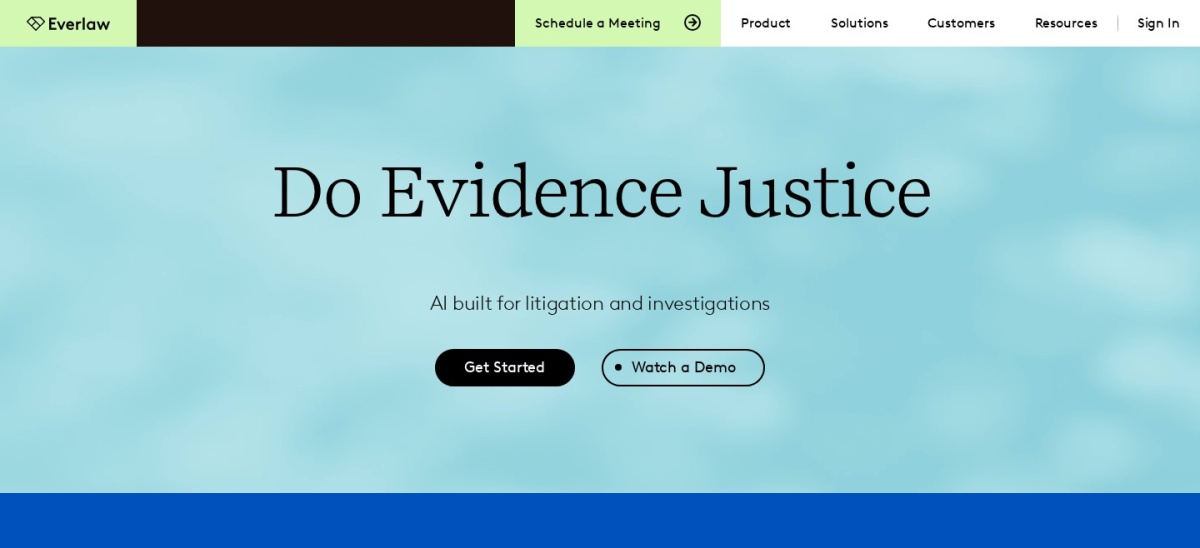
Everlaw is a cloud eDiscovery platform built for litigation and investigations, with AI tools for clustering, predictive coding and document summaries. Its open platform connects to other AI tools, and G2 lists its starting price at $250 per user per month. Unlimited training and dedicated customer success come with the platform.
The trade off is cost and setup. At $250 per user per month, a large review team adds up fast, and G2 reviewers report most teams take about a month to get running. It suits firms and legal teams that want the highest-rated review experience and can staff the rollout.
What we like
Highest review count in this list at 780 G2 reviews
AI clustering, predictive coding and summaries included
Unlimited training and dedicated customer success
Open platform that connects to other AI tools
Watch out for
Per-user pricing gets expensive for large review teams
Most teams take about a month to get running
Some reviewers say AI costs and guidance are unclear
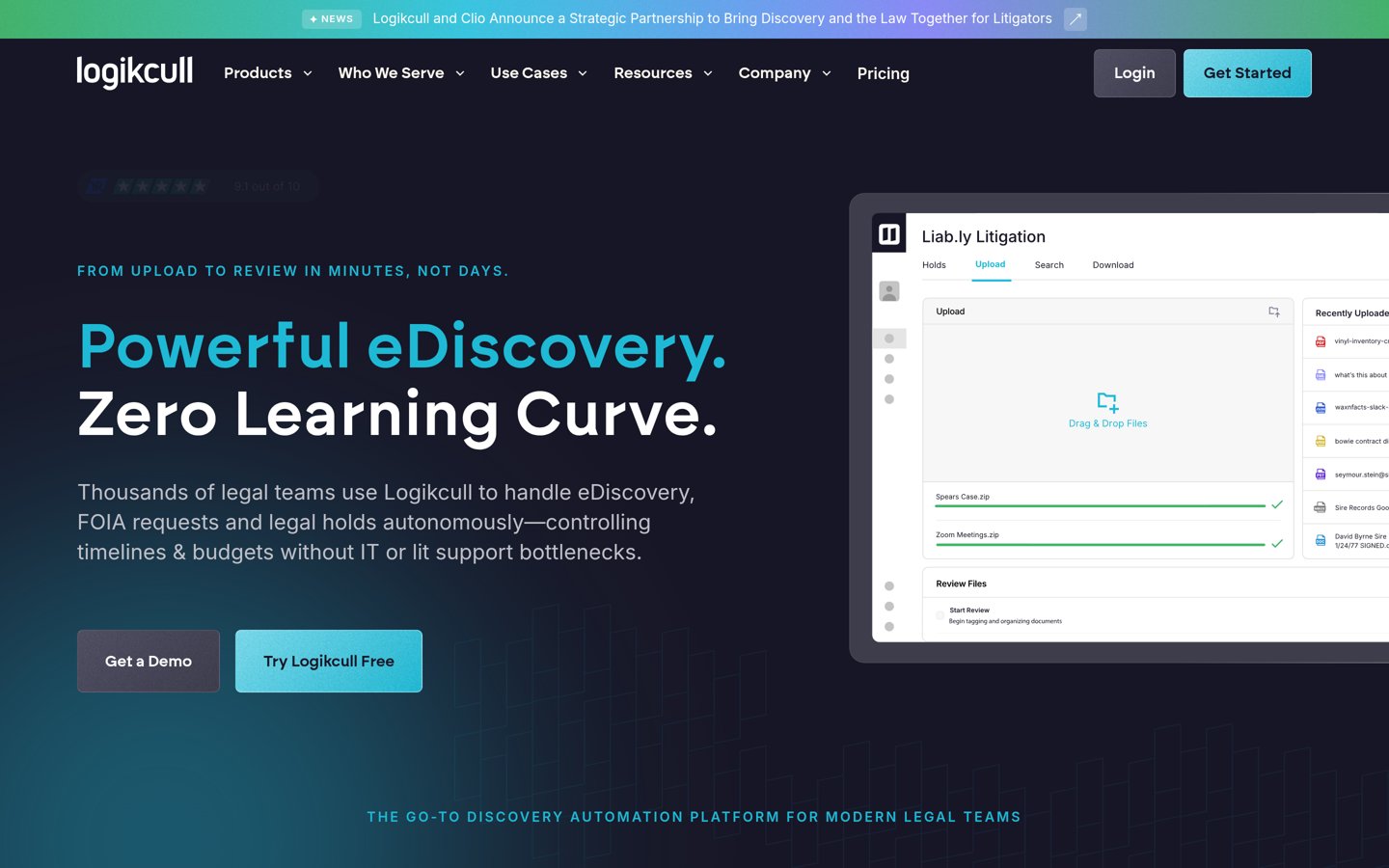
Logikcull is a cloud eDiscovery platform for collecting, searching, reviewing and producing documents, owned by Reveal. Pay-as-you-go billing charges per GB stored each month with a 10 GB minimum, unlimited users and projects, and every account includes a free sample matter.
The trade off is the quote. Logikcull publishes no per-GB rate, so the monthly cost stays unknown until you ask, and the advanced features such as Reveal AI fact-finding sit in the annual subscription. It suits small and mid-size firms that want to start a matter today without a sales cycle.
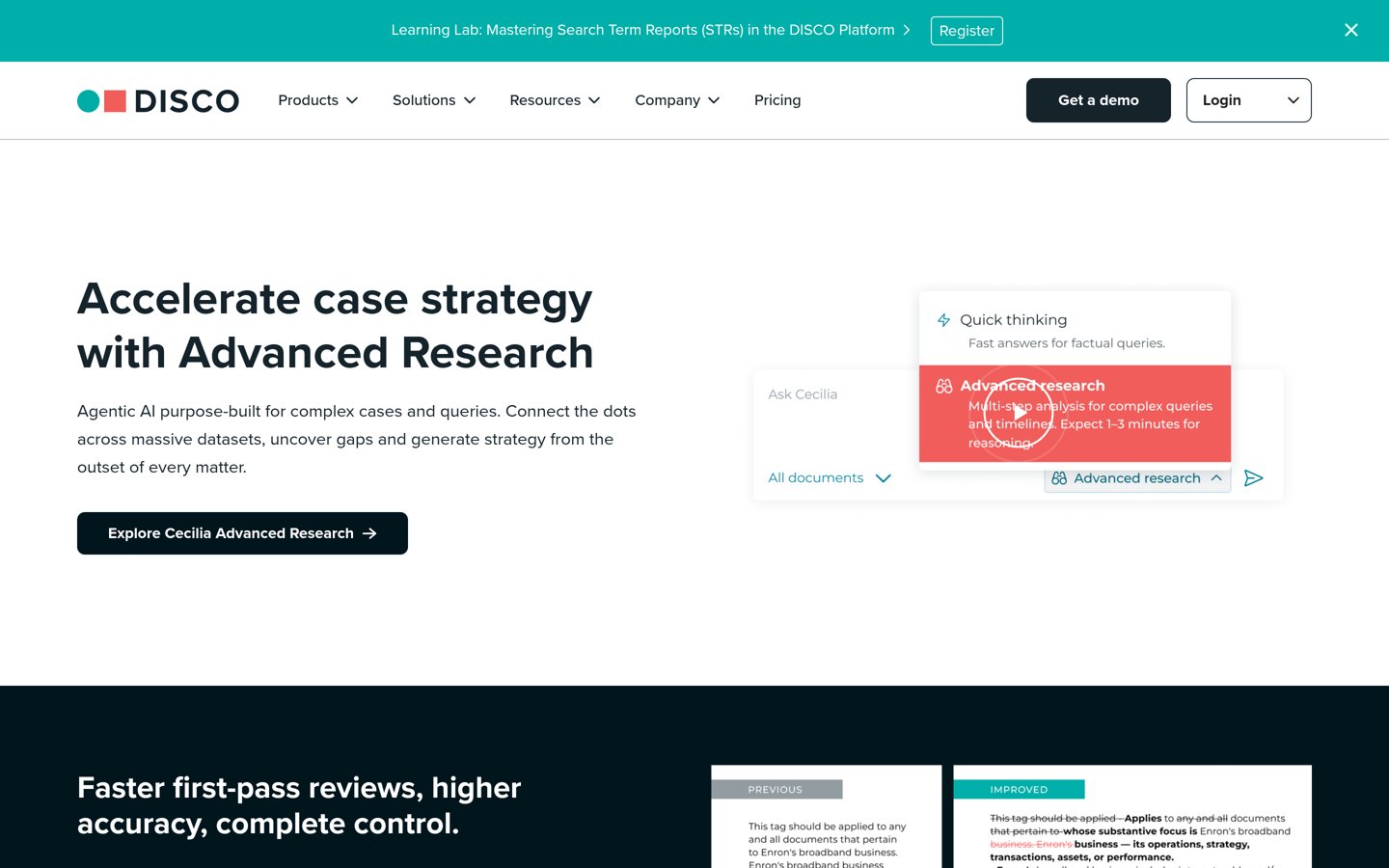
DISCO is a cloud-native eDiscovery platform with AI review tools, legal hold and deposition management in one place. Its Cecilia AI answers questions about the documents, and Auto Review with Tag Tuner runs AI-powered first-pass review. Reviewers rate it 4.6 out of 5 on G2 from 175 reviews.
The trade off is price transparency. DISCO publishes no prices, so costs come from a quote per matter, and G2 reviewers note occasional search glitches and a learning curve on advanced features. It suits teams handling large matters that want AI review plus depositions under one roof.
What we like
Cecilia AI answers questions about the documents
Auto Review speeds up first-pass review
Legal hold, review and depositions in one platform
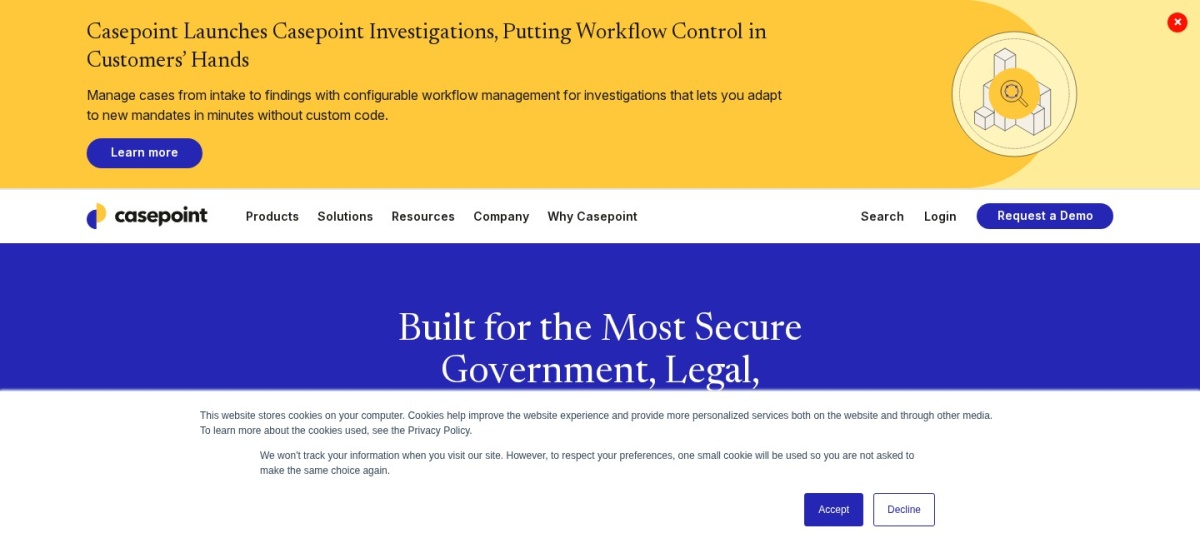
Casepoint is a cloud eDiscovery platform for legal teams, government agencies and corporations, covering review, FOIA requests, investigations and legal hold. Its CaseAssist Active Learning and Casepoint IQ AI sit on top of a platform with FedRAMP Moderate and High authorizations.
The trade off is evidence depth. Only 25 G2 reviews support its 4.7 rating, and pricing is quoted per matter with no public rate card. It suits government and regulated teams that need the strongest security authorizations and a managed project team behind the software.
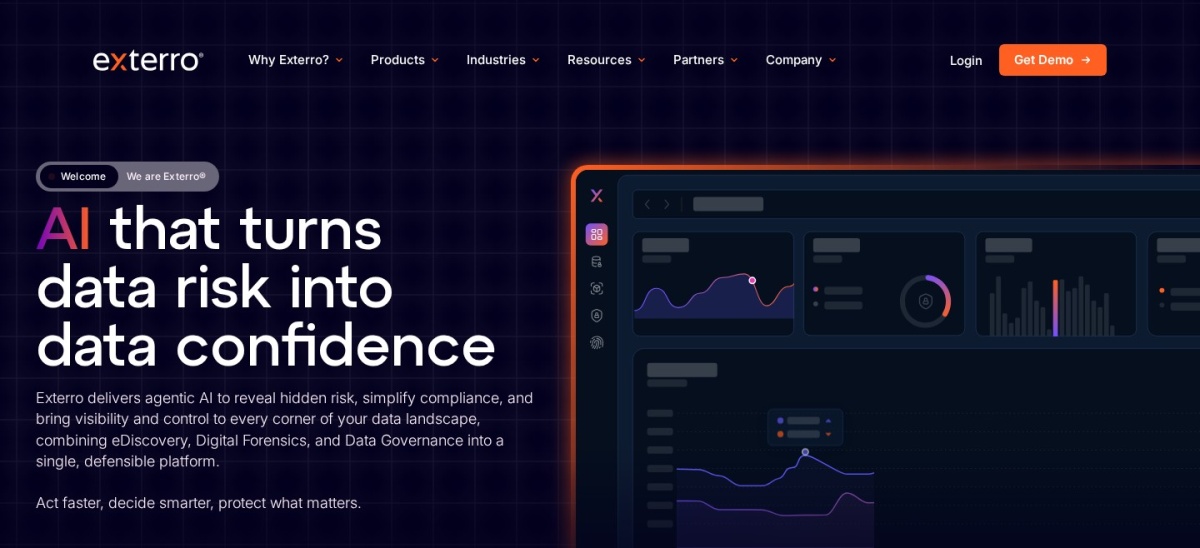
Exterro is a data risk management platform that combines eDiscovery, legal hold, digital forensics and data privacy in one system. It supports 49 languages and targets in-house legal, privacy and IT teams at larger organizations, with agentic AI workflows called ARMOUR.
The trade off is scope and setup. It is built for enterprise programs rather than single matters, G2 reviewers report implementations of one to three months, and pricing is quoted. It suits corporate legal departments that want eDiscovery beside privacy and forensics.
What we like
One platform for eDiscovery, privacy and forensics
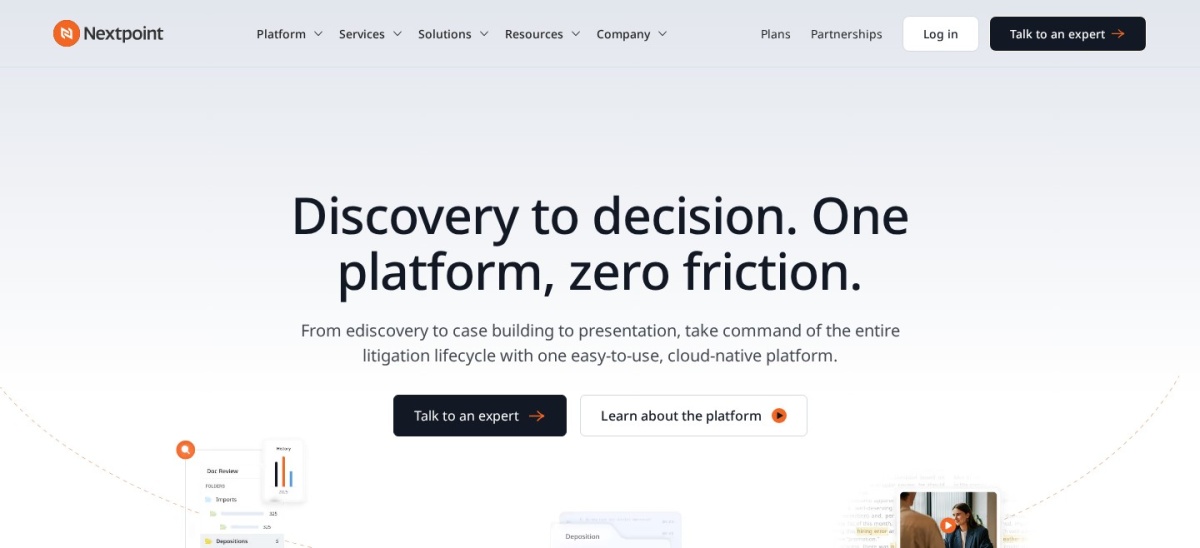
Nextpoint is a cloud platform for eDiscovery, case building and trial preparation, with document review, productions, deposition transcripts and AI search in one subscription. Pricing is flat per user at $262.50 a month, with unlimited data hosting and no per-GB charge.
The trade off is the per-user bill. A 10-user team pays $2,625 a month before any discount, and advanced features such as predictive coding are thinner than in enterprise rivals. It suits small and mid-size firms that want predictable monthly costs and trial prep included.
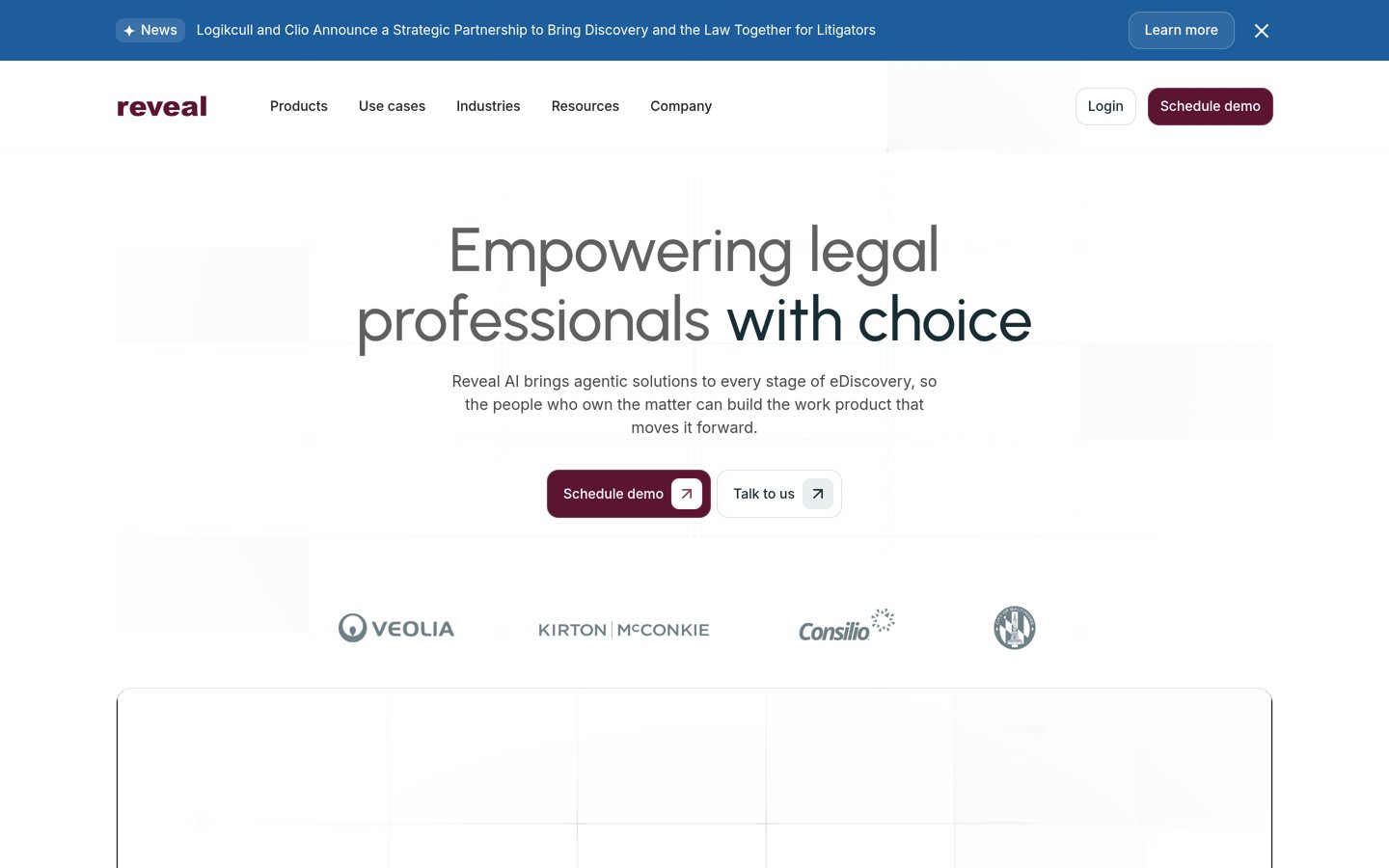
Reveal is an AI-powered eDiscovery platform from Reveal Data for processing, review and analytics, with the Brainspace visual analytics module built in. It handles more than 900 file types and 84 languages, and G2 lists cloud hosting from $25 per user per month.
The trade off is polish. Reviewers praise the speed and AI tools but report bugs after updates and three separate portals for processing, review and management. It suits teams that want strong analytics and AI at a low entry price and can tolerate rough edges.
CloudNine is an eDiscovery platform for processing, review and production, offered as SaaS or on-premise from the same unified review platform. Reviewers rate it 4.6 out of 5 on G2 and praise its ease of use, fast search and responsive support.
The trade off is evidence depth. Only 18 G2 reviews support the rating, pricing is quoted per matter, and reviewers note a dated interface and higher per-GB costs on large databases. It suits small firms that want a simpler review tool with on-premise as an option.
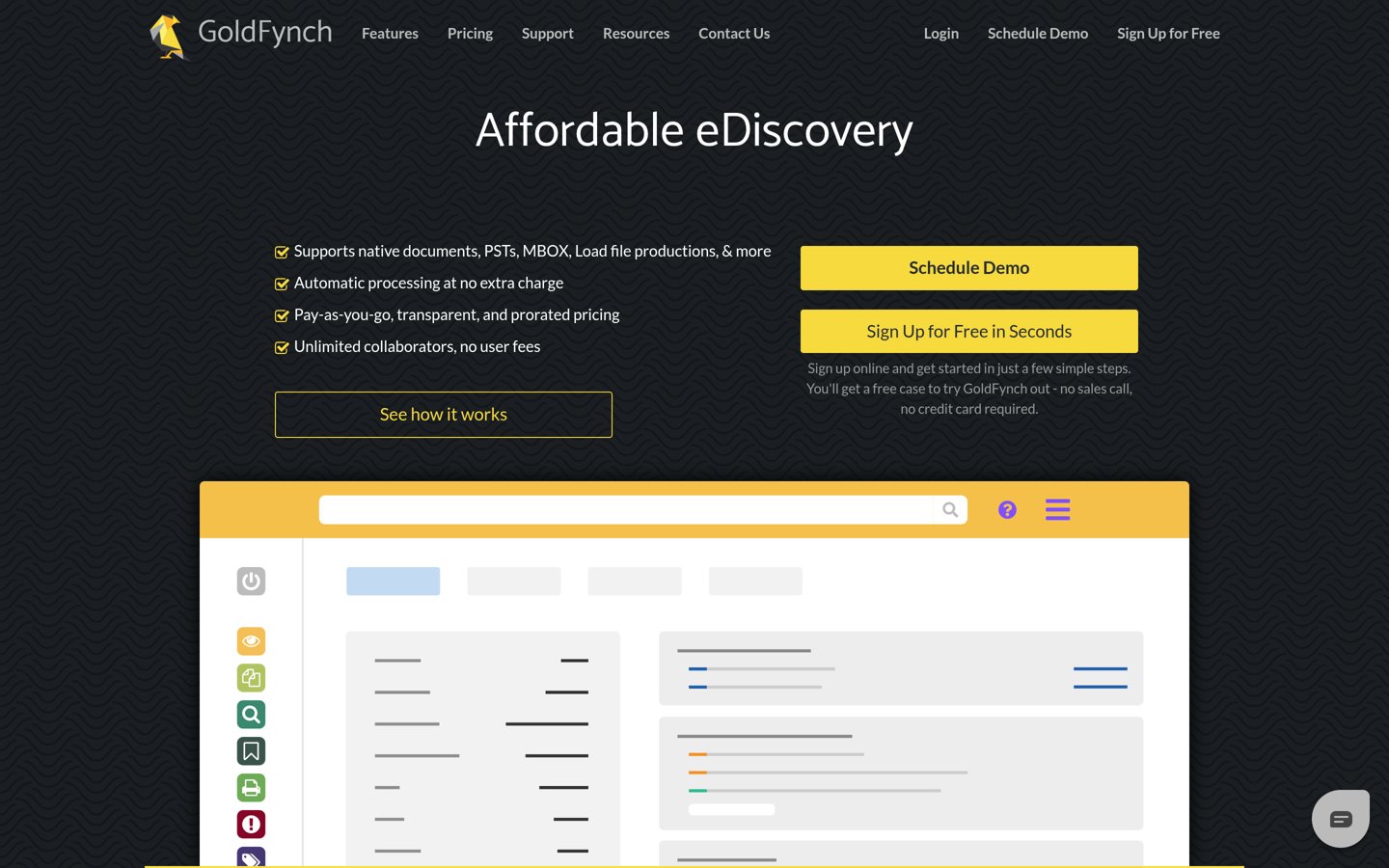
GoldFynch is a cloud eDiscovery tool for small firms and solo lawyers, with per-case pricing by storage volume instead of per-user seats. Plans start at $27 a month for a 3 GB case, users, processing, OCR and productions are included, and the first case under 512 MB is free to trial.
The trade off is scale and depth. Costs rise directly with data volume, there is no near-duplicate detection, and the 5.0 G2 rating rests on only 6 reviews. It suits a small firm running a single matter that needs real eDiscovery without an enterprise contract.
Five tools in this list publish no price: Logikcull, DISCO, Casepoint, Exterro and CloudNine. Expect a quote that depends on data volume, user count and matter length.
Ask every vendor the same three questions: what is charged per GB, what is charged per user, and what AI features cost extra. The answers decide the real bill more than any headline rate.
Get the quote in writing with the billing unit named. Per-GB hosting, per-user seats and flat matter fees produce very different invoices for the same case.
How we chose
We started from the eDiscovery tools G2 lists as Relativity alternatives, then kept the nine with a public G2 rating and an established user base, from Everlaw at 780 reviews to GoldFynch at 6.
Prices come from each vendor's pricing page and G2's vendor-supplied pricing, checked on 29 November 2026. Where a vendor publishes no price, the list shows a quote and says so in the text; where a vendor shows a sale, the list shows the regular price.
We left out ZyLAB ONE because its site now redirects to Reveal, its parent company, so it is no longer a separate product. No vendor paid for a place, and we do not claim to have used these tools ourselves.
How to choose a Relativity alternative
Start with your matter size, then match the billing model to it.
Count the data before you count the users. A 50 GB matter and a 5 TB matter need different tools. Per-GB billing punishes big data, while per-user billing punishes big teams.
Ask what the AI features cost. Clustering, predictive coding and summaries are bundled in some plans and charged extra in others. Get the AI price in writing before you sign.
Run the free trial or sample matter first. Logikcull includes a sample matter and GoldFynch a free trial case. Load real documents and run a real search before you commit.
Check security authorizations early. Government and regulated work may need FedRAMP or DoD authorizations that only some tools hold. Confirm it before the demo, not after.
FAQ
What is the best alternative to Relativity in 2026?
Everlaw is the best Relativity alternative for most teams. It is rated 4.7 out of 5 from 780 G2 reviews, the most in this list, and it combines AI clustering, predictive coding and document summaries at $250 per user per month.
How much do Relativity alternatives cost?
Prices range from $27 a month for a small GoldFynch case to $262.50 per user per month for Nextpoint and $250 per user per month for Everlaw. Five tools publish no price and quote per matter, so expect a custom quote for Logikcull, DISCO, Casepoint, Exterro and CloudNine.
Is there a free alternative to Relativity?
There is no free Relativity alternative with a permanent free plan. GoldFynch offers one free trial case under 512 MB, Logikcull includes a free sample matter, and most others offer a demo, so you can run a real case before paying.
Which Relativity alternative is best for small firms?
GoldFynch is the best pick for a small firm on a tight budget, starting at $27 a month for a 3 GB case with unlimited users. Logikcull is the next step up, with pay-as-you-go billing per GB and no user fees.
Everlaw vs Logikcull: which is better?
Everlaw is better for large, complex matters, with the highest review count at 780 and deeper AI tools. Logikcull is better for starting fast and controlling spend, with pay-as-you-go billing, a 10 GB minimum and unlimited users.
Do I need to contact sales to buy a Relativity alternative?
For five of the nine tools, yes. Logikcull, DISCO, Casepoint, Exterro and CloudNine publish no price and sell by quote. Everlaw, Nextpoint, Reveal and GoldFynch all list a starting price, so you can budget before the first sales call.
SaaS SEO and WordPress specialist with about 8 years of experience. Rakib compares WordPress plugins, themes, hosting and software using public pricing, documentation and user reviews. See how we rank.