eMoney is the best porfolio management platform for advisory firms, rated 4.7/5 on G2 from 68 reviews, with planning, aggregation and a client portal in one login. Pick YCharts for research-led portfolio work, or Ziggma if you track your own holdings and want a free plan with paid tiers from $6.99 a month.
How we make this list: we compare pricing pages, product documentation and public user reviews, then re-check every price before each update. No product paid for a place. Disclosure.
eMoney is the top advisor pick at 4.7/5 on G2 from 68 reviews, but every package is quoted, so firms cannot budget without a sales call.
YCharts matches that 4.7 rating from 146 reviews, yet its cheapest Analyst seat costs $3,000 a year.
Morningstar Direct Advisory Suite carries the biggest review base here, 302 G2 reviews at 4.1/5, and no published price.
Three tools have free plans: Ziggma, Seeking Alpha and Sharesight, with paid tiers starting at $6.99 a month billed yearly.
Addepar's 4.1 and Sharesight's 3.5 both rest on tiny review counts, 5 and 1, so treat those scores as weak evidence.
How do you choose a porfolio management platform?
The first choice is who the platform is built for. Advisor systems run many client portfolios with reporting, billing and portals, while trackers serve one investor and focus on performance, dividends and tax records.
Published prices are rare at the advisor end. eMoney, Morningstar and Addepar all sell by quote, so a firm should plan for demos and a negotiated first-year cost instead of a checkout page.
Review counts matter more than scores here. Morningstar and YCharts are the only tools with more than 100 G2 reviews, while Addepar has 5 and Sharesight has 1, so small-sample scores deserve extra doubt.
A free tier is the cheapest way to learn a tracker. Ziggma, Seeking Alpha and Sharesight all let you start free, and the lowest paid tier in the list is $6.99 a month billed yearly.
eMoney is a planning-first platform for advisory firms, built around goals-based plans rather than holdings alone. It pulls accounts together through aggregation, adds cash-flow and retirement planning, stores client documents and gives clients a portal to see their own plan.
The trade off is the price tag, which eMoney does not publish. Its Plus, Pro, Premier and Enterprise packages are all sold by quote, so a firm cannot budget without a sales call. It suits firms that want planning and portfolio oversight in one place.
What we like
Top advisor-platform rating here, 4.7/5 on G2
Goals-based planning, aggregation and portal together
YCharts is a research workstation for advisors and analysts, built for charting, screening and client-ready reports. It covers stocks, funds and ETFs with deep fundamental data, plus an Excel add-in and an AI assistant for faster research.
The trade off is the entry price. The Analyst plan costs $3,000 a year for the first seat, and the fuller Professional plan is $6,300, so it is priced for firms, not individuals. It suits research-led advisors who present portfolios to clients.
What we like
4.7/5 on G2 from 146 reviews
Strong charting, screening and report builder
Excel add-in and AI research assistant
Watch out for
No free plan; cheapest seat is $3,000 a year
Alternative-asset data is thinner than the rest
Analyst is $3,000 a year; Professional adds the Excel add-inVisit ycharts.com
03
Morningstar Direct Advisory Suite
4.1/5on G2 (302 reviews, checked Nov 2026)
PricingCustom/yr
Best research depth for advisors
Free planNo
Cheapest paidQuote only
G2 reviews302, rated 4.1/5
Fund researchAnalyst ratings, X-Ray
morningstar.com
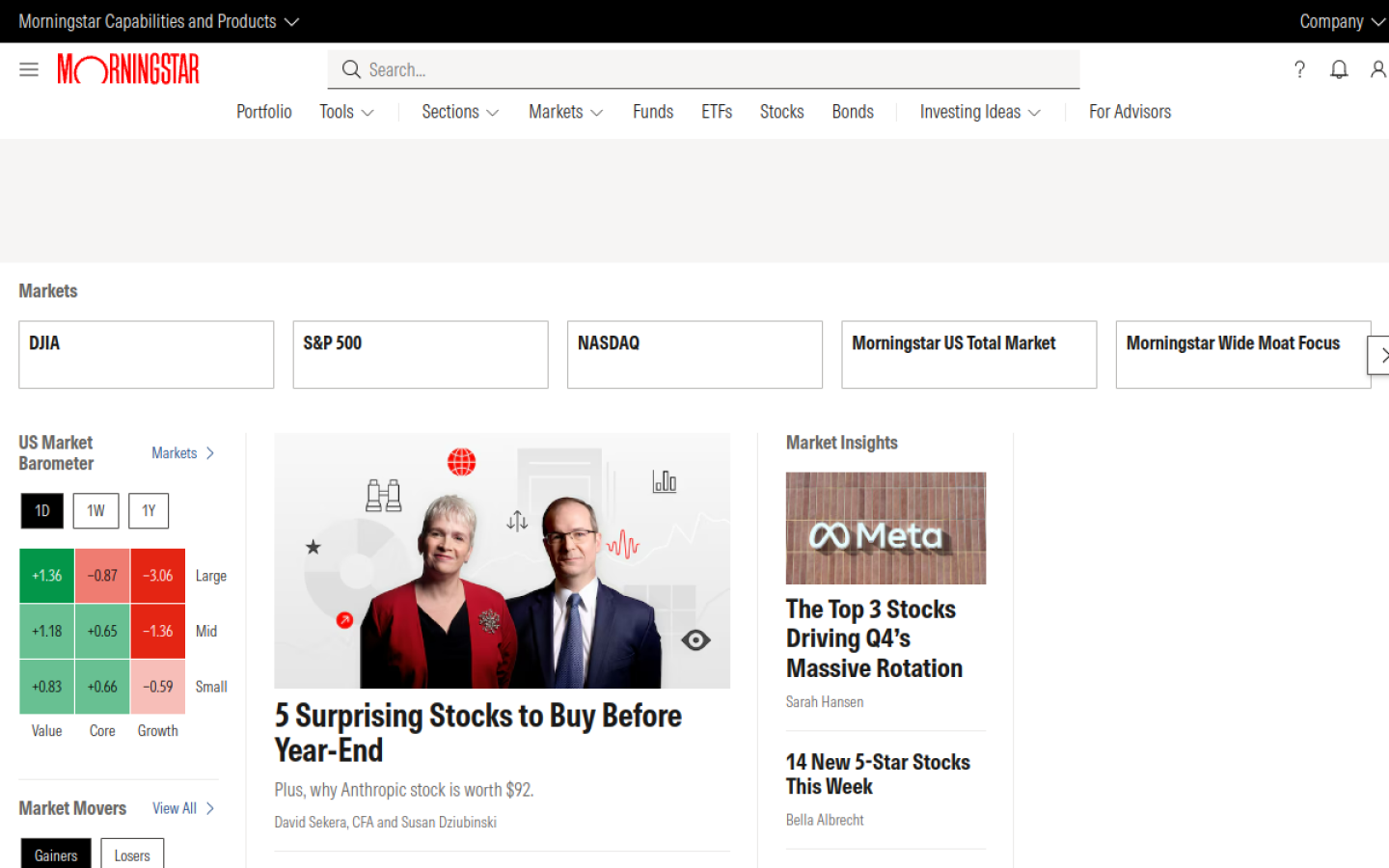
Morningstar Direct Advisory Suite homepage, captured Nov 2026.
Morningstar Direct Advisory Suite is the research-heavy pick for advisors who live in fund data. It covers fund and ETF analysis, model portfolios, portfolio X-Ray reports and manager research, with the largest review base in this list.
The trade off is usability and price. G2 reviewers praise the data but call the interface hard to navigate, and Morningstar sells the suite by quote with no published price. It suits firms that need the deepest fund research and can live with a learning curve.
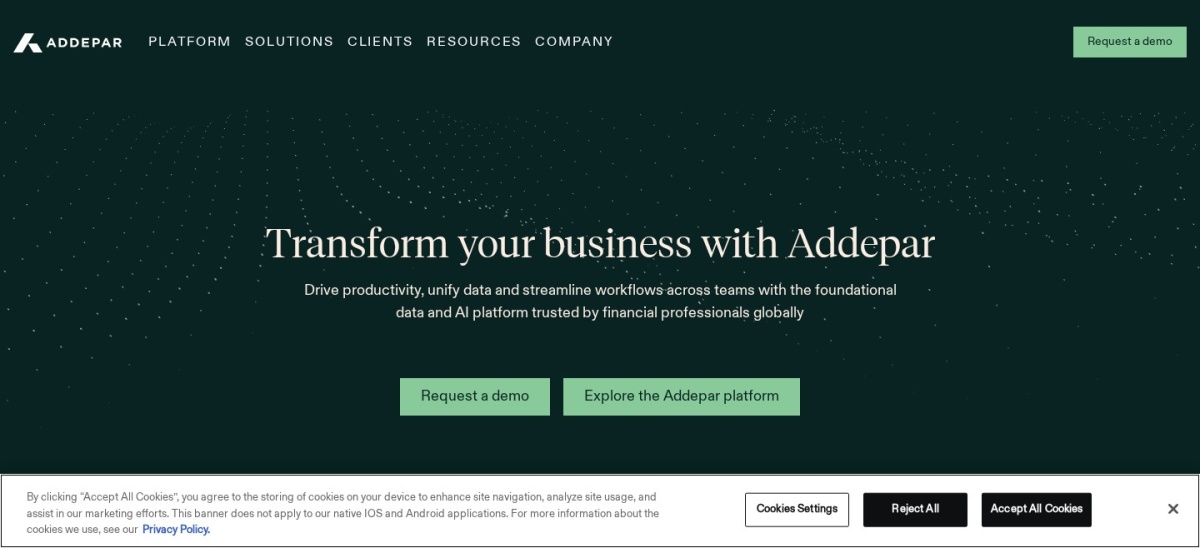
Addepar is the platform for complex wealth: family offices, private banks and advisors with public and private holdings in one view. It aggregates accounts, tracks alternatives and multi-currency positions, and builds custom reports for clients.
The trade off is that almost everything about buying it is opaque. Pricing is quoted per firm and tied to assets, and G2 reviewers report slow integration and long onboarding. It suits firms with complex books that simpler trackers cannot hold.
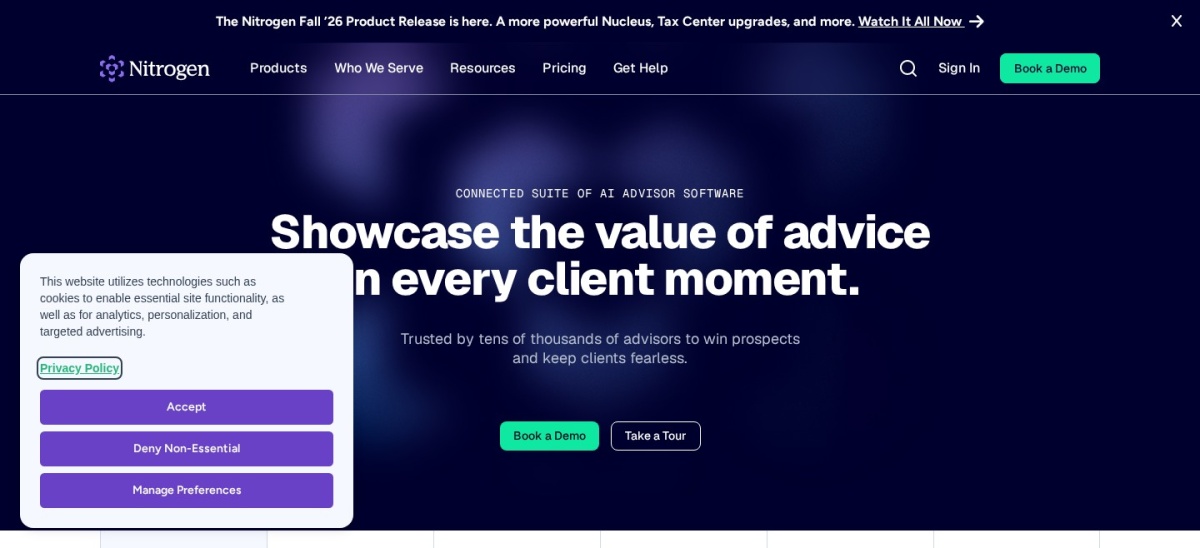
Nitrogen, formerly Riskalyze, is the risk-first advisor tool. It turns a client's risk tolerance into a Risk Number from 1 to 99, then compares the current portfolio with the proposed one and builds proposals, stress tests and retirement views around the gap.
The trade off is the modular price. Each Center starts at $99 a month on annual terms, and Risk Center is $199, so a full setup costs far more than the entry module. It suits advisors who lead with risk conversations rather than reporting.
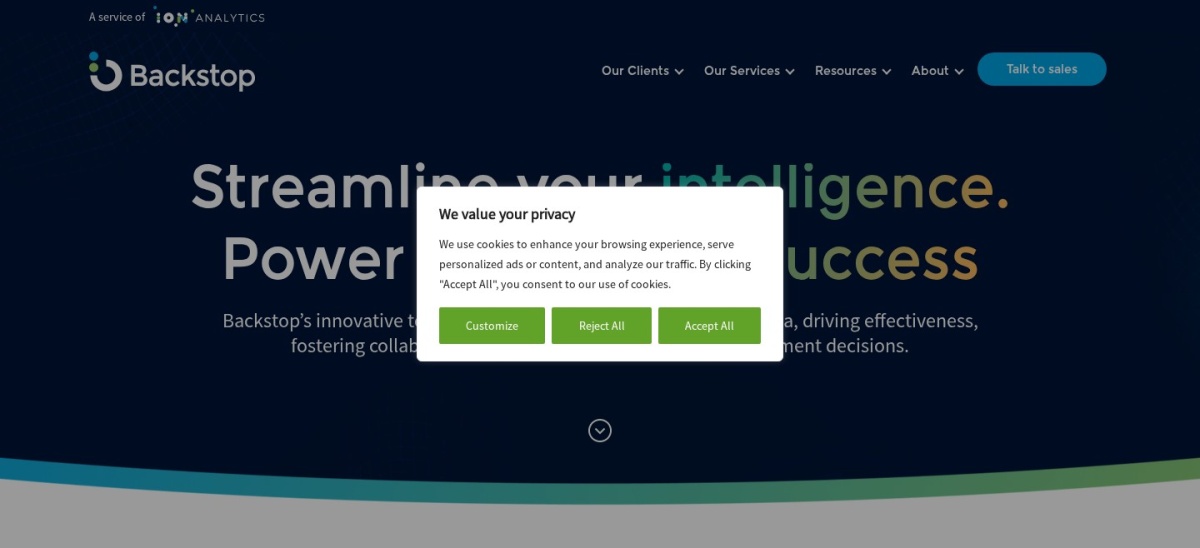
Backstop Solutions Suite homepage, captured Nov 2026.
Backstop Solutions Suite is the institutional pick, built for investment firms that manage research, fundraising and investor relations in one system. It covers multi-asset portfolio monitoring, due-diligence documents and a branded client portal.
The trade off is that it is a CRM-led system, not an accounting one. The Basic tier is listed at $3,000 a year, but the full suite is quoted, and reviewers describe the interface as dated. It suits funds and family offices that need research and investor workflows.
What we like
4.7/5 on G2 from 46 reviews
Research, CRM and investor portal in one system
Only institutional tool here with a published entry price
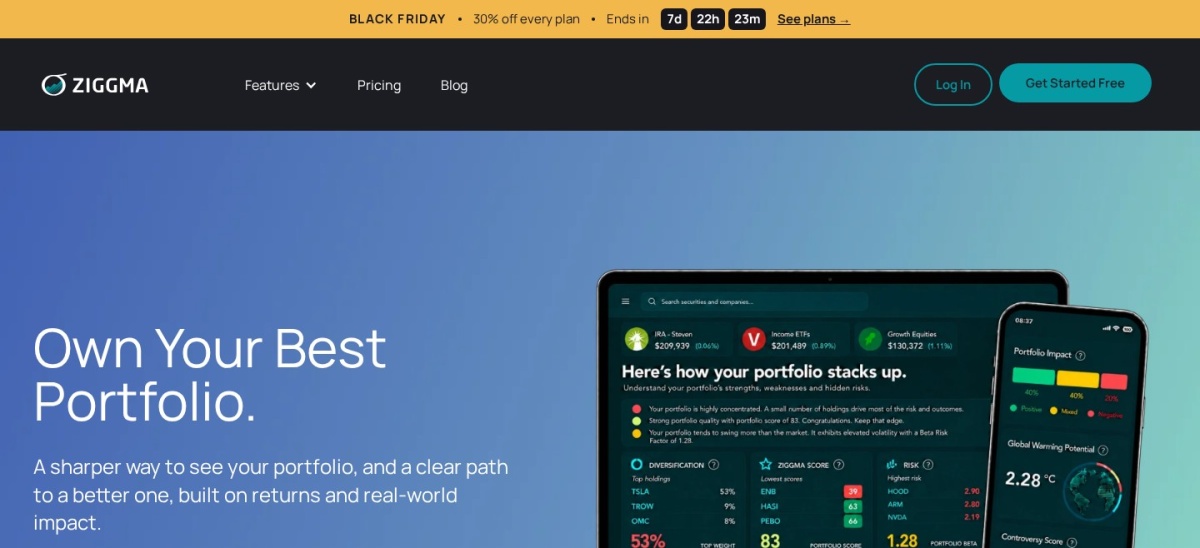
Ziggma is the cheapest way into serious portfolio tracking for individuals. Its free plan covers three virtual portfolios, and Starter at $6.99 a month billed yearly links one brokerage account and adds the Stock Score, which rates each holding from 0 to 100.
The trade off is coverage. Scores and data cover US-listed stocks only, so holdings elsewhere can be tracked but get no analysis. It suits budget-minded investors who want a clear view of diversification, risk and impact.
What we like
Free plan with three virtual portfolios
Stock Score rates holdings 0 to 100
Cheapest paid plan in this list
Watch out for
Scores cover US-listed stocks only
No IRR or benchmark comparison
Starter is $6.99 a month billed yearly; Investor is $10.49Visit ziggma.com
08
Seeking Alpha
4.1/5on G2 (31 reviews, checked Nov 2026)
Paid from$299/yr
Best for research and Quant Ratings
Free planYes, Basic
Cheapest paidPremium, $299/yr
Quant RatingsAbout 5,600 stocks
G2 reviews31, rated 4.1/5
seekingalpha.com
Seeking Alpha homepage, captured Nov 2026.
Seeking Alpha is the research-led pick for individuals, built around Quant Ratings that cover about 5,600 stocks, plus contributor analysis, screening and portfolio tools. The free Basic plan gives limited access, and Premium is $299 a year.
The trade off is volume and upsell. Reviewers say the daily flow of articles is hard to follow, and the platform pushes its other paid services. It suits investors who want crowd and quant research beside their own holdings.
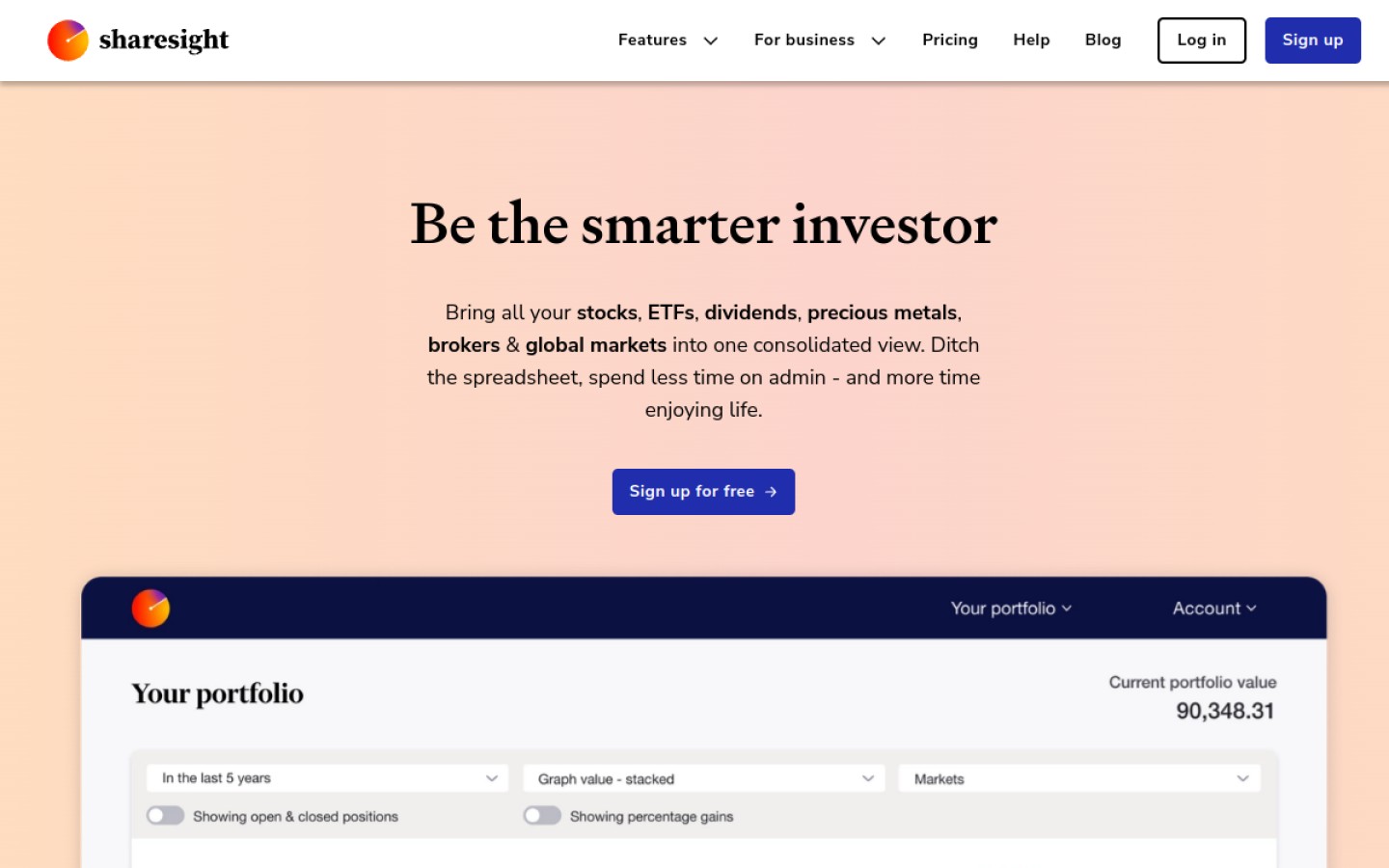
Sharesight tracks a portfolio the way an accountant would: every trade, dividend, split and currency move feeds into true performance figures, and paid plans turn the same data into tax reports.
The trade off is thin social proof and tight caps. The 3.5 G2 score rests on one review, the free plan holds 10 investments, and Starter at $7 a month billed yearly allows 30. It suits investors who care most about accurate returns and tax-ready reports.
Firms buy a system, individuals buy a tracker. Advisor platforms bundle client reporting, billing, trading and compliance into one contract, which is why they quote instead of listing a price.
Trackers are simpler and cheaper by design. One person pays a flat monthly or yearly fee, usually with a free tier, and the main limits are holding counts and report depth.
Match the tool to the buyer. A firm should demo two advisor platforms and compare first-year totals in writing, while an individual should test a free tier with a real portfolio before paying.
How we chose
We started from the advisor platforms and individual trackers most often named for portfolio management, then kept the nine with a public rating on G2.
Prices come from each vendor's pricing page or pricing sheet, checked on 30 November 2026. Ratings and review counts come from G2 on the same day. Where a vendor shows a sale, the list shows the regular price.
We left out tools with no public rating anywhere, including Kubera and Advyzon. No vendor paid for a place, and we do not claim to have used these tools ourselves.
How to choose a porfolio management platform
Start with who the platform is for, then check the rating base and the full first-year cost.
Work out whether you are a firm or an individual buyer. Firms need reporting, billing and client portals; individuals need performance, dividends and tax records. The two kinds of tools barely overlap.
Weigh the review count beside the rating. A 4.7 from 18 reviews is weaker evidence than a 4.1 from 302. Read a few recent reviews before you trust the number.
Ask for the second-year price before you sign. Advisor platforms quote, and individual tools discount the first year. Ask what the second year costs before you sign, and see our budgeting guide for how to frame the numbers.
Test with a real portfolio before paying. Three tools here have a free plan. Use one with a real portfolio for a week and check that your broker syncs before you pay.
FAQ
What is the best porfolio management platform in 2026?
eMoney is the best porfolio management platform for advisory firms, rated 4.7/5 on G2 from 68 reviews, with planning, aggregation and a client portal in one system. Individuals should start with Ziggma or Sharesight instead.
How much does a porfolio management platform cost?
Advisor platforms mostly sell by quote, so firms should expect a sales process and a negotiated first-year cost. Individual trackers are far cheaper, with paid plans from $6.99 a month billed yearly at Ziggma.
Is there a free porfolio management platform?
Yes. Ziggma, Seeking Alpha and Sharesight all have free plans, though each limits what you can do without paying. Ziggma's free plan covers three virtual portfolios, while Sharesight's covers one portfolio with 10 holdings.
Which porfolio management platform is best for beginners?
Ziggma is the easiest starting point for an individual investor, with a free plan, a stock score for each holding and paid tiers from $6.99 a month. Sharesight is the better pick if tax reports matter more than scores.
eMoney vs YCharts: which is better for advisors?
eMoney is better for firms that lead with financial planning, since it combines goals-based plans, aggregation and a client portal. YCharts is better for research-led work, with deeper charting, screening and client-ready reports.
Do I need an advisor platform or just a tracker?
A tracker is enough if you only follow your own holdings, dividends and performance. An advisor platform is for firms managing client money, where reporting, billing and client portals are part of the job.
SaaS SEO and WordPress specialist with about 8 years of experience. Rakib compares WordPress plugins, themes, hosting and software using public pricing, documentation and user reviews. See how we rank.