Rancher is the best Portainer alternative for teams running Kubernetes across several clusters, with a free open-source edition rated 4.4 out of 5 on G2. Docker Desktop fits local development at $9 a month, while Qovery suits teams that want managed deploys without running Kubernetes by hand.
How we make this list: we compare pricing pages, product documentation and public user reviews, then re-check every price before each update. No product paid for a place. Disclosure.
Rancher is the closest free replacement for multi-cluster work: open source, rated 4.4/5 on G2, with paid support by quote.
Docker Desktop is the cheapest paid pick at $9 a user a month, but it only manages containers on your own machine.
Qovery is the only managed PaaS here, yet Starter costs $299 a month, about 33 times Docker Pro.
OpenShift, GKE and EKS all rate 4.5/5 on G2, but each ties you to its vendor's cloud and billing.
AKS and ECS charge nothing for the control plane, so small Azure or AWS teams can start free.
How do you choose the best Portainer alternatives?
Portainer is a window onto containers, not a deployment platform. It shows stacks, volumes and networks, but repeatable deploys, domains and SSL still need other tools, which is why teams look for an alternative once shipping gets serious.
Start from where your containers run today. A single server needs little more than a desktop tool or a small web UI, and a VPS setup keeps that option cheap and simple.
Kubernetes changes the answer completely. Once you run several clusters, access control, policy and upgrades matter more than a pretty container list, and Rancher, OpenShift or a managed cloud service fits better than another Docker UI.
Price spreads are wide, so check what the headline covers. Docker Pro costs $9 a user a month while Qovery Starter costs $299 a month, and the managed Kubernetes services charge per cluster hour plus nodes and storage.
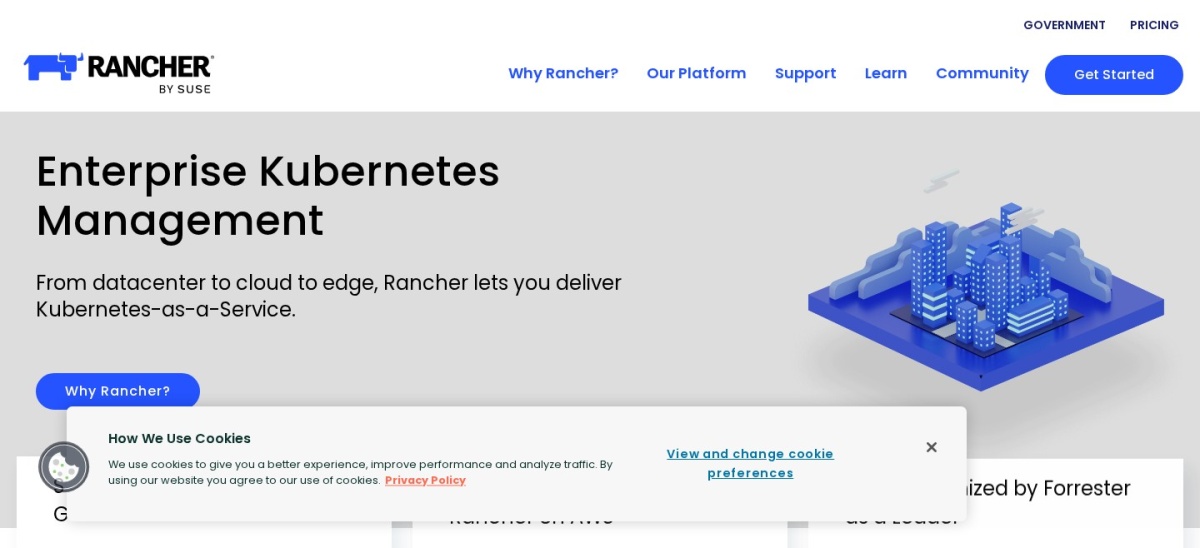
Rancher is an open-source platform from SUSE for running Kubernetes as a service across data centres, clouds and edge sites. It is used by more than 30,000 teams and manages over 5.2 million containers, with one login, central access control and cluster provisioning from a single console.
The trade off is weight. Rancher needs its own management cluster and a team that knows Kubernetes, and paid Rancher Prime support is priced by quote rather than published. It suits platform teams running several clusters who need central control more than a simple Docker view.
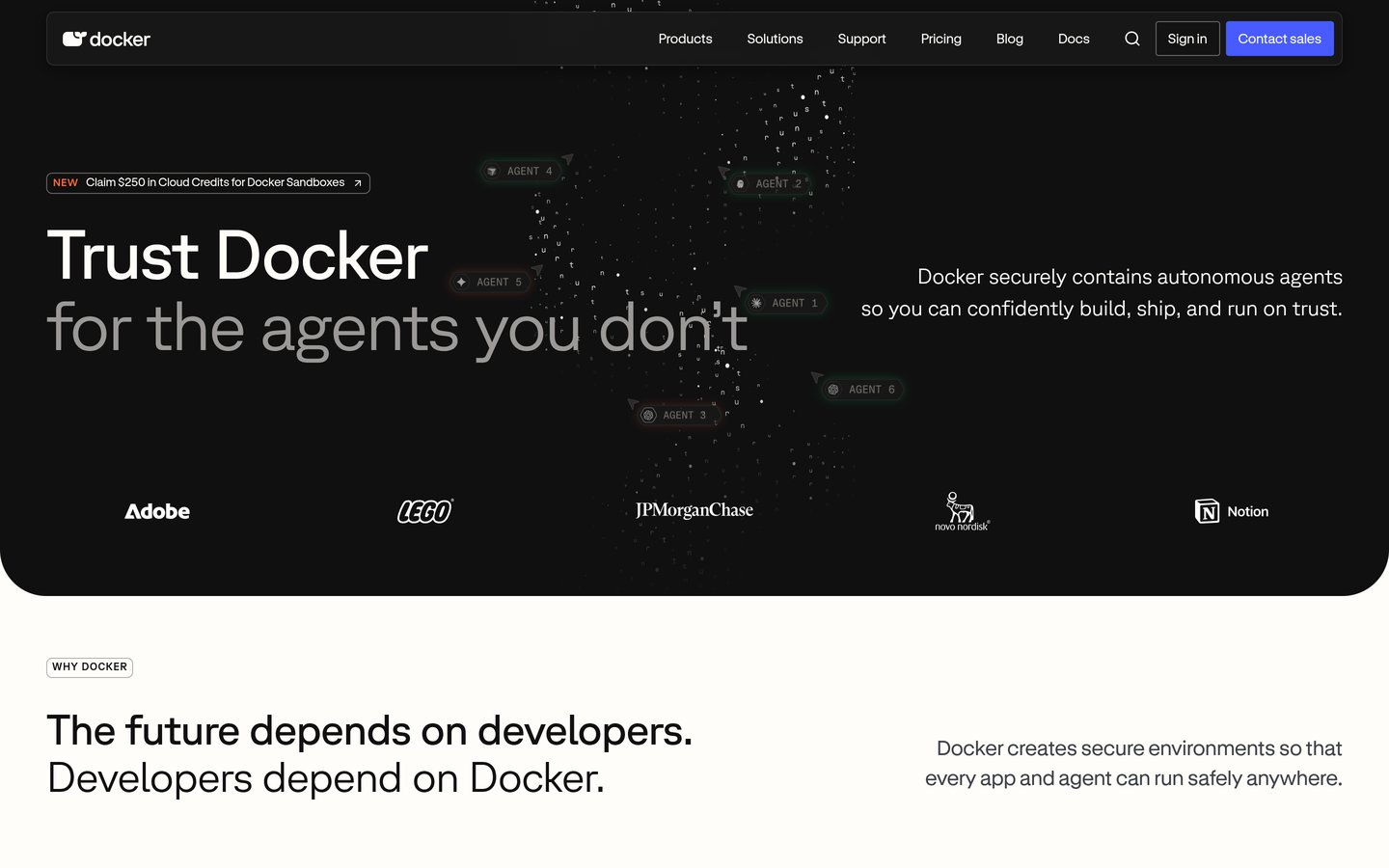
Docker Desktop is the official desktop app for building and running containers on Mac, Windows and Linux. The free Personal plan covers local development with Docker Engine, Compose, volume management and built-in Kubernetes on one machine.
The trade off is scope. Docker Desktop manages containers on your own machine, not fleets of remote servers, and the free plan is limited to one user. Pro costs $9 a user a month billed yearly and adds unlimited private repos. It suits developers who want a local container workspace.
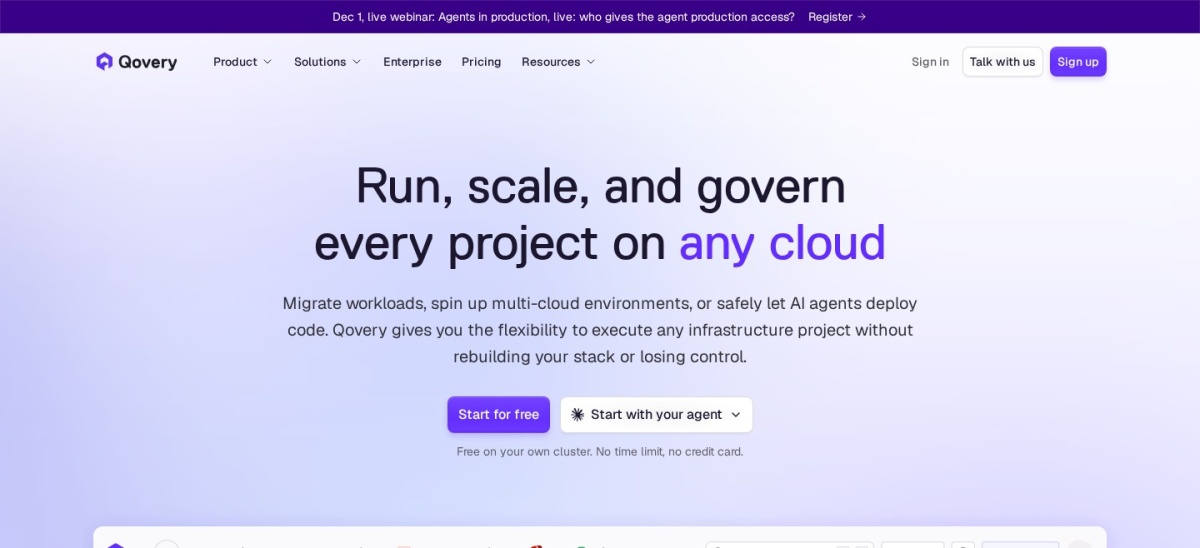
Qovery is a platform that deploys applications to Kubernetes in your own cloud account on AWS, Google Cloud, Azure or Scaleway. The free plan covers 3 users, 1 cluster and 1,000 deployment minutes a month, with preview environments for every pull request.
The trade off is cost. Starter costs $299 a month billed yearly for 3 users and 1 cluster, and extra deployment minutes cost $0.16 each past 3,000 a month. It suits small teams that want managed deploys without running Kubernetes by hand.
What we like
Free plan with no time limit or credit card
Published prices for every paid plan
Preview environments for every pull request
AI agents do not consume user seats
Watch out for
Starter is capped at 3 users and 1 cluster
Your cloud bill stays separate from Qovery
Deployment-minute overages add up for busy teams
Growth adds more users, clusters and a kickoff sessionVisit qovery.com
04
Red Hat OpenShift
4.5/5on G2 (306 reviews, checked Nov 2026)
Paid from$0.076/hr
Best enterprise Kubernetes platform
Free tierDeveloper Sandbox
Managed from$0.076/hr
Built-in CI/CDYes
Paid editionsBy quote
redhat.com
Red Hat OpenShift homepage, captured Nov 2026.
Red Hat OpenShift is an enterprise Kubernetes platform with a web console, built-in CI/CD and security controls. A free Developer Sandbox lets one developer try it, and managed clusters start from $0.076 an hour on reserved terms.
The trade off is complexity and price. Self-managed editions are priced by quote, and OpenShift carries far more moving parts than a simple container UI. It suits large teams that need certified Kubernetes with support and compliance controls.
Google Kubernetes Engine homepage, captured Nov 2026.
Google Kubernetes Engine is Google Cloud's managed Kubernetes service, with Autopilot mode removing node management. Google gives a $74.40 monthly credit per billing account, which covers one cluster, and the cluster fee is $0.10 an hour after that.
The trade off is lock-in and billing. Workloads run on Google Cloud, and node and storage costs sit on top of the cluster fee. It suits teams already on Google Cloud that want managed Kubernetes with autoscaling.
Amazon EKS is Amazon's managed Kubernetes service, running the control plane for $0.10 an hour per cluster. It plugs into IAM, CloudWatch and other AWS services, and supports EC2 and Fargate compute.
The trade off is cost and setup. There is no free tier, and EKS expects comfort with AWS networking and IAM. It suits teams already running workloads on AWS that need managed Kubernetes.
Azure Kubernetes Service homepage, captured Nov 2026.
Azure Kubernetes Service is Microsoft's managed Kubernetes service with a free tier that charges no control-plane fee. It integrates with Entra ID, Azure Monitor and other Azure services, with autoscaling for nodes and pods.
The trade off is the Azure tie-in. The Standard tier costs $0.10 an hour per cluster, and the best experience needs other Azure services. It suits teams already on Azure that want managed Kubernetes.
Mirantis Kubernetes Engine homepage, captured Nov 2026.
Mirantis Kubernetes Engine is an enterprise container platform that runs Kubernetes and Docker Swarm side by side from one console. It targets teams with existing Swarm workloads that also need Kubernetes, with central access control and support.
The trade off is price and age. Mirantis publishes no prices, so every deal is a quote, and Swarm support matters less as teams move to Kubernetes. It suits enterprises migrating Swarm estates to Kubernetes.
Amazon ECS is Amazon's own container orchestrator, with no charge for the control plane itself. You pay only for the EC2 or Fargate compute your tasks use, and it plugs into IAM, CloudWatch and other AWS services.
The trade off is scope. ECS is not Kubernetes, so Kubernetes tools and manifests do not carry over, and the best fit needs other AWS services. It suits AWS teams that want simple container runs without Kubernetes.
Dockge, Coolify, Dokploy, Komodo and Yacht are the names most Portainer users ask about first. They are free, open source and closer to Portainer than any Kubernetes platform in this list.
They are not in the ranked list because none of them has a public rating on G2, Capterra or Trustpilot, and this list only ranks tools with a published user rating. If a rating source covers them later, they belong near the top for single-server use.
For now, treat them as the shortlist for a home lab or a single VPS, and pick from the ranked list above when you need team access, several servers or managed Kubernetes.
How we chose
We started from the tools named most often as Portainer replacements, then kept only those with a published rating on G2, so every pick below carries a user rating and review count.
Prices come from each vendor's pricing page, checked on 29 November 2026. Rancher, Docker Desktop and Qovery prices were read on their official pricing pages today; the managed Kubernetes fees come from the vendors' published pricing pages. Where a vendor shows a sale, the list shows the regular price.
We left out Dockge, Coolify, Dokploy, Komodo, Yacht, Podman Desktop and Rancher Desktop, which have no public rating on G2, Capterra or Trustpilot. No vendor paid for a place, and we do not claim to have used these tools ourselves.
How to choose a Portainer alternative
Start with where your containers live, then match the tool to that setup.
Count your servers and clusters. One server needs a desktop tool or a small web UI. Several clusters need Rancher or a managed Kubernetes service.
Decide if you need Kubernetes at all. If you only run Docker Compose stacks, a Kubernetes platform adds cost and learning for no gain.
Check the free plan limits. Rancher is free and open source, Docker Personal is free for one user, and Qovery Free covers 3 users and 1 cluster. Paid plans start at $9 a month and climb to $299 a month.
Move one stack first. Move a single non-critical stack, following the same deploy steps in our GitHub Actions deploy guide, then move the rest once logs, backups and access control check out.
FAQ
What is the best free alternative to Portainer?
Rancher is the best free alternative to Portainer for most teams. It is open source with no cluster limit, rated 4.4 out of 5 from 167 G2 reviews, and it manages several Kubernetes clusters from one console with central access control.
How much does a Portainer alternative cost?
From free to $299 a month. Rancher, AKS and ECS charge nothing for the control plane, Docker Pro costs $9 a user a month billed yearly, and Qovery Starter costs $299 a month. Managed Kubernetes services add a cluster fee of about $0.10 an hour plus nodes.
Is there a free Portainer alternative for a home lab?
Yes. Rancher is free and open source, Docker Desktop Personal is free for one user, and Qovery Free covers 3 users and 1 cluster. For a single server, the free open-source UIs Dockge and Yacht are popular, but they have no public user rating.
Which Portainer alternative is best for beginners?
Docker Desktop is the easiest starting point. It runs on your own machine, includes Compose and built-in Kubernetes, and the free Personal plan covers local development. Move to Rancher or a managed service only when you need several servers or team access.
Rancher vs Docker Desktop: which is better?
Rancher is better for teams running several Kubernetes clusters, with central access control and one console for every cluster. Docker Desktop is better for local development on one machine, at $9 a user a month for Pro. They solve different problems, and many teams use both.
Do I need Kubernetes to replace Portainer?
No. If you only run Docker Compose stacks on one or two servers, a Kubernetes platform adds cost and learning for little gain. Docker Desktop covers local work, and the free UIs Dockge, Coolify and Dokploy cover single servers. Choose Kubernetes only when you run several clusters or need its scaling.
SaaS SEO and WordPress specialist with about 8 years of experience. Rakib compares WordPress plugins, themes, hosting and software using public pricing, documentation and user reviews. See how we rank.