Shortcut is the best Pivotal Tracker alternative for most former Tracker teams, with stories, epics and iterations from $8.50 per user a month and a free plan for up to 10 users. Pick Linear for fast issue tracking, or Zoho Sprints if you want the cheapest paid Agile plan at $1 per user a month.
How we make this list: we compare pricing pages, product documentation and public user reviews, then re-check every price before each update. No product paid for a place. Disclosure.
Pivotal Tracker shut down on 30 April 2025, so every tool here is a live service you can sign up for today.
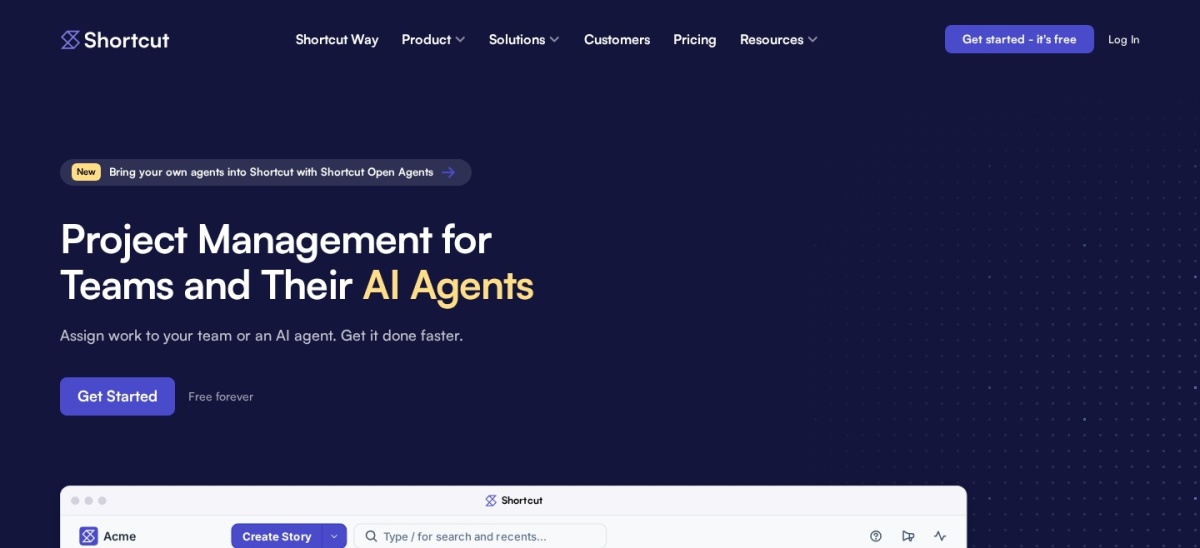
Shortcut is the closest match to Tracker: stories, epics and iterations, with a free plan for up to 10 users.
Zoho Sprints is the cheapest paid plan in this list at $1 per user a month, with sprints, backlogs and burndown charts.
Linear is the fastest option for developers, but its free plan caps at 250 issues and 2 teams.
Paid plans in this list run from $1 to $12 per user a month, and all 9 tools offer a free plan.
How do you choose a Pivotal Tracker alternative?
Pivotal Tracker is gone, so the first test is simple. Any replacement must be a live service with a backlog, small stories and sprint planning, and it must still accept new sign-ups.
The closest replacements keep Tracker's story workflow. Shortcut, Zoho Sprints and Taiga all plan work as stories grouped into epics, run time-boxed iterations and show velocity, which is what Tracker teams miss most.
Price spreads widely once you leave the free plan. Our guide on scheduling posts in WordPress shows the same discipline: plan only as much work as the team can finish, and the same idea applies to paid seats, since a $1 plan and a $12 plan differ by $1,320 a year for a 10-person team.
Free plans are not equal. Some cap users, some cap issues, and some cap projects, so check the limit that will bite your team first before you commit to a migration.
Shortcut is a project tracker built for software teams, formerly called Clubhouse, with stories, epics, iterations and a backlog that will feel familiar to Tracker users. The free plan covers up to 10 users with Kanban views, roadmaps, reports and GitHub, Slack and Figma integrations.
The trade off is reporting depth. Built-in reports are thinner than Jira, with no timeline view, and the Team plan at $8.50 per user a month is needed for WIP limits and custom workflows. It suits small development teams that want Tracker's story workflow without Jira's setup.
What we like
Closest story, epic and iteration workflow to Tracker
Linear is an issue tracker for product and engineering teams, built around fast issue creation, cycles and views. The free plan covers unlimited members with 2 teams and 250 issues, plus Slack, GitHub and API access, and Basic at $10 per user a month billed yearly removes the caps.
The trade off is structure. Linear is opinionated about workflow, running cycles instead of sprints, with less customisation than Jira, and Business at $16 a user a month adds private teams and triage. It suits small technical teams that value speed over configuration.
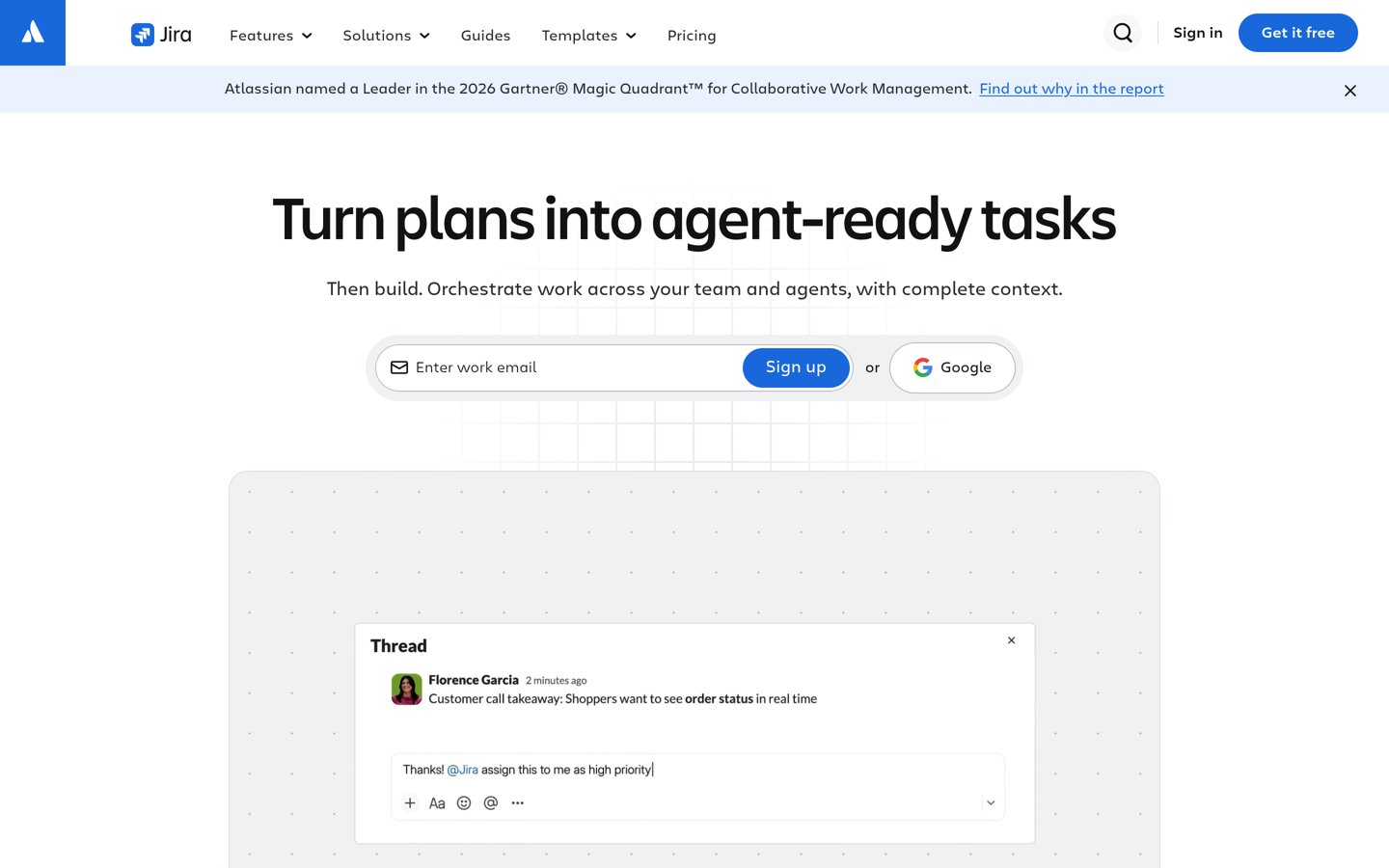
Jira is Atlassian's issue and project tracker, built for software teams running Scrum and Kanban at scale. The free plan covers up to 10 users with unlimited projects, Scrum and Kanban boards, 2 GB of storage and 150 automation runs a month.
The trade off is setup. Jira has the steepest learning curve in this list, and Standard at $8.48 per user a month is the cheapest paid plan, with Premium at $15.56 adding cross-team planning. It suits larger teams that need custom workflows, permissions and reporting.
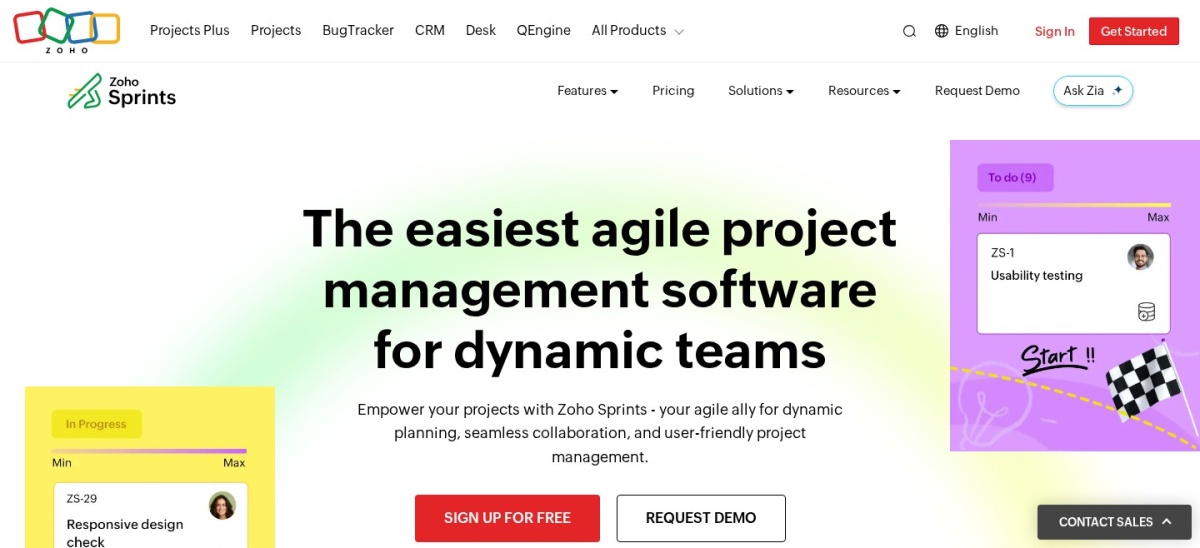
Zoho Sprints is an Agile tracker for planning backlogs, running sprints and tracking delivery with burndown charts. The free plan covers 3 users and 3 projects with 500 MB of storage, and Starter at $1 per user a month adds 50 projects, timesheets and Agile reports.
The trade off is scale. The free plan is small, and advanced features such as epics wait for Premier at $5 per user a month, while the GitHub integration draws some criticism. It suits small Agile teams that want Tracker's sprint workflow at the lowest price in this list.
What we like
Cheapest paid plan here at $1 per user a month
True sprint, backlog and burndown workflow
Simple setup, rated 4.5 out of 5 on G2
Timesheets included from Starter
Watch out for
Free plan covers only 3 users and 3 projects
Epics need the $5 Premier plan
GitHub integration is limited
Starter adds 50 projects, timesheets and reportsVisit zoho.com
05
ClickUp
4.6/5on G2 (15,600 reviews, checked Nov 2026)
Paid from$12/mo
Best all-in-one workspace
Free planUnlimited tasks and members
SprintsYes
ViewsList, board, Gantt, calendar
Paid planCore, $12/user/mo
clickup.com
ClickUp homepage, captured Nov 2026.
ClickUp is a work platform that combines tasks, docs, chat, goals and dashboards in one workspace. The free plan includes unlimited tasks and members, Kanban boards and calendar views, while Core at $12 per user a month adds unlimited storage, Gantt charts, custom fields and 1,000 automations a month.
The trade off is complexity. ClickUp does more than Tracker ever did, so new teams face a learning curve and noisy notifications, and the current page shows a $9 sale against the $12 regular price. It suits teams that want sprints plus docs and chat without buying a second tool.
monday.com is a visual work platform built around colour-coded boards, timelines and dashboards that non-developers can read at a glance. The free plan covers up to 2 seats with 3 boards, and Basic at $9 a seat a month billed yearly adds unlimited items and viewers.
The trade off is Agile depth. Basic has no automations at all, so most teams land on Standard at $12 a seat a month, and sprint planning is lighter than Shortcut or Jira. It suits mixed teams where product, marketing and support share one board.
Asana is a work management platform with list, board, timeline and Gantt views for coordinating work across teams. The free Personal plan covers up to 2 users, and Starter at $10.99 per user a month billed yearly adds timelines, dashboards, unlimited automations and unlimited free guests.
The trade off is Agile focus. Asana is a general work tool, not a developer tracker, so sprint planning and velocity reports are thinner than Shortcut or Jira, and monthly billing costs $13.49. It suits cross-functional teams that run projects with people outside engineering.
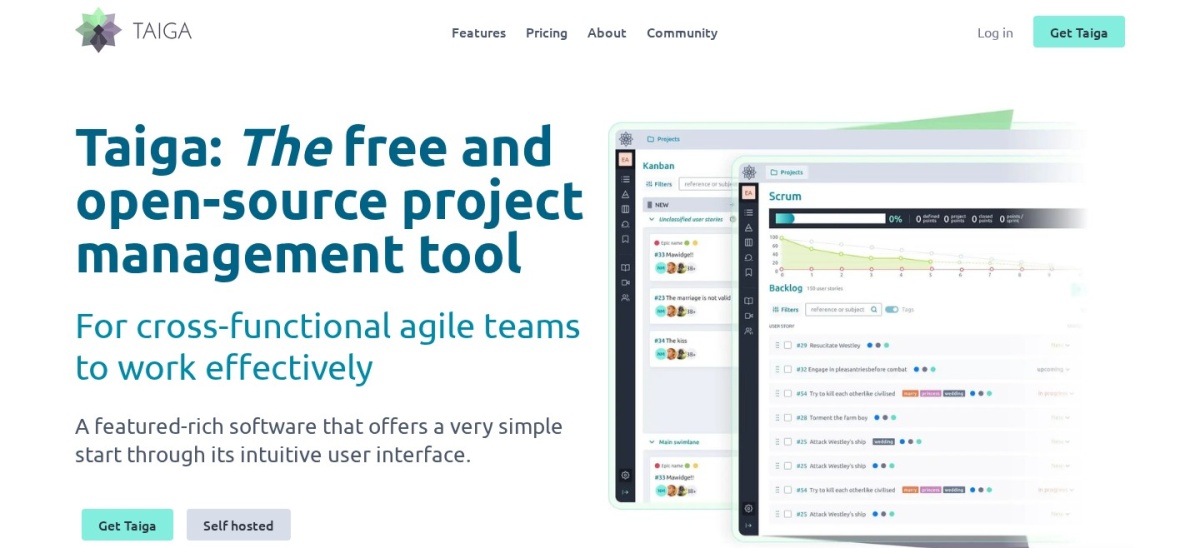
Taiga is an open-source Agile tool for Scrum and Kanban teams, released under the Mozilla Public License 2.0. The free self-hosted edition covers backlogs, sprint planning with story points, burndown charts and Kanban boards, with no user limit.
The trade off is scope. Taiga has no Gantt charts or resource planning, so it fits Agile software teams better than classic project offices. Premium costs $7 a user a month for the hosted version. It suits small development teams that want a light, strict Agile tool.
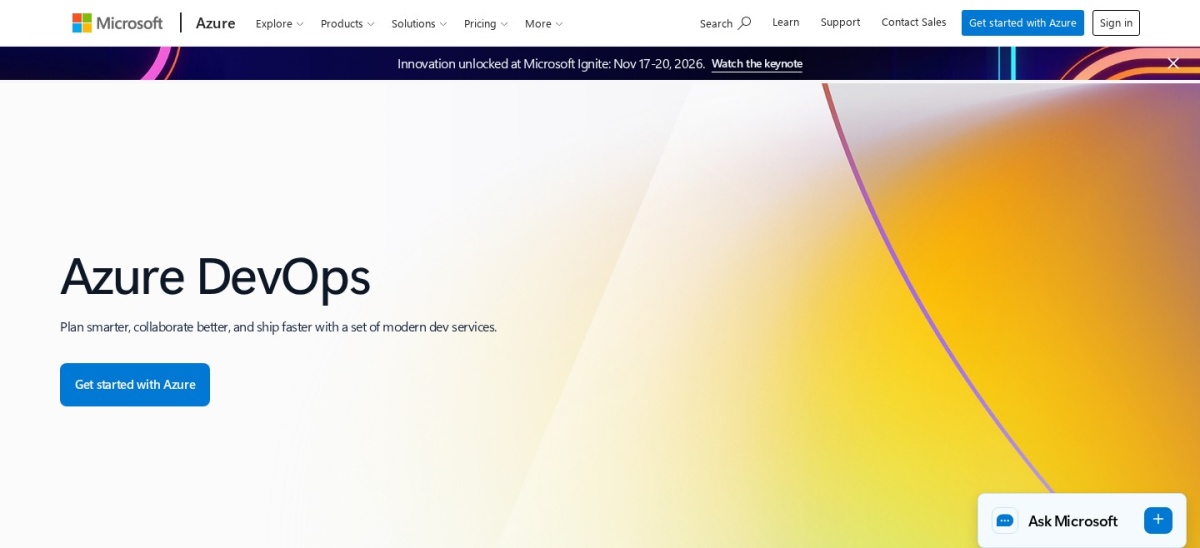
Azure DevOps is Microsoft's suite of development tools, combining Boards, Repos, Pipelines and Artifacts in one service. The first 5 Basic users are free, with unlimited private repos, 1,800 CI/CD minutes a month and 2 GiB of artifact storage, and Basic costs $6 per user a month after that.
The trade off is breadth. Azure DevOps is a full DevOps platform, not just a tracker, so small teams face setup overhead, and the 6th user triggers $6 a month for every Basic user. It suits teams already on Azure or .NET that want repos, boards and pipelines together.
Pivotal Tracker shut down on 30 April 2025. Its parent, VMware Tanzu, announced the end of life in September 2024, ended renewals and new sign-ups, and the pivotaltracker.com domain no longer resolves.
Exports ended with the service. Teams that saved a CSV export before the shutdown can still import it into most tools in this list, but there is no live service left to export from.
That is why this list only includes live replacements. Every tool here accepts new sign-ups today, and the cheapest way to move is to start with a free plan and import a small project first.
How we chose
We started from the tools most often named as Pivotal Tracker replacements, then kept only live services with a backlog, story planning and sprint or cycle support, and a published rating.
Prices come from each vendor's pricing page or G2 pricing data, checked on 29 November 2026. Ratings and review counts come from G2 on the same day. Where a vendor shows a sale, the list shows the regular price.
We left out tools with no public rating and any service that has shut down, including Pivotal Tracker itself. No vendor paid for a place, and we do not claim to have used these tools ourselves.
How to choose a Pivotal Tracker alternative
Start with what your team actually ran in Tracker, then match the replacement to that workflow.
List the Tracker features you used daily. If it was stories, epics and iterations, Shortcut or Zoho Sprints will feel closest. If it was mostly issue lists, Linear is faster.
Check the free plan limit that bites first. Shortcut caps users at 10, Linear caps issues at 250, and Zoho Sprints caps projects at 3, so pick the limit your team will not hit in a month.
Price the whole team, not one seat. Multiply the per-user price by your headcount: a $1 plan and a $12 plan differ by $1,320 a year for 10 people.
Import one real project before you commit. Bring over a saved export, run one sprint, and check the board, the burndown and the GitHub integration before you move the rest.
FAQ
What is the best Pivotal Tracker alternative in 2026?
Shortcut is the best Pivotal Tracker alternative for most former Tracker teams. It keeps the story, epic and iteration workflow, costs $8.50 per user a month on the Team plan, and offers a free plan for up to 10 users.
Is Pivotal Tracker still available?
No. Pivotal Tracker shut down on 30 April 2025, and its website no longer loads. VMware Tanzu announced the shutdown in September 2024, and exports ended with the service, so teams need a live replacement.
How much does the cheapest Pivotal Tracker alternative cost?
Zoho Sprints is the cheapest paid option in this list at $1 per user a month on Starter. It includes sprints, backlogs, burndown charts and timesheets, and its free plan covers 3 users and 3 projects.
Is there a free Pivotal Tracker alternative?
Yes. Shortcut is free for up to 10 users, Linear is free up to 250 issues, and Taiga is free to self-host with no user limit. All 9 tools in this list offer a free plan, though each caps users, issues or projects.
Which Pivotal Tracker alternative is best for small teams?
Shortcut is the best pick for small Agile teams, with a free plan for up to 10 users and the closest workflow to Tracker. Zoho Sprints is the better pick if budget matters most, at $1 per user a month.
Shortcut vs Linear: which is better for former Pivotal Tracker users?
Shortcut is better for former Tracker users who want stories, epics and iterations, since it mirrors that workflow directly. Linear is better for teams that mainly track issues and want the fastest interface, with cycles instead of sprints.
SaaS SEO and WordPress specialist with about 8 years of experience. Rakib compares WordPress plugins, themes, hosting and software using public pricing, documentation and user reviews. See how we rank.