PostgreSQL is the best of these Oracle Database alternatives: it is free and open source, with no licence fees, and is rated 4.4 out of 5 by 684 G2 reviewers. Choose Amazon Aurora for managed AWS scale, or MySQL if you want the most familiar drop-in replacement.
How we make this list: we compare pricing pages, product documentation and public user reviews, then re-check every price before each update. No product paid for a place. Disclosure.
PostgreSQL is free, open source and rated 4.4/5 by 684 G2 reviewers, with no licence fees at all.
Aurora is the highest-rated managed option at 4.5/5, but a db.r6g.large instance costs about $190 a month before storage and I/O.
MySQL is the most familiar swap, yet it is owned by Oracle, so it does not remove Oracle from your stack.
SQL Server Standard costs $3,945 per 2-core pack, while MariaDB SkySQL starts at $65 a month.
TiDB leads on rating at 4.6/5, but its Essential tier starts at about $400 a month.
How do you pick the right Oracle Database alternative?
Oracle Database is priced for enterprises, not small teams. Standard Edition 2 lists at $17,500 per socket, before 22% annual support, which is why many teams look for a cheaper relational database first.
The closest swaps keep SQL and ACID transactions. PostgreSQL, MySQL, MariaDB and TiDB all speak standard SQL, so most queries move with small changes, while MongoDB Atlas needs a move to documents.
Managed cloud services trade licence fees for hourly bills. Our guide on what MySQL is explains the engine behind two picks in this list, and Aurora, Atlas and TiDB all bill by usage, so a quiet database costs far less than a busy one.
Free plans are real, but they have limits. PostgreSQL and MariaDB are free outright, while Atlas, TiDB and Db2 cap their free tiers by storage, so check the limit before you migrate production data.
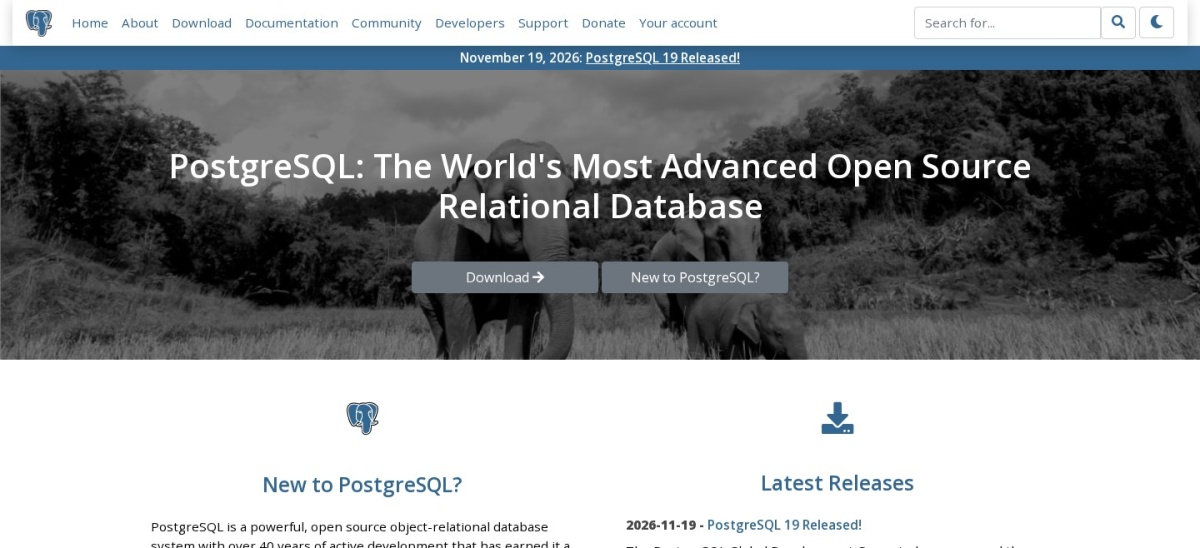
PostgreSQL is a free, open source object-relational database with no licence fees at all. It supports advanced SQL, JSONB, full-text search and a large extension library, and version 19 was released in November 2026. It runs on Linux, Windows and macOS, and managed versions are available from every major cloud.
The trade off is that you manage it yourself. There is no vendor support line or managed backup unless you pay a cloud provider or a support firm, so upgrades, tuning and failover are your team's work. It suits teams that want full control and zero licence cost.
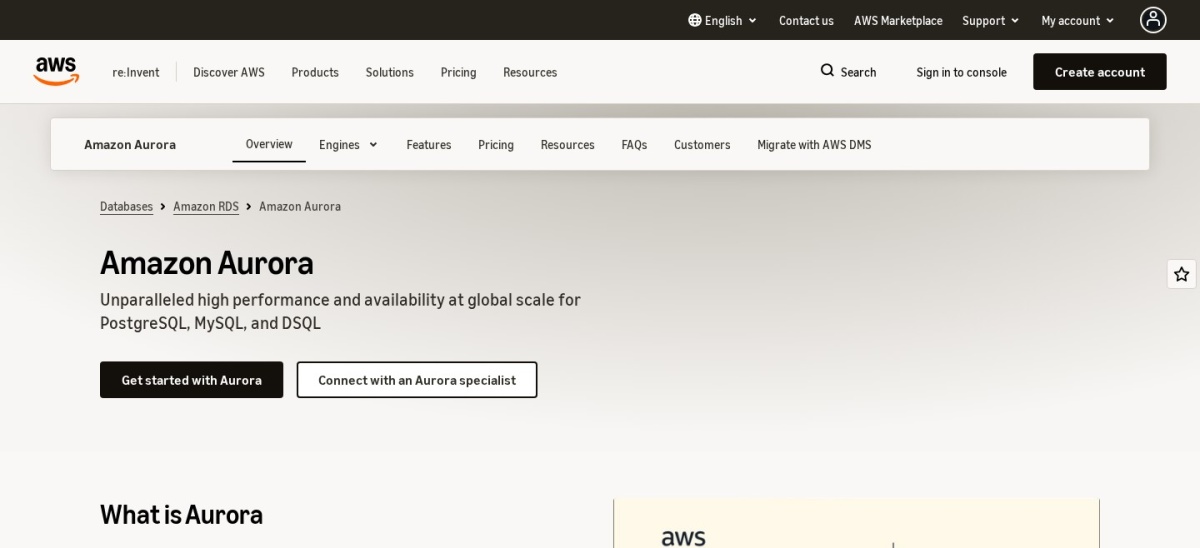
Amazon Aurora is a managed MySQL- and PostgreSQL-compatible database on AWS. It replicates data six ways across three Availability Zones, scales storage automatically and claims up to 5x MySQL throughput and 3x PostgreSQL throughput over standard RDS. A db.r6g.large instance costs about $0.26 an hour.
The trade off is the bill. Storage costs $0.10 per GB-month and Standard charges $0.20 per million I/O requests on top of instance hours, so busy workloads can cost more than plain RDS. It suits AWS teams that need fast failover and read scaling.
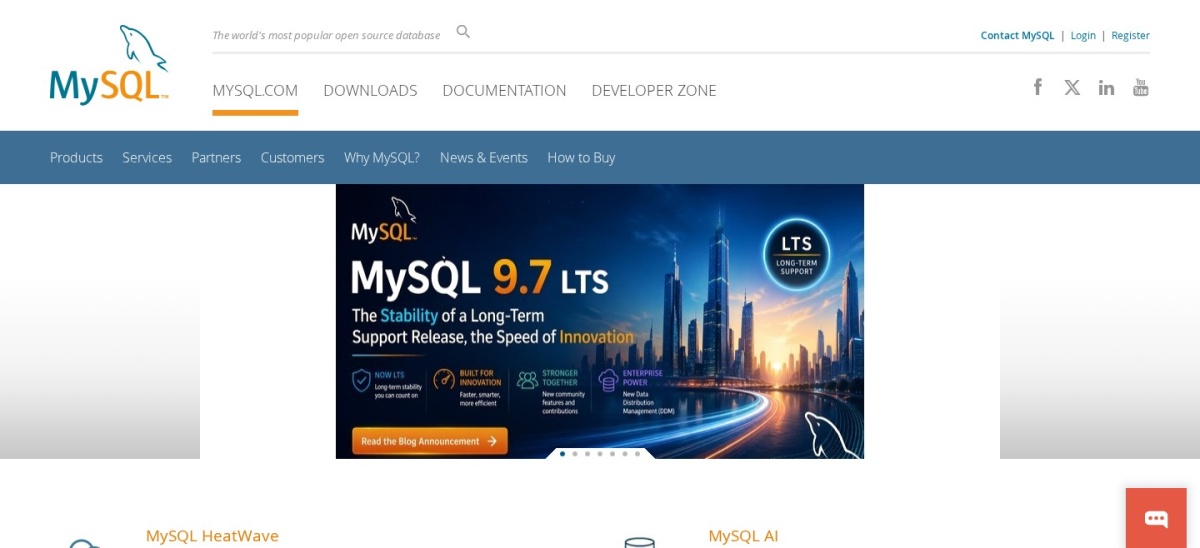
MySQL is a free, open source relational database, with a Community Edition that costs nothing to run. It is the most widely used open source database for web apps, and MySQL 9.7 LTS is the current long-term release. Managed MySQL is available from Oracle, AWS, Azure and Google Cloud.
The trade off is ownership. MySQL is owned by Oracle, so switching to it does not remove Oracle from your stack, and paid Standard Edition starts at $2,000 a year. It suits teams that want a familiar, well-supported drop-in with a huge hiring pool.
What we like
Free Community Edition
Most widely used open source database
Managed MySQL on every major cloud
Largest review base in this list
Watch out for
Owned by Oracle
Fewer advanced features than PostgreSQL
Standard Edition adds support and enterprise toolsVisit mysql.com
04
Microsoft SQL Server
4.4/5on G2 (2,287 reviews, checked Nov 2026)
Paid from$3,945/yr
Best for Microsoft environments
LicencePer core, 2-core packs
Free editionExpress, up to 10 GB
Current releaseSQL Server 2025
Paid planStandard, $3,945/2-core pack
microsoft.com
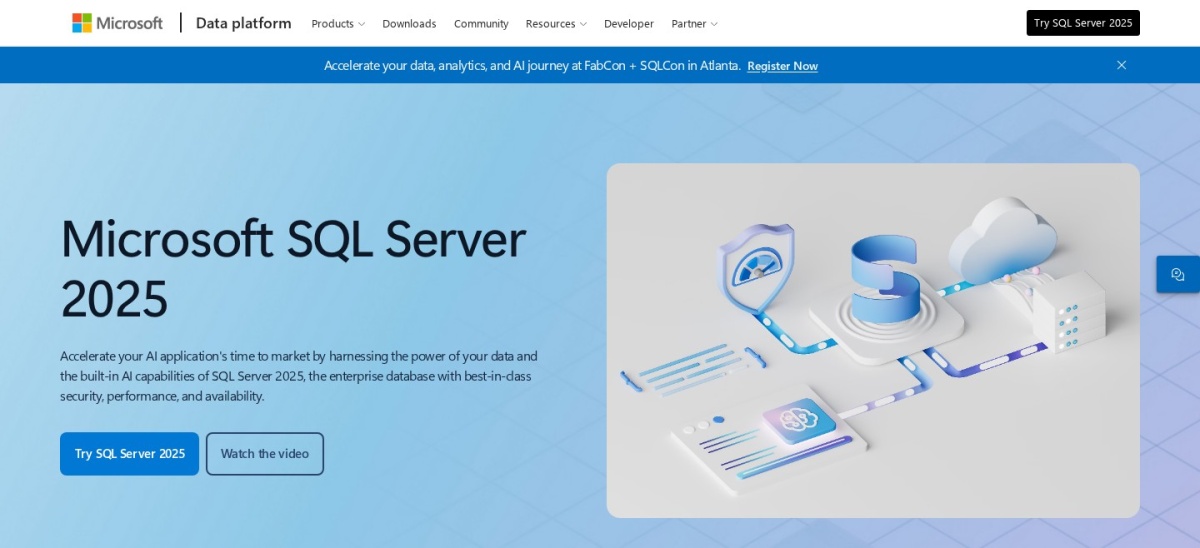
Microsoft SQL Server homepage, captured Nov 2026.
Microsoft SQL Server is the enterprise database of the Microsoft world, with deep ties to .NET, Azure, Power BI and Active Directory. The free Express edition covers small databases up to 10 GB, and SQL Server 2025 adds built-in AI features. Standard adds Always On availability groups for production.
The trade off is licensing cost and complexity. Standard lists at $3,945 per 2-core pack as a one-time licence, and Enterprise features such as online indexing cost far more. It suits teams already running Microsoft software that want one vendor for database and tools.
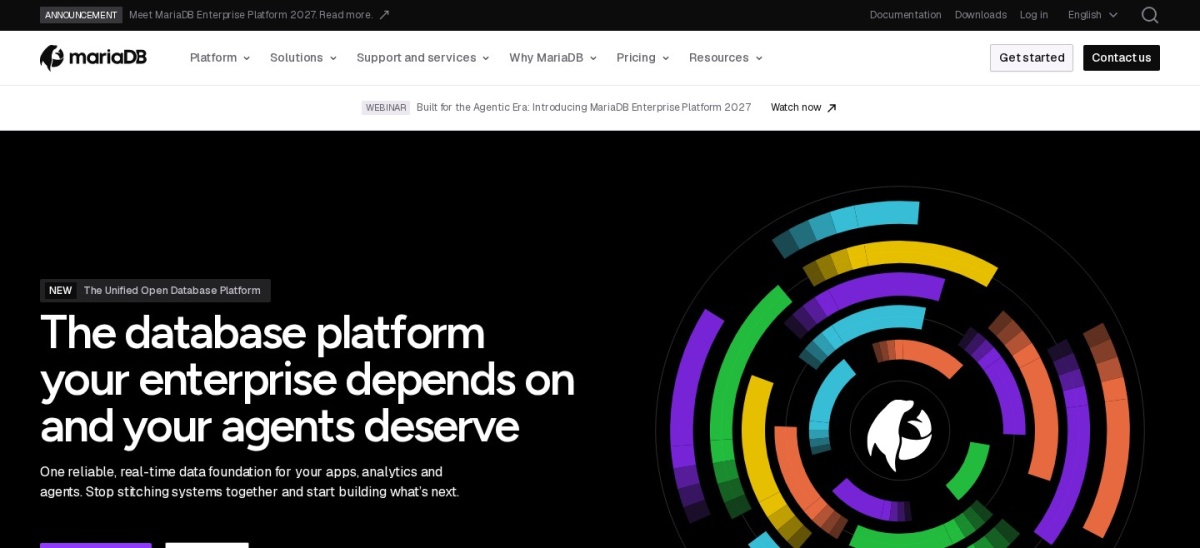
MariaDB is a free, open source fork of MySQL, created by MySQL's original developers. MariaDB Server 13.1 is the current stable release, and it stays compatible with MySQL clients and tools. It runs self-hosted, or as managed SkySQL in the cloud.
The trade off is paid support. The Community Edition is free, but managed SkySQL starts at $65 a month, and enterprise support is a separate contract. It suits teams that want MySQL compatibility without Oracle ownership.
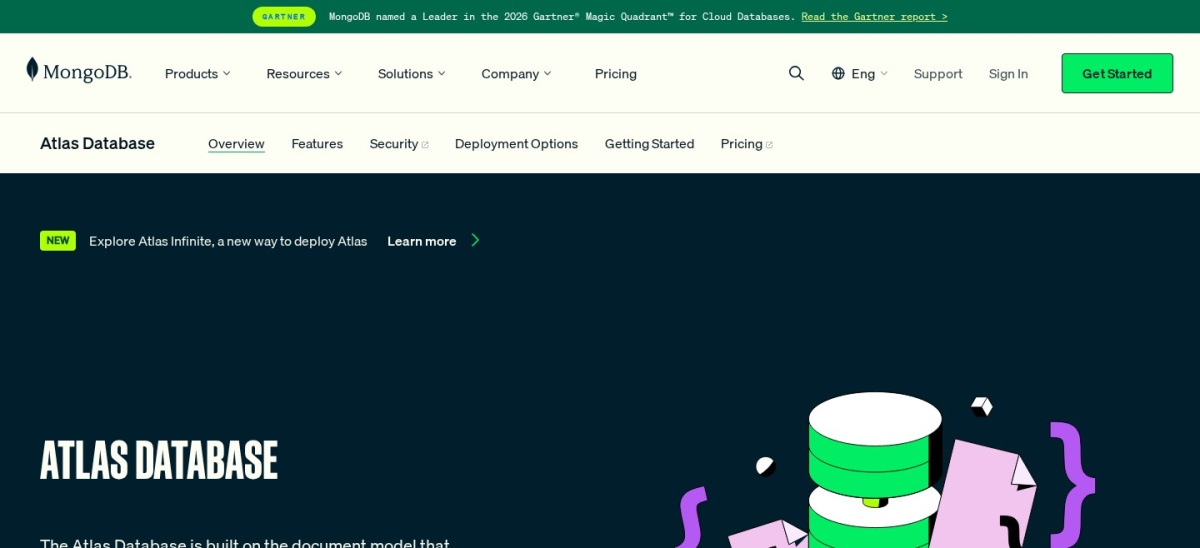
MongoDB Atlas is a managed document database that stores data as flexible JSON-like documents instead of fixed tables. The free M0 tier gives 512 MB of storage, and Flex starts at about $8 a month with up to 5 GB. It runs on AWS, Azure and Google Cloud.
The trade off is the data model. Document storage fits changing product catalogues and content well, but strict relational joins and multi-table transactions are not its strength. It suits apps whose records change shape often and need to scale across clouds.
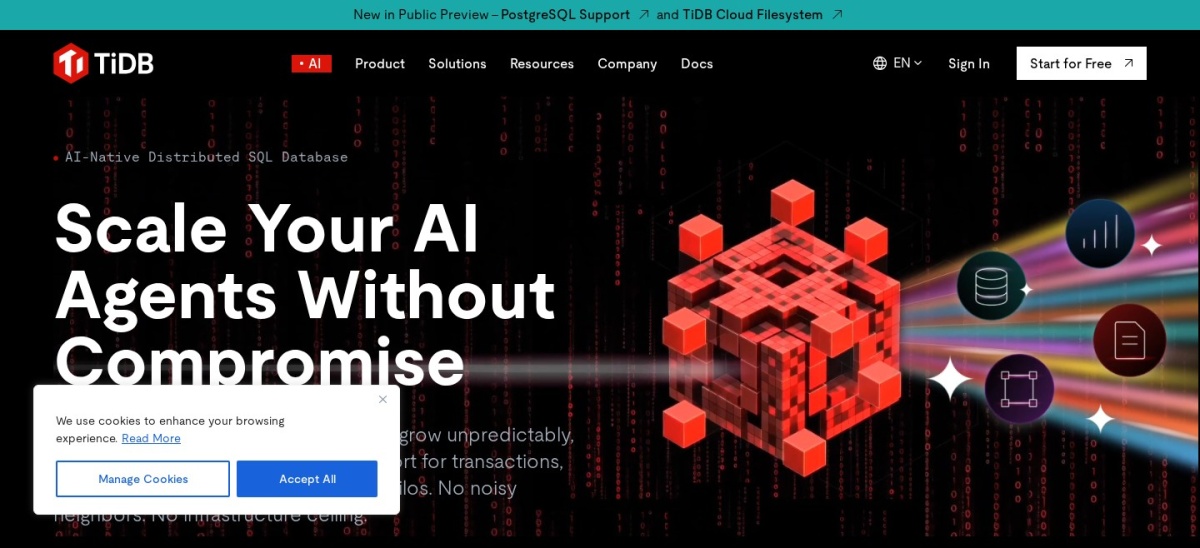
TiDB is a distributed SQL database that is compatible with MySQL and scales out by adding nodes. Its free Serverless tier gives 25 GB of row storage and 25 GB of column storage a month, and the built-in TiFlash engine runs analytics on live data. It is rated 4.6 out of 5 by 67 G2 reviewers.
The trade off is cost at scale. The Essential tier starts at about $400 a month, and production clusters need at least two TiDB nodes plus three TiKV nodes, so small apps pay for capacity they may not need. It suits MySQL teams that need horizontal scale and real-time analytics together.
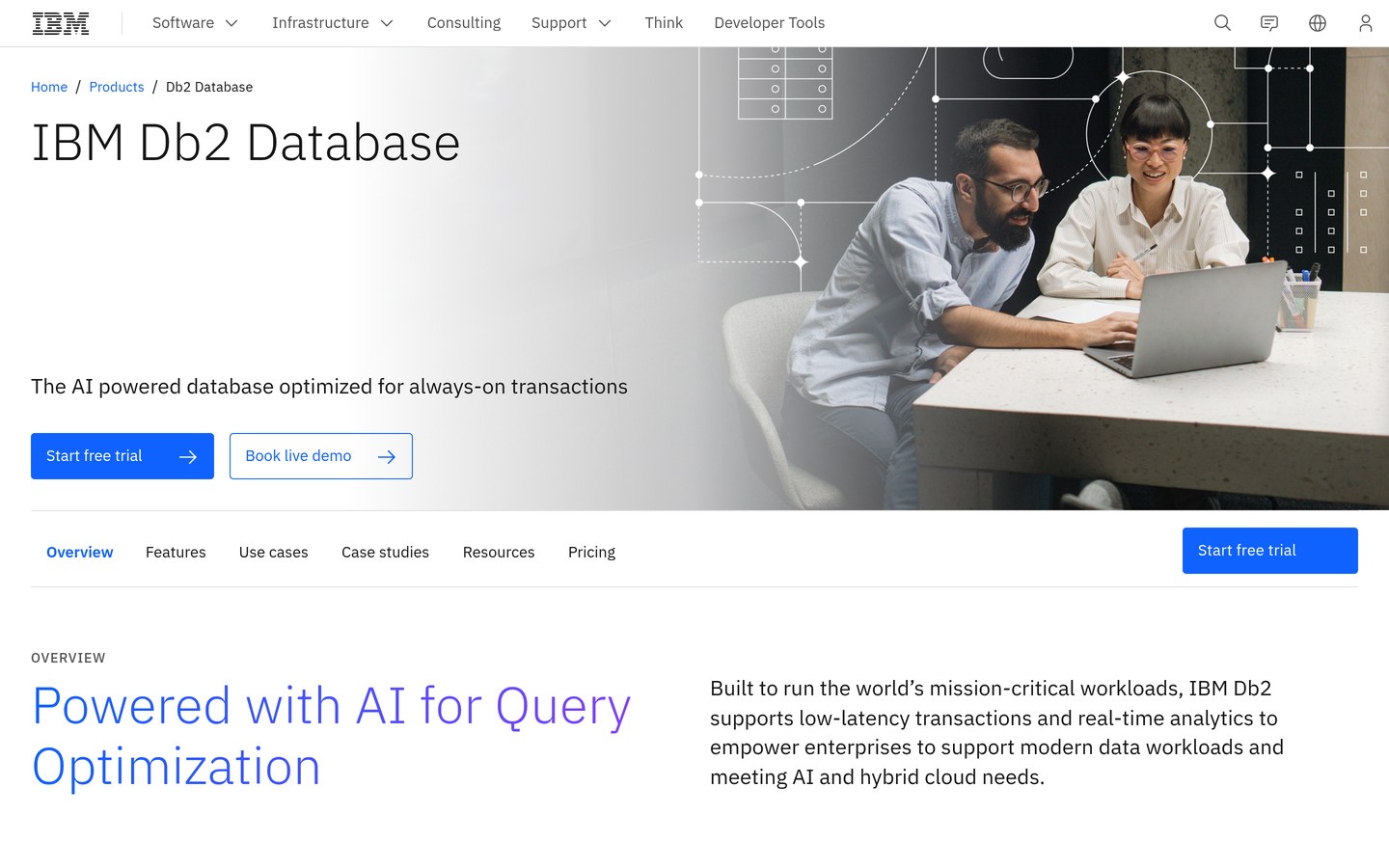
IBM Db2 is a long-running enterprise relational database built for high-volume transactions, with strong security and HADR failover. The free Lite tier on IBM Cloud covers evaluation and small use, and Db2 12.1 added vector storage for AI workloads. It runs on IBM Cloud, AWS and on-premises.
The trade off is price and complexity. The Standard cloud tier costs $99 a month, reviewers flag a steep learning curve, and it holds the lowest rating in this list at 4.1 out of 5. It suits large teams in banking, healthcare and government that already run IBM systems.
What we like
Built for high-volume transactions
Strong security and HADR failover
Runs on IBM Cloud, AWS and on-premises
Vector storage for AI workloads
Watch out for
Lowest rating in this list at 4.1/5
Steep learning curve, complex setup
Enterprise tier adds dedicated compute and unlimited connectionsVisit ibm.com
09
YugabyteDB
4.5/5on G2 (65 reviews, checked Nov 2026)
Paid from$125/mo
Best for multi-region PostgreSQL apps
CompatibilityPostgreSQL wire
Free optionOpen source, self-hosted
Managed serviceYugabyteDB Aeon
Entry paid tierAeon Standard, $125/vCPU/mo
yugabyte.com
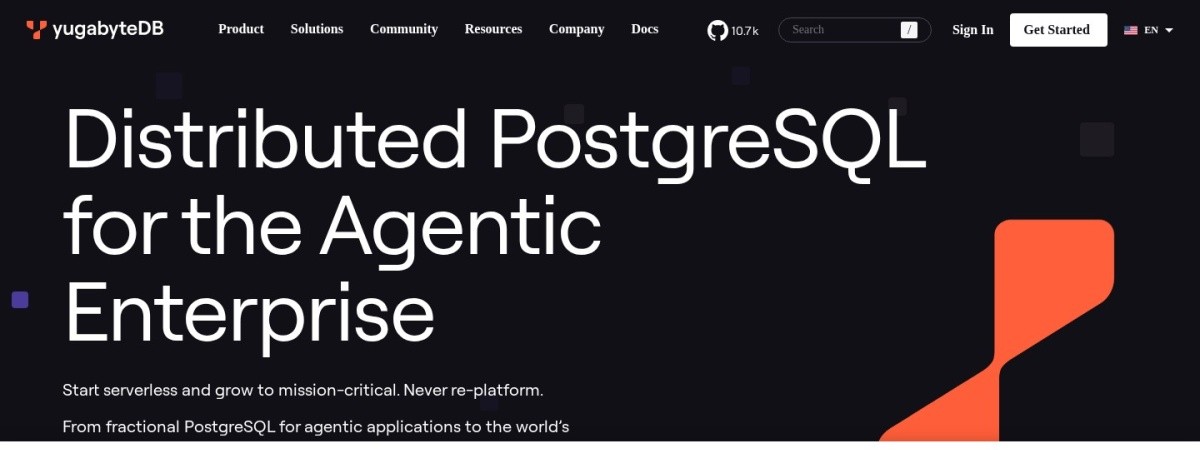
YugabyteDB homepage, captured Nov 2026.
YugabyteDB is a distributed SQL database with PostgreSQL compatibility, built for multi-region apps that must stay up when a region fails. The open source database is free to download and run, and the managed Aeon service handles operations. It is rated 4.5 out of 5 by 65 G2 reviewers.
The trade off is price and operations. Managed Aeon Standard starts at $125 per vCPU a month, and self-hosted clusters need distributed-systems skills to run well. It suits teams building global apps that need strong consistency across regions.
Oracle Database Standard Edition 2 lists at $17,500 per socket, before 22% annual support, so licence and support costs dominate the bill for many teams.
The alternatives in this list split into two groups: free open source databases such as PostgreSQL and MariaDB, and managed cloud services such as Aurora and Atlas that replace licence fees with hourly bills.
A move is not free either. Oracle-specific features such as PL/SQL, sequences and proprietary data types need rewriting, so budget migration time beside the new database cost.
How we chose
We started from the databases G2 lists as Oracle Database alternatives, then kept nine established options with a public rating and a published price.
Prices come from each vendor's pricing page or G2 pricing data, checked on 29 November 2026. Ratings and review counts come from G2 on the same day. Where a vendor bills by the hour, the list shows the monthly cost of running one instance continuously.
We left out tools with no public rating or no published price. No vendor paid for a place, and we do not claim to have used these tools ourselves.
How to choose an Oracle Database alternative
Start with your data model, then decide who operates the database.
Match the engine to your data. Relational data with strict transactions fits PostgreSQL, MySQL, MariaDB, TiDB or Db2. Flexible, nested records fit MongoDB Atlas instead.
Decide who operates it. Self-hosted PostgreSQL or MariaDB cost nothing but need your time. Aurora, Atlas and TiDB charge by the hour and handle backups and failover.
Check the free tier limits first. Atlas caps its free tier at 512 MB and TiDB at 25 GB of row storage, so a free tier that fits a prototype may not fit production.
Price the production size, not the starter. Aurora bills storage and I/O on top of instance hours, and SQL Server licences per core, so model a busy month before you commit.
FAQ
What are the best Oracle Database alternatives in 2026?
PostgreSQL is the best Oracle Database alternative for most teams: it is free, open source and rated 4.4 out of 5 by 684 G2 reviewers. Aurora is the best managed option on AWS, and MySQL is the most familiar drop-in.
What is the cheapest Oracle Database alternative?
PostgreSQL is the cheapest, because the database itself is free and open source, with no licence fees. MariaDB Community Edition is also free, and MongoDB Atlas has a free tier with 512 MB of storage for small apps.
Is there a free alternative to Oracle Database?
Yes. PostgreSQL and MariaDB are free and open source with no paid licence needed. MongoDB Atlas, TiDB and IBM Db2 also offer free tiers, though each caps storage or connections, so check the limits first.
Which Oracle Database alternative is best for small teams?
PostgreSQL is the best pick for small teams: it costs nothing, runs anywhere and has the largest community. If you want a managed service, MongoDB Atlas Flex starts at about $8 a month, and MariaDB SkySQL starts at $65 a month.
PostgreSQL vs Amazon Aurora: which is better?
PostgreSQL is better if you want zero licence cost and full control over your database. Aurora is better if you run on AWS and want managed failover, automatic storage scaling and read replicas without operating the database yourself.
Can I migrate from Oracle Database to MySQL easily?
Partly. MySQL speaks standard SQL, so simple tables and queries move with small changes, but Oracle features such as PL/SQL packages, sequences and some data types need rewriting. Test the migration on a copy first and check stored procedures line by line.
SaaS SEO and WordPress specialist with about 8 years of experience. Rakib compares WordPress plugins, themes, hosting and software using public pricing, documentation and user reviews. See how we rank.