Claude Code is the strongest OpenCode alternative for terminal-first multi-file coding, starting at $17/mo billed annually on Claude Pro with a 4.7/5 G2 rating. GitHub Copilot ($10/mo Pro, free tier available) fits teams already inside GitHub, while Cline (free Apache-2.0 software with BYOK) matches OpenCode's open-source flexibility.
How we make this list: we compare pricing pages, product documentation and public user reviews, then re-check every price before each update. No product paid for a place. Disclosure.
Open-source BYOK agents like Cline and Kilo Code cost $0 for software, leaving model API tokens as your only bill.
Subscription agents start at $8/mo for OpenAI Codex (ChatGPT Go), $10/mo for GitHub Copilot Pro, and $17/mo annual for Claude Code.
Claude Code holds the highest G2 rating among commercial coding agents at 4.7/5 across 522 reviews, but lacks a free tier.
GitHub Copilot includes a free tier with 2,000 monthly completions plus CLI and agent mode, rated 4.5/5 on G2 across 303 reviews.
Gemini CLI stands out for high-volume free use, offering 1,000 daily model requests on a personal Google account.
How do you choose the best OpenCode alternatives?
OpenCode is popular because it keeps the terminal agent free and MIT-licensed while letting you connect 75+ model providers, local Ollama models, or a $10/mo OpenCode Go plan. When developers look for OpenCode alternatives, they usually want either tighter integration with a subscription they already pay for or richer IDE workflows than a terminal TUI provides.
Your first decision is how you want to pay for model inference. Bring-your-own-key (BYOK) tools like Cline and Kilo Code charge nothing for the software and pass through exact provider token rates, while bundled subscriptions from Anthropic, OpenAI, and GitHub wrap terminal and editor agents into predictable monthly tiers.
Your second decision is where the agent lives. Terminal-native agents such as Claude Code, OpenAI Codex CLI, and Gemini CLI mirror OpenCode's command-line speed, whereas VS Code and JetBrains extensions like Cline, Kilo Code, and Cursor give you inline diff reviews and visual multi-file checkpoints.
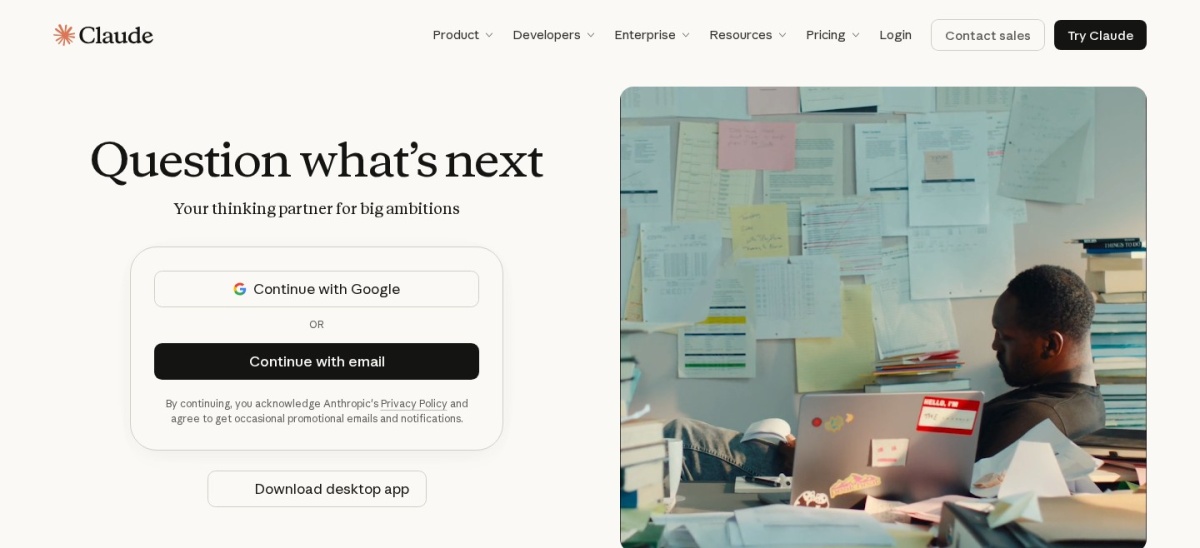
Claude Code is Anthropic's agentic coding tool for the terminal, IDEs, and GitHub pull requests. It explores repositories, edits multiple files, runs shell commands, and executes git workflows, with entry access bundled into Claude Pro at $17/mo billed annually ($200 up front) or $20/mo billed monthly.
The trade off is that Anthropic's Free plan excludes Claude Code, and Pro shares a rolling 5-hour and weekly usage pool with Claude web chat before requiring Max ($100/mo) or Ultra ($200/mo). It suits developers who prioritize strong multi-file reasoning over model freedom.
What we like
High 4.7/5 G2 rating across 522 verified reviews
Runs across terminal CLI, VS Code, JetBrains, desktop, and @claude GitHub mentions
Supports custom slash commands, subagents, and MCP servers
Includes cloud sessions on Anthropic-managed VMs within plan limits
Watch out for
No free tier included on claude.com
Locked to Anthropic's Claude model family
Rolling 5-hour usage windows can interrupt heavy refactoring sessions
Claude Pro ($200/yr) unlocks CLI, IDE, desktop, and cloud agent access.Visit claude.com
02
GitHub Copilot
4.5/5on G2 (303 reviews, checked Nov 2026)
Paid from$10/mo
Best for GitHub-native teams and low entry price
InterfaceVS Code, JetBrains, CLI, GitHub.com
LicenseProprietary (VS Code chat MIT)
ModelsOpenAI, Anthropic, Google, xAI
Free tierYes (2,000 completions + CLI)
github.com
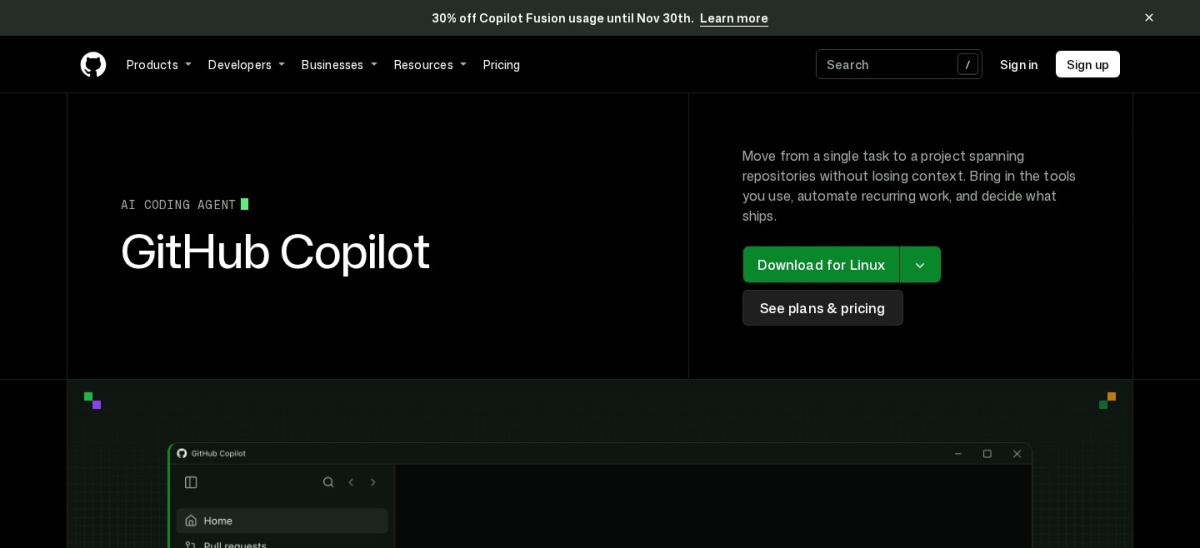
GitHub Copilot homepage, captured Nov 2026.
GitHub Copilot is an AI coding assistant and autonomous agent spanning VS Code, JetBrains, Visual Studio, Copilot CLI, and GitHub repositories. Its Free tier includes 2,000 monthly code completions plus limited chat and CLI agent mode, while Pro costs $10/mo ($120/yr) with $15 in monthly GitHub AI Credits.
The trade off is that heavy agent runs and premium models burn through monthly AI Credits quickly, pushing frequent users toward Pro+ ($39/mo) or Max ($100/mo). It suits teams already hosting code and pull requests on GitHub.
What we like
Generous free tier that includes Copilot CLI and editor agent mode
Lowest flat paid subscription among multi-model agents at $10/mo
Delegates GitHub issues directly to a cloud agent that opens pull requests
Supports third-party agents like Claude Code and Codex inside GitHub
Watch out for
AI Credits meter agent mode and pull request reviews
No native bring-your-own-key billing for standard subscription features
Pro ($10/mo) adds unlimited completions, $15/mo AI Credits, and PR reviews.Visit github.com
03
Cline
4/5on VS Code Marketplace (264 reviews, checked Nov 2026)
Paid from$9.99/mo
Best open-source BYOK agent in VS Code
InterfaceVS Code, JetBrains, CLI, SDK
LicenseApache-2.0
Models311+ cloud and local models
Free tierYes ($0 open-source + BYOK)
cline.bot
Cline homepage, captured Nov 2026.
Cline is an Apache-2.0 open-source coding agent available as a VS Code extension, JetBrains plugin, and standalone CLI with over 72,000 GitHub stars. The core software is free for individual developers using their own API keys or local models, while ClinePass offers a flat $9.99/mo ($119.88/yr) subscription option.
The trade off is that pay-as-you-go API usage can spike during long multi-file loops if you rely on frontier reasoning models without token caps. It suits developers who want transparent per-step diff approvals without leaving VS Code.
What we like
Completely free Apache-2.0 open-source client with zero software lock-in
Shows exact token and dollar cost per task in real time
Native MCP Marketplace for adding custom tools and integrations
Supports Anthropic, OpenAI, Gemini, Bedrock, Vertex, and local endpoints
Watch out for
Unmonitored API usage can grow expensive on large repositories
Step-by-step approval prompts slow down routine tasks unless auto-approved
ClinePass ($9.99/mo) provides a flat monthly subscription option over BYOK.Visit cline.bot
04
Kilo Code
4.1/5on JetBrains Marketplace (40 reviews, checked Nov 2026)
Paid from$15/mo
Best for switching among 500+ models mid-task
InterfaceVS Code, JetBrains, CLI, cloud
LicenseMIT / Apache-2.0
Models500+ models across 60+ providers
Free tierYes (Auto Free, BYOK, local)
kilo.ai
Kilo Code homepage, captured Nov 2026.
Kilo Code is an open-source agentic coding platform spanning VS Code, JetBrains, a CLI forked from OpenCode, and web cloud agents. Individual developers use the platform free with Auto Free routing, local Ollama models, or zero-markup provider keys, while Teams starts at $15/user/mo ($180/yr) and optional Kilo Pass credit subscriptions start at $19/mo.
The trade off is that Kilo Gateway adds a 5% processing fee on credit top-ups if you choose hosted billing instead of direct provider API keys. It suits developers who want OpenCode's CLI DNA paired with full JetBrains and VS Code support.
What we like
Kilo CLI shares OpenCode's lineage and config across editor and terminal
Access to 500+ models with mid-task switching across Architect, Code, and Debug modes
Free individual tier includes Auto Free model routing without API keys
Native JetBrains plugin with isolated git worktree agent management
Watch out for
5% processing fee applies to hosted Kilo Gateway credit purchases
Cloud compute sandboxes bill separately at $1.20/hour
Teams ($15/user/mo) adds shared custom agents, analytics, and centralized billing.Visit kilo.ai
05
OpenAI Codex
4.6/5on G2 (5,731 reviews, checked Nov 2026)
Paid from$8/mo
Best for existing ChatGPT subscribers
InterfaceTerminal CLI, desktop app, VS Code, web
LicenseApache-2.0 (CLI)
ModelsGPT-6.1 Sol, GPT-6 Luna, GPT-6 Astra
Free tierYes (ChatGPT Free quick tasks)
chatgpt.com
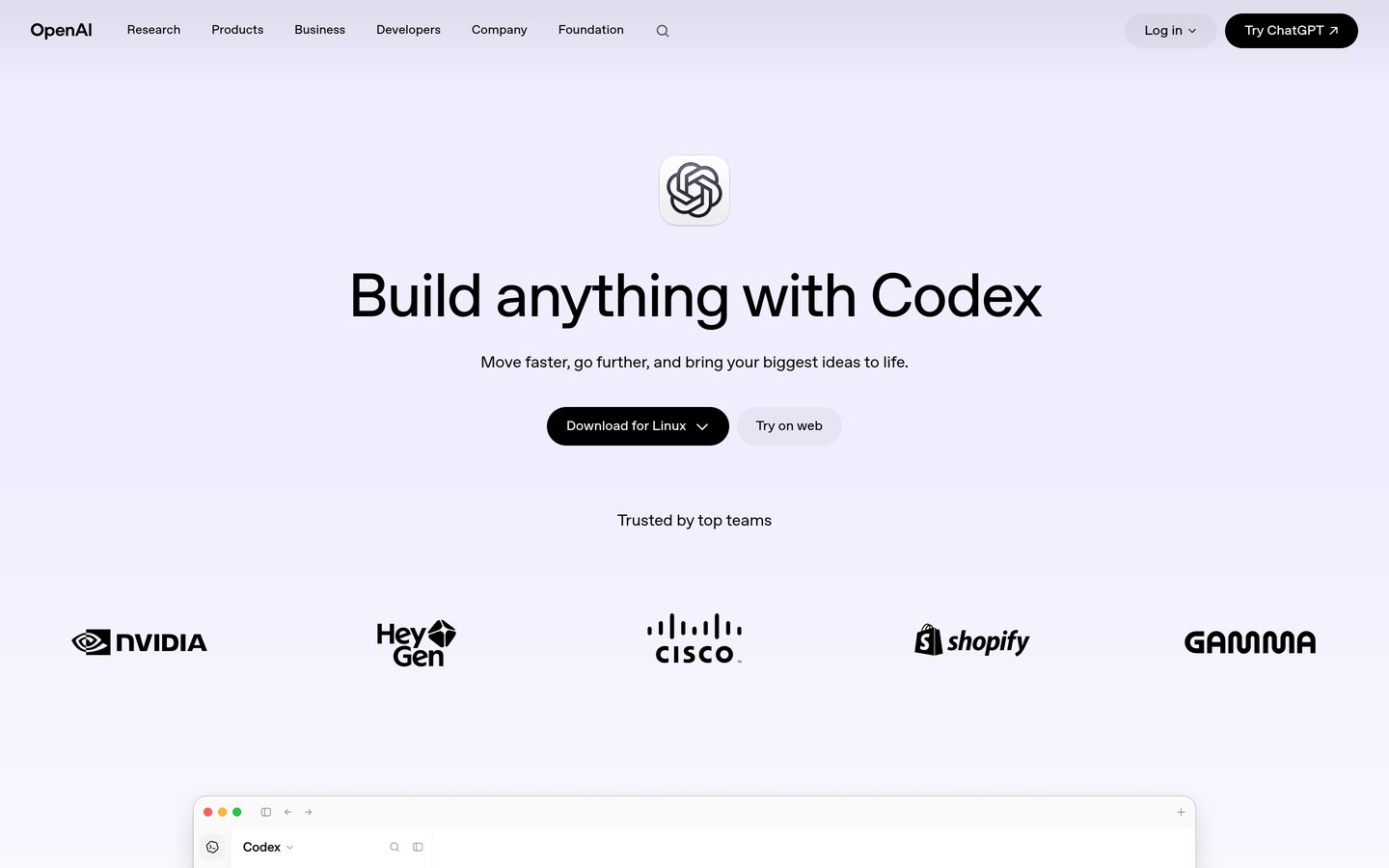
OpenAI Codex homepage, captured Nov 2026.
OpenAI Codex combines an Apache-2.0 local terminal CLI with IDE extensions and cloud tasks packaged directly inside ChatGPT plans. ChatGPT Free includes limited Codex access for quick tasks, ChatGPT Go starts at $8/mo ($96/yr) for lightweight coding, and ChatGPT Plus costs $20/mo for regular weekly development.
The trade off is that Codex is built around OpenAI's models, and heavy daily coding requires upgrading to ChatGPT Pro ($100, $200, or $500/mo) or buying extra credits. It suits developers who already pay for ChatGPT and want terminal and cloud agents under one bill.
What we like
Included in existing ChatGPT subscriptions starting at $8/mo on Go
Apache-2.0 CLI also works standalone with an OpenAI API key
Supports macOS and Linux terminal workflows plus VS Code, Cursor, and Windsurf extensions
Cloud tasks integrate with GitHub code review and Slack on paid plans
Watch out for
Tied to OpenAI's model ecosystem
Plus enforces rolling 5-hour message windows that cap intensive sessions
ChatGPT Go ($8/mo) expands Codex limits; Plus ($20/mo) adds GPT-6.1 Sol and IDE access.Visit chatgpt.com
06
Cursor
4.6/5on G2 (334 reviews, checked Nov 2026)
Paid from$20/mo
Best for an AI-native IDE workflow
InterfaceStandalone desktop IDE (VS Code fork)
LicenseProprietary
ModelsComposer, Grok, Claude, GPT, Gemini
Free tierYes (Hobby plan with limited usage)
cursor.com
Cursor homepage, captured Nov 2026.
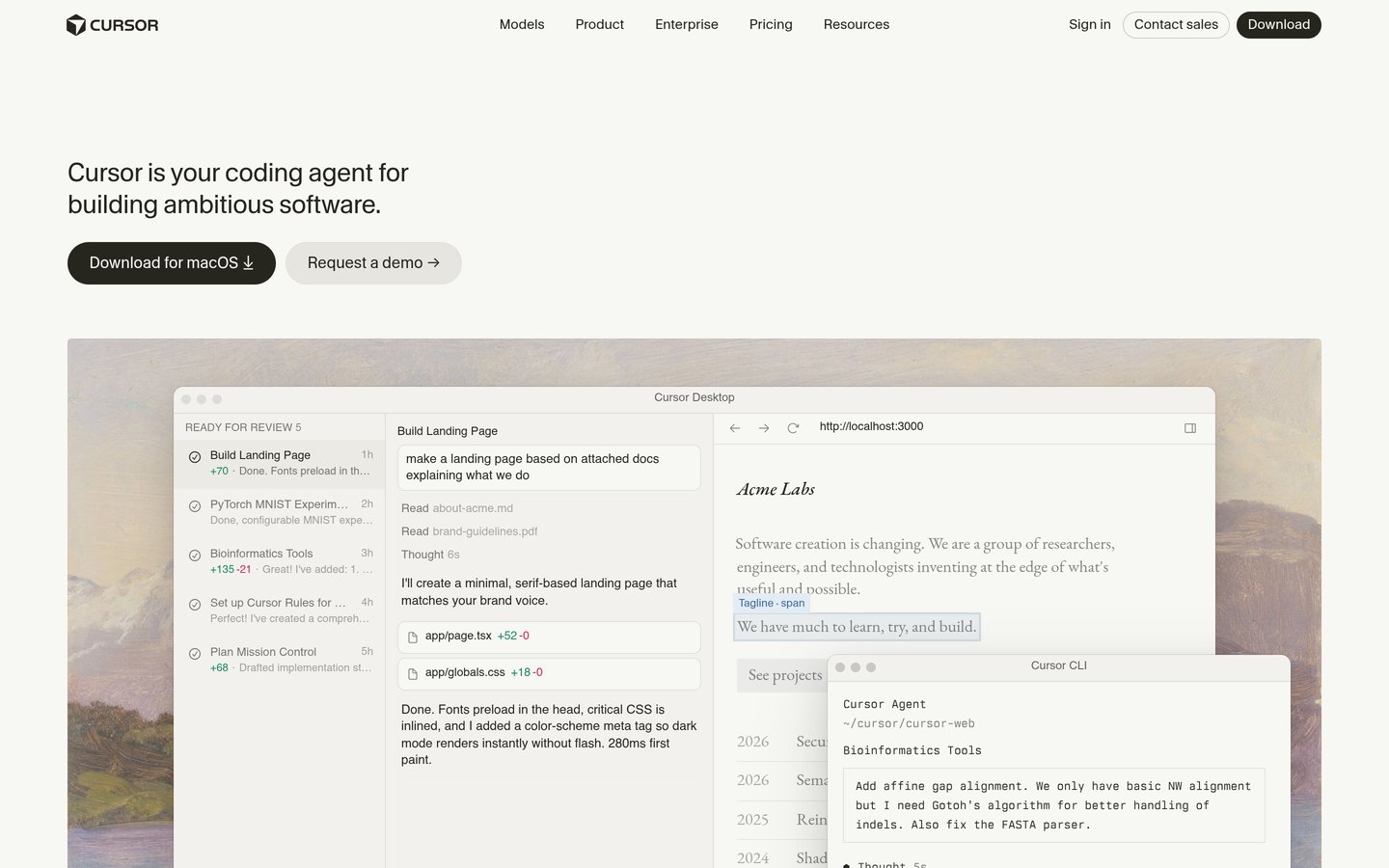
Cursor is a dedicated AI code editor built on VS Code that embeds multi-file agent editing, codebase indexing, and Tab autocomplete directly into the workspace. Its free Hobby tier includes limited Agent and Tab usage, while individual Pro plans start at $20/mo ($240/yr) and new X Subscription bundles start at $30/mo ($300/yr billed annually).
The trade off is that Cursor requires replacing your primary editor rather than running inside your existing terminal, and third-party frontier models incur metered usage fees beyond plan pools. It suits developers who want fast visual edits and background agents.
What we like
Tightly integrated Tab autocomplete and multi-file Composer agent UX
Strong 4.6/5 G2 rating across 334 reviews
Supports background cloud agents and automated pull request reviews
Imports existing VS Code extensions, themes, and keybindings in one click
Watch out for
Proprietary editor fork rather than a lightweight terminal CLI
Third-party model usage can add overage costs on heavy agent runs
Free tierYes (1,000 requests/day via Google login)
github.com
Gemini CLI homepage, captured Nov 2026.
Gemini CLI is Google's Apache-2.0 open-source terminal agent that pairs with Gemini Code Assist in VS Code and JetBrains. Signing in with a personal Google account grants a free tier of up to 1,000 model requests per day, while Gemini Code Assist Standard starts at $19/user/mo billed annually ($228/yr, or $22.80 monthly) with 1,500 daily requests.
The trade off is that Gemini CLI only runs Google's Gemini models rather than letting you swap in Claude or GPT. It suits individual developers who want a generous daily free quota or teams standardized on Google Cloud.
What we like
1,000 free model requests per day with a standard personal Google account
Apache-2.0 open-source CLI with non-interactive JSON output for CI scripts
Built-in Google Search grounding, MCP support, and session checkpointing
Large context window handles sprawling legacy repositories
Watch out for
Restricted exclusively to Google Gemini models
Per-minute rate limits tighten during peak demand on the free tier
Code Assist Standard ($19/user/mo annual) raises limits to 1,500 requests/day with enterprise indemnification.Visit github.com
08
OpenHands
4.3/5on G2 (28 reviews, checked Nov 2026)
PriceFree
Best for self-hosted sandboxed cloud agents
InterfaceWeb Agent Canvas, Docker, CLI
LicenseMIT
ModelsModel-agnostic (cloud or local)
Free tierYes (MIT self-hosted core)
openhands.dev
OpenHands homepage, captured Nov 2026.
OpenHands is an MIT-licensed open-source platform for running autonomous coding agents inside isolated Docker sandboxes via its local-first Agent Canvas interface. The open-source core is completely free with no published self-serve subscription price, letting you connect any cloud LLM or local model endpoint.
The trade off is that OpenHands requires Docker setup and heavier system resources than a lightweight terminal binary, and hosted Enterprise pricing requires contacting sales. It suits platform teams automating parallel pull-request workflows in VPC or air-gapped environments.
What we like
MIT-licensed open-source core with VPC and air-gapped deployment support
Runs multiple parallel agents in isolated sandboxes with browser and shell access
Event-driven automations can trigger on pull requests or monitoring alerts
Model-agnostic across commercial APIs and local open-weight models
Watch out for
Heavier Docker setup compared to single-binary terminal agents
Cloud and Enterprise pricing is custom rather than self-serve
OpenHands Cloud and Enterprise add managed sandboxes, audit logs, and RBAC on custom quotes.Visit openhands.dev
BYOK open-source agents vs bundled subscriptions
Open-source harnesses like Cline, Kilo Code, and OpenHands mirror OpenCode's architecture: the client is free under MIT or Apache-2.0, and you pay only for the API tokens you consume. For light or intermittent coding—around 40 million cached input tokens a month—BYOK setups often cost under $10/mo, and you can switch to local Ollama models offline at zero cost.
Bundled subscriptions like Claude Code ($17/mo annual), GitHub Copilot ($10/mo), and OpenAI Codex ($8–$20/mo) reverse that model by capping spend inside rolling 5-hour or monthly credit pools. If you run long autonomous refactoring loops every day, a flat subscription shields you from surprise token spikes, even though it ties you to one vendor's model lineup.
How we chose
We built this list by evaluating established terminal, IDE, and sandboxed coding agents that directly replace OpenCode's core workflows: reading multi-file codebases, editing files, running shell commands, and integrating with Model Context Protocol (MCP) tools.
Every price, license, active user count, and review score was verified on 29 Nov 2026 directly against vendor pricing pages, GitHub repositories, G2 profiles, and official IDE marketplaces. Regular non-promotional entry prices are listed in USD.
We excluded discontinued editors such as Void, tools lacking verified public review profiles, and agents without clear pricing documentation. No vendor paid for a place, and we do not claim testing for this list.
How to pick the right OpenCode alternative
Match your existing AI subscriptions, preferred editor, and token budget before switching agents.
Audit the AI subscriptions you already pay for. If you already pay for ChatGPT Plus, Claude Pro, or GitHub Copilot, test their native agents (Codex CLI, Claude Code, or Copilot CLI) first so you do not pay twice for inference.
Decide between terminal speed and visual IDE diffs. Choose Claude Code, OpenAI Codex CLI, or Gemini CLI if you live in tmux and the shell; choose Cline or Kilo Code if you want inline diff approvals inside VS Code or JetBrains.
Check license and data-privacy requirements. If your team requires MIT or Apache-2.0 source code or air-gapped local inference via Ollama, stick to Cline, Kilo Code, Gemini CLI, or OpenHands.
Cap your token spend before running autonomous loops. Set provider spending limits or use model routing—such as Kilo Code's Auto Model or Haiku-tier models for routine edits—so multi-step retries do not drain your monthly budget.
FAQ
What are the best OpenCode alternatives in 2026?
Claude Code is the top overall alternative for deep multi-file terminal coding at $17/mo billed annually. GitHub Copilot ($10/mo Pro, plus a free tier) offers the best value for GitHub teams, while Cline and Kilo Code are the strongest free, open-source bring-your-own-key replacements.
What is the best free open-source alternative to OpenCode?
Cline (Apache-2.0) and Kilo Code (MIT/Apache-2.0) are the closest free open-source replacements. Both charge $0 for the client software, support local Ollama models and major API keys, and include terminal CLIs alongside VS Code and JetBrains extensions.
Which OpenCode alternative includes free AI model usage without an API key?
Gemini CLI gives personal Google accounts up to 1,000 free model requests per day with no API key required. GitHub Copilot Free (2,000 completions plus limited CLI agent usage) and Kilo Code's Auto Free tier also include hosted model access at $0.
How does Claude Code compare to OpenCode?
Claude Code is proprietary and tied strictly to Anthropic's Claude models, starting at $17/mo billed annually on Claude Pro with no free tier. OpenCode is MIT-licensed, free to run, and supports 75+ model providers, local Ollama models, and ChatGPT or Copilot sign-ins.
Are there OpenCode alternatives that work inside JetBrains IDEs?
Yes. Kilo Code, Claude Code, GitHub Copilot, Cline, and Gemini CLI all offer official JetBrains plugins in addition to terminal or VS Code workflows, whereas Cursor and Roo Code are limited to VS Code environments.
SaaS SEO and WordPress specialist with about 8 years of experience. Rakib compares WordPress plugins, themes, hosting and software using public pricing, documentation and user reviews. See how we rank.